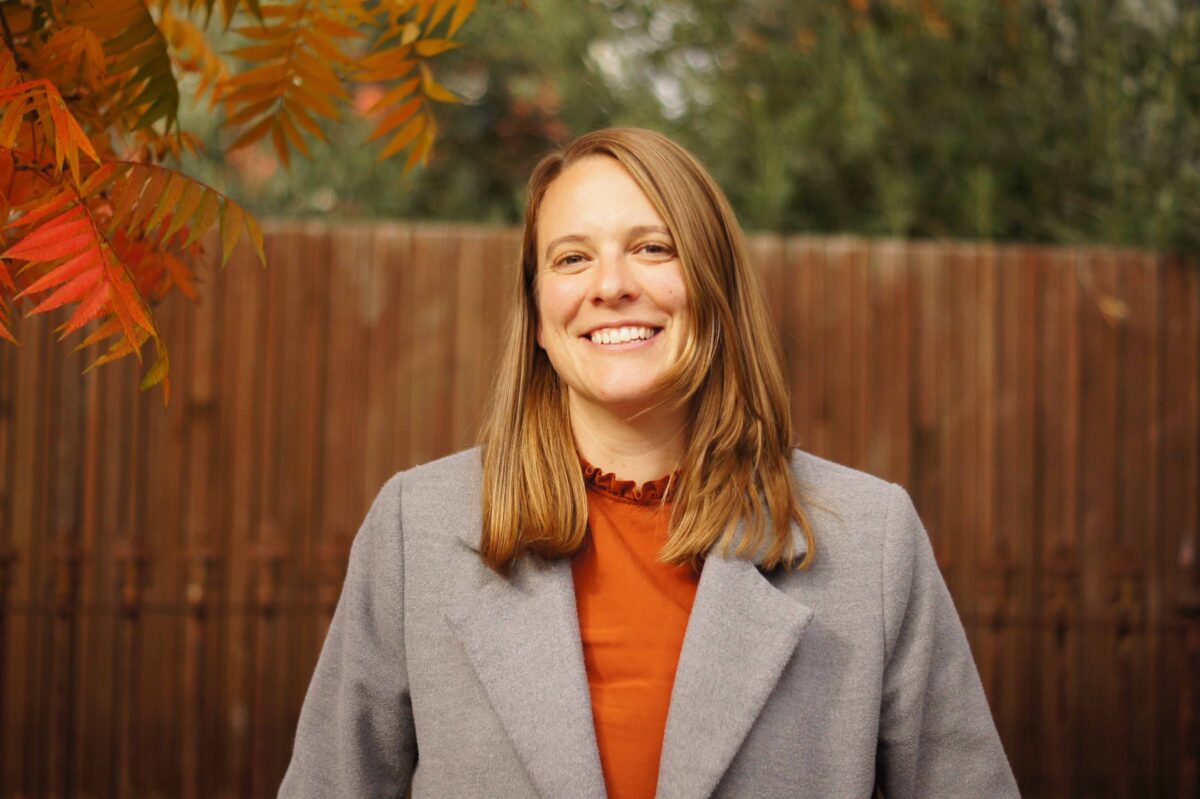
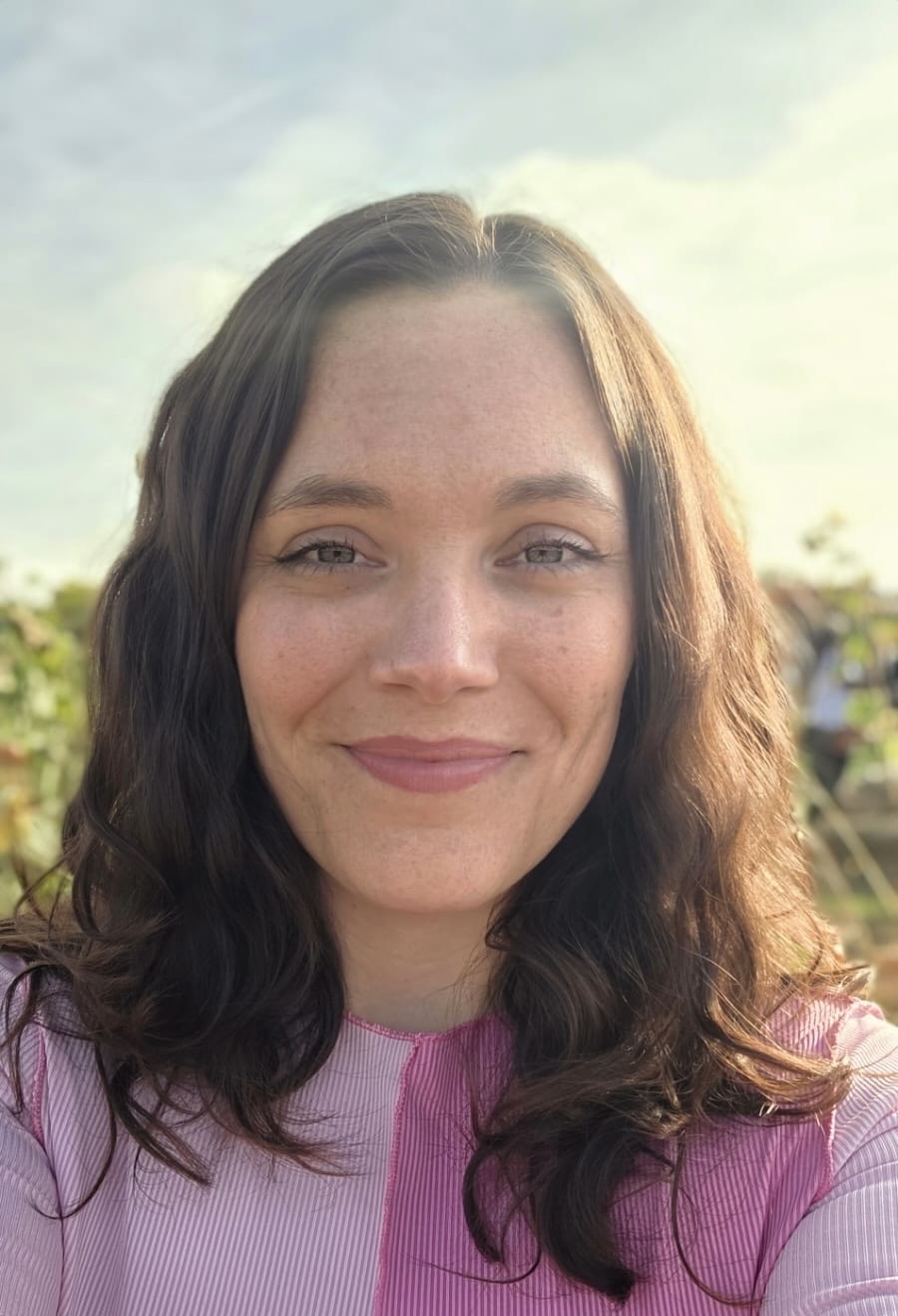
Healing from Trauma – A podcast interview with Dr Hayley Lugassy

From Trauma to Hope

I really enjoyed recording this podcast with Dr Hayley Lugassy. Here are some thoughts related to our discussion.

Recovery after trauma is not a straight line; it is a careful blend of honest reflection, steady support, and practical boundaries that make change feel safe. This conversation traces a lived journey from adolescence marked by adversity and isolation in Spain to returning to England with a two?year?old, re?entering education, and building a career in educational psychology. The constant thread is hope, often fragile, protected by small acts of belief from a school psychologist, an English teacher, a steadfast brother, and a partner who set firm, loving limits. These relationships did what systems often fail to do: they held space for pain while nudging forward, proving that healing accelerates when compassion and accountability travel together.

For schools and services, the lesson is clear: trauma?informed practice is not permissiveness. It means understanding the nervous system and the ways distress shows up in behaviour, then responding with steadiness and skill. Emotion coaching offers a workable model—connect first, name and validate feelings, teach skills, and only then set a clear boundary or apply a natural consequence. This approach keeps safety, dignity, and learning intact. It also demands adults regulate themselves. When adults lose calm, consequences slide into punishments, trust ruptures, and children learn that needs invite rejection. When adults hold their ground with warmth, children learn that needs invite guidance, and the boundary becomes part of the bond.

Another overlooked truth: some of the most distressed children are the least disruptive. School refusers, isolated teens, and the “quiet good kids” can be carrying acute anxiety, shame, or family trauma without drawing attention. A trauma?aware lens widens the radar beyond detentions and behaviour charts to patterns of withdrawal, somatic complaints, perfectionism, and sudden dips in engagement. Systems should prioritise proactive outreach, flexible re?entry plans, and gentle curiosity. Equally vital is care for the carers. Teachers, foster carers, and safeguarding staff cannot co?regulate children when their own needs are ignored. Supervision, reflective practice, and workload realism are not perks; they are safety equipment for relational work.

Personal recovery also needs body care. Masking pain through overeating, sleep loss, or isolation is common after trauma, yet the body keeps the score. Reclaiming basic rhythms—movement, nutrition, rest—gives the nervous system a predictable floor. Pairing this with therapy helps name enduring sensitivities without shame. For many, abandonment anxiety lingers; sirens, late texts, or silent phones can spike panic. The goal is not to erase these triggers but to build a plan: notice early signs, slow breathing, reality?check the story, and ask for reassurance without apology. Over time, these micro?repairs create a life where fear no longer runs the day.

Parents often ask how to lead when they feel broken. Start small. Say sorry. Repair is a superpower that teaches children humility and trust. Acknowledge what went wrong, state what will change, and follow through. Boundaries are not walls; they are promises about safety. When a home or classroom pairs structure with respect, children internalise both agency and limits. That mix, seen in authoritative parenting, is the antidote to cycles of exclusion. When schools keep kids connected during mistakes, students learn that belonging is not conditional. When services engage parents with kindness and firm expectations, families attempt change rather than armour up. This is how communities turn adversity into growth—one regulated adult, one clear boundary, one repaired rupture at a time.

You can listen to the podcast here:

You can watch the podcast here:

Hayley’s Bio:

Dr. Hayley Lugassy is a Senior Educational Psychologist with Keys Group and the founder of Lugassy Learning Solutions, where she focuses on inspirational speaking and sharing her lived experience to support schools and families. Drawing on her professional expertise and her journey of becoming a mum at 15, Hayley is passionate about bringing compassion, boundaries, and trauma-informed practice into education and parenting. Her work opens up honest conversations about healing, hope, and creating environments where children can thrive.

Related Podcasts:

If you really liked Hayley’s podcast interview about healing from trauma and, especially, the role of teachers and education, I anticipate you will also like the following:

Dr Lisa Cherry’s podcast interview about breaking intergenerational cycles of trauma:

Benjamin Perks’ podcast interview about preventing child maltreatment and the role played by a single teacher in Ben’s own transformation:

And Megan Corcoran’s podcast interview about building trauma informed schools:


Transcript of Hayley’s podcast interview:

Colby: 0:00

Hello and welcome to the Secure Start podcast.

Hayley: 0:04

So I started writing an awful lot about my experiences as a way to process what I’d been through. That was the second member of staff from school, I guess, that had really noticed something in me. And it was her support that got me through that year. It was essentially a combination of several people noticing me, supporting me, believing in me. I had a lot of protective factors as a young child. I had quite a lot of strengths that I was able to draw from from those younger years. But I was able to kind of hold on to some of that. And I think that’s what helped me to realise that actually this situation that I’m in, this should not be happening. This is not okay. I deserve better. I can do better. I think that you can go on to live a very meaningful and content life where you know the trauma isn’t overtaking your day-to-day. But it’s always there, it’s always something in the background somewhere, and it is very much a case of managing it, supporting authorities and professionals to open up conversations with parents and carers where they can start to feel safe enough to recognise some of their challenges as parents and to take that accountability with that compassion and that kindness. What we tend to see is that the adults really struggle to keep their calm. And that’s where the boundaries actually probably aren’t boundaries, they become punishments. And one of my biggest um messages is to parents you know, say sorry, we all mess up sometime. Let’s have more informal conversations. Yes, absolutely. Say sorry to your children, recognise the mistakes that you made, acknowledge them, take accountability and grow. And that’s what I’ve done, and it’s you know it’s working okay.

Colby: 1:45

Hello and welcome to the Secure Start podcast. I’m Colby Pierce, and joining me this episode is a very special guest with an inspirational story to tell. Before I introduce my guests, I’d just like to acknowledge the traditional custodians of the lands that I come to you from, the Ghana people of the Adelaide Plains, and acknowledge the continuing connection the living Ghana people feel to land, waters, culture, and community. I’d also like to pay my respects to their elders, past, present, and emerging. My guest this episode is Dr. Haley Lugassy. Haley is a senior educational psychologist with Keys Group and the founder of Lugassi Learning Solutions, where she focuses on inspirational speaking and sharing her lived experience to support schools and families. Drawing on her professional expertise and her journey of becoming a mum at 15, Haley is passionate about bringing compassion, boundaries, and trauma-informed practice into education and parenting. Her work opens up honest conversations about healing, hope, and creating environments where children can thrive. Welcome, Haley.

Hayley: 3:11

Thank you so much. Thank you for having me.

Colby: 3:14

And just so you know, um, I talk to children all day long, so it’s a it’s a pleasure to talk to uh adults. And um one of the things I do, which will I’ll edit out, is that um when I’m speaking to particularly young children, I don’t say the, I say the. I’m sorry, as I as uh it’ll be edited out, but as I the at the tall end of your bio there, I said five, and then but of course, and then went back and recorded it properly. So uh so as to look like the adult that I am.

Hayley: 3:51

I love that that’s very authentic of you though.

Colby: 3:54

Not not that the well, it’s a bit uh uh non what’s the opposite of authentic to be.

Hayley: 4:01

To take it out, but but using it the first time you said it was very authentic.

Colby: 4:06

Oh well, thank you. I I do leave a lot of my faux pas in when I’m recording, but um yeah, maybe actually there’s nothing there’s nothing wrong, I I think, with uh maintaining a bit of of the uh of our inner child.

Hayley: 4:24

I agree, I agree, I think that’s really important to connect with our inner childs, yeah.

Colby: 4:28

Yeah, I do that all day long. Have a blast with with with the kids that I see. Yeah. So Haley, thanks for coming on. I’ve been aware of you for a little while now through the story, the parts of your story that you’ve shared uh online. Um but I really wanted to focus this conversation on really on recovery and thriving as much as um possible, notwithstanding that you do have a story to tell, as I alluded to. But I I thought we could probably just start with if you could just tell me a little or tell tell me, tell us uh a little bit about your story, who what you do, um and how you came to be doing what you’re doing these days as an educational psychologist.

Hayley: 5:18

Great. Um, how long do we have? This could be a long story. I will summarise the best to the best of my ability. Um, so I think the introduction was great. That really captured um essentially what what I do. So I am in uh an England-based educational psychologist. Um I work for a company called Keys Group four days a week as a senior educational psychologist, working with independent special schools for children that have social, emotional, and mental health needs. Uh, that’s where my passion lies, is in supporting children and young people that have experienced or been subjected to traumatic experiences, um, as well as supporting the adults in those children’s lives. I think that’s where my passion probably lies, is supporting the systems around children and young people to help them thrive. So I do that four days a week. And then outside of that, as you’ve already mentioned, I’m the founder of Ugasi Learning Solutions, which is my own company where I offer workshops, inspirational talks, and trainings to educational settings and beyond if they would want me, um, on anything related to trauma-informed practice and supporting individuals that have suffered. Um, so that’s I guess a snapshot of the work that I do on it on a day-to-day basis. I guess the most interesting part is what’s led me to do the work that I do. And I love hearing about people’s stories about how how did you become an educational psychologist? Um, I don’t know in Australia, but here we’re quite a small profession. Um it’s it’s less than, I’d say probably three, three to four thousand um people. And for me, I was actually drawn to this profession from living in Spain um as a child, where um, so I am English. Um, I lived in England until I was 10 years old. And then my mother had the idea of moving to Spain. I was asked, you know, Hayley, how’d you feel about moving to Spain? And I said, Oh, of course, beach, swimming pool sounds amazing, you know. Um, of course, yeah, who wouldn’t want to? Uh so my mum and I packed up and moved over to Spain when I was 10 years old. Um, and whilst living in Spain, that’s unfortunately when life became particularly challenging. And it was when I was 14 years old, I’d experienced um something quite traumatic on the Halloween, the night of Halloween, um just before my 14th birthday. Got had involvement from a school psychologist to support me with that. And as I was leaving the room following my last session with her, she kind of said to me, Hayley, I was like, Oh, you know, when you’re a teenager and you look back and go, oh, what do you want? Let me go. And she just said to me, One day you would make an excellent psychologist.

Colby: 8:02

Really?

Hayley: 8:03

And at the time, yeah, yeah. And at the time she saw, why do you think she said that? I do know what if I wish I could find her, I wish I could go and ask that question. What did you see in me? What was it? Were you just being nice? Um, what she did share with me was that she felt that I had very good um kind of listening skills and that I was very reflective. She didn’t use that word with me, but kind of remembering some of the conversations we had, um, the way that I was able to think about things and kind of try and put two and two together, make links with things and really try to connect with my inner thoughts and feelings, uh, was something that I potentially found a little bit easier than than other young people, perhaps. And she essentially said to me that with what I had been through, as well as being a foreigner living in Spain, I’d experienced bullying, there’d been lots of other challenges of moving abroad, you know, learning a new language, not having any family. So it wasn’t just the traumatic event, I think it was a combination of a big move, a big transition. So she felt that my lived experience would be helpful in the future and to support children and young people. So that’s she’s one of my biggest inspirations. But as I’ve already mentioned, at the time, I just looked back and thought, who are you? What are you going on about? You know, shut up. Um, but actually those words stayed with me. And it was around four years later that I decided that I actually did want to take that seriously, and that supporting children and young people was my biggest passion in life, and that I wanted to do what she had done for me. Uh, and that’s that’s where it all started. So hopefully that gives some insight into where little little Haley in in Spain got inspiration to you know to become a psychologist.

Colby: 9:49

It’s interesting, it came from uh another psychologist um as well. And uh yeah, I do have quite a lot of the young people I see want to be psychologists when they’re older. Um and and some have got very close actually, um, and really just could have gone on to be become registered uh or finished their their training and become registered, but they would they’ve gone down a um another path but uh related but not the same. But yeah, that that’s a wonderful story. Um of such a of belief in your yeah, just noticing something in you that yeah being the word that came to me was introspective when she was um when you were talking about that. Oh yeah, yeah. But you you you you mentioned that um there was uh um a an unfortunate or traumatic incident that happened and gee, not you know, almost we’re almost on the anniversary of that or just after. Um I I am aware, and I guess people who know who know of you are aware that that yeah that you had um some significantly bad experiences um after that point. But I guess uh what I was um wondering is what what helped you kind of get to that point you know to realize this aspiration. I think you said only four years later you’d made the decision and then um and then the rest is history, so to speak. So how how did you go from a very dark place from what I know of your history to um to be um starting to be a psychologist?

Hayley: 11:40

I’m really glad you’ve mentioned this because actually I I said it in a way, you know, oh four years later, and that’s why I did it. But actually, four four years is a really long time. And when you are 14 years old, you know, from the age of 14 to 18, that’s a that’s a big chunk of my adolescence. Um, so four years on the grand scheme of things isn’t that long, but actually it was a really, really big chunk of my life. So for those four years, um, you know, and until I got to the point of feeling ready to engage um in education again, those four years were extremely dark um to the point where I didn’t think that I would survive, I didn’t think that I would continue to be living that that’s how dark it it became. Um so to go from that to then actually saying, hey, I can do this, I’m I’m going to do this, um, that that was a significant change. And it was, it was a but it was a small, small step journey, I guess, with very baby steps. So, in terms of how I got to that point, um when I was 17 years old, I eventually was able to flee Spain because during those years I was uh essentially stuck and trapped in a very difficult relationship, and all of my family were living back in England. So at the age of 17, I somehow found the strength and way of returning home. Um for me, England was always my home, even though Spain was like a second home as well. And when I came home, I had a little boy um who was two years old at the time. And he was always my biggest inspiration. He was the reason that I continued to live. Um, I truly believe without him I I would not be here today. And when I returned to England, I had absolutely nothing. Um I I turned, you know, I remember getting off the airplane, I had you know my little boy in one arm and one little suitcase in the other. I had to leave everything else in Spain, including some very important paperwork, um, because there was a high risk as I as I was leaving. So I had nothing. So I had no money, uh, an awful lot of trauma, no qualifications because I’d left school at the age of 14. Um, but one thing that I did have was hope. I was really hopeful that that was going to be the right decision. Me returning to England was going to be the right decision. It was absolutely heartbreaking, and there was no day as hard as the day that I left Spain, got on the plane, and came to England. That quite literally tore my heart apart, tore, tore my heart out. Um, but I did have hope that we would have a better future, and I think I really needed to hold on to that hope. So then gradually, whilst you know we became safe and physically, um, we were both safe, we could start to rebuild our lives together, me and my little boy at that time. And that’s when I decided to re-engage in education. Um so I approached kind of the local uh council to explore what options I had as a 17-year-old single mum uh with no money and no qualifications. And thanks to the support that we do have available in England, you know, I was I was entitled to benefits, which I was extremely grateful for at the time. Uh, I was also entitled to receive free education, and as part of that, they funded a nursery for my son so that I could go back to school. I could go back to education whilst he was well looked after. So I just want to say out loud, I’m very, very grateful for the support that was here in England that wasn’t available to me in Spain. And um from there I returned to education that I did an IT course as the first thing that was available to me, just a level two. Uh then I went to college to do my GCSEs, um, the kind of compulsory um, you know, secondary education here. Um, I didn’t do massively well. I didn’t know I didn’t fail, but I I think I got a D in Mass and then I achieved kind of between A’s and C’s in in the other four subjects. Um and it was actually during that year that I discovered a passion for writing. Um so I started writing an awful lot about my experiences as a way to process what I’d been through. And my English teacher offered to have a look at some of my writing. Um, this was was I was 17 to 18 at college. And when she read um my writing, she was really inspired and she actually asked to have a one-to-one with me where she really encouraged me to keep writing, to keep sharing my story, and she really believed in me. So that was the second member of staff from school, I guess, that had really noticed something in me. And it was her support that got me through that year because even though I was safe emotionally, you know, physically safe emotionally, I was still really, really um stuck, I would say, um, highly traumatized from my time in Spain. But yeah, so little, little, little bit of support from the teacher was wonderful. I got through that year, and then during that year, I I actually then met my now husband, who is um I’d say one of my biggest inspiration, my my second inspiration after my son and my anchor. Um, my husband, I describe him as saving me, uh saving me and my son, seeing something in us that nobody else saw. And it was actually him who I eventually told that I’d really like to be a psychologist one day. I said it in passing, uh, not believing that it would happen. Um, and then around a year after that, but that we’d kind of got married, things had progressed very quickly. And he just said to me, he said, Haley, you need to do this. You you need to study psychology. Um, I wasn’t at the time, I just did my GCSE, still very, you know, I didn’t really have a great job, wasn’t really earning much money. And he truly believed that I should study psychology. So it was at that point that he said, let’s find a way of this to happen. We discovered the open university, which is where you can study remotely or online, um, at a cheaper cost than what a kind of traditional university would be here in England, and they didn’t require TCSEs or A levels, and to this day I don’t I don’t have A levels, which are typically required for university. Uh, so he decided that he would actually fund my first year. So we he paid um for my first year on a monthly basis so that I could start studying. Uh, and then from there I picked up student loans, and then the rest is history in terms of just continue to study. Um so yeah, it was it was a long journey, and even that is a snapshot of what it was like, but it was essentially a combination of several people noticing me, supporting me, believing in me, and really push pushing me to follow that dream because I was one saying, no, I’m never gonna do that, I’m not clever enough. Who would want me? Uh, but there were these two, three people that really felt that I could do well. And if I hadn’t have listened to them, I don’t think I’d be here today.

Colby: 18:27

Yeah. I that’s a it’s a marvellous story. And I you were you started doing the summary that I was hoping to do. So I noticed, yes, that there were those, there were those those three key people, and there may well have been others as well. And um you described your um husband as as in in terms akin to being like a secure base, and um I’m very interested in secondary attachments and and uh what we and earn security uh after um uh my my other passion, which is attachment in children. But yeah, so you had those those key people. Um you you also like some of it came from within you as well. Like you’re clearly you’re clearly very capable and you had and um you’re able to return to education and complete um the university training in psychology. And um and what was the third one I was going to say? So I’m having a senior moment now. Um and education in i in and of itself is is such a um uh an important way uh to change your life in in in actual fact. And you know, I it’s it’s sad that a lot of the children and young people I see who could can’t be safely cared for at home or couldn’t be at some point and are placed in out-of-home care. Education just becomes another it can often enough become another re-traumatizing experience for them, uh particularly um because their behaviour is poorly understood and they often get excluded from education when um and and that only really compounds their their their challenges, whereas what they it would be much better off if they um if we could keep them in education. I say I say to the young people, because the young people often don’t can’t see the point of education. I say to it, say to them, schools like vegetables. You don’t have to like it, but it’s still good for you.

Hayley: 20:36

I love that. I’ve not heard that before. I might take that.

Colby: 20:40

Everybody is I was gonna get uh stickers made up to put on uh put on uh car bumpers, but um uh I can’t turn off my entrepreneurial brain for um I blame my dad. But um you also talked in there about hope. Um it that hope that you had, and I was just wondering where we that hope came from.

Hayley: 21:03

That’s people have asked me this question before, and I I I genuinely I don’t know. I don’t know where that hope came from. I I think I think it was hope that that was the only thing left. Um there was nothing else, and it was it was either feel hopeful um and believe that something better is coming, or stay here and die. Um, so there was some there was some sort of fire in my belly that’s um that ignited, and that’s where that hope came from. I do often reflect on this in terms of how how did I get to that point? You know, I I wish that I could go back and be a fly on the wall as I was experiencing those things because I wish that I could share whatever I did with the world so that we could kind of replicate some of those skills that I demonstrated at such a young age. Uh unfortunately I can’t do that, but something I think for me that potentially was helpful is that I had a lot of protective factors as a young child. Um, a lot of my challenges came from the move to Spain. It wasn’t that the only challenge, but the most significant trauma was that adolescence. Whereas when I was younger, living in England, I had you know family around me. Um, I always did very well at school. And I think for me, you know, I was I was extremely academic at school, you know, I loved going to school. I was a perfectionist, got, you know, got top grades, had big dreams and ambitions from a very young age to go on to be what I called a boss lady. That was my ambition before I moved to Spain, before I wanted to become a psychologist, I wanted to be a boss lady, you know, one of those strong, independent, powerful women that walked into these fancy offices with pencil skirts and high heels. That that was my dream. And I guess that even though I was struggling emotionally and I was extremely traumatized, I did know deep inside me that I was capable of studying. Uh and that I didn’t find studying particularly difficult. Although I’d been out of education, you know, from the age of 14, I had no qualifications. I could read, I could write, I could do that with ease. Um I could understand things, I always had good communication skills. So I had quite a lot of strengths that I was able to draw from from those younger years. And that I suppose kind of enabled me to feel hopeful about my ability to re-engage with education and pursue my dreams. Um, other people might not agree with that, but that’s that’s how I make the link between those early protective factors and the kind of hope that I then identified later on.

Colby: 23:30

Absolutely. I I I think I agree with you that I think that’s probably was was very influential. Um that you had already developed a sense of your own worth and competency and adequacy, deservedness. Um, you’d already developed a uh an understanding that people could be relied upon and trusted. Of course, you fell into adverse circumstances, and in those circumstances, those those core beliefs were really challenged, and and others were probably at play, undoubtedly at play. But then you had, and there may have been other instances, but you had the experience with the psychologist of um, you know, someone just someone reminding you to believe in yourself. And um I I just think that no I don’t think anyone’s circumstances uh are so bad that they can’t be um repaired in some way, and nor are is it is anyone’s circumstances so good that they can’t, you know, really be knocked about a bit. And and um and that that’s life is all about where we live predominantly, under the influence of uh positive and hopeful beliefs about ourselves and other people in our world, or quite negative ones. And that really does depend quite a lot on your early experiences as you described, um, and and contemporary circumstances, and and it’s a bit of a continuum you can or or spectrum, you can move backwards and forwards a little bit. Yeah, yeah. I agree, and I think you’ve just go ahead. We’re both we’re both chatters, I think.

Hayley: 25:20

I think we are. I’m I’m containing myself and definitely holding back. Um, but I guess you’ve just touched on you know something on there again around how yes, I think I had those early belief systems about myself and I recognized my worth. And yes, those were absolutely changed for you know good three years of my adolescence, uh, but I was able to kind of hold on to some of that. And I think that’s what helped me to realize that actually this situation that I’m in, this should not be happening. This is not okay. I deserve better, I can do better. Yeah, and I think just something really important for me to say is that I’ve got two older brothers. Uh, one of them at the time, so they’re both much older than me, one of them is eight years older. And whilst I was living in that extremely difficult situation in that abusive relationship for three years, my partner at the time did let me speak with my brother. Um, for some reason, you know, very little contact that I was allowed with the outside world, but speaking with my brother was okay, potentially because he feared him. And my brother called me from New York, where he lived at the time, every single day and reminded me that I am the most amazing person in the world. He always believed in me, he always thought that I’d go on to be a really successful, inspiring person. And that was from when I was born. Um, he just adored me from the second I came out, apparently. So, even during that really difficult time where all of my beliefs around the world were being challenged, I did have this one consistent person, even then, telling me, no, don’t listen to that guy. You know, you are you are a star. Um, and I’m again extremely grateful to to have him, you know, at that time because I do feel that I was able to balance out some of that negativity, which was that would be really impactful.

Colby: 27:08

Yeah, you I mean, I was thinking about it when you said it earlier, but there’s that there’s the that era of endeavour that goes under the the heading of the one good adult. And um and um I was thinking to myself, who was the one good adult, you know, through that time? Because the psychologist involvement was was episode was was just contained, I think. Contained to a certain um episode. Um so it turns out it was your brother. Oh, yeah you had that you had he the his ongoing involvement with you, uh someone who understood you, believed in you, and yeah, in in in however form he could be was there for you in those in those times.

Hayley: 27:57

Yeah, I think without him, I I think it would have been so much more challenging because I was out of education, there were no teachers looking over me at that point. So the school psychologist involvement had been before I’d started this relationship that was related to a different um incident that happened. So by the time I was in that relationship, I was living with this man. Um I fell pregnant, I had my son, uh, it it was just us. It was the most isolating experience I I can describe. You know, there’s no more isolation possible. Um, and the only small bit of contact with the world I was allowed was was that contact with my brother and the occasional, you know, you’re allowed out if you’ve been a good girl. Um so yes, he was that that constant adult, and I hasn’t reminded I haven’t remembered that. So thank you. You’ve just brought back some positive memories for me.

Colby: 28:45

Well, maybe if he listens to this podcast, he can expect a pretty good Christmas present this year.

Hayley: 28:51

Oh gosh, too much pressure.

Colby: 28:55

I’m not suggesting you should. I’m not trying to tell you how you should organize your Christmas presents. Yeah. Do you um was there anything but any particular challenges that that you would be um you think would be important to um acknowledge that you that you think you you you’re almost a bit proud of yourself, or maybe you are very proud of yourself that you were able to kind of um find a way to overcome those challenges.

Hayley: 29:27

There are so many challenges, Colby. There’s so many challenges. Um you’re referring to challenges in terms of the impact of the trauma and how we’ve been able to overcome those. Yeah, okay. Um I’m extremely proud of everything that I’ve achieved, and I don’t mean that in a oh look at me, I have a big ego way. I mean that in a I did that. I’m standing today, regardless of title, that you know, that isn’t actually important to me. The fact that I’m here and smiling, I have friends, I’m you know, day to day I experience a lot of joy and happiness. Uh, as well as all the other emotions, but generally I have a really nice life, uh, and I’m extremely proud of that. I think, in terms of the most significant challenges following the traumatic experiences, for me, it was that there were two main challenges for me. Um, one of them was around relationship building with others. I had lost all trust in people, even though I knew deep down that people were good and um I was able to interact with people. And I think part of the problem was that I masked very well. Um I was very, almost like I am today, very talkative and very smiley. But relationship building on a deeper level was extremely challenging because I couldn’t trust people. I’d been hurt not only by my partner, but so many other people within where you know the place where we lived in Spain was extremely disadvantaged. So I was surrounded by people who were all suffering and we all hurt each other. Um, so then when you then move to a new area to start a new life, you you don’t want to trust anyone. So for me, making friends was extremely difficult. Um, I didn’t know how to associate with people, I felt misunderstood, I felt different, like there was something wrong. I was truly believed at the time that something was wrong with me, and I was on a desperate mission to find out what that wrong thing was. Um, so friendships weren’t important, it was important to find out what was wrong with me so I could find the fix. I never found it really. Um, so that that was one thing that I had to really work on, and it’s been a very gradual process. And you know, we’re talking, I I left Spain when I was 18, so we’re talking 13 years now, and I would say that only the last three to four years I feel like I’ve been able to form meaningful relationships with others for on a friendship point, you know, put from a friendship perspective. Um, and it’s now such a beautiful thing. I missed out for a very long time on what it meant to have a best friend, for example. Um, so yeah, that’s one thing I’m extremely proud of. And then the other thing that I um really found difficult was health. I think the health consequences of trauma, something that maybe we I feel we don’t talk about as much. Um, but as I said earlier, I masked quite well, you know, I appeared to be okay on the outside. The way that I dealt with my trauma was overeating, I didn’t exercise, I isolated myself. So physically I was not healthy, I was not okay. I wasn’t looking after myself, I was punishing myself and my body for things that other people had done to me. And it was around six or seven years ago that I had a bit of a light bulb moment. I think it was just after my youngest son was born, where I realized that I had been punishing myself and that I was I was still miserable. Um so one of the biggest things I’m proud of is realizing that and realizing that I was um not processing the trauma and that I was essentially trying to bury everything through overeating, uh, then starving myself, not exercising, looking in my looking at the mirror and crying and saying horrible things about my body, all of that stuff. Um and so I gradually started working on that, and I’m very pleased to say that that is no longer an issue for me now. So now I live a relatively healthy, you know, healthy life. I eat healthily, uh, occasionally over indoors, who doesn’t? Um, but I try to exercise, I prioritize sleep, all the simple things, I think. Um and that has had a massive impact on my life. So I’m super proud of that as well.

Colby: 33:51

Yeah, yeah, that’s terrific. And but I mean, we’re all shaped by our childhood experiences, people uh say, but I guess I’m not sure how much people delve into that. Um I guess we when when childhood is is uh problematic, challenging, there’s a lot of adversity, then there’s a lot more uh uh delving into that that occurs. You did mention that there are some in your in your previous response, you did mention that there are some things that probably haven’t been fully gotten over. Um and and I guess, of course, so from my perspective as a clinician working in this area for the last 30 years, I I would say that 100% getting over trauma, such that trauma never existed, is is a pipe dream. That doesn’t happen. Um the best we can expect is that it doesn’t continue to uh impact your life negatively on a daily basis. But there and and I talk about enduring sensitivities. So I wondered about what what enduring sensitivities um what are things that are uh that are sensitive to you and how you how you manage those those things.

Hayley: 35:07

Such a great question. I get asked an awful lot whether I think that people can fully heal from trauma. Uh, and I have a very similar view to you. I think that you can go on to live a very meaningful and content life where you know that the trauma isn’t overtaking your day-to-day, um, but it’s always there, it’s always bubbling in the background somewhere, and it is very much a case of managing it. Um for me, there are definitely certain things that bring bring it up very quickly and very easily. Um, I’m quite open around how I experience heightened anxiety quite frequently, and that’s probably one of my biggest challenges still to this day. I have worked an awful lot around you know, on managing anxiety over the years because it was debilitating at one point in my life, especially in those early years after leaving Spain. Uh, one thing for me in particular is abandonment. Yeah. Um, and that very much stems from even before Spain, um, being abandoned by my father as a as a little girl, moving to Spain, having lots of challenges there with my mum, then that relationship I was in, and also me taking my son away from Spain and almost you know removing a key person from him. So for me, anything that could trigger a sense of abandonment is a big issue. And that can be something as simple, Colby, as my husband going out in the car and me not hearing from him for a little while. So I don’t know that he’s arrived safely somewhere. And previously, you know, a couple of years ago, um, he would, for example, drive to the motor, uh not to the motorway, drive down the motorway to get to the cinema. Should be a 20-minute drive. If he hadn’t messaged me within the 20 minutes exactly, and I would be sat there with my phone with a timer on, I would be having a full-on panic attack, struggling to breathe at the bottom of the stairs in my house, uh, ready to call the police because the ambulance, because I generally thought that he’d died and abandoned me. And that was not a nice place to be. I’m no longer at that stage, thankfully. I’ve worked a lot, been to therapy, really, really tried to get over that. Um, but it definitely still comes up. There are definitely moments where I have this really horrendous fear that I’m going to be abandoned again. And that’s where that little inner Haley is still hurting a lot. Um, I manage that thanks to therapy and thanks to exploring that. I’m very aware of when those feelings come up. Um, so for example, today with swimming lessons, my husband took the little one swimming. I noticed that the feeling came up thinking, oh, they should be back by now. And the challenge that I have is that I live very near a hospital and ambulances go past my house very, very frequently. So for me, any sort of ambulance, you know, the sirens of the ambulance, that automatically makes me go to the extreme of they’re dead, they’ve had an accident, I’ve been abandoned, I can’t survive without them. And it’s very easy for me to fall into panic attacks that will then last for several hours and completely knock me out for the evening. Um, and that can still happen today. Thankfully, during the day, I think during my working day, I’m generally quite contained. It’s you know, I do very well, I’ve not really had any issues. It does tend to be once I take my professional hat off, um, that’s where that’s where the trauma can resurface a little bit more.

Colby: 38:30

It’s interesting, isn’t it? Yes. I’ve I’ve I’m I’m a uh how would you temperamentally not as intemperamental, but by temperament, I am a very shy person. And no one believes it, except for my wife. She she’s the only only person that believes that. Certainly no one that I’ve ever worked with believes it because I’m so war high warmth, high energy, and and and very sociable. But when you’re in role, when you’re in certain roles, you you almost you develop an identity within that that role. Now, some people, yeah, and and that and that identity can be protective as well, you know, like it’d be terrible if I was a child psychologist and uh and was just painfully shy. That would kids wouldn’t want to come and see the painfully shy psychologist, I’m sure.

Hayley: 39:23

Um well, maybe maybe one or two, but overall you need a bit of a personality, don’t you to wear a children?

Colby: 39:28

I think you do. And uh yeah, they never believe I get angry either. They just think, you know, I’m this big big because I am very large, this big um um uh friendly bear type character.

Hayley: 39:43

That’s so sweet though. Yes, but I get I get the same people can’t imagine me being cross or angry um because I’m you know, just go about this. This is you know, this is me, this is what you get. But yes, absolutely, come five, six o’clock, that’s when I take my professional hat off, relax, and that’s where some of those things can very easily resurface.

Colby: 40:04

Yeah, it’s interesting. Uh do you ever feel like if you, you know, if you knew the real me, if you knew what was really going on?

Hayley: 40:15

What would people think?

Colby: 40:17

Yeah, well, as you can watch with me. If you’re but if it’s it’s that if you knew the real me, it’s kind of like some people would say that um they’re pretending to be someone they’re not most of the time. I would say there’s a kid in me who wanted to make friends and and and and have fun with with uh, you know, it’s like it’s part of me. In the same way we’ve talked about things have been part of you, notwithstanding how life has panned out.

Hayley: 40:52

I think we’re all actors, you know. I I think that we all put on different masks throughout the day, and and that’s just the way it is. I’m a bit you know, very passionate about being authentic. Um, and I do I don’t believe that I’m not authentic at work at all. I I think that I absolutely am the person that I’m meant to be at work and the psychologist that I’m meant to be, and I don’t feel like I have to pretend to be that person. Um, it’s not when I, you know, when I talk about masking, for example, I don’t feel like I’m holding the anxiety together to get through my day. It’s more that professionally I have a different skill set and I’m interacting with different people, that you know, that my trauma and that isn’t it’s not relevant within that context. Whereas, of course, when you then get back into your personal life, I take all of that, put it to one side. I’m no longer the psychologist, I’m the wife, I’m the mum, I’m Haley, I have all these other interests and hobbies outside of psychology. Um, so I think that I’m authentic in most places to you know, to a certain extent, there’s always going to be some things that we’ve kind of hide a little bit. But yeah, I believe we’re all we’re all just actors walking around putting on different masks depending on the situation we’re in. And I don’t think that’s a bad thing necessarily. I quite enjoy the different experiences I get from doing that.

Colby: 42:03

Yeah, I I I’m not taking issue with it, but the the I would say we’re channelers. We’re all channel, you know, like in different circumstances we channel a different part of ourselves, but it is still us.

Hayley: 42:15

Yes.

Colby: 42:15

And I you know, some of my older older teenagers who’ve been been through a lot um struggle to struggle to to to realize that that that it’s all still part of the same person. It’s not you know, not necessarily other personas or other or autars, but um um yeah, I think we just I don’t I don’t think Colby at work is not Colby. It’s just Colby at work channels, you know, another part of Colby. And I think it sounds like you do too. And authenticity. Authenticity is a bit of a buzzword, I think, that uh at the moment, but um, but I notwithstanding that, I do think that, you know, as time goes on, people highlight different aspects of relating that are important, and I do think that uh uh authenticity is one of them. Yeah, now you you on that day a week that you’re not um working for the keys group, you focus on on talking to well, I mean you talk to people as part of your role at the Keys Group as well, uh, about um the the needs of of um children at school. Um you talk to parents, you talk to to teachers. I’m not sure if you you you had the opportunity to speak to child safeguarding authorities, maybe in your public speaking you do. What what what are some of the key messages that you want them to hear about children who are experiencing adversity and what should they be doing about it?

Hayley: 43:56

So I think one of the key things for me is helping the adults that work in the systems around children to really recognise that children are communicating through their behaviours that there is an unmet need. Um, they are crying out for help and support and understanding. So I’m very passionate about uh trauma-informed practice. And I know that that over here is a bit of a buzzword or a buzz concept as well, and I think that it can be a little bit blurry in terms of people’s understanding of what that means. Um, essentially the way that I view it is can we please understand the impact of trauma on individuals’ sense of self, their behaviour, their sense of the world, have that understanding as adults and respond with uh compassion, but also make sure that we do have those boundaries in place. And I think one of the challenges that I’m often seeing here at least is that people are misunderstanding trauma-informed practice for permissive permissiveness. Um, so essentially not wanting to put any consequences or any boundaries or um restrictions in place because they fear that that could uh re-traumatize the child or that could be the wrong, wrong thing to do. And as part of my own journey and to get to the point where I am, one of the things that my husband was extremely good at as a former police officer in Colombia, he was very good at being quite firm with me. Uh he was very understanding and very kind, but he absolutely put his foot down quite often and said, enough is enough. Um, you can’t sit around like this for your whole life, Haley. And I absolutely feel that that was crucial for me to continue developing because if not, I would have just probably laid on the sofa all day every day and not progressed. Uh so for me that’s important to try to translate into the work that I do is let’s be compassionate and kind, but we also do need to put our food down and we need to help uh children and parents and adults that support them to take accountability for some of the things that they’re maybe not doing, that’s you know, things that maybe do need changing or things that aren’t um appropriate, for example. So that’s one of my key messages is kind of trauma-informed practice with boundaries and accountability is really important for me. And then in line with that, um, I’m very passionate about trauma-affected parenting, really refer to it as. It’s when we’ve got families that are parenting themselves through their own trauma. And I feel like we often focus so much on the downside, the problems, what the parents aren’t doing well. Let’s put all the blame on the parents, and then sometimes it will result in the children not being able to live with their parents anymore, and families get separated, and it’s extremely traumatic all round. And there’s quite a lot of negative narratives still around the parents and care, you know, the parents and carers. And something that I’m very passionate about is supporting authorities and professionals to open up conversations with parents and carers where they can start to feel safe enough to recognise some of their challenges as parents and to take that accountability with that compassion and that kindness. And again, that’s a journey that I’ve had to be on myself, um, where I’ve had to learn some of the mistakes that I made and I’ve had to learn to repair those as a parent. So I guess, yeah, the messages that I share are very much from lived experience, things that I’ve experienced either as a as a parent or as a professional. Uh generally they’re quite well received, um, but I do get some pushback, especially around the consequences, boundaries. I think people don’t like the word boundaries, and accountability can be a little bit triggering for people as well.

Colby: 47:40

Yeah, yeah. I think you get it, it’s a bit of a mixed bag on on that particular issue that um I can I can remember standing in front of a group of uh brand new foster carers and talking about therapeutic parenting and talking also about you know responding to the unmet need or responding to the child’s experience. I think it’s broader than that. I I think it’s broader than that, I just say it’s responding to the child’s experience. Um and and people saying to me, but won’t that we just won’t that just spoil the child? And I I you know, and I was and I I would be thinking these are the least spoilt children that are coming, you know, that that you can you can probably uh uh think of. I had um I had a s I had a similar experience only uh yesterday um where where someone described a ch a young person as well they have to they have to get used at the with at the eye with the idea that they can’t have uh everything. And and I and I had and I put it to them, well, this is someone who by experience the reality of their life is that they’ve had so little. So you know and they’ve replaced it with a lot of stuff, so they’ve got to move into a house and there’s not enough room for all their stuff. But this idea it was lucky, that was the word. He has to he has to realise he how lucky he was to have his current placement where he could keep and I said if you know his circumstances, you would think, and I certainly think he’s probably the most unlucky young person I’ve ever met. And uh yeah, so the other thing that that came through in what you were saying across this conversation is the power of relationships to heal. And I yeah, and I and I so I think you know, we were with schools, I think we were having this quick little chat before we started the podcast, but but you know, oftentimes schools uh can be a a place of of felt rejection for our young people and uh because the boundaries are are exclusion. Um what what are you what are your thoughts around that balance between accountability uh for behaviour and boundaries around behaviour whilst also maintaining connection?

Hayley: 50:19

Oh so an error and very passionate about, and something that we talk an awful lot around with my work here at Keyes Group is what is that balance? What does that look like? How can we support children to learn and to not do things that put themselves at harm or others at harm, uh, whilst also not being punitive like a lot of our mainstream schools are here in England? Um, I’m not sure, Colby, if you’re familiar with an approach um called emotion coaching, um, which we use here in England quite a lot. So it’s something I’m very passionate about, which is very much about you know validating, you know, connect connecting with the child, validating their emotional experiences, focusing on the underlying emotions uh that underpin behaviours rather than focusing on the behaviour. And if we can do all of that groundwork, as I call it, that and connect with the child on that level, we can then put in the boundary or say, actually, no, that’s not okay. We don’t do that. Um, or we can put in a natural consequence, you know, for example. Um, but we’re doing that with somebody that they the child feels safe with, and therefore that boundary, that accountability shouldn’t feel traumatic or too triggering. It should be a moment for the child to learn where they feel like, oh, actually, okay, yes, maybe I made a bit of a mistake, but it’s safe and it’s okay for me to learn from this. And oh, I feel I feel okay about that. And that’s where that relationship’s really, really crucial. And a lot of the work that we do is around helping the adult to actually regulate themselves in those moments. Because what we tend to see is that the adults really struggle to keep their calm, and that’s where the boundaries actually probably aren’t boundaries, they become punishments. Um, and that’s where it becomes extremely challenging for the child, and that’s where relationships are ruptured, and then it’s a constant cycle of rupture repair, rupture repair. Whereas if we do that groundwork, I think it’s much easier to put the boundary in place and then repair if you need to, but hopefully you won’t need to as much.

Colby: 52:20

Yeah, yeah. I remember being um at a conference many years ago now, a lot of uh 17 odd years ago, 18 years ago. Anyway, at that time, there were people from education there and education leadership, and they were talking about how you can’t you can’t be like the the senior leader for well-being and the deputy principal at the same time. So so in our education system, the deputy principal is kind of the main disciplinary in the school. Um, the principal is the public face of the school, um, but the deputy principal is kind of like the the strength behind the throne, so to speak, and who manages, and then we have uh well-being leaders who are there for student well-being. Anyway, it was just an interesting perspective that in school they couldn’t see that how uh at least the people who are there that were talking, couldn’t see how you can be you can you can be both boundaried and sensitive and responsive. Yeah. And and interestingly, isn’t that what an authoritative parent is like? They understand.

Hayley: 53:33

This is it, I think yeah. Yeah, yeah, this is it. And this is when you know, when we deliver our emotion coaching training, we get to a slide where we have the different parenting styles on there. And most people have seen that before because I think you know, years ago, before I qualified, there was a lot of discussion about different parenting types. Um, it’s no, it’s no different to that. But I think for some reason we’ve shifted into, as I said, we either here in England I’m seeing either extremely punitive approaches, uh, very much the kind of children should be seen and not heard, you follow my instructions, you do as you’re told. If you don’t look, you’ll centered attention. And then we’ve got the complete opposite, which is, oh, I can’t put any boundaries in place at all. Um, I don’t, you know, I don’t want to cause the child any any more trauma. I’m like, we can absolutely just take, take, take the both, let’s merge them together. I mean, absolutely can, you know, do such a wonderful job. I think part of the challenge is that we’ve got an awful lot of adults that are struggling themselves, and it’s quite easy to to flip, isn’t it, to either become more punitive or to just be more lenient because it can be easier in the not the long term, but in the moment, let it let it go.

Colby: 54:43

Yeah, and that’s one of the one of the themes that’s come through quite a number of times on this podcast that you you need to but the first step in trauma-informed practice is to look after the adults who you uh who you are expecting to provide um reparative relationships and rela and reparative care. Yeah, because if they they can’t do it, if they’re they’re preoccupied with their own feelings, uh, their own experiences, they’re gonna struggle. Everyone will everyone will struggle to focus on someone else’s experience when they don’t feel heard and understood and acknowledged around their own.

Hayley: 55:19

Yeah, that’s a big part of my role um is to support the adults and it has such a such a positive impact when there’s the time to do it.

Colby: 55:26

So yeah, uh and that’s that’s uh again something I don’t see much of here, but yeah, that comes through is that um adults do respond very well to acknowledgement of their experience of the work. Yeah. Yeah. Do you is there anything that you particularly say to parents, teachers, safeguarding authorities to keep an eye out for to you know, kind of like red flags, I guess, that a child is potentially really going through a tough time.

Hayley: 56:00

So I’m extremely passionate about keeping an eye out for the children that are making the less noise. Um, I think that we have children that present in very different ways. And my concern is that we have an awful lot of children that are not um communicating their needs through their behaviours, uh, kind of external behaviours. They’re not walking around shouting or screaming or punching or swearing. Um, so one of my biggest passions is helping the adults to recognise some of those more subtle signs that actually somebody is really struggling. Um, and again, that comes from lived experience as well as my professional training. I’m very passionate about children that don’t attend school for emotional reasons, children that are at home in their bedrooms not causing any harm in public, uh, and they’re the ones that quite often get forgotten about, and that I find very distressing. Um so, yes, it’s very much about broadening people’s understanding of what a child in pain might look like because I think we might have a bit of a skewed view of you know the children that are shouting the loudest, but actually sometimes the children speaking the least are the ones that I feel most concerned about. Um so that’s one of my main messages to uh professionals and parents.

Colby: 57:20

Yeah. Did anyone follow you up in Spain when you stopped going to school? That you recall?

Hayley: 57:28

No, unfortunately not. You know, we’re talking, gosh, how many years ago? 15, 16 years ago. Uh Spain, I think from what people have said, it’s kind of 30 years behind England in terms of their processes and so on. Um I don’t remember, we didn’t have a social worker. Um I was almost, they were strongly encouraging me to have an abortion when I felt when I fell pregnant at the age of 14. There was a clinical psychologist that sent me home with a a doll uh to look after for the weekend to convince me that having a baby was challenging. Um didn’t work, obviously, because a doll was cute and I loved pushing it around in a pushchair. Um and after I, so the day of the abortion when I didn’t actually go in, that was the last of the medical involvement that I’d had, and then I didn’t go to school after that, and there was no knock at the door, there was no telephone call. Um, and I then moved at that point, I was still living with my mum, and then I moved in with this um this man, quite a long way away from where I had been with my mum, and I don’t think that anybody knew where I was. I I believe that I was missing from the system. Yeah, I think that was one of the biggest challenges is that I was completely missing. Um nobody knew where I was, what I was doing, and I was just hence I was so trapped. Yeah.

Colby: 58:55

I don’t want to finish on that note, Hailey. I I want to ask you what what what does the future hold for you and your family, do you think? And and I know one of the things in our communications that you’ve mentioned is your is the book that you’re writing.

Hayley: 59:13

The book. Yes, so I have lots of ambitions and lots of hope for the future. I’m a very hopeful person. Uh some key things that I would very much like to achieve on a professional level is to continue developing my expertise in supporting children that experience trauma. I’m still very early career, so I’ve only been qualified for three years. So I still have an awful lot to learn.

Colby: 59:38

And um I can recommend a book.

Hayley: 59:42

Please do. Is it the one I can see on the screen? Yeah, I thought you’d say that. I’m yeah, I’ll be able to. Can I have a signed copy, please?

Colby: 59:50

I need that. I didn’t need to do another edition. I need it needs to be updated. But anyway, go on. Go on.

Hayley: 59:55

If you want if you want a co author, um so yes, so I want to very much continue developing. My expertise in this area. I would very much like to write a book or several. I’ve always been passionate about writing ever since I was a little girl. That was alongside being a boss, a boss lady, I wanted to be a writer. That was that was my dream to be a writer and be a boss lady. I don’t think I’ll ever be the boss lady that I envisioned as a child, but I do believe that I can try to find that inner writer. So I’m very open on LinkedIn and within my talks around being a young parent and the impact that that has had and the journey that I’ve had to go through with my son, who is now almost 17, to repair some of the significant trauma that he experienced as well when he was very little. So part of that is writing a book proposed to title Sorry Son, which is essentially a book dedicated to him, where I reflect on my life and how I got to the point of becoming a young parent and how I didn’t know what I didn’t know, and then how I decided that I wanted to learn and do better. And obviously to get to this point where I think I am a good enough parent, um, but essentially apologizing for some of the mistakes that I made. A lot of people, when I tell them this, they go, Oh, that sounds really depressing. Whereas actually it’s meant to be really hopeful. And one of my biggest um messages is to parents, you know, say sorry, we all mess up sometimes. Let’s have more informal conversations. Yes, absolutely say sorry to your children, recognise the mistakes that you made, acknowledge them, and take accountability and grow. And that’s what I’ve done. And it’s you know, it’s working okay. It’s I’m not saying everything’s perfect because it isn’t. So that’s that’s one bit, you know, pizza. That’s a project that I’m currently working on. Um, it’s just taking my time to write it because it is obviously very emotive and it’s it’s meant to be for my son with then the wider impact for parents and professionals, and that’s kind of secondary impact.

Colby: 1:01:59

What does he think of that? Does he know?

Hayley: 1:02:03

He does know, yes, and I do talk about my son quite a lot, and he he knows that I do, and he’s he I have his permission. Um, hence I start. I I actually waited um until I started using LinkedIn and talking more publicly about my experience because I was very mindful of him because he’s part of our you know, our story. This is our story, it’s not mine, it’s ours. Um, I feel very privileged to have a son that is as passionate as I am about helping people. And he often says to me, Mum, I love that you want to help people not go through some of the stuff we’ve been through. And if our story can do that, then yes, let’s do it. And he has asked me if he could do some public speaking with me, um, you know, together to share our story in the future. I still feel that he’s a little bit young. I want him to, you know, become an adult and kind of find himself more before I um potentially invite him to do that because I don’t want him to look back and regret doing it. Uh so yeah, very, very wonderful son, and I’m very excited to see what his future is. Um and then outside of that, so I want to write a book, I want to continue developing my practice. I’d also very much like to lecture. Um, I’m very passionate about teaching, I love sharing knowledge, I love talking, as it’s probably quite obvious from this. And when you put me in front of a group of people to talk, that’s when I feel potentially the most authentic. Um, I could just, oh, it it brings me so much joy, and I I take a lot of joy from helping other people work towards their goals. Um it it I struggle to explain how it makes me feel. And the idea of working with adults, especially um young adults, and supporting them achieve their goals, work towards their um careers, that that fills me with a lot of joy. So that’s something I’d like to work towards as well. Um, and it kind of links I’m a clinical supervisor at work, and that’s one of my favourite parts of the job is is supporting my supervisees to you know make progress and to reflect on the work that they’re doing. So I keep my eye out definitely for educational psychology lecturing positions or guest lecturing positions. Uh nothing’s come up yet that would work for me, but here’s hoping.

Colby: 1:04:17

Maybe, maybe, maybe the right person will listen to this podcast or um who knows?

Hayley: 1:04:23

That would be wonderful.

Colby: 1:04:25

Heidi, it’s been fantastic to have you on. Um it’s been, I think, a really uplifting conversation. Um, notwithstanding um yeah, that there uh were chat significant challenges challenges acknowledged. Um but thank you, yeah, thank you for um allowing me to this opportunity to have a chat with you for the for the podcast.

Hayley: 1:04:51

Well, it’s been a pleasure. Thank you so much, and I really hope that uh for those listening, they can take that take that hope and the inspiration that things can get better. That’s a lot of hard work, but things absolutely can get better. So thank you for having me uh for sharing my story. I really appreciate it.

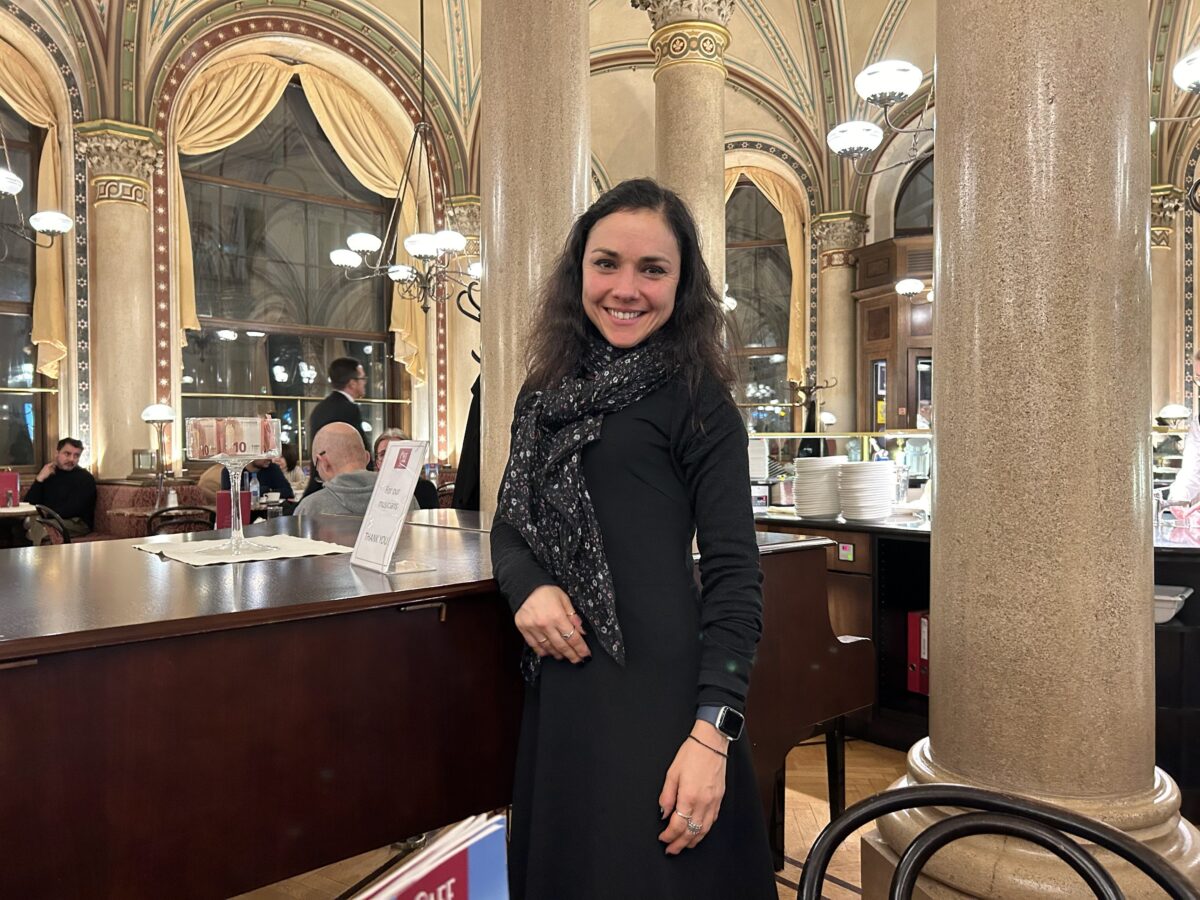
Building Trauma Informed Leadership – A podcast interview with Tom Ellison

Why Clear Primary Tasks And Brave Authority Transform Children’s Homes

Clear leadership in children’s residential care starts with one deceptively simple question: what are we here for? Defining the primary task sounds easy, yet many leaders default to jargon or vague mission lines that can’t guide daily choices. When the work is complex and emotional, simplicity is not a luxury; it is a lifeline. A crisp, jargon-free description of the primary task anchors decisions, training, and supervision. It shifts a home from reacting to crises toward intentional, therapeutic care. This clarity also helps new staff, who need a map more than a manifesto. When people can repeat the task in a sentence, they can align their actions to it, whether they are mopping a floor, writing a risk plan, or de-escalating a distressed young person.

Alignment is the second pillar. Without a leader who actively aligns the team to the primary task, people drift. External forces like regulation and internal pressures like fear of not being liked pull focus away from children’s needs. Alignment is not a poster on the wall; it is a constant practice of naming the task, linking daily work back to it, and correcting drift. Good leaders repeat the “why,” set clear expectations, and draw straight lines between roles and outcomes. They accept the risk of being unpopular when decisions must favour safety, development, and enduring transformation over short-term comfort. Alignment turns a group of individuals into a team with shared direction.

Supervision is where alignment is maintained and understanding is grown. Two core functions guide useful supervision: alignment and understanding. Alignment asks whether work still points to the primary task. Understanding explores what pushes people off course, from regulatory anxiety to unconscious responses evoked by traumatised children. Staff need help to sort what belongs to them from what they have absorbed in the work. Leaders who can name projection, transference, and countertransference in plain language remove shame and increase capacity to think, not just feel. When anxiety flows up the hierarchy and containment flows down, teams feel held and can hold children better.

Risk management deserves plain talk too. In step-down and high-risk settings, the first task is safety. That is not opposed to therapy; it is the ground therapy stands on. Clarity about who is responsible for whom, minute by minute, prevents gaps that harm. Culture matters more than documents. A risk plan no one uses is just more paper. When staff understand the risks, the authority they hold, and how to handover responsibility cleanly, young people are safer, and the team is calmer. Framing the work in the language of safety, not only risk, also fits the therapeutic aim: to help children enjoy and succeed in the world, with relationships used consciously to support enduring change.

Practical training sticks when it moves from concepts to action. Many workers already know what “good” looks like. The real question is what gets in the way. Imposter syndrome, fear of authority, and regulatory preoccupation often block people from doing what they know. Effective leadership development surfaces these barriers and sets small, concrete next steps. Ask four questions often: what is the primary task, what does it look like when we deliver it, what gets in the way, and what is the plan? Answer them in simple words, review them in supervision, and tie them to daily practice. Balance doing with thinking. That balance is the heart of authentic leadership, and it is how homes move beyond buzzwords to real, lasting change for young people.

You can listen here:

You can watch here:

About Tom:

Tom is an accomplished Consultant and leadership trainer with over 30 years in children’s residential care, specialising in innovative leadership and mental health support for young people. Through Elevate Professional Development, launched in 2025, he delivers UK-wide workshops to strengthen care leadership. With 20 years of boardroom experience, Tom has consistently driven strategic leadership and service transformation. Holding a BPS-approved Psychology degree, a Master’s in Psychoanalytic Observational Studies, and postgraduate qualifications in Management and Strategic Management, he blends academic and practical expertise. Currently, he serves as Non-Executive Chair at AMMA Childcare Ltd, Non-Executive Director at Cedars Childcare Ltd and Empathy CIC, and advises the leadership teams of a number of organisations in the third and independent
sectors.

Related Podcasts:

If you liked this podcast interview with Tom, I anticipate that you will also like:

Simon Benjamin’s podcast interview about the importance of leadership alignment in trauma informed organisations:

You will also like hearing from Lynne Peyton on why the culture of an organisation flows downhill:


Transcript of the podcast interview with Tom:

Colby: 0:00

Hello and welcome to the Secure Start podcast.

Tom: 0:05

If I describe to you something you already know in a way you’ve not heard before, the rest of the programme is to explore why you’re not doing it. Dealing with imposter syndrome, for example, is that can be a barrier to people fully taking up their role and taking up authority. The job of leaders is to help people. In this 90 minutes, I want to give anybody that attends something that they can walk away and use. The more jargon you can deploy, the smarter you look. Whereas I try and go the other way and say, Well, let’s try and express this really simply. What does a good outcome look like after a residential experience? Well, you would want those children in adulthood to be able to enjoy being in the world and to succeed in whatever form they choose to succeed. Is once we’ve got clear about primary task, what are we here to do? The thing that naturally follows from that is alignment. Without a leader who’s clear about the primary task and who is actively aligning people to the primary task, people will end up aligned all over the place. An essential quality of leadership is to align the team to that primary task. That you could have a feeling that you don’t have a valency for, it’s not yours. You picked it up from one of the children. If you don’t understand that, if you’re not helped to understand that, you might think it’s you. Then in an effective organization, the way I describe it is anxiety feeds up through the system. And what should be coming back down is containment, is containment. Processing the anxiety, metabolizing the anxiety and thinking with people.

Colby: 1:42

Hello and welcome to the Secure Start podcast. I’m Colby Pierce, and joining me for this episode is a highly experienced social care consultant and leadership trainer. Before I introduce my guest, I’d just like to acknowledge the traditional custodians of the lands that I come to you from, the Ghana people of the Adelaide Plains, and acknowledge the continuing connection the living Ghana people feel to land, waters, culture, and community. I’d also like to pay my respects to their elders, past, present, and emerging. My guest this episode is Tom Ellison. Tom is an accomplished consultant and leadership trainer with over 30 years experience in children’s residential care, specializing in innovative leadership and mental health support for young people. Through Elevate Professional Development, launched in 2025, he delivers UK-wide workshops to strengthen care leadership. With 20 years of boardroom experience, Tom has consistently driven strategic leadership and service transformation. Holding a BPS-approved psychology degree, a master’s in psychoanalytic observational studies, and postgraduate qualifications in management and strategic management, he blends academic and practical expertise. Currently he serves as non-executive chair at AAA Childcare Limited, non-executive director at Cedars Childcare Limited and Empathy CIC, and advises the leadership teams of a number of organizations in the third and independent sectors. Welcome, Tom.

Tom: 3:46

Thank you. I’m quite humbled by that introduction, so thank you.

Colby: 3:51

Well, it’s all you. Yeah. People um often comment about uh having it’s a weird thing having your your professional life, I guess, um reported on in in that way. And uh a couple of people said, Oh, I’d like to meet that person, you know. It is yeah, he sounds impressive. Yeah, and for other people it’s just very awkward um to to sit and and hear that. But yeah, you know, um, but it is a it is an impressive career, and I I should say uh at the outset, um, I approached you after seeing um a post on LinkedIn about uh psychoanalytic leadership, uh no psychoanalytic supervision workshops that you were delivering. Um, and I thought, oh, that’s that’s right up my alley to have on uh here on the uh Secure Start podcast. So um I yeah, I approached you and here you are.

Tom: 4:55

I’ll try and be suitably smart and impressive.

Colby: 4:59

I’m sure it’ll just come naturally. Um before we we we really get into it, I just thought it’d be interesting to hear a little bit more about you, how you came to be um working in in this area, and um yeah, what you do, what you what what you were you do in an average week or an average month uh as part of your work.

Tom: 5:27

Okay. If I if I start at the beginning, I start sort of it’s easier to lead in than go backwards. So um I was interested in psychology as a teenager. Before the internet, there was a bookshop uh in my hometown where there was a psychology shelf, and I’d go there and peruse the books and eventually buy the books. And um, so I was interested in psychology from 13, 14. Um I ended up going to university and doing a degree in psychology, traveled a little bit, and then when I got back, was kind of determined I want to use this degree to do, I want to work in that field. So um I did a little bit of work in the youth service and then saw a role as a residential, I think it was called residential social work back then. That’s a protected title now, so you can’t call it that in the UK, usually called residential care workers. But I um I applied for that job not really knowing what it was I was implying for. It sounded interesting, and found myself working in a psychiatric, a child adolescent psychiatric unit within a residential school. I think I was 22, 23, something like that. Yeah, so there was not much age difference between me and the oldest young people in that service. I think there’s like three or four years between us, something like that. So I did that for I think I was there three years, and then uh being an ambitious soul, I wanted to progress and move forward. So I took up a role in a charity called the Together Trust on Greater Manchester and worked there on an offer 10 years. And then while I was there, um I started a master’s program with the Tavistock. As a result of that, I kind of branched into working for an organization called SACS, which you might have heard of. Um, and SACs were delivering treatments, treatment programs, residential treatment programs, specifically for younger children who’d experienced sexual abuse and who in the main were demonstrating sexualized behavior themselves. So I was there for five years as a deputy director, and then I went to Britt Mellencare as a director. Um, that was more forensic, that was more awful lot of children who were some of them were a risk themselves, some of them were a risk to the community. So uh a lot of risk management involved in that role. So I did that role, and then I went to be the director of a therapeutic community. So I was uh director of community at Thornby Hall for roughly two years, and then uh went to an organization called Young Foundations, which was um not in a good state when I arrived. And um myself and the leadership team there developed Young Foundations to be a um the UK’s largest provider of tier four step-down services. So for people watching in other countries, tier four step-down meaning uh children who’ve been in patients. So children who’ve been in patients in hospital, usually on locked wards, we would offer pathways back into the community. But again, a lot of risk management, a lot of clinical support, psychiatry, clinical psychology, psychotherapy, sometimes things like OT and speech therapy as well. Um, so I was in the leadership team of that organization for eight and a half years. I left there late 22. I was going to go, I was I was talking to an organization about joining them as a chief executive. And halfway through that process, I kind of realized I wasn’t feeling it. And thinking I’ve just come away from eight and a half year stint uh in the boardroom, and I’m not sure I want to jump in to another one. And uh during that transition, I’ve been approached about some consultancy. So um I just followed that up and I ended up consulting to a local authority two days a week for initially. I think I was meant to be there for 12 weeks, and it went on for 18 months, and that was helping develop their residential services, which were pretty good to be fair. The governance, the governance needed work, but actually the work going on at the coalface was was was very good, actually. Um, and from there that built out into a consultancy. Um, and then this year um I’ve started to deliver leadership programs and leadership. Because what I found what I was doing in the main, particularly the non-executive work, is I am coaching and advising leaders. So I’m coach and advising the board, or I’m coaching and advising the senior management team. And so and I’ve always been interested in that space. I I ran development programs internally. Back when I was at SACS, I was involved in the development of uh uh a degree program in therapeutic childcare. So I’ve always had a leaning towards people development and um and so the the the leadership stuff that I’m delivering now combines that background in operational leadership with some of the stuff that are picked up at the TAVIS stock and working in organizations that had a psychodynamic, if not psychoanalytic, leaning. So now that so the the supervision training that you saw, uh I delivered, I delivered one of those last week. And the the the early part of the day is about leadership in a way you might expect to see on a an MBA program or a leadership training. So there’s there’s some basic building blocks that need to be in place, but then as we move into the afternoon, there’s an awful lot of stuff that I think you would recognize as a psychologist and a therapist about um um projection and containment, transference and counter-transference splitting, the things like that that do crop up in the work. Yeah, that are thing if you’re an operational manager, it helps to see it, it helps to understand it. Um, I’m very um careful in setting boundaries about what are the limits to doing that kind of work. That the that so noticing you know transference effect in a key worker relationship is probably useful and helps you think about what’s going on and what the needs of the child might be and what support the staff might need, but it’s not therapy. And and so and so drawing those boundaries uh when you when you’re going into that area is I think is quite an important part of the work. So I think that’s the journey. So now I have a portfolio career now, so I do uh the leadership stuff through Elevate. I um I’m a non-exec director for three different organizations, and I and I consult. So um which is you know it’s always advisory. So you know I think I’ve been I’ve been invited to step into operational spaces before now, but I’m quite um I’m quite boundaried about that. And my my job’s to advise and help. It’s not it’s not to actually come and do the work.

Colby: 12:32

It’s interesting, isn’t it? It it does it it’s not dissimilar in some ways to how my own my own career is uh is kind of unfolding. I am still doing a lot of um psychotherapy work with children and young people who are recovering from multiple adversities. Um, but certainly uh that more consultant role to organisations and and supporting and as well as um uh supervision, consultant supervisor type roles has become more and more uh an aspect of my role and uh of my work, sorry. And I’ve you know, and I for example, I’ve I’m doing less and less training these days and moving more into the development of individuals and teams in a consultant and supervisory way, as opposed to delivering standalone training.

Tom: 13:31

I th I think I’m merging the two.

Colby: 13:33

So yeah, it sounds like it.

Tom: 13:35

Yeah, so so certainly the leadership program that starts in November. So I’ve developed a 12-month program, and a third of that program is coaching. So, so it the the the the training bit to introduce principles and concepts and ideas, and throughout that program, and and actually pretty much everything I do, I I emphasis the need to have some self-awareness or develop increased self-awareness through the program. And so I think I’m doing the same thing every time. I’m introducing some concepts and ideas that might be helpful in the leadership task, and then I’m exploring okay, what are the barriers to you engaging in this? Because the way I describe it is quite often in the training element, I’m telling people things they already know. Now I might be telling them in a way they’ve not heard it before, or describing it in a way they’ve not, or framing it in a way they’ve not heard it before, but I’m telling people things they already know. So the the purpose of the program then is okay, if I if I describe to you something you already know in a way you’ve not heard before, the rest of the program is to explore why you’re not doing it. And so which is usually it’s it’s internal stuff. You know, we we started um you know, you after your introduction, my reaction was the voice at the back of my head telling me that’s too impressive, that can’t possibly be it. And so and and dealing with imposter syndrome, for example, is that can be a barrier to people fully taking up their role and taking up authority. And I think for me, the biggest issue that I repeatedly run into in leadership situations is uh um people being hesitant to take up the authority that goes with their role. You have to take the risk. Yeah, I think the the way I frame it is you have to take the risk of not being liked. To to take up leadership fully, you’re risking uh rejection, you’re risking losing connection, you’re risking, you know, if you if you put the needs of the organization first, you are risking quite a bit. And I think that’s where people hesitate. So they’ll they’ll get into a leadership role, they’ll be doing the things they’re supposed to be doing, that we’re going to the meetings they’re supposed to be doing, that we’re sitting in supervision, for example, which you’re not we’re going to talk about. So you’re you’re acting out the things that you’re supposed to act out in that job, but maybe what you’re not doing is taking up authority, which is which is embodying the responsibility, accountability, and authority that sits with the rule.

Colby: 16:18

And that would be an interesting thing to explore um as to why why they just hearkening back to a it was almost like remember the old movie uh Harry Maguire when he when he was it Harry Maguire? No, that’s that’s the Manchester guy. Um what was it? It was a Tom Cruise movie. Um with the Jerry Maguire. Jerry Maguire, there you go. Some people might edit that bit out because I’m gonna leave it in because of course Harry Maguire plays for Manchester United. You’re not far from Manchester, he scored the head of winner, much maligned former captain of the club. Anyway, so I’ve had him on my mind a little bit today because one of the sons is a massive Manchester United fan. Um remember in Jerry Maguire, he bit the his the the love interest is in a gathering with some um with some women and and uh and he he turns up and starts you know uh making all sorts of statements about um you know his his affections towards her, and she says, You had me, what did she say? You had me at the door or something similar like that. I had exactly the same uh reaction in my own mind then when you when you said about people um uh telling people what they already know, which I think is a really good start in any training endeavor or any supervision endeavor, but then moving on to talking about why they’re not doing it, which is you know akin to saying what’s what is getting in the way of you um being able to actually practice those things that you already know. Um you mentioned also a number of concepts a little bit earlier that um I guess most listeners or many listeners to this podcast would recognise as being concepts or constructs that are related to psychoanalytic thinking and psychodynamic thinking. I’m just wondering uh about other influences on your peer, uh on your sorry, on your career uh progression. Are there uh people important people or or important theoretical frameworks?

Tom: 18:40

Uh in terms of theoretical frameworks, I’ve cycled through all sorts of things. So so I did the psychoanalytic thing quite deeply in in the noughties. That that you know, I did I did a master’s in psychoanalytic observational studies and went into analysis myself, and I went down the avenue of training to be a psychoanalytic psychotherapist and then realized I’d probably be a really terrible one. And turned and and by that point my my day job had developed into you know, I was I was I was in roles with director in the title. And so I thought, well, actually, I enjoy being a manager, I enjoyed being a director, I enjoyed um helping people in that way because I think that’s what leaders do. I think leaders help people, and and I usually add a caveat to the end of that, and help comes in many forms, so so helping people sounds uh lovely, it sounds really pleasant that you know I go to work every day and I help people, but sometimes help involves a difficult conversation or or even a difficult process, and so um I kind of arrived at at the well, I I think the job of leaders is to help people, and um but on that journey I I’ve been influenced by all sorts of things. So um yeah, I’ve studied uh management and management studies at quite an academic level, uh, which is quite dry. Um but I’ve also picked up a lot by just doing the work. I think early in my career, um, when I was a practitioner, when I worked with the children, the it seemed like attachment theory was a new idea. So I remember I’d been in the work for five or six years. I’d I’d been working directly with children in residential settings in their homes for five or six years, and and then there was suddenly I was put on the list to go on an attachment training, which I got very excited about. I thought, oh, this is great, this is this is exactly what I want to be doing. And I went on a day of attachment training, and I learned about avoidant and ambivalent attachment styles and disorganized attachments, and I learned about John Bowlby and Mary Main and the strange situation test. And I did this, it was a very full day, and I really enjoyed it. And when I went back to work in the home the next day, somebody said to me, So what are you gonna do different? And I didn’t have an answer. I really I kind of thought, okay, I’ve I’ve I’ve picked up some jargon, I’ve picked up some frames and ways of looking at things, but I didn’t really understand what I do with this, how do I apply this? You know, and so when I’m developed training, even if I’m doing, I do some 90-minute webinars that I tend to give away. But even on those, I’m very mindful, I remember that experience, and I’m very mindful of in this 90 minutes, I want to give anybody that attends something that they can walk away and use in their in the management and leadership tasks, something that okay, I can use that. So I I try to go very quickly from conceptual theoretical stuff to an invitation of okay, how might you use this? And uh I think pretty much every training that I do ends with tell me how you’re gonna use what you’ve used today. And I go around the room and get people to tell me how they’re gonna use it because it is it is that um application of the training rather than uh you know people can go on a training and be thoroughly entertained, and it makes no difference whatsoever in their career. And and it and training managers tend to measure training in that way, they’ll hand out a feedback form and you know you put smiley faces on and say how many, you know, whether you get a smiley face or a sad face dictates how good or not the training was. And I’ve always struggled with that a bit because I think surely the training, the the the value of the training, how good the training is, is does it actually change what people do in the workplace? And is that is that change enduring? Are they are they working in a different way 12 months later? Or is it just something they pick up, deploy a little bit of jargon in the workplace to show that they’ve been on the course and then go back to doing how they did things all along?

Colby: 22:59

I think I well, there’s there’s a lot in that. I think um the way I used to put it is that um training often um was focused on what people needed to know, uh, but didn’t really offer much in terms of what people needed to do. And there’s still plenty of training, I think, that is like that, that is very much knowledge oriented, right, and uh lacks um the uh it lacks um the provision or the delivery of um of a way of um turning your mind to how you’re going to implement this knowledge that you’ve been gained, you’ve gained. And I think the other thing that um you just said there right at the end is about in 12 months’ time people may they may have made a change but go back to how they’ve always practiced, or they may never have even made a um a change at all. They just had new concepts and and new ways of perhaps thinking about the work, which in itself is not a bad thing. Um, but there’s a there’s a statistical phenomenon, phenomenon, phenomenon. It’s getting late in the day here. I’ve been talking to young people all day. Um, there’s a statistical phenomenon called regression to the mean. And regression to the mean really um is is a phenomenon that that relates to in any change endeavor, you probably already know this, so this is just for the for our listeners um who haven’t heard it, but in any change phenomenon or change process, people uh will find it hard to sustain the change over time, and they’ll and they’ll often end up back where they started again over time. It’s really difficult to change habitual uh behaviors, including, for example, the way we relate to other people. And um, so that’s regression to the mean. People some people don’t change those who do, some people can mobilize effort to change their approach, but they’ll um but a good proportion of those will end up go reverting back to just performing in the role uh how they always have. And that that has brings me back to something that you said earlier about starting with where people know. Because it’s my view that if you start with where people with what people already know and already do, you you you cut out this phenomenon, or you have your best chance of um cutting out this phenomenon, and rather just focus on those aspects of the way in which people perform in the role that are um therapeutic, that are helpful, that are um able to be sustained over time. And um the the further importance of that, notwithstanding that it’s easier for people to keep doing the things, perhaps emphasizing certain things over other things, but keep doing the things they already know and do, um, is that it’s not as jarring for the young people because our young people uh can you know are very sensitive to inconsistencies and uh and they you know it does they don’t always react or respond well to them those inconsistencies.Tom: 26:27

I think you’ve said a lot now, so I’m trying to pick up the the things you’ve said, but the the the the thing about uh regression to the mean uh might mean that someone engages in a training, they change their behavior for a bit, and then after 12 months they’ve gone back to where they were before.

Colby: 26:45

That’s right.

Tom: 26:46

The the thing that I try to the way I try to address that is if you can change the way somebody sees their job, their role, and what their role is for, I think it’s less likely there would be that regression. It might happen from time to time, but it’s easier to snap them out of it, if it particularly if the supervisor can see it. So, for example, um on most of the trainings I do now, I’ll introduce primary tasks at the beginning of the training, which an idea from beyond. So from that kind of psychoanalytic, psychodynamic movement. But the the fundamental question, well, what are we here for? What what what what is the task that we’re here to do? And I I never cease to be surprised that in certainly in the UK, if you ask a the registered manager of a children’s home, and they might work within an organization that that uh builds itself as psycho uh as therapeutic. We’re therapeutic, we worked with therapeutic model. And if you ask a manager of a home, okay, what’s the purpose of your home? What are you here for? I’m always taken aback by how vague the answers are. There’ll be a bit of jargon thrown in there, it’ll be a bit vague. Words like nurture get deployed and therapeutic and so on. Without, and if you drill in to start drilling into those words, well, what do you mean by nurturing? And what do you mean by therapeutic, they run out of rope pretty quickly. And that’s not their fault. That that I think that’s I think one of the things in uh professional culture is we use jargon to distance people, we use jargon to try and you know um embellish our own understanding. So the more the more jargon you can deploy, the smarter you look. Whereas that I try and go the other way and say, well, let’s try and express this really simply. Because somebody who if you deploy a lot of jargon, how do you help somebody who who started in the work last week? And so um we spend on pretty much every training I do, the first hour and a half is what’s the primary task associated with your role? So if you’re a home manager, that a home represents quite a discrete kind of system. Uh yeah, you it links to a wider organization usually, but it’s quite a discrete system. So you say, okay, what does this discrete system do? What’s what’s the purpose of it? What does it do? I think if you distill that into a sentence or two sentences that are clear and free of jargon, it’s enormously helpful because I don’t think that leader can if they if they really commit to the task of okay, let’s let’s develop a primary, let’s develop an expression of the primary task, a couple of sentences. It’s very difficult for them to go back to where they were before because they see their work differently now, and there’s clarity about it. And and one of the things when I’m asking people to do that, I say, look, it’s unlikely you’re going to do this at the first time of asking. So you sit down. What does okay? So you’re the manager of a children’s film, and it sits in an organization and on the website it says it’s therapeutic. And maybe there’s some clinicians in and out of the service. Okay, write down in a sentence or two sentence what. What’s the primary task of that system? Um, I’ve never known anyone who just do it. I I they’ll they’ll write it, they’ll edit it, I’ll challenge it a bit, they’ll go back. And I and I quite often say, look, you’re gonna you probably if we did a training on a Friday, if you come back to that primary task on Monday and read it again, it won’t be right. It’ll need to be distilled, it’ll need to be worked on until you’ve got absolute clarity of what are we here to do. And I think that that the that avoids the regression to the mean thing. That if you if you’ve got actually, I’m really clear about what I’m here to do and and how I do it. So I use a phrase, um, it’s quite often people make the claim, well, we’re here to do therapeutic work with children. And the place that we get to is something along the lines of, okay, so you consciously use relationships in order to affect enduring transformation in children. Okay, there’s some big words there, but they’re not jargon. So you can’t it’s the conscious use of relationships because if you children, you know, a teacher in a classroom probably wouldn’t make that claim. They’re there something to do with uh knowledge and development and teaching. And a teacher can have a relationship with a child that is actually beneficial and helps the child to grow and develop as a human being, but the teacher isn’t consciously using that relationship. And so if you’re delivering therapeutic care residentially, the I try and boil it down and say, okay, what is it that you’re doing? Okay, it’s a conscious use of relationships. So you’re conscious, you’re thinking about the relationships. You’re uh and in order to um deliver, or words of that words of a similar word, uh, enduring transformation in children. Because again, the the enduring transformation bit, and I had a debate about this last week, is I’ve come there are people in residential childcare who believe their job is to make the children behave. So that’s so the job is to make the child. So so here’s a child behaving badly, you know, they they live in a home for 12, 18 months, and then they’re not behaving badly anymore. Now that is a good outcome. I wouldn’t I wouldn’t dispute it, that’s a really good outcome. But it’s probably because there’s some other transformation that’s gone on underneath that means the behavior’s not necessary anymore.

Colby: 32:27

Yeah.

Tom: 32:28

And so it it certainly in residential work with children, really thinking about what is it that what what is it that makes a difference? What do we do? What are we aiming for? And what do we use out is the conscious use of relationships. And the trans and it’s transformation because it is literally on a neurological level. You’re looking to change synapses and pathways in the brain, in order that I think I’ve got a slogan somewhere that it’s about um that they can enjoy and succeed in the world. Because okay, what does a good outcome look like after a residential experience? Well, you would want those children in adulthood to be able to enjoy being in the world and to succeed in whatever form they choose to succeed.

Colby: 33:16

That’s also an imp a difficult question for people to answer. Um, while you’ve been talking, I’ve been just thinking, yes, yes, yes. I love starting out with what are we here for? With the primary task. What do we do? Because I think what happens in social care and and various aspects of child protection endeavor is that the work is so confronting or you know hectic in in some way or or potentially even overwhelming, is that people stop thinking and just and do. And that and once you can get them, as you said, once you can get them to start thinking about the work that they do, that then that stops them from just doing it in a almost in a procedural way, which is where you get that problem of them going back to or or continuing to do what they’ve always done. So I love that idea. I think you’ve mentioned three things. Is is that that firstly getting people to think about what is the primary task or what is what is the core task of our organization. What do we know, and what what is getting in the way of us that delivering upon that. I think there, if I’ve heard you right, there are three really core aspects of of um training that you deliver in in these in this sector.

Tom: 34:48

I think I think the other thing to acknowledge is there are forces that will push you off task. So so in the UK, um you don’t have to talk to anybody involved in residential childcare for very long before the conversation turns to Ofsted and regulation.

Colby: 35:04

Yeah.

Tom: 35:05

And I and regulation is important, and managers in particular, registered managers in particular, and responsible individuals, which are statutory titles in the UK, um, they would be very ill-advised not to pay a lot of attention to regulation. However, that’s not why we came here. So, so in terms of and I think that has taken over a little bit. So I you you’ll see it on you know on LinkedIn, managers will put their Ostead rating now in their title, you know, outstanding or you know, good rated manager with Osted. And I’ve sat in interviews with managers where they clearly felt what I was looking for was somebody who can deliver very good Ofsted outcomes. Because the rate uh outstanding good requires improvement or inadequate. So that they’re rated. And the the ratings have consequences, you know, they have they have consequences for the organization, and sometimes they have consequences for the children, and so that is a very real, very powerful force acting on the question of what did we come here to do? And then there are other forces as well. I think that’s the one at the moment that I feel um eclipses occasionally the best interests of the children because the the managers become so preoccupied about their Ostead rating that they will become concerned that that a child that they might be caring for who’s struggling and um acting out or running away or you know uh pre presenting behavioral challenges, they’ll become concerned that that might impact their Ofsted rating.

Colby: 36:53

Yes.

Tom: 36:54

Now, actually, that’s not what we came here to do. We didn’t come here to achieve outstanding Ofstead ratings, we came here to um help children in a transformative process using relationships, and and sometimes there is there is and I know if there’s any Ostead inspectors listening, and I had a debate with one recently, they would say uh there’s no inconsistency. And I think I think you can have a situation where there’s no inconsistency, but I think that force is so uh dominant, it’s shaping the thinking of people in residential childcare in the UK.

Colby: 37:31

Yeah.

Tom: 37:32

Occasionally it eclipses the consideration of what does this child need from us?

Colby: 37:38

It’s one of those unintended consequences of um of regulation. Regulation is important for ensuring public safety. There’s and uh you you may not know this, but until the middle of last year, I’d spent 14 and a half years in various roles, right through to chair and deputy chair positions in our own national health practitioner regulation scheme in the psychology part of it here in Australia. So I I’m a believer in in regulation, but it needs to be light touch and it needs to ensure that um we don’t end up um scaring our you know our our service providers into becoming risk-averse and preoccupied with with um with regulation. And and you know, I think there’s uh including guests that we’ve had on this podcast, and well a number of guests on this that I’ve had on the podcast would agree with the notion that that probably the most important role of um a responsible individual or a leader in an organization in in order to achieve the therapeutic task would be to turn their mind to staff well-being, the people who are actually delivering services on the floor. And that um and that yeah, the I my concern would be who is facilitating that outcome where the staff are in the best possible place to be delivering therapeutic care if the responsible individual managers are so concerned about um regulation.

Tom: 39:24

Yeah, I think don’t get me wrong, regulation is a power for good. And so, in and if you look at the UK in the 1970s, the chances of being abused as a resident in a children’s home were incredibly high. It was it was almost a one-to-one relationship. If you’re in residential care, you’re gonna be subject to some kind of abuse, and I don’t think that’s the case anymore. I think I think I think when abuse happens in children’s homes, it’s unusual and it’s almost uh headline grabbing when it happens.

Colby: 39:54

Certainly is.

Tom: 39:55

And one of the things that’s contributed to that journey, that improvement without a doubt, is regulation. I think I’m I’m quite a big fan of the notion of authentic leadership. And a principle of authentic leadership is balance. So so the a leader leading, I don’t and I don’t think it’s the regulator’s fault that that um providers have become preoccupied with um regulatory outcomes. I I I think they’re looking for something to measure how good or not they are, and the regulator gives them a convenient shorthand for whether they’re good or not.

Colby: 40:31

Well, the work is tough, isn’t it? So you don’t get that many pats on the back necessarily. This actually that’s interesting, just quickly as a segue, in terms of what people find are easy and difficult to describe about the work. And you were mentioning that um that people in your in your experience um find it very difficult to describe the primary task just off the bat, if they’re asked. What are we what are we here for? You’d think that that was the easiest thing to say. Um I was go thinking of asking you what do they find easy to describe. I I’ll just let you know from my experience when I when I’m working therapeutically um with parent clients or or with um when I when I’m engaged, sorry, with parent clients or with with teachers of children that I see or with the uh caseworker from the statutory child protection organization, I’ll often say to them uh what how will you know that the service I’m delivering has made a difference? So what what are the positive things? What are the growth things that you you are looking to see? And and they again they just can’t they they really struggle to answer that question. Whereas they’ll they’ll easily tell you what all the problems are. They’ll very, very easily tell you the problem. And I think that has a bit to do, well, I know from a psychology point of view, it has a bit to do with how our thinking and problem solving, uh, how much our thinking is devoted to problem solving versus um acknowledging or paying attention to the good stuff.

Tom: 42:22

There was a there was an event in the UK last month, uh it was a very good event actually, but there was a there was an event about um it was for commissioners, so those who are commissioning and paying for children’s residential services and focusing on well, what do we mean by therapeutic? So if we’re commissioning something and it’s therapeutic, what is it that we’re commissioning exactly? And I got into a conversation with the commissioner there about tier four step down, which children coming from um sectioned under the Mental Health Act and being discharged into the community. And the uh the commissioner was saying, well, we want we want to know that the children are getting sessional therapies. And I said, Well, maybe I think you know, having run you know an organization that that does tier four step down, my primary concern was always risk management. It was the the top of the list is are the risks being managed? Because the the the children, you know, they found themselves sectioned under the mental health app, usually for the risks they pose to themselves. You know, and uh and they’re making a transition from something where the boundaries were very solid, as in locked doors uh and occasionally pharmaceutical boundaries, um, into uh an environment which by its definition is going to be a bit looser. And so the conversation there was I think the top, you know, if you’re making a list of what what do we want from a provider of tier four step-down services, I think that the the the number one isn’t therap, you know, sessional therapies with a clinician, although it might be on your list, but the number one needs to be robust risk management. And and that again, it was that was a version of the conversation of what are we here for, or or in that case, okay, you’re here to commission what is it that you’re commissioning, and how do you work out what it is that you need? And um I think that going back to basic principles um in whatever you’re doing is incredibly helpful. And the way you frame what are we here to do is really does dictate the outcomes. So if you’ve got a clear, I think if you’re a sessional therapist and you’re, you know, you’ve you you’ve got a therapy room and a child is coming in for therapy, in a way it’s hard to lose sight of what you’re there for. It’s kind of suggested by the space and the the time limit and the rest of it. If you’re a residential worker in a children’s home and you’re driving kids to and from appointments, you’re filling in paperwork, you’re mopping the floor, you’re preparing a meal, you’re cleaning the toilet, you’re going on a training course, all the things connected with that, I think it’s much easier because there’s so much variety in the task. It’s much easier to lose sight of well, what am I here for? You know, but how how do you align um and align align is another word I’m fond of using, but how do you align mopping the floor and cleaning the toilet with um transformational change through relationships? You know, it’s it’s easier to lose sight of it.

Colby: 45:44

Yes, uh, yes, that I think that’s that’s really quite interesting. And um I was also uh while you were talking about um risk management, I was I was just I was one wondering if you would um briefly you know kind of describe what you mean by risk management as a as a really fundamental aspect of the of the role.

Tom: 46:11

I think um, you know, if you think about services that look after children who present a risk to themselves, the risk management hits on a number of layers. So so you you you would want staff who are clearly orientated to risk management. And I know that sounds silly, but it’s not just the manager task. So I think again, in children’s homes, one of the things that happens is a manager will write a risk assessment, the staff will peruse the risk assessment, particularly if it’s full of jargon, it won’t go in. And then they’ll go about their business having forgotten about the risk assessment. So a lot of risk management stuff is cultural. It is about people understanding that they’re responsible for this child, understanding what the risks are around this child, understanding the sort of things this child might do and acting accordingly. And and the notion understanding uh the authority that sits with your role is important. So it’s so you don’t get to say, well, it was it was someone else’s. I thought someone else was watching that child, for example. So in in terms of risk management, there’s a link to governance, but but um who is doing what and when, who is responsible for what and for what period, and when is it handed from one person to the next? And that I know that sounds really simple, but where things go wrong, it’s usually where that that chain breaks down. So who was responsible for uh a young person who perhaps presented risks in one moment to the next? And in children’s homes, that stuff is complicated because you’ve got lots of moving parts and you’ve got things that might happen that pull you out of shape, like the telephone ringing or the doorbell ringing or another child drawing resources away. And so um it is very um, it sounds very basic, but it’s about who is doing what, where, and when, and who’s responsible for what, and and is the clarity about that on the ground? So if I come into a home and I am responsible for, and there’s I don’t know, three or four, five or six children there, and I’m responsible for the safety of one of those children because they’re being funded for one-to-one care by the local authority for reasons of risk. I need to understand that and it needs to be clear, and I need to make sure that if I need to step away from that child, I’ve clearly communicated with one of my colleagues and they’re going to step into the space. And so it’s it’s very um it’s very operational and it’s not that connected with um some of the psychoanalytic and psychodynamic or even or inverted commas therapeutic stuff that that we might might also discuss that that child needs. But fundamentally, that child needs to be safe, and and to create the safety, everybody needs to be clear who’s looking after that child and who’s responsible for their safety moment to moment.

Colby: 49:11

So I’m getting excited now because I was gonna say, well, I’m just a simple person as well. And I uh well, maybe not as well, but I’m a simple man with a simple message. And when you were talking about risk, the the little the mischievous part of me was thinking, are we talking what are we talking about with risk management? Are we talking about how we you know manage actual physical risks or or procedural risks? And I think there’s there’s some of that in it, but are we not also talking about safety and psychological safety, physical safety? And I think yeah, I think the way we talk about these things is um really important because I think a conversation that that uses the safety language over the risk language probably aligns better with the um the primary task that you that you’re referring to earlier. And um yeah, it uh the therapeutic task as such is to is to keep children safe, to do what we we as adults who are responsible for their care and management, uh what we what is expected of us uh to keep this young person safe, which is you know you can take it right back. It’s it’s it’s it’s parenting 101, isn’t it? Really? You you have a child, you you have a child as a couple, and um uh and when that child is in your care, the f you gotta one of the first things you gotta do is ensure that they’re safe at all times, both uh emotionally, psychologically, and physically safe, and and that their their other um primary dependency needs are being met. But um yeah, I I think the language, as I said, I love alignment as well. I think alignment is is a key construct in this area and and not well um used or thought about. I mean, I think it in in our work in social care and child protection, I’d love to see a lot more thinking about the work happening and and and to the extent that there’s a lot more thinking about it, I’d like to think a lot that there’s a lot more alignment.

Tom: 51:31

Um I think I think on alignment like after a visited. If I’m doing and it is pretty much true of every leadership training, do whether it’s supervision or whether you know a full leadership program, is once we’ve got clear about primary tasks, what are we here to do? The thing that naturally follows from that is alignment. Because if you think, okay, I’m working with leaders, so if a leader through some work we’re doing together, they reframe their primary task. And and again, it’s I’m not introducing them to new ideas, I’m just introducing them to a new way of framing it and thinking about it. It’s not, they’re not going to conclude, oh, I didn’t know that’s what I was here for. It would just be a okay, I’ve got more clarity of how I describe what I’m here for. And if you can describe it, you can you can repeat it. And so the the role of the leader is to then go and repeat that to the team. This is what I think we’re here for, and there might be a debate about that. Usually there’s not, but there might be a debate about that, and then over time, the job of the leader is to align the individual members of their team to that to that task. And I’ve I’ve got some graphs that are you uh graphs, diagrams, I’ve got some diagrams that are used in the training that that illustrate this very simply and very clearly. The idea of without a leader who’s clear about the primary task and he and who is actively aligning people to the primary task, people will end up aligned all over the place. There’ll be they’ll be the everybody will be facing in a different direction, slightly. Um, there might be some commonality, they’re looking in roughly the right direction, but they’re not looking at the same thing. And you know, I think that the an essential principle of leadership, as as distinguished from management, management’s slightly different, but as as an essential quality of leadership is to align the team to that primary task because that then becomes quite powerful. We all know what we’re here for, and we’re all coming into the workplace every day and moving toward that. You you end up leveraging off the power of the group.Colby: 53:41

Yeah. What what importance do you place on leaders um having regular supervision themselves and uh and and and training about uh some of these things that you’re talking about? What what importance do you put on that? How do you think about the importance of that?

Tom: 54:05

Well, as somebody who delivers this kind of training, I’d say it’s very important. Yes, of course, that’s the obvious in in terms of supervision. If you think about the frame they’re offered, so the frame is and we’ll we’ll take the manager of a children’s home, but it could be a school, it could be a residential school, it could be a fostering service. Um so you’ve you’ve got a manager who’s developed some clarity about their primary task, and their job is to align people to that primary task and move forward towards achieving uh those outcomes. For example, transformative change brought on by conscious use of relationships. So that’s that’s what we’re moving towards, and everybody’s aligned to that. Over time, what will happen is people, including the leader, will become misaligned. Other forces will like the regulator or like a crisis or you know, a lack of staffing, or um, or the children, you know, the the stuff that the children bring can pull you out of shape. And um so the manager’s own supervision should be helping them reflect on where they are, take stock of where they are, work out am I still advancing towards that primary task, or have I drifted off because I’ve been pulled out of shape by the things that just happen when you’re in these complicated roles. Um so I I would say that if somebody, if if you have a moment in time, it never happens. But let if you imagine a moment in time where you’ve got a team that’s arranged in a hierarchy, and the person at the top is perfectly aligned, and everybody underneath it is perfectly aligned. The supervision is the thing where you fine-tune, okay, that one’s slightly out of whack, so let’s bring that one in, and that one’s or that person there is struggling with something, maybe something coming from the children, maybe something coming from outside of the system from home or or wherever. Um the role of the manager’s supervisor is to help reflect and take stock and work out where they are. Um, and within that, I mean, the there’s lots, you know, there’s lots of different supervision models. There’s an awful lot. There’s, you know, seven-eyed model, there’s a four by four by four model. Um the in the old days in the children’s homes regulations in the UK, you got in England rather, in uh slightly different in Scotland and Wales. But in England, you you used to get eight points. It would guide you and say, right, supervision should take place monthly and they should cover these eight points. So it’s very prescriptive, it’s less prescriptive now, but it was very prescriptive at the time. But if I try and make things simple, so so you say, okay, well, supervision is about alignment, that bit of have we drifted away from the thing we came here to do? And if we have, can we can we correct? And the second part is understanding, and so so and so you’ve got alignment, are we moving toward the thing? And the understanding bit, understanding is a broad term, but is it’s it includes self-awareness, it includes understanding what are the things that are push pulling us out of shape or pushing us out of shape, it includes understanding what’s going on for the children, which which is uh, you know, I think I think um the trauma informed gets bandied around a lot in the UK at the moment as a way of understanding children that have had adverse experiences in their early childhood.

Colby: 57:37

Not just the UK, yeah.

Tom: 57:39

Okay, so but if you if you think whether you call it trauma informed or attachment informed, or you know, understanding that um it, I I think working with children who experienced trauma and neglect is not intuitive. It’s it’s so the intuitive thing is, and I was in a conversation with well, well, this works with my children, so why doesn’t it work with these children? That’s the intuitive thing. That the someone comes through the door and says, Well, um, he’s been that child over there’s been beastly and called me all sorts of terrible names, he should go to bed early, you know, which might work. Um, I wouldn’t use that at home with my son, but but but I I kind of get the thinking. I kind of get okay, um cause and effect. Okay, so we’re gonna use cause and effect thinking to try and shape the behavior of these children. It doesn’t work with children who’ve had really um unpleasant and neglectful and abusive experiences growing up in their early early life because the the bits of the brain that deal with cause and effect don’t work terribly well. And you know, they’re learning. Yeah, and you know, there’s I’ve got a slide in one of the trainings I do that’s that’s um it’s brain scans of the remaining orphanage kids, and I’m literally showing they’ve not got the hardware, so it’s it’s not even a question of the running different software, they don’t have the hardware that the gray matter is not there to do this cause and effect thinking. So, and I take that as an example of okay, understanding the effects of trauma, it’s not intuitive, you can’t just intuit it. Some people, some people, to be fair, uh are closer to it than others in just by their you know natural inclinations. But um you have to develop understanding to do this job. You you can’t you can’t just intuit your way through it, and so the second part of supervision is about understanding. So it might be understanding okay, what’s the neurology of a traumatized child like and why is it unhelpful to use sanctions and rewards, and ineffective actually, but but actually actively unhelpful. Uh, and what can you do instead? And but then the other part of the understanding thing is understanding yourself and understanding. Well, what what is working with these children provoking in you? Um, why is that? And actually, um to well, I I I because uh there’s a real issue in the UK with turnover in this sector. So so people come into the work and they leave the work. Now I think there’s various reasons for that. One one reason might be that organizations might the people at the ground floor and the people at the top of the organization are not well aligned, but I think a big reason that goes unacknowledged is working with these children can provoke feelings that are very uncomfortable. And without supervision that helps you sort out what is your stuff that was in you when you came through the door, and what are you picking up from the children? What’s or HR, what’s going into you? Um without being able to sort those things out, and I’m I’m trying in a very simplistic way, I’m avoiding jargon to talk about um personal and diagnostic counter transference. But the the I tend not to use those terms in the workplace, but um, I’m doing it for you because I know you’d get it. Yeah, it’s just the two of us, yeah. So the that um diagnostic country the the idea that that somebody else that you could have a feeling that you don’t have a valency for, it’s not yours, you’ve picked it up from one of the children. If you don’t understand that, if you’re not helped to understand that, you might think it’s you, you know, and and that could be it could be feelings of depression or anxiety, it could be feelings linked with abuse. And I think if you’re not helped to process that stuff and it’s strong enough, you probably you probably start to feel like you might be a bad person or a depressed person, or oh, this isn’t for me, and run away from it.

Colby: 1:02:05

It’s it’s that um oh vicarious traumatization in a sense, isn’t it? It’s well it not in probably in more than a sense, but um it’s what what we absorb, I guess, from the work, and um individuals and organizations absorb a lot. And we and we have individuals and organizations who work in this area who them who become very much like the clientele that they’re serving, um, probably in part because of a lack of space and time to reflect on what’s actually going on here, to think, you know, to think about the work. And I think there’s three things you’ve you’ve kind of mentioned which align very much, there’s that word, they align very much with um my most recent past guest, uh Adriana Diaz, talking about a program in Portugal, but uh supervision on that project aligns with what you’re talking about. At the very least, it’s about what’s going on for us, it’s about what’s going on for the children, and it and it’s what’s going on in the organization. That’s how I understand um what you’ve talked about, how aligned we are with the primary task, what’s going on for with the kids that we’re seeing, and what’s going on with us as well. And we need at least those three aspects of supervision. Um well that they are very important uh to um facilitate an outcome where we where we work closely to and with that that primary task that we have.

Tom: 1:03:49

I think like I say, I I I try and keep everything really simple. So it’s the the alignment thing is are you approaching the primary task? And the understanding thing is, well, what are the many forces that might be acting on you that prevent you from aligning with the primary task? That and that could be unconscious processes, it could be um, you know, stuff coming from the children. It could, it could be, you know, it could be, you know, for a manager the regulatory environment, it could be the organization and things that are going on in the organization that might not be, there might not be a straight line relationship with the children. There usually is, you can usually find uh if you if you’re working with children who are whose presentation is dysfunctional, that dysfunction will get into the organization and it mirrors up and down. And um in an effective organization, organizations organize themselves in hierarchies, and in an effective organization, the way I describe it is anxiety feeds up through the system, and what should be coming back down is is a is containment, is processing the anxiety, metabolizing the anxiety and thinking with people, because the the you know the the understanding bet is being able to think about what’s going on rather than just experiencing.Colby: 1:05:06

Is it too simple to say that um what is really required in this work, but whether it’s um delivering a quality residential care service or or a foster care service, um or or performing the role of a statutory social worker or statutory child protection worker, probably one of the foundational things or the things that are of most important in this work is to have the time to stop and think about the work and and what’s happening for you um and what’s happening in terms of what you’re delivering to um to your client group.

Tom: 1:05:49

I think it’s about being balanced as a professional. So you I I was someone once described me and said, Oh, you’re you’re a doer, not a thinker. Because in my early career, I kind of got ahead by getting lots done very quickly, and uh that hit home because I can’t there was something very real about that that comment at that time, and the inference was I wasn’t being particularly reflective, and I certainly wasn’t looking at myself. And um, so you you we get rewarded in career, in profession, for being doers, getting stuff done, and you know, the likes of us would speak up for spaces to reflect, spaces to think, spaces to understand. But you have to have a balance. So, my you know, critique of organizations that are very psychologically informed and perhaps work in a psychodynamic way is they will think and analyze ad nausea and not get things done. And things need to get done. So that it is that balance. And I wouldn’t say like for most organizations doing the work that I’m involved in in the UK, I’d say there’s probably more doing than thinking. But I have come across the opposite scenario where there’s an organization that’s very, very good at thinking, very analytical, very um smart, introspective, and so on. But they struggle to get things done, they struggle to turn that processing and thinking into activity that makes the world a better place. And so it it is, you know, I go back to that, you know, the qualities of an authentic leader. Um one of which is um so the the qualities of the authentic leader are self-awareness, balance, transparency, and morality. And the transparency and morality thing together are about I think that that’s there’s a big lot of talk in leadership circles about being vulnerable, you know, allowing yourself to be vulnerable. I think there’s a link between trans if you if you play in the space between transparency and morality, you probably get to vulnerability, but the balance bit’s important. The the balance bit is um we need to be able to think and we need to be able to do, and you can’t sacrifice one for the other.

Colby: 1:08:25

So I’d I’ve what I’m gathering from this conversation that we’ve had today is that you it if and again, I’m a simple man. Uh I like I like to simplify things a lot too. And people, what what Einstein, perhaps the cleverest man of the 20th century, some would say, uh, maybe the cleverest man ever said, if you if you can’t describe it simply, you don’t know well know it well enough.Tom: 1:08:52

Yeah.

Colby: 1:08:52

That’s uh apparently an Einstein quote. But what I what I what I’ve heard you say, if I can bring up four key things, which is which are what are we here for? What is our primary task? Yeah. Um what’s getting in the way of us let me put it a different way is what is what is the primary task? Um what what does it look like to be delivering on the primary task? What’s getting in the w way of us doing it, and and what what is the the the next steps forward to making sure that we are delivering on the primary task? Would it be too simple? And I I have a feeling I there’s an important point that you’ve made that I’ve one that I’ve missed out in that um little list.

Tom: 1:10:01

I think the but so yeah, I I I am frequently, particularly when I’m working with new people, it’s what are the two questions that I always package up at the beginning is what are we here for and what do you want? Because hopefully they align, but they might not. Um, but you know, so what are we here for? Which is about your role and your role within the organization, but what do you want is more personal, it’s about you as a human being and what your you know dreams and aspirations might be. I think when I okay, so what are you here for and what do you want? Hopefully those two align. If they don’t, then we can do some work to help them to align. It when when there is clarity about the primary task and that leader is going off to align other people, the thing that we’re thinking about when I say what’s getting in the way, what’s getting in the way might be practical, it might be resources, it might be capital, it might be all sorts of things. But quite often it’s something unconscious or or or if not unconscious, unacknowledged. So uh as I said earlier, I think I think a frequent difficulty that, in particular, new leaders have is they’re reluctant to use their authority because they’re worried that other people will regard them badly. Who do you think you are? Um, why you I I can remember the first time I gave direction to somebody, and I was about 22 or 23, I found myself by default leader on a unit, and it was a unit, um, with some children who presented risks. And I I just worked out by elimination, oh, I must be in charge today. And the the the fellow, I can remember his name, but the fellow that I gave direction to was in his 50s, and I fully expected him to either laugh at me or dismiss me, or who do you think you are? Um and I I said, could you and it was about risk management. I was asking him, could he go and supervise a corridor where I knew there was always trouble down there? So send someone down there. Um and he just very politely said, Yep, and went and did it. And and I but I was waiting for something to come back, something negative, some rejection. And I think that that all right, I was lucky enough to be very young when that happened. But I think at whatever point in your career you find yourself in a position where you’re delegating or you’re asking people to do things, you you’re and you’re asking from a place of authority, you’re not asking as a favor. Um, I think a lot of people hit a barrier there. And and there are people running around with director in the title who’ve not overcome that barrier. That um, and then in the in the you know, if you if you follow leadership thinkers uh on the internet, um, there’s a big thing, authentic leadership is that there’s a big movement around authentic leadership, but there’s a lot of stuff about vulnerability and empathy, the empathetic leader, which I think’s all good, but it has to be balanced with, and you have authority and you have responsibility, and in particular, if you’re looking after children where there’s risk, you absolutely have to exercise their authority. You can’t not, you can’t choose not to because it feels a bit uncomfortable. And so um that what are the obstacles, they can be external or internal, and and it can be about what what what’s what’s going on on the inside, and um of uh somebody when I when I was in my early days as a director, somebody used to provoke me with the phrase of who are you being at work, which was a provocation to me because I was struggling with that, how to uh inhabit my role and still be me. You know, inhabit my role without looking like I’m pretending to be somebody that I’m not, and I was struggling with that. I think he could see it, and so he he would regularly deploy the phrase who are you being at work today, which was which was a big I didn’t like it, I didn’t like it, but it was the right challenge. It was uncomfortable, but it was the right challenge. It was it was you know that that was I don’t know 20 years ago. I’ve held on to it. Um so that the the I think very simply, and it is what are we here to do? How do we align people to that, and how do we address the things that get in the way of that alignment?

Colby: 1:14:38

And what’s the plan? It’s been a fascinating conversation, Tom. We we haven’t quite got through all the areas that I had hoped to speak to you about. So I um maybe make it maybe I can persuade you to come on again another time. I as you know, I had a bit of a senior moment there as happens. The thing that I I was try struggling to remember when I was trying to summarize our conversation under four points was the primary task, what do people already know? That was the bit. What do you already know? Um now I’m gonna have another senior moment um about the about the next two. But um, what’s getting in the way of what we already know, and then and then what’s the plan? How are we going to put realize this, how we’re going to operationalize it? Because as one of your mo your latter points has been is it’s you have to be thinking about the work. It’s really important to think and reflect about the work, but it’s you’ve got to also get stuff done. Yeah, you’ve got to be productive, you can’t spend all your time uh being in introspective um about although I I I often sort of think you know, reflecting on my own practice experience, I’m always thinking about what’s going on. I’m always both introspective and doing something, or reflective and doing something.

Tom: 1:16:10

I think I think that’s the place we aim for. So late career, I think I like to think I could say the same that I’m able to do and I’m able to think. Early career, that’s not the case. Early career, I was a manic doer. Yeah, who who probably left lots of collateral damage around him and and wasn’t particularly thoughtful about how I was doing what I was doing, why I was doing what I was doing, and what were the forces acting on me. I think that stuff certainly because I started residential work in my early 20s, and throughout my 20s, there wasn’t much regard for that. I was busy and I was rewarded for my busyness, but I think it was it was mid-career that I was challenged to actually actually meaningfully reflect and develop understanding and develop understanding of how am I being and how are the people around me being and what’s what’s passing in the space between us.

Colby: 1:17:13

Yeah, yeah. Well, once again, it’s just been I think a fascinating conversation and uh um so fascinating, in fact, that uh that I I slowed the process down a bit too much. So hopefully we um we may have an opportunity to speak again um a little bit more about um uh residential care, which is an aspect of care that you have um a career lifetime looking in and around, and uh love to hear more about your your um your thoughts around that too. But uh for the sake of uh allowing us both to get up with the rest of it at the end, uh mine is very short from here. Uh but yours is still mostly ahead of you. Um thanks again, and uh hope to speak to you again another time.

Tom: 1:18:09

Thank you, it was my pleasure.

Building Healthy Birth Family Connection – A podcast interview with Adriana Dias

How a Reflective, Respectful Approach Helped Families Choose Healthier Relationships

Child protection is often described with neat outcomes and rigid timelines, but the lived work rarely fits those lines. This episode explores a project in Portugal, Revira Volta, that set out to build healthier relationships between girls in residential care and their birth families by widening choice, deepening respect, and anchoring practice in reflection. The team challenged the linear idea of “turnaround” and leaned into non?linear change: shifting direction, trying new strategies, and making room for different destinations. By forming an external, dedicated team separate from daily residential routines, they protected role clarity and created space for a systemic approach. Families were treated as holders of meaningful knowledge shaped by their own contexts, not as blank slates. That stance changed the relationship in the room and opened possibilities that standard interventions often shut down.

The project was built on three intertwined layers of reflection. First, case reflection: building systemic hypotheses about each family’s history, strengths, and vulnerabilities, and selecting tailored strategies rather than defaulting to one-size-fits-all solutions. Second, project reflection: using supervision and expert input to adjust phases, session numbers, and methods as the work unfolded, allowing the design to evolve with evidence rather than forcing families into a preset program. Third, self-reflection: examining personal values, biases, and resonances as practitioners to avoid enmeshment, hold boundaries, and model the relational health they hoped families would internalise. This triad of reflection served as the engine of ethical, responsive practice, keeping the team thoughtful under pressure and aligned with a core aim—supporting healthier connections.

A striking insight was the shift from “reunification at all costs” to “healthier relationships as the true north.” For some families, full reunification remained right; for others, partial reunification—weekends at home, shared caregiving, stepped transitions—proved safer and more sustainable. The power lay in helping parents think clearly about their situation, tolerate hard feelings, and choose for themselves. Containment was crucial here: a trustworthy relationship where overwhelming fears and grief could be expressed, processed, and returned in digestible form. With containment, families felt seen rather than judged, which fostered self-worth and reduced defensiveness. From that steadier base, parents could weigh their daughters’ needs against their own constraints and opt for contact patterns that preserved connection without overwhelming daily stress.

Time emerged as the hardest challenge. Children’s developmental windows are short; adults often need longer to shift entrenched patterns or stabilise life conditions. This mismatch forces systems into blunt decisions. Ribeira Volta navigated the tension by being honest about limits while preserving dignity—naming children’s urgency, acknowledging parents’ pace, and crafting plans that balanced both. Reflective supervision proved vital: it prevented burnout, widened perspective, and protected therapeutic stance. Supervisors didn’t hand out answers; they created thinking space. The team mirrored that with families: not dictating, but partnering, validating, and co?creating next steps. That parallel process matters. When practitioners admit “we don’t know yet,” families are invited into genuine problem-solving, which is both respectful and effective.

Integration set this project apart. Rather than operating as a distant service, the external team worked closely with the residential staff while maintaining distinct roles, ensuring consistent messages and coordinated care. That alignment made practical differences—smoother contact, clearer expectations, and less role conflict. Funding as a pilot encouraged learning, and the team finished with sharper hypotheses about what to change next time: start with “healthy relationships” as the explicit outcome, keep structural guidelines but allow flexible pathways, and invest more in practitioner self-awareness from day one. These lessons speak to systems far beyond Portugal. When we treat families as partners, protect reflective space, and expand the definition of success, we don’t just improve metrics; we help people reclaim choice, dignity, and pathways that fit. That is the kind of non-linear change that endures.

You can listen to the podcast here:

You can watch here:

About Adriana:

Adriana graduated in Psychology from the Faculty of Psychology and Educational Sciences of the University of Porto in 2006. She later completed a Master’s degree in Special Education – with a Specialization in Early Intervention, from the Institute of Education of the University of Minho, in 2011.
 
Adriana is a Full member of the Portuguese Psychologists Association, is specialist in Clinical and Health Psychology, and has advanced specializations in Psychotherapy and Psychology of Justice.

Adriana also holds a Postgraduate degree in Child Protection from the Faculty of Law of the University of Coimbra, and is currently undertaking a PhD.

Adriana recently led the Revira Volta project that sought to build healthy relationships between young people in the care of Livramento, and their birth families. 

Related Podcasts:

If you liked this podcast, then Sally Rhodes’ podcast is another ‘must listen’!


Transcript of Adriana’s Interview:

Colby: 0:00

Hello and welcome to the Secure Star Podcast.

Adriana: 0:04

And Rivira Volta um have a more complex meaning. It means that you choose some pathways, some circumstances, and that aren’t um fitting quite well, that aren’t um uh going well, and you do something. Um sometimes you improvise, like the Portuguese love to do, and you um you achieve a different outcome. And most of the times these families, these parents didn’t have the fair conditions to develop, to um um to to develop their competences, to develop their um their dreams, and uh we thought that they deserved um have that fair condition to flourish. We saw ourselves, the team, the the professionals, we saw ourselves as facilitators of church. Um as facilitators of uh of dreaming. We are uh sharing and we are listening to them, listening about uh their knowledge, because they have knowledge, lots of knowledge. It’s a different kind of knowledge. It’s uh knowledge learned in different countries, but they have knowledge. Sometimes they choose um not to be all the time with their girls because they understand that they have uh conditions to learn. The self-conscience, uh the self-monitorization, the self-conscience, the self-knowledge about ourselves uh that can help us to choose what we want was one of the most beautiful uh goals that we achieved. When we are um when we have um we have this power of choose uh and we choose our pathway uh and we um have this how to cheat, um then we are um pacified with our choices and with what have happened in our lives. But when we uh feel that the the context um robbed us uh degrees of freedom, we are not good. And this was very important for us, um and we cannot uh uh forget that our residences can have um can limitate us if we don’t have um self-conscious or can be um very important uh um tools to work with the families because we know uh um who we are. I think that’s very important in enough in future projects of this nature.

Colby: 2:55

Hello and welcome to the Secure Start Podcast. I’m Colby Pierce, and joining me this episode is a fellow clinical psychologist in Portugal who led a project on an aspect of child protection work that is close to me and close to my heart and my head. Before I introduce my guests, I’d just like to acknowledge the traditional custodians of the land that I come to you from, the Ghana people of the Adelaide Plains, and acknowledge the continuing connection the living Ghana people feel to land, waters, culture, and community. I’d also like to pay my respects to their elders, past, present, and emerging. My guest this episode is Adriana Diaz. Adriana graduated in psychology from the Faculty of Psychology and Educational Sciences of the University of Porto in 2006. She later completed a master’s degree in special education with a specialization in early intervention from the Institute of Education at the University of Minho in 2011. Adriana is a full member of the Portuguese Psychologists Association, is specialist in clinical and health psychology, and has advanced specializations in psychotherapy and psychology of justice. Adriana also holds a postgraduate degree in child protection from the Faculty of Law of the University of, and I’m struggling with this, Coimbra. That’s a I know I’ll get Adriana to correct me on that in a moment. Adriana is also currently undertaking a PhD. Adriana recently led the Rivera Volta project that sought to build healthy relationships between young people in the care of Livermento and their birth families. Welcome, Adriana.

Adriana: 5:13

Hi, Colby. I want to thank you.

Colby: 5:17

Oh thank you for coming on. Now, there were two, there were the names of two universities there that I probably should have checked beforehand how they were pronounced. Uh and I didn’t. So one was is it Min? How would you Minho or how would you pronounce that university?

Adriana: 5:37

Minho, Minho, Minho. Yes, Minho.

Colby: 5:40

That’s one person Portugal. Minhos. Yes, I’ve got one from one. The other one I I I’m pretty sure that I failed at. What was the the the one where you did the um the other qualification in the faculty of law? What what’s that university called?

Adriana: 5:59

Coimbra. It’s the uh major yeah, the the third major um city in Portugal and the one of the most ancient um universities in Europe, Coimbra.

Colby: 6:13

And I I think of myself as a an amateur historian. I love history. How I’m embarrassed that I got that name. I didn’t know that. I didn’t know that, and I got that name wrong in the pronunciation. Um never mind, never mind. Now I also said Rivera Volta. Did I get that correct? Yes, yes, so Rivera Volta, yes.

Adriana: 6:47

I can’t do um that the the the R there.

Colby: 6:52

Roll the R. Yeah, yeah. We took I think we call it rolling the R, and I can’t do it. I I and that noise that you just made, uh, my mother and my sisters can do it, but I can’t do it. With your tongue that roll with the R the vibrating tongue. I can’t do that. No, but anyway, Rivera Volta is as good as I can do now.

Adriana: 7:16

Yes, the Portuguese have the Portuguese the Portuguese have some sounds that are a little bit difficult because they are very specific.

Colby: 7:27

Yeah, that noise, that noise, you can’t do that. Yeah, yeah. So Rivera Volta was the name of the program that um that I was mentioning, um, that I’m really keen to speak to you about. In in English, what does Revere Volta mean? How does it translate?

Adriana: 7:51

Um the translation, um the bad uh translation I I found uh was turnaround. But um this is very this isn’t very accurate because I think turnaround means that you go and you come back and have a more complex meaning. Uh it means that you choose uh some pathways, some circumstances and um that aren’t um um fitting quite well, that aren’t um uh going well, and you do something. Um sometimes you improvise, like the Portuguese love to do, and you um you achieve a different outcome. Um you have you you do um you um move these uh the pieces of the the circumstances and you can have a different outcome. Um uh we hope a better outcome. So is that you mix all the things, you do different things, you uh experience uh different uh strategies, and uh then you have you have maybe you have a different outcome. Um turnaround, it’s a more linear um process. You go and you come back.

Colby: 9:08

Um so Javira Valtis is that well work with birth families, um, work in this space, child protection is never linear, it’s it’s always um uh follows follows a non-linear course. Yeah. And and if I understand you correctly, what you’re saying is it it’s not turnaround and come back to where you started, it’s changing direction, more like changing direction, taking a different path.

Adriana: 9:41

Yeah, yeah. And maybe you have we will have a different outcome. Um in this context of the project, um, we thought that families deserve uh fair conditions because the system isn’t always fair, and life isn’t all isn’t always fair. Um, and most of the times these families, these parents, didn’t have the fair conditions to develop, to um um to to develop their consciousness, to develop their um their dreams. And uh we thought that they deserve um uh have that fair conditions to flourish, to give them their their girls, because uh livramento um is a residential care home that have only girls. Um they they deserve uh that right conditions, right in comments, um to flourish.

Colby: 10:41

So the project was very much around supporting birth family, birth parents to be a better the best version of themselves that they could be. Yeah. So that and and and my other my other understanding of the project was that part of helping them to be a bit a better version of themselves as parents was about re positively reconnecting or facilitating healthy relationships um with their girls young people, yeah. They’re girls that reside in Livermento. Yeah, yeah.

Adriana: 11:24

We are sorry.

Colby: 11:26

You go ahead.

Adriana: 11:27

We always uh we thought about uh sorry, we um we thought uh most of um of the times uh give them um more degrees of freedom to choose. And that’s very important because we are not educators uh in this project. Of course, we share with them knowledge, scientific knowledge, because that’s important. Um, but we were um we saw ourselves, the team, the the professionals, we saw ourselves as facilitators of change, um, as facilitators of um of dreaming. Um, because dreaming is um achieving uh a more um degree more degrees of freedom to choose. And most of the time these families, these parents didn’t have lots of degrees of freedom to choose in their lives.

Colby: 12:25

Yeah, so you are as I understand it, you were opening up choices and new pathways for them to follow. How were you doing that? How were you how was the project uh uh being delivered? How were you were you um giving those those additional or those extra choices to birth family?

Adriana: 12:50

Um first of all, um we thought that we have to have uh an external uh team. Um Livramento, the resident residential care home, and uh have uh a team that uh work directly with the girls. Um in they are they were they are uh their educators, uh they um they um organize their daily routines, um the they are they go to school. So this team uh work as the educators of the girls, but this internal team um cannot um work with their families without having a conflict of roles. Um because if they do the both roles, they have to um change all the time the hat of the role. I I I um use this metaphor. I have a hat is a role, I take off the hat, I take on um another another hat and is another role. Because when we work with the families, uh we have to have um uh a systemic approach. Uh all the elements uh have to be considered. Um we can focus on one or another element uh for some time, but we have to have the the whole vision. Um and we need a team, an external team, that worked specifically with this approach, this systemic approach. Um we included the girls, of course, because they are part of the family, even if they in that moment they were uh they aren’t with uh living with the families, but we have to focus on the wall, the whole system. So um we um thought that we need an external team. So we created this team, the team of Rivira Volta that worked uh with the families. We work with 10 families because this was um uh pilot project, um, and that 10 families were chosen uh with the the the internal team. Um um that uh because the that families, uh that girls, um the life project of that girls uh was um the reunification. We thought that the better project, the better life project for that girls was the reunification, because there are um lots of girls that are in the in Livramento, um that uh the the project isn’t the reunification because um the system, the the team uh doesn’t uh understand that um the family um can be um secure for that girls, uh can be um minimal conditions of uh security to to that girls be in the family. So we uh worked directly with the internal team, but we were we we had uh different roles, and that was important because families um had to have um a therapeutic um uh relationship with us uh uh with um confidence um trust, sorry, uh with um um a collaboration uh approach. Um they work with us and we work with them. We are not teaching anything, we are uh sharing and we are listening to them, listen about um their knowledge because they have knowledge, lots of knowledge. It’s a different kind of knowledge, it’s uh knowledge learned in different contexts, but they have knowledge. So um this help us to work um with them uh at with this uh approach, with this collaboration approach. Uh and that was a very important point of this project. The other point, uh, very important point was reflection. We have um to have to be all the time reflecting about the um the the way we are conducting the project because uh of course we didn’t uh invent anything. This project wasn’t new uh in their um approaches, um, in their basis, because we had lots of information of the previous projects, but this one we wanted that um was adapted specifically to this context, and that was new because we had to think about the kind of families we had, we had the kind of context that families uh were, and we have to um think about uh the possibilities, but uh all the time we had to adjust what we were doing so we uh reflect lots with the internal team, uh we reflect um uh within the team uh of Vina Volta, we reflect with our supervisors. We have um um a supervisor, uh Patrick, um and um we have some experts of Portugal that uh helped us to reflect. And the reflection was um a base point of this project.

Colby: 18:29

It uh the way you describe it, Maria. Sorry, I can edit that bit out.

Adriana: 18:37

I am I am Maria, I am Maria. Adriana Maria is my name, so you are you are good.

Colby: 18:45

I it I know it’s I’ve just got I I got that stuck in my head at some point, and I’m not sure how, but yeah, I’m pleased to hear that it is, you know, one of one of your names. Um anyway, what what I was gonna say is that listening to you, it it sounds like there were there were those two key elements. It was it was very much a reflective project and a reflective process that was happening, and I can imagine one in which um you didn’t see birth parents as um how would I put it you didn’t you didn’t see them as non-experts in their own life. If I yeah, you rather you saw them, you met them where they were where they are, yeah, and you collaborated with them to open up possibility new possibilities for them in their life. And it strikes me that it was it’s it’s a very respectful approach to the birth parents. Um child protection systems um often struggle to help birth parents feel restricted through respected through um the process and a child’s journey through care. So it was a very as I’m listening to it, it was very respectful, it was very collaborative. Um you were attempting to change the course of the family’s trajectory as yeah. Um and part of that was um about fostering healthy connections with with their with their girls, with their girls in Livermento. Yeah, and you you mentioned that there was a a reflective process, perhaps with with reflective supervision with Patrick Tomlinson as well as um within the Tomlinson. Yes. Perhaps um tell me what you think was the importance of it being a reflective project and there being that reflective supervision that occurred.

Adriana: 21:18

Uh this reflection uh as some um points, uh some main points. Um in one uh one hand we had the reflection about the cases. We had to think about the specific cases, um, the ten families that we were working. Um and we thought about their um characteristics, um uh we construct um systemic uh hypotheses about what was happening, about uh uh their pathways, the previous pathways, and the the strengths and the fragilities. We uh thought about this, and we use um uh an instrument that was uh that it was created by um um a Portuguese um teacher and and and um um Madalena Larcan um that is um in Portuguese is Imias, um that helped us to have a um a world vision about the the conditions of the family. Um and um this kind of reflection helped us to uh work directly with the families uh and use the right strategies, the right uh strategies, what we thought was the right strategies, um, improve dynamics, uh etc. And there was another kind of reflection that helps us to think about the project, the the phases of the project, the number of the sessions, the um the main strategies that we can we could use in the um in uh each phase of the project. Um and this was um uh a kind of reflection that we have with uh with Patrick, but also with the other experts, um, the design of the project. Uh that’s what what I I mean. Uh and uh a third um group, I can uh of uh of sessions of reflection was about ourselves because we thought that the team um uh had to reflect about um about um we we have to to reflect about ourselves as professionals and as persons. Um we have to uh reflect about our values, our uh vision of what is a family, because uh our um our core um visions of what is life. Um and we we did um um um some um exercises um of reflection about ourselves that help us to um to um to improve our competences, personal competences, social competences, and uh therapeutical competences that um we believe uh help a profession to work better with the families. Um Patrick uh said once that the the way we behave with each other as a team will model the way uh the families will behave with the um within them themselves and within us because they are always like like a child uh a child um when we have a child is always observing the parents, um the families are always observing us as a team, as a person. So we have to improve ourselves as a profession, professionals to uh do a better job with them, um, but also to model um the uh some things that we believe that will help to construct um healthier relationships. If we model that healthier uh relationships with the family, the family maybe will um um can um build that healthier relationships within the elements. I don’t know if I explain myself well, but very well. These are three um parts of reflection.

Colby: 25:48

So I’ll I’ll tell you what I what I took from that, which was that there is there’s the reflection on the family and their circumstances and their needs. There’s the reflection on the project. So it starts off uh as a project with I’m I’m guessing with with a certain with certain understandings and certain processes, but they’re always subject to review and and and following a different path. And that fits nicely in the definition of Rivera Volto, as you talked about, you know, that there’s it’s a cry it’s not set in stone, it it’s not just the families we’re wanting to um go to help to go in, have choices about uh other directions that they can go in. The project itself can develop and grow. And and and again, it this there’s this link, as you say, between you you put it about how we uh as how we interact with a team model something for the families about how you how you interact. But I also but but you were it was like you were all on the same voyage of discovery, you were all learning, developing changing path, perhaps. And and the third element of of the reflection was in in reflective supervision and thinking about your own experience of the work and your own values, your own thinking about family, what is a family, parenting, and you were being more consciously aware of biases, I guess, or or the and blind spots, but but you were more self-aware, um, more able to think about your own experience of the work. You’re to to approach the work in a very conscious, deliberate thinking way. Which I can see again is something that we you you you weren’t necessarily telling the parents how they had to be, what they had to do. You were what you were modeling uh is a different approach to life, and you were modeling that individually, collectively, and relationally with the families.

Adriana: 28:48

The the the idea of giving them more choices to choose, but uh in the end, uh the ones who choose are them, not us. They did they don’t do what we say it’s right because we don’t know what is right, um we know what is um what the the science tells us that is wrong, and we share with them the consequences, but uh in the end they um they choose what is right for them, and sometimes and and happened this uh in this project, sometimes they choose um not to be all the time with their girls because they understand that they haven’t uh conditions to that. That and that happened uh in some of the families. Um in the end of projects, uh maybe the the in the at the beginning the the idea was the reunification, the the whole reunification. In the end, uh some of the families understand uh understood that um um the old reunification wasn’t the the the better outcome. we have a partial reunifications. The girls go to the family at the weekends and they stay at Livermento um in the the the rest of the days or they go to the family um some days or uh half of the week and they stay at livramento uh um for some days and this was um a better outcome because uh the the intensity of the the the relationship um make our uh that relationship healthier because they don’t didn’t struggle with uh so many challenges daily challenges and um this conscience that would the the um the parents um um gained uh was uh one of the for me was one of the more um beautiful uh goals that we achieved because um the change the the the the the changes are important uh but the self-conscience uh the self-monetrization the self-conscience the self-knowledge about ourselves uh that can help us to choose what we want um was one of the most beautiful uh goals that we achieved um this um when we we thought uh in this project we thought about uh some uh main principles we wanted to to um to apply one of them uh was auto chip the auto chip is very important for us because uh when we are um when we have um we have this power of choose uh and we choose our pathway uh and we um have this how to chip um then we are um pacified with our choices and with what have happened with in in our lives but when we uh um feel that uh the the context um um um robbed us uh degrees of freedom we are not good and it this was very important for us yeah yeah there was one word that you said that i i i didn’t quite get but what i’m understanding you’re saying is that it was and this is in when child protection authorities become involved with families it’s a it’s an incredibly disempowering experience for them and though families may already be struggling the child protection the child the intervention the intervention to keep children safe often enough maybe almost universally further disempowers the family because it’s a state intervention we we we we are going to take the children into our care for a period of time because we believe that you can’t do that and that’s an incredibly disempowering uh and and parents don’t give a good account of themselves in those circumstances they’re not they’re not they’re not they often struggle to relate to child protection authorities uh in a skillful thinking way yeah they they’re more reactive and defensive because they’re hurt yeah and what one of the concepts that we talk about on this podcast fairly regularly of late is is the concept of containment and containment being the the relationship that um that we develop with people whereby and it’s a bit like a supervisory it’s a bit like lots of relationships it’s like the parent-child relationship it’s like a a a mentor or supervisory relationship but one of the core um component or aspects of um containment is this idea that when you’re interacting with someone they can share with you their most overwhelming experiences fears sadnesses and that you can then feed it back to them in a way that is more manageable for them yeah you can help them so in that doing so you can help you help families make sense of process and make sense of the experience that they’ve had now why all this is important is because of something else that you said which was um that one of the outcomes of the project was that what that you that was you loved the most was that parents were able to think about what was the best part.

Colby: 35:17

Yeah so a containing relationship is a relationship that helps people to be able to manage difficult overwhelming situations and and and be able to then think about what is the most appropriate path.

Adriana: 35:38

Yeah so that I mean that’s as you say it’s beautiful that that families were able to think about what was best for them for their girls and for themselves and and be able to make decisions along those lines a very a very good outcome yeah Adriana I was wondering um you said that there you you referenced that there’d been previous projects but why why did this why do you think this project needed to be done as a you know at when it was done and how it was done because um this projects was uh we did this project within the residential care home um there are other services in Portugal um that work with reunification but um uh they are um based in CAFAP um the centers of family support that uh do different kinds of of of work they work with the families um when the children are within the families they work with the families that the parents are divorced and they have to um manage the the the the con the connections and the contacts within the the the two progenitors um and they work within the reunification um but they are more uh general uh they work quite well but they are more general and we wanted a project a team that worked specifically uh within the the residential care home uh a work uh a team that works specifically with this within this context uh a team that work um very closely uh within the the the another the the other team that that um work with the girls um and uh we thought that uh this kind of project could be uh uh different from the um the other services that are um being doing in portugal because um they um serve a more um um more uh communication that is more um um close uh that’s can that can we can uh work the two teams can work uh directly daily uh and uh the the the attention we give to the families to the girls to these dynamics could be more um more specific yeah it it sounds like it was an integrated project integrated between where the families were at where the girls and where the girls were at right as opposed to uh yeah you know the girls live here and the families live here and there’s a service over here um there was much more integration between the three yeah yeah yeah but do you recall any particularly significant challenges that you you faced in um in delivering on this project and its aims yes um some of the challenges was uh i i I tell you uh um a while um was the we have to reflect about the the um the path of the the the project we have to um do some corrections to the number of sessions dynamics the strategies that was uh some of the challenge but another challenge that i didn’t uh talk about um yet was the what i i i don’t know if i can explain myself but what we um called the time of the family uh and the time of the children um these two times uh weren’t always the same uh the same compass um because we know the time of the of a child is very short they just have a window of a window of opportunity to to develop some kind of competencies um and we have to rush um our our intervention with the children because they don’t have time that kind of time uh they have lots of time in life but they don’t have that kind of time of to develop some um some some competences and um and the time of the family uh the time of the um the adults is a different kind of time and sometimes um we know that the fair conditions for an adult to develop is here two years because they have to have time to think to reflect to talk about to uh experience experience some different kinds of uh um of uh circumstances of uh um of um um situation situations uh to change but the time that the that girls their children have isn’t one year two years three years and this this compass uh between the two times was a challenge for us because sometimes we had to take difficult um decisions um with the parents and the um with the the internal team because the two times don’t don’t don’t match um and the the parents deserve this fair time but the girls didn’t have that time um and this this is a very for me as a professional this is one of the greatest um challenges of interventions because sometimes this um make me I don’t know if I can use this word but we are persons that this make me sad because I I I I realize that sometimes we cannot achieve all goals we cannot achieve all outcomes we have to choose between what is the better outcome for a children um and what is a better outcome for an adult and for the whole family that have this time too I didn’t know if I I explained myself but this is one for me one of the greatest challenges of the project.

Colby: 42:28

Yeah I won’t repeat what you said but um it did come through very clearly what you were what you were basically saying was that um the children the girls and their families were out of sync out of synchrony in I guess we would just say out of sync in terms of where they’re at in their development yeah and um and sometimes to I guess uh for the parents to get to that place where they are the best versions of themselves as parents is is is going to take time longer than the length of I guess a project like Rivera Volta.

Adriana: 43:13

Yeah and I I was wondering while you were talking about it Adriana um about the role the role of supervision the role of the reflective supervision in terms of um coming to understand that and and whether there are other particular um insights important insights that were gained as a result of or uh as a product of that reflective supervision process um the the role of supervision um I guess it uh has uh two main goals and we we get in love a lot with supervision because our supervisors uh have um a different experience and a larger experience of course so they can give us different inputs um about the design of the of the project about the um the um the conditions and um the hypothesis of the uh of of cases uh and that was very important for us because sometimes we are not uh um we are not uh um seeing something uh that they they they they give us a different input and we can we could uh change our vision of what was happening uh within the family but um the supervision uh especially the supervision with patrick because it was um more um personal uh the the our uh the the the the other team that helped us uh help us more with the the reflection of cases or um and the with the the design of the project but patrick helped us to reflect um in a more personal way and it was very important for us to give us this self-conscious of our resonances uh of what was happening with us as persons and as professionals that were uh that were uh facilitating or that were not facilitating the work that we were doing with the families and that was important very important for us as a team um for me as a as a profession but for us as a team we were three uh three psychologists if i i didn’t say that um but uh was very important for us because we could um understand sometimes that some resonances about our visions about life about our visions of our preferred visions of about families about life about parents um our expectations about what we wanted to uh to achieve because sometimes we we work so hard with the families that we sometimes I think we we we become uh in in certain way part of the family uh and that take us take us off the therapeutic um our in some way take us the therapeutic um um capacity and uh and the the supervision help us to to be with the family but um um without losing this therapeutic capacity i you understand what i mean yeah it it it’s about i mean i would say it’s about being able to think about the circumstances of the family in a i guess i we would say a metacognitive way but it’s really um it’s it’s about being one step removed may maintaining a position one step removed and observing the goings on of the family but also observing what’s hap where our own interactions with the family our own and and where we where we sit in this dynamic with the family so I think that yeah the role of supervision there as as I understood it was that it helped you maintain perspective about the family to help maintain perspective about your your own part of that dynamic with the family that working dynamic yeah and um I mean we I think one a theme of this podcast Adriana is about supervision and the the absolute importance of it that it it’s that it’s so critical to work in complex um endeavors like this um where that that it where it’s quite confronting for us and it also can really tug on the the the emotional heartstrings we would say like it it yeah it’s so so yeah supervision I think is vital and in particular as you describe it it the fact that it in it doesn’t necessarily have to give you all the answers it it it just needs to help you be able to think yeah and in the same way like we do with the families.

Colby: 49:14

That’s exactly what I was going to say we don’t have to tell the families exactly how to live their life or they should be living their life or or what all the answers are. In fact uh another theme of this podcast has been I don’t know or another another element of the discussions has been this idea that we don’t have to know everything. We don’t have to know all the answers when we admit that we don’t know then we create a space where you can have a meaningful conversation and work things out with people. And that’s when you’re doing that with your colleagues and with your clients that’s such a respectful way of of conducting that interaction and I could and if you did nothing else treating your those pet those families with respect yeah would change their life course to some degree just treating them with respect treating them as partners in an endeavor in a journey treating them as people of worth my own apart from my my big interest in attachment uh Adriana my other a big interest at the moment is or has been uh for a long time is in self-worth and and I think all therapeutic endeavour that improves self-worth will bear some pretty good outcomes for people because the alternative to self-worth is worthlessness and people make really poor decisions about their life when they feel worthless.

Adriana: 51:18

You talked about over the um the course of the project um your own thoughts changed the project changed um but in our pre-meet when we when we met beforehand you you talked about how your own thinking changed over the course of this project um I wonder if you could tell us a little bit more about that what changed in your thinking mostly um I think that when we started the project we thought that we were working with the families to the reunification to the wall reunification um and um we um uh designed a project with the um a certain number of phases that uh was um was uh implemented or will be implemented with that uh uh order uh and then at the end the the the the outcome was the reunification i guess it’s um when i think about that uh in risk in um looking um back i i think that uh we have a a kind of i uh idealistic view about uh uh about this and can i can i just jump in and say that’s a very can I just jump in and say that’s a very much a psychologist way of doing things yeah very strands and all of and you were three psychologists yes yes yes yeah yeah yeah I I agree with you um and and it was um yes a beautiful and idealistic view about the the the things but when we were um um implementing the project we started to think that reunification can be a more um a less strict uh concept um because we we started to think about healthy relationships more than reunification yes reunification is important and maybe it will be an outcome in some um situations but the most important uh most important thing that we could work with the families was working uh within the the healthier relationship relationships between them and then we thought and we reflect lots about what is a healthy relationship we did um lots of exercise um um in the context of supervision and uh then with the uh with the families uh thinking about what is a healthy relationship what that means what mean these concept what uh includes a healthy relationship and at the end uh um for us the better outcomes was when the the the families gain this um self-conscious again um uh of what is a healthy relationship and um within their specific family uh what is a healthy um how can we operationalize a healthy relationship sometimes a healthy relationship a wealthier relationship in that family was uh the girl um go uh to the family again and live uh with them and uh we have a total real uh reunification sometimes the outcome the better outcome for a healthy relationship was the girl stay at livramento start study um for more years uh and go at the weekends to the family and that was uh a um a good outcome for a better for a healthier relationship so that changed that idealistic view of the the the phases the orders um the number of the sessions uh the a clean project very uh very um very tidy project i i guess um that that change in our head um and the um the the concept of healthy relationship uh become more important i think that was the great um change in my mind in our mind yeah wonderful wonderful outcomes um of course um from from my perspective um if you know that the a a really terrific outcome as you you’ve talked about it is um these best connections the best possible connections at the at the time um that were possible that that certainly also though um that um that capacity to think and reflect on what what was a good outcome for for them as a family yeah I think that that’s that’s remarkable because um in my own experience um the way in which parents feel like they are treated in child protection matters then they become they can the that treatment that disempowerment can make them really struggle to be able to think about what’s in the best interest of their children yeah they become much more inward focused so yeah so the you know being able to achieve that outcome is is remarkable and well done do you think there’ll be further projects like this um either with livramento or or um um in Portugal more generally we want to uh replicate the project um maybe first uh to Libramento um so we can uh uh have more um uh more specific data um because uh like I said it was a a pilot project and we was um we thought a lot about uh how we can uh implement the project and at the end we feel that we we need to start again to do some things differently um to um um to see if uh how what we thought previously uh will have different uh um outcomes um but we don’t know yet if um it will be possible yeah you had my understanding is you had funding you had some uh external funding for the project as well is that right yeah yeah yeah it was like um bp like aisha yeah it was uh an external fund an external yeah like it’s a bank oh it’s a bank yeah yeah yeah so it’s like um almost I’m thinking philanthropic but it’s not not that’s not the right word um but it it’s it’s like social funding I guess a bank yeah yeah a bank uh yeah okay so that have a bank that have a project of social funding yes it’s like that yeah yeah so if you did a project again you would you would you you would take on all of this learning from this pilot project and you would you would um start in a different place I guess um yeah yeah but do you do you I I’m interested to know whether you it would there would be a different outcome to the one that you achieve that you would be looking for maybe we start um because when we realize this kind of uh of uh things i i said to you uh we are at the middle of the project maybe if we start from the beginning we have uh more time to do things like we thought um of course the guidelines of the phases of a project the number of the sessions the stretches the dynamics these are always uh uh this is um all uh important things we have to have that we have to have limits we have to have guidelines because we cannot live and this is this is true for everything in life we cannot live without limits and without guidelines but um if we start with this vision that the the better outcome is the healthier relationship not the to respond to the expectations of a system that wanted to uh on off um answer that oh oh we have uh reunification or we don’t have a reunification uh this black and white response um maybe we can have more time to um do things with families differently and maybe we can go for um go further um in the outcomes uh in the the results um and another thing i think is very important in the in in future projects is the um this reflect reflection about ourselves as a professionals as professionals because i think this uh was um a very important point of this project um of course um we know from the for our formation uh based formation that uh we have to have um professional skills uh therapeutical skills but we forgot lots of the a lot of times um of uh develop our personal skills uh as persons and when we are in uh with the families uh with persons we are the professionals of course but we are the persons too um and we cannot uh forget that our resonances uh can um have um can limitate us if it we don’t have um the a self-conscious or can be um very important uh um tools to work with the families because we know uh um who we are i think that’s very important in enough in future projects of this nature

Colby:

yeah well i i really hope that there are future projects of this nature i hope you get an opportunity to um put into practice some of these key learnings um that you you that you made from this pilot project but i i guess i i think that the the outcomes that you achieved are are really good outcomes anyway so that you the any subsequent projects the outcomes are gonna be that you’re going to look for are going to be very similar these best most healthy relationships between the children and their families i would add um growing um empowerment in the birth plan in amongst the birth families growing their sense of their own worth growing their sense of their own uh importance in the lives of their girls or their children um I would add um achieving an outcome where parents are able to truly reflect on what is in the best interest of their children which is really quite different to the circumstances in which um child protection authorities place children away from parents so I think there’s some all of those things are such worthy outcomes for a project like this um I I wouldn’t change the outcomes with the subsequent project you might change the process but I think the I think the outcomes are great and um thank you very much for coming on and um um english is not your your your first language obviously so um very brave of you to come on and um communicate with uh uh with uh an English uh podcast in this or English speaking podcast in this way as we mentioned earlier my Portuguese is nothing like your your command of English I know two things in Portuguese so thank you again.

Adriana

it was it was my pleasure Colby very thankful for for the invite

Building Trauma Informed Schools – A podcast interview with Megan Corcoran

How supporting adults creates the safety children need to learn, belong, and heal

Belonging sits at the heart of healing, and this conversation explores how schools can become places where children recover, learn, and feel seen—without asking teachers to be therapists. The core idea is simple: when adults in education and youth services feel supported, regulated, and connected, they create the conditions that allow young people to build trust and thrive. Megan Corcoran draws on nearly two decades in alternative education and leadership to show why adult wellbeing is not a luxury but a necessity, especially in environments where secondary traumatic stress is common. When leaders normalise vulnerability and model practical strategies—naming stress, regulating, seeking peer support—they reduce stigma and make it safe for teams to speak up early. That honesty strengthens consistency, and consistency builds belonging, which in turn creates the relational safety necessary for learning to stick.

The path forward blends trauma-informed principles with the realities of busy classrooms. Rather than overcomplicating practice, we begin with Tier 1, universally applied supports that help everyone: morning check-ins that tune the room, predictable routines that lower cognitive load, regulation strategies available to the whole group, and a tone of unconditional positive regard. These are not therapeutic sessions; they are ordinary, repeatable habits that send a clear message—adults are safe, fair, and present. Children may arrive each morning carrying the unknown burdens of their lives; we cannot control that. But we can control the experiences they receive before the bell goes home, day after day. Name them, greet them, notice cues early, and respond before escalation. Over time, those micro-moments add up, reorganising expectations about adults and planting seeds of security.

Leadership sets the weather. In high-stress settings, the old culture of “be tough and get on with it” isolates staff and amplifies churn. Megan describes creating communities of practice for leaders—spaces to debrief, compare notes, and build accountability. That network effect matters. When leaders show they are impacted by crises and share what regulation looks like in real time, they legitimise healthy coping and weaken perfectionism. Supervision, where available, becomes a protective factor, slowing reactivity and reinforcing ethical practice. These supports reduce professional dangerousness by addressing vicarious trauma before it distorts judgment. Policymakers often want numbers first, but retention and relational continuity are the data that matter most for children who cannot afford another goodbye.

At the coalface, a simple compass helps adults act before behaviours spiral: AURA—Accessible, Understanding, Responsive, Attuned. Be accessible by noticing who is wobbling and stepping in early. Be understanding by naming the young person’s felt experience with warmth and clarity. Be responsive by offering practical help proactively, not only when pushed. Be attuned by matching affect enough to convey empathy, then regulating toward calm so the child can co-regulate with you. None of this is exotic; it mirrors how we care for infants, and it scales when done consistently by a whole staff. Consistency is the antidote to chaos. Children who have learned to mistrust adults do not need dramatic new programs as much as they need the same steady signals, delivered by many people, across many days.

When schools hold learning and wellbeing together, the results ripple. Regulated nervous systems learn better; connected students tolerate challenge longer; excluded students re-enter community with dignity when belonging is prioritised over banishment. The wider social cost of burnout—teachers who are also parents, carers, neighbours—demands attention. A school that invests in adult wellbeing invests in public health, crime prevention, and future workforce capacity. The work is incremental and deeply human: build staff safety, strengthen leadership containment, align on simple Tier 1 practices, and let AURA guide daily interactions. Do this long enough and the culture changes. Classrooms become places where young people learn to live with themselves and with others. Healing hides in the ordinary, and belonging lights the way.

You can listen to the podcast here:

You can watch here:

About Megan:

Megan Corcoran is the founder of Wagtail Institute, where she works alongside schools, youth services, and complex settings to strengthen wellbeing and build trauma-informed communities. With nearly twenty years’ experience teaching and leading in alternative education, Megan brings both professional expertise and lived understanding to her work.

Her vision is simple but powerful: that every child has a safe and magical childhood, supported by adults who believe in their future. At Wagtail Institute, Megan partners with those adults—educators, carers, and practitioners—helping them to feel supported, heal, and thrive, so they can continue doing this important work.

https://wagtailinstitute.com/

Related Podcasts:

If you want to hear more about trauma informed practice in schools, you might also like:

Learning to Live with Yourself and Others: Insights from Therapeutic Residential Care – A podcast interview with Richard Rollinson:


Transcript of the podcast interview with Megan:

Colby: 0:00

Hello and welcome to the Secure Start podcast.

Megan: 0:04

Belonging could be the key to healing childhood trauma. This is challenging work. There are some risks to it. So let’s have some open conversations about it. And I think a real crucial part is the leaders actually just modelling. Hey, this was hard. Here’s what I’m doing about it as well. So it’s like, you know, I felt this, but I actually have some strategies in my toolkit as well. I think there’s no lonelier position sometimes than being a leader. Yeah, and that peer support becomes incredibly important when we find ourselves in a position like that. Was when an old colleague reached out to me who was also leading, but in a different setting, who reached out to me and just said, can we start grabbing coffee together and unpacking what’s going on? Um, and it was just such an incredibly helpful space talking about education in a way that supports that notion of I’m a teacher and I’m here to support human beings and they’re going to come in with their complexity. So I just think anyone who’s working with young people has the opportunity to provide therapeutic moments without being a therapist. The curriculum’s not the centre, the young people are the centre of the work that we’re doing. And lots of trauma-informed practice lines up really well with some of our tier one setup for our classroom. We don’t know what experiences these young people have had over the weekend or that morning before they come into our classroom. But we know what experiences we can give them before they leave for the day.

Colby: 1:23

Hello and welcome to the Secure Start Podcast. I’m Colby Pierce, and joining me for this episode is a fellow podcaster and trauma-informed well-being consultant. Before I introduce my guests, I’d just like to acknowledge the traditional lands of the Aboriginal people that my guest and I come from. For me, it’s the Ghana people of the Adelaide Plains. For my guest, it is the Warajari and Bunerong people of the Kurlum Nation. And I’d just like to acknowledge the continuing connection the living Aboriginal people feel to land, waters, culture, and community. I’d also like to pay my respects to their elders, past, present, and emerging. My guest this episode is Megan Corcoran. Megan is the founder of Wagtail Institute, and she works alongside schools, youth services, and complex settings to strengthen well-being and build trauma-informed communities. With nearly 20 years’ experience teaching and leading in alternative education, Megan brings both professional expertise and lived understanding of her work. Her vision is simple but powerful. That every child has a safe and magical childhood, supported by adults who believe in their future. At Wagtail Institute, Megan partners with those adults, educators, carers, and practitioners, helping them to feel supported, heal, and thrive so that they continue doing this important work. Welcome, Megan.

Megan: 3:13

Thank you so much, Colby, and thank you for such a lovely introduction as well.

Colby: 3:18

You’re welcome. Um, I’m really pleased to have you on. And um I’m wondering if we could just begin if you just can uh tell us a little bit about yourself, how you um at the Wagtail Institute, perhaps your podcast as well, because we’re fellow podcasters, and uh and how you gain how you came to start all that, found all that.

Megan: 3:40

Yeah, thank you so much. Yeah, so as you mentioned, I spent quite a lot of my career working in schools. Um, so yeah, I was a good old graduate teacher quite a while ago, um, working at the Berry Street School here um in Melbourne in the southeastern suburbs. And back then when I started, um the Berry Street School was actually set up just for young people in out-of-home care. Um, so you had to actually be in out-of-home care to be a student at the school. So that was quite a complex start to teaching, that’s for sure. Um but I thought I had one of the best jobs in the world. I absolutely loved working in education and loved teaching these young people. Um, so I worked at a couple of different alternative settings as a teacher across the Melbourne area and then eventually uh moved my way into school leadership, which was never on my radar. It was never something I was thinking deeply about. Um, but it came from a bit of a values place, I guess, where um, you know, I was really passionate about supporting the young people and I loved my time in the classroom, but it was a bit of a chance, I guess, just to have a bit of a further impact and support other teachers to do the same and have those wins with the young people. Um, and so I went back to Berry Street actually to start my leadership um journey there. So I kind of came full circle and came back to the same campus and went into leadership at a pretty pivotal point for the campus too. There was a lot going on, a lot of change. They’d had a pretty rough year the previous year, so we were sort of re-establishing some safety in the campus. Um, yeah, and then I worked, yeah, worked there for a little while, and then I was an assistant principal and then worked at a really large alternative setting in leadership as well. So we had like the next school I was at, we had like 360 students enrolled, um, and all of them experiencing some sort of disadvantage and quite a few of them in out-of-home care. And um, yeah, so I got really passionate, I guess, about supporting the practitioners and the professionals in these spaces. Um, I was leading through the COVID era and really saw just how much we really needed to wrap around the adults who were supporting these young people. Um, so I got really passionate about it and I studied my masters in um in well-being science and positive psychology as well. And in that I actually explored um belonging. So I was looking at belonging being, I guess, a pivotal thing for young people that experience trauma. So I sort of was exploring the fact that belonging could be the key to healing childhood trauma. And then I got really curious because I’m like, the only way we can do that and establish places where young people belong is by having adults who are consistent in those spaces. Like we feel a sense of belonging when we know the people in that space. Um, and I was looking at all the turnover happening and all the people that were really struggling to stay in schools and youth settings and out-of-home care spaces. Um, so Wagtail really was dreamed up in that way, I guess, at looking at well, what can we do to support these adults? There’s kind of a bit of a two-pronged approach with what we do at Wagtail Institute. Um, one is enhanced trauma-informed practice so that they actually know what to do with the young people. Um, but the second is enhancing well-being for the adults as well. So we need to know how to look after ourselves, how to look after each other, and to make sure our services and systems are actually helping the adults in that space as well, so that they feel like they can stay and they can do this work with the young people. Um, so that’s really how it all began. And I’m a few years into it now and working alongside lots of amazing settings and organizations and loving every step of the way. Um, and the Wagtails podcast came came pretty early on in the journey as well. So I think I just realized that some of the best learning I ever have as a professional is when I get to sit down with people and pick their brains and just dive into really good conversations. And I thought, well, what a great way to actually share that learning with a wider platform. So just doing what you’re doing, really, Colby, is inviting people that I’d love to have a chat to, and then just having that opportunity and that privilege to share that with a wider audience and learn together through the questions we get to ask on these podcasts.

Colby: 7:47

And that that’s uh you bring up a great point, I think, is that it’s it is actually a great way for us to learn. Well, at least, yeah, I think that’s what you’re suggesting, and I feel that way too. It’s such our people that we interview are often such great resources, not only to our listeners, but but also also to ourselves. And uh yeah, it’s like like doing it’s like the best professional development you ever do in a in a way. Um, although some people may actually call it that. Um, and I I think I think your journey is an interesting one uh in the sense that what you’ve you’ve recognised is the need, if we’re going to deliver trauma-informed practice well to children and young people, we the adults need to be um supported uh as well as the children. And in actual fact, we go so far as to say that um what we want the adults to be doing with the children, we want them to experience themselves so that it kind of um transmits through them, yeah.

Megan: 9:00

Yeah, makes it so much more real too. It’s I feel like with trauma-informed practice, we sort of um as a field, it started off very much as an applied practice to other people. So it was sort of like we’ve got some traumatized young people in front of us, we need to apply this work to them. Um, but we are like developing as a field now to really understand it more as a way of being and a lens to see the world through and a way of showing up and just making sure we’re also preventing harm with anyone we’re interacting with, not just the traumatized young people.

Colby: 9:30

Yeah, yeah. And and I think you’ve also alluded to the fact that it is it it is difficult. Well, it can be difficult and confronting work. It’s not good for the children and young people that for people to come and go uh in the high volume. So I’m just wondering, what are your thoughts about the kind of the scope um of well-being challenges, uh vicarious trauma for the adults that that work in this space and what do we do about that?

Megan: 10:04

Yeah, great question. I feel like it’s an area where we’re just starting to scratch the surface. Um, like if I rewind back to when I started in the field, um, there wasn’t a lot of permission to share how we were tracking. Like we obviously cared about each other’s well-being, we’re really supportive. But if you were to put up your hand and say, I’m really struggling here, there might have been a sense that like she’s maybe not going to make it. She maybe shouldn’t be here. Like back then, that’s sort of how we approached it. And so even for me as a graduate teacher, I was sort of learning how to just suppress some of that challenge and um believe that I’d get like the language wasn’t this, but really I was learning to desensitize my reactions to what was going on around me. Um, but it comes up at some point, you know, and it’s something to be aware of. So I feel like we’re really just starting to scratch the surface, and there’s starting to be, you know, a lot more research happening around secondary traumatic stress, um, you know, and looking at what’s actually happening, what does that look like, what does that feel like? And there is starting to be some really good research around what we can actually do about it as well. So I feel like just stage one really is having permission to name that and be okay that it is actually a risk factor in our field. And if we’re more comfortable in naming it and talking about it and sharing that challenge, um, we’re actually starting at that awareness level, which is where we need to begin. Like if we go into it blindly and just think, you know, you’ve got to be pretty tough to do this work, well, we’re not really helping the young people to have those consistent adults because we need to acknowledge this is challenging work. There are some risks to it. So let’s have some open conversations about it. Let’s be aware of how it may impact us. Let’s track some of those emotions and those sensations that we might get throughout the workday when we are confronted with some of the challenges. Um, and like that’s just really step one is just I know it’s I know it exists and I’m aware of it. Um but there’s so much more we can be doing as well around just peer support, like making sure we’ve got really good wraparound with each other at work. Um, yeah, and just like sort of implementing the trauma-informed principles at the adult level as well. So making sure we’re actually working in trauma-informed ways. So far, if there’s any leaders listening, it’s like, well, what do we do for the young people when we know they’re stressed and we know they’re impacted by trauma? We can translate that absolutely up to the adult level and work in ways where we acknowledge there is stress. We acknowledge that there may be some behaviors from the colleagues that we’re supporting that might be in fight or flight mode, but it just looks a little bit different at the adult level as well. Just making sure we’re putting in supports where people feel really safe, where we’ve got really trusting relationships, um, you know, all of those like really good practices, and that we are actually like working on regulation as well. So just knowing I am stressed, going to do something to regulate, then I’m gonna go back in and support the young people again. Very long-winded answer there.

Colby: 12:52

Well, no, uh no, I think it it’s a good answer. And it I found myself thinking as you were talking about what you’re what the reaction might be when you go into a complex environment like a school or or um you know residential uh care provider for for children. Um you go in and say, Don’t worry, don’t worry about what’s hap what happened to the kids. Tell me what’s happening for you in the first instance. I I don’t know if you if they’re the words that you use, but I I wonder about the re some of the reactions that you may uh get to the adults, I guess expecting to be told what to do with the kids and perhaps not so much expecting to have to talk about their own experience of the work.

Megan: 13:44

Yeah, absolutely. And a key part of that, I think, is um the leaders modeling that as well, because we don’t want to be the new person who comes in and has to be vulnerable in front of our peers straight away, but we need to see it’s actually part of the culture and part of the fabric of the way of working in this space as well. Um, and so the permission sort of comes when we see others doing that too. And I think a real crucial part is the leaders actually just modeling, hey, this was hard. Here’s what I’m doing about it as well. So it’s like, you know, I felt this, but I actually have some strategies in my toolkit as well. And that is something I’m saying from I think neglecting to do that when I was in leadership as well. I’ll never forget a day where I had um, you know, there was a bit of a some sort of crisis and we had a debrief. And afterwards, one of the teachers came to me and she said, How are you okay with everything that happens here? Like you never look like you’re impacted by it. And I was thinking, well, I’m doing a huge disservice to the team if I’m not actually expressing how I feel and modeling what I’m doing about it as well. Um, because they don’t need a robotic leader. Um, like, you know, well, I had great strategies in my toolkit, and they don’t need a leader breaking down every day something happens, but they need to hear that there is permission to talk about it and that we all feel the impact in some way. Um, no matter how experienced we are, you know, we’re we’re supporting young people who it’s their life and something big may happen. And it actually upsets us when we see a young person in crisis, and it’s okay to be upset by it, but it’s also really good to have some strategies to nurture ourselves and to look after ourselves after moments like that.

Colby: 15:12

How can it not be upsetting? I I think it was something that uh dawned on me very early in my career that um the way to desensitization in a sense, if it if it if it stops bothering you, then you need to stop doing the work, really. Um but I think you but so if you kind of practice with heart, you need you need to be able to not lock all those experiences away, but have uh opportunities to discuss them, to be held in mind by a leader at who walks the walk and talks the talk. I think I got that right. Yeah, but you you you need uh you need we talk we’ve talked in previous podcasts on on the Secure Start Podcast about the role of leaders in containment. And maybe we’ll talk a bit more about containment in a bit, but um you uh you’ve really I think hit the nail on the head in relation to leadership, the the the important role that leadership play. And um again that that’s a theme that’s come through um uh many times, and it includes um the importance of leaders having their own person or uh to to go and talk to about um they about their own experience of the work. Yeah. I wonder if that is that kind of something that you get yours get involved in as well in terms of just being that sounding board and that person who holds space for leaders.

Megan: 16:47

Yeah, it’s a really interesting area. I think there’s no lonelier position sometimes than being a leader.

Colby: 16:53

Yes.

Megan: 16:53

Yeah, and that peer support becomes incredibly important when we find ourselves in a position like that. Um, and something I found really helpful, um, which, you know, a couple of years into my leadership journey was when an old colleague reached out to me who was also leading, but in a different setting, who reached out to me and just said, can we start grabbing coffee together and unpacking what’s going on? Um and it was just such an incredibly helpful space because it was like, here’s that peer support that we all need where we have similar experiences, we can validate each other, um, and we don’t feel so alone in the journey. And then from that, we actually developed a community of practice. So we now host, and it’s now five, six years into that community of practice, um, where it’s a space for leaders to just come together four times a year, meet each other, learn from each other, hold space, you know, connect, share details, stay in touch if they want to as well. Um, so this work becomes incredibly important, I think, is just that idea that we need to just have someone to validate and listen to us. Um, and if we’re feeling isolated or we’re feeling like we’re in a space where, you know, maybe we don’t have that peer-level support, supervision is incredibly helpful. Like if we can get good supervision set up, cannot stress enough how important that is.

Colby: 18:09

Yeah, one of my one of my past guests, Lynn Payton, she’s a leadership consultant in Northern Ireland, she she made the comment that leaders leaders can’t debrief, probably butchering it a little bit, but the the general point she was making is that is that because of their role in an organization, the leader can’t uh have this mentoring relationship or this debriefing relationship with someone who is junior to them in the organisation, you know, because ultimately that you that person’s gonna be um self-censoring what they see and observe and acknowledge in the leader. Um, and so yeah, I’m really uh interested to hear about this community that of leaders that um that you set up and I and again um very much consistent um with with with what’s been talked about more in the I guess the social care and child protection organizations specifically uh on this podcast.

Megan: 19:17

Well, yeah, the the um the community of practice we have is um for leaders in alternative education. Um so it’s for any leader who middle leader, you know, executive leader, working in a school with young people impacted by trauma. Um so that’s the key um, I guess, thing that they have in common. And yeah, over the years it’s it’s growing, it it takes different shape. It originally was going to be all in person um around Melbourne, so it was kind of an invitation for anyone in Melbourne. Um then, you know, good old COVID teaches you to do things in different ways. So we ended up in those lockdown years doing it online, and that meant people from regional Victoria started joining, we had people from Tasmania join. We had someone move to the Northern Territory during that time and stay in it. So now we do a hybrid thing where we go, all right, there’s need for in-person, and we still host those, and it that the whole community is welcome, but obviously it’s hard. Um, but we will do three online a year just to make sure that that that can still be available to everyone.

Colby: 20:18

Yeah, that’s fantastic. And that’s that’s one of the the great things that has emerged out of those COVID years is that we were we we we had to trust in technology and and the worth of still being able to connect over this. Yeah, yeah. When you talk about it, it reminds me in in the residential child care space, therapeutic residential child care space in the UK, they have a uh an entity called the Community of Communities. Now the the community of communities uh these are therapeutic communities, um and they do a um they do a lot of things uh about which I’m not uh an expert. Um I’ve just had some conversations. But but one of the one of the good things, I guess, that arises out of that is not just the opportunity to um support each other, but also there’s a there’s a there’s almost like an accountability um aspect of that experience that everyone keeps everyone else kind of on the on the right track, so to speak, in in those circumstances. Um because that they are vulnerable children and young people that we’re talking about, and uh the old concept of professional dangerousness arises where where people are you know experiencing their own vicarious trauma and then they can it can has a possibility of leading people into pref professional dangerousness. Um so I think a a community of communities as with the community of leaders that you’re talking about is actually a really ethical uh space. Um, yeah.

Megan: 22:09

And it’s an important point you raise as well, because if you think about it, the cultures of these workplaces for so long have been about that idea that it is hard work, but you need to just be tough and come and do it. And what we’re kind of talking about here is breaking that mold. And that takes time and that takes a bit of courage as well to put up our hand and say, hey, I’m actually finding this really challenging, or I’ve had a I’ve had a reaction to what happened yesterday. Um, whereas, you know, in the past it’s been a bit of a like, you know, something happened, like, you know, you’re tough, you can handle it, come back in the next day, we’re all okay. And we’re just trying to shake it off and pretend we’re all okay. But as you said, it’s that level of accountability and just keeping an eye on each other and making sure we are okay and that there is permission to go, you know what, it’s okay to have support, it’s okay to raise a challenge, um, and you don’t need to like we can break down that culture together of that tough come in and be tough and just you know shake it off in this industry.

Colby: 23:02

You’ve got to be pretty tough in this area. Um, the other the benefit, one of the benefits that we that it would be good if there’s not already to have really good stats that demonstrate this, um, because policymakers just love numbers. Um But I would imagine that uh staff retention um would be a a really uh um achievable outcome when you when you start from a place of supporting staff. It sounds counterintuitive, doesn’t it? Really? You’ve got vulnerable children, children in need, and the first thing you do is you is your is your work with the staff.

Megan: 23:45

I know it sounds like it’s counterintuitive, but it’s oh not this is the thing. Like, how can we show up and do this work as well as we can if we’re not coming from a place of strength and feeling well and having good processes in place? Um, but this is the hard thing of my work, Colby, I think a lot of the time is I feel like I’m trying to sell it to people and be like, you know, this is why you need this. Um and it feels a little bit crazy sometimes where you know I’ll meet with people and they’ll go, we don’t actually have funding for that. We need to put the funding into the kids. I’m thinking, well, if you’re having a revolving door of staff walking out, you know, that funding is just, yeah, you’re being yeah, you’re spending it on recruiting and hiring and you know, starting from scratch over and over.

Colby: 24:26

So yeah, it it probably and and you perhaps I guess do it, it it needs there to be some clear definable outcomes that you’re looking for with with um intervening at the staff level first or even at the leadership level first. I’ve got I’ve got a I’ve got a theory about this. Well, I it’s I mean all of my theories are based on experience, including the experience of others, myself, and things that I’ve read. So I wonder if anything is truly my theory. But one of the things that I’m aware of from the literature, um relevant literature uh on thinking is that we are um we’re problem solvers. We’re really good at identifying problems and and then trying to we’re very good at identifying the problems, but we’re you know, and then trying to come up with a solution. Now the solution may not always be um successful, but but we do we do notice problems. We’ve adapted in that way. Um and we’re not so good at noticing the things that go well correspondingly. We focus a lot on problems and fixing problems, and we don’t focus so in any kind of endeavor where you’re trying to achieve an outcome, people need to know what that outcome looks like, or else they won’t see it. You know, I’ll just see I’ll just see the problems that persist.

Megan: 25:59

Um, so I think it’s I think to add to add to that as well, if you look at the nature of this work when we support trauma-impacted young people, um, it’s a little bit crisis-driven, if we’re honest, you know, and so we become very reactive. And so we look for a problem, we solve that problem in the moment, and then our like it’s almost like we’re addicted to that fight or flight adrenaline as an industry where it’s like problem, problem, problem, you know, reacting, solving, and we’re not so good, if we’re honest, at slowing down and looking at strategic work and looking at the long-term impact of some, you know, some implementation of different things. Like, I know we are definitely in a better place than we used to be, and there’s lots of good work happening in this space. Um, but we can get a little bit addicted to the reactivity, and our decision making is sometimes pretty quick. Um, yeah, and I’ve seen that from a lot of leaders in this space as well, where you know, they’ll be like, all right, we need to implement this change and we’re doing it tomorrow. And it’s like, how about we slow down and look at you know what outcome we’re trying to do and how we’re going to measure that?

Colby: 27:03

Yeah, and ultimately trauma traumatised organizations uh are not good at um responding therapeutically to traumatised children. Yeah. But yeah, I can see what you mean about it’s it’s almost like it’s a sales, a sales job to to, I mean, leadership, leadership is the I guess in schools is the target, primary target. Um because leaders, yeah, set the tone of the of the school, as you say. Um have you worked out what works with the cell job that you’re prepared to share?

Megan: 27:39

To be honest, I’m not I’m definitely not a sales um motivated person when it comes to business, but I think ultimately um it’s just like just being out in the field and just talking to the people and sharing and having case studies, and like that’s that’s my approach, really, is like if I can share things that are helpful to people, whether it’s an article, a blog, a podcast, uh a little idea that’s worked in a school, um, that’s my approach. So it’s not very sales for sales focused. Um, but you know, if someone finds something helpful, then they’re more likely to think about well, how can we do this on a bigger scale?

Colby: 28:13

Absolutely. Yeah, and I think yeah, being a resource to school leadership um is a great place to start. Yeah.

Megan: 28:20

Yeah, yeah.

Colby: 28:21

Which is a nice we can I can segue a little bit away from that into what what do you think is the role of schools in helping children recover from early adversity, family trauma?

Megan: 28:35

It’s such a good question. And I find that this is a really interesting part of the work. Um, and I’m gonna start by saying I feel like a lot of empathy for teachers at the moment. Um, there’s so much different discourse around what a school does and what the role of a teacher is. And I think we haven’t started from the right place around what it what is the work, you know. When we look at being a teacher and coming into a classroom and supporting a group of young people and often a very large group of young people at one given time, we’re we’re supporting human beings, and those human beings are coming in with all of their complexities. Um, and I think initially what we should have been doing is actually thinking about talking about education in a way that supports that notion of I’m a teacher and I’m here to support human beings and they’re gonna come in with their complexity. Um, so yes, teachers want to teach their curriculum and they they absolutely want to execute those amazing lesson plans, and that’s what they’ve signed up for. Um, but I just think we’re doing a disservice in talking about education as solely that when we look at the complexity of human beings that come into classrooms. So I want to say that teachers do not have to be therapists, and it’s not about adding therapy training to a teacher’s workload. Absolutely not. Um, but I think it’s just about learning ways that we can work in a trauma informed way while we deliver that education. And I just wish that that was part of um. You know, pre-service teacher degrees and training is just a bit more knowledge around trauma-informed practice. Um, and then that way we would come in understanding why children might be behaving in particular ways in our classroom. So for some young people, school might be the safest place. It might be the place where they come in and they actually feel seen and heard and they feel loved by the teachers at the school. And so teachers can be doing life-changing work without even being 100% aware of that notion as well. So I just think anyone who’s working with young people has the opportunity to provide therapeutic moments without being a therapist. And so I just think if we all can put that hat on and just remember, young people are at the center of the work that we’re doing. The curriculum’s not the center, the young people are the center of the work that we’re doing. Um, yeah, and I just feel for teachers, I just really wish, you know, we spoke about it in ways where they understand that complexity before they sign up.

Colby: 30:56

It’s it’s kind of like in my in my uh field, the psychology of individual differences. So it’s that tension between um this is what we know about everyone, and this is what we know. So, you know, we could apply these general theorems or you know, uh this general knowledge to everyone. Um, but perhaps perhaps the the best of those statements is that everyone’s an individual. We need to tailor and adapt and and yeah, I mean it’s it’s what I think what you’re what you’re getting at, um, or what I’m hearing you’re getting at is that um early on it’s important to not only think about what you want to deliver, but just to think about the role. Think about the the role that you put you’re playing uh in the in the lives of the of the children and think about their experiences and how best to um adapt for each child. And uh I feel sorry for teachers too, because I could just imagine if I came in as a psychologist into a school and said, Well, you’ve got to adapt for each individual child, they would say we have 30 children in our classroom and half of them are experiencing this and other yeah, and so you know, and um that’s the thing as well.

Megan: 32:23

Like I feel like we don’t have to get overly complex about it. Like when we look at some trauma-informed practices, we can actually look at what’s called in education, like multi-tiered systems of support. And when we at tier one, that’s universally what we want to do for the entire class. So like we don’t have to make adjustments in tier one. Tier one’s what we provide for everyone. And lots of trauma-informed practice lines up really well with some of our tier one setup for our classroom. So things like having a circle time in the morning and having a chance to actually engage with everyone and see how they’re feeling, do a pulse check, regulation strategies for the entire class, just using unconditional positive regard in how we, you know, respond to behaviors that are coming up, clear expectations, predictable routines, like lots of these things will actually just support all of the young people in our class without overcomplicating it and going 50% of my students need this and 50% need that. Like if we can just get some of those basics right, we’re gonna see some change happen in classrooms as well.

Colby: 33:22

How did what’s the response you get to that?

Megan: 33:25

Well, to be honest, this is actually where I think I do get a lot of positive response from teachers because they are incredibly overwhelmed when they think about I need to do trauma-informed practice and curriculum and this and that. Whereas when I get a chance to actually map it with them and go, let’s map these tier one things that you can do for your entire class, like it’s almost like a sigh of relief of going, oh my gosh, I’m actually so relieved to hear there’s some things I can do just in my daily practice without getting too individualized and overwhelmed.

Colby: 33:54

Do you think it matters who delivers that message? Um, so I’ll give you two examples. You delivering that message, or me as a clinical psychologist with 30 years experience working with these children, developing that uh delivering that message. Do you think it makes a difference?

Megan: 34:13

It can for sure. I think because I’ve walked the classroom experience that sometimes it lands because of that. Um, but I I’m just imagining the power of us delivering that message together, Colby. That would that would be so impactful.

Colby: 34:28

I dare say, um, I always say when I’m when I’m working at school, and just just just to let you know that I’ve written a program for schools. I have I have rolled it out here. It is rolled out, it’s not rolled out widely here. In fact, um when I applied as part of this SA government’s um, they had a scheme to deliver trauma-informed uh practice across schools. Um I’m I’m I’m happy to put my hand up and say that I I didn’t win the tender. I wasn’t a successful tenderer um for that, which um I think there’s a bit of a story in relation to that. But net nevertheless, I have still worked with schools um a lot over the past 30 years, um, less so these days because of that initiative. But but I have a program that is rolled out in schools in Ireland.

Megan: 35:23

Amazing!

Colby: 35:24

Yeah, it’s like but you know, an artist is never known in their hometown.

Megan: 35:30

I find it’s quite funny. Australia’s funny like this, actually. Like I I agree, like there’s sometimes where I’ve seen some um some colleagues who’ve been really successful in the UK, yeah, um, but they’re Australian-based, and then they, you know, there’s certain networks they try and get on in Australia, and it’s like nut, but the UK said yes. And I think, yeah, there’s just different processes and approaches, I think, to to yeah, how we go about it in Australia. We’re very very red tape over here.

Colby: 35:56

I yeah, and also though, I think I just think that whatever’s exotic, you you know, we’re drawn to what’s exotic. So I I I can’t I I feel conflicted when I hear that someone is coming from overseas and they’re rolling out something in my local jurisdiction that I could do, I’m conflicted because I’d like to be doing it in my own local jurisdiction. One, but I also know if I went to their jurisdiction, they would probably find me more attractive in a sense, in an exotic, you know, from overseas sense than than that person that’s come to my jurisdiction. And certainly I find that in Ireland and the UK, and especially in Ireland, um, you know, some of the most validating work I’ve done has been the overseas work because yeah, I think there’s that that bit that goes through it. Anyway, I think I think we digress. What I was going to say is also like I think it’s really important to just ignore. I think part of what’s helpful for someone like me to engage uh teaching staff in a school is to first acknowledge the limitations of my experience. So I’ll I’ll often say, look, I I’m not a teacher, I didn’t train as a teacher, I have never, it’s not true that I’ve never ever taught a class in a school, because I have. I’ve been invited into my my son’s school to in their psychology, year 11 psychology, but for a little bit. But basically, I’ve never taught I’ve never taught in a school, I’ve never worked in a school. That’s also not quite true. But anyway, my point is I’ve I’m not, I haven’t lived and breathed what you have.

Megan: 37:42

Yeah, but you you bring up extra knowledge as well, though, that like that’s the thing. So we can learn from so many different people from so many different angles as well. Um, and I’m sure there’ll be teachers sitting in your training that will like that light bulb moments will be taken. And as long as like part of the message or just one practice is taken, then you’ve made a big difference as well.

Colby: 38:01

Yeah, so well, thank you for saying that. What I what I do say is that I know the children very well.

Megan: 38:07

Yeah, absolutely.

Colby: 38:08

Because I’ve been working with them therapeutically for 30 years, yeah. That’s my primary work, and um yeah, and but I still, you know, it’s still I guess we all would get the people that we meaningfully engage, and then there’s the ones that um yeah, that it it would be harder to achieve that.

Megan: 38:28

Yeah. Well, I’m curious, Colby. What’s your main message to teachers? If you can like I’m I’m now firing questions back to you, but I’m just curious what’s this is my podcast. But what’s your main message if you can sum it up like briefly to teachers, you know?

Colby: 38:43

I thank you, because um I love to talk on my own podcast. Um it’s interesting. I what you said about um you’re always you’re already doing things that will help, it really resonates with me, and really I’m a I often say I’m a simple man with a simple message. My I think that um change changing your approach. So if I’m talking to foster parents or kinship carers or or residential childcare workers or social workers, you know, any of those audiences that I might speak to, teachers, it’s very hard for them to change their habitual approaches to the work. And in fact, their habitual approaches to relationship and relational connection and how we how people approach their roles. And in action, there’s a there’s a statistical phenomenon called regression to the mean, and I sometimes talk about it in this term, which is which basically means that people you can get some people to mobilize a bit of extra effort to change a behavior. The most likely outcome, though, in any behaviour change process is that people will end up back to where they started slowly, they’ll make a change and then they’ll slowly tail back to where they started. And so the message of that for me has always been well, you’ve got to work with where people start. What do they already know and do that helps? So my message uh can be summed up in the acron several acronyms, but the one that people seem to like the most at the moment is aura, where I’m not talking about aura in a well, it is a metaphysical sense, but not the new age sense. That an aura is is def is defined as the felt quality, uh, the person’s experience, one person’s experience of another person or a place, how it how it feels to them. And it it’s also really I I actually came, sorry, now I’m on the I feel like I’m on the Wagtail podcast, but um I came up with this. I was laying in bed one morning and I was just thinking about the concepts that I routinely think about in this space, and and and it dawned on me that you could put them under this aura acronym. Accessible, understanding, responsive, and attuned. Um paying attention to children, teachers do that. Yeah. They know and part of being accessible is noticing or anticipating that a child may be having difficulty and getting in before the child does anything to um to secure attention or get out of what they’re doing. Uh, understanding means just you know acknowledging the child’s experience in our words, in our actions, and in our expressed emotions, our actions, responsiveness, it can be um uh turning our mind to what a child needs from us at this time and just and and offering it proactively. With children and young people who are recovering from a tough start to life, proactive is much better than reactive if because because they feel often feel like they have to control and regulate adults. Your cut through that is that you do things proactively so that they have a different experience. So it’s not you only did that because I did something to make you make it so, rather, it’s um oh, you noticed that I needed that from you. And the last one uh the A in aura is attuned, which is about empathic acknowledgement, really. Just you know, not don’t try and um present an entirely different uh affective presentation to that of the child. The reality is we all have instinctive empathy, well, just about all of us do. Um and so when if a child’s upset, we’re likely to be upset. If a child is happy, we’re like to be we’re likely to be happy. We don’t have to suppress our emotions. What we do though is we we show a bit and then we regulate back to a karma space, and children will follow that. So the that that is a very and these are all very natural parts of of um relationship building and caregiving, being accessible, being understanding and not uh responding and being attuned. We all do it. We do it we do it when the kids are younger, especially we do it for babies. Yeah, and then as babies grow up, they go we say use your words, yeah, and we start to we we we start to be less proactive and more reactive, and it’s part of just socializing our children in the ways of the world. But traumatized children, hate using that term, but children have experienced trauma in the home, their uh their their uh development is start often start way back. Or they’ve got this kind of Frankenstein development in a sense where there’s all these holes in it. You know, they they’ve never that for example, they’ve never had um consistently enough, often enough, the experience of being in the mind of an adult. You know, that they’ve never had um the experience that adults come when needed, that you can tolerate being separated from them because you know that they exist and that they will come when needed. There’s all sorts of ways in which early family trauma and neglect is part of that, impact development, and so they end up with this kind of weird hybrid level development that I think just start at the beginning basics, which is I think consistent with what you’re saying. Start at the basics, yeah, and progress and see how you go from there. And I I think you get along, you go a long way, easier for the staff, and the kids are less reactive to it because it’s all it children who go all children have experienced some level of care, they haven’t been raised by dogs or whatever. Well, you know, that maybe um dogs make I don’t dogs don’t make good parents for children, they make good parents for dogs, but and good companions, but not necessarily parents. Yeah, that’s right. So I I mean, if you start at the basics, they’re not unfamiliar to children.

Megan: 45:28

Yeah, yeah.

Colby: 45:30

If they’re unfamiliar, if someone tell comes in and says you’ve got to do this suite of really, you know, newfangled, sophisticated things, one teachers or f teachers, foster parents, kinship care, anyone will find it hard to implement and sustain over time. And the problem with it not sustaining over time is inconsistency. Inconsistency just rolls the kids up.

Megan: 45:54

Yeah.

Colby: 45:54

So if you start doing something, then you give it up, they’ll they they don’t know what to expect of you. The other thing is that the kids don’t like change, they’re reactive to it. So the teachers go, that this idiot Colby Pierce, he told me to do this, and then we, you know, and then we had to evacuate the classroom as you know when chairs started flying and whatever, it’s just too much. It’s too much. So dose is important. Okay. So maybe we should release this podcast under both Wagtail and Secure Start.

Megan: 46:32

Brilliant answer though. And I like a lot of what you were sharing, like I often say to teachers is um we don’t know what experiences these young people have had over the weekend or that morning before they come into our classroom. But we know what experiences we can give them before they leave for the day. And if we do that every single day, so if we’re just having a couple of positive interactions, we’re saying their name, we’re greeting them in the morning, where you know, we’re pretty consistent in the way we’re supporting them when they’re having a challenge. We’re actually helping to send those messages to them that adults can be safe. Because here’s an adult doing it five days a week, week after week. And over the course of a year, you’ve actually sent some pretty strong messages to that young person that’s going to change their perspective and their experience of adults.

Colby: 47:16

And I think, yes, uh, look, there’s there’s so much going through my mind, and I don’t want to go off onto a long, uh, a long answer, but um I recently had um Ben Perks on the podcast. Now he’s the global head of policy and advocacy and child protection at UNICEF. And he he’s written uh his book is fantastic. It’s just a cracking read. I love it. And but one of the things he he grew up in children, he was relinquished by his parent or parents and grew up in children’s homes in pretty kind of the it sound without going into a lot of detail, it sounds like you know, some of the worst experiences of being in children’s homes that young people can have. And he’s got a you know, he’s got a a massive global role now in UNICEF. Yeah, he’s he’s had a spectacular career from kind of like children’s home, young offender, delinquent kind of uh thing to to here. And anyway, the the the punchline in this story is it started with a teacher. And and and I I think it star it it does start with one adult who just stops and um thinks thinks about this child, holds space for them, keeps them in mind, responds to them proactively. And now and if you can get a whole school focused on this is how we’re going to be with any child we interact with in the school, simple basic things, acknowledging, empathic acknowledgement of their experience, uh responding to their needs proactively before they have to ask. That that that has great power and and you need it because often parental in child protection out of home care, too often um the relationship with birth family is is fra which is fractured is not repaired.

Megan: 49:24

Yeah.

Colby: 49:25

So you need lots of good relational experience for young people to compensate.

Megan: 49:33

Yeah, I heard someone refer to it actually as needing a like a patchwork quilt where we’re all adding a patch to the quilt. And that that’s what a young person who’s had a fractured home life and has lost that sense of the birth family. It’s a patchwork quilt approach where they need multiple people adding to it.

Colby: 49:51

Yeah, yeah. You’ve said a little bit about what you recommend. I’ve I’ve said a lot, too much. Some people will say, we come on and listen to this podcast, Colby, to listen to your guests, not to you. Uh, I know so I can already anticipate one particular person who uh uh regularly I regularly speak to about this podcast, who’s gonna say, Colby, won’t you just, you know, not but you did ask the question.

Megan: 50:17

I did ask the question.

Colby: 50:19

Yeah. Do you is there I wonder if there’s anything else that you think it would be important to say in the as part of this conversation about how we make schools places of healing as well as learning?

Megan: 50:33

Yeah, it’s such an interesting one. I feel like the education system likes to do a bit of a pendulum kind of swing where we focus on one thing and then something else. Um, and I feel like about 10-15 years ago, we’re getting really good at going well-being’s really important, and now we’re pendulum swimming back the other way and going, let’s do rote learning again, and science of learning is the main focus. And it’s like they both coexist, they both have to be there. Um, so I think just giving teachers a chance to hold both, and the priorities don’t have to keep swinging from one to the other. But the most important thing I think I will say is we need to change the discourse around teacher well-being to start, and here we go again about it. But ultimately, it’s hard work, like teachers are, you know, it’s a challenging job. And here we are talking about trauma-impacted young people coming into their classrooms as well. And so I think we actually need to be proactive around thinking about teacher well-being. And there was some research that came out, I think it was in May, from um Adam Fraser and a couple of other people at Deacon around secondary traumatic stress being really high in educators. Um, and so, you know, like we need to acknowledge that and say this is real, this is part of what teachers are facing. So let’s plan for that. Let’s not just assume that that’s not going to happen to the teachers in our school. The stats are showing it’s happening to the teachers in your school. Um, so let’s like acknowledge that that’s a real thing and plan for that. And let’s actually look at how the industry could have more effective debriefing, more effective, you know, peer support circles, like we’ve spoken about. Um, you know, supervision would be a dream for educators. And but I don’t want to plant seeds that can’t be watered or grown in any way. But I know principals, some principals have access to that, and some alternative schools have been implementing supervision. So just making sure we’re actually putting supports in place and then we’re training teachers effectively to actually navigate trauma-informed practice in their classrooms, they’re going to feel a lot better for it. So I think that that’s the starting point, really.

Colby: 52:33

Yeah, it’s hard, it’s hard to get across that uh kind of like a primary prevention method uh message, isn’t it? Where, you know, so one thing, you know, there’s a number of things that came up in in what you were saying, but one thing is that if if let’s say if you want to focus on learning outcomes, you need to acknowledge that children learn best when their central nervous system is regulated and they learn best from people that they feel connect relational connection to. Correct. And so some children some children resist relational connection, and uh so we need to find ways to connect with them. And and I also so that’s you know, with learning outcomes, I also want just wonder about the the cost to society of teacher burnout. And even if not teacher burnout, see again I come back to Ben Perks and his book, and he t he tells lots of stories about parents and and children, some of which are factual and others are um uh fictional, but but making a point. But you one of the kind of things that gives you chills when you think about it is you’ve got a teacher who’s burnt out at work but is a parent themselves. Like that’s it, there’s social costs in all of these things, and they don’t necessarily uh fall nice and neatly into all the buckets that that that you know that the government has, and this is the education bucket, and but if you if you burn out teachers or you know, or burn out child protection workers notwithstanding the their their best uh endeavors, you you create a scenario where they’re not at their best in all walks of their life.

Megan: 54:29

Yeah, yeah. And this is what we ignore sometimes too, is just like how trauma is actually we’re very interconnected. And like the way our systems and our society is structured and set up is actually, you know, perpetrating trauma into our society as well. And we have parents who are quite isolated while they’re trying to parent because our structure of society is all this independence and you know, managing the full-time job and then managing the household at the end of the day. And you know, people are actually, yeah, quite isolated a lot of the time too.

Colby: 55:05

Yeah. Only we can change the world.

Megan: 55:10

I know, but we can bit by bit, we can change, you know, maybe just the experience for one child at a time, and that’s changing their world at least.

Colby: 55:18

Well, this is um well, a point that I would make further to that is that if you can change that child’s world, you can you you have uh there’s a strong possibility that you’ll change the the the life and experiences of a life partner, of their children, and of their grandchildren. So that it by intervening there’s that there’s a social capital. I had an earlier guest who was very interested in social capital, uh, Graham Carrige, um, another good podcast to listen to. But he, yeah, the what came out for me out of that conversation was just that that ongo, you know, that ongoing benefit to society. And then on the flip side is that if you don’t if we don’t do anything about this. I was only thinking about it this morning, actually, that with child protection systems is that each child who comes in to child and and and grows up in in child protection system in a child protection system and out of home care system. How many child and and if nothing therapeutic, if they’re if their life course is not um changed and you we’ve got that intra intra intergenerational transmission, that it’s a big problem. Then child protection will never shrink as a problem because they’ll have uh multiple children, likely they’ve all gonna have similar histories, and it and it just it’s like a snowball, it just gets bigger and bigger. And I do, I personally do think that school it’s been very difficult for me over the years at times to to get the message across, but school is is after the home environment is is is the place where children get the biggest dose of relational connection, not just with teachers but with other kids as well. The the original notion of the takes a village included the children in it. We’ve kind of uh truncated a bit to say a village of adults, but it was a village in the true sense with with children as well, and that’s got implications, I think, for you talked about belonging earlier. Um, it’s got implications in terms of how we manage children’s behaviour, you know, what are the consequences and how do we foster belonging in a system that excludes children for misbehaviour?

Megan: 57:53

Yep, absolutely. That’s exactly why I dived into that area in my masters, really. Wanted to prove a bit of a point that, yeah, just that sense of belonging can be a life changer. And it’s the same when we look at out-of-home care as well, when young people are moved from home to home, house to house, when we have what would call placement breakdown. I hate the word placement as well. Um, but just the impact of that, if we’ve got children moving from home to home and then school to school or excluded from school altogether, well, the impacts are actually, yeah, really, really awful.

Colby: 58:24

Some would say they’re the worst, they’re among the worst things we can do to children. Placement or, you know, homesetting breakdowns, family, yeah, over and over and over. Yeah. And and you could equally, not equally, but you could similarly apply that to school.

Megan: 58:42

Yeah.

Colby: 58:42

I remember um um my father my father was expelled from school. Um many, you know, back he’s not alive anymore, but many, many um decades ago, in the atten, for the the teacher threw a chalk duster at him and he threw it back at the teacher and he was expelled. So this is back in the 1950s, late 1950s. Yeah, and that that never left him. That that was like an attachment injury. He he yeah, he ne he was he was always highly sensitive about that.

Megan: 59:20

Mm-hmm. Yeah, and what an awful experience too, and it just really highlights that dangerous power dynamic that was very strong in the 50s, but can still play out today, where the teacher had the power and was okay it was okay for them to throw something at the at the child, um, but then the child does something that we don’t like, and it’s you know, that power imbalance is huge.

Colby: 59:40

Yeah, yeah. Um Richard Rollinson, he he ran uh and has continued to be a significant figure in the mulberry bush, the uh therapeutic community in the in the UK.

Megan: 59:54

Yep.

Colby: 59:54

Um, he says he talks about how the schools help children. helps children to live with themselves and to live with others.

Megan: 1:00:06

I like that line.

Colby: 1:00:07

And yeah, I like it too. And he um and he talks about the power of we. We don’t this is not something that we do here. You know what we do is this. This is how we treat other people. We we where whereas so there’s that always that sense of in our language of community.

Megan: 1:00:31

Yeah. Yeah. And what’s okay for young people is okay for adults and what’s you know what I mean? Like it’s we have these like sort of unfair expectations sometimes of young people that we think the adults are immune to and it’s like no in a re in a true community we just have values and we operate by those values. And that’s everyone.

Colby: 1:00:51

And although it’s a very powerful way to intervene what we want is people to be we we want people to be motivated to can to um follow the the the norms of the of the group rather than to be fearful of of um exclusion from the group. That’s always there. That’s always a bit of a but you want the predominant thing to be you know I want to I want to stay part of this group. I want to be motivated I’m motivated to be part of this group. Yeah. Yeah. Any final things that you’d like to points you’d like to make about um this discussion or the or the work that you do?

Megan: 1:01:38

Yeah really good question. I think um I mean we’ve covered so much today but just if there is anyone listening that is doing this work it’s I think we’ve planted a few good seeds that like it is such important and beautiful work um and that you are you know making a difference in young people’s lives. So just make sure that you do have those um support systems in place and just thinking about you know the way that we’re showing up and how we’re looked after in the work as well and just so we can sustain ourselves to do it long term would be the main thing I think. Yeah great terrific well thank you Megan for being on the secure start slash wagon thank you so much Colby honestly it’s such a privilege to be invited and honestly yeah sorry for firing questions back you as I said I like to learn from people as well so I was picking your brain I think that I think the most uh uh telling thing was that that you only asked one after my response yeah there were no more well thanks again thank you might speak to another time sounds good

Building Trauma-Responsive Care – A podcast interview with Richard Cross

What if “care for the carers” is the real key to healing children? Richard Cross unpacks attachment, containment, and why residential care isn’t always a last resort.

Why caring for carers is the first step to healing children

The conversation with Richard Cross traces a clear through-line from first principles of attachment to the practical, daily realities of caring for children who have lived through repeated adversity. The central idea is disarmingly simple: care for the carers as deliberately as you intend to care for the children. When organisations build genuine containment for staff—through reflective supervision, stable leadership, and shared language—adults think more clearly, tolerate uncertainty longer, and respond more humanely. This is not abstract. It shows up in fewer reactive decisions, more patient attunement, and a culture where difficult feelings are metabolised rather than acted out. Richard’s pathway is parallel by design: a staff pathway that mirrors what we want adults to offer children—holding, reflection, and growth—so that therapeutic care becomes a living experience rather than a manualised aspiration.

This lens also reframes how we choose care environments. There’s a prevalent belief that family is always best, and that residential care is an option of last resort. Richard challenges this. For some children—especially those phobic of family life due to traumatic family histories—early, high-quality residential care is the right first option. It offers increased containment, predictable routines, consistent relational responses, and an integrated team that can share the emotional load without burning out a single carer. Used early and well, residential care is not a cul-de-sac. It can be a structured bridge that shortens the overall care journey, stabilises education, restores trust, and improves placement matching into foster care when the child is ready. The cost argument fades when we look beyond a single year and count the human and financial toll of repeated breakdowns.

Translating theory into practice depends on leadership. Trauma-informed care is not a leaflet or a one-off training day; it is a culture choice repeated under stress. Richard starts with directors and senior managers, setting an honest expectation of a long journey. Leaders must protect time for reflection, model transparent communication, and respond to crises without abandoning the principles that keep the system humane. Shared language is the glue—terms like containment, emotional holding, thinking-not-acting, and amber flag meetings give teams a way to notice patterns, signal risk, and convene quickly to think together. Staff need spaces to explore triggers, write safety plans for themselves, and acknowledge that not knowing is often the wisest starting point. Tolerating uncertainty creates room for curiosity about what a child’s behaviour is communicating, rather than rushing into control strategies that escalate distress.

Integration across services magnifies healing. When residential homes, foster services, schools, and clinical teams all use the same concepts and responses, children experience adults as consistent and coordinated. Anxiety drops when staff don’t contradict each other, and when ideas flow freely across settings. Practical structures make this real: cross-service supervision, shared formulations, and “amber flag” meetings anyone can call when pressure rises. These routines stop fragmentation before it sets in and keep the system relational. The message to commissioners is equally clear: bring psychologists into placement planning, invest earlier rather than later, and track outcomes credibly so trust grows. Evidence from practice shows that the right residential intervention can reduce total time in high-intensity care, improve education continuity, and increase the success of subsequent family placements.

Mentorship underpins all of it. Richard’s story threads through good governors, supervisors, and collaborators—people who stood at his shoulder while he learned to hold complexity without panic. That’s the same stance we need for staff stepping into tough roles, and for children learning that adults can be steady, honest, and kind. The north star remains attachment: safety, proximity, and reliable responses that let minds turn back on. When organisations embody that for staff, staff can embody it for children. That is how cultures change, how placement breakdowns slow, and how healing becomes less about slogans and more about daily practice that holds firm when it matters most.

Listen here:

Watch here:


About Richard:

Richard is a UK Registered Psychotherapist and Child Psychotherapist.

His career for over 30 years has focused on working with relational approaches in areas associated with attachment, trauma and dissociation.

Richard’s early career was focused on developing relationally based treatments within correctional environments to reduce recidivism, as well as managing democratic prison-based Therapeutic Communities for high-risk adult life-sentenced offenders (HMP Dovegate, England).

Richard collaborated with Sandra Bloom to introduce the Sanctuary Model to the UK in 2004.

Since then, Richard has developed an interest in trauma-responsive models and continued his focus on Therapeutic Communities, exploring how to bring these aspects to life in organisational cultures. One example is a multi-component approach called ATIC (Attachment and Trauma-Informed Care), which is now harnessed across multiple residential child care homes. 

Richard is actively involved in research and innovation, and he also provides consultancy services to organisations, and training to qualified mental health professionals. 

Richard is Director of Clinical Services at Five Rivers Child Care & Midhurst Children’s Therapeutic Services, where he leads teams of psychologists and psychotherapists. He is also a Fellow and Faculty member of the International Society for Trauma and Dissociation, and serves as a trustee of the Bowlby Centre in London and The Consortium of Therapeutic Communities (TCTC).


Related Podcasts:

If you liked the conversation with Richard, you may also like:

My Interview with Patricia Sheridan of Moore House:

You may also like my conversation with Dr Kevin Gallagher:


Transcript:

Colby: 0:00

Welcome to the Secure Start Podcast.

Richard: 0:03

There’s something about having a really good mentor, having a good individual who can create the space for you to think, grow, and develop and wrestle with some of these tensions and unknown elements that can often come around in the world. It’d be great if you could put an old head on your own shoulders, but the reality is that that can never be the case. So we need to go through this. Through this process of learning. It’s that experience that we have someone there that’s going to stand by us through that process of learning, through that process of growth. It’s so reassuring, and we don’t want to care for the staff equally as much as we do the children. We often see the graduates of within the home having other children in mind. I speak to leadership and management, but what’s that going to mean in terms of the leadership style in the organisation and the culture that’s going to permit staff to be able to move to a place where we can truly use the structures and attachment to twelve and form. And we start to think, to learn, to grow, to develop. But if people think twelve and four care to be responsive is easy. It’s not. To be able to deliver this and to be able to do it, so it’s created as a living experience for the staff and a direct experience for the children. It takes a lot of courage and bravery because people need to go and think about hearings and would not really think of it. Foster care can be highly effective for those children who have anaphobic about family living. You know, the great thing at the moment is that five of us is changed caring for over a thousand children, and then the much of it those children are in foster care. Very happy, really good outcomes, you know, great foster parents, you know, doing great work. But there is a group of children and young people that are still the BO them to identify when residential the residential environment is the environment that’s best for them.

Colby: 2:25

Welcome to the Secure Start Podcast. I’m Colby Pearce, and joining me for this episode is a leader in therapeutic and social care in the UK who has a particular focus these days on supporting those whose therapeutic task is to support children in need. Before I introduce my guest, I’d just like to acknowledge the traditional custodians of the lands that I come to you from, the Ghana people of the Adelaide Plains, and acknowledge the continuing connection the living Ghana people feel to land, waters, culture, and community. I’d also like to pay my respects to their elders, past, present, and emerging. My guest this episode is Richard Cross. Richard is a UK registered psychotherapist and child psychotherapist. His career for over 30 years has focused on working with relational approaches in areas associated with attachment, trauma, and dissociation. Richard’s early career was focused on developing relationally based treatments within correctional environments to reduce recidivism, as well as managing democratic prison-based therapeutic communities for high-risk adult life sentenced offenders. Richard collaborated with Sandra Bloom to introduce the Sanctuary Model in the UK in 2004. Since then, Richard has developed an interest in trauma-responsive models and continued his focus on therapeutic communities, exploring how to bring these aspects to life in organisational cultures. One example is a multi-component approach called Attic, Attachment and Trauma Informed Care, which is now harnessed across multiple residential childcare homes. Richard is actively involved in research and innovation, and he also provides consultancy services to organisations and training to qualified mental health professionals. Richard is Director of Clinical Services at Five Rivers Childcare and Midhurst Children’s Therapeutic Services, where he leads teams of psychologists and psychotherapists. He is also a fellow and faculty member of the International Society for Trauma and Dissociation and serves as a trustee of the Balby Centre in London and the Consortium of Therapeutic Communities. Welcome, Richard.

Richard: 5:18

Thank you. Thank you so much, Colby, for that very warm welcome. And it’s really good to be here.

Colby: 5:24

Yeah, and look, it’s lovely to have you and thank goodness for the technology. Otherwise, uh be coming from a different uh well, I’m in the future for you, um, because I’m later in the same day. Um, and and also this technology uh allows me to sound very professional in the opening, even uh if you had to sit through a couple of uh blooper worthy moments there. Now, Richard, is there anything um that you’d like to add to that um that short bio I just uh gave of you?

Richard: 6:01

No, naturally, that’s that was that was very kind for you to share about a little bit about my developmental work history there. Uh but naturally it can’t cover off uh everybody that’s been really supportive of the thinking and innovation that I’ve had the privilege to do because often it takes organizations and systems a leap of faith to consider doing something something new or innovative.

Colby: 6:32

So yeah. Yeah, well, I I want to I do want to um talk to you as we go through about um about individuals, organizations that that that have um uh been influential, I guess, in in uh your career to this point. But I guess I’m wondering in the first instance, maybe if you can tell us a little bit about how you got into this um this space, this space. Uh you might even uh have some other words to describe the space you occupy uh in your work.

Richard: 7:11

Yeah, it’s fascinating when we end up at a destination. We often think about how did we get here, and I think for many people that getting gets involved in thinking about how to supporting children and young people, often there’s a real benefit to think about port supports being our motivators uh to engage in the task, and I’ll sometimes even help the care staff and the people that I support to really think about joining the dots around us. Uh personally uh yeah, you know, I had uh I think one of the driving forces was thinking about the key significant peoples in my early development that supported me through what wasn’t uh uh a particularly easy time coming into the world and uh starting starting off in life, and those experiences really stuck with me. So when I uh left the military in uh 1991, I left the services uh the Navy. I thought, what is it I’m gonna do? And for some unconscious reason, I I ended up working in young offenders. That was my first sort of task. That started off as a prison officer. Uh but very quickly within I think it was six months, I had this really supportive governor, uh, somebody called Dan Gunn, who uh MBE who uh supported me to go on my journey to become first qualified in psychology, but then start up my route to become a psychotherapist over the over the preceding 12 years and get some, you know, and then I got involved in the programs and the like. But yeah, so yeah, there’s there’s uh I often reflect on how I ended up, but there was something that was driving me to think about understanding the needs of children and young people. Uh even back then, it was thinking, thinking be sort of beyond what the label was back then, back in the 91 when I first joined the young offenders. It was all about the young person who committed a certain offense, which which is important. But quite early on, I was thinking, what is it that we need to do to think about what happened to this young person? What was the drivers, what was the antecedents for them to end up in their journey to end up in the young offenders? So yeah, that was that’s a little bit about my early embryonic sort of foray into the work.

Colby: 10:10

Aye, aye. And um uh was is there through your um uh your career since then, you’ve you you hinted at before that there’s been individuals and organizations, I guess, that have been willing to give give things a go or give give your ideas and innovations a go. I’m really excited to have you on because um I said the magic word when I in your bio, uh, which was bulby. And uh I think I think early on in each podcast, I I tend to ask people um about what theoretical orientations um uh influence their work. And I’ve been waiting for someone who who to uh who obviously um has drawn on attachment theory um probably similarly, uh if not uh more than I have done in my own career.

Richard: 11:08

Yeah, John John Bowlby and the subsequent pioneers. Uh because often thinking has its origins, and hopefully then there’s there’s others that can come after and pick up the bat and uh and carry on these these areas of development and thinking, and just as John Bowby’s uh theory is and uh and all uh and also pioneers about the social mind as well. Uh Colin Trif Island, for instance, uh there’s there’s been so many pioneers who who who create idea. Uh so John Balby was a very significant influence in my early war. That’s in part that was why I chose to go and they support places like the Balby Centre in London, but also thinking about how that relational aspect about how it can be applied not only to the practitioners themselves, thinking about their relational aspects in the work and the therapeutic task, but also thinking about the tasks with the child or the young person. Yeah, it’s very important, and I think the whole notion that John Bowlby brought, and I can remember watching his very last interview that was filmed, he uh he often said he had a regret about not incorporating as much as he wanted around the whole notion of trauma. He did move the theory away from the fan this notion of fantasy into the reality, but he had this element uh in his last interview with Peter was saying that there’s so much we need to do in terms of hearing what the children are bringing to us and and understanding that context in the relation of adversity. Uh so yeah, John Bowlby is a very influential person, but so so has been the people that I’ve had the privilege to work with. Uh so I can remember back in uh 2003 I was presenting at a conference in Scotland, uh, and at that time it was presenting on attachment, it was called broken bonds. Uh and in the audience was somebody called Sandra Bloom. And I’m fascinated when we’re passed cross, just like we’ll pass across in today, Colby. Uh when I pass cross with like-minded people, it can often create an energy to think about how we can collaborate and work together. So that was a significant experience for me because I was speaking about things like essays, the importance of the therapeutic relationship within residential childcare. And some of these concepts back then, because that was before trauma informed ideas were in the UK in a big way, it seems to just have become massive like overnight. But in the audience was Sandra who had uh developed this model, and it was great to be able to collaborate with her uh and and and bring that to the UK, which was great.

Colby: 14:32

And that was the sanctuary model.

Richard: 14:34

That was a sanctuary model, and I suppose at that moment, 2004, that had been after I’d my path had crossed with with uh someone called Roland Woodward who uh developed a democratic prison-based TC called HMP Dovegate, and he gave me the opportunity of being the therapy manager for a 40 40-bed therapeutic community. And I wish I could bottle experiences sometime to to give people an experience because to be able to work and manage a team in a therapeutic community for a period of time uh and embody principles like containment and management of anxiety and start to understand how these ways of working can be really effective in turning people’s lives around. Uh it would be because sometimes I feel it’s really hard for people to understand how cultures need to be in a live and breathing way, unless they’ve experienced it. You know, I used to say have faith in the process, uh but that can be difficult if you you haven’t experienced what a process is. And uh I’m going to say thank you for like to roll in because he was there’s something about having a really good mentor, having a good individual who can uh create the space for you to think grow and develop and wrestle with some of these uh these tensions and unknown elements that can often come around in the work. Uh yeah, there’s so many people I could actually say thank you to, you know. There’s I’m sure everybody is that what’s in this field, you know. We’ve like we’ve often had somebody, I’m gonna say something about Bulby here. Uh we’ve often had somebody that’s been at our shoulder that can help and support us in our work, particularly in the early, you know, the early foundational stages of our growth into either being clinicians or therapeutic residential practitioners. We’ve often had somebody at our shoulder that’s that’s embodied that confidence to then go through the professional maturation process, as I call it, to get to a point we can feel more comfortable in the task.

Colby: 17:03

I’ve I’ve I’ve kind of referred to it when previous guests have brought it up as the importance of had people who have confidence in us until we have confidence in ourselves.

Richard: 17:16

That’s that’s such a nice way of putting that, you know, that whole notion that uh and I think this is what children and young people need, you know, this this intentionality that we believe in someone, it’s it’s uh it’s often the unspoken though. It’s like it’s that experience that we have someone there that is going to stand by us through that process of learning, through that process of growth. Uh it’s so reassuring, and and it can automatically reduce anxiety because often that is that’s the critical element that I feel that I’m day-to-day. It’s like it’s my day-to-day task almost of being the being the processor of anxiety from like for staff, creating spaces where they can sit and gain their confidence and tolerate uncertainty and uh yeah, develop that understanding. That’s a nice, very nice way to put it, Colby.

Colby: 18:17

Yeah, well, thank you. I I I had these moments every now and then, but um I I’d forgotten about it until you were talking just then. But um uh you I mean, you’re obvious you were also talking about containment when you were talking about holding on to and and processing other people’s anxiety. So I I sense that containment theory and perhaps the work of Beyond has also uh been of some um well thank you.

Richard: 18:46

Yeah, I’ve I was I was so lucky I had a supervisor for a long time called Bob Hinchelwood. Uh he’s a professor and he’s a psychoanalyst, and uh often that transfer of knowledge and wisdom. I used to have like my first supervisor used to say uh it’d be great if you could put an old head on young shoulders, but the reality is that that can never be the case. So we need to go through this through this process of learning. So yeah, Wilfred Beyond, he was uh when I got involved in therapeutic community work, I used to prolifically read the texts about the origins of TCs, you know, Northfield experiments, you know, thinking about how Beyond, Tom Main, uh Maxwell Jones. I I really like his ideas of the social, the social environment as well. Uh there’s all these active ingredients and knowledge that people have people have identified and brought that we can think about bringing to life, and there’s often interconnections as we know, so so Beyond’s work on containment is really connected as well to Donald Winnicott and that notion of emotional holding, as Winnicott called it. And Winnicott naturally worked with Barber Docker Drysdale. So sometimes when we look, you know how we’re talking about people’s past crossing. Often, often there is the crossing and history of uh how knowledge is then translated from one to another. So, yeah, containment, emotional holding, thinking about how we can use the day-to-day environment effectively for the therapeutic task and all that’s been the foundation of my work, yeah, for many years.

Colby: 20:43

And what one of the things that I often say about Balby is that he was not insular or siloed in it, you know, in the way that so many can be. Um you know, in his time and and and more recently, he was drawing on work from other areas of endeavour and integrating it into attachment theory. So attachment theory is an integration in a way of multiple areas of endeavour. Um and I just go off like I’m sorry. No, no, you say, you go ahead.

Richard: 21:20

No, it’s interesting because if you ever, you know, if I don’t know if you’ve ever been to the Taverstock clinic where Bowby was based, uh in London, it’s a you know, it’s it’s still a center of psychoanalytical thinking. But but even back when Bowlby arrived, and often often a new theory when it emerges, it’s there’s often a there’s often a rejection, there’s often a pushback. And I find this is a fascinating dynamic, particularly in work around children, because often children we can be very clear about their histories and why they’re having to get the supports they’re needing, but often just like theories are often struggle with. I think in general, this notion about attachment theory, thinking about how we handle that. There can be a bit of a bit of a wrestle for professional organizations and systems to you know to truly embrace it, to truly understand it and how to translate it in actual direct practice. Uh there’s there’s there’s often a real challenge about walking the talk, as I call it, in the field. And this is natural and normal in terms of human beings, it can be hard to do what we say we’d like to do. Uh so that’s why systems really need to develop approaches that they can tolerate almost the checking out. Are we sticking to where we want to be? Are we you know we’re staying in staying in this position of therapeutic mindedness and relational-based practice, particularly when the stress comes on the system.

Colby: 23:02

Yes.

Richard: 23:12

And sometimes Bowby, I think, had a really difficult time of it. He didn’t think you know, the very you know, the very early stages. Now it’s like one of the widest embraced uh frameworks that’s in the world. But back in the early thing, yeah. Yeah, yeah.

Colby: 23:33

There’s a there’s a lot in there. One of the things that you mentioned it was about it can be difficult to walk the walk sometimes. Yeah, I think I think theories are good if they have good explanatory power and and and they’re easily understood, digested, and and I think you know, for me, from when I first got involved in child protection work, attachment theory and 30 years ago, attachment theory gave me the best way of um helping me with with um understanding the work that I was doing. Just going back to um I liked your your your idea of having a mentor that you know someone that just is there at your shoulder, guiding you in a way, and and I talked about them having having someone that has confidence in you until you have confidence in yourself. And you mentioned too that that that’s essentially something that we we do for the children that we work with. Um and um and I you know I’ve talked about this with previous guests, but I we talk about you know, we want I think a really important aspect of the work is to ensure that the adults have it have this have an experience of being held in mind, an experience of of being looked out for and looked after in a way that we want them to in turn transmit to the child or or to be to be doing with the children it themselves.

Richard: 25:13

Yeah, and that’s that’s that’s that’s part of the model and the thinking that I’ve actually embodied within attachment and trauma-informed care. Because I thought about how to distill quite complex ideas into uh a model which can be easily embraced and understood. And what I created was two parallel pathways, uh one for the staff and one for the children and young people. And basically the parallel pathway is saying we are going to care for the staff equally as much as we do the children because they are the therapeutic agents of change, and it’s like what does what does an adult adult practitioner need in terms of that mentoring, that support, that guidance, supervision? So, yeah, I work through these parallel models, which fascinatingly it then starts to give the practitioners or the carers or the staff the knowledge and the experience to more directly to be able to do this with the children and young people, because not everybody arrives at the therapeutic task having the knowledge, experience, attunement, and the abilities to do the work with the children. So we we really put as much nourishment as we possibly can into the care staff because so my role really and my my clinical services teams are to care for the carers, to do that that you’re describing very eloquently, Kobe, about giving that that that sense of uh togetherness, uh and it’s fascinating because we even see this happening between the children and young people. We we often see group like the graduates of uh within the home having having other children in mind, starting you know, helping and supporting them. So it’s I see the system as everybody, I see the system as the staff, the children, young people, and also the relationships with the two children themselves, and about how they can start to support and think about each other and help each other.

Colby: 27:37

Yeah, you you’re I think the point to make is that if you want to create a healing system, you need to be supporting your staff very well in a in a way that is analogous or closely aligned with, I should say, with with what how you want the staff to um care for the children. And I think you know, when I think about who comes to the work, um and previous guests referred to the the kind of wounded healer, or you know, you all you’ll often you’ll often get people who come to the work who um haven’t had the the best of upbringings themselves. Yeah, and so they don’t they’re not necessarily they they probably come with an idea of what they don’t want to repeat, they don’t want the children to repeat. And it repeat they want to relieve suffering, they don’t want other children to to experience and go through what they’ve gone through. What they maybe um benefit from is is is a form of um reparenting in terms of setting that re resetting the parenting model for them, yeah. And a containing mentor, supervisor, I guess is it it’s an important part of that relationship.

Richard: 29:05

Yeah, and that supervisor relationship needs to needs to create the environment, the you know, the weather system almost about how that uh professional development can take place. Uh because there is there is a process that often goes through for new staff coming into the field, and I used to find this uh even within the prison-based T sort of TC environment, that the first stage is people arrive believing they’re going to be this omni-important saviour for the children and do this sort of change over like married days, you know. They’re gonna be able in some way make uh significant changes quickly, but then often it’s the repeated relational attunement. Attachment over quite a period of time, and that takes sometimes the need to be really resilient and to be aware of our own biologies and responses, and really understand ourselves and our triggers. And that supervisory relationship can hopefully create an environment where staff can have their own uh well-being and safety plans, so they really start to understand themselves, understand their own responses when the therapeutic task gets difficult. Have a space that they can go and talk about how they feel emotionally before this anything gets acted on. So that uh I really like Tom Main’s notion of thinking non-action, being able to create an ability where practitioners can think but not act. Uh naturally, that’s what we want to support the children with as well, to get to a place where they can think and then you know, through this thinking stuff and not have to act through behaviors. But staff need to learn that, staff need to be able to be in the presence of a child and create a space between them and the child that they can do this thinking and understanding so they can do the attachment work, like we know they can, you know, they know what how they can be in their best of selves uh and respond to children.

Colby: 31:29

Yeah, and and of course, containment the idea behind containment theory and what Beyond wrote about that was essentially um we support another person and in doing in doing so we facilitate their capacity to think.

Richard: 31:45

Yeah.

Colby: 31:46

And I think and I think staff staff who are thought of are better equipped to think of others. If you yeah, when you encourage reflection on your own motivations, the reason why you do things, the reason why you you reacted in that way, your blind spots, when when you’re encouraged and supported to do that, then I guess in turn you don’t just jump to the immediate conclusion that children are bad because they’re doing behavior that is not um agreeable, and uh and they should and they need to be disciplined in some way. You there’s a there’s a cart and a horse thing going on here, and I I myself have been across my career guilty of putting the cart before the horse. If the whole if the cart is teaching this is teaching the adults, this is how you um you need to be relate therapeutically or care therapeutically for the children. If that’s your first step, your first move, then I’ve been as guilty of it as probably you know great many people have. But as I’ve gotten older, and you talked about putting an old head on young shoulders. I am hoping the podcast by interviewing very experienced people does help uh new practitioners in the area a bit, accelerate the growth, so to speak. But yeah, you know, the first step needs in in therapeutic endeavor, it’s become much more clear to me over time, needs to be to um needs to be our endeavours to support the staff and contain the staff and facilitate their own reflective capacity.

Richard: 33:33

Yeah. Yeah, there’s there’s someone that sadly passed away recently called Philip, Philip Bromberg, who’s a psychoanalyst, and he’s written written prolifically about working with complex trauma and dissociation. And yeah, his notion is about always being aware to hold us hold a space between you and the other. That like beyond beyond stuff was about being able to create this metabolic, this this said sort of digestion of another’s person’s uh transference or affect or whatever notion we want to consider. But without creating a space to think, hopefully, all structures out there trying to do the therapeutic task, uh hopefully they have a place where it can be protected to do to do that work, as a group, but also individually in supervision. Uh because without that, people can start to get a bit lost in the task.

Colby: 34:40

Well, I think yeah, my view is that they become procedural and and heartless in the sense that there’s you know, the heart is lost from the work because it’s just a cognitive, it’s not even a cognitive exercise, it’s it’s a reflexive approach, you know. Um, there’s not not that thinking. I I am very concerned about child protection systems, like statutory child protection systems, where workers from you know supervisors down to the to to workers um at the coal face are just you know so much under the pump that they don’t have that opportunity to stop and think about the work that they’re doing.

Richard: 35:24

It becomes a paradoxical situation around the whole things around the social care system, is that everybody like I come from the position that everybody are good entities wanting to do the good task, but often the systems be can can become unconsciously uh distracted due to the some of this parallel shift in us, but some of the anxieties, some of the trauma-related challenges, and actually these systems are working with extreme distress, extreme challenges that can often create reactivity in the systems, but like uncannily that we know what can help and sometimes it’s around holding the boundary around the systems and the processes that we know that work because they’re often the things that go out the window of us, sadly. Uh so it’s like trying to know that people are good people, but be able to find ways that we can raise it in the consciousness about what’s happening because people find it really easy to deal with the rational about uh objectives and well, we’re doing great, and but when things become irrational and they become really difficult, there’s a rule, there’s a real challenge for people to consider that, to think about it, and to really tap into what the reality might be going on, so then solutions can be identified. Thought you know, thought like this, thought through relational-based solutions for people, but also families and children.

Colby: 37:09

It’s it’s such an interesting area. I and I wonder about your experience of introducing um maybe new staff or or new organizations, your experience your experience of trying to introduce um this this thing that we’re talking about, where what we how we want the staff to interact with the children, we’ve we’ve got to offer that as an experience for the staff in their in supervision, in mentoring, in yeah, how how does how does that how does that go down, so to speak, when when you try that?

Richard: 37:52

Attachment and trauma-informed care. So it’s a model now that’s uh you know it’s been in five five rivers childcare for a long period of time, but it’s also going into all the organizations outside the five rivers now. And the first thing I’ve the first thing I say to organizations and the leadership, so start the leadership, even right up at the the point of the directors of the organization, because uh I’ll say this is a journey, it’s not uh I’m gonna arrive today and we’re gonna do this intervention and it’s gonna be in place tomorrow. I’m gonna hand out these leaflets, I’m gonna I’m gonna do a bit of training, and then all of a sudden, the whole organization is going to be trauma involved. Uh so I start off with a realistic base about the journey, about how that’s going to be, what it’s going to feel like. That’s a notion I’ve taken from my work uh as a psychotherapist with traumatised clients. So, like clients will come into me and they’re often like, What’s this going to be like, Richard? And I give a sense about what the journey is going to be like. And it’s like we’ll give a sense about what we need to achieve first. And so, in terms of trauma-informed practice, it’s safety, stabilization, all these notions. But it’s the same for organizations, we go back to we go back to the sort of foundational ways, and this is where the A in attachment and trauma-informed care comes in. I speak to leadership and management about what’s that going to mean in terms of the leadership style in the organization and the culture that’s going to permit staff to be able to move to a place where we can truly use the structures in attachment and trauma-informed care to allow staff to think, to learn, to grow, to develop. How are you as a leadership team going to respond when things might not go quite well within our service? How like how are we going to respond? Uh, how are we going to work together to embed uh these ways of working? Uh so right from the start, it’s all about collaboration, open, transparent communication, you know, it’s almost setting setting the tone, setting the culture. Uh but you know, if anybody thinks trauma-informed care is an easy option, but it can be if you do a bit of training and you get a leaflet and you think you’re trauma-informed. But if people think trauma-informed care and and being responsive is easy, it’s not to be able to deliver this and to be able to do it so it’s created as a living experience for the staff and a direct experience for the children takes a lot of courage and bravery because people need to go and think about areas they would not normally think about in terms of the work.

Colby: 40:58

Yeah, so um I think you’ve touched on the importance of senior management um and or setting setting expectations, managing expectations from the outset. And uh, you talked about you know going into an organization, speaking to those leaders. And while you’re speaking to me, it reminded me of of some previous conversations I’ve had on the podcast about about how we ensure that our that the very leadership of the of these organizations are um uh uh supported to have experiences of of of the model, basically. That you support you know have a have a containing supervisory relationship or relationship with the mentor. Yeah.

Richard: 41:46

Yeah. Can I just say a little bit about how I came to attachment and trauma and phone care? Just a little bit

.Colby: 41:54

Yeah, absolutely. Go ahead. I was working my way around, I was working my way back around to that, but you’re reading it.

Richard: 42:01

Well, because yeah, no, it just somebody came to mind there, and it was and it was the person called Pam Pam McConnell that created five five rivers childcare. So 36 years ago, uh actually on the 19th of September, Pam McConnell created the entity which is called Five Rivers Childcare. And it’s I’ve been there nearly 16 years, and I’ve I’ve stayed there because it’s a secure base for me. Because I believe places of work can also create this sense of security, places you can grow and develop. So I’ve been there for 16 years, but what Pam created, even away back 36 years ago, she noticed that those children who had sadly experienced sexual abuse, trauma, and neglect, the systems weren’t designed to meet their needs. So she was she was very creative and very innovative, and she she started to create residential environments, residential homes for children and young people to come and stay in. And since then, the organization’s significantly grown, we’ve gone into foster foster care, uh, education, we’ve got clinical services, but the key task is to support children at the heart, you know, at the heart of the organization, it’s doing good, thinking about how we can help children and turn their lives around. But PAM allowed the creative thinking about developing a model that could be easily accessible across multiple multiple geographical locations, about thinking about how we we we package up what can be quite complex psychoanalytical, therapeutic community ideas, adapting it into a model that can be translated and easily uh applied if the live and breathing system is on board, if that leadership manager team is in place. Um so yeah, Pam, you know, Pam McConnell just naturally came to mind because without her support and uh Five Rivers is a social enterprise, it’s you know, it’s it’s uh in the UK that means that paradoxically, people have difficulties thinking about sadly, care organizations need to charge because we need staff wages to pay and all that sort of stuff. But as a social enterprise, we reinvest, we reinvest in research, development, invest in our staff, and a bit of the investment that Pam gave was to allow me to invest in creating a model for the organization, which was great. So, yeah, yeah, I wanted to say my appreciation to Pam McConnell for that.

Colby: 44:59

Yeah, it is a remarkable organization because as you mentioned, it has residential care, it has foster care, it has education as a school, has clinical services. Yes, it has multiple schools, multiple services, and crisis intervention. Yeah, and and crisis support services as well.

Richard: 45:19

So, yeah, it’s got these multiple uh so in terms of children, in terms of their care journeys, they can come in at any part. Sadly, children, you know, it’d be a you know, the world would be a great place if children didn’t have to access our services. But the reality is children do, and sadly, in an increasing way across societies, there’s an increase. So, like in the UK at the moment, there’s about a 10% increase in the use of residential childcare. Yeah, uh often sadly, residential childcare isn’t seen as an early intervention, and that’s partly why I developed ATIC because it’s for under 12s initially. That was when I sort of developed the idea that children who are going through repeated placement breakdowns and disruptions in foster care given a given an idea to commissioners and uh uh people who are not sadly not often practitioners in the field. Look, if you see this pattern, there is something else, there’s something else that can be really helpful and harmless for good, and that’s residential childcare. So the notion that we have is we’ve got multiple ways that children can come in and uh have a home with us, uh, and that’s either in residential care or foster care, uh and also access education and the therapeutic services is the need. Yeah.

Colby: 46:51

Oh, yeah. Look, um you’ve drawn you’ve drawn on a number of themes from some fairly recent podcasts. But as I’ve as I’ve been doing these podcasts, one of the things that um has been more and more clear to me is that the this option of last resort is just I mean, that’s what there’s a look, there’s a bit of a story to it. I won’t go into it all, but that that was one that was almost what spurred me on to do the podcast, and in particular a stream of the spot podcast that looks at at residential childcare. I just think that there’s so many problems with this idea of residential care being an option of last resort. I think as I think you did you just touched on in there, there are times when it can be an option of first resort. There are it, and that and and I I’ve been writing and thinking about that and talking to people about that. Um you it it it does, it is something that a number of guests have talked about uh that can be utilized, and this has got to be good quality, good quality, therapeutic focused residential childcare. It can be it can arrest one of the most harmful aspects of out-of-home care, which is repeated placement breakdown. And the other thing is, and Bruce Henderson talked about, he’s my most recent past guest uh on the podcast. He’s he’s probably done the the largest review of the literature, including the uh empirical literature around uh social care, including residential childcare. And um he talked really clearly about um placement matching, and he was in he’s involved with the Black Mountain um care organization, he’s in America over there, and and similarly they have residential and foster um options, and um and it it it it’s allowed what I think you know it sounds like you’re able to do there at Five Res Rivers as well, is is to uh mobilize the care that the children need um where where they are in their journey, and sometimes that’s residential care, often enough that’s residential care.

Richard: 49:24

Yeah, this is very embryonic work in the UK. Um so embryonic uh attachment and trauma-informed care came out of 36 years, you know, the past period of time that we’ve been working, so we’ve harnessed all that knowledge, but that’s only been really since 2016. So I know that’s it might sound a long time, but in terms of changing systems and changing knowledge, uh we’re still on that journey to collaborate and work uh with commissioners with with local authorities because I I feel we’ve got a responsibility to explain really accurately about what can be supportive and helpful for children in terms of their needs. Often we need to translate that for the local authorities and commissioners in terms of the plans that we do. So we’ve got uh you know, when we get the privilege to have a referral for a child, a young person, we spend a lot of time about right, even at that initial phase about really understanding the child’s needs and taking the responsibility for being truly able to say that we are able to support this child, and this is what we would suggest would be helpful in terms of that part of their care journey. Often it comes down to trust, though, with with local authorities and commissioners around is this going to be something that’s gonna be helpful for the child? And and naturally, this is where research and evidence comes in. Being able to deliver really focused uh supports and how to explain outcomes and how to translate that as we go through the journey as well, is support the commissioners to understand that this is being effective, then it then it generates uh more more trust, trustworthy reactions again in the future. So it’s like, yeah, we’ll go back to Five Rivers and we’ll consider this approach again, like residential. It should can be the first option because of the experience. So there is a big responsibility on providers, isn’t that, to be able to make sure that we deliver what we say on the outside of the tin, you know? Yeah, uh, that we walk the talk, going back to that walk the talk bit again.

Colby: 51:57

And I’ve whilst you’ve been talking, I’ve I’ve been thinking about how five rivers with all of with all of those divisions, it’s probably not I mean divisions is the wrong word in if you because it it implies divide, but you’ve got those streams is a better word, and and and you are able, I think I’m hearing, to be to provide an aligned service so that staff might move between the streams, kids might move between the streams, but they have a consistent experience of care across those streams.

Richard: 52:34

And that’s where the model almost provides a tapestry for that. So one of the great things that Sandra Bloom told me when and I learned from what going back to the mentorship thing again, was language becomes the glue in terms of the model, in terms of how we speak about the work, uh how we see the task. And if that is shared consistently, if that language is shared across the different uh almost threads like the education, residential fostering. Children experience this as well. Children experience staffs using the same language, the experienced staff having the same response if situations are occurring. You see the adults sitting down and thinking together, you know. Uh yeah, it creates that uh that harness in the tap. Well, often people call it integration. Uh so one of the things that we do seek to make sure we don’t experience is this fragmentation in the system. In actual fact, people do become that sort of separate siloed uh thinking and the breakdown and communication. So part of the model was as well about the shared language is also making sure we keep these strands interconnected and almost be really aware if they start to drift apart, which can be natural and normal and anxiety. I’m not saying that there’s there’s anything abnormal about that that tension that that can happen, but we are really aware so we can bring things back together.

Colby: 54:11

It’s like and how reassuring for children who leave chaos and uncertainty to come into a place where they uh where the adults interact with them similarly. Because I think I think a task, a therapeutic task or a primary task and a model, it doesn’t make everyone clones of each other, it just ensures that there are there are aspects of uh the way they go about things that are consistent across home and school. And I think that that even just in and of itself, as long as there’s that consistency, that alignment between home and school, and it’s safe and and nurturing, but as long as there’s that, that it that’s gonna have such a massive impact on heightened nervous systems, yeah.

Richard: 55:04

So that magnification is a you know, when I was developing attachment to trauma and informed care, I thought, how can I magnify these helpful relational experiences? Going back to attachment again. How can I magnify these experiences?

Colby: 55:19

Can I say it all comes back to attachment? Sorry, I didn’t want to talk over you, but I I just needed to chime in there. It all comes back to attachment. Sorry, yeah, go ahead.

Richard: 55:30

No, it’s it’s great, yeah, because naturally it’s great, you know. All like research shows like if we’ve got one person, you know, it can have like quite a significant impact on us. But imagine if we can magnify that having 12, 15 people. So like I was looking at okay, if I can create this this approach in the residential care environment and have it in the schools, and when children are prepared and ready to go to their home in foster care, and the carers are embodying this stuff as well. It’s you know how enriching, how nourishing is that for the children, but also it creates this really helpful relational way of working and way of managing stuff between the staff and the adults as well. They’ve got this sense of understanding about okay, when this stuff happens, we get together. Uh, we’ve got different approaches for crisis management. There’s one called an amber flag meeting, which is anybody can call it, it’s like when things start to become difficult, staff can raise the flag, call a space, everybody gets together. We’re all involved in thinking, all involved in supporting. Uh and it, you know, it takes away the anxiety and fear that it becomes an everybody approach rather than somebody feeling their left on their own with a situation. Again, going back to attachment theory, uh, you know, often yeah, we’ve got our own resources and we want to develop that and our staff increase their resiliency. But when it gets to a point they feel overwhelmed, they feel like people either grow or they go sadly in the work. You know, people either grow in the work or uh it feels it gets too much, they leave. So we have like we’re all about growing people, so create and make sure people know they’ve got an outlet if they feel they’ve got to the end of their solutions or the end of the resources. We create this space where they can come and talk through and uh get the helping support they need.

Colby: 57:42

And of course, um um the first of my guests to um talk something uh a little about this was John Whitwell and uh of Cotswold Community and ISP uh integrated services. I’m not sure I got that last bit right, but anyway, John John was talking about uh going to because he went to the it went from residential care to foster care, and uh on the first day the staff, you know, there was something was going on in Stafford came to him and said, What do we do? What do we do? And he says, I don’t know. But but let’s talk, what do you mean you don’t know? Um but let’s talk about it, and I think, yeah, yeah, yeah. Like there’s and that has come back a number of times. Um, in fact, Peter Wilson, who we were talking to about a little bit beforehand, uh uh wanted to name his forthcoming book or title his first coming book forthcoming book, I don’t know. The because the I think the the the the um the the power or the influence or the strength in that is that it invites collaboration. And one of the things that that I’ve noticed, just as a bit of an aside, when I when I do training with um carers, uh if we if a carer brings up an issue to do with um a child in their care and they just don’t and they don’t know where to go with that, the other carers are actually really good at offering solutions, yeah. Yes, but then those same carers feel stuck in coming up coming up with solutions about their own the the children in their in their care. So it’s it’s quite fascinating that if you take if you take almost like a metacognitive stance, yeah, you’re yeah, you’re one step removed from it. The the yeah, that’s such a resource to be around people who are one step removed from being in the in that particular challenge.

Richard: 59:54

I think it’s I think it’s one of the key areas that can impede for. Trauma informed practice in my mind is the inability to tolerate what I call the unknowing. And that’s a direct translation from my work with clients because we can be sitting thinking we’ve got the answer. But the sad bit is if we think we’ve got the answer, we’re missing the opportunity to find out what it is actually like or what the meaning is from the other person. And equally with staff, the temptation is to think about that we’ve got the answer and to do the quick solution. And uh thinking really like back in my early work 30 years ago, I used to be so keen about just getting a solution. Let’s just let’s just do something. Because I used to come to the thing about doing something was better than doing nothing, right? But in actual fact, being able to tolerate uncertainty that uncertainty, that unknown for a period of time creates opportunities that uh can make people feel the part people need to feel part of the solution because otherwise, what what we find out in the terms of the attachment uh people go into that ambivalent state, they feel that they’ve not got a voice, there’s no point in saying, they become silent, and those toxic things within care environments are unawanted because we need we need people to feel they’re part of, they’ve got a voice, they can be heard. Uh and it may be a difficult process this about working through this, but the outcome of it is as golden as I see it. It’s it is to me, it’s the work to be able to because equally the staff are going to have to do this for the children, they’re gonna have to try and understand what the children are communicating through their behavior, trying to make sense of it, uh, and coming to that from a certain lens as well, as we know it’s about uh trying to illuminate about what that communication is that the you know the child is doing between them and the staff.

Colby: 1:02:17

Yeah. While we’re while we’re talking, Richard, um a question without notice has been formulated in in my mind a little bit. Um but hopefully you don’t you don’t mind. Um the question is what it was starting out as what sort of child need needs residential care and it and and but it’s now it’s also kind of in my mind it’s it’s blending a bit with what what does residential care offer uh to children to children in need of care that that perhap of that is per hot perhaps superior that time of need for the child than than other forms of out-of-home care.

Richard: 1:03:11

I’d be interested in your thoughts about that well foster care in its is a in its own right can be highly effective. So in terms of my comments that I’m gonna say about is foster care can be highly effective for those children who are anaphobic about family living. Some of the responses I see children displaying, and it’s not about the family they go and stay in, but they carry inside themselves experiences about being in families that mean it’s going to be highly unlikely that they’re going to be able to stay and create security within that family. Uh it becomes unbearable for them. It’s uh and it becomes unbearable for the uh foster carers as well. And it’s the foster parents can sadly they can they can almost be placed in a situation where the material that they’re getting given to process and uh the behaviours and stuff gets to a point, and often foster carers can get to a point they they feel this task is task is too much for me. It’s too much. They get to yeah, too much. And sadly for children, then if they they start to expand, well, naturally they’ve had one, but their uh the original scene was in the family or origin, uh this is often replicated and reenacted within the foster replacements, and I’ll see the attempts to use foster care well into double figures sometimes. You know, children children will be in that repeated cycle. So if we can identify children as early on that that are gonna often I’ll I’ll see social workers and stuff understanding the children’s history through an attachment and trauma and form lens, understand about their experiences and knowing that that containment is going to be needed in terms of the children’s distress, it’s gonna need much more than foster care. Yeah, foster carers can’t typically manage situations where children act out excessively in terms of acting out against other people or uh the environment of the home, the foster foster parents’ home. So, quite early on, you can almost you can see what I call gateways. I’ve got this notion of gateways to particularly uh care options uh to help be able to identify through assessment, and this is where the psychological lens can come in within care organizations commissioning. I don’t know how it is in Australia. I don’t know if you know, I worked in New Zealand for a little period of time myself, but yeah. And I’m like I’m always fascinated about where care the care system is sort of held within the UK, it is social care. There is a greater involvement with health. To me, there needs to be even more. The more that we can help commissioning teams understand the psychological and emotional aspects of the child’s needs, then that can more effectively inform what part of the care journey does that child need. Does the child need residential care and all that that it offers, increased containment, and less risky staff burnout, foster carers, fostering families, massive risk of that? Uh we can provide this more integrated educational magnification of these principles that often child needs. And that often cuts down the time. Some of my some of my research at the moment has shown that if you do this early enough, it can be an early intervention that over the care journey period actually reduces not only the the child’s need for in terms of staying in these higher higher recruiting environments, so the child can go to foster care, uh but it also cuts down the time. Uh because naturally I saw the other end like working in that prison-based therapeutic community for adult male life offenders uh who had committed it was sad to see how many of those uh human beings had been in the care system. So this notion of early intervention and about stopping patterns and doing the you know, doing the work as early as possible, not as late as possible. To me, it’s a cost saver. To me, it’s uh to me it’s a no-brainer. It’s like just it’s just uh uh but it’s a challenge I know for systems to think past a year. You know, most uh business plans only cover one year, most governments I think only covers the their term in office. Some of this stuff is moving the systems to longer term thinking, longer term perspectives. Uh but I but I truly believe the more people that have these these ideas, the more we can send the messages out in the box to social care and social work and the political system. About let’s turn this thinking, you know, the mindset from short termism, like to sort of longer term.

Colby: 1:09:02

And and I mean, I think part of the whole option of last resort is for residential care is is it’s the most expensive form of care. So we don’t want we don’t want to be uh what we don’t want to be uh focusing initially on on the most expensive form of out-of-home care.

Richard: 1:09:24

Is it not?

Colby: 1:09:26

We’d rather we try foster care. And and and there is a a deeply held belief in society that the that family is the best place to raise children. But it’s not it’s not for those children, as you said, who are phobic of family, who have a phobia. And I’ve written, I first wrote about this um in a published paper 13 odd years ago. That um, and and so to me, residential care provides a psychologically so people think, oh, you know, with all the scandals and and so on, this is you’re mad for saying this. But in actual fact, residential care provides a psychologically safe, relationally safe care environment that is better for certain young child certain children and young people than than putting them into a into a family-based environment. And we we need all those options. We in my state here, they they embarked on a bit of a uh um uh an endeavor to to get rid of residential care because it was seen as being because it was of low quality, seen as being of low quality, option of last resort, expensive, all of these things. But but in a what I’m hearing you say is in a um in a functional, adaptive, um, effective uh social care system that that meets that is able to tailor care to the needs of the children and use fitness and match it placement matching um to its best ability, then residential care has an equal place alongside uh family-based uh care options. And I really like what you said that you think that it that it can enhance the young person’s preparedness to go into or ability to go into a family-based placement such that that’s uh more successful for them.

Richard: 1:11:39

Yeah, uh the evidence illustrates that uh so early on in the delivery of the attachment trauma-informed care model, it was children and young people who had largely been through that repeated placement disruption and ending and leaving one one relationship and going to another relationship, and often being out of education that would come into the service, and naturally we we we were we were still able to attain the trajectory that we wanted, the aspirational trajectory for the children in terms of them being able to go into foster care and becoming more secure. Uh but while even the children used to say to me about the trust thing, about almost their mindset was that they were gonna even have to leave that home, you know. It’s like the you know, the attachment systems have become so uh hyper-vigilant that they believed that nobody could care for them, nobody could uh tolerate what they were going to give us. And it’s like, wow, I’m not like I used to say, I’m not surprised that you’re giving me this stuff to have to handle for you. You know, this is what I used, you know, in terms of my understanding with the children, is that uh it’s quite understandable if they’re exposed to situations that are repeated and chronic and things don’t work. Uh yeah, it is still possible, but it’s much better for the for the child and the whole system to be able to identify those children, it’s not all children. No, uh you know, the great thing at the moment is that Five Rivers has changed caring for over a thousand children, and uh the majority of those children are in foster care, very happy, really good outcomes, you know, great foster parents, you know, doing great work, but there is a group of children and young people that I feel that we owe them to identify when residential uh the residential environment is as the environment that’s best for them. Yeah, yeah.

Colby: 1:13:59

I think that’s a wonderful spot to finish up, uh Richard, because um time is time is marching on. I’ve put I’ve kept you for over an hour. Um it’s been fantastic to chat with you and um and talk more about attachment uh on the podcast. Everything comes back to the catch. Um I’m being a bit time-cheapy. I’m kind of sort of being time cheap about that. Yeah, it’s been thank you for taking the time and uh invariably I I say it before I’d like to have you back on again at some stage because there’s so much more that we could talk about. So thank you.

Richard: 1:14:42

Thank you so much, Colby, for the time today. I’ve really enjoyed speaking to you.

Colby: 1:14:47

As have I. Thank you.

The Case for Quality Residential Childcare – A podcast interview with Bruce Henderson

“We don’t need to pit different kinds of care against each other. The real question is quality.” Professor Bruce Henderson shares compelling research showing why high-quality residential care should be an option—not a last resort—for vulnerable children.

Rethinking Residential Care

In a world where residential care for children is often viewed as a “last resort,” Professor Bruce Henderson’s evidence-based approach brings a refreshing perspective. His comprehensive analysis of the research challenges longstanding assumptions about what’s best for vulnerable children in out-of-home care.

Professor Henderson’s experience with Black Mountain Home for Children in North Carolina provides a compelling case study. What began as a struggling facility with outdated approaches was transformed through quality leadership into a model organisation offering a continuum of care. Today, Black Mountain provides not only residential care but also foster care, adoption services, family reunification support, and programs to help young people transition to independence. This approach recognises that children’s needs are diverse and often change over time.

The concept of “fit” emerges as central to Henderson’s argument. Rather than adhering to a rigid hierarchy of placements where family-based care is always prioritised, Professor Henderson advocates for matching each child’s specific needs, history, and circumstances to the most appropriate care environment. For some children, especially those who have experienced multiple failed foster placements or who need to remain with siblings, high-quality residential care may be the most appropriate first choice – not a last resort after everything else has failed.

One of the most disturbing statistics Professor Henderson shares is about children who have experienced dozens of placements. He mentions a young person who had been in 35 different placements by age 15, and the interviewer notes working with a child who had experienced 50 placements. The damage caused by this constant upheaval – educationally, socially, and psychologically – is immeasurable. For these children, stability in a well-run residential setting may be far preferable to continuing the cycle of failed family-based placements.

Professor Henderson’s critical analysis of the research literature is particularly valuable. He points out that much of the negative perception of residential care stems from a handful of influential studies, particularly research on Romanian institutions, which examined exceptionally poor care provided to infants and very young children. These findings have been inappropriately generalised to all forms of residential care for children of all ages. Meanwhile, research showing positive outcomes from quality residential care – including survey research with alumni who report positive experiences – receives much less attention.

The core issue, Professor Henderson emphasises repeatedly, is quality rather than setting. “You can find good and bad versions of every kind of care,” he notes. Quality care comes down to relationships – selecting the right staff, training them properly, supporting them adequately, and providing stability. When these elements are in place, children can thrive in residential settings.

Professor Henderson challenges the “family first” language common in child welfare policy, preferring the Danish approach of “children first.” This subtle but profound shift places the focus where it belongs – on the needs of individual children rather than on ideological preferences about care models. For some children, particularly older adolescents or sibling groups, quality residential care may be the environment where they can best heal, develop, and prepare for independent adulthood.

As jurisdictions around the world reconsider their approaches to child welfare, Professor Henderson’s evidence-based perspective offers a valuable corrective to simplistic thinking. Rather than eliminating residential care options, we should be focused on ensuring quality across all care settings and making placement decisions based on the specific needs of each child. Our obligation is to provide vulnerable children with environments where they can heal from trauma and develop to their full potential – whatever form that environment might take.

You can listen here:

You can watch below.


About Bruce:

Bruce is Professor Emeritus of Psychology at Western Carolina University, and is a child psychologist (PhD for Minnesota) whose research until 2018 focused on the development of curiosity and memory in children, and on teaching in higher education. Since then, most of his writing has been about residential care. His book Challenging the Conventional Wisdom about Residential Care for Children and Youth: A Good Place to Grow (Routledge, 2024) is a critical appraisal of the research on residential care and a defense of high-quality residential care for children who need it. For over 35 years, Bruce has been involved with the Black Mountain Home for Children, Youth, and Families, an organization that provides residential care, but also has foster care and adoption services, transitional and independent living programs for older youth, and works to reunite children with their families of origin whenever possible. Bruce lives with his wife Judy in the mountains of Western North Carolina. 


Related Podcasts:

I am sure you will also like my conversations with Dr Laura Steckley and Dr Jenna Bollinger. Click the links below to watch and listen:


Transcript:

Colby: 0:00

Welcome to the Secure Start podcast.

Bruce: 0:04

I think it’s a huge mistake to break up sibling groups when that may be the only part of their family that they’re still in touch with on a regular basis. I think the record that I know of was a young man at the age of 15 had been in 35 different placements 35 different placements, and if you think about what that does to your life, it’s just. I mean educationally, socially every way you can think of.

Bruce: 0:37

I think the issue is a matter of finding a fit between a particular child, that child’s history and an environment that’s going to work for that child, and I think residential care needs to be one of the options. I don’t think we need to pit different kinds of care against each other. I mean, you can find good and bad versions of every kind of care. And the question, the real question, is quality, the quality of the care, and it comes back to that every single time and to a large degree, the question of quality is a question of building relationships. If in fact, there’s a good chance of going back to the family of origin, residential care is kind of a neutral place to go.

Bruce: 1:18

The evidence is that we lose foster care families at a rapid rate and I think it’s oftentimes because of that insensitivity about the nature of that child. I don’t think residential care should be the norm for kids who need care. I think it’s gonna be relatively rare, but it needs to be one of the options. The last resort notion came from a belief that residential care was inherently bad for children. But if you ask a large number of alumni of residential care about their experiences and they tell you. They had good experiences and they never would have preferred foster care. You’ve got to give some attention to that.

Colby: 2:08

Welcome to the Secure Start podcast. I’m Colby Pearce, and joining me for this episode is the author of perhaps the most comprehensive review ever of the research evidence in relation to children’s residential care. Before I introduce my guest, I would like to acknowledge the traditional custodians of the lands that I come to you from the Kaurna people of the Adelaide Plains, and acknowledge the continuing connection the living Kaurna people feel to land, waters, culture and community. I’d also like to pay my respects to their elders, past, present and emerging. My guest this episode is Bruce Henderson.

Colby: 2:55

Bruce is Professor Emeritus of Psychology at Western Carolina University and is a child psychologist with a PhD from Minnesota, whose research until 2018 focused on the development of curiosity and memory in children and on teaching in higher education. Since then, most of his writing has been about children’s residential care. His book Challenging the Conventional Wisdom About Residential Care for Children and Youth A Good Place to Grow is a critical appraisal of the research on residential care and a defence of high quality residential care for children who need it. For over 35 years, bruce has been involved with the Black Mountain Home for Children, youth and Families, an organisation that provides residential care but also has foster care and adoption services, transitional and independent living programs for older youth and works to unite children with their families of origin whenever possible. Bruce lives with his wife, judy, in the mountains of western North Carolina. Welcome Bruce.

Bruce: 4:14

Thanks for having me, Colby.

Colby: 4:16

Yeah, and you quiped a little bit earlier about speaking to someone in the future, which probably the laugh that it got from me probably would have if we’d been recording. It would have blew out a few eardrums if we included it in the podcast recording. But yes, it’s nice to be here too. It’s Thursday for you and Friday for me.

Bruce: 4:41

And don’t give me the lotto numbers. I don’t need them.

Colby: 4:44

You don’t need them, you’re doing okay. Well, that’s good to know. Yeah, yeah, in my neck of the woods, professor Emeritus means that you’ve retired. Is that the same in America?Bruce: 4:58

Yes, it means I retired from teaching and committee work and you’re given access to your computer and to your email and you can sit on dissertation committees and things like that.

Colby: 5:14

But yeah, I basically retired from teaching in 2020 after 42 years, 42 years, and look, and I was going to uh make the point that it doesn’t really look so much that you, like you, have retired as such my, my brother calls it a faux retirement a faux. Yeah, that’s probably a good yeah, that’s probably a very good term to use yeah anyway, as long as you still enjoy it, why not?

Colby: 5:42

that’s right and that’s right yeah, and particularly brain active yes, yes, I can imagine myself writing, you know, until I can no longer write, I would in fact, I’m looking forward to retiring. I’ll probably do a faux retirement myself, in terms of I’ll retire from certain activities and free up a bit more time for reading and writing in the area.

Bruce: 6:06

Well, my job was at a regional comprehensive university we call them here, not a research university and so when you did research and writing, you had to find bits and pieces of time. So I find it quite a luxury to have a good deal of time to write. It’s been fun.

Colby: 6:26

Yeah, yeah. So, as I read out in your bio, your work activities until relatively recently were very much focused on teaching and training and you were interested in children’s curiosity and memory from a research point of view. But you have also had this longstanding connection to residential childcare, wondering if you’d tell us a little bit more about how that came about.

Bruce: 6:58

Well, my wife talked me into doing that. I didn’t really want to do it, but she had visited the Black Mountain home and at that time in 1989, the home was in a good deal of difficulty. Their leader had died unexpectedly. He had actually fallen back behind the times and really had needed to retire years before he died, and there were lots of problems and I didn’t really like what they were doing there. And so I went on the board and at that time met with other board members trying to find a way to gracefully close the place down. And it had become. It wasn’t serving very many children and it wasn’t, in my opinion, serving them very well. But instead of closing it down, we hired some effective leadership and that turned the place around.

Colby: 7:59

And that was, as you say, 35 years ago, in the early 1990s. Yeah, yeah, as you say, 35 in the early 1990s, yeah, yeah, what was it that you noticed?

Bruce: 8:12

where had it gone? Gone awry? From your perspective, I think, uh, they hadn’t kept up. Come up, uh, come along with new ideas about child care. They, they were still using almost a barracks kind of situation and they didn’t have cottages, they didn’t have enough house parents, the physical facilities had gotten old and dilapidated, they didn’t have a good education support. There were lots of things that needed to be fixed and they didn’t really have good relationships with the children’s families, and all of that needed to change.

Colby: 8:50

Well then, tell us a little bit about how that happened, how it came to be turned around.

Bruce: 8:57

Well, I think it’s almost always leadership, and we hired two leaders. It was a couple and the man had been involved in mental health he was a Presbyterian minister and he’d been involved in mental health and his wife was a child welfare lawyer and so they brought some skills that were really well applied in the child care situation well applied in the in the child care situation, and having having a lawyer around was quite useful in trying to help kids navigate the legal system.

Colby: 9:33

That oftentimes is pretty oppressive, and having that that kind of background really helped a lot and I was impressed to read that not only is Black Mountain these days a therapeutic residential child care facility, but it also has fostering activities associated with it. It has some endeavour around looking after young people who are entering adulthood who have been in out-of-home care, and also reconnection or strengthening connection with birth family.

Bruce: 10:13

Yeah, I think that what you see at Black Mountain is increasingly common with good programs. They often call it a continuum of care. I like to call it an array of services, because I don’t think continuum is an accurate description. But you know, children are complex. They’re as complex as they’ve ever been. Families are as complex as they’ve ever been, and so I think the programs need to have the flexibility to assess what’s going on with a kid or a family and then use whatever services are needed at that time, and you know that can change over time. It’s different for every child and family. Every child and family and we are at Black Mountain, like a lot of places, we’re dealing with kids who’ve had just awful experiences. I think the record that I know of was a young man at the age of 15 had been in 35 different placements, and if you think about what that does to your life, it’s just I mean educationally, socially, every way you can think of that’s insane.

Colby: 11:30

And so those are the kinds of situations we’re often dealing with arises that you see the young people with that level of well, that type of history, largely because of residential care being seen as an option of last resort, so that definitely has an impact.

Bruce: 11:58

So what? What has often happened to these young people is that they’ve been in foster situations that didn’t work, or even even, sometimes, adoption situations that didn’t work, or even, sometimes, adoption situations that didn’t work, and then they’re put in residential care and the pressure and this is not just true in the United States, it’s true all over the world there’s pressure to get the young person out of the residential care as fast as they can and oftentimes it just leads to another bad foster placement that doesn’t work and the kids suffer for it.

Colby: 12:33

So I guess what I wonder with what you’re saying is that sometimes children may even yo-yo in and out of residential care or between foster situations and residential care.

Bruce: 12:46

Some of the histories are amazing. I mean, you look at it and you say how can that happen to any child?

Colby: 12:52

Yeah, well, as it happens, I work therapeutically with children in the out-of-home care sector primarily, and I have a young person that I see at the moment who’s been through 50 5-0 placement that’s unbelievable, unbelievable yeah, yeah. So, um, the option of last resort, um, how does that sit with you?

Bruce: 13:24

Well, you know, I think the issue is a matter of finding a fit between a particular child, that child’s history and an environment that’s going to work for that child, and so the idea that you’ve got a hierarchy of placements makes no sense if you think in terms of fit, because there may be children the very first thing that would be best for them would be in residential care, and I’m not talking about being in residential care the rest of their lives.

Bruce: 13:57

Oftentimes, what they need is a period of time. It may be six months, it may be a year period of time. It may be six months, it may be a year, a year and a half, two years. It varies. And there’s another situation that is common and that is sibling groups.

Bruce: 14:11

And oftentimes sibling groups in the United States and I know other places get broken up because their foster families don’t want to take more than one child, and I think it’s a huge mistake to break up sibling groups when that may be the only part of their family that they’re still in touch with on a regular basis.

Colby: 14:33

Yeah, if you stop and think about it, and this is part of the problem, certainly in many jurisdictions, and what I’ve heard from many people talking on this podcast is that practice is dominated by a set of, I guess, principles or ideals or beliefs, indeed, one of those beliefs being the best place for children to grow up is in a family environment. The best place for children to grow up is in a family environment, and if that’s your paramount decision-making standard, then you get those sorts of situations where children are separated from their siblings, because if it’s a large sibling group, it’s very rare or difficult to find a family-based placement where they can all be together, and it comes with complexities when you do put siblings together as well that I think child welfare authorities often worry about.

Bruce: 15:43

Well, I think you’re right about the concept of family has, I think, been used in an unfortunate way, because sometimes what these kids need is a home. They need a place that is a home, and sometimes your biological family isn’t home, or at least it isn’t for a period of time.

Colby: 16:02

until it can become a home, you need another home yeah, yeah, I often and you made a very good point in there I I think the language we use is really important. I I strongly encourage child welfare authorities to um use the word, use the that’s not a word unless you make it one but use could not, instead of cannot be safely cared for at home. Because you see kids who tally up a huge number of placements over in their teens by the time they reach their teens and they’re still writing that the young person cannot be cared for at home, but no one’s really assessed that for years and years and and so much damage is being done in the meantime with, with, through failed placement endeavors. Uh, in family-based care.

Colby: 16:56

You see, black mountain is interesting for a number of reasons, not least of which is you have those, at least those four streams of endeavour that I talked about children’s residential care, the foster care, the transition from care and the family reconnection. I think. I mean it sounds like an absolutely ideal model service to me From your point of view view. You’ve talked about fitness and I think I think fitness is a a really key concept here, because fit in a struggling child welfare system, fitness goes out the window. They’re just looking for a bed, right, right, yeah, that’s right. But I also wonder about what your thoughts are about the relative standing of residential care alongside family-based foster care or adoptions, which you do in America.

Bruce: 18:02

Well, my view is that what we need are options because of the fit fit question, and I think residential care needs to be one of the options. I don’t think we need to pit different kinds of care against each other. I mean, you can find good and bad versions of every kind of care, and the question, the real question, is quality, the quality of the care, and it comes back to that every single time and, to a large degree, the question of quality is a question of building relationships, and one real problem with the last resort notion is that oftentimes the children are placed with the expectation they will not build relationships because they’re going to get yanked out soon, and that’s, I mean that that’s becomes a self-fulfilling prophecy if you, if you say, well, um, you know that here’s the, here’s the care of last resort. Therefore, don’t build relationships, and then in, in fact, it’s bad care, it’s bad care by circumstance, and you said you talked a little bit earlier.

Colby: 19:12

You mentioned that for some children it may be the first resort, the option of first resort, and this is something that is very much in my mind at the moment and I’ll just just just very quickly. The reason being is that my, my long-held view or observation of children, young people, who find their way into out-of-home care, the trauma that they’ve experienced is relational trauma. It’s happened at the home, it’s happened, you know, with their parents and they come into care with. Well, I would say it’s uh for people, because people don’t easily think of it in this way. I would say it’s akin to a phobia, where the phobic object is there is a relationship, is relationship or relational connection.

Colby: 20:03

Now it’s, I would say it’s more than akin to a phobia. It is a phobia and that phobia has, you know, probably relative degrees of difficulty for the young people, a challenge for the young people and there are, there are probably young people, there are undoubtedly young people who come into care that perhaps the worst place to put them is in the family environment, where they’re really challenged by relational closeness and the expectations of the adults in those environments. And again, I think that comes back to what you were saying about fitness. I wonder have you got any comment you’d like to make about that?

Bruce: 20:48

Well, you know, I think something that goes with that is that we often think in terms of these children who’ve had traumatic experiences in their families, all in terms of parent-child attachment.Bruce: 21:04

But as kids get older, it’s their peer group that’s increasingly important.

Bruce: 21:09

And unfortunately, there has been a mythology that’s built around the idea that if you put kids in residential care, they’re just around other troubled kids and that’s just more trouble, when in fact I don’t think the research supports that.

Bruce: 21:24

And I think that if you have high quality care, as kids get older certainly when they’re by the time they’re 12 or 13, their peers are becoming increasingly important and that peer group can be a powerful form of relationship and, under the guidance of sensitive adults, that can be an important part of their therapy. And the idea that you’ve always got to go back to the infant-child attachment model I think is a mistake. Now, the infant-child attachment model works in the sense that every social relationship is about kids sending off signals and needing to get sensitive responses back from those they send the signals to, but it doesn’t have to be a parent and it doesn’t even have to be an adult yes, in fact, um children will continue to make relationships that we would we would refer to as attachment relationships throughout their throughout their growing years and even as adults as well.

Bruce: 22:30

And I don’t want to, you know, put down the parent-child relationship, because I mean, if it had worked in the first place, the kids would have been a lot better off. But the other thing I know is I’ve rarely met a child who wouldn’t go back to their family if they possibly could. I mean that that that is fundamental, and even when they’ve been mistreated, and even when they know it’s not a good situation in their heads, they would love to be able to go back to that. And so I don’t want to suggest that’s not an important relationship.

Colby: 23:05

it is yeah, and I think it’s something that it should be aspirational in terms of our endeavors, that we, we, we do endeavor to try and return them, and part of the part of my reasoning around this is that children form multiple attachment relationships, but their overall attachment style is a is influenced by all of those relationships.

Colby: 23:31

So one of the reasons why placements, foster placements break down, not least of which is that the children are challenged, potentially overwhelmed, by the expectation of the foster carer around relational closeness, is that they’re carrying around all this attachment baggage for want of a better term from their relationships with their parents and that impacts their capacity to form a new attachment form, an attachment to their current carers, and also it impacts their overall attachment style and those two things interplay with each other.

Colby: 24:12

So you know, I call it the secure ideal. Child protection authorities seem to be relentless in trying to pursue this idea of attachment security, but in the process they often neglect these historical relationships or they may still be contemporary, but they may also be unrepaired, and those relationships do hamper our efforts, I think significantly, to achieve an outcome where children and young people approach life in a well-adjusted way, well, cognitive psychologists would call it mental models or schemas, and that’s how we interpret our worlds, and these kids often have mental models that are distorted in important ways, and partly what therapy is about is working on those mental models and providing new models.

Bruce: 25:09

And uh, and you can’t provide new models.

Colby: 25:12

If kids are changing situations over and over and over again, they, they never get a chance to form them yeah, yeah, and if they’re just putting transference into all of those, there’s a lot of transference going on into all of those new relationships and too often unhelpful counter transference. But one other thing I think you touched on. I just wanted to ask you, before we move on, do you think that residential care, children’s residential care, could be an option of first resort, and under what circumstances do you think Well, I think there are a couple of situations residential care, children’s residential care, could be an option of first resort, and under what circumstances do you think?

Bruce: 25:50

Well, I think there are a couple of situations. You know. If in fact there’s a good chance of going back to the family of origin, residential care is kind of a neutral place to go compared to having to get a brand new family and starting all over again. And residential care under those circumstances might be the best place for kids to be while their family’s getting their act together.

Bruce: 26:17

And so I think that’s one. Another one is the sibling situation, and at Black Mountain I’ve seen situations where we’ve taken in three or four kids at a time and they, for those kids, those sibling relationships, are the most important relationships in their lives, and so that that, I think, is sometimes a good reason to put children in a residential care as a first resort. There may have, you know, there are also, I think, red flags. There are red flags in some kids especially, you know, adolescent, young adolescents, where it’s clear that they don’t want another family and that you’re really putting not only them at risk but the poor foster family at risk. The evidence is that we lose foster care families at a rapid rate and I think it’s oftentimes because of that insensitivity about the nature of that child. And you know, I feel for social workers, social workers around the world they’re too young, they’re too inexperienced, they don’t last think, I think they’re in incredibly difficult situations.

Colby: 27:29

But I think we’ve created some of that difficulty by doing things like saying um, well, residential care is last resort yeah, when indeed it as we’re talking, I mean we’re highlighting some of the, you know, the manifest strengths of residential care, and I know from reading some of the you know the manifest strengths of residential care and I know from reading some of your writing you’ve talked about stability and resources as strengths Wonder if you might tell us a little bit of your thoughts about that.

Bruce: 28:02

Well, you know, this gets complicated because it’s related to what I think has been the stereotype of residential care that has kind of ruled the literature over the last 30 or 40 years. And I think that what they look at is they say that residential care is inherently unstable because the caregivers are coming and going Well in high quality care. That’s not true. In high quality care, where you’re compensating your house parents, for example, well and you’re making their jobs doable and attractive, then you can get long-term stability in relationships. So I think that stereotype has worked against it. If, in fact, the residential care is not providing stability, it is not high quality by definition. It’s not able to provide high quality care Resources.

Bruce: 29:07

I think the most important resource we’ve talked about relationships and those are the most important resources. But I think also there are resources like specific forms of therapy for some kids with particular traumas, but also just basic things like education. One of the things that happens to these young people who’ve been through dozens of placements is they’ve not only changed families, they’ve changed schools, they’ve changed neighborhoods, they’ve changed playgrounds. They with the same group of children and adults is just. For some of them that’s the first time that’s ever happened to them in their lives.

Colby: 29:54

Yeah, yeah, I think you speak compellingly about these aspects of residential care that are strengths and often overlook strengths.

Bruce: 30:07

You’d have to say when the dominant, when the dominant view is that residential care is is the lowest standard of care and the option of last resort well, even related to to foster care, one of the one of the advantages we have at Black Mountain is we we have a campus and we have resources there, and one of the advantages we have at Black Mountain is we have a campus and we have resources there, and one of the things we can do for foster parents is provide them with resources. And one reason that foster care places don’t make it is because the foster parents don’t get enough support. So we’re careful about identifying the parents in the first place, but then we also support them. It may be if it’s very young children.

Bruce: 30:51

it may be something as simple as diapers, providing them with diapers, which are very expensive, or it foster children that they wouldn’t have otherwise, and now they’re getting some of the same experiences as the residential kids are getting and we can also work with them in terms of things like educational planning, vocational planning, and that really helps those foster parents.

Colby: 31:26

Yeah, and what you’re describing is a is a community, a therapeutic community that’s right, that’s right. Yes, that’s that’s right, and you know a lot of, I guess, even just from my own jurisdiction, where I’m most familiar a lot of these things that that we’re talking about just don’t exist in residential care yeah, that’s right, that’s right and so residential. I want to get on to talking a little bit about the research in a moment, but it’s probably worth mentioning beforehand that residential care is a heterogeneous group, just as families are.

Bruce: 32:02

That’s right and worldwide it’s incredibly heterogeneous and some of it’s good and some of it’s bad, and I will say that I have tended to focus on private residential care. I am not in the sense that I’m not sure for profit residential care. I don’t know how you can make a profit in this business. I don’t know how you do it and make a profit, and I haven’t looked closely at for-profit care. I read the newspaper too, and I read the stories about a lot of problems in for-profit residential care, but I just don’t, unless your government is supporting it well or you’re a private, uh organization that has extra support from, from donors. I don’t know how you do it, yeah it’s definitely an.

Colby: 32:59

What we’re talking about is expensive care or at least someone taught me the task about this about whether you call it extensive, sorry, expensive or high cost, though, and no, he was arguing that it’s high. When it’s done well, it’s high cost, expensive kind of has connotations of not being really value for money, but just for image, I guess.

Bruce: 33:26

But yeah, I think the key, key word is value. Uh, I mean, it’s a question of values. Uh, you know, the united states spends billions and billions of dollars on aircraft carriers that float around the the world and in the sea. Uh, we spend enormous amounts of money on betting, on sports activities and lottos and so forth. And it’s a question of you know, where are you putting your money? I don’t think residential care should be the norm for kids who need care. I think it’s going to be relatively rare, but it needs to be one of the options.

Colby: 34:10

And I guess when you say the norm, are you saying that children? Probably it’s not the best place for children to grow to independence so that they spend all their time in care, in residential care.

Bruce: 34:25

Well, again, it depends on the child and the environment, and when we get new youth, when they’re 14 or 15, it may, in fact, be the best place for them to grow to independence. Because we can, we can provide the support in terms of training and support. You know, for years and years in many states in the United States, when a child turned 18 in foster care was basically by it’s been nice knowing you, and for most 18 year olds, the idea that you’re going out on your own without any support, I mean could you have done it? Could I have done it? I mean I can’t imagine it and so that idea was just crazy. So I think the changes in recent years to provide more support for older kids it may be a 15 year old. They need to stay in residential care until they get the skills to be independent. But yes, certainly there are situations where it’s going to be a lot cheaper, more effective, to find a forever home for children, whether it be a really good foster situation that’s going to remain stable or adoption.

Bruce: 35:37

Now I have concerns about adoption. In the United States. We’ve had a tendency to rush to adoption in too many cases and I don’t like the idea that families of origin can be cut off quickly. That shouldn’t happen. If they need to get their act together in order for their child to come back to their house, give them some time for it, because one of the naive aspects of some of the changes that occurred in the last decade was the idea that you can fix families real quick and then send the kids home. I mean that I don’t know who told them that could happen as a psychologist.

Bruce: 36:17

That’s crazy to me yeah, yeah.

Colby: 36:21

So so the issue with residential care, or the I guess the point sorry that we’re that is being made is that, um, there, there needs to be an ongoing, perhaps, assessment of what is the best care arrangement for this person. So, um, so that that can happen at the beginning when children come into care. And what I’m hearing you say is that there shouldn’t be a distinction in relative status between residential care and a family-based care environment. They’re just all part of the care options and they have equal standing and merit because they cater to children who have different needs, the variability of needs, and then, as a child travels through the remaining years of their growing up, their childhood, there can be a continuing assessment of fitness and what is, what is the best placement environment for them. And we need residential care to have the same standing as an option as, uh, as those family-based options.

Bruce: 37:44

That’s what what I’m, I guess, to summarize, yeah the last resort notion came from a belief that residential care was inherently bad for children, and what got me going on and looking at the research was that a law that was passed in the United States in 2018 that said that no federal funds could be used for residential care. And I was the chair of the board of directors at Black Mountain at that time and a reporter called me up and said you know, you’re going to lose significant amount of money here. What are you going to do about it? Now, black Mountain is a faith-based organization and I said we’re a faith-based organization. We’ve been working with kids for a long time. We’re going to find a way to work with these kids and meet their needs.

Bruce: 38:39

Well, I got attacked immediately by a lobbyist in Washington DC who said you people who are spreading this notion about good residential care, that’s phony and I’ve got the research to support it. And he argued that he had three pages of citations of studies that showed that residential care was inherently bad for kids. Well, there I was, a child psychologist and somebody with research background and research methodology and I thought, well, I’m going to take a look at those citations. And that got me in looking at the whole literature. Now it turned out that those three pages of citations didn’t have a single one that supported what he was saying, but it got me into that literature to look at what actually was going on I’m going to come to that in a moment.

Colby: 39:36

But what I would say I mean we, because we’re going to have people who listen to this podcast. Perhaps. Perhaps we’ll get a lot of people who listen who are kind of thinking similarly, but we’re going to have a proportion of people who think that this is nuts. You know, talking positively about residential care. And there is and I know I’ve had, I’ve put, I remember a post I put up about residential care some time ago on LinkedIn and I didn’t get any comments, but one where the person who commented basically said that residential care was basically a repository for adults who engage unlawfully with young people, and they weren’t as vague about it as I just was.

Colby: 40:32

But I think to those people, to those people who are concerned about residential care, I would say that my understanding of what we’re talking about, the message is this that in some instances and for some children, residential care is not a good option. So, in some instances, because residential care is not always the same and there are residential care programs or facilities that do not meet the needs of the children and young people and for other children and young people, that’s not what they need at this time. They need to be, they’re ready and they need to be in a caring family option, or they need to go home to their parents a parent or parents? Yeah, I think so, and I think, think so. It’s a good time to go to the next part of our conversation with the. What does the research actually say about children’s residential care, including in comparison to other care options in out-of-home care?

Bruce: 41:50

Well, you know, I think I started off the book with an early chapter on research methodology, because I think you need to think carefully about this research.

Bruce: 42:03

It’s a messy area and there’s some things that we can’t know, and I think it’s important to keep that in mind.

Bruce: 42:12

I do not think there’s any way to prove that residential care is inherently bad or that it’s good, because of what you were talking about earlier the range of different things we’re talking about, and so definitional issues are really important and I’ll just say up front that I think there’s certain forms of residential care that seem to have consistently been poor, and that’s correctional juvenile justice forms of residential care that seem to have consistently been poor, and that’s that’s correctional, juvenile justice forms of residential care, and I think that’s because they rarely, if ever, use a developmental model, they never really understand the way kids work, and so that all over the world you know juvenile justice interventions in residential care have not worked.

Bruce: 43:03

Now I think that when you look at the research that says residential care is inherently bad, a problem with making that statement is all you have to do is find one, one residential care situation that isn’t bad and then that blows the inherent out of the water, it’s not by its nature, it’s, again, the quality of the care. So, anyway, when I started looking at the literature, it became clear to me that there’s a handful of studies, research studies that have had an enormous impact on the view of residential care, and the single most important one is the study of the so-called Romanian orphans who by?

Bruce: 43:47

the way were not orphans at all. But that study, the Bucharest Early Intervention Project, has just dominated all the talk about residential care for almost 30 years now.

Bruce: 44:06

And it appears over and over and over in the statement, and that was a situation where there was lots of money for research and American researchers, including good researchers from Harvard University, were involved in the research. They’ve published dozens and dozens of journal articles out of it and indeed the care that was given in Bucharest was horrible care and it should never be repeated. But what’s happened is that that research has been generalized. It was, it was research on infants and very young children, and yet it has been generalized to all forms of residential care, for all kinds of different kinds of residential care, for kids of all different ages and backgrounds, and that’s a. That’s a research. No, no ages and backgrounds. And that’s a research? No-no, you don’t generalize from one kind of research to completely different situations, different majors, different kids. I mean it’s just amazing to me that it has been applied so naively. And there are a handful of other studies that have the same problems, have the same problems. There was one that was funded by the Annie Casey Foundation that basically looked for kids or adults who had grown up in bad residential care and interviewed them and said residential care is terrible. I mean it just frankly. It’s researchers not following their own rules.

Bruce: 45:45

Now, on the other hand, I think there’s evidence that it’s not proof. It can’t be proof, but I think there’s strong evidence that good residential care has positive effects. And some of it is just simple survey research, which tends to be. You know, researchers tend to look down their nose at survey research. But if you ask a large number of alumni of residential care about their experiences and they tell you they had good experiences and they never would have preferred foster care, you got to give some attention to that. If you look at simple pre-post studies, kids come in and you look at them when they come in, you look at them when they leave and they get better consistently. Now, that’s not going to prove that it was the program that made them better, but it all suggests that it’s not making them worse. That’s not going to prove that it was the program that made them better, but it all suggests that it’s not making them worse. It’s not.

Bruce: 46:46

So I you know what I did in the book was to was to kind of look at both sides and I looked very critically at both sides and I and I and there is no perfect research. There’s not going to be perfect research, but the evidence is that if you do it well, kids thrive, they do grow. And then in the book I focused on two very different models of residential care the teaching family model, which has behaviorist roots and a lot of people I work with don’t like behaviorist roots but I don’t think the actual application of the behavioral psychology and the teaching family model has been. It’s not Watsonian or Skinnerian, they found out very, very early relationships mattered and that family systems model I think works well.

Bruce: 47:44

And the other is the care model. And, uh, the care model is the out of cornell, out of the uh, uri bronford brother center, and the care model is what fit, uh, what we were doing at black mountain, and so, uh, we adopted that and became one of the care model programs and I think they do a wonderful job. I think they have a very sophisticated theory that combines James Anglin’s work, attachment theory, vygotsky’s work, and they do it in a very sophisticated way and I think that it’s had a power, powerful, positive effect on residential care all around the world, including in australia.

Colby: 48:26

Yeah, yeah, what you were saying there put me in in mind very recent guests, which was, uh, dr laura stickley, who, um you, you would, you would know, who in fact put us together in contact with each other.

Colby: 48:44

And, yeah, she talked about exactly the same thing that when you interview alumni of residential care, more often than not they’ll say that they have a positive opinion of it, and even if they’ve also been in foster care, they’ll report comparatively more positively about their residential care experiences.

Colby: 49:08

It would have to be said, though, that that data may be influenced by the circumstances in which they left foster care and went into residential care, and I think this is it’s that, it’s that level of and I think this is probably what you were, you, you have were saying about just be aware of basic research methodology, and and you had that early in your, you have that early in your book which is that we, we, we need to, to be, we need to be able to critically appraise the research. That um and not not everyone can do that, and that’s why I guess it it’s helpful to have people like you who can do that. To spell it out, um for people, but, um, you know even just what, what I just said, that you’ve got to, you know, understand the circumstance, or turn your mind to the circumstances under which a child might have left foster care to go into residential care, or young person.

Bruce: 50:08

Yeah, you’re really not talking about discrete effects. You’re not talking about what we would call discrete, independent variables. You’re talking about packages. It’s much like studying cultural differences when you’re comparing kids from one culture to another culture. You can’t identify something discrete about those two cultures because you’re dealing with packages. And that’s certainly the case in terms of residential care. And the other thing I think you have to be careful about is the quality issue, because that’s what comes back over and over again is as more important than the site of the care is the quality of the care, and kids can have bad care in every single different situation, and what we need to do is make sure you’re assessing that quality of care is. Make sure you’re assessing that quality of care.

Colby: 51:02

Yeah, yeah, you’ve mentioned your book a number of times. You’ve mentioned I don’t mean that in a bad way, but you’ve mentioned it. It’s one of the reasons why I was really keen to speak to you. What can people expect to get out of reading uh, access and reading the book, and how? How do you think it would influence practice in this space?

Bruce: 51:30

uh, you know I I did not push the book for the first year and a half because the hardback version was ridiculously expensive.

Bruce: 51:38

So I didn’t suggest anybody buy it, and so now it’s in paperback and you can buy it on sale sometimes and it’s more reasonably priced. But I think some of the other things I’ve written in journal articles would get the message across, and I often just give references to open access articles because they can get the basics. James Anglin, who has had a big influence on me, and anybody who knows residential care knows James’ name, and James said that the main purpose for my book should be that anybody writing a grant proposal to get support for residential care should put it in the appendix, and that’s basically why I wrote it. I wrote it because I felt like those who do residential care, those who see it as having a positive impact, were getting a bad press and I wanted to clear that up. And so you know, I think the major purpose of the book was to make that point. Now I do think that and this happened to me when I talked I was giving in Calgary, canada, last year a young woman came up to me and had actually bought the expensive hardback and she said that she she had, she was running a program there in Canada and she said what she had picked up from the book and which I was delighted to hear, was a better idea about what quality care is, and I think if people can can read that book and take that away.

Bruce: 53:21

I’m delighted because I think that’s such an important issue. It is the issue, the issue of providing quality care, and I think the reason you know, I don’t think there’s a mystery here. I think the research shows what high quality care is. It’s a matter of picking the people who are going to provide it carefully. It’s a matter of training them carefully, it’s a matter of supporting them carefully, providing the resources they need and the kids need, and then providing that stability. And I think that if you do that, you can provide quality care. Now it’s easy to provide bad quality care. There’s so many different ways of doing it and you do have to go into it. I think, thinking that this is an expensive form of care. And I say in the book, in the conclusion of the book, one of my conclusions is that residential care is expensive and it should be. We owe it to these kids. Society has not supported these kids well up to now and we’re going to pay for it and we should pay for it.

Colby: 54:30

I think that’s a really good point and it puts me in mind of an earlier guest who came into residential care from economics and who was very interested in human capital, the notions of human capital Graham Kerridge was his name, if you wanted to look back and I think that residential care done well, I think that residential care done well, just as is the case with other forms of out-of-home care, is an investment not only in the future of that young person, but their children and their children’s children. That’s right, and I do think that when you view residential care as an option of last resort, I wonder whether you know, like I wonder, whether a certain amount of that argument comes from the funders. Because of the cost yes, because of the cost they don’t want kids to be in residential care.

Bruce: 55:37

It’s bad for them, which also confounded with with the fact that it is also expensive yeah, there’s no question about that, that that happens, and and I think that, um, one of the reasons they get legislators on board for, uh, pulling the support from residential care is exactly that. And they said you know, it’s cheaper to keep kids in families. Well, no kidding. But the question is what’s the long term impact and what’s it going to cost society in the long term if we’re not careful? One of the things that’s happened because of the last resort thinking is that and the lack of foster care placements is there’s some strong stress on keeping kids in their families of origin, sometimes to the point where that’s dangerous.

Bruce: 56:34

And they’re doing it in situations where that’s dangerous. So there’s a writer, Naomi Riley, who writes about this regularly and what she’s pointed out is that when you increase the number of kids who are going back to their families of origin, abuse and deaths go up. Yeah.

Colby: 56:54

Well, that’s sobering.

Colby: 56:57

As a practitioner myself for 30 years working in child protection and related endeavor, one of the one of the the challenges that practitioners like me have is is that the state is a is a relatively poor carer and it’s a bit of a case of out of the frying pan into the fire for a lot of our young people, unfortunately, and I think you know, our legislators and our services have got a big job ahead of them to address the quality this, the quality of, of all forms of out of home care I mean state care, or the care if you’re in the care of the state. That should be a haven, that should be a sanctuary for the children that should be a safe place to grow up and too often we owe that to them yeah, yeah, have you ever said

Bruce: 57:58

that no, you go well, I, I think you know the foster, foster parent situation is we we don’t give, typically, we do not give nearly enough support to foster parents. Um and and if, if you’re serious about making uh, foster care work, we’ve got to do a better job of supporting foster parents.

Colby: 58:19

Yeah yeah, yeah, bruce, it looks like the sun’s going down where you are, the it’s getting darker and darker. It’s getting dark. You’re right. I don’t know if you wanted to pause for a moment and put a light on I can put, I can put a light on does that help? That’s different. We’ll wait for that. There you go.

Bruce: 58:45

Now the camera is focusing in on you again well, I I was going to do this outside on my, on my deck, overlooking the mountains, but, uh, they were predicting, uh, um, thunderstorms, so I I decided to go inside.

Colby: 58:57

I I well, we talked last time. You, I think you were out on the deck.

Bruce: 59:02

Oh was I.

Colby: 59:02

Yeah, there were thunderstorms predicted then too. You were in a very stormy place, it seems. Yes, yeah, I can predict that, on the basis of N equals 2. Both times I’ve spoken to you.

Bruce: 59:13

Well, we live in what’s known as a temperate rainforest.

Colby: 59:18

Yes.

Bruce: 59:18

And we are in the wettest portion of the United States east of the Mississippi.

Colby: 59:24

Wow, yeah, yeah, well, there you go. Well, there you go. I mean, my prediction was true based on a sample there you go. Sometimes it works. Bruce, if you were sitting down in front of legislators, what would you say to them about residential care?

Bruce: 59:42

in a nutshell, Well, we’ve talked about some of the things I would say to them. In fact, I have written to to as a written witness, to a number of of legislative groups and what I, what I say, is good residential care needs to be available and it needs to be an option, and not an option of last resort, but an option that takes into consideration the child’s needs. And one of the problems we’ve had in the United States and I’ve told legislators this over and over again they use the term family first and I think that’s wrong. I think the Danes have it correct. In Denmark, they don’t say family first, they say children first.

Colby: 1:00:32

And.

Bruce: 1:00:32

I think that’s the attitude that we need to take, and so what we need to do to have children thrive. They’re the ones that don’t have the power, they’re the ones that don’t have the voice, they’re the ones that get pushed around, and when you say family first, and what you really mean is parents, adults first, that’s not a good approach.

Colby: 1:00:55

No, no, yeah, finally, I’ve asked you a lot of questions, bruce. Was there anything that you’d like to ask me before we wrap up?

Bruce: 1:01:06

yeah, um, um. Australia was a place a few years ago that said we’re going to do away with all residential care. That’s the dream, and the dream’s been realized, and then things seem to have turned around pretty quickly. What’s your take on what happened?

Colby: 1:01:27

Well, I can’t really speak authoritatively for what’s happened in other states of South Australia. I’m in South Australia. We had what’s called a Royal Commission in our political environment, which is based on the British one, a Royal Commission and I’m probably not going to give a great description of it, but it’s like a very high level judicial inquiry into an issue. It’s called by the government of the day, it tends to take a period of time and it’s an investigation of an issue of great importance to the body politic, and then recommendations are made and it’s usually around things that have gone wrong. We had one in relation to child protection systems and an outcome of that was that, well, one of the things that flowed on from that was there was this idea reinforced that residential care is inherently bad, excuse me. And so we did have congregate residential care units. They’ve been closed down. Residential care units they’ve been closed down. I think almost all of them have been closed down, at least the state-run ones.

Colby: 1:02:48

And there was pressure in the last few years to move children out of residential care arrangements and, in particular, temporary residential care arrangements, which they were referred to as emergency care.

Colby: 1:03:05

And there remains this um, this idea that that residential care is bad and and that we should have all children out of residential care. And indeed our minister, or her staff has, has, you know, talks in posts on social media about we funded this program or that program and we saved children from residential care. I can’t quote you the figures, but residential care hasn’t gone away, and though the state or the government-run child protection agency tried to divest itself of residential care to independent providers, they have ended up having to maintain their own residential care program. I don’t know if it’s expanding or static. I don’t know if it’s expanding or static, I just know that it’s not been successfully gotten rid of. And I think you won’t. You won’t, and I think there’s very good reasons, as we’ve outlined in this conversation, for why residential care needs to be part of the picture. So it’s almost like the tail wagging the dog, in a way.

Bruce: 1:04:23

Yeah, yeah.

Colby: 1:04:28

The need is right in front of people’s faces. There needs to be this option. You can’t get rid of it. What you, rather, should be focused on is how do you make it better? How do you improve?

Bruce: 1:04:44

it. Quality is the issue. Quality of care is what it’s all about. I know that the people at Cornell in the care model have spent a lot of time in Australia and a lot of Australian programs have adopted the care model and I think that’s a real positive outcome because I think if you really do take the care model seriously, you can provide high quality care. Yeah, yeah.

Colby: 1:05:22

Well, Bruce, it’s been a real privilege to be able to have tracked you down and had this conversation.

Bruce: 1:05:27

Well, I have a low social media presence and that’s intentional, but I’m not hiding from anybody I know.

Colby: 1:05:34

But look to be honest. Last weekend it’s Father’s Day here tomorrow, tomorrow, sunday’s Father’s Day here tomorrow. Tomorrow, sunday, it’s Friday here, but one of my sons is going away tomorrow. So we celebrated. Last weekend. I barely picked up my phone and looked at social media and, gee, it was nice to do that. But thank you for taking the time to speak with us.

Bruce: 1:06:00

I’ve enjoyed talking with you. It’s been a fun conversation, awesome, thank you.

Reimagining Children’s Homes: From Last Resort to Purposeful Healing, with Kevin Gallagher

Not Forever Homes, But Forever Impact

In this insightful episode of the Secure Start podcast, host Colby Pearce engages in a profound conversation with Dr. Kevin Gallagher, a veteran practitioner with nearly 30 years of experience in UK residential care. Their discussion delves into the evolving landscape of residential care, its purpose, and how it can be optimally utilised to support vulnerable young people.

Kevin’s journey into residential care began in his mid-twenties, following personal struggles with identity and finding his authentic self. His early experiences of inequality and exclusion fostered a deep desire to help others, eventually leading him to social work training in the late 1990s. This personal healing journey coupled with professional development highlights how many practitioners in helping professions bring their own lived experiences to their work – what Kevin refers to as the “wounded healer” phenomenon.

What stands out in Kevin’s narrative is the evolution of his practice from an intuitive, heart-driven approach to one that balances authentic connection with evidence-based methodology. In his early career, his approach centred around providing “good parenting” – ensuring children had bedtime stories, proper meals, and a well-maintained environment. While well-intentioned, he acknowledges this approach was “crude and naive” without the underpinning theory to support it. This honest reflection demonstrates the importance of continuous professional development in the residential care sector.

A pivotal aspect of the conversation revolves around the purpose of residential care. Kevin makes a statement that might initially seem controversial: “These are not forever homes.” However, he clarifies that this doesn’t mean these environments should be cold or unfeeling. Rather, it speaks to the purposeful, time-limited nature of therapeutic residential care. The goal is to provide young people with healing, skills, and relationships that enable them to flourish within the parameters of their stay, ultimately preparing them to navigate life more successfully when they move on.

The podcast challenges the prevailing narrative of residential care as an “option of last resort.” Kevin questions why, after a second failed family placement, the conversation doesn’t shift towards trying something different rather than attempting several more family placements. This cycle of placement breakdowns creates additional trauma through repeated rejection. He suggests that in some cases, residential care could be used earlier and more purposefully to do the necessary therapeutic work that would eventually enable young people to successfully transition to family settings.

Kevin also addresses the heterogeneity of residential care, emphasising that just as no two families are the same, no two residential care settings are identical. He describes how his current organisation, Amberleigh Care, operates psychodynamic group therapeutic communities for teenage boys – a model that wouldn’t be suitable for all young people. Meanwhile, other organisations like The Mulberry Bush School use similar therapeutic frameworks but adapt their methodologies for younger children. This diversity is essential for meeting the varied needs of traumatised young people.

The financial aspects of residential care receive thoughtful consideration as well. Kevin makes an important distinction between “high cost” and “expensive” – residential care is undeniably high cost due to the resources required, but it should only be considered expensive if it doesn’t provide value for money. This nuanced perspective challenges simplistic financial comparisons between residential and foster care.

As our care systems continue to face increasing demands with diminishing resources, Kevin’s insights provide valuable guidance for how we might reimagine residential care. His decades of experience suggest that when used purposefully and therapeutically, residential care can be a powerful intervention that changes young lives for the better. The key lies in being intentional, responsive to changing needs, and guided by both heart and evidence-based practice.

You can listen to the podcast here:

You can watch the podcast here:

About Kevin:

Kevin is a qualified social worker, organisational consultant, manager and has just completed his PhD. 

He has worked in residential care and education for almost 30 years (with Amberleigh since 2015), from front line practitioner, through management roles and into leadership in a diverse range of organisational structures, both public and private. 

Kevins passion is for therapeutic residential care and education, promoting the use of quality improvement standards. 

He is an Advisory Group member and Therapeutic Care Specialist at the Royal College of Psychiatrists. 

Kevin has been a trustee of The Consortium for Therapeutic Communities for over a decade, supporting and developing therapeutic practice across the UK, in particular, supporting local authorities to commission specialist provision. 

Additionally, Kevin assists providers in strengthening models and practice. 

Kevin is a very public campaigner for better understanding and use of residential care through a focus on practice evidence.

Related Podcasts:

Listen here:

Watch here:

Listen here:

Watch here:

Transcript:

Colby: 0:00

Welcome to the Secure Start podcast.

Kevin: 0:04

When the second family placement has failed? Where is the conversation that says maybe we should be trying something different rather than carrying on trying another three or four or five? You know you’d like to think that residential care would be used earlier and more purposefully to do the work in order to allow young people to move into family type settings successfully. Therapeutic care as opposed to any other descriptor, it needs to be purposeful, it needs to be deliberate. These are not forever homes. It’s not forever, but whilst they’re with us, it is their home.

Kevin: 0:50

We need to be clear on what are we doing. Why are we doing it? How are we keeping it responsive? How is it responding to changing needs? This idea about them not being forever homes there’s nothing in my mind. There is nothing cold and feeling about that which would be the kind of criticism, and quite the opposite. It’s a much more responsible approach to say how can we make sure that these young people feel loved and welcomed and protected and encouraged and enabled to flourish and given all the opportunities they can within the parameters of the time we’ve got?

Colby: 1:32

Welcome to the Secure Start podcast. I’m Colby Pearce, and joining me for this episode is a highly experienced practitioner and leader in the UK residential care community. Before I introduce my guest, I’d just like to acknowledge the traditional custodians of the lands that I come to you from, the Kaurna people of the Adelaide Plains, and acknowledge the continuing connection the living Kaurna people feel to land, waters, culture and community. I’d also like to pay my respects to their elders, past, present and emerging. My guest this episode is Dr Kevin Gallagher.

Colby: 2:19

Kevin is a qualified social worker, organisational consultant manager and has just completed his PhD. He has worked in residential care and education for almost 30 years the past 10 years with Amberley Care, from frontline practitioner through management roles and into leadership in a diverse range of organisational structures, both public and private. Kevin’s passion is for therapeutic residential care and education, promoting the use of quality improvement standards. He is an advisory group member and therapeutic care specialist at the Royal College of Psychiatrists. Kevin has been a trustee of the Consortium for Therapeutic Communities for over a decade, supporting and developing therapeutic practice across the UK, in particular, supporting local authorities to commission specialist provisions. Additionally, kevin assists providers in strengthening models and practice. He is very public as a campaigner for better understanding and use of residential care through a focus on practice evidence. Welcome, kevin.

Kevin: 3:49

Hi, colby, it’s great to spend some time with you and thank you for that very generous introduction. I feel like I need to, you know, add some personal bits to it. I’m a Gemini, I don’t like football, I’m no good at DIY, and we’re picking up a new puppy tomorrow.

Colby: 4:04

Oh really, I’m no good at DIY and we’re picking up a new puppy tomorrow.

Kevin: 4:06

So I think that just it kind of rounds off a long list of work-related activities. But it’s great to be with you and I’m delighted to have been invited. Thank you.

Colby: 4:15

Well, and thank you for agreeing to come on. I’m not sure when which month covers Gemini. Yeah, we’re a little bit different. I don’t mind the football and building things. In fact, I’ve spent much of today doing renovation work here at my house, but we obviously both have an affection for dogs. There you go. What sort of puppy are you getting?

Kevin: 4:42

tomorrow. So we’re getting an Irish Terrier puppy tomorrow. Oh yeah, yeah, yeah. So that last dog of 16 years sadly passed away about a year ago. So we’ve got the summer holidays out of the way, so that we’re now ready to have a new addition to our home, and actually we’ll be registered as a therapy dog as well, so I can bring him into work with the children yeah, I look, I’m a I’m a massive dog person.

Colby: 5:10

I love dogs, my mine. Last month was two years since our maltese cross poodle passed um and uh. I’d like to tell the story about the, the variation in in uh, the dogs that rebecca and I, about the variation in the dogs that Rebecca and I have had in the course of our marriage. So our first dog early in our marriage was an Alaskan Malamute, and so a very big dog, very big, very strong, shedded a lot. And then we went from there to a Maltese Cross Poodle, or a Moodle as they call them here, and they both used to sleep in our bed. He was small enough to sleep on his daddy’s chest, a bit like the Bubbies did when they were small. So, yeah, dogs really enrich our lives. I wish I could get another one, but my sons feel my pain, and so one of them’s already. He moved out earlier this year into his own house and very closely after that, bought himself a golden retriever puppy.

Kevin: 6:21

Dogs have always been part of my life and actually even at work we have dogs and animals of various descriptions in our two settings. I might talk a little bit about later. But I think that kind of the impact of having dogs around or having animals around and needing to care for them, as well as the kind of the distraction and shared experience that you can have with staff, I mean, yeah, I think it’s. It enriches our lives to have animals around.

Colby: 6:46

And I think there is definitely an evidence base that is emerging around the role that pets slash animals play for the benefits around mental health and wellbeing and the developmental benefits for children and young people as they’re growing up having pets to care for. So, yeah, that’s great. Was there anything else that you wanted to add to the bio that I read before, or just the personal addition was sufficient.

Kevin: 7:25

No, it’s an honour to be invited and I think when you kind of read it out, when you’re in and doing the work, and then the years go by and you learn and your role changes and now I find myself 30 years in being invited to have conversations like this, which is a real privilege. So it’s always useful to be able to reflect on the journey and the different roles and how it’s evolved and how that informs how I practice and you know the views I have around child care, how we run the services, how we campaign. So I think it’s a yeah, it’s a useful starting point in terms of the conversation this morning.

Colby: 8:04

Yeah, yeah, and of course the privilege is also mine as well, having you on, so tell us about how you got involved in residential care.

Kevin: 8:15

I mean, I think, like a lot of people in helping professions, there’s a degree of wounded healer in in the background. I sort of fell into it in my in my mid-20s. I kind of left school at 16 with qualifications. There wasn’t a, there wasn’t an encouragement in my house to kind of work, um, and struggling with my identity as a gay man. I hadn’t come out at that point and I found myself with a house and a girlfriend and a job and responsibilities and living a life that really wasn’t um, authentic um, and there was a kind of a hidden side and the tension and the pressure of managing that culminated in me coming out and having some quite a lot of difficulties during my late teens and early 20s, you know, become a little bit extremely strange for my family for a while. A bit of running with the pack, mixing with some of the wrong crowd, too much partying, um, you know those those sorts of issues, and I was kind of finding myself um and I wasn’t happy during that period. Uh, and then, um, as I began to settle into myself a little bit more, um, I actually went back to night school as it was then, and did my sociology and psychology a levels, um as a stepping stone towards social work. I think the my experiences of being a gay man and coming out and growing up during the the 80s I was born in 69, so um, the kind of the environment, um in the, in the culture at the time around, homosexuality was still um very negative um, and even my first experiences of coming out on on the gay scene there were a handful of quite clandestine venues that you would go to and a real melting pot of people in there in terms of ages and interests and so on and so forth. It’s not like it is today and I think I was very aware of inequality, unfairness, feeling excluded. Some of these thoughts were not properly worked through because I was living them and experiencing them as a young man and that definitely informed a motivation to want to help others. I’d always found that I was fairly gregarious, quite confident in, at least on the surface, quite confident in social situations, and when I left school I ended up working in banking and sales, so a very kind of talking, interacting type profession, and I think that and then this combination of social values and wanting to help people I didn’t recognize it at the time, but some of that was also my own healing that. That took me towards social work training.

Kevin: 11:37

So I did my social work training in the late 90s and that was the beginning of a sort of a turning point in my personal life. I can kind of come out of a difficult period and then now had more of a purpose of where I was going. I’d come out, my family had had some time to adjust to that. The fact that I was now training and on a career path was, you know, was helpful in rebuilding my relationship with my family and so it moved on from there. And then usually at the time when I did my social work training it was a diploma in social work. It’s now a degree in the UK, so it was a two year diploma with quite extensive placements as part of the learning.

Kevin: 12:28

And I did my second year placement, partly attached to um uh, an adult um, mental health hospital, um and partly with a leaving care team, um, working with young people transitioning, and that was the beginning of my hook into working with young people. So when I qualified, everybody else on my course there were about 20 odd of us. Most of them were doing children and family social work or adult social work and wanting to go and work in statutory teams, but I went to work in residential care straight away in the local authority. So even that was quite unusual at the time. So I found myself in a small local authority children’s home in the West Midlands in a very kind of urban setting, working with quite diverse, challenging young people. If I look back on it now, there was no deliberate use of residential care. You know this was a unit, as the language would have been called then, and we were working with whichever young people the senior management in social services were sending through to us.

Kevin: 13:50

And it happened that we were working with a very complicated young person who displayed sexualised behaviours as part of his kind of profile and we were engaging with an independent sector organization that were actually coming out to do some assessment to see whether he would be a suitable match for their service. And I was involved in that and although, as it turned out, that wasn’t the right route for that young person, I made a connection with that service that ultimately then turned into a job offer at a later point. But I found myself fairly quickly as the only qualified member of staff in a mixed staff group and within a few months of being there the registered manager had an accident that injured his back and put him out of work for several months. And as the only qualified member of staff I was asked to step up and hold the team, even though I was newly qualified and really wet behind the ears. So I found myself learning on the job very quickly and that was my springboard then into the, the independent sector and moving into a management role after about two years in the local authority and it moved from there. So I started as a residential social worker um managing a really tiny service initially, then moving into a six bed service for under 12s all boys and that was my first taste of working with therapists. That service used to buy in its therapeutic services from another established provider and, yeah, that was where I cut my teeth. I was in that organization for five years as that organization grew. So I started as a manager of one home, um, and then after about a year I moved into a middle management role and then was overseeing the opening of more homes and that’s when I really, you know, got my my feet into personnel management and staff training and understanding some of the policies and, um, you know the regulatory frameworks in more detail, and it basically moved on, moved on from there, um. So so, yeah, it’s definitely rooted in personal experience. There was definitely a motivation to want to help others.

Kevin: 16:25

When I look back now at my knowledge back then was wafer thin, really wafer thin? I mean a lot of the judgments were quite crude and naive. I mean I remember a phase I mean this would have been, you know, way back at the very end of the 90s, and my thinking was very much about good parenting. It was quite sort of middle class, sharp, elbowed parent type, thinking about manners and looking after our environment and making sure there were bedtime stories and that the house was well maintained and there was abundant food on the table, and so I didn’t have any of the underpinning theory to go with that. It was just based on this kind of strong sense of good parenting to try and make up for what had been missed. Um, you know, reflecting back on it now, it feels very crude, it feels very, very naive, and I certainly remember at one point, you know, three or four years in um, I was very much on my white charger, trying to rescue everybody and trying to lead from the front, and that was definitely my achilles heel.

Kevin: 17:45

I remember one, one period where you know the degree of trauma again, I’ll use the language that I understand now things were uncontained. Um, I wasn’t recognizing the need to contain the staff, to contain the children. I was trying to do all of that myself and you couldn’t fill your own cup quick enough to be able to feed everybody else. So, yeah, there were definite moments where I think I was very fortunate. In the first kind of four or five roles that I had, I had really solid, experienced practitioners as my immediate line manager or mentor, and so those four or five people really. They kind of gave me confidence and support to kind of do what I was good at, but they also kind of challenged and signposted me on the areas where I needed to grow and develop and that, yeah, that put me in really good stead.

Colby: 18:50

People seem to find their way into this area. That kind of need to find their way into this area.

Kevin: 18:57

It’s strange work really, isn’t it? I mean, when I talk to people about over the years and I’ve talked to kind of friends or people that you meet who are outside this work, and people will often say, oh well, it must be so rewarding, or well, I couldn’t do what you do. And it is a strange, it is a very strange situation. I mean even thinking specifically about the idea of a children’s home. Specifically about the idea of a children’s home. You know it’s a place of work for the staff who are coming in, but then it’s a relational and very kind of familial and domestic set-up, but then the young people who are there are not really there by choice. It’s a very odd situation to be in by design.

Kevin: 19:48

And then, in terms of the nature of that kind of relational work, um, you know, I often talk about to staff as well, about you. You need to be open and affected and bothered enough, um, to actually have real connections. You know that you’ve got. You’ve got. You’ve got to feel and want and want to know and want to be with these young people. But, by the same token, you also have to be slightly detached and aloof enough if aloof is the right word, detached enough to be able to think and and see things objectively and be able to apply yourself deliberately, and I suppose that’s the the point.

Kevin: 20:39

I was the thing I was talking about earlier. I suppose that’s the point of distinction. When I was earlier in my career I I wouldn’t have been able to describe it like that because I was driving very much just from the kind of internal um wants and motivations and the kind of internal my own internal working model of how I thought the world works, um, but now I’m able to kind of harness the good part of that but also balance that with something that’s a bit more structured and a bit more evidence-based and informed. You know that the thinking has a much more concrete underpinning now rather than it just being from the just from the heart. You know, you need that.

Colby: 21:26

I mean, I think the word that comes to mind is sophistication Like the approach has become more sophisticated as you’ve had opportunity to reflect on the role that you’ve been performing and delivering over the years. I did think. I must say I did think when you were talking about your initial approach and it being a family by from what I heard, a conventional family trying to provide a conventional family environment, and feel I think, you know, I think that there’s nothing terrible about that. In fact, if we can do that for our young people and provide them with some of those conventional family experiences or relational experiences, I think they’re the foundations.

Colby: 22:26

They’re good foundations to build on.

Kevin: 22:30

Yeah, I suppose at the time I would say it’s yes, and, and at the time I didn’t have the, and I think that’s the thing that I’ve learned. And I think that bit about heart and head and, you know, being authentic and being connected but not but able to um, stay contained and not be overwhelmed and flooded, I think there’s also a parallel when we think about um staff teams because, again, you know, residential settings are an unusual environment with multiple relationships, um, they’re familial and domestic, but then they’re not, in terms of the shape of them, that difference in age and gender and personality type that you have within staff teams. You know, there are some that will be much more thinkers and want the theory and the evidence base and the knowledge and use that as their way in to kind of inform their practice. And then there are others who just seem to be innately able to connect but might equally then struggle with report writing and paperwork. And so this thing about moulding a team and being able to recognise that you need all of those different talents, sometimes they’re contained within individual people, um, sometimes they’re absolutely contained within different people within the team. Um, and I think, again, that’s another thing that over the years I, you know, I’ve been able to have a much deeper understanding of in terms of how you support and shape and develop a team. It’s definitely become more. You know my thoughts around that become more strengthened as I’ve got more and more into therapeutic communities. I mean my therapeutic community interest. That absolutely came by accident.

Kevin: 24:25

20 years ago I took on a director role for an organisation that had 27 small, very small children’s homes spread across North Wales and Shropshire with a couple of small schools that they were servicing, and it had been through some operational difficulties. There was some really great practice happening in pockets and there were some areas where things were chaotic and not good. Um and I can’t take the credit a predecessor in the role had come across these therapeutic service standards and had literally just got them and started an initial email conversation and it had never gone anywhere. So these were sort of almost in the inbox when I arrived and I was looking for some kind of framework to help bring these 27 homes together, some kind of common language or set of principles so that I could start to share what was working well with services that were perhaps struggling and kind of, you know, coordinate it really.

Kevin: 25:34

And the therapeutic community standards were what I discovered and it was like a light bulb moment. I mean, they were to me, they were an off the shelf-to systemic framework that gave a language that we could use consistently. That then, as you got into the detail, talked about some of the how-tos in terms of systems and processes and, yeah, that was my starting point and I’ve worked with those standards, um, in deeper and deeper ways. Uh, ever since it’s, that’s become a complete um, uh, yeah, complete turning point in my, in my kind of practicing and career.

Colby: 26:22

Yeah, yeah, uh. Peter wilson, a very recent guest, said his life has been a series of serendipities. You referred before to you had some mentors that you had when you were getting into the work and I really wanted to ask you, when you mentioned them, what it was that you took from those mentors that helped you in your own practice and career progression um.

Kevin: 26:54

So I think, in in my very first step into, uh, into the independent sector. So when I, after about 18 months, two years of working in the local authority, um, so in the uk, as, as people may know, um, we most children’s services in the UK now are delivered by the independent sector. Most of that is private sector. There’s a small amount of third sector provision and public sector provision has been very, very low for a long period of time and when I was first joining the profession it was right at the beginning of that journey. So the independent sector was relatively new. It was probably a decade. We’ve been around for about a decade but it was growing, growing, growing. So my career has been lived through the experience of public sector shutting everything and a new market of private provision and how that market has evolved and matured, which we can talk about later. So in that very early stage I was working with two experienced local authority child protection social workers who were and this this was very common in terms of how those early services were set up it was predominantly experienced local authority practitioners who were, you know, disappointed or frustrated with the way that services were organized, who decided to go out and set up on their own to do things differently. And so I worked with these two guys who were, um very well established in their own reputations. They knew what they were doing. The service was, you know, solid in terms of um its understanding. You know it wasn’t yes, it was a for-profit organization, but back in those early days this wasn’t set up as a money-making venture. That wasn’t the, that wasn’t the kind of way it was positioned. This was like new innovation. So being around them and having their support was, um just very reinforcing in those early days. And then I moved to um a larger organization. I took a sort of immediate middle, sort of middle senior management role in a larger organization that was already working therapeutically in different ways, and I had a there was a female managing director there, again very, very long in the tooth established local authority child protection social worker who’d been managing these services for a number of years and had that mix of the kind of operational leadership in a space where the services are being purchased by local authorities but still needing then to operate, from a practice perspective, quite a diverse portfolio of different provisions. Um. So again, there was a bit of troubleshooting to be done there, um, so it was good experience and she was um, as I touched on earlier. She was somebody who appreciated what I was able to do and gave me space to just crack on with it but was an absolutely amazing backstop and mentor. So in terms of if I was hesitant about something, that sounding board, but it really felt like a peer relationship rather than it being a line management relationship, it felt very kind of creative and that then was a stepping stone then into the organisation.

Kevin: 30:37

I think a mutual colleague, patrick Tomlinson. I joined SACS so there was a bit of full circle there. So SACS was a very, very reputable therapeutic childcare organisation in Shropshire in the Midlands and the first independent sector role that I had where there was the bought-in therapy, the bought-in therapy was being provided by SACS. So I began to have a sort of an awareness and a working relationship with them and three or four years later I then joined as a director when that organization was expanding and that was one of the most significant periods in my kind of, you know, middle part of my career, the the expertise. There was a lot of commitment in that organization to really developing the evidence base of what they were doing. They developed a body of work. They had a very clear treatment and intervention and assessment process. The systems were very structured. The people that they had had recruited into that kind of senior team.

Kevin: 31:46

There was a lot of thinking going on. They were writing, you know, publishing articles um, supporting the writing of books, um, it was. Yeah, it was a really fertile um period in terms of being exposed to thinking. I mean, that’s when I started to get more exposed to psychodynamic thinking. First came across the Tavistock. It’s through that organisation that I uh, alongside that, as part of that kind of reflective work, which was not something that I’d done earlier in my life, um, so it was a. It was really interesting to come at personal therapy under the auspices of a work and a qualification, um, but it was. It was really that point where I properly got to understand that you’re using yourself in the work, um, in a very explicit. My understanding became much more explicit, um, and then my understanding of the theoretical underpinnings of that and what that looked like in terms of organisational structures and systems and the idea of anxiety in organisations and containment and how that pertains to leadership. All of those ideas absolutely came through my time at SACS and that and that qualification. Yeah, there was said there were several, several very influential colleagues there and they were also an organization that was very outward facing and networking with other practitioners. So it certainly laid the foundations. It gave me introductions and contacts with other people and into the other networks that I’m still very much in contact with today, 20 years on. So that was definitely very, very significant. And I think the other person I would say would be very significant for very different reasons Before I came to Amberley so I’ve been at Amberley now for 10 years.

Kevin: 34:08

But after I finished that consultation qualification, I uh I started to do some individual consultation work to make it live, you know, to make it a real, a real thing. And uh, I used to, I used to meet up regularly with other providers in our part of the country, kind of networking groups, and the original owner and founder of Amberley was somebody that I used to see regularly in these spaces and we got on well and she needed some role, consultation, because she was a director, a registered manager, a responsible individual, you know she was wearing a lot of hats in quite a small organisation and needed some thinking space, some kind of coaching and thinking space, and that relationship was ongoing for six and a half years, providing that supervision and doing. I did some board strategy days and some team development days at various points and there’d always been a bit of a joke. I was running a much larger service as an employee, um, and there was always a bit of a joke about, oh, when you’re going to come and work for us so I can retire, you know, I could hand over to you, and that conversation became more serious in 2015. And so that’s how I joined Amberley. So Amberley has been around for 20 years and I’ve been connected with the service for almost 17 of those, but employed in the leadership role for the last 10.

Kevin: 35:46

So that relationship with that particular woman uh, you know that that founder um was a, you know provided me with the opportunity that I, that I have today.

Kevin: 35:58

I wouldn’t be, I wouldn’t be in the role I mean now had I not had that, that working relationship. So it’s definitely significant, not always straightforward. I mean the idea. I mean that was a learning in itself, the idea of um, you know, helping to manage the transition of a founder, you know, leaving the thing that they have put their blood, sweat and tears into for a, for a decade, um, and that kind of handing over the service to somebody else, to kind of take it for a very complex process to have lived through, you know, not always easy and uh and learned a lot through that, but, um, but definitely a significant person, um, you know, I wouldn’t be here now without, without that opportunity, so I’m always mindful of that what’s become really uh clear in the expression of people who work in this space and in related endeavors is the role of supervision in, as you put it, providing some thinking space, that opportunity to reflect about the work, because if we’re not thinking about the work, then how are we practicing, is the question.

Colby: 37:11

You mentioned earlier the word containment quite a number of times and I was going to ask you about the kind of theories that particularly influence your practice. I’m very much of the view that the people who do well in this space, they can be quite a diverse group, but the one quality that I think really makes people stand out is that they’re good at containment. Yeah, some people are just naturally good containers, you know they’re just, they are, I think.

Kevin: 37:46

I think in terms of, um, I think there’s a responsibility to the children. And, if I was to use a slightly different perspective, these are paid for services, whether it’s delivered by the state or whether it’s delivered by a private sector organisation. It’s public sector money, it’s a state intervention when we’re looking after children. So I think there is a, I think there’s a moral and uh and an economic um, um responsibility. But to the children, um, they’re with us, not by choice, you know. They’re with us as a result of, you know, these significant early traumas and we owe it to them to work with them and alongside them in the best way that we possibly can.

Kevin: 38:41

And I think, in relation to therapeutic care, as opposed to any other descriptor and we may talk about that in a while it needs to be purposeful, it needs to be deliberate. So I think, the thing about the kind of the learning and the knowledge and what that might mean for containment, for people who are leading a shift if that’s the language that’s used or a registered manager or a senior manager we’ve got to understand the nature of the work on the ground and to play our role in the system to make sure that those young people and those staff are getting the maximum amount of support, relational opportunities and different inputs and supports to be able to, uh, help with healing and recovery. So so, yes, we, we could go along and do that in a very uninformed and just go with what’s natural, but loads of mistakes are going to be made and these young people deserve much better than that. So I think that’s, I think I think sophisticated. You know, having a more deliberate or sophisticated approach I think is absolutely essential, but then it’s a deliberate thing.

Colby: 40:22

Yes, it’s the intentional use of yourself, the intentional use of the self, and so there needs to be a guiding framework, um that so you, so that there is an understanding of the children, of the work of, of relate, the relational environment in which you’re working, so that, um, so that you can be intentional about it. And it needs to be the opportunity to stop and think about the work and how I approach it and use myself in a way that is reflective of good care standards and of the needs of the children.

Kevin: 41:10

I think it’s. What is the work? I mean children’s homes, you know I’ve spoken a little bit recently about which some people can find slightly controversial. These are not forever homes. These young people are coming to us at a point in their life where they need particular types of help. They’re only going to be with us for a relatively short period of time. Maybe that might be a couple of years or three or maybe a bit like, if we’re lucky. I mean, in the uk the average length of stay in residential care is getting shorter um, so it’s not forever, um, but whilst they’re with us it is their home, but it’s. It’s a special home where they’re there to get specific sorts of help from a diverse group of individuals.

Kevin: 42:05

So the purposefulness it’s. You know we can’t afford drift. We need to be clear on what are we doing, why are we doing it, how are we keeping it responsive? How is it responding to changing needs? I mean, I work with teenage boys and if they’re with us for three or four years, they’re growing up as young men, young adults. So their personalities evolve and are shaped by the people and the experiences that we provide. I mean that’s a. You know, I’m not a parent outside work and it’s interesting that I know I’ve spoken with, with family and colleagues along along the way. I think there is a there is a strong parenting motivation within me that gets satisfied through the nature of the work that I do.

Kevin: 42:54

Um, so, yeah, it’s strange when, when you know, when you have, like, a media presentation about children’s homes and and young people can then either be put into these polarised positions of being these poor victims that need to be looked after by the state, and if you start from that position, a whole load of assumptions can unfold or it’s a more demonised view about troublesome individuals that need to be managed away from society, and both of those positions are obviously unrealistic.

Kevin: 43:32

Um, but they, but they both then set up a set of assumptions at a societal level about what a children’s home is or what it’s for. Um, and, yeah, this idea about them not being forever homes. There’s nothing in my mind, there is nothing cold or unfeeling about that which would, which would be the kind of criticism, and quite the opposite, it’s a much more responsible um approach to say how can we make sure that these young people feel loved and welcomed and protected and encouraged and um enabled to flourish and given all the opportunities they can within the parameters of the time that we’ve got, with an understanding of their starting point when they arrive with us, with the application of theory and practice, so that by the time that they’re moving on they are healthier on all levels healthier, more rounded, more confident human beings to be able to go on and navigate life more successfully under their own steam. I mean, that’s the outcome from my perspective.

Colby: 44:46

I think yeah it’s not so controversial with me, kevin, I’ve been thinking a lot about the best way to use residential care, in a sense, because I do think it has strengths. It has really clear strengths in a number of areas. So, yeah, the idea is that we should be very much aware of those strengths and we should be very much aware of the populations of children and young people who can benefit from it. I’m interested to hear more about you know how you view residential care as, as compared with um, foster care, for example yeah, well, again across my career.

Kevin: 45:39

So again, this is where the understanding evolves over a career. So I now have a much more, a much clearer understanding of the um, the wider societal roles about um. You know economic policy for argument’s sake in a country and how that translates to the funding of services. So if we look in the in across my 30 years in the uk system, um, it’s moved from massive decline in public sector provision into the private sector and then that sector not very well managed, given that we’ve only got local authorities who are commissioning services. Then, if I look at the last 10 or 15 years in particular, because there are some extreme pressures in the UK, as there are in many systems, we’ve had 15 years of real cuts in public funding. So our local authorities, in terms of all of those early help, help for families, early intervention, youth clubs we had Sure Starts centers in the uk, a lot of these initiatives that were helping children and families to have the best start in life and ultimately reducing some of the numbers that would be coming into care they all got stripped away.

Kevin: 47:03

Um, at the same time we’re on a societal level. We’ve had real economic pressures, a more unstable labour market, a more unstable housing market, fuel pressures, et cetera, et cetera, et cetera. So all of the societal pressures that are going to drive demand into a kind of a looked after system have risen at the same time when a lot of those preventative and protective structures were being taken away. So it’s been a perfect storm. We’ve seen rise, rise, rise in terms of the numbers of of children and families coming into the system, um, and then it’s a bit of a crude analogy. But if, if we were to look at that a bit like a funnel in terms of, you know, greater numbers coming in um and greater complexity within that, where that kind of filters all the way through, um, you know you’re thinking we’ve now got a situation where about 90 percent of children who are in care are in foster-type settings in the UK, foster-type settings or sometimes kinship care, and about 10% in residential care.

Kevin: 48:18

But that line between, you know, the line between moving from fostering to residential care, has moved further down that funnel. So, you know, you’ve got young people who 20 years ago might have been in residential provision now absolutely in foster care, and a lot of that is driven by economics, not by practice, um, so fostering gets talked about like it’s a single thing, and of course it isn’t. It’s a spectrum of different types of provision. So we’ve got therapeutic foster placements and solo foster placements and you know those for siblings and so on and so forth. And then when you get to that point where you know if you’re a young person where the local authority is deciding that a family is not right for you, authority is deciding that a family is not right for you or quite often multiple foster families have been tried and failed and that and children need to go through that, sadly, before they’re able to start accessing the resources of residential care.

Colby: 49:22

That that’s um the line and distinction when that change is made has moved more and more as they kind of down that funnel, sorry, there’s something that you just said there that I want to just jump in on because I think it’s really important to hear more about and talk more about you. You mentioned that some it’s almost as if some children have to go through a succession of foster placements before they get they. They end up in residential care. Yeah, yeah, and and it can’t be really understated what the impact on the children is of those, those successive breakdowns in foster placements before they Multiple rejections yeah.

Colby: 50:12

And that also then feeds into this idea of residential care being an option of last resort, last resort, and I wonder what you thought of that. I wonder what you think about this idea of it being an option of last resort.

Kevin: 50:29

Yeah, I mean that’s been the kind of narrative in the background across pretty much the entirety of my career. You see it at policy level. I mean we just had in the UK a couple of years ago we had a big independent inquiry into children’s social care by Josh McAllister, who’s now an MP, kind of putting forward a number of reforms, and it was interesting in that in terms of who they spoke to and what the kind of narrative was guiding that kind of that kind of inquiry, because residential care was hardly even included in it. And you know, you look at it and think, well, yes, it’s a, it’s a relatively small part in terms of the numbers of young people, um, but they’re the young people who are the most diverse and they have the most, um, you know, complex lives in terms of competing needs and it’s also the highest cost interventions. It’s where the system is spending the most of its limited resources. And yeah, the whole narrative is almost about we don’t want it. I mean I get it.

Kevin: 51:47

When the Children Act was introduced, that kind of reinforced this idea of residential care as last resource.

Kevin: 51:53

And I I get it because you know, I absolutely subscribe the best place for a young person to grow is in their family or in a family setting where that’s possible.

Kevin: 52:04

Um, but the way our laws and our systems were created, it almost had a systems level thinking that was that’s what we should be focusing on at all costs.

Kevin: 52:22

And so, inevitably, residential care becomes, yeah, absolutely the end of the line. Care becomes, yeah, and absolutely the end of the line. So you end up with processes where children do need, you know, do end up having lots of failed placements and you kind of you sit there sometimes as a social worker and kind of think what, why is nobody, you know, in terms of the decision makers who were kind of managing this young person’s care planning, when the second family placement has failed? Where is the conversation that says maybe we should be trying something different rather than carrying on and trying another three or four or five? But then, you know, by the same token, I’m not in the position of sitting in those resource meetings where those local authorities are trying to manage. You know, you’d like to think that residential care would be used earlier and more purposefully to do the work in order to allow young people to move into family-type settings successfully.

Kevin: 53:41

And that definitely is what happens in some of the countries. I think some of the Scandinavian think some of the scandinavian models work like that, but their whole welfare system and how that’s funded is entirely different to a uk context. So we’ve had experiments in the uk when people have looked at um, you know, social pedagogy models from scandinavia or germany and tried to kind of bring them in and they haven’t really worked because the wider system around them isn’t geared up to embrace that way of working, because it’s like turning the UK system on its head and we’re not set up for that.

Colby: 54:21

It’s too culturally different, but it’s interesting. On this question of option of last resort and, by the way, I agree that there are compelling reasons for it to be the option of first resort, but the people who would keel over at their desks, of course, are the chief financial officers of the commissioning organisations, because you wonder whether it is expensive to do it. To do it compared to foster care, residential care, High cost.

Kevin: 54:58

Just to put it in language there I say you know, I make a distinction between something being high cost and something being expensive. High cost is realistic in terms of the amount of resource that needs to go in. I think something’s only expensive if you don’t get very much for your money, because there’s a conversation about the cost of things and about value for money and how you determine that. So they are absolutely high costs. There’s a sensitivity to that in the UK because we have examples of profiteering, which is something that’s become quite a you know, a political and a media element in the kind of wider narrative. That’s why my ears pricked in that language.

Colby: 55:43

Again, I think you raise a very, very good and very interesting point around and and that is around value for money and um, I want to get into talking to you, about talking with you a little bit about the heterogeneity of residential care, that it’s not all the same, just in the same way that not all families are the same and not all not all foster and and there and there seems to be a relentless pursuit to try and make and I’ve been part of it to try and make all care experiences as same as possible. But reality defies us. The reality is that there is always going to be diversity. But just getting back this idea of the option of last resort, but just getting back this idea of the option of last resort, I mean you do, I am turning my mind to whether that’s is it the option of last resort for financial reasons, or is it the option of last resort because it’s a lower standard of care?

Kevin: 56:49

No. What are your thoughts about?

Colby: 56:50

that.

Kevin: 56:51

Yeah, yeah, interesting point. I think the financial drive is very, very significant within that and, as I say, over an extended period of time when the financial imperatives for local authorities have changed in points, when they’re under dire cuts, that financial motivation becomes much more to the fore. But I think, before that, I think, going back to the comments I made about the Children Act, I think there’s something rooted in our systems thinking, in our cultural thoughts about, you know, what is the proper place for children to be brought up in, what is the environment? So this idea of the family and the family home and for children to grow up in that environment, and what we might think of as ideas of normality and childhood and so on and so forth, there’s something deeply ingrained at a cultural and systems level, and even in terms of our legislative framework. That means that we are prioritising family and in many instances I absolutely agree with that, you know, I completely agree with that. But I think that needs to be balanced with and, yes, and sometimes a family has been the place where trauma has been created to such an extent that that young person needs something different for a period of time, to such an extent that that young person needs something different for a period of time.

Kevin: 58:30

When we go back to kind of you know, thinkers and writers, somebody whose work is absolutely as relevant now as the day that it was written, adrian Ward, who was writing back in the 1980s about, you know, leadership and and residential care, and in relation to therapeutic care he was well, residential care. He was kind of saying, well, if it’s not therapeutic, what is it? And I think he was speaking to a point that I I certainly make loud and clear now when we look at the profile of need of young people who are being referred into residential services in the UK I’m sure this is true elsewhere. By definition, by default, those young people come with significant underpinning trauma needs in all kinds of ways that express themselves in all kinds of risks and behaviors. So so all residential care must surely be therapeutic and planned and purposeful. How can it be anything else, like I, given the nature of the task.

Kevin: 59:43

But then that’s where there’s a disconnect. When you look at the way that um, and there are some changes emerging in the UK, but broadly speaking for a long time, when you look at the way local authorities describe, specify, commission, purchase residential care, standard places and and and core provision and and somehow other things are then enhanced and bolted on, like the. There’s a, there’s a. There’s a difference in thinking um, and I think some of that is informed by procurement and commissioning language rather than about social work language. I think it’s two different mechanisms trying to talk about the same thing in the middle, um, but we are, we are definitely beginning to see some change there.

Kevin: 1:00:41

I think um and that goes back to this idea that you know, children’s homes need to come in all different shapes and sizes, both in terms of their locations, the size of the building. Are they going to be single gender or mixed gender? There are definitely different cohorts of needs for young people, some of which can be clustered together and overlap, some of which you need to work quite distinctly with, and a good example I give to bring that to light. I mean, we’re in amberley, we’re working, um, in a psychodynamic group therapeutic community. So it’s unusual, um, in the uk residential settings where we have up to 19 boys, uh, on one of our sites and one of our communities in two buildings and up to 13 boys in the other.

Kevin: 1:01:34

Now, most children’s homes in the UK are two or three, maybe four places, so they’re unusual in their size and we work with a very specific cohort of young people. So we’re very clear who we don’t work with, our environment and that operating model of using the power of a group and using relational practice in that context would not work for certain types of risk profile um. And yet we’ve got the mulberry bush school, which is a very, very long established, you know well-renowned therapeutic community. So they operate to the same set of therapeutic standards that we do, but they have. They’re working with primary age children whereas I’m working with teenagers, and they have a campus model of five small homes around a school, all on one site. Now, same set of standards, same psychodynamic thinking, a lot of the same structures and practices, but the but the way that is delivered in the day-to-day um and some of the kind of the theories and structures, like their approach to assessment, for example, and intervention is rooted in the needs of younger children. So it’s a way of having the same framework of practice in terms of governance, but the methodology that you’re then hanging on to that framework is bespoke to the nature of the children that you’re working with, and I think that speaks to this idea that we need diversity of provision.

Kevin: 1:03:17

You can have some standard frameworks to help create some common language, but that allows local authorities when they’re more confident in engaging with that. It allows local authorities to be able to make more of a comparison between apples and pears, because if they think that residential care is all the same and they’re presented with a plethora of models and descriptions and acronyms and the reality is, is that some of those are robust, some of those are well-meaning but maybe a bit thin. Some of them are just marketing BS. I mean, that’s that’s the reality of the kind of diverse system that we have in the UK and local authorities are in a really difficult position in terms of how to navigate that and knowing what questions to ask. So you have a real experience on the ground of.

Kevin: 1:04:12

You know, they know the quality services they’re working with. They also are in their hamstrung at the moment because there isn’t enough provision. You know volume coming through the door is huge, complexity is huge. They haven’t got access to enough diverse services that meet need. So there’s all kinds of failing arrangements um, you know, unsatisfactory arrangements for children, um, overly expensive, certainly not delivering value for money. You know we’ve got, we’ve got a lot of that, uh, in our system in the uk, but it’s, but it’s not the whole by any stretch of the imagination. But where it would have been a frayed edge to our system maybe a decade ago, those are now big tears.

Colby: 1:05:05

But there are some challenges. It’s definitely expanding, there’s no question. No question.

Kevin: 1:05:09

You know it’s definitely. It’s definitely expanding. Yeah, there’s no question. Yeah, no question. And now we, we’re now beginning to see the kind of over the last, you know, I’d say the last half a dozen years maybe we’re beginning to see an increasing focus now on wanting more diversity, focusing more on practice. Therapeutic community standards, therapeutic child care standards they’ve always been around, but now they’re starting to be rediscovered and re-engaged with, which is it’s great. It’s also a little bit frustrating at the same time, because there’s been lots of people and lots of government reports over the years that have been pointing to these things, but somehow the system just wasn’t in a place to be able to make that shift. So there’s still a lot of work to go, but there’s definitely promising green sheets.

Colby: 1:06:00

Well, listen, kevin, it’s been an absolute pleasure to speak to you about these issues related to the work. I feel like, just kind of, this is a bit of a press pause, because there are some things that already that I’d like you know. Time permitting, I would like to follow up with you and, if you’re game, I’d love to have you back, you know, in in a little while on the podcast. But thank you for for making the time and um contributing, uh, to what’s been, for me, quite a very enjoyable and, uh, informative conversation well, no, thank you so much.

Kevin: 1:06:43

I mean, it’s been, it’s been looking to spend time with you and, yeah, I, I, you know I’ve happily unpack, unpack more of these issues in more detail, I suppose by way of apology. Uh, you know, you know, sometimes, um, the ideas link from one to another and maybe some of these points could have been put across more, more succinctly for you. Um, but no, I really really appreciate the opportunity to, to speak to you this morning and I hope that you know, viewers and listeners find, uh, find, some of that interesting and helpful.

Thanks, kevin.

Challenging Last Resort Thinking: Why Some Children Thrive in Residential Care, with Dr Laura Steckley

Reimagining Residential Childcare: Insights from Dr. Laura Steckley

The latest episode of the Secure Start podcast features Dr. Laura Steckley, a leading academic and researcher in therapeutic residential childcare from the University of Strathclyde. With over three decades of experience spanning practice, teaching, and research, Dr. Steckley brings profound insights into an often misunderstood area of child welfare. Throughout the conversation, she challenges the prevailing ideology that residential care should be viewed merely as a “last resort” option for vulnerable children.

One of the most compelling arguments Dr. Steckley presents is that high-quality residential childcare can be the optimal choice for certain children in specific circumstances. She points to research showing that many children who have experienced both foster care and residential settings actually express a preference for residential care. This flies in the face of conventional wisdom that family-based care is universally superior. Dr. Steckley explains that for children who have experienced relational trauma, the intensity of a family environment can be overwhelming and even threatening. The pressure of intimate family relationships can trigger loyalties to birth families or activate unprocessed trauma, making foster placements difficult to sustain.

Residential care offers unique advantages that Dr. Steckley illuminates throughout the discussion. The presence of multiple carers provides children with diverse relationship opportunities – increasing the likelihood that a child will connect meaningfully with at least one adult who, in the words of Urie Bronfenbrenner, is “irrationally crazy about them.” The structure also allows both children and carers to have necessary breaks from one another, preventing the relationship burnout that can occur in family settings. Additionally, the power of the peer group in residential care provides therapeutic opportunities that simply aren’t available in foster homes.

The conversation takes a particularly fascinating turn when Dr. Steckley discusses her extensive research on physical restraint in residential settings. Rather than viewing restraint as universally negative, her research reveals nuance – some children report that certain restraint experiences actually improved their relationships with staff. Dr. Steckley introduces containment theory as a framework for understanding how adults can help make “the unmanageable manageable” and “the unthinkable thinkable” for distressed children. Physical restraint, when done as an act of care and protection rather than control, can sometimes provide the physical containment that helps a child regulate overwhelming emotions.

Throughout the discussion, Dr. Steckley emphasizes the importance of understanding shame in children’s behaviour. She suggests that shame may be the most “uncontainable” emotion, often manifesting as rage or shutdown. This connects to her point about the importance of staff receiving adequate containment themselves through supervision and support. Without this, staff cannot effectively attune to children during escalating situations – precisely when attunement is most difficult but most crucial.

Perhaps most powerful is Dr. Steckley’s assertion that “in the daily minutiae of good care is where healing and developmental ground is regained.” This simple yet profound statement emphasizes that the day-to-day interactions, the consistent care, and the accumulated positive experiences are what ultimately help children recover from trauma – not just specialized therapeutic interventions. This perspective elevates the importance of residential childcare workers and recognizes the complexity and value of their work.

The conversation concludes with a discussion of the famous “still face” experiment, highlighting how children become dysregulated when adults fail to provide emotional attunement. This serves as a powerful metaphor for how professionals must remain emotionally present and responsive, even during challenging interactions with traumatized children. The insight that children escalate their behaviour when seeking attunement offers a radical reframing of how we might respond to difficult behaviours in care settings.

You can listen to the podcast here:

You can watch here:

About Laura:

Dr Laura Steckley leads up the MSc in Advanced Residential Child Care at the University of Strathclyde and so has the very good fortune of doing teaching and learning with residential child care practitioners.  She has worked in direct and indirect practice in both the United States of America and Scotland. Her teaching, research and knowledge mobilisation are mostly addressed to residential child care practice and education, with a particular focus on physical restraint.  

Related Podcasts:

Listen here:

Watch here:

Listen here:

Watch here:

Transcript:

Colby: 0:00

Welcome to the Secure Start podcast.

Laura: 0:03

The world needs people who care about these kids and are finding their passion for how they can make a difference in their lives, working in a place that is kind of the receptacle of last resort. I have been attentive to evidence to the contrary Good, high quality residential child care is the best choice for a very small number of children in very specific circumstances. So even for kids who don’t end up going back home or back to foster care, some of them go on to build a healthier, more rewarding family life in their adulthood as a result of the residential child care experiences they’ve had. I think multiple placements is one of the most damaging things that care systems do to children and young people. But to be able to have breaks from each other as part of an alternative experience of care, I think is really valuable.

Laura: 1:08

Also, having such a range of people with whom that child can have different kinds of connections or there’s at least one person there who can start to see the beauty in the child. That Bronfenbrenner quote of one at least one adult who’s irrationally crazy about them. We’re creating the conditions for children to experience themselves differently, and activities are about the best way to do that. Physical restraint is the most extreme form of containing physically containing then it may also be like therapeutically containing, and that also came through in the data the research did. There were kids who talked about purposely orchestrating events, such so they knew they would get restrained to either let anger out or to be held while they cried In. The daily minutiae of good care is where healing and developmental ground is regained.

Colby: 2:13

Welcome to the Secure Start podcast. I’m Colby Pearce, and joining me for this episode is a highly experienced academic and researcher in therapeutic residential child care. Before I introduce my guests, I’d just like to acknowledge the traditional custodians of the land that I’m coming to you from the Kaurna people of the Adelaide Plains, and then acknowledge the continuing connection the living Kaurna people feel to land, waters, culture and community. I’d also like to pay my respects to their elders, past, present and emerging. My guest this episode is Dr Laura Steckley. Laura leads the MSc in Advanced Residential Child Care at the University of Strathclyde and so has the very good fortune of teaching and learning with residential child care practitioners. She has worked in direct and indirect practice in both the United States of America and Scotland America and Scotland. Her teaching, research and knowledge mobilisation are mostly addressed to residential childcare practice and education, with a particular focus on physical restraint. Welcome, laura.

Laura: 3:38

Thanks, Colby.

Colby: 3:41

Now I always like to ask people was there anything else that you’d like to add to that short bio?

Laura: 3:52

Yeah, I wanted to keep it short and snappy. Direct care, um, training management, um, all of that, um, some of the bureaucratic admin stuff, um. And then came to teach and do research at the university of strathclyde in 2003. So I started working in resi in 1990. It’s been at it for quite a while. Hopefully there’s a kind filter on the Zoom today, but yeah, I’ve been at it for a while, but it’s yeah, it’s still been my main focus and passion really as an adult, you know in my professional from from pretty much the start yeah, yeah, and a concept that we concept or construct, that we spoke about during a pre-meet a few weeks ago was that of pracademic.

Colby: 4:56

So you, yeah, you fit, you fit the the profile in terms of having significant practice experience and having the good fortune to be able to research, and yeah, further study work and I’m interested in practice Like that would be another way of saying what my research and teaching interests are.

Laura: 5:18

And yeah, I’m really interested in practice and I think it’s a forever rich, complex, rewarding area to support, to study, to try and and develop in terms of workforce in Scotland, and Scotland’s been a good place to be doing that for sure yeah, yeah, yeah, I mean people will Scotland, and I did mention that you’d worked in the US as well, but you obviously don’t have a Scottish accent.

Laura: 5:49

Yeah, yeah, no, scotland’s been a good landing place for me, so I was already working in residential when I moved here, but I moved here in 1999. So I’ve been in Scotland. For what is that then? In?

Colby: 6:04

the beginning of 99.

Laura: 6:06

So that’s 26 years, yeah so. But as I just mentioned a little bit ago, scotland has pretty high aspirations around care more generally the the alternative care, you might say, of children and young people, including residential child care, and I suspect we’ll be getting into some of the challenges around that coming forward. But, um, it’s not perfect here, most definitely not, but um, but the aspiration is there, which has been a really good landing place for me. It felt like the stars aligned.

Colby: 6:43

Yeah, speaking to other guests, it sounds very similar. Yeah, yeah, so residential childcare. Tell us about how you came to be working in this really important and, at times, controversial area of childcare practice.

Laura: 7:03

Actually, before I answer that, I’m going to give a little anecdote On the MSc in residential child care. It’s primarily managers but some frontline practitioners, and because there’s a big component of the use of self and who you bring to the encounter with a child, or who it is of yourself that you bring um to the class, to the studies, um, we start the whole year with this um activity called river of life um and people choose what they want to share, but they chart what, the key things that have happened in their life that brought them to this day where they’re embarking on a master’s level.

Laura: 7:44

For some, like they haven’t had good experiences of education in their past, whatever, but what’s brought them to have that level of commitment, to be working in residential child care and to be doing this work, this educational work in relation to that, and for many years. Well, we’ve been doing this for now 20, 22 years maybe it’ll be this september. Um, it’s extremely rare and most years no one says. I wanted to be a resi worker when I was a kid, right, and many people didn’t even know what residential child care was myself included, or residential, didn’t know anything about it and, like so many others, I fell into it almost accidentally. And this is a common theme across that and what that does to our workforce in terms of how it shapes professional identity, which we may or may not get into. There’s so much we could talk about today, but, um, so I, I thought I was going to be a lawyer, that was going to be an attorney, and I, I like arguments, not like hostile argument. I like building a strong argument. Um, from a young age and I was interested in courtroom dramas as a kid.

Laura: 9:05

So I did an undergraduate degree and in the United States you do four years undergraduate and three years law school. So I did my undergraduate degree focusing on what would get me into law school, and I did a degree in political science, or a major as we call them, and I found it really just just despairing, actually, the grimness of the political realities of the world, which are only getting worse, I think. But I also took an ethics class that I loved, and so that was in philosophy, and so I took another to get my humanities requirements out of the way. But I just kept taking more and more, and so I did a second major in philosophy and I have to tell you that equipped me more for residential child care than any of the psychology I took, maybe because of the type of psychology that was being taught at my university.

Laura: 9:59

And when I finished the four years I knew I wasn’t mature enough to go to law school like self-discipline and all that and so I thought I need to just go be in the world and work, and a friend of mine had gotten a job in a residential treatment center and she’s like we need staff, as you do, and she’s like maybe you’d be good at it. And so I’m like I don’t even know what that is Like. So I went along and she had told me a bit about the work before I went. So I kind of thought about you know what that might be like and what, how I might approach things. And I did well enough in the interview to get a job, although maybe they just needed a warm body, I don’t know.

Laura: 10:41

And I swallowed the hook, man. I just it was so frightening and intense. But every day was different and it was meaningful and I loved the teenagers. They were difficult and didn’t always feel love for them, but overall I loved working with teenagers. I loved working as part of a team and it didn’t take long before I realized the world didn’t need another lawyer, do you know? But the world needs people who care about these kids and are finding their passion for how they can make a difference in their lives.

Colby: 11:16

So that was that was the path for me into this work so when you, when you were working initially in residential child care, um, cast your mind back, what, what influenced the way in which you went about the work, would you say. Were they, what? Were there people that had influenced you? Were there? Was there um particular theories or bodies of work that um that you came across that were of influence to the way you went about being a residential child care practitioner?

Laura: 11:52

It was a bit more theoretical. In the States At least they espoused or claimed to follow, positive peer culture was the first place I was in and I learned about the power of the group and that has influenced me ever since. And Scotland, maybe the UK more widely, is a bit afraid of the group. It feels like afraid of groups of children, especially teenagers, and we don’t harness and we’ve also become much more individualized collectively, I think, at least in western society since my, since the early 1990s. So it’s not just the UK probably, but yeah, so we struggle to harness the power of the group, I think now, but it’s still there and I still kind of push against it.

Laura: 12:36

Ruth Eman’s work who would be another great person to have on the podcast is brilliant. She um for her phd. She lived in a residential child’s home as an adult. She didn’t pretend she was a kid, but she also was very clear I’m not a member of staff, I don’t have keys. She had a bedroom like the other kids had bedrooms and did an ethnographic study of um the children’s culture outside of the staff gaze. She couldn’t do it outside of the children’s culture outside of the staff gaze. She couldn’t do it outside of the adult gaze because she’s an adult right and they tested her. You should get her on because she talks about how they tested her to see if she was going to like take things back to the staff. And she was really clear like if it’s serious imminent harm kind of stuff, we got to take that back, but otherwise so they would test her and stuff. But she did a brilliant and she’s done brilliant work ever since then.

Laura: 13:29

So, I’ll talk more about her with you, maybe after, but anyway. So the power of the group. I think the other big thing was the move from the United States and a treatment focus which was more deficit based, more medicalized orientation to the work. That was so pervasive that I didn’t recognize it as such because that’s just how we all thought. And that was the wider culture to residential child care in Scotland which felt sorely lacking in theory, not that we were actually using theory as well as we should have, but really understood care well, understood care better than in the United States. And I think care is the way to go. Not that there isn’t a place for a treatment orientation, but I think it’s where, in the daily minutia of good care, is where healing and developmental ground is regained. And that relationship within which that care takes place and those relationships even John Toronto’s work as a political philosopher about the marginalization care and the fact that we need to bring it to the center of society’s concerns all have played a big part. And that’s just a little bit.

Colby: 15:25

When you were talking about the difference between what happened in the US and what you were observing in Scotland. It made me think about treatment as being something that you do, too, and care as being something that you do with.

Laura: 15:38

Yeah, if you’re doing good care. Yes, and we didn’t always. Even once I got to scotland in 99 and I didn’t get a job for about six months and and I think when I had um submitted applications and even did an interview, they were like, they were like I’m not sure about her, you know, because I was coming from it’s such a different orientation but a place took a chance on me and um and you know, I worked then in scotland in care um for a few years four years, something like that before then going on to work at the university.

Colby: 16:16

So yeah, yeah, and and I recall from our conversation, um, during our pre-meet, that you have some things to say about what children say about their experiences in residential care. I wonder if you’d be happy to share some of that.

Laura: 16:34

Sure, so yeah, so in both the United States and in Scotland and I’m aware from the literature, many places in the world residential child care is very much treated as a last resort and there’s this underlying belief that sometimes not even adults are not even aware of, or that they don’t scrutinize if they are aware of it, that like that’s the worst thing for a child, and so working in a place that is kind of the receptacle of last resort.

Laura: 17:11

I have been attentive to evidence to the contrary and and there have been some interesting studies, none of which that I’m aware of have focused in on which is better and under what circumstances, and maybe I’ll put my cards on the table, to use a poker metaphor I believe residential child care is the best.

Laura: 17:35

Good, high quality residential child care is the is the best choice for a very small number of children in very specific circumstances, and so, um, in 1998, barry Jim Brody did a really significant study and that wasn’t their focus, but that was kind of, and that’s how it seems to be coming through in the research. That was kind of a side thing that they included. Jim Anglin, who’s a North American, his seminal grounded theory study has a batch of and what’s happening in these studies is kids who’ve experienced both foster care and residential child care have had things to say and often it’s been a majority have had a preference for residential child care. Um duncalf in the uk. Um is a care leaver herself and she did a big um quanta or a big um questionnaire type study and quite a lot of people responding had had experience of both and a high proportion preferred residential child care to to nearly half experience. The placement is very positive and 78 preferred residential, 78 percent preferred residential child care and 5% indicated they preferred foster care.

Colby: 19:11

Why do you think that is the case?

Laura: 19:14

There’s more recent ones, but I’m less on top of them anyway. So I think again, if it’s good quality residential childcare and it’s the right child’s circumstances, certainly the pressure of the more intimate familial relational demands that we naturally make of one another as part of being in relationship with one another would be experienced by some children in a foster home as even potentially intolerable because of the loyalties or ambivalence the loyalties to their family of origin or their ambivalence about these kind of relationships, because of the damaging experiences they might have had in similar type of relationships that haven’t yet been cognitively processed, digested, um, and so that’s, I think, why foster care goes wrong a lot. I also think foster carers are often put in horrible situations, you know as well, and I think we do damage to adults with this as well as damage to kids by placing them on for ideological reasons that foster care is better because it mimics family more.

Laura: 20:33

But I think residential child care has more resources, even though it’s poorly resourced in most countries, has more resources just in the sheer number of adults. And if there’s a good culture or there’s good training and ongoing as well as entry-level training, then I think as well as just like activities, the power of the group, all of that kind of stuff, and sometimes it can be a bridge back to either family of origin or back to and I’ve worked with kids where we provided bridging experiences which England I don’t know if he coined the term, but uses that very well in a seminal study experiences that then enable them to access the kind of normal experiences of either going back to their family or of origin and and or foster family and being able to have more normal family life. Um, but I don’t think there’s enough recognition of what some kids need to be able to do that. And then there are other kids who either aren’t able or don’t want to have that as part of their childhood. They might go on to have that in adulthood, to have that as part of their childhood. They might go on to have that in adulthood.

Laura: 21:47

I’ve had a student who looked at outcomes of the placement that he had worked in, but these people were in their late 20s and early 30s and one of the most significant outcomes that they identified this whole dialogue around the whole way we use outcomes. They were defining outcomes themselves, which was a really powerful but small study, and they said you know, I parent my children differently because of the way that I experienced relationships with the adults in this home and the reparenting they didn’t call it that as compared to how my parents parented me Like. So even for kids who don’t end up going back home or back to foster care, some of them go on to build a healthier, more rewarding family life in their adulthood as a result of the residential child care experiences they’ve had. We have some small bits of evidence from small scale study and anecdotal evidence as well, and the reason why we don’t have more evidence is because we’re not designing research. That’s asking the right questions and that’s a funding issue, but yeah, anyway. Yeah, I’m not good at short answers, sorry.

Colby: 23:04

No, no, that’s okay. It has often been said of me as well. I can write succinctly. When I used to do a lot of court work, I had a bit of a reputation for giving long answers, but amongst the lawyers, that is, I’m glad I’m not with a kindred then yeah, yeah, so, um, but yeah, you said a couple of things there of of interest to me.

Colby: 23:31

Um, I’ve long also felt that there are there are young people who find being in a family, young people in the out-of-home care system who find being in a family emotionally unsafe and threatening.

Colby: 23:48

They just the level of closeness that we expect of people, and it’s tragic to think that they might go through any number of family-based foster placements before, at some stage, someone decides well, they’re not really getting on at all in foster care, so we’ll have to invoke the option of last resort, as you say. Whereas if you actually thought about the experience of the young person, thought about the experience of the young person, so, rather than making an ideological decision that the best place for children to grow up is in a family environment and that’s a general ideology, as you say if you actually just treated each child on a case-by-case basis and thought about the particular characteristics of each child and what their needs might be, there are likely to be a proportion of young people that you would, from the outset, choose residential care for. Yep, and what I also heard you say and I often think of the impact of relational trauma as being like a phobia. Yeah, and what’s the best treatment for phobias? Graded exposure. The thing that they’re phobic of is relational closeness.

Laura: 25:16

And so we put them in situations where it’s too intense, too fast and we actually deepen the phobia or we deepen the hurt, and I think multiple placements is one of the most damaging things that care systems do to children and young people. Yeah, we’re totally in agreement about this. I would add. For that to be possible, though, people who are making placement decisions need to understand what residential child care can offer, understand what can happen or what does happen in good residential child care, and then residential child care needs to be supported to do what it can do so well, and those two things are really precarious at best when they’re when both of those things are kind of functioning, but often people have no idea, and so all they have is that ideological thing to fall back on, because they just don’t know.

Colby: 26:14

Yeah, yeah, I am concerned that if we maintain the idea that residential care is the care option of last resort, then it’s hard. It’s difficult for me to conceive of that. Policymakers would fund it well yeah, exactly so.

Laura: 26:32

It’s this vicious or vicious circle or self-fulfilling prophecy, like it’s and, and, yet and. And. This is why, in Scotland, it’s a good place to be, because the current Scottish government does have an investment. It can’t back up that investment with the kind of resources that are actually required, or it? I mean, there’s always money, but who has the money? Like it’s not, like they’re swimming in it. They have it. They have to make decisions, and I certainly don’t think residential child care is the only thing deserving of resources, right, so I wouldn’t want to have to be the person making those kind of budgetary decisions, but there is that aspiration in the Scottish government. There is an awareness of residential child care and of care more generally. This has been one of the great things about living in Scotland, especially as compared to the United States, is the Scottish government, and Scotland is small enough that policymakers do really listen and you have access.

Laura: 27:37

I’m part of CELCIS and the Department of Social Work and Social Policy, and CELCIS has changed its name, so it’s no longer the Center of Excellence for Looked After Children, but I can’t remember the exact bits now, but CELCIS is one of the many ways that Scottish government communicates, and then I’m part of CELCIS, and so I’ve watched the Children’s Act get influenced by care experienced activists and CELCIS was a bit a part of that in the background experienced activists and CELCIS was a bit a part of that in the background, and that activism informed some of what came out of the Children’s Act 2013, I think, such that children’s age of leaving care got extended to 21, with support of through care to 26. And there was a very much relational face-to-face impact between the then head, Nicola Sturgeon of the Scottish government and care experience people that you know, and the promise also came out of all of that too. So, yeah, yeah, small is better sometimes.

Colby: 28:50

Yeah, I think so, and you also mentioned before about children going back to birth family, and you mentioned bridging and spoke about James Anglin. There’s a name I’d like to get on my podcast as well.

Laura: 29:08

Oh yeah, wouldn’t that be great.

Colby: 29:10

So we’ve talked a little bit about how residential care if you think about trauma creating a phobia where the phobic object is relational connection, that’s where children feel most unsafe and the best treatment for that is graded exposure. So you gradually re-expose them to relational connection. With birth, family connection. I often think that residential care has the opportunity to lead the way in terms of birth family reconnection, because there’s less agendas when you’ve got a professional workforce working with children. It’s much more vexed if it’s family-based care, if it’s foster care or, you know, if it’s kin as well, where oftentimes the kinship carers are quite negative in their disposition towards the parent on the other side of the family, so to speak. But even foster carers can be very unforgiving of birth parents. So I think so birth family reconnection, I think is something that residential childcare can lead the way. And I guess this kind of leads me into wondering about what you’ve discovered, about what else you’ve discovered about how residential childcare can offer things better things or offer things in a better way than other forms of out-of-home care.

Laura: 30:52

Well, right on that point that you’re making, I think sometimes the care that they give to families as well, and helping families make sense of their child’s behaviour, for example, creating spaces where children and their family members can start to have that graduated kind of reconnection, so, and I think you know, often it’s less threatening for the family too that these, especially if there’s a school on site, then oh, my child’s at school and they’re just the staff at the school. I think that makes it even easier. But even in a care home or they refer to them as houses in a lot of places here because of the negative stigma attached to care home but so in houses here, like it’s still a house, that is kind of professional versus the foster care, so kinship care, so yeah, I definitely think there’s that. I think I think the power of the group, as I’ve mentioned having, I can remember, being able to endure and actually be really present and, um, really tolerant and creative and bear quite a lot of rage or difficulty, sometimes into three or four in the morning, having worked a double, you know, having started the morning before whatever, or just the energy of like camping and like many days because I knew I was going to go home and go right, and so I think there’s something about. And for kids too to have a fresh face, like with all the shame. I think shame’s a part. So I think there’s phobia, but I think shame’s an interesting part. We talked about that earlier and I haven’t read the thing you sent me, I just remembered. But um, but to be able to have breaks from each other as part of um, as part of an alternative experience of care, I think is really valuable. That’s just not structurally possible in a foster home or in kinship care. I mean, the break is from the family of origin and sometimes there’s to-ing and fro-ing that happens there. That can be helpful but often isn’t. So yeah, I think there’s that.

Laura: 33:22

And also having such a range of people with whom that child can have different kinds of connections, or there’s at least one person there who can start to see like the beauty in that child that Bram from Brunner quote of one, at least one adult who’s irrationally crazy about them. And for some kids, what’s happened to them and their way of coping and defending themselves has become such a rejection of the world and ways of please reject me, kind of to keep you away from me that it can be really hard to see that child’s beauty or wonderfulness in whatever form that it manifests. And the large you have a large enough group of people and once that starts, then that can spread to other people and so, while we all sometimes have to try to look for it and have to pretend isn’t the right word, but when it’s difficult you kind of have to shift to where there’s this really genuine, authentic reflecting back a child’s goodness to him. The bigger the, and we all need that experience in our lives, not just as children, but we need a lot of it as children.

Laura: 34:38

And then, if you’ve had really hurtful experiences, you need more of that and I think I think that’s something that isn’t really talked about, but I was very aware of it in practice when I had those moments where that happened and I was able to do it. It sort of just happened at first and then I became aware of it, was able to do it, and I think like that would be an example of like people who don’t understand residential child care wouldn’t even be able to muster that up. But that happens within good teams and really good teams who are cooking on gas. They talk about it and like who is connecting with with this kid just now? Who is able to reflect back to this kid? His goodness? Um, it’s probably not happening all over, but there’s.

Colby: 35:21

So there’s so much in what you say I mean um.

Colby: 35:24

It puts me in mind of the my own observation, across 30 years of practice in child protection, out-of-home care and related endeavours, which is that our children don’t just.

Colby: 35:39

I often think about the one good adult research and I think, yes, absolutely we need to have. As Yuri Brompton Brenner said, you know you have to have one of those adults in your life, but I do think the more good relationships that children have, the better. So I think you know our child protection system is very much focused on whether you’ve had a bad experience with parents here. So what we’re going to do is line you up with some new parents and you’ll have experiences with them that will, that will remediate, that will repair the the damage that is done there. And you mentioned earlier about how foster carers often get um hurt themselves through in in this um system and and largely that’s because, from my point of view, that they’re sold. They’re sold a bit of a dummy really, about what, what, what is possible, what, what, they, what they can, what can be achieved um and what will be demanded of them.

Colby: 36:52

Yeah, yeah. The reality is that there’s so much more that needs to happen to help a child or young person recover from that early relational adversity.

Laura: 37:09

Yeah.

Colby: 37:10

I’m not particularly au fait with the power of the group that you know when you’re yeah, and I wondered if you might just uh say a few words about that and what you mean for my benefit. If not, you know other other listeners as well okay, gosh, where to begin?

Laura: 37:27

I think I’ll start by saying, like, anytime you have a group of people, or even just two people, and probably intrapersonally as well, there’s always dynamics that are happening within a group, and I think being able to channel some of that is useful. But I also think so my first experience was with a model called positive peer culture. Experience was with a model called positive peer culture. So and this is about the power of peer relationships to foster positive change, so much so that, like we were encouraged and sometimes even corrected to, if we didn’t do this, instead of, like, directly confronting a kid’s behavior, you would sidle up to a different kid and say I’m interested in the fact that you’re noticing so-and-so, struggling with this authority problem and you haven’t yet called a group. And the whole day, even in education, like if something was happening, any child could call a group or adult could call a group, but ideally you want the kids calling group and then they circle, they stand up and they circle up and they’re like I’m calling this group, Colby, because I see that you’re struggling with your authority problem with Mrs Smith and I think we can help you with that. And there’s this whole list of problems. That, on the one hand, is good because it gives kids a way to identify things and a language for it. It’s pretty deficit based because it’s all problem based. But, um, and then they talk and they swear at each other and they fall. But do you know, and these kids were so insightful and so, and they would listen to each other in a way that they don’t listen to adults, right. So there’s that like, and that happens anyway.

Laura: 39:15

I mean, that was a very structured, facilitative approach. That was sometimes amazing and sometimes it felt a bit dodgy. No required qualification for us to be doing that and like the power of that. You really had to be good at it and you had to have an understanding and a value base because, yeah, you could use a book group to bully a kid, for example, a kid who’s given you problems or whatever. So there was all that, plus I would and I’m going to draw on Jack Phelan He’d be another great person to have. By the way.

Laura: 39:56

He wrote this really small article a while back and he’s now got a book out that I haven’t read yet but is on my list. But this little nugget was this thing called experience arranging and he was like child and youth care work isn’t all the things we think, it is, it’s experience arranging. That’s what we’re doing. We’re creating the conditions for children to experience themselves differently and activities are about the best way to do that. Especially if the activity is fun enough or engrossing enough, then it drowns out that background narrative of I’m a bad kid or I’m too cool for this or all of the stuff that gets kids in the way of being able to experience, say the restorative foster parents that you mentioned before.

Laura: 40:45

So group activities if and again it requires skill and fortitude to do well can really enable children and, like for my master’s dissertation, which was the school football team that played against other special schools, and the way these boys some of them had already got aged out, as we used to call it the way they talked about those transformative experiences of the school football team and they never at that time would have been able to access a normal mainstream school or league.

Laura: 41:21

You know, football team because of the behavioral difficulties was like life-changing for them and um, they, they could have that as part of a group and um, like, they could remember Colby, like remember that game where we played against and then they named the other school and I was coming down the line and like this was a few years prior and and then he just knew I was going to pass it to him and he was right there and and the excitement and everything. It was just amazing. So I guess that is what I mean about the power of the group and for a lot of our kids they don’t have the normal experiences of group that kids, which I think is reducing for all kids right now. To be honest with you, Sports and band and all of that. The funding for all that is is not good, but, um, yeah, that’s what I mean yeah, thank you, that’s.

Colby: 42:17

That’s a wonderful description and, um, it put me in mind of sports teams yeah, as you, as you were talking about it and then. So it was nice that you you finished up the talk giving a sports example and I love what you’re saying, what you’re attributing to Phelan. I totally you will never talk a child out of believing that they’re bad.

Laura: 42:45

Yeah, you’ll never talk them out of it. They have to experience themselves.

Colby: 42:48

They have to experience themselves in a different way. Never talk about it. They have to experience themselves in a different way. They also.

Laura: 42:56

You’ll never, you’ll never talk them into trusting people right until they can until they have the experience, and that’s the minutiae of care of really good care the little drips of care that that that’s where the restoration happens. Not that the therapy hour doesn’t have its place, but yeah.

Colby: 43:16

Yeah, recent guest, Adela Holmes, who set up Hurstbridge Farm, a residential therapeutic community here in Australia. She was talking about getting the you know what comes first the cart or the horse, in this sense that we often expect children to behave and as a reward for that, we will give them good relationship.

Laura: 43:42

Yes, yes.

Colby: 43:44

Yeah, and it’s outrageous, isn’t it? And it has to be the other way around. Yeah.

Laura: 43:49

Yeah.

Colby: 43:51

Now I want to. People are going to wonder a bit about this little segue. Your research interest has been in restraint. One of your great I know this, I’m not sure if you’ve mentioned it already, but one of your great theoretical passions is containment theory, containment and restraint yeah, yeah, so I can remember, because I I did have to restrain children, um, young people really.

Laura: 44:28

I’ve mostly worked with young people. I remember like something is going on here that is powerful and I don’t understand what it is and I need ways of understanding this. And it really troubled me, like, and I became the in-house trainer in in one of the places in Colorado for for crisis, for you know, restraint and all of the stuff that went around trying to avoid getting into restraint, um and so. So physical restraint for anybody who’s watching that doesn’t know exactly about residential child care and physical restraint it it doesn’t just happen in residential Chicago, it happens across a lot of strata of society. But in residential child care if a child poses serious, imminent harm to themselves or someone else, um, and the adults responding have no other way of of making it safe. They sometimes have to hold a child against his or her will and it can be really horrible for everybody. People can get really hurt.

Laura: 45:39

So I did a study in 2000. It probably started in 2003, and it went on for a long time, partly because I collected so much data. I had to do justice to all of that. So I published from that data for a really long time, and it took a good few years to collect the data around people’s experiences of restraint. And I also then came to be aware of containment theory as a way of, first, of a way of understanding what was happening in the data, what I had experienced, as a way of understanding what people were saying about their experiences adults and young people and children and then containment theory just has become an organizing frame and a way of seeing the world generally. For me it’s not the only way, but it is a big one and the end of seeing residential child care practice more widely. So, um, so I’ve done some other research in relation to physical restraint and it’s recently been announced, so I can say here, that the Scottish government is funding a 30-month project that I’m a part of, leading up around mainly research but also some knowledge mobilization, and it’s not just we research and then we give the knowledge, like we’re mobilizing knowledge from the residential child care sector while at the same time giving knowledge back. So there’s this flow of knowledge between us that’s being mobilized in the best interest of children, young people, around reducing, where possible, eliminating, restraint. But here’s the other thing, and again I’ll put my cards on the table, but also ensuring that when not ensuring because we can’t raising the likelihood to the greatest extent possible that when restraints do happen they are experienced as an act of care and protection by the child or young person.

Laura: 47:41

And actually that first study, there were children and young people who said some restraint. So I asked a question like how did the restraint affect your relationship with the people who restrained you? And then adults, how did it affect your relationship with the kid that you restrained? And adults all said either it damages it or they’re kind of neutral about it. But children and young people over a third said in some cases it improved the relationship. Okay, and I was doing the interviews both at the same time.

Laura: 48:19

I didn’t do like children first and then adults or vice versa. So I started asking adults, once they had exhausted what they wanted, to tell me what about the other side of the coin? Is there ever a time that it’s had a positive effect and a really high proportion once, given the question and maybe some permission where, well, with some kids like, there’s a relief or you know so, um, so I think when kids are at their most extreme states of distress, rage, um, all of the things that happen in the lead up to a restraint can be understood. And now I’m going to shift to containment theory. So I’m going to give the very boiled down version. So containment theory is really about what makes the unmanageable, unbearable, intolerable, uncontainable, containable, manageable, bearable, tolerable and that like and that like. That’s the way in, that’s a boil down and most people can recognize states of being uncontained and that’s another way in. So if you’ve ever yourself been so such strong feelings that you can’t think straight, feelings that you can’t think straight, um, then that would be an example of being uncontained.

Laura: 49:44

And beyond, who’s the father containment theory? Um, so it’s actually a developmental theory that we develop the capacity now here’s the other little boiled down way and to use thinking to manage raw experience and emotion. Right, so, to be able to use thinking to make it containable, manageable, um, and we all have moments or periods of time, individually and groups, have this, where it where we lose that or where it’s lost a bit and we’re not thinking very clearly as a team and we become punitive. There’s lots of ways we can identify this in our own lives, and so physical restraint is the most extreme form of containing, physically containing. But if there is all the other things, the relational part, it’s handled in the most child-centered way possible up to and during the restraint and then post the restraint, then it may also be therapeutically containing and that also came through in the data.

Laura: 51:01

So containment theory will be very much a part of the the um study that’s about to start. That it’s more than a study because it’s also got some knowledge mobilization in it. But um, but there will be others other elements to that as well. But certainly there are a lot of things that happen for kids that are uncontainable, right, but also for the adults. So if adults are going to be able to buy and also talked about, like the mother absorbs the child’s uncontainable empty stomach, uncontainable empty stomach or just dysregulation, we’ll use dysregulation because that’s identifiable For Brian it was.

Laura: 51:44

The mother would absorb that and give it back in a more containable form the clean nappy, the full stomach, the rocking, and there is something very physical, I think, about our needs for containment. That’s very challenging. So staff do their version of absorbing it and then giving it back in a more manageable form, which could be something as simple. As you seem really upset about that, let’s go for a walk. There’s a bit of containment in there. But they need contain because there’s a lot of things that happen in the work that raise anxiety, that are hard to manage, that, things that are frightening or concerning or um, and not just the children’s behavior but the fact that you work in a field that’s last resort and stigma that can go with that, organizational policies and practices that aren’t so helpful.

Laura: 52:40

There’s all sorts of things that can cause scandals and history of institutional abuse.

Laura: 52:47

All of that stuff can in a very unconscious way create anxiety that then compromise adults’ ability to be good containers for kids through their relationships. If we can help that and if that containment gets stronger, that therapeutic relational containment and the rhythms and routines and positive symbolism and all that stuff symbolic communication then I truly believe in. There’s some anecdotal evidence and another project I’m a part of is beginning to produce other kinds of evidence that it can reduce restraints through because that stuff is being contained earlier in whatever process of escalation might’ve occurred, that sort of thing. So that is a very messy attempt to offer an introduction to like what the two are and what they have to do with each other. Yeah, we’ll start there, or we could even end there when I first started getting excited about containment theory, I kind of felt like I was not a sole voice but one of a very few voices and you know banging on about this, and I knew that most people were hearing something different than what I was intending, because of Restrictive practices.

Laura: 54:08

yeah, Exactly of the negative connotation and I’m like well, holding environments Winnicott’s holding environments is kindred like. They’re very and beyond containment. They’re very, very close and I often use the two almost interchangeably um, but holding therapies, especially like um, the, the attachment holding therapies that foster klein was doing in the united states. I just didn’t want that to get conflated, because that’s very contentious work, that um, kids were deliberately provoked and then held, and because I was like, yeah, with physical restraint I thought I can’t go that way. So I just kept banging on about it and I I have to say in scotland containment theory is getting traction. It’s becoming part of people’s vocabulary in a way that is useful in helping them understand their own needs to be able to meet the needs of children. It’s not uniform across the whole country or anything, but it is definitely getting traction and it’s exciting when students are like, oh, like anything that has explanatory power, and people are like, oh, this helps me make sense of stuff, and then they start using it in very enthusiastic ways. We’re that and that’s.

Colby: 55:22

That’s been very rewarding, for sure yeah, previous podcast guest, lisa etherson, has um. She’s the person I was telling you about, who, who has developed shame containment theory yes, yes, that’s the thing I need to read that you said yeah, yeah well, yeah, yeah, read it. Uh, it is. It’s very interesting. I hope to have her back on shortly. You know, before we move on from that.

Laura: 55:50

Sorry, just it just occurs to me that shame is probably the most uncontainable emotion, and so I immediately can see a link there, like shame is so intolerable of all of our emotions that we usually shift it into rage or we shut down. And so being and part of containment theory is about making the unthinkable thinkable and the unfeelable feelable, and so, and I think shame is one of the most important unacknowledged, unaddressed aspects of what’s going on in practice. So, from my practice interest, um one of the projects I’m working on, we’re beginning to look at shame and how we can make that more recognizable and dealable with um, so the fact that she’s linked that with containment actually sparked something for me, in a way that when we talked about it before it hadn’t, it hadn’t set legs in.

Colby: 56:53

So that’s yeah, that’s really interesting what you interesting what you said could have came out of Lisa’s mouth, then Really, yeah, based on my experience of listening to Lisa talk about it, yeah, absolutely that it does get shifted into rage, and you do. You then do think about some of of our you know our significant social problems in society, in society that are anger and rage based, and, um, and the importance of understand for me, the importance of understanding where that comes from. I think it’s probably just misattributed to as just being to do with toxic masculinity, for example, or you know one’s own, you know cultural factors around male aggression and so on, when male aggression, a significant component of it, for example, is this uncontained or can be uncontained shame related to that and until we get to grips with that yeah, until we get to grips with it, we won’t fully get.

Colby: 58:11

we won’t get as far with dealing with some of those social ills that revolve around male aggression in particular.Laura: 58:19

Yeah, and understanding it.

Laura: 58:23

Yeah, understanding it isn’t justifying it in any way. Understanding it can lead us to better solutions, yeah, and it’s in everybody’s interest. The other thing about containment containment doesn’t just make it go away, and so, like the previous ways that term has been used, I think there isn’t much thought about what happens after you contain it, like that’s it done, happening at work, and you have a really good containing supervision. You don’t come out of that supervision with your anxiety taken away. You come out of that supervision with greater clarity of thinking. You come out of that supervision with a greater sense that you can manage what previously felt more unmanageable, and you come out of that supervision maybe with a bit more hope and and um things that you can do. And so, yeah, I think that’s the other thing I wanted to say about containment theory it doesn’t make it go away, it just shifts it to something more manageable, clear thinking, all that kind of stuff. But boy don’t we need that in society. Or, after a really difficult shift, the whole range yeah and and, uh and super.

Colby: 59:41

I love what you said a little bit earlier when you were talking about it, about the need for staff to be contained to, and it’s been a it’s been a consistent theme that’s come up in this podcast over the past 19 odd guess 19 guests that I’ve had on um, most of them talking about the need for a containing supervision arrangement in order to yeah, yeah, the other thing, just talking about restraint and some children, I can, you know, looking back at my own practice over the past 30 years, I can easily think of the kids who actually sought out physical contact, part of safe care, and safe care practice in out-of-home care not just, I guess, in therapeutic residential childcare but in foster and kinship care has perhaps led us away from the role of touch, the role of holding, and we have children who haven’t been held.Laura: 1:01:00

Right Physically.

Colby: 1:01:01

Physically held for years and years and not everybody.

Laura: 1:01:06

Sorry, I’m getting excited.

Colby: 1:01:08

No, that’s okay, I was just going to say 1995, I had a paper published in the Journal of the American Academy of Child and Adolescent Psychiatry about the importance of physical touch on mental health and wellbeing.

Laura: 1:01:22

Yeah, yeah, you know, not everybody needs health when they’re at their most uncontained or when they’re uncontained generally, but a lot of us do, and a lot of kids do. You add to that, though, that being touched and held like you might need it, but you also need for it not to happen, or you’re, whether it’s phobic or what meaning it has for you after um, after people have have um been exploitative around that or hurtful around that, so, um, so that’s this whole another layer of further anxiety that staff are um undergoing and the the research did um there were kids who talked about purposely um orchestrating events such so they knew they would get restrained to either let anger out or to be held while they cried they were a minority, but they were, it’s still significant and or witnessing that and thinking that’s what was happening for another kid. And there are people who have really had a problem with that being in my findings, or with kids having anything positive to say about it. You know, like the positive impacts on relationship being in my findings, um, and I think you got to create a space for all of people’s truths to come forth and then try to make sense of that truth in a way that doesn’t distort it. But um, yeah, but here’s the.

Laura: 1:02:53

The other thing is catharsis, like our bodies have a somatic reaction to the emotional dimension and we haven’t really dealt with the fact that a child’s body will have needs during that, not just this abstract emotional need through talk dealt through talking but adults as well.

Laura: 1:03:17

And so what’s going on there that we might be brave but also really careful about to try to better meet kids needs? So again, so that either restraints aren’t needed or when they do happen, it’s experienced as an act of care and protection. Do you know, and I think the thing I’ve become very interested in very recently is that attunement, so that achievement and the ability to reflect back what you’re tuning in on when you’re in that escalating phase, maybe going up to a restraint, like how capable are most people of doing that when actually they’re either shutting down or having to manage their natural desire to either shut down or their natural defense, or to shift to rage or whatever it is that’s happening for them, but to actually be there for the child and be attuned to that child, and yet I think that might be emotional availability and attunement in those peak moments are the hardest thing.

Colby: 1:04:40

But maybe the most powerful thing to avoid it going to the kind of brutalizing restraint that kids have described in my research and in many other places.

Colby: 1:04:45

Other research and the promise and that sort of thing, boy, that’s advanced practice, isn’t it? You know, laura, there is so much we could talk about. I know, I’m sorry, just what you were saying. Then a couple of things, though that I reflect a couple of my own reflections on that. And it goes back to what you were saying right at the beginning of this talk, which is that for for a cert, for for certain children, resident residential care is the best option for for certain children, it aligns with their needs, but in order and and then, and at that time I reflected, you reflected, and I reflected too, that we need to get away from these kind of ideological approaches to the care of the children and actually understand what each child actually needs. Yeah, yeah. And similarly, you’re not saying that restraint is a good experience, far from it. You’re not saying that restraint is a good experience for all children, but there are children who will seek out that physical contact, that physical containment, because it meets a need for them.

Laura: 1:06:00

Yeah, and we have to figure out how to deal with that, or we’ll do much greater damage to those kids. Even though they’re a small minority, they matter, you know, and people aren’t making that up.

Colby: 1:06:12

No, and we need to. So again. I mean one of the I think the broad messages of this conversation has been that we need to understand our subject more, more and more. And it’s through understanding our subject that we can tailor our responses better and more therapeutically to them.

Laura: 1:06:37

Yeah, and I, when I first started working in that first residential treatment center, I knew very quickly I did not know enough to be doing that work and I didn’t get the sense that people around about me knew enough either. Like, yeah, and I now I feel that even more so. Do you know? Like, the more you know, the more you know you don’t know, kind of thing Like there’s and it’s such complex work, it’s such complex work, yeah.

Colby: 1:07:06

Yeah Well, I better let you go. You’ve got your day ahead of you, I’ve got my evening ahead of me. But one last thing I would love to speak to you again, and I would love to speak about the topic of attunement, and me too.

Colby: 1:07:24

Let’s do that I I thought I would just leave you with one one thought, one reflection. You know the, the um, the still face experiments, yeah, you’re familiar with, yeah, and there’s the famous that there’s a, there’s kind of like a famous video that you can lift off of the internet yes, I use it in my teaching yeah, yeah, yeah. So, um, at where it’s what’s one, it’s the all one of the authors of it. Um, he’s kind of narrating the, the video, you know the one yeah, I mean everyone.

Laura: 1:07:57

I can’t think of his name.

Colby: 1:07:58

No, I’m having a mental blank. Now everyone, um, when I because I use I use it in my training as well I get, I get people to. I’ve warned people, it’s very distressing, bloody blah. But what I want you to do is notice what is the mum’s first response to the baby yeah, so that what when she comes out of still face? So, um, if people are don’t know what we’re talking about, you can go. If you, if you go onto youtube and do and type in still face experiment, you’re likely to get the video we’re talking about anyway. So you know mum, mum’s playing and interacting with her child, and and and they’re, you know they’re in sync, they’re attuned to each other, and then mum looks away, as you know, and she looks and she looks back and she’s um, still face. Now, this is, this was advice that was doled out, you know, and maybe still is that you know when a child is escalating, what you should do is just give them no emotional reaction at all.

Laura: 1:09:10

Yes, and that probably has caused some restraints, even in my own practice, and you know, and some people then maybe even become more wooden as part of their coping because they don’t want counter-aggression to be coming through, or they naturally shut down when they’re feeling threatened.

Laura: 1:09:29

Right, and at those moments that child becomes, we are, we are so much on the same wavelength with this because I teach about this in my and that child is like I need you and reaching that baby, right, and the baby becomes completely uncontained, so much so that she loses her physical posture, she even becomes contained, uncontained physically, and that it.

Laura: 1:09:58

And then you could link it with shame too, in terms of like being cast out and like the deep, fundamental, like sociological understanding of shame, and that a relational repair or the minute, the because you said but what does the mom do as soon as she’s allowed to come out of still face? It’s that relational repair or that connection that she immediately connects to that child. So if we can stay connected to that child during that escalation, we may have a much better chance of it, of that child not becoming more uncontained, rather than and our uncontainment may look different as we become more wooden, trying to be professional, and certainly when I start working in the field, it was like being professional meant being detached, especially in provocative situations, whereas it actually might help to say, god, I’m really frustrated right now and I don’t know how to help you, absolutely so the child.

Colby: 1:10:54

The child will be when you, when you give them nothing, they will escalate, because they’re looking for you to feel what they feel Exactly. They’re looking for attunement. And you give them nothing and they just keep escalating. And the poor baby in the still face, she’s just escalating. But then I think about mum. What’s mum likely to be thinking at that time? So, mum’s, as you watch her, and it gets closer to when she can come out of still face, she just starts blinking really rapidly.

Laura: 1:11:25

Does she, she does, she blinks a lot Nice observation.

Colby: 1:11:28

And then she comes out and I say to everyone in the talks that I give you know what’s mum’s first reaction? And they say say she’s happy, and I, and so I play it back and I play it again and her first reaction is well, starts with the blinking of the eyes before she even comes out, and her first one reaction she comes out is oh my baby.

Laura: 1:12:09

Out is oh my baby my baby, there you are, ah, mommy’s here, yes, yes, but she starts at attunement. She’s because it’s not hard for her, because she feels terrible. The baby feels terrible, and so does she yeah, because she she becomes more uncontained or more dysregulated. Um, as the baby goes up, she has a similar and yeah, and it’s like, oh, and then they both and the baby goes whoop straight back.

Colby: 1:12:30

As soon as mom sounds her self-distressed, baby goes whoosh.

Laura: 1:12:36

It’s before she even goes into that little bit and their bodies are having this dance of attunement and this relief almost. I always think of it as she’s relieved to be able to get out of that still face and stuff. Yeah, yeah isn’t that interesting. We both use that um and had similar things that we see, because that’s not what they were. They were studying baby sociability but, you know, whatever lens you’re looking at it through, you might see and have different ways of understanding what’s happening there.

Colby: 1:13:07

Yeah, yeah, well, I like looking at theories and coming up with a different theory about the theory, and we all have them right like yeah yeah, and people who are a theoretical.

Laura: 1:13:20

They still have theories about like what this child needs a swift kick up the backside. That is their working theory.

Colby: 1:13:27

They might not be aware of it, but we all have them yeah yeah, we might as well get better and better at good ones and using them yeah, it took us a while to talk about containment theory and people that know you might think well that you did well there, but we didn’t talk about attachment and, uh, people might think that’s remarkable of me in the, in the circumstances, um, I’ll leave you with this. There’s a pro, there’s a prologue to each of my editions of um, of the attachment books, the, the. There’s only two editions, but the first one, it’s a tale of three mice. The second one it’s a tale of four mice and they’re both attachment stories but they’re both skinner’s operant condition paradigm and I’ve been waiting for someone to take me to task for the last 15 years or 16 years.

Colby: 1:14:22

But because our children are very much like the intermittently reinforced rats in Skinner’s experiment. So anyway, I’ll leave it with you to have a bit of a look at what I’m talking about. But again, me, everyone you know, looked at Skinner’s work and it was all about, you know, consistent reinforcement and you know, and optimal for learning. And I looked at it and thought, no, I want to know about those kids that couldn’t rely on the. You know, those rats that couldn’t rely on the rat.

Laura: 1:14:52

Yeah, yeah, that was a more powerful memory was the inconsistent yeah, yeah, that’s like our kids.

Colby: 1:14:59

Yeah, that’s like our kids, it’s like our kids. Yeah, anyway, it was lovely to speak to you. Let’s do it again another time.

Laura: 1:15:08

Yep, I’m happy to follow up with some of those things we talked about and connect you with ruth, maybe yeah, yes, yes, I want send me the, send me the names, please. Okay.

Colby: 1:15:19

Okay, thank you, bye-bye, bye.

The Science of Prevention: How We Can End Child Maltreatment, with Benjamin Perks

The Importance of Attachment and the Science of Prevention in Child Development

In a recent podcast episode, Benjamin Perks, Head of Campaigns and Advocacy at UNICEF, shared profound insights about child development, attachment theory, and the global effort to end child maltreatment. His personal journey from growing up in residential care to becoming a leader in child protection provides a powerful narrative that underscores the importance of positive relationships in childhood development.

Ben emphasizes the concept of the “Four S’s” – secure, safe, seen, and soothed – as essential elements that every child needs to flourish. When children receive these four elements from their family, they develop resilience that protects them from adverse experiences in other environments. When family support is lacking, schools become the critical secondary buffer. The ideal situation, according to Ben, is having all three systems – family, school, and community – committed to ensuring every child experiences these four essential elements. What makes this particularly significant is that we are the first generation in history with the knowledge and resources to ensure universal access to these developmental necessities.

The podcast highlights the alarming prevalence of Adverse Childhood Experiences (ACEs) and their long-term impact. According to the Center for Disease Control in the United States, each adverse childhood experience significantly increases the risk of negative outcomes across 40 different well-being indicators, from addiction to poor mental health to involvement in crime. This intergenerational cycle of trauma creates what Ben refers to as “relational poverty” – the inability to form healthy relationships due to lack of early relational skills development. This pattern is observable not just in humans but across species, where similar patterns of attachment and development have been documented.

One of the most compelling arguments Ben presents is that child maltreatment can be ended through a public health approach similar to how child mortality was dramatically reduced globally. In the 1980s, when 14-15 million children died annually from preventable diseases, a targeted approach implementing four simple interventions (vaccinations, oral rehydration salts, growth monitoring, and breastfeeding promotion) reduced child mortality by 61% over a decade. Ben proposes that with similar determination and a few key interventions, we could achieve comparable results in reducing child maltreatment.

These key interventions include universal access to evidence-based parenting programs, extended parental leave, universal preschool from age three, and widespread public education about child development and trauma. According to the UN Special Representative on violence against children, while child maltreatment costs societies up to 12% of GDP through various social costs, implementing these preventative measures would cost less than 1% of GDP – making it not just a moral imperative but an economic one as well.

The podcast also explores the complex nature of intergenerational trauma, including collective trauma experienced by communities that have faced historical oppression. As Resmaa Menakem notes, people maladapt to contexts that are passed through generations; the context is forgotten, but the adaptations become culture. This perspective helps explain how trauma patterns persist in communities long after the original traumatic conditions have changed.

Ben’s’ own healing journey demonstrates that recovery is possible at any age. After recognizing the impact of his childhood experiences on his adult life, he underwent therapy that transformed his world “from black and white to color.” This personal transformation enabled him to break the cycle of insecure attachment with his own son, demonstrating that with appropriate intervention, intergenerational patterns can be disrupted. His book, “Trauma Proof: Healing, Attachment and the Science of Prevention,” combines scientific research with personal narratives of healing from around the world, offering both inspiration and practical approaches to addressing childhood trauma.

You can listen to the podcast here:

You can watch here:

About Ben:

Benjamin Perks is the Head of Campaigns and Advocacy in the Division of Global Communications and Advocacy at the United Nations Children’s Fund, based in New York. He leads public and policy advocacy on the development and protection of children. He previously served in human rights diplomacy roles as the UNICEF Representative and UN Resident Coordinator ad interim to both the Republic of North Macedonia and the Republic of Montenegro. In both capacities he advocated for reforms to fulfil international human rights commitments and realization of the Sustainable Development Goals. He has served in Georgia, Kosovo, Afghanistan, India and Albania. He coordinated the Back-to-School campaign in the Northern Afghanistan which brought 3 million children, including 1 million girls, into school-most of them for the first times in their lives. He has led work on demobilization of child solders, deinstitutionalization of children in state care, addressing child poverty, pre-school expansion and disability inclusion.

Related Podcast Episodes:

Professor Julie Taylor:

Listen here:

Watch here:

Transcript:

Colby: 0:01

Welcome to the Secure Start podcast.

Ben: 0:04

This teacher took me under her wing and made a connection with me, and I say in the book that she’s the first adult that I think I really had a proper conversation with. If you grew up without family, your relational skill you have relational poverty. Your relational skills are poor often. Poverty, relational skills are poor often. So family is the primary buffer in that, when family is not able to provide that buffer, school is the next best option.

Ben: 0:34

And what’s really important in relation to my work is that we got the first generation history that can ensure that every parent is able to give the child the four S’s and that every school is able to do that too. But we now know that with three or four, similarly, with three or four simple interventions, we could dramatically reduce child trauma, child maltreatment, risk of trauma. I also think that child maltreatment is something that drives a number of social costs. According to the special representative of the Secretary General of the UN on violence against children, he says it costs us up to 12% of GDP, but the interventions I’m suggesting we make globally available will be less than 1% of GDP. We must be the last generation to see violence against children, maltreatment and trauma as being insurmountable social problems.

Colby: 1:33

Welcome to the Secure Start podcast. I’m Colby Pearce, and my guest for this episode is a global leader in child development and protection. Before I introduce my guests, I’d just like to acknowledge the Ngarrindjeri people of the Lower Murray Lakes and Coorong, on whose land that I’m coming to this podcast from, and I’d like to acknowledge the continuing connection the living Ngarrindjeri people feel to land, waters, culture and community. I’d also like to pay my respects to their elders, past, present and emerging. My guest this episode is Benjamin Perks, benjamin Perks.

Colby: 2:28

Ben is Head of Campaigns and Advocacy in the Division of Global Communication and Advocacy at the United Nations Children Fund, based in New York. He leads public and policy advocacy on the development and protection of children. Ben previously served in human rights diplomacy roles as the UNICEF representative and UN resident coordinator at interim to both the Republic of North Macedonia and the Republic of Montenegro. In both capacities he advocated for reforms to fulfil international human rights commitments and realisation of the Sustainable Development Goals. Ben has served in Georgia, kosovo, afghanistan, india and Albania. He coordinated the Back to School campaign in northern Afghanistan, which brought three million children, including 1 million girls, into school, most of them for the first time in their lives. He has led work on demobilisation of child soldiers, deinstitutionalisation of children in state care, addressing child poverty, addressing child poverty, preschool expansion and disability inclusion.

Colby: 3:47

Ben is Senior Fellow at the Jubilee Centre at the University of Birmingham in the UK, which researches education policy on character, social and emotional development of children, and he is an Associate Faculty Member at Oxford University Department of Social Policy and Innovation. Ben is recognised as a public speaker and campaigner on child development and protection. His book Trauma Proof Healing, attachment and the Science of Prevention is out now.

Ben: 4:22

Welcome, ben. Thank you very much, colby. It’s great to be with you, connecting from New York to you in Australia. I’m very glad to be on your podcast.

Colby: 4:34

Yeah, thank you, owen. Thank you very much for agreeing to be on, and I was just wondering and I give all my guests this opportunity is there anything that you’d like to add to that bio of your work?Ben: 4:48

yeah, a couple of other things. I I lead globally for the un on international day of play, which is a new ua, the outcome of a new un resolution, and obviously play is central to child development and child protection. So I’ll be talking about that, I guess, a little bit in the conversation today. But also just to add that everything I talk about today and everything that I’ve written in my book is in a personal capacity. I’m not speaking on behalf of the UN or UNICEF or anybody apart from myself today, so I just wanted to to be clear on that as well. Yeah, excellent.

Colby: 5:23

Terrific. So, ben, tell us how you got into this work that you’re, this really important work that you’re doing and have done across your career.

Ben: 5:34

I think there are three kind of major turning points. I think the first one is that I was in. I grew up the second half of my childhood in residential care in children’s homes. I was in. I grew up the second half of my childhood in residential care in children’s homes. I was in Birmingham and in London. I lived a lot on the streets, I ran away a lot, I was involved with gangs and other kinds of kinds of activities. And then suddenly at 16, I had the opportunity to become an activist in London for the rights of young people in care. And that’s my first job, my first serious job at the age of 16, a full-time activist. Um, so, so that was how I became a campaigner. That’s how a campaigner was born, I think.

Ben: 6:15

And then, secondly, a few years later, when I was at university, it was very rare for somebody from a children’s home to go to university in the UK. Uh, in those days it’s still quite rare, but it’s uh, the prospects are a little bit better now than they were back in my day. But I was really passionate at university about Martin Luther King and the civil rights movement and Gandhi. I read endlessly about their work to change the situation of segregation and structural racism in the United States. Also the effort of Gandhi to build a movement against colonialism, the passive resistance and all of this very well-disciplined campaign work, and that made me really think that I want to dedicate my life to real change, not performative work but real change that delivers outcomes. And one of my heroes in the civil rights history of the United States was a guy called Ralph Bunch who was a big figure, an African-American guy who became a big figure in the early days of the United Nations and he became kind of a hero to me and I then thought about a career in the UN.

Ben: 7:29

So at the end of my first year at university I somehow managed to organise to go to Croatia and there was a middle of a conflict Croatia and Bosnia and Croatia. I somehow went on the bus to Croatia and kind of talked my way in to a role, a temporary role, in UNICEF, and took a year out and worked on that and I was hooked. So I I had very much of like a bog standard UNICEF kind of career. I I did very well I, when I finished my master’s degree a few years later I went back to the organization and, you know, worked my way up towards being a head of office and all of that.

Ben: 8:12

But finally when, when I became a head of office, you know, in a formal diplomatic UN role I was at a meeting where there was a conversation about deinstitutionalization and somebody was talking about attachment research and I heard it for the first time. I was sitting there and I realized the guy who was talking, the professor, was talking about the outcome, the adult outcomes, of insecure attachment in childhood relationships. All of that and I saw myself in everything that he was saying. So I went into a period of therapy for a year and then I became a passionate campaigner on issues like child trauma, attachment, and that’s the journey that brought me to write the book and that added another very personal stream of work to the work I’d already been doing on children’s rights. Very long-winded answer, but those three points were crucial in bringing me to where I am now.

Colby: 9:13

Yeah, that’s awesome and I also am a little bit interested in attachment as well and written a bit about it. But do you remember the name of the fellow who who, um, first introduced you to attachment?

Ben: 9:28

but that’s yes, you know, I’m getting to an age where I think that I forget things, so it’s uh, it’s uh, it’s professor from uh university of nottingham, and it will come back to me during the course of the conversation and I’ll probably blurt it out when it comes back to me okay, awesome, so I’m just queuing your recall for that, perhaps at a later date.

Colby: 9:50

You’ve talked a bit about influences in terms of your circumstances and the roles that you’ve gotten into. Are there any people that really stand out for you as having played a role and been a big influence over your career development? And you’ve mentioned attachment. Maybe you can tell us why you think attachment is so important in your work as well so well in terms of, um, in terms of people that have influenced me.

Ben: 10:23

I write a lot in my book. My book tells lots of stories of different people, but I write a bit about my own as well, and one of the things that was transformative for me was I had a teacher when I was 15. I’d been thrown out of school. I had a best friend who’d been killed in a knife fight. I I had, uh, I was in a very tense inner city poverty care, you know situation, no parents or anything like that. But this teacher, um, somehow, in this, in his school for kids that have been kicked out of school, this teacher took me under under her wing and made a connection with me, and I say in the book that she’s the first adult that I think I really had a proper conversation with as a child.

Ben: 11:08

I was 15. And her name is Jan Report. And when I had this moment, when I listened to this professor from Nottingham giving this talk about attachment, at the end of it I went into this process of therapy. But I also tracked down my teacher in that process, because I wanted to go back and tell her what I’d done with my life and I would have done none of it without her. And so I went back and met her, having not seen her since childhood, and that was incredible. And now now every year when we go back to the UK, we go and see her. I took my son to meet her last year and so so that’s a really pivotal person.

Ben: 11:52

I also had a great social worker. At one point there was a good residential social worker in the children’s home. I had a couple of good friendships when I was young and also eventually also became kind of connected to a family that had reached out over some campaigning work that I was doing. I think that makes all the difference, because if you grow up in a without family, your relational skill you have relational poverty. Your relational skills are poor often and so you know, because you just don’t. It’s like a muscle. You have to grow relational skills and I hadn’t so many things that people learn in a family. I hadn’t really learned them.

Colby: 12:35

I grew up in a, in a survival mode, um, but somehow I managed to have these friendships and uh, attract this support and engagement, and I think all of it meant the world to me and I wouldn’t be here today without those people yeah, that’s an awesome story and it puts me in mind of two things the, the idea that comes from the one good adult research, that that all the child needs is one adult who believes in them, who’s’s there for them, who truly listens to them and helps them. And then there’s the other idea, which is that it takes a village. Now, I think both of those concepts they may be seen as being mutually exclusive, but I think that they sit comfortably alongside each other. The one helps the other, particularly the one good adult helps the other. I do think that when children grow up in adversity relational adversity the more good relationships they have, the better the outcomes.

Colby: 13:40

And I was speaking to someone relatively recently and apologies if you’re listening, and it was you and I can’t remember who it was, but he talked about that it takes a village. The construct at the very beginning was referring to, or at least meant to take into account, peer relationships, so that the important role of peers in children’s up, children growing up and and and I can see how that fits with with social learning theory, for example. So I guess, attachment theory what is it about attachment theory that has influenced your, your career since that introduction?

Ben: 14:24

I want to come back to what you were just saying about peers, community, trusted adult and then lead that into the conversation about attachment and how that influences my work. So I think that you know Dr Daniel Segal and Tina Penny Bryson have this brilliant expression of I think it comes from them the four A’s, sorry, the four S’s. So it’s to be secure, safe, seen and soothed. And the idea is that for children to flourish they need to have those four S’s. If a child has them at home with the family, that’s really important, particularly for early development, uh, early childhood development, to set that secure base and safe haven. We know that early experiences we don’t remember things that happened to us before the age of two, but they are disproportionately and massively influential on the way we see the world for the rest of our life and for the opportunities that we will have and the constraints that we will have.

Ben: 15:32

So that’s really important in the family.Ben: 15:34

But if a child is not safe, seen, soothed and secure in the family, then if they have the four S’s in school, that can help to some extent to heal and prevent them going on a trajectory that is driven by trauma and toxic stress and help them to build relationships and so on.

Ben: 15:58

That’s why the teacher was so important to me by reverse, if children are safe, seen, secure and suited at home and then they go to a rough school, that resilience that they get from the forest is at home will protect them from the trauma of the school or a war zone or a gang infested neighborhood. So family is the primary buffer um in that when family is not um able to provide that buffer, school is the next best option. Certainly it’s the community um. But the idea, the ideal world is you want to have all three of those things family, school, community, committed to, intentional about ensuring that every child is secure, safe, safe, seen and soothed. And what’s really important in relation to my work is that we are the first generation in history that can ensure that every parent is able to give the child, the four S’s, and that every school is able to do that too, and we know that that can be achieved for a fraction of what is lost by not doing it. That’s how it influences my work, yeah.

Colby: 17:12

Awesome. I understand from your work you have a powerful belief that we can end child maltreatment. Tell us a little bit more about why you think that to be the case.

Ben: 17:27

Let me tell you another story that brings me back to this. In 1980, and I talk about this in the book in 1980, in University of Birmingham in the UK, an American public health professional delivered a paper in which he argued that we could I think 14 or 15 million children die every year from preventable disease that if we could just do four things if we could vaccinate every child globally, if we could provide oral rehydration salts to treat diarrheal diseases which can be deadly, if we could monitor the growth of children and if we could promote breastfeeding, then we could dramatically reduce that. Unicef and WHO got hold of that paper and had a really complex internal conversation with many people against the idea, but some of them championed the idea of making this a reality. And over the next 10 years they mobilized a coalition of royals, of heads of state, of community organizations, of religious leaders all around the world and they increased vaccine coverage, for example, from 15% of the world’s children to around 85% of the world’s children and in the decade that followed, child mortality under five mortality reduced by 61%. Everybody thought they were crazy in the beginning. Everybody thought that this was insurmountable, but they did it. And if you look back on every single um global achievement, whether it’s a massive expansion of education, whether it’s massive expansion of availability to um, to to clean water, or prevention of child labor or child marriage. There has been a really audacious drive to do that.

Ben: 19:21

Um, child maltreatment is something that is a problem everywhere. It’s not just in the global south, it’s a problem everywhere. But we now know that with three or four, similarly, with three or four simple interventions, we could dramatically reduce child trauma, child maltreatment, risk of trauma, toxic stress, all of that. Things like universal access to evidence-based parenting programs, a minimum package of parenting programs that we now know, through systematic review, can improve child outcomes, reduce risk and maltreatment and even improve parental mental health outcomes. Secondly, parental leave making parental leave a universal norm, dramatically increasing parental leave, recognising it as a public good. Thirdly, ensuring that children from the age of three in preschool are in schools where they are safe and secure and seen and soothed.

Ben: 20:22

And fourthly, making people aware. If you think about it, people are aware of influenza or the common cold or how to manage a knee injury. Right, they know this stuff. It’s part of family conversation, it’s something that’s common knowledge. Really, child maltreatment, trauma and all of that is no more complex than the transmission of influenza. It’s not more complex. It is shrouded in taboo and stigma and shame and myth. But we can break all of those myths. We can break all of those constraints and make it something where everybody’s aware of the basics to underpin those changes.

Ben: 21:01

With those interventions, I believe we could dramatically reduce child maltreatment. I also think that child maltreatment is something that drives a number of social costs, right From addiction to poor mental health, to risk of being a perpetrator or victim of all kinds of violence, from gang violence to political violence to domestic violence. It puts us at risk of poor health and poor learning outcomes. And all of that, according to the special representative of the Secretary General of the UN on violence against children, says it costs us up to 12% of GDP, but the interventions that I’m suggesting we make globally available will be less than 1% of GDP. So we lose trillions by not addressing problems before they occur at scale, and that’s something I think we’re the first generation to be able to do that, and I think, because of that, we must be the last generation to see violence against children, maltreatment and trauma as being insurmountable social problems.

Colby: 22:09

Yeah, yeah, that’s terrific. While you were speaking there, my mind was going to what the universal parental education would look like, what the intervention into schools might look like. I wonder if you would comment on each of those things.

Ben: 22:39

Sure. So in terms of the parental parenting programs, they can be delivered in a number of ways In some countries because they already are available in about 25% of countries targeted not universal Right and what? The most common format is a home visit. That home visit often it’s bundled with a health visit, and so a home visitor comes and talks to you about health things like vaccines and nutrition, but also talks to you about play, engagement, positive discipline and all of that, and often a minimum package of that. A few visits in early childhood and then, like booster sessions, critical milestones like before adolescence can make all the difference. You know as an attachment expert that Bowlby and Ainsworth said that when a parent is able to either process their own insecure attachment or come up with a strategy for parenting, they’re much less likely to transmit it. And who and oxford university and unicef and others have done a vast systematic review with um hundreds of random I think 460 randomized controlled trials all over the world and found that parenting programs really make a difference. So there should be a minimum package of visits, but then progressive, in the sense that those that need more support can get more visits. This can also be backed up by things like group sessions. In South Africa, for example, they have group sessions for parents, but also grandparents, to talk about how they can ensure the best outcomes for their children. Also, apps are beginning to show real breakthroughs. There are some apps. I think there’s an app in India that reaches 20 million people. Unicef has an app called Bebo. There are many different apps which are actually really helpful for parents who are trying to access evidence based information. So I think you can have an ecosystem that has all of these things, with quality control supported by organizations like UNICEF, who and others.

Ben: 25:11

In terms of parental leave, I think every country in the world should be having a very minimum WHO standard of six months for the birth parent and four months for the other parent, but it could be all foster parents as well, or adoptive parents. I think it should be much more. The Scandinavian countries are showing a really good model for that um. I think that’s really important. Then, having family-friendly workplaces attached to that is also a part of that, that package.

Ben: 25:29

And then schools really having um systems in place where teachers would create a system where where where children are seen and safe and secure, and where teachers are aware of trauma. They’re aware of the prevalence of trauma, because in an average classroom of 30 kids, half of the kids have experienced an adverse childhood experience, a risk factor for trauma and toxic stress. So you know, this idea from the past that you know it’s one or two kids in a class that are in touch with the social work system that are the really vulnerable kids is wrong, recognising that it is across the board and what we need to do is make sure that kids have a strong sense of belonging and uh, um and you know uh, connection with a teacher and, as you mentioned earlier, peers.

Colby: 26:28

the peers thing is really important in adolescence because, of course, in adolescence, it’s peer relationships that are the most important thing for children yeah, yeah, thank you, and um, have you had an opportunity to observe or otherwise get a sense of what the uptake of these measures might be across Western and non-Western countries, jurisdictions, western and non-Western?

Ben: 27:01

countries, jurisdictions. Yeah, I think there’s a lot of enthusiasm, very little resistance to parenting programs, which is interesting because a parenting program often is like going into the house, going into the home, but there’s a lot of hunger for parenting skills. You know, I think increasingly the world is talking about the fact that many of us grow up with intergenerational issues of trauma or or neglect at home. Um, and then even people that haven’t got that want to know what’s the best way of securing the best future for their kid. So I see a lot of um support and interest and very little resistance. I I speak to people that I interview, people in the book that are receiving parenting programmes, people that deliver them, for example, and there’s a lot of interest and I think it’s just a question of making it a normal thing, normal part of childhood, a normal part of parenting, the way that vaccines is or the way that schools are.

Colby: 28:02

Yeah, sometimes I talk about how birds don’t have bird parenting experts that teach them how to raise their birds, and neither do wolves or, you know, even the other great apes. So there is that view that parental advice and guidance is really not necessary, that we are meant to be the most sophisticated, uh, of at least of the great apes, if not of the whole entire animal kingdom, on this. How, why, why can’t, why do we need parenting experts? We, we’ve, you know, we’ve been parented ourselves. We’ve learned from the things that our parents do well and the things that our parents don’t do so well. Um, and we, we must have a, an inbred instinct, just like other members of the animal kingdom. Do what? What would you say to that?

Ben: 29:14

well, they do research on rats I think it’s. My community does research on rats and what they do is they see the same patterns of poor attachment in other animals and they see that those that are licked and groomed by their parent have much better outcomes, are much more likely to go out into the world and be a success by rat standards, right, and so it’s the same as humans. You know it’s the same as humans. We know that humans that don’t grow up with a strong sense of being safe and loved are more likely to have poorer interpersonal relationships, are more likely to do poorly in school, to be addicted, to have all of these problems.

Ben: 30:03

You know the Center for Disease Control in the United States, the major public health institution, has an index of 40 different well-being indicators, from suicide to osteoporosis to addiction, everything, everything, and there’s almost a step increase every risk of negative outcome for every adverse childhood experience a person has had. So somebody that has been suffered emotional neglect emotional via verbal violence, for example, and physical violence and witness domestic violence, for example these are four things quite common, all of them very common is multiple times more likely to have a poor outcome across all of those 40 well-being indicators. So that’s why really I think we do have an instinct, that’s why really I think we do have an instinct, but for maybe at least 40% of us, that instinct is driven by intergenerational trauma, toxic stress, neglect and violence.

Colby: 31:18

And we, now that we know because we didn’t know throughout history, now that we we know, we should be able to stop that cycle and make people you know, ensure that people can flourish yeah, it put me in mind of when you were talking about the rats, because when I’m delivering training, I’ll uh, I will talk also about another group of rats, the rats that were in skinner’s operant conditioning experiments. And people go oh, aren’t you supposed to be an attachment person rather than a behavioural person, when, in actual fact, there should be a lot. In my view, and this is what Bowlby did there should be a lot more cross-fertilisation of ideas and theories and knowledge, rather than siloing of ideas and theories and knowledge, rather than siloing Skinner with his rat experiments and the operant conditioning paradigm. It was really quite interesting because, though he didn’t go down that path at least not that I’m aware of there is a group of rats and pigeons in his research that are very much like our children, who’ve experienced grossly inadequate care, and they’re the rats and pigeons who are in an inconsistent reinforcement paradigm. They got their needs met inconsistently in response to a gesture, and the gesture was to either peck a button or push down on a lever, and the operant conditionings paradigm teaches us a lot about learning and adjustment in those circumstances. So and I also, while you were talking, I was thinking about a conversation I had with a previous guest. It may actually have been a YouTube video, I’m not sure which.

Colby: 33:07

But talking about these now, I’m hoping I’m not going to butcher it, but I think they were mosquitoes. You can put mosquitoes into a jar and they try to get out of the jar. You put all these, but if you, and if you so, they kind of go up and down in the jar. Now, if you put some clear film halfway up the jar, that prevents them going all the way to the top and and getting out after a while, you can take the clear film away and they’ll never try and jump out of the jar. They just go up and down, and that’s really interesting, I guess, until and you think, well, you know, they’ve just learnt that that’s as high as they can go.

Colby: 33:58

Well, this is where it gets really interesting, which is that their offspring also only jump as high. So their offspring don’t go out of the, notwithstanding that there’s no longer a clear film to stop them from getting out. They only go as high as their parents do, and I think that’s. You’ve spoken a little bit about the cost of child maltreatment, but that seems to bear quite significantly. Uh as well. Uh, on that, that issue, that, um. You know, what are we transmitting down through the generations?

Ben: 34:39

the, the positive psychologists, I think, would describe what you’ve just described as learned helplessness, seligman would. That’s what happens. I think that happens often with communities already beaten down. Yeah, I think that. Yeah, I guess that it’s obvious now from psychology, from neuroscience, from population level data, that a lot of these things are intergenerational, that you know they are acquired characteristics from you know that are transmitted through the culture of families.

Ben: 35:28

And, of course, resmei Mannequin, who’s a leading scholar on mental health and race in the United States, says it really well. He says that you know that people respond. He’s talking often about racism and slavery in the United States, but people respond. He’s talking often about racism and slavery in the United States, but people respond they maladapt to a context that’s passed on through generations. The context is forgotten and it becomes the culture, and I think that’s something that is often seen in communities that have been oppressed and affected by collective trauma, if they don’t have the, the holocaust and slavery and also the situation of the native American Indians and the boarding schools, which would have a lot in common with um, with with the um, aboriginal, uh and Torres Strait Islander community in Australia I hope I’m saying that correctly in Australia, um, I think, I think there’s a there’s also. We think, as well as thinking about individual, um trauma, we also need to think about communal trauma.

Colby: 36:48

Yeah, yeah, and I think the the other thing that was, I guess. Well, the thing that was going through my mind as well in relation to the, the mosquito story is I is that we can’t do nothing If we do nothing. It just gets, as you say, transmitted, transmitted through the generations. But if we can but it might be too simplistic to say this but if you can change the course or the trajectory of one generation, then you end up with perhaps a multi-generational change of trajectory. So when you talk about we had the opportunity to end child maltreatment, and the impact of doing that and the importance of that endeavour really is not just for those children and young people who otherwise would have had quite an adverse experience growing up, but you’re changing the trajectory for their life partners, their children and their grandchildren. So yeah.

Ben: 38:06

So if you look at an issue like crime, if you go to most juvenile justice facilities, the young people that are involved in crime continuously, and serious crime, over 90% have four or more adverse childhood experiences.

Ben: 38:29

If you could, um prevent adverse childhood experiences before they occur, um, from what we can see, it would have a dramatic increase on propensity to commit crime, to be involved in violence, to take risk, because risk is related to the adolescent brain.

Ben: 38:49

You know it’s adolescent brain development, right? So you have. If you have this toxic combination of poor attachment and trauma in early childhood crashing against the really complex process of adolescent brain development, you have this really high risk and almost all children at very serious risk of being exploited or being involved in crime or violence are coming from those kind of backgrounds. If you speak to people that dealt with the Epstein case the girls that were targeted or if you look at radicalisation, or look at the kind of people that end up in far right groups or people that end up addicted or victims of grooming, almost exclusively coming from very high ace backgrounds, if you could eradicate most forms of adversity by ensuring that children have the four S’s in both the family and school and community early on, then you’re going to completely transform all of those risks across society, making society a much better place for the future and for future generations.

Colby: 40:08

Yes, yeah, and one of my earlier guests was Graeme Kerridge, who has had perhaps a not dissimilar career history, as you have, except in other organisations, but he was very interesting. We’ve had a number of people who have an economics background on this on this podcast, who, um, who moved into the, this social care, uh, into the social care arena and but anyway he, graham carriage, was very interested in human capital as part of his economic background and again, this really ties in with what we’re talking about. This idea of human capital is the human capital gains of reducing or eliminating the prevalence of adverse childhood experiences is significant. Yeah, yeah, you’ve mentioned your book. Well, I mentioned it first, but then you mentioned your book a few times Trauma proof, and let me read the healing attachment and the science of prevention. And let me read the Healing Attachment and the Science of Prevention.

Colby: 41:33

I think I’ve butchered it every single time. I’ve tried to say it. But tell us about your book. Tell us. You’ve mentioned stories. I’m getting really excited about reading it now. So there you go. I haven’t read it yet, but I only just recently learned that it was already out, so I’m looking forward to it. But tell us a bit about your book and who you think it would be of most interest and usefulness to.

Ben: 42:07

Well, the first thing is I probably need a new title if it doesn’t slip off the tongue so easily, because it won’t get that kind of contagion, don’t worry about it.

Colby: 42:18

It’s not unusual for me to struggle with verbal fluency. It’s pretty, it’s a bit embarrassing being both verbose and not particularly verbally fluent.

Ben: 42:34

Oh, you’re doing fine, yeah. So I wanted to write a book that would present this argument that you could end child maltreatment, and you bring all the data together, the economics of it and all of that and all the science. So I talk about the history of attachment theory and, and, uh, the evolution of aces and our understanding of toxic stress, um, some of the economic arguments about return on investment. That comes from james james heckman at university of chicago. Loads and loads of science, but I also do lots of storytelling. Um, when I went to the agent and the publisher and said I want to do a book about how you end child maltreatment, they said that’s great, but you need to include something else as well, which is you’ve got something to say about how people heal, right, how you healed and how others heal. So it has to be about healing and prevention and attachment. So the book, in addition to putting forward the idea that we can end child maltreatment, it also argues the case that we can heal at any age. Almost everybody can go through some kind of healing process and, as a result of that um have a much better quality of life. So every chapter tells a story of somebody and the stories are from all over the world, um. So the first part of the book is really focused on kind of the, the, the, the prevalence of uh, child maltreatment, the parameters of it, what we know about it. The second part is really focused on parenting and talks about parenting programs and parental leave, but through stories. So, for example, the one on parental leave. I do a comparison between two different families, one in Alabama in the United States, where they have really harsh policies on parental leave, and one in Estonia where they have the most progressive policies in the world, and looks at what happened to the parents through both different processes. Then there’s a part about schools and community and crime. And then there’s a part about collective trauma, societal issues like myth and stigma and taboo. And the final part is really my call to action on what we should be doing about all of this. And it tells something of my own story as well.

Ben: 45:06

My own story about intergenerational the issue of healing and intergenerational trauma is kind of this you know, I lived most of my life as an outwardly successful person who was really not having um. You know the quality of life I would have because of the way that I felt inside, which is completely normal if you grow up without parents. You know, viol, the quality of life I would have because of the way that I felt inside, which is completely normal if you grow up without parents. You know Viola Davis says you grow up with this sense that you’re wrong Not that you’ve done something wrong, but that you are wrong and living with that inside me the whole time, while being outwardly successful and doing well and suppressing it. You know, it was something that I kind of thought was normal and then, when I realized that I lived with all of that trauma inside of me, um, I went through a transformation, through healing, uh, seeing a therapist and changing my life. It felt like the world went from black and white to color, and then when to colour. And then when I got married and we had our son, I held my son in my arms and I just instinctively knew or felt that what happened to me as a child was completely unimaginable to myself. The cycle had just broken. I got what you experts would call an insecure attachment, like I would walk to the end of the earth to protect, love, nurture my son. And that’s something that I thought very consciously of because I’d had to go through a lot of work to become, to become the kind of person that could instinctively feel that um.

Ben: 46:56

So that’s my healing journey, but I talk about lots of other people’s healing journeys as well. There’s a guy that was a gang member in Glasgow who was in prison and went through a process of change. There was a, a woman here from new york that was born into um to a crack affected family. Her parents died, which is very young, um, and she had a teacher that helped her and now she’s a big-time campaigner in washington dc for disadvantaged kids.

Ben: 47:23

All these amazing people, scottish member of parliament, um, who had post-natal depression, who talks publicly about it. All these different, amazing people. I got to interview them also on the Holocaust and slavery and other things, all of that. There’s a famous saying by the writer James Baldwin and I can’t quote it exactly, I’ll probably butt-tread. But you think your suffering and pain is personal, pervasive, pervasive, permanent, personal to you. But then you read dostoevsky or tolstoy and you realize that a couple of hundred years ago elsewhere in the world, people going through the same thing and like putting together these different stories of healing and trauma from all around the world, completely different cultures, but people going through broadly the same thing, I think was really cathartic for me and I think for the people I interviewed as well, and hopefully it’s uplifting for people that would read it.

Colby: 48:21

Awesome. Where can you get a copy most easily?

Ben: 48:26

Well, you know, it’s on uh. It’s on uh kindle audible audio and a hard copy. It’s available, I think, through most good bookshops where you are in australia. I get feedback from people that read in australia and in most places there is a different version in North America because there’s a different publisher. There’s a different audible audiobook in North America and the one in North America went through a second round of editing, came out a bit later, so it’s slightly different, but they’re probably the same thing. So it’s available everywhere, I think.

Colby: 49:07

I hope yeah, if it’s not, let me know you haven’t gone on done what I did. I mean, not long after my first book came out, I was on the internet to look where it was coming out and what people were saying about it.

Ben: 49:20

Yeah, yeah, I do do that. You know it generally had good reviews so far. This has been a very busy year in my regular job with the UN. You know the UN’s gone through a lot of changes and so I haven’t had as much time as I wish to promote it. But I’m going to be doing a bit more of that now. I hope it just came out at the beginning of this year. It came out in April in North America, so it’s relatively new, yeah, yeah terrific.

Colby: 49:51

It’s been awesome to have you on and have a chat to you, Ben, about your life and work. I’ve asked you a lot of questions. Is there anything you’d like to ask me before we wrap up?

Ben: 50:03

What do you think about? You’re an attachment expert. What do you think about the idea that we could be the first generation to end child maltreatment if we have a public health approach to it?

Colby: 50:18

I think, in considering my response, I think we live in slightly different worlds, and what I mean by that by saying that, is that I think where I live and work and I’m not talking about here in Adelaide, south Australia, I’m talking about the level of where I sit in terms of exposure to child maltreatment I think it can be really hard for people to think and believe or even consider that what we’re dealing with every day, what we’re seeing, what we’re immersed in, I would say, can be ended or at least significantly reduced in some way. I think we all believe that if that happened and that happened and that happened, you know we’ve all got ideas about how you could end it. I think the benefit of the argument that you’re making is that it’s a bit like the difference between thinking and metacognition. So thinking is just thinking, as we always do, the thoughts that come into our head, and those thoughts are very much linked to what’s happening, you know, to our experience of ourselves, of our surroundings, of our life, that our thoughts are very much linked to emotion. Metacognition is thinking, about thinking, and it’s that higher order thinking where we’re noticing what we’re thinking, where we’re noticing what we’re experiencing, and at that level, we are less emotionally attached to what we’re noticing as such, and this is the foundation of certain therapeutic traditions that exist now, the foundation of certain therapeutic traditions that that exist now. And so I think the benefit of what you are advocating and talking about is perhaps, um, you’ve had, you you’ve had direct personal experience and I think direct parent personal experiences is very important but you’re able, you, you’ve risen above in a way. You’ve risen above and been able to take that more, that meta view, um, and I think so, I think probably a lot of people in who work in it, in this, in those systems, I think if they had time to be able to go to a metacognitive place, to be able to, and maybe your book will help, maybe your book will be a source of tremendous comfort and inspiration for the workers on the ground.

Colby: 53:32

That’s who I’m really referring to and who I count myself one amongst, is the workers on the ground. I think the book, as you describe it, perhaps will present some hope that there are things that can be done at a systems level or a government level, a country level, an international level, that can make a meaningful impact on child protection. So that’s how I would say it is that I think. I think it’s. It’s probably hard for the people at the coalface to, but uh, but necessary for them to feel like something can be done, because when you’re at the coalface you just think, oh, it’s very hard, yeah that’s a brilliant point.

Ben: 54:31

I gave a talk recently at oxford and do a lot of practitioners there and I was describing this public health approach that I’m promoting. They said, well, what about the family that doesn’t respond to parenting? Or what about this? You know this or that, and they won’t get it? And I think it’s not.

Ben: 54:49

I think what you’re doing with the public health approach is a long-term process. Yes, right, like you, you started off in like 1980 where people thought it was normal, insurmountable, that millions of children died and then, gradually, as pieces were built on the audacity of saying that we can end this, there was a whole system, a public health system in place. Uh, that could protect you, I think. I think it’s like that. I think that you’re, you’re gonna, you know you’re gonna have, with a kind of really public health approach, you can have improvements across the board over time, but you’re always going to have those hard to reach kind of parts of the community that need more work. And I think it’s a long-term process where you change the whole culture of society around the issue over a generation. Yeah, I think that’s the approach, but we have to start the work.

Colby: 55:41

Yeah, look, and I think that in my own jurisdiction here and many jurisdictions, people at the coalface who are on the ground doing child protection work all the time. Morale is often compromised and there is a risk of people becoming quite cynical about the work, and I think it’s and that’s a shame. It’s a shame for them, but it’s also a shame for the people who come into contact with them and you know the families that are struggling, the children who can’t, for a period of time, be safely cared for at home, and I think everyone gets involved in this, wanting to make a difference. We all want it, but sometimes there’s a risk that it can seem like it will never end and there’s a degree of hopelessness.

Colby: 56:49

I think one of the power, powerful thing, messages of what you’re talking about is we’ve done it, we’ve done it before, we’ve done it in other, in other ways, in another, in other areas.

Colby: 57:02

Of course, we haven’t reduced it to zero, we haven’t eradicated all diseases, but we have had a. We have had a good and sustained crack at a number of things and seen a global, a significant global reduction, if not elimination, of um certain ills that that beset us in this life and why not? Child protection as well. And the other thing I think about that message and I often ask guests this later in the podcast I’ve avoided asking you any questions that might come hard up against your role in the UN and not wanting to be seen as speaking on behalf of the UN and not wanting to be seen as speaking on behalf of the UN. But I think a book like yours should be inspirational at multiple levels of the work and in particular, I would say, at the level of the policymakers, the level of government, the level of the policy makers, the level of government. So I think, hope, hope in a direction to get us out of, away from and towards a better future for our children, their children and grandchildren as well.

Ben: 58:27

Thank you very much and, on the back of what you just said, can I just end by saying massive gratitude to all the people that work in the child protection workforce, both in Australia and all around the world. Yeah, terrific.

Colby: 58:43

Thanks, ben, and hope to speak to you again at another time.

Ben: 58:49

Absolutely Thank you. It’s been a real pleasure. Thank you very much, Colby.

Building Hope: Lighthouse Foundation’s Legacy of Love

The Lighthouse Foundation: Transforming Youth Homelessness Through Relationships and Community

In a world where vulnerable children and youth often fall through the cracks of support systems, the Lighthouse Foundation stands as a beacon of hope. Founded 33 years ago by Susan Barton AM, this Australian organisation has pioneered a therapeutic approach to youth homelessness that focuses on healing through relationships, community involvement, and long-term support.

Susan’s journey began over four decades ago when a life-changing experience in Sri Lanka opened her eyes to the suffering of vulnerable children. Witnessing malnourished babies in dire conditions prompted a profound personal transformation. Upon returning to Australia, Susan discovered that while Australian children weren’t dying of severe malnutrition, they faced different challenges, with youth suicide rates among the highest in the Western world. This realisation sparked her mission to create safe homes for homeless youth, beginning with fostering teenagers who had nowhere else to go.

What started as Susan opening her home to vulnerable young people evolved into a comprehensive therapeutic model. The Lighthouse model isn’t merely about providing shelter; it’s about creating healing communities where young people can form meaningful relationships and begin their journey to recovery. Their approach has yielded remarkable results, with 87% of young people leaving Lighthouse never returning to homelessness again, effectively breaking the cycle of intergenerational trauma.

Central to Lighthouse’s success is their understanding that relationships are the primary vehicle for healing. Their therapeutic residential care homes provide young people with consistent, emotionally available adults who don’t just “do to” but “be with” children and their families. The organisation supports young people up to 25 years of age—far beyond what most services offer—and continues relationships through their “On For Life” program, recognising that healing takes time and that young people need ongoing support, just as they would in a family environment.

The Lighthouse model incorporates several unique elements that distinguish it from traditional approaches. Community committees surround each home, creating a network of supportive adults who act as surrogate extended family. Regular reflective practice helps carers understand their own emotional responses and how these might impact their work with young people. Their psychosocial screening ensures that everyone in the organisation, from therapeutic carers to board members, aligns with their values and approaches.

Perhaps most revolutionary is their approach to birth families. Lighthouse understands that children who have been abused by their parents don’t stop loving their parents—they stop loving themselves. By working non-judgmentally with parents and involving them in their children’s healing journey, they honour the importance of family connection to identity and recovery. Their Young Parents and Babies Programme supports young parents to heal from their own childhood trauma while raising their children free from inherited emotional wounds, embodying their philosophy: “We care for the parents so they can care for their children.”

The Lighthouse Foundation demonstrates that therapeutic residential care can be a powerful intervention rather than a last resort. By focusing on relationships, community involvement, and long-term support, they provide a model that challenges traditional approaches to youth homelessness and offers hope for meaningful, lasting change.

You can listen to the podcast here:

You can watch here:

About Susan and Ben:

Susan Barton AM founded Lighthouse Foundation 33 years ago and has dedicated her life to helping the most vulnerable children and youth. Her mission is to change the way Australia looks at the issue of child and youth homelessness towards a more therapeutic approach where we create caring communities where all young people – from babies to young adults – can feel safe, form meaningful relationships, and begin their journey to recovery.

Susan has co-authored two books on childhood trauma, was awarded an Order of Australia for services to youth in Australia, was named Melburnian of the Year in 2009, and was inducted into the Victorian Honour Roll of Women for her significant achievements and contribution to the Victorian community, in 2012.

With over fifteen years of experience in therapeutic residential care, residential communities, and educational settings, Ben brings a wealth of understanding and passion to his role at Lighthouse Foundation.

Ben honed his reflective skills at Fairways, an award-winning children’s services charity in the UK. It was during his time there, that Ben encountered Therapeutic Residential Care for Children and Young People: An Attachment and Trauma Informed Model for Practice, written by Susan Barton, alongside Rudy Gonzalez and Patrick Tomlinson.

Inspired by the Lighthouse Foundation’s values and vision for high-quality care, Ben joined the organisation in 2018 as a Therapeutic Carer, supporting children, young people, young parents, and babies in need of a secure base.

In 2021, Ben became the Manager of Youth and Family Services; leading Lighthouse Foundation’s nine therapeutic residential care homes.

Related Podcast Interviews:

Adela Holmes

Listen here:

Watch here:

Kiran Modi

Listen here:

Watch here:

Transcript:

Colby: 0:01

Welcome to the Secure Start podcast.

Susan: 0:04

And children grow in the love of someone. If you can hold with them and stay with them during that really difficult time, they’ll usually find a little spark of hope and see it through and get out the other side. Every time we open a home in a community, we build a community committee around that home and the um. The importance of that is that they’ve got all these surrogate parents and brothers and sisters and aunts and uncles and there’s a really deep responsibility that I’m a conduit for the young people who can’t tell their story to those who don’t know their story.

Ben: 0:45

And we contract all our forensic carers to engage in reflective practice. Children have been abused by their parents. They don’t really stop loving their parents. They stop loving themselves and we really see parents as an integral part of their identity and their healing process. And that was all the child needed. Really. He didn’t need to affix, he just needed to be heard. We care for the parents so they can care for their children. When I was a child, playing was very terrifying because it it meant abuse. Um, you’ve, you’ve taught me how to play with my children, so she was very grateful for that.

Colby: 1:23

Welcome to the Secure Start podcast. I’m Colby Pearce, and joining me for this episode are two representatives of an Australian endeavour providing homes and therapeutic care to the young people who need it, where they need it and for as long as they need it. Before I introduce my guests, I’d just like to acknowledge the traditional custodians of the lands I’m coming to you from the Kaurna people of the Adelaide Plains and the continuing connection the living Kaurna people feel to land, waters, culture and community. I’d also like to pay my respects to their elders, past, present and emerging. My guests this episode are Susan Barton and Ben Pryke of Lighthouse Foundation.

Colby: 2:13

Susan Barton AM founded Lighthouse Foundation 33 years ago and has dedicated her life to helping the most vulnerable children and youth. Her mission is to change the way Australia looks at the issue vulnerable children and youth. Her mission is to change the way Australia looks at the issue of child and youth homelessness towards a more therapeutic approach where we create caring communities where all young people, from babies to young adults, can feel safe, form meaningful relationships and begin their journey to recovery. Susan has co-authored two books on childhood trauma, was awarded an Order of Australia for services to youth in Australia was named Melburnian of the Year in 2009 and was inducted into the Victorian Honor Roll of Women for her significant achievements and contribution to the Victorian community in 2012.

Colby: 3:09

With over 15 years of experience in therapeutic residential care, residential communities and educational settings, ben brings a wealth of understanding and passion to his role at Lighthouse Foundation. Ben honed his reflective skills at Fairways, an award-winning children’s services charity in the UK. It was during his time there that Ben encountered therapeutic residential care for children and young people, an attachment and trauma-informed model for practice written by Susan alongside Rudy Gonzalez and Patrick Tomlinson. Inspired by the Lighthouse Foundation’s values and vision for high quality care, ben joined the organisation in 2018 as a therapeutic carer, supporting children, young people, young parents and babies in need of a secure base. In 2021, ben became the Manager of Youth and Family Services, leading Lighthouse Foundation’s nine therapeutic residential care homes. Welcome, susan and Ben. Thanks, colby.

Ben: 4:23

Thank you, colby, thank you for having us.

Susan: 4:24

Can we acknowledge the traditional owners of our land, the Wurundjeri people, and thank them for the beautiful country we live in.

Ben: 4:34

Yeah, we pay respect to elders past, present and emerging and we extend that respect to Aboriginal children, young people and families who entrust lighthouses with their care.

Colby: 4:43

Yeah, well, thank you for that. Now, was there anything about either of those bios or anything that you would wish to add at this point?Susan: 4:53

I don’t know, I’ve placed over a bit of time.

Ben: 5:01

Oh God, would that add to the bio? No, I was thinking Colby. It made me think about, uh, the podcast you had with lisa cherry recently, I believe it was, and it reflected on being a parent. Um, so just to add, that’s our professional roles, but, um, I’m also a father and a husband and take those roles with the same level of seriousness and care that we give to Lighthouse Foundation young people.

Susan: 5:27

Yeah, okay, and if you want a more personal one, I have six grown-up children and 12 grandchildren, and I would like to push for a 13th if my kids are cooperative.

Colby: 5:42

Well done, that’s lovely. I know if you’ve listened to a couple of the other podcasts. It seems to be excruciating for some people to sit and listen to their bios. Yes, on the one hand, and on another hand, there it’s almost an opportunity to reflect on how much you’ve done across a career in this space, and we do spend a lot of time, I guess, focused very much on the task that is at hand, what’s right in front of us, and don’t always have the opportunity to sit back and reflect on the span of our activities. Yeah, so I thought I’d just get going by asking, perhaps starting with you, susan, if you could tell us a little bit about Lighthouse Foundation, the work that you do and perhaps even how you came to found Lighthouse Foundation all those years ago.

Susan: 6:52

Yeah, thanks, colby. Well, it’s a bit of a long story so I’ll try and encapsulate it very succinctly, but I actually started probably 43 years ago. But I actually started probably 43 years ago showing my age, and I happened to. A group of Australians were supporting a project over in Vietnam, and then there was the fall of Vietnam. So we had to refocus somewhere else with our wish to make a difference, and that place ended up being Sri Lanka, and we found out in Sri Lanka they needed a nurse to help and set up a nutritional crèche for all abandoned children, and so we sent money over and the French nurse was employed, and then she arrived and realised there was such an enormous task to set up. She put out an SOS to the global community for anyone that might be able to come and help her, and so I’d never been out of partly my suburb, let alone my country, before, and I strangely put my hand up and found myself over in Sri Lanka.

Susan: 8:07

My mum was minding my two sons and I thought it was going to be a very short stint and it ended up being a little bit more elongated. But what happened there was she asked me to take a really sick baby to the infectious diseases hospital. While I was there I noticed a severely malnourished baby with abscess, scabies and flies sucking on it. I was just stunned that that would happen to children, because that doesn’t happen in our country. And I in that time also saw many babies languishing in cots three at a time in excrement, and it so shocked me that that happened in my world. And I looked at myself and I wondered couldn’t I be doing more about this and shouldn’t I be doing more about this? And who was I as a human being that was allowing this to happen? And I was looking at it and had no power to intervene. And I found out that one of those little babies died and I came back to Australia a really different girl, one that knew that I couldn’t live in the world and see that going on in my watch and do nothing about it.

Susan: 9:32

And I knew then that I needed to find out more about myself and what was holding me back. And I started then looking at what was happening in Australia around homelessness and realised, although our children weren’t dying of severe malnutrition, we had one of the highest suicide rates in the Western world. And that stunned me and I thought but I love teenagers so much and I guess that was a seed that germinated and to the point where I thought, oh, I can foster children. And I found out that kids over 16 that didn’t have money attached to them was so easy to be fostered. You know, they’re almost pushed at you and before I knew it I had a home full of children. It started with a little Aboriginal sibling group and then it grew to having including my own children. I had 16 kids living with me and was looking at fostering another one and went oh my god, I’ve run out of bedrooms. And when I started eyeing off the bath and thinking I could put a mattress in there, I knew that I was stepping out of what I was doing, which was loving these children, to really setting up another orphanage.

Susan: 10:54

And at the same time I happened to my cousin, thought I needed help and sent me to a course called Money Anew, run by Robert Kiyosaki, who wrote the book Dad, rich Dad, poor Dad, and If you Want To Be Rich and Happy, don’t Go To School. And that kind of sung to my heart a little bit, because I’d only gone to year 10 and my stepfather then pushed me out into the workforce before I was ready, and so going to that course changed my life. He taught me about the processional effect. You know, the honey doesn’t really know what they’re doing, they’re just going from tree to tree, but it makes honey, and so if you’re on course, what you’re meant to be here on the planet to do the rest falls into place. He taught me about policies and procedures and, most importantly, he taught me about franchising. He said so you need to do what you’re doing. That is having such a strong outcome compared to the system that you need to duplicate that. Well, I thought he was mad and I thought, oh, how am I ever going to do that?

Susan: 12:08

And at the time we got some funding from one of our philanthropy supporters and they paid for a psychologist to come on board.

Susan: 12:20

And so Dr Sarah Crome, our first psychologist, followed me around for a year and looked at what I was doing organically with the young people, which is really just loving them so much.

Susan: 12:32

And my measurement was how much I love my own children and I’m so territorial about my kids. You don’t come. I say you don’t fuck with my kids or you deal with me. That’s how you know kind of territorial I am, and it was my measurement to know if I was doing the best job I could is to measure my love for them against that of my children and to make sure I kept working on that until I did that. And Sarah Chrome really was the first person that put all that I was doing into a framework that had a psychological underpinning and references to it, and really it was just attachment and relationships, loving and object relations, and so that was really. The rest is history. We went from there to having an independent report done just a couple of years ago that 87% of our young people leaving us never into homelessness again and changes the trajectory of intergenerational trauma.

Colby: 13:42

Wow, that’s wonderful. What an inspirational story. And Ben or Susan, one of you, I wonder if you’d like to just kind of expand a bit on what the Lighthouse Foundation is doing at this time, what their services encompass? Yeah, thank you.

Ben: 13:59

Cobby, certainly so. Ultimately, lighthouse Foundation is a trauma informed organisation that supports children, young people and families here in Victoria, australia. Our key modalities of healing are through relationship. We support with caretakers who don’t do too, but be with children and their families. And, as Susan explained, time is a critical component to healing to allow deeply ingrained expectations of people and self to change. It can be very slow but deeply meaningful work. I believe we provide a sense of belonging. The community helps young people to feel safe and accepted and part of something meaningful. We’re purposeful with intention. We respond with empathy and understanding that you know.

Ben: 14:47

Children, young people, may have had a bad experience, but they’re not bad people and through season susan’s vision and values, we we believe in you and we put great thought into everything we do.

Ben: 14:59

I’m privileged to work alongside young people and carers in our therapeutic residential care homes. So we have a Young Women’s Freedom Programme which supports young women who are survivors of forced marriage and modern slavery. We provide them a safe therapeutic environment to heal. A Young Parents and Babies Programme which core aim is to support young parents to heal from their own childhood trauma in the hope that they can raise babies free from those inherited emotional wounds and we support young people who’ve often experienced complex trauma, who are unable to live with their biological families currently, and we support them up to 25 years of age within therapeutic residential care homes, which is a different experience to many organisations who are kind of maybe forced to stop providing care at 18. We continue to provide care to 25 and actually much longer through our on for life program and sense of belonging so our on for life is really important to us and probably what sets us apart.

Susan: 16:03

Um, we we were, because we didn’t at the time get any recurrent funding. We were able to create Lighthouse, really in the way we thought was best practice for young people, and really we looked at what families do. It’s a family system and you know my kids, god, they come back when they’re 40. I don’t think I’ll ever get rid of them. You know, with six of them, there’s always someone at home or someone that needs moving or someone that’s broken, their washing machine’s broken down or all the sorts of machinations of what a real family is.

Susan: 16:42

And exactly like our young people, some of our young people now on our Alan for Life program are in their early 50s and it’s such a joy for us to see them coming back, even if it’s because of relationships broken down. How, you know, we can walk beside them to help them, give the time and space for them to think and see what their next steps are, but also to celebrate with them when their child’s growing up and getting married themselves or having a child or um, you know, we’ve got a couple of our kids that are millionaires now and and then we’ve got other kids that have got, you know, know mental health issues, but we see them shortening the time each time they have a whoopsie. The next time they’ve learned something. So the time to get back on their feet and get going again is shorter and shorter each time. So it’s really, like Ben said, a privilege to walk beside them and sharing that joy of their parenting and breaking that cycle.

Colby: 17:50

You said something very interesting in a couple of spots in there, susan Talking. Initially you were saying how, if you’re kind of doing what you’re meant to be doing on the planet, the money tends to follow. And you’re not the first kind of founder who I’ve had on the podcast who’s said something very similar to that. If not, you know the same, maybe with some slightly different words. And I always, I mean mean, in my own practice, I’ve always followed the motto that you, you just make sure you provide a good service and uh, and money follows. It doesn’t always. It can be a bit of a bumpy ride at times, it doesn’t always follow like that, but but overall, um, it does, um, yeah, and then you and then I think, if I understood you correctly, you were, you were kind of saying um, because you didn’t have recurrent funding from, I guess, from um government funding bodies you were able to create a service based more on what you thought a service should look like in this space. You weren’t constrained by funding bodies and their requirements.

Susan: 19:15

No, I wasn’t constrained by the quantitative exercises it might be, it was more qualitative for me, but I also always did it alongside a psychologist, either clinical or community, who understood what I was getting at and could always relate it back to a framework so that it had real rigour to it.

Susan: 19:43

And I think that was probably, know, really important for me, that, you know I wasn’t just going off going doing, oh well, I’ll just love every child, and that’s what we do, but also that it had had something to um, harness to, that was of value in the community and I guess hence the book.

Susan: 20:06

You know we’ve had some fabulous psychologists I mean I shouldn’t name any because then I’ll get stuck but Dr Sarah Crome in the beginning, you know, rudy Gonzalez and Taimur Hussain had a real influence on the place. Laura Petrie, ben beside me, simon, who is our CEO, and I think you’ve had on before Simon Benjamin they’re all people that played a large role in bringing forward everything they know and adding to it. So it’s not a static organisation. We keep learning and growing and as we branch out to different um I guess for one of the better word young people or cohorts as some people call them um, we have to change and grow and think more and think differently. So I think that’s also important that we can then relate it back to well, how does that have an underpinning with a psychological framework?

Colby: 21:09

Yeah, and you referred to attachment theory and being one of those significant frameworks. Yes, yeah.

Susan: 21:17

Yeah, well, I used to call it love and I get myself into trouble all the time, so it’s much better to say attachment.

Susan: 21:24

But it’s really about a relationship and children grow in the love of someone. You know, I think it was Chilton Pierce that said it only takes one person to love a child and they’ll usually make it through and that’s always been my experience, even young people that are suicidal. You know, if you can hold with them and stay with them during that really difficult time, they’ll usually find a little spark of hope and see it through and get out the other side. So I always see us as a containment. You know, a great big glass bowl of holding and the young people, you know a great big glass bowl of holding and the young people, you know, grow and learn in that until they’re ready to do their interdependent living, you know, outside that containment area. So for us it’s about giving them the opportunity and the time, as Ben said, to grow and learn and have hope. You know, and I think if you can find a spark of hope for them, that’s really what will. You know, see them through, and that’s love and attachment.

Colby: 22:36

And, I think, especially suicidal young people. You know having that experience of being a person of worth. When you love a young person, their experience of that is that I am an adequate, worthy person. Yeah, and young people, indeed everyone who has a healthy sense of their own worth, or has at least some semblance of a healthy sense of their own worth, or has at least some semblance of a healthy sense of self-worth, do tend to make better decisions for themselves in their life. Going forwards, ben, I want to go over to you because we kind of skipped past you a little bit, but you have an accent. You started your career in the UK. How did you come to be working in this space?

Ben: 23:31

Yeah, thank you, colby. Yeah, that’s correct. Yeah, so I actually started off in play in primary schools. I couldn’t believe my luck when I was offered the chance to be paid to play football. It wasn’t quite the Premier League but I was having a great time in primary schools, great joy alongside the children, and it was one of the head teacher there saw my kind of ability to be with children and help co-regulate I wasn’t quite sure of that terminology at the time. She invited me to work in the primary school and support children.

Ben: 24:18

At the time it was in the UK, there were music professionals who had social, emotional, behavioral difficulties and social, emotional, behavioral made sense to me. The social experience of where the trauma may come from. Then the emotional impact. Then we see that through behaviour and I was unsure on the difficulty part, like maybe difficulty for the young person but certainly difficult for the school to tolerate and accept as well. And it was in the school environment. A wonderful school and a wonderful head teacher who was really focused on community, would integrate families. They would have alternative educational on a Friday, cooking and play experiences.

Ben: 25:00

But I saw a young child steal food from a lunchbox during. I think she’d excused herself from the class and I witnessed that and I saw a teacher and I saw that experience and I thought, oh, clearly the child’s hungry, maybe they need some food or have not had breakfast or I’m not sure what’s happening in their home life. I saw a teacher come out and I expected them to provide that level of care but instead they shouted at the child for stealing and it just didn’t make sense to me and it just didn’t make sense to me and I thought I think I need to work in an environment, more in a home setting really. So I found myself working in a 20-bed residential care community setting. There was three homes on site. It’s like a developmental process where the children would move through homes on site. It’s like a developmental process where the children would move through.

Ben: 26:01

We had a school in the middle, mechanics, um vegetable patch and you’d live there for a week alongside the young people. Then you’d have a week off and that really gave me an experience of the importance of relationship and containment and living alongside that, what that can offer. And it’s a beautiful setting, not too dissimilar to Hurstbridge farm, like adela holmes spoke about, but there wasn’t the systemic levels of holding for staff to process, being that close to uh, expressions of trauma, and I noticed I was starting to get quite physical symptoms of back pain, um, which I thought was from a, an injury, um, but had a, had an MRI scan and, um, there was nothing physically wrong. So it got me thinking about, um, the unconscious, really, um.

Ben: 26:47

I moved to another organization called Fairways and there was a mentor there called Michael Crutchley, who was a mental health nurse, um, and we go out and ride our motorbikes together and each share stories with me about high quality forensic residential care, which included, uh, the book that susan rudy and patrick um published, and, and we also spoke a lot about pepper harrow, which was so interesting. But richard rollinson was on there and had a community, had decision-making together and involvement, and I believe that the only this is my interpretation the only kind of expectation is that you came to a community meeting every day and ruptures were repaired. So, after reading the book that Susan had published, I convinced my I was assistant manager at the time at Fairways and convinced my wife to quit our jobs and fly to Australia, and I was lucky enough to become a therapeutic carer in 2018 at Lighthouse Foundation.

Colby: 27:48

Wow. Well, that’s an incredible story as well. Thank you, ben, and we’ve obviously had a bit of a chat before this podcast, you and I, ben, so I’ll come to a couple of things from that, but I couldn’t, I couldn’t leave behind. Move on. I guess, before just going back to something that you were saying, susan, about in in the correct parlance it would be after care, but the decision that has been taken by Lighthouse to continue to provide support, direct support, right through to 25 and indeed subsequent support it reminded me a lot of what Kieran Modi, who was on the podcast from Udayan Care, was talking about in terms of they support through to 25, and then they have alumni and she does a lot of work, or her organisation does a lot of work in terms of supporting care leavers. It was also mentioned by the Livramento people in Portugal, but if you can just tell us a little bit more of your thoughts behind how, I guess how Lighthouse went in that direction of supporting young people beyond 18.

Susan: 29:15

Funnily enough, I’ve been over to Kira Modi’s place and she’s been over here, probably about eight years ago, to look at what we were doing, and we talked about the importance of On For Life and having a psychologist with your team to make sure that the frameworks, to make sure that the frameworks keep evolving. And our book’s been translated into Portuguese and Japanese, so now I know the link, which is good. But for me it was really again modelled on the way I cared for my young people. And you don’t stop being a mother and a parent just because they’re moved out people. And you don’t stop being a mother and a parent just because they’ve moved out. In fact, they’re at age 16, 18, 20. Even if they’ve come from a really good enough family life, they still aren’t always quite ready to do it alone. They always need an attachment or that umbilical call that brings them back to ask questions or check in and all that sort of thing. And so it was really important for me for us to develop that against a lot of pushback at the time, not so much at Lighthouse but with the system. You know the Australian system and how they operated but I was determined that we were going to do that, and so we just pressed on.

Susan: 30:40

But we also developed from there our community committees, because I think young people need not just their mum and dad or one parent, they also need a network of people, like you do when you come up in a family, you know you’ve got your school parents and your parents have got friends, and so you become part of a strong, resilient group, and so I wanted to build that for the young people.

Susan: 31:12

So another unique thing about Lighthouse is every time we open a home in a community, we build a community committee around that home, and the importance of that is that they’ve got all these surrogate parents and brothers and sisters and aunts and uncles and what I call corporate parenting, where everyone can take some responsibility for caring and nurturing and developing these young people.

Susan: 31:43

So on the community committee there might be a school teacher or a policeman or a person that’s lost a child to suicide or the local I call it the butcher, the baker, the candlestick maker and they all come together to parent that child. And it’s just been quite amazing really, some of the things. Some of them have become foster parents of a 16 or 17-year-old and said well, before they transit into, you know the community. Why don’t they come to live with me for a year or two and let them see parenting as we do it? So when they become parents they’ll have learnt something. So they’ve all you know there’s been some amazing stories of people. I keep saying I’d love to write a book about all the people that have been part of those community committees, that have got stories of their own and what brought them to help me parent these young people.

Colby: 32:43

That’s remarkable, and how do you access them, susan?

Susan: 32:50

Again that processional effect. I just go out and tell the story, anybody that reaches in or anyone that donates, even if it’s a dollar, to me they are the king and queen of the place. If it’s a dollar or if it’s a million dollars, I love them all the same because all that helps. But going to Rotary meetings I’m a Rotarian myself going to talks at corporates, just I say yes to everything because I think I was saying to you at the beginning, there’s a really deep responsibility that I’m a conduit for the young people who can’t tell their story to those who don’t know their story, and if I can share part of their story with their, okay, then most Australians want to help in some way. I’ve just got to provide that pathway for them to be able to do that.

Susan: 33:49

And everyone’s pathway is different. Some don’t want to have any contact with the young people. Others want to be right in there and helping the house and doing a barbecue every week, or you know things like that contact with the young people. Others want to be right in there and helping the house and doing a barbecue every week, or you know things like that. So just finding unpacking what it is they want to do to help this young person. An example might be the ANZ in August are putting on a big Diwali event and there’ll be thousands of people all doing Indian and Sri Lankan dancing, and that funding will come to Lighthouse and we’ll be able to promote and tell our story there. So I’m not just telling it for the day, but there’ll be people there that then want to do workplace giving and donate $5 a month, you know and so they become a surrogate parent in their own way.

Colby: 34:39

So there’s all sorts of ways you can parent, I believe, and so we just have to find that in each person that comes forward again, it reminds me of the work that Kieran and Udain Care are doing as well, the way the, the way in which they use volunteers in their model of care. And you know, I just highlight the similarity between the two to make the point that it is possible to one access people who are concerned and committed and really want to be part of facilitating better life outcomes for children and young people in need, and there are really positive ways to utilise those people for the benefit of the young people.

Susan: 35:35

Yeah, and just on that. I think the important thing to then remember is that the level of support and screening you give and so we do psychosocial screening, and to me that’s a real key to keeping the organisation safe, just to mention that, yeah.

Ben: 35:56

Yeah, yeah, yeah, yeah, and that’s a really important integral function of the forensic care we offer. So we don’t really ask of young people what they’re not willing to do for ourselves, and a psychosocial screen really allows us to understand people’s unconscious motivations to be in the work. Do they have a reflective capacity, emotional capacity and are they willing to ask for help, which we think is a really important component? Some of the committee members we have a chair of our Young Women’s Freedom Programme who I believe has been 14 years but before her her brother looked after it for about five and then all her family are involved.

Susan: 36:34

So it’s like her home and I’ve almost got to put my hand up to see if I want to tiptoe in. And there’s Rolf Tedisco, who’s an immigrant from Italy. He wanted to open a home. I said, oh, the governance around it. Rolf is so overwhelming, why don’t you do it under our umbrella? So he’s got the Springvale home who takes care of most of our really pointy and young people and he’s proud as punch and he’s been with that probably 25 years now, you know. And so when people come in, their loyalty and long-term commitment is probably what we look for, and honour in those people and the emotional intelligence of our staff really is what we look forward to that warmth and humanistic qualities.

Ben: 37:25

Yeah, it’s interesting. I’m sorry, colby.

Colby: 37:27

No, I was just going to you first, because people want to hear more of you and less of me.

Ben: 37:34

I was going to say that chair I was speaking about uh katherine. She’s also on our care subcommittee, um, so the the openness of communication goes throughout the organization. So she’s there to uh hear stories, share stories of the young people, what she sees, and provide a voice to the ceo and the care subcommittee. Members of the board, just to help us keep on track really and monitor for drift.

Colby: 38:02

Yeah, yeah, well, that, yeah, it’s interesting. It seems to be an opportune point to bring in that, and I have flagged this with you that we’ve started a little an aspect of the podcast where we get the previous guest to think of a question to ask the next guest on the podcast, and so I’ll be making, or have made public, patricia Sheridan from the Moore Group’s podcast today. Now, the question that she put to me, apart from she wished me to pass on her best wishes to you and your organisation, what really was around this issue of fidelity, which I think you’re starting to touch on in what you’re saying now, ensure that the carers that you have in the organisation remain aligned with the values of the organisation.

Ben: 39:07

Yeah, thank you, colby. Well, I think the psychosocial screen is a fundamental component of that. I think it sends a real clear message to therapeutic carers and it’s not just carers, everyone amongst the agency. I think it sends a real clear message to therapeutic carers and it’s not just carers, everyone amongst the agency. I think Simon spoke about that. We expect the same from our finance team and our marketing team that the primary task is the children and young people. So we’re interconnected to make sure that we remain focused to the quality care of children and young people. And the psychosocial screen sets us apart there. I believe you know it’s communicating to young people, to carers. We take this work seriously, um, and with kindness. Uh, so if you enter lighthouse, that’s the expectation a deep level of thought and care, um, I’m happy to share a little bit about my own experience of psychosocial screen, where I’d said to Andrew, who was the manager of clinical services at the time, I said, oh, I’ve done something similar to like this before at Fairways.

Ben: 40:11

It was a print profile, because they ask you what do you think your unconscious motivations may be? And this was, you know, was seven, eight years ago. I hadn’t done as much internal work or thinking at the time and I said, oh, it said I had a desire to feel special. And he said, oh, why do you think that’s where that’s come from, ben, and I wasn’t aware at that time that I am. Now I said, oh, I’m not sure, it’s just a test. And he said, oh well, lighthouse, we encourage you to think into those parts of yourself. And that’s really important actually, because as a therapy carer, I need to be aware of my own emotional availabilities and what might light me up to make sure that doesn’t impact the work of the children and they remain focused. So I mean, that’s an important, a really important part of my learning. Really, we’re a learning organization.

Colby: 41:07

It expects deep, deep thought and I think all my podcast guests, who are representatives of well-respected and, I guess, successful however you might define that have talked about the need for fidelity, the need for alignment through the whole organisation. Simon talked about Simon, benjamin talked about. You know what we do with the kids? We do with everyone in the organisation. There’s that alignment all the way through.

Susan: 41:45

And particularly, you know it has to be the board included. And to get you know a whole lot of professional people to talk about their feelings is hilarious. However, we’ve managed to hold on to that probably more challenging aspect of it. But it’s really interesting that once people get into the habit of it, after three or four months they actually they’re the ones calling for it. They actually they’re the ones calling for it and there’s something intangible about the warmth and connectedness you get from sharing your feelings at a board level that they feel and take away with it. It’s actually they don’t want to leave the board and we have board members 12, 14 years.

Susan: 42:38

You know that long-term loyalty, which is fabulous, I know, from a governance perspective, they like changing you. You know there’s three year on three year, but there’s something to be said for. You know, having those grandparents around as well as new blood staying on board and holding the culture throughout and having that emotional intelligence and then having to share the journey alongside the young people in that way that they’ve got to do the same practices, I think holds us all together. And when you do get wobbly because there’s always times no matter how great you are, you know you have different leadership and different people coming into the organisation and you grow wider and so you’ve got to make sure even more that you hold tight to those. You know different practices that we have and hold them dearly.

Ben: 43:40

Now I can speak to that a bit more, colby, if you like, because, as we spoke about, the model of care has kind of evolved and adapted. It’s like a living thing and it’s kind of since Susan and Patrick and Rudy, yeah, it kind of developed the model. It was co-designed, youdesigned with Patrick Tomlinson, which I think was really important because it shows a level of involvement and ownership for the organisation, and since then it’s kind of evolved to four key domains really, which is the home, a home environment where you want to provide a secondary care experience where the home is a warm, beautiful home. That is maybe different to what our children and young people have experienced of feeling worthy. We have young people interventions, so that could be a daily, weekly and monthly intervention. So we have daily reflections that the carers are involved in. We have weekly one-to-one times where the carer or the psychologist are solely available for the child for that time, whether they wish to step in or not. We will hold that space and that’s the same for the carers.

Ben: 44:46

We have weekly clinical and operational supervision, depending on the program and the level of need required for those children. That may be fortnightly of program and the level of need required for those children. That may be fortnightly, um, but I’ve recently gone weekly, uh, and so has the clinician in in the focus of central care program. So we’re trying to um step in early, really, before feelings get too big for staff, um, and understanding young people. When you say it out loud, an hour a week, there’s only 52 hours, you know. A year it’s not actually very much, but people seem to think that’s too long to sit and be with, yeah, and then, as I said, we have community, which is an important component as well, and we contract all our prognostic carers to engage in reflective practice. So you can’t extend the clear communication, communication really. Now, if you want to be part of this organization and care for young people, we expect that practice of you, um, and I can share an example from this week, if that’s of helpful around focus on feeling and how that supports, uh, our understanding of children, young people go ahead, yeah.

Ben: 45:57

So we’ve just recently opened a new Fremont residential care home, so the young person has recently returned to the area, which can be quite scary. We believe it to be of great benefit to be closer to family and we’re hoping to interconnect in with family and bring them into the residential care home, but ultimately still a scary experience to leave people that you’ve, you know, the safety of their old residential care home in those relationships, to come to somewhere new. And we had a phone call on the weekend where the young person had asked I’m out with my friends, can you come and pick me up? And then he he said, oh, I have a weapon. And I was unsure, you know, did he have a weapon or was he just feeling very unsafe? Because I’d read in the referral previously that when he changed homes before you know, he was found with a weapon on him or seemed to have a weapon, we believe, communicating this feeling of unsafe. So the group really took it serious. Um, and I spoke to the carers directly on the on the uh in the home and they said no, benny, it sounded like um, he didn’t sound like he was joking. We need to take him seriously, which we did, you know. We enacted a process to go up and make sure he was safe and our carers were safe and brought him home and he fell asleep in the lounge and they put a blanket over him.

Ben: 47:18

Um, and then I still attend the reflective practice space alongside the carers, uh, fortnightly in in the home, um, and they were speaking about a razor. They were saying, oh, we’ve seen that, we’ve noticed the razor in the shower and it was getting quite big for them, the razor. They were saying, um, you know, he’s moving into adolescence. It’s quite an important part of development. It’s something you sometimes do with your own father. And then they say, but we want everyone to be safe.

Ben: 47:46

And then they were coming up with a uh, an intervention of like well, maybe you know, we could get a lock box and he can have a key and we can have a key and we can lock it up. And I, we’ve asked him to focus on the feeling. What is the feeling that the razor has given you? And it’s one of um. You’re feeling quite unsafe and scared, and that gave us an insight into how he may be feeling in his world.

Ben: 48:08

Where we hadn’t focused on the feeling, you could see how that, you know, intervention of the razor could really escalate.Ben: 48:14

But that wasn’t the case.

Ben: 48:15

We were able to bring in one person, brought in the feeling of um, how he may have felt like a black sheep of the family was his words many years ago, another one was able to hold on to like the empathy and hope, um, and then so the group could hold that and tolerate that distress, um to respond with empathy.

Ben: 48:34

So when he called a couple of days later and said, you know, started to give him and his friends started to give the character a bit of grief, ultimately, on the phone they were able to say, oh yeah, if Billy’s there, let him know we’re thinking about him and we care about him, which was a really important message not just to him but also to his friends. There’s adults out there who show you care and think about you, where if we hadn’t had that space on feeling they may have been reactive or put the phone down. And actually the fact he was calling us when he’s outside the home, when he’s new, was a wonderful win for us. It shows that he’s holding us in mind when he’s not in the home and that’s what you know we do as well. We we hold our young people in mind.

Colby: 49:20

Yeah, lovely yeah, there’s so much we could talk about um.

Colby: 49:27

I wanted there was something just going back to to what you were saying as well, susan, before um, talking about um reflection, holding, you know, holding people in mind, but also reflecting on what’s happening for us and having that experience of sharing and other people connecting with us around our experience.

Colby: 49:56

And you talked about how people, for example, on your boards or committees hanging around for a very long time and other family members getting involved, and the thought that was going through my mind is that this jurisdiction is probably more characterised by staff just going through the system at a rate of knots. Yeah, that there is a lot of changeover in the workforce in these jurisdictions, maybe not in your organisation, but certainly in this jurisdiction, and what I had in mind listening to you talk about um, your experience there at lighthouse, was the importance of um not just the children being feeling heard, but but the staff, or the everyone connected with organisation, feeling heard and acknowledged and valued around their experience, which is, I guess, another way of talking about you know what we do with our children, with the children we should be doing at all levels of the organisation, as Simon said. There’s one thing, though, that I really wanted to also speak to you guys about, which is the involvement of birth family.

Ben: 51:26

One of you mentioned that I think it was you, ben no families.

Ben: 51:31

Yeah, families, and from our pre-meet conversation, ben, you talked a little bit about that and I think it would be really useful at this juncture to hear a bit more about how Lighthouse connect with involve birth families. You want me to go? Yeah, yeah, thank you, colby. I guess we really ultimately think that children have been abused by their parents. They don’t really stop loving their parents, they stop loving themselves and we really see parents as an integral part of their identity and their healing process. We all entered the world attached to our mothers, as Susan said, and a lot of the time we crave that attachment to our families to remain. We work non-judgmentally with our parents and we really try to understand their own history and involve them in the young person’s experience and their own experience and clear that we’re not the parents that they are.

Ben: 52:36

When I was a care in our secure base program, every Monday I would meet a father in the park so he could play with his son and play on the swings or ride bikes together, and I was just there in the background providing support to them both. That was enabled to transition into one of our residential care homes where he was able to get the experience of really he would like own the barbecue cooking for his son. Read his son a story. Kiss him good night to bed, um, and then him and I would just, you know, sit together once his son was asleep, you know, have a cup of tea and chat. And he would also come to Youth Resource Centre here, which is the heart of the organisation.

Ben: 53:27

He may do parental courses, like Circular Security, alongside some of our other staff members, and there was an experience once the sense of safety was kind of formed with all of us, that the child was able to sit alongside his kind of key carers not not myself, but some really important people in his world in the living room and he was able to say to his father um, you know, where where were you? Why didn’t you keep me safe? Um, and the child was crying and the father was crying, and whilst the father couldn’t give him an answer, he was able just to acknowledge it and apologise and that was all the child needed. Really, he didn’t need a fix, he just needed to be heard.

Ben: 54:08

And once that young person was ready to kind of fly the nest from lighthouse, we also created a book for the father of memories that we had together and stuff that we’d learnt from him, and he was able to say you know, I wish I had a lighthouse when I was a child, so really we’ve got great respect for families and, yeah, really think deeply into their own experiences and try to involve them as much as we can. Yeah, really think deeply into their own experiences and try to involve them as much as we can.

Colby: 54:39

Yeah, yeah, I am on record as saying the most healing relationship for our children is the relationship with their parents. Yeah, the most healing relationship. Yeah, that leads into Ben. We also talked a little bit about the Mothers and Babies Program, and I was keen for you to talk a little bit about that as well in our time together.

Susan: 55:10

And keeping our siblings together too. Yeah, the White House.

Ben: 55:14

Yeah, of course. Yeah, yeah, I’ve been lucky enough to work in our Young Parents and Babies programme. I believe it was started with yourself and Vicky Vidal, Susan, is that correct? Yeah, and really at. Its aim, as I said, is to support young parents to heal from their own childhood trauma in the hope that they can raise their own babies free from these inherited emotional wounds. Ultimately, we’re trying to provide an environment where we care for the parents so they can care for their children, the developmental programme, so as the young people kind of attach and join, we’re just really trying to see if they can seek support and receive care for parents. It’s a really wonderful programme.

Ben: 55:59

You get to see changes very quickly, as you know, in the first two years of life, and we’re similar to what we were saying in reflective practice. We’re there with kindness and boundaries, but we don’t rush things. We allow things to kind of percolate and come to fruition. So an example of that is we had a young mother who I’m very proud of. The experience that she received of what she gave her children is very different and when she first joined she was unable to play with her children. But we just noticed that and we would role model, play ourselves, you know cues and um, bedtime routines and things like that. And one time she was able to say, um, yeah. Then in time, we saw her starting to push the child on the swing or, you know, play with the trucks, etc. Take an interest in their world, and she was able to, you know, many years later, reflect to us that, um, when I was a child, playing was very terrifying because it it meant abuse. Um, you’ve, you’ve taught me how to play with my children, so, uh, she was very grateful for that um. But if we’d rushed that in the early stages, if we kind of thought, why is she not playing with her child? And tried to make that happen too quickly, we would have missed that opportunity and not playing with her child and trying to make that happen too quickly, we would have missed that opportunity and not had given her that experience.

Ben: 57:23

We have young mums, uh, now that they kind of form a little community together, don’t they, susan? They’ve, uh, they live together now in the community and the two of them have started their own business together, um, and that they pop back. I think we currently have about 13 families uh being supported closely through One for Life in terms of like their own little community that comes together. And just a couple weeks ago I looked after one of the uh, a little boy who was six months old when I first looked after him and now would be five years old, so his mum could attend a business course on beauty just in the community. So really able to kind of come back and reach out for support when needed, yeah.

Susan: 58:09

I think that we’ve got 1,350 young people that have graduated the program now and that’s long term. So it doesn’t sound like that it is. You know, I often think you know if a young person’s been abused for 10, 15 years, that needs to be equalled on the other side of you know that good parenting another 15 years. So for me, you know, when Ben talks about about you know we shouldn’t be quantifying time, it’s when they’re ready. So I think that’s an important thing. You know, you’ve got a lot of abuse to abuse to unpack and it will take as much time as it takes and not to rush that process.

Ben: 58:56

Yeah, we had yeah in there. Something we really wrestle with in the programme is phones, you know, and the gaze that we all have towards our phones and we ask of our young parents, during kind of bath time or dinner time, that we have a little kind of clear container on the side and we ask them to put the phones in. And that can be very difficult in the early stages but, um, I’ve seen so many times after eight weeks or so, but, um, yeah, you, you notice them just being left in there overnight so they can respond to the baby. And that’s a lovely kind of it doesn’t feel that big but it’s a lovely little measure that I I take in of growth one of my previous podcast guests, um, said something very chilling, uh, at the time or it is chilling, she.

Colby: 59:49

I mean, she was talking about, um, this attachment relationship or this, this relation, relational dynamic that exists for young children, that has three parties to it the child, the parent and the device these days, and what is going to be the longer-term implications of that? I think we just yeah, we will see, but it is. Yeah, it gave me chills hearing her talk about that.

Susan: 1:00:22

Well, I think the mental health issues will skyrocket. Really, you know, unless we have some boundaries around it, you know some positive ways of dealing with it.

Ben: 1:00:33

It’s probably worth mentioning Colby that we’re realistic in our task and sometimes we may work with parents who have kind of 10 out of 10 of adverse childhood experiences on the study In time. We wish for their children to have less and their other children to have less. It’s not always realistic that we might not have an instant quick fix, but we want to give people an opportunity. Yeah, and I think that’s where that program is philanthropically funded, because it’s very hard.

Susan: 1:01:11

We don’t get a lot of recurrent funding. The government have partnered with us now and we’re very excited about that and I think they’re keen to look at our model of care. We’ve got a CEO, brenda Boland, who comes from Child Protection and I think that as a leadership, she’s showing them the work we’re doing and I think they’re really excited to hear about our work and partner with us. So that’s great. But, as Ben was saying previously, we’ve really done it from philanthropic partners and to pay for two living carers, a salary you know that’s a couple of hundred thousand to run the program, couple of hundred thousand to run the program. So, um, but if you look at you know incarceration and that long, long term consequence. We’re much better doing that early intervention piece and putting the time and money and investment into our young people early.

Susan: 1:02:13

But it is always a challenge for organisations that aren’t recurrent funded. So one of the things probably in our world and of interest to you is that we’re looking at how do we self-fund into the future. So we’re looking very much at getting a futures fund established so that we’ll be able to live off the interest rather than continually go cap in hand, and we still want to do that. We want to reach out because we believe it’s community that help heal our young people in that kind of resilience membrane that they all belong to us. But also we want to be able to, as good parents do, be able to afford. You know what we, how we live, and so we need to demonstrate that ourselves. So we’re looking at developing. We’re going out to developers to help us find lots of land. We’ve got a corporate that will build houses for us. So we’ve got a whole range of projects we’re working on to be self-funded, but it’s a long-term strategy.

Colby: 1:03:25

Yeah, yeah, that’s wonderful. I just wonder you raised the issue of government being interested. It kind of leads me into what you know if you could sit down with them and I’m sure you will what are the key things that you would want to be communicating to them about how to deliver therapeutic care to young people in need and their families?

Susan: 1:04:00

Well, I think we understand their constraints and the governance that underpins what they do, and so, really, I’m excited to work alongside them to come up with a way of working that really focuses on the best practice for young people Do you want to?

Ben: 1:04:25

Yeah, for me as we were speaking, I truly believe in residential care. I think, as we’ve spoken about, a lot of the trauma experience where our young people experience this is in a home with unsafe adults. We want to give them a secondary strength of a safe home and emotionally attuned and available adults and I find, as we spoke about, the young parents and babies program is a wonderful way of providing high quality preventative care. If the money was invested early in programs like that, you may not see the significant distress or complexities that we see in adulthood. But what I find is that often government are willing to put the money towards 16, 17, 18 years old when they’re leaving care, but not so much the preventative space of parents and children. I really think that would make a huge difference to society.

Susan: 1:05:22

Yes, so we’d encourage that as much as we can, and for us it’s about like Vicky Vida has paid for our mums and bubs home for the last probably 15 or more years, and their family have donated this building we’re in, so they’ve really given us that foundation underpinning. That is just. You know, you can’t put words on that or understand how that’s really been able to formulate our way forward but also give us a sense of empowerment to actually build a model of care we believe is second to none, and about those trauma-informed practices rather than the roof over their head. The roof over their head isn’t the main story, it’s just part of, isn’t the main story? It’s just part of. It’s the trauma-informed practices.

Susan: 1:06:23

And if we can have an impact on the way young people are cared for in out-of-home care in a much more, you know, empowered and loving way, that would be amazing for us. So, you know, and also we’re learning things from government too that we may need to put in place as well, because we understand that we’re, you know, in a lot of cases, the guardian of these young people and it’s a huge responsibility. So working as a team for us, with government as a partner, is really important for us, you know and and our next steps to have had an impact in that arena would be amazing for us.

Colby: 1:07:05

Well, I’ve really enjoyed our chat this morning and hearing more about Lighthouse, and I’m sure the people who will listen to this podcast will take a lot from it as well. So thank you to you both for coming on and for all that you’ve shared and your continuing endeavours on behalf of children and young people and families in need. I do give my guests an opportunity to ask me a question without notice. At the end, I wondered if there was anything that you particularly wanted to ask me before we sign off.

Susan: 1:07:46

Well, I just wanted to give a shout out to Patrick Tomlinson, who helped us or co-authored the book and gave us an opportunity to be global in sharing our model of care, and also Mulberry Bush for opening their place to us when we visited, and for me it’s having that global sense of community I think is very empowering for trauma, informed practices and the more we can share with each other and promote what we do I think is important. But do you want to answer that next question?

Ben: 1:08:25

No, I guess I’ll give you a talk about it the other day and you were wondering with Colby whether there’s an opportunity to create like a free music community or a group process where we could all come together to think and share our experiences.

Susan: 1:08:39

Yeah, like every two months is there an open forum where we can all share and have an agenda. But you know whether that’s possible or not.

Colby: 1:08:49

Well, it’s interesting because you will have heard, I guess, from the podcast that I’ve done with people in the UK, and Simon brought it up as well, was the community have heard, I guess from the, from the podcast that I’ve done with people in the uk, that they there’s, and I and simon brought it up as well was this the community of communities?

Colby: 1:09:03

yes, that they have yeah that they have in in the uk where there’s a number of org, social care organizations, that um meet collectively, I look, as I understand understand it, I should say and that they kind of order each other as well to kind of keep yeah, keep in a supportive way to keep everyone you know on track and maintaining the vision of those organisations. I think it’s a really interesting point that you raise, susan. Let me first say that Patrick and I talk a lot about this podcast and he also puts me in contact with a number of the podcast guests that we’ve had on, in contact with a number of the podcast guests that we’ve had on. He’s a remarkable individual who has a global network, and so I think that question is probably one that I would like to have Patrick’s input into about a global, would like to have Patrick’s input into about a global. I think what we’re trying to do with this podcast, amongst other things, is establish, in a way, establish a place where global, good or great practice, informative practice, kind of comes together, is is collected. I understand what you’re saying it would be good to to have a forum. Oh, I think it, I think it’s possible.

Colby: 1:10:49

I I think everyone who’s come on this podcast has, you know, been really excited to come on and be a part of, amongst other things, changing the story that exists around therapeutic residential care or around residential care. I do think that there are residential care being seen just as the final resort. You know the place. You send kids that you can’t send anywhere else. I think it’s got hairs all over it, as we would say. It’s a real. Even if we, even if policymakers, just continue with that thinking about residential care and its role, I think it is highly problematic. You know, like we need to. If that’s what your thoughts are about residential care, then it needs to change. You need to invest in and be a part of the change. But I, you know, the reality is, through this podcast, is that we can easily show that there are, is that we can easily show that there are fantastic therapeutic endeavours occurring in residential care worldwide. There’s more guests that I’m really excited to have on from organisations like your own who demonstrate that.

Susan: 1:12:15

So yeah, I think, yeah, it’s about having that groundswell where there’s enough of this that force policy to change because there are better outcomes and, collectively, when you evidence all that, then you’ve got. You know. Robert kiyosaki always said to me so you need to have artifacts, artifacts, artifacts a bit like like Patrick and all these books and talking about it. So you need to have that collective. If we all did something together, collectively, and it was on the global stage, then that’s when you make real change, I think, you know, rather than working in silos and pockets. But I think, as you said, your podcast is a really big part of getting that sort of you know, your kind of the linchpin to get us all together and maybe, you know, get that happening.

Colby: 1:13:09

I think it would be really exciting to do that, and all of my podcast guests, I think, who I’ve had communication with about wanting to, are willing and wanting to reappear and talk more. So I think that what you have kind of proposed is probably another way in which we can ensure that the voice of people who you know, who have substantial experience and expertise in this sector, can come together and influence.

Susan: 1:13:47

Yeah, what about a world conference with each of us speaking? Sorry, I’ve gone a bit wild.

Colby: 1:13:58

If you’re asking me, me, what I what, what I think about, I think it, you know. Look, I think I think we’re heading in a direction of their. You know we’re making these connections between good practice, um endeavors around the place. If you’re asking for me to organise it, I’d need a little bit of help. This is not my day job. I think my wife, who also manages our practice, would have a bit of a. I hope she wouldn’t have a heart attack. She’d be very supportive, but she’d be asking me where the money comes from. You know, susan, as you say and not just you, others have said as well, if it’s the right thing to be doing, if it’s the right thing to do, then yeah, the money will come, the support will come for it. Yeah.

Susan: 1:14:51

But also Robert told me about also. You’re on purpose, but you’ve got to take action as well. Robert told me about also. You’re on purpose, but you’ve got to take action as well. It’s to be, you know, be and do and be and do and be and do you know in equal measure, is you know?

Colby: 1:15:08

Yeah Well, we’ll definitely rope Patrick in to such an endeavour and others, but look, thanks again for agreeing to be on the podcast A great pleasure. Yeah, pleasure was mine as well. Thank you Ben, thank you Colin, and yeah, I’ll look forward to speaking to you another time.

Susan: 1:15:31

Yeah, well, now Ben’s not nervous anymore and me will be right, that was my question.

Ben: 1:15:37

Patrick’s very encouraging of us to come on, but I’ve not seen him on Spotify yet. I’m still waiting, yeah.

Colby: 1:15:46

I’m going to treat that as an observation rather than a question.

Ben: 1:15:51

Thank you, colby, lovely to see you in person.

Susan: 1:15:54

Thanks, colby. Thank you, bye-bye Thank you.