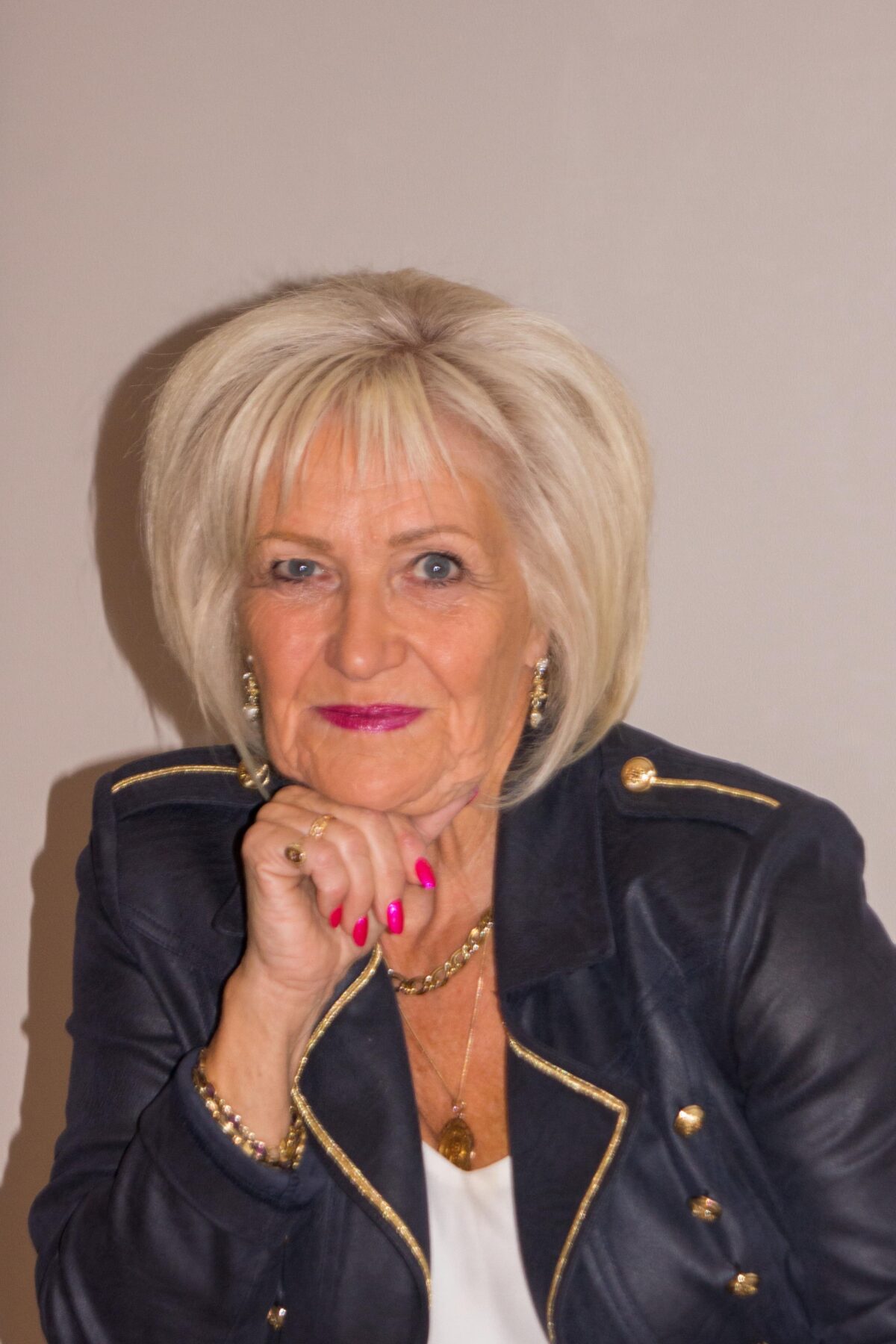
Breaking Cycles: Healing Across Generations with Dr. Lisa Cherry

The Transformative Power of Trauma-Informed Practice: Insights from Dr. Lisa Cherry

In a compelling conversation on the Secure Start podcast, Dr. Lisa Cherry shares profound insights on trauma-informed practice, drawing from her 35 years of experience working with vulnerable children and young people. As the Director of Trauma Informed Consultancy Services Limited and author of several influential books, Dr. Cherry brings a unique perspective that combines academic knowledge, professional expertise, and powerful lived experience.

One of the most striking themes throughout the discussion is the concept of breaking intergenerational cycles. Dr. Cherry reflects on raising her own children, now 26 and 28, and how this process confronted her with her own childhood experiences. “People often talk about breaking cycles,” she notes, “and for me, it’s about breaking cycles. There are some things that just repeat, but actually there are some cycles that can be broken.” This perspective highlights the intergenerational nature of trauma work – we’re not just helping individuals in front of us but potentially influencing generations to come.

Dr. Cherry’s journey from being in care herself to becoming homeless, then eventually finding her way to university and a career advocating for vulnerable young people, provides a powerful narrative thread throughout the conversation. Her experience of writing to the director of social services as a child and making complaints in children’s homes foreshadowed her future career path. This early advocacy demonstrates how lived experience can shape professional passion and purpose, providing authentic insight that academic knowledge alone cannot offer.

Language emerged as a critical focus in the discussion. Dr. Cherry emphasizes the urgent need to address how we talk about children and young people in care systems. “The language that is used to describe children and young people is hugely problematic,” she states. “It’s hugely problematizing of those children and young people, and it shapes and forms the way that they are viewed and the way that they are seen.” This observation highlights how seemingly small linguistic choices can perpetuate harm and influence both service delivery and children’s self-perception.

Another key insight focuses on understanding behaviour as communication. Dr. Cherry challenges practitioners to recognize that children rarely have the capacity to articulate their trauma verbally. Instead, they show their struggles through behaviour. This perspective requires professionals to develop self-awareness about their own nervous system responses and relationship with shame. As Dr. Cherry explains, “It’s very, very difficult to think about behaviour as communication if you don’t have the time and space to think about how you communicate your own distress when you’re distressed.”

The podcast conversation also examines the systemic challenges facing care and education services. Dr. Cherry highlights how reduced funding, diminished capacity, and increasingly procedural approaches make genuine relational work more difficult. “We have to stop thinking about people as machines fulfilling a role,” she insists. “This is relational work. Relational work is deep, it’s meaningful, it’s connecting.” This observation points to the need for systems that prioritize connection and proper staff wellbeing to enable truly transformative work with vulnerable young people.

Dr. Cherry’s three books – “The Brightness of Stars,” “Conversations that Make a Difference for Children and Young People,” and “Weaving a Web of Belonging” – each contribute unique perspectives to the field of trauma-informed practice. Her focus on making these books accessible and practical for busy practitioners demonstrates her commitment to creating real-world impact. Her current focus on supporting the wellbeing of practitioners themselves recognizes that those doing the direct work with traumatized children need profound support themselves.

Listen here:

Watch here:

About Lisa:

Dr Lisa Cherry is the Director of Trauma Informed Consultancy Services Ltd leading a dynamic and creative organisation that provides a ‘one stop’ approach to delivering on research, consultancy and learning and development.

Lisa is an author, researcher, leading international trainer and consultant, specialising in assisting schools, services and systems to create systemic change to the way that we work with those experiencing and living with, the legacy of trauma.

Lisa has been working in and around Education and Children’s Services for over 35 years and combines academic knowledge and research with professional expertise and personal experience.

Lisa has worked extensively across many sectors with Social workers, Educators, Probation Workers and those in Adult Services, training and speaking to over 35,000 people around the world including in the US, Australia and Pakistan and across the whole of the UK.

Lisa has produced multiple pieces of research for various settings and Lisa’s own MA research looked at the impact on education and employment for care experienced adults who experienced school exclusion as children in the 1970’s and 1980’s.

In February 2024 Lisa completed her DPhil research at The University of Oxford in the Department of Education. The research asked “How do care experienced adults who were also excluded from school make sense of belonging?”

Lisa is the author of the hugely successful and award winning book ‘Conversations that make a difference for Children and Young People’ (2021), ‘The Brightness of Stars’ 3rd Edition (2022) and Weaving a Web of Belonging: Developing a Trauma-Informed Culture for All Children (2025).

Related Podcasts:

Dr Hayley Lugassy

Listen here:

Watch here:

Transcript:

Colby: 0:01

Welcome to the Secure Start podcast.

Lisa: 0:04

Taking your children into adulthood is probably one of the deepest education experiences that I’ve had. People often talk about breaking cycles, breaking the cycle and for me it’s about breaking cycles. There are some things that just repeat, but actually there are some cycles that can be broken, and being able to really be present, be connected, be consistent, for my children as adults feels to me like a really beautiful breaking of a cycle. We have to stop thinking about children coming out of care and that’s the end of service. The people who are doing the work you know the direct work are giving something of themselves every time they do that, and what I’m focused on in my next book is how do we make sure that those people, that the people doing that work are looked after in a really deeply and profound way so that they can do that work?

Lisa: 1:20

We need to sort out the language. The language that is used to describe children and young people is hugely problematic. It’s very, very difficult to think about behaviour as communication if you don’t have the time and space to think about how you communicate your own distress when you’re distressed. And this is what happens when you starve systems and you reduce capacity and you take away funding and you make the work really, really intense. Unfortunately, it makes real relational work much harder.

Colby: 2:01

Welcome to the Secure Start podcast. I’m Colby Pearce, and joining me for this episode is an author, researcher and leading international trainer and consultant who specialises in assisting schools, services and systems to create change to the way that we work with those experiencing and living with the legacy of trauma. Before I introduce my guests, I’d just like to acknowledge that I’m meeting with them on Kaurna land, and I’d just also like to acknowledge the continuing connection that the living Kaurna people feel to land, waters, culture and community, and pay my respects to their elders, past, present and emerging. My guest for this episode is Dr Lisa Cherry. Lisa is the Director of Trauma Informed Consultancy Services Limited. She leads a dynamic and creative organisation that provides a one-stop approach to delivering on research, consultancy and learning and development.

Colby: 3:12

Lisa has been working in and around education and children’s services for over 35 years and combines academic knowledge and research with professional expertise and personal experience. Lisa’s MA research looked at the impact on education and employment for care experienced adults who experienced school exclusion as children in the 1970s and 80s. In February 2024, lisa completed her Doctor of Philosophy research at the University of Oxford. The research asked how do care experienced adults who are also excluded from school make sense of belonging. Lisa is the author of the hugely successful and award winning book Conversations that Make a Difference for Children and Young People, published in 2021, as well as the Brightness of Stars, which is in its third edition, and Weaving a Web of Belonging Developing a Trauma-Informed Culture for All Children, which has been published this year. Welcome Lisa.

Lisa: 4:23

Thank you, Colby. It’s lovely to be here and thank you for such a warm introduction.

Colby: 4:30

You’re welcome. Is there anything that I left out that you think is important for our listeners to know about the work that you’ve done and continue to do?

Lisa: 4:40

Well, listen, bios are just inherently quite uncomfortable to listen to, aren’t they? Because they sound so, you know, like Formal, like yeah, they’re just like a lot, which is lovely, and at this stage of life, you would expect to have a bio that’s got quite a lot of stuff in it, because you know you’ve been yeah, I’ve been around a long time. I guess the only other thing that would be worth mentioning is that I have two adult children and I’m a grandma, and um, taking your children into adulthood is is probably one of the deepest education experiences that I’ve had.

Colby: 5:26

I’ve always said the same yeah, I mean, it’s probably our greatest achievement, isn’t it? And also our greatest. Our kids are often our greatest teachers.

Lisa: 5:38

Oh God, I mean, it’s really difficult to even talk about them without feeling emotional. You know it’s such an emotional thing and I think, when you’ve also had to recover from your own childhood experiences and felt some of the weight of that appear in your own children in that intergenerational way, that that works. That is very confronting. It’s very confronting.

Lisa: 6:12

There were periods that were like being in therapy every day you know, as as that experience is mirrored back and I’m now at a place they’re 26 and 28, and I’m now at a place where I see what’s mirrored back is more healing and more recovery and just how much connection and support your children need, with a deep, deep awareness that I had nothing like that. And so when we think about I listen to people often talk about breaking cycles, breaking the cycle, and for me it’s about breaking cycles. There are some things that just repeat, but actually there are some cycles that can be broken, and being able to really be present, be connected, be consistent for my children as adults feels to me like a really beautiful breaking of a cycle.

Colby: 7:20

Yeah, yeah, wonderful. We’ve heard some other stories on the podcast so far, one in particular in Graham Kerridge’s podcast that really reflected the significance of breaking the cycle, and it’s something that is very near and dear to my heart. It’s something that is very near and dear to my heart, and I often think that our work is intergenerational as well in its impacts. Sure, and so it’s not just the person or the people in front of us that we’re effectively working with. We’re working with their spouse, future spouses or part life partners there and their own children and grandchildren through, as you say, what transmits through, through the generations so it’s very powerful and important work that we do.

Lisa: 8:22

Yeah, I love that and I love that kind of circle of life. You know, and I always talk about healing Often we might be healing an ancestral wound we don’t even know we’re carrying. That is from somewhere completely different. And when we’re talking about children and young people who’ve experienced fractured childhoods and adoption and care and all of those things, then they’re often working with something within themselves which will appear across the life course that they might not know where that comes from, they might not know they’re even healing and that’s deep.

Colby: 9:05

And then when you bounce into the future and you start thinking about the future, those future spouses and future children I just think it’s such, it’s such a privilege and it’s such beautiful work yeah, it was interesting because, um, graham got me thinking about this and his training was as an economist and his interest was in human capital, and it was such a totally different way of thinking about the work we do, because I’m not an economist.

Colby: 9:43

In fact, um, my bank balance reflects very, very well that that that is the case, but, um, yeah, yeah, but I mean it was it’s a nice way of putting it anyway the looking at it from a human capital point of view, that I hadn’t done that before, but, yes, certainly I have been for a while, um, very much aware of that intergenerational impact of our work. Lisa, I think people who know you would know that your work in this space is influenced by personal experience growing up. Um is influenced by personal experience growing up, um, but I wonder if you, if you can perhaps say just in your own words, what got you into the work, um, that you’ve been doing this past 35 years or so?

Lisa: 10:40

yeah, I mean it’s. It’s a really interesting one, isn’t it? And, without a shadow of a doubt, my experience of being in care has, you know, provided me with my work, and I guess there are aspects of that that are part of me and my personality and the things that I care about and I’m passionate about, like you know, I remember as a very young child being very passionate about justice, being very passionate about the society that we lived in, um, and so I guess I could have gone into different avenues. I wanted to be Kate Adie. I wanted to be a war correspondent. You know I was.

Lisa: 11:22

I thought that looked absolutely amazing and, of course, going in know, doing research is is kind of like, really sophisticated. You know, I don’t know if researchers would like this, but journalism and research really sit closely together and I was always very interested by journalism and wanting to tell stories and wanting to highlight things that were wrong and that needed change, and I felt that very much growing up. But going into care of course exposes you to a world that is very different than a world that you would see if you weren’t in care. So you start being exposed to a whole range of professions you might be, you’ll be exposed to residential social workers, to foster carers, to social workers. Nowadays you’ll also have CAMHS workers and of back then also IROs, you know, an independent reviewing officer, and there’s all these different types of jobs.

Lisa: 12:29

And if you’re not really engaged in education for because you’ve got like loads of stuff going on um, then it’s almost like a kind of careers um opening up. You know there’s all these types of jobs and there’s these ways of doing things. So I think the combination of who I was and I was the sort of um child who was often writing to the director of social services and making complaints and, you know, kind of seeking justice in the in in the children’s home and stuff like that um and that combination I think, then of seeing people and also experiencing um a social worker I’m still in contact with Eunice who, who I always refer to as the the only social worker whose name I remember, you know we’d sit in her Ford Escort. I’d be crying, going why is everything so shit, and she’d be making me feel better and I thought that looks like a great. Get a ford escort and you get to make people feel better.

Colby: 13:31

Give me the ford escort bit a bit yeah, what’s not to love about that?

Lisa: 13:37

you know, so, at sort of 15, 15, 16 she. She was my social worker only for about a year and a half, but, um, very influential. Um, probably not at the time realizing how influential she was, but I kind of looked at um different social workers and thought I like I would like to do that, so that’s, those seeds were then planted. I mean, unfortunately, coming out of care I then had, I was homeless for a couple of years and I didn’t have an education because I had been expelled from schools. And you know, that came a bit later and I was lucky enough to get some funding to do a sociology degree, um, at the age of 21. Um, I had to do a couple of a levels which I was pretty diabolical at, but I obviously ticked the right boxes help me the right, help me boxes and and got into uni and and did sociology, which just further really cemented um how I felt about wanting to create change socially. Um, so, yeah, yeah and Lisa I’m.

Colby: 14:52

There’s a lot in there, but I’m the first thing that I was recalling, and I think you shared you must have shared this video at one stage was a younger version of yourself on a. Was a younger version of yourself being interviewed on a talk show about. That must be back around that time that you were at university and maybe even before. But talking about young people in care.

Lisa: 15:16

Yeah, so I guess because I was very articulate, pretty feisty and have a bit of a streak of determination in me, that did get picked up when I was younger, from different organizations and I’d been in a night shelter um around the age of 17, 18 um called Centrepoint um who are a big charity for youth homelessness in the UK and at the time a man called Nick Hardwick was the CEO and once I’d come out of that we’d kind of stayed in touch a bit. I’d been housed. I was then at uni and he asked me if I’d go on this Channel 4 programme about homelessness with John Snow, who’s an incredibly wonderful journalist, who’s retired now from his time on Channel 4 News element and wanting to create change and going through that process of being quite vulnerable. Because you know, I think when I met Nick many years later you know he said that they had only just started thinking about children coming out of care and homelessness. That actually the vision at the time so I’m going back to the late 80s, early 90s was very much that homelessness was a step you know this idea of an older male drinking.

Lisa: 16:55

You know that there wasn’t a real deep understanding about children coming out of care and being homeless, which which so many of us were, and that piece was part of a massive campaign. We did lots of things. We did Channel 4. We did lots of newspaper items and magazines and all sorts of things to really raise awareness that children were coming out of care and they were becoming homeless for lots of different reasons, you know. One of them might have been just to get as far away from that care experience as possible, thinking you can cope and you can do stuff, and not being able to Alongside. We didn’t have legislation back then that made sure that children weren’t homeless and that there were lots of options. There weren’t lots of options, actually, when you came out of care, so it was a really, really tricky time.

Colby: 17:52

Yeah, and I think it’s something that’s still being grappled with in many jurisdictions around the world. In my own local jurisdiction, um and I think you mentioned something in there that resonates with me that often my observation with young people and I’ve worked long term with the young people that I do see and will continue to see them professionally post care but oftentimes the last thing that they want is for any authority to be assisting them in any way. They just want done with the government running their lives and sadly, I mean that’s a bit of an indictment on their experience in care and also sadly sets them up for a tough run, as you experienced as well, with homelessness and various other challenges being part of their experience post-care.

Lisa: 19:03

And that’s why we have to stop thinking about children coming out of care and that’s the end of service. That has to be in the same way that you have with your own children. There has to be that ability, you know, because your own kids might turn around as well. You know, both my kids were trying to live independently long before they could and I think that’s quite a normal thing to happen. But of course there’s that elastic band, that continuous coming back. We need to really think about services in a very different way that understands the science that underpins child development, for a start, and that also understands 18 to 25 year olds in terms of a um, the, the work that’s been done around contextual safeguarding um, so that we, so that people have that opportunity to recover from some of those experiences. But they can also come back, just like your own kids can.

Colby: 20:10

Yes, and I’ve already done a podcast interview with Kiran Modi, who set up Udain Care in India, and remarkable, remarkable person and what they’ve done. And, as you say, they provide a place and people that care leavers can come back to right through to their mid-20s and beyond. They have what she called volunteer mentor parents in their residential homes who are parental figures for life for the young people that go through there. Oftentimes, I think we I wonder about this, I wonder whether in our white Western, you know, first world kind of mentality, we think we’re doing it better than um anyone else and and and uh, the challenges that we have would be the same everywhere. But um, you know, you know, my experience just very recently in talking to someone from india is that you, you can do it um very differently and provide extraordinary levels of support and opportunity for our young people.

Colby: 21:27

Um, anyway, uh, the other thing that that stood out for me in when you were talking was you talked about Eunice and her. I think it was Eunice and her Ford Escort and um, I wonder if there was any. And you also talked about um john snow, the journalist, but also the other chap put you in touch with him and um, I was wondering if there’s anyone else that you’d like to you know, acknowledge, or that you would acknowledge uh as having had a really important and significant um uh impact on you travelling this path, walking this path.

Lisa: 22:08

Yeah, I mean to be honest, I wouldn’t know where to start and I think that’s really part of our work, really, isn’t it, that people influence you along the way. I do remember somebody else I don’t know their name, but I was living in Cornwall. I’d gone down to Cornwall, I was homeless. I was. I lived across all sorts of different types of non-housing across Cornwall for for a few months before I went to London, which is where I kind of Cornwall for for a few months before I went to London, which is where I kind of uh was, was saved, if you like. Um and some journalists came down from shelter and did a piece on homelessness and as soon as I got to London, I went straight down to the shelter head office on Old Street and became a really pain in the arse volunteer um, which was, um, one of the first experiences that I had, but it was again. It was. It was a stunning experience because it was the 21st uh anniversary. So it would have been, I suppose, 1987, something like that, the 21st anniversary of Kathy Come Home. And we had this amazing event with all these very famous people, and there’s a wonderful picture of me stood next to Jeremy Irons, kind of gazing at Jeremy Irons on this stand, this podium stand, at the age of I must well, maybe I was 17, 18, and so those were the kind of things that really, really influenced me.

Lisa: 23:46

But, as I say, you can’t take away who you are as a person as well, because the first thing I did when I got to London was I’m going to find that journalist, that person who did that writing piece.

Lisa: 23:59

I want to be there, I want to do that, you know, and I think that’s why it’s so important for children, young people, to meet as many different types of people as possible.

Lisa: 24:09

I can’t remember her name, but what happened was a chain of events that led me into a campaigns department, that led me to start writing articles for their magazine, you know, all of those kind of things that really showed me where my passion was, and so, mostly across my work, I’ve never felt like I’m working because I found that passion, I found what I wanted to do, and if we can give that gift I found what I wanted to do and if we can give that gift to to young people, how incredible is that to have this exposure to so many different people with different ways of life that spark and ignite a passion that, yes, you’re not. You’re not always going to be doing the things that you really want to do, but you’re going to be in that field. So, yeah, I feel very, very fortunate and can’t ever really feel cross about the experiences that I had, because they gifted me those types of events that have given me the ability to work from a place of passion.

Colby: 25:27

Yeah, it’s a not uncommon, I guess, response from people who have experienced hardship in their life, but it has, and who have overcome it and, um, they, they wouldn’t. It’s quite common to say they wouldn’t change. Um, those difficult, you know, those things that shape those experiences, that shape them. And what’s really coming through, lisa, listening, listening to you talk, is how driven you were to, even in the latter stages of your time in care. You’re being driven to try and to stand up and say this is not good enough for me, nor my peers who are in this space.

Lisa: 26:34

Yeah, yeah, and again I feel very blessed that you know I have that within me.

Lisa: 26:41

You know you’re very focused on attachment and I absolutely believe that the first attachment relationship that I had with my grandmother was profound in terms of of my development, and you know she was present, you know she could give me things, emotionally and through that attachment relationship that I couldn’t get from my mother. You know that wasn’t and still isn’t possible, and so I have so much gratitude for that because I think if I hadn’t had her, I’d have been in care from very young, you know, and that would have brought a whole other set of challenges and difficulties and it would be as much as there are no regrets in the sense of what the experience gave me. There’s still sadness and there’s still loss and there’s still grief, and I think it’s really important to hold both of those things. And I wonder, anyway, I’ve met enough humans, many, many humans, to know that sadness, loss and grief is part of the human experience and that, whatever experiences you’ve had, invariably most people are grappling and dealing with their, their own?

Colby: 28:30

families and their own beginnings in life. Yeah, yeah. So, um, at some point you you kind of started out your your advocacy in care about the conditions within the care arrangement that you were in, and then moved to the homelessness of care leavers, post-care, and at some point in time you turned your attention to schools and, uh, the experience of of, of young people who had experienced relational trauma, and, uh, and their experience of schools. Do you mind telling us a bit about that?

Lisa: 29:17

yeah. So once I’d got my degree, I moved into um, I worked in leaving care teams, uh, for nearly 10 years and then, and then I moved into and then lots of things changed. I didn’t like it. I didn’t like it anymore. It became very admin-y, um, it lost some of the fusion with youth work that Leaving Care Work had back then, which I loved and which was very relational and consistent and it was lovely work. So I wandered across the road and went into the education department and that was a very different experience. All of a sudden, you know, know, I was not in my jeans anymore. I was, you know, covering my tattoos. It was all very, very um, I don’t know how to describe it, but it was a cut. It was a bit of a culture shock. Everyone was very proper and social work had it.

Lisa: 30:25

It’s just not, it’s not quite as proper yeah it’s got a bit of activism and it’s got some rebellion in it. It’s got, you know, social work often brings people in with all sorts of different lived experiences. Education back then was incredibly straight, um, and so I had a bit of a steep learning curve, but I met some amazing people who kind of taught me how to be in the education space, and I spent time working in schools. I spent time working with people who children and young people who were not attending school, and we would be setting up like different tutoring arrangements and alternative plans so they could stay on roll at school. It was very much about reducing exclusion, preventing exclusion. So, yes, I did that for 10 years, um.

Lisa: 31:45

So yeah, so I did that for 10 years, um, and I kind of got to a point because I also had two young bringing the body into the way that I had been thinking about the work that I was doing, and that was around 2005 2005, so 20 years ago and then I did a small piece of work with a local authority which was very much about creating services across different sectors and getting people around the table, and that was an amazing piece of work because it really taught me how long it takes to build relationships, not just the relationships that you’re having, but when you’re trying to engage other sectors, to sit around a table and talk to each other and become friends. That takes a long time, um, so that was a real gift to watch that process, um, and then it was after that, because we had we had, um a change of government and the financial crash and, uh, I also had something personal happen in my life that just threw everything open, and that’s when I became self-employed 15 years ago.

Colby: 33:08

Yeah, and you’ve been very active in that 15 years, as you likely were prior to that. Amongst other things you’ve done is you’ve written three books, which I mentioned earlier in the intro.

Lisa: 33:41

I wonder if you just would like to talk a little bit about each of those books and what particular messages they might have for children’s services and for schools. Yeah, so well. The first book was the Brightness of Stars, and I wrote that back in 2012, 2013. And I wrote it because I’d hit a bit of a roadblock. I wasn’t particularly open about my experience, I hadn’t really talked about it, but I was very aware, like lots of people who get to their kind of late 30s, early 40s, that midlife period, that it had massively influenced me and that whatever I hadn’t dealt with in the recovery journey I’d had so far, I was going to have to deal with. And that led me to think. But there must be lots of other people with this experience. Where are they? I mean, think about this there there’s no Facebook groups, there’s no social media where everyone’s connecting.

Lisa: 34:30

I think we were sort of very much at the beginning of that um, and so I had a few connections and I wanted to share stories. You know, as I where I started at the beginning of this podcast talking about sharing stories and journalism and I wanted to share stories and I’ve been fortunate enough that Routledge republished that book, because I’d self-published originally and they published it and what was beautiful about it was when I read what I’d written. It wasn’t relevant anymore. I’d written it wasn’t relevant anymore. I didn’t have those feelings about it anymore and it made me think. Everybody that was in it needs to write. What do they think about it?

Lisa: 35:11

Now, 10 years later, let’s have an exploration of the healing journey and how, at different points in your life, something really troubles you and is really defining and is really intense.

Lisa: 35:23

And 10 years later, when you’ve processed it and used writing to make sense of it and perhaps had some therapy and perhaps done some body work and all of those things, um, that help us process stuff. So there’s a there is a new section in there as well that’s more contemporary, but there’s that beautiful section at the beginning that’s got the reflections of what people had written to use earlier. So that’s wonderful. So I guess the messages in that book are about what does the experience look like and what does a healing journey look like? You know, it’s really good for people to know that over time we change and we grow and we transform and I think that that’s that’s a real gift of of the third edition. Conversations that make a difference is very much a book that infuses, as everything that I do I try and infuse, with academic knowledge, professional practice and lived experience, and that book infuses that conversations that make a difference for children and young people and the opening chapters with unis are wonderful which is wonderful, um.

Lisa: 36:39

So there’s there’s a whole range of conversations in there. It’s a lovely way of sharing conversations in a book like that, because it’s quite easy to read, and I’ve tried to make most of my books easy to read. Practitioners are busy. We haven’t got time to get through Dostoevsky, you know, like you’ve got to be able to just dip in and read something that really makes a difference and that makes you think about something in a different way. So there’s lots of reflections and then weaving a web of belonging, which has just come out this year, is very much underpinned by the research, uh, the PhD that I did, the research, um, which again was a really interesting experience.

Lisa: 37:28

There’s lots of voices in there, but writing academically is so hard and so dry, um, and it felt equally hard to strip the dryness back and create a practice book. So it’s very much underpinned by extensive research, but again, I’ve tried to make it very readable. I’ve even got some recipes in there, some grounding exercises, you know, anything that makes reading about some really difficult stuff just just a bit more manageable, because the people who are doing the work you know the direct work, um are giving something of themselves every time they do that, and what I’m focused on in my next book is how do we make sure that those people, that the people doing that work, are looked after in a really deeply and profound way so that they can do that work.

Colby: 38:39

That sounds wonderful. I look forward to reading that book as well. Lisa, I think you’ve. I mean, writing a book is a very generous thing to do, I think, and particularly when you have such extensive lived experience and knowledge and drive. And I’m really just really pleased to hear that your books do well. And see all the posts on social media of people who’ve got the latest book on belonging yeah, that’s just wonderful. If you could sit down with, you know, the heads of education or the heads of child protection, child safeguarding statutory authorities, what do you think you’d say to them?

Lisa: 39:38

So I guess I mean I’d say a lot, but I think there’s two things that I think are really important and really misunderstood. So the first thing I’d say is we need to sort out the language. The language that is used to describe children and young people is hugely problematic. It’s hugely problematizing of those children and young people and it shapes and forms the way that they are viewed and the way that they are seen. So language is the first thing. Let’s get on with a piece of work sorting that out. Let’s get on with a piece of work sorting that out.

Lisa: 40:22

And I guess the second thing that is also hugely misunderstood is that behaviour is communication. That seems to me to be such a difficult concept for people to understand. It’s almost as if people think children have an articulation of their trauma that it can take you decades to get of their trauma, that it can take you decades to get that they can somehow come and say to you I’ve got to have a chat with you later because I’m really struggling with something and I’d like to walk it through. You know, and of course that is not possible, but that’s the expectation. So when a child shows you which is what children will always do that they are struggling with something.

Lisa: 41:04

I would say that’s something that I would really like to be understood more. First, ways of understanding that is, for people to drop into their own central nervous system, their own relationship with shame and their own relationship with struggle. And if they can do that and that’s some of what I try and do with people if they can do that I try and do with people if they can do that, then that expands that space of compassion, because then there’s some compassion for self. It’s very, very difficult to think about behavior as communication if you don’t have the time and space to think about how you communicate your own distress when you’re distressed. So I think that would be what I would be looking at. Let’s give people some space for reflection. Let’s give people some space for some really good training opportunities. Let’s give people some space to drop into their own bodies, um, so that that exploration can happen.

Colby: 42:19

Yeah, I think listeners of this podcast will be very, very familiar with me saying that um, one of my um and another issue that’s very close to me, um is the fact that too many practitioners in education and also in child safeguarding are so flat out with the work that they don’t have time to stop and think about what they’re doing. And it manifests to me in a couple of things. I’ll often ask people, you know, if we, they’ll say they’ll give me the shopping list of problems with a young person and then, and I’ll say to them a couple of things, one of them would be if my intervention was successful, what would you expect to see? What would be different? And people find that very hard, very, very hard to answer because, as you say, they’re so stuck in a problem focus and talking about the problems of the children. I also say to people and I think this ties very much in with what you’re saying about just take some time to think about what it would be like we, if you were struggling, if you were having some of these experiences. I asked, I asked three questions if the child could or would, how would they truthfully describe themselves, other people and their world? How fast does their motor run and what did they learn in their first learning environments about how you get your needs met? Again, really difficult questions to answer, I’ve found, but I do think you’re right. I think, if I think, I think and again, people need time I think, if you can, if people have the time to drop in and reflect on their own experiences of struggle, or you know what it would have, what, what they can imagine it would be like to experience significant struggle. I remember the first. It was not the first time I thought about it, lisa, but it’s one of the first times that it really stood out, so much that I remember Very early in my career, mid-90s, in my first posting as a clinical psychologist doing assessments of young people, I had a young person that I was expecting to see first thing in the morning at the office, and when I arrived I used to live on one side of my home city of Adelaide and work at the far extremity of the other side and, depending on traffic in between, that journey could be elongated or otherwise.

Colby: 45:18

But anyway, I walked in and I walked into one of the at uh, the professional areas of the building and, and, and there was the young person I knew it would be her because she had a distinctive um background. So I immediately knew, ah, this must be the, the young person that’s come to see me. And I was very aware of her surroundings at that time and what she made of them and the fact that the taxi driver a taxi driver had collected her from her placement and dropped her at the office and she was about nine years old from memory. So, yeah, just really. From then on it was very much foremost in my mind the experience of our young people. It’s very hard. If you don’t give people the time to stop and reflect, then they just become very procedural and the work loses a bit of its heart and it becomes heartless and procedural. I think.

Lisa: 46:29

We have to stop thinking about people as machines fulfilling a role. You know this is relational work. Relational work is deep, it’s meaningful, it’s connecting um and so people. And this is what happens when you starve systems and you reduce capacity and you take away funding and you make the work really, really intense. Unfortunately, it makes real relational work much harder. Now I say that knowing that some areas that I work in prioritise it above all else. But it does mean that something else has to give. So there’s an intentionality when you’re thinking about belonging relationships, connection, proper staff well-being not, you know, let’s go bowling every fortnight or something, but the proper stuff that really nourishes and fills people’s cups. And you know you’re absolutely right when, when we don’t have that, then that’s where the procedural stuff comes in and burnout and secondary trauma and you know all of that stuff kicks in one other thing I just want to say I the the language we use.

Colby: 47:52

My first edition of the attachment book I. I say I wrote I didn’t write two editions. I wrote two of the attachment book. I say I wrote I didn’t write two editions. I wrote two books, the first book and the second book. They’re different books and the language is quite different. And a little example when I do, every now and then I’ve spoken to our heads of our child protection department here in my local jurisdiction department, here in my in my local jurisdiction. But I, on the language thing, I’ll say um, because one of one another thing that’s really near and dear to my heart is is the main, where possible, the maintenance and I think it’s more possible than we we think but the maintenance of good connection with birth family. So I I will say you could probably achieve a lot in terms of practice by changing one word in the sentence that is routinely said about our children and young people.

Lisa: 48:50

What’s routinely said and written is that they cannot be safely cared for at home and I say replace cannot with couldn’t or could not, and I I dare say you would, yeah, you would um notice a big, I mean language is powerful it’s so powerful and maybe could not right now, you know like allow parents the opportunity that we all afford ourselves of transformation and recovery and wellness and sobriety and all those other things you know, in a dynamic, trauma-sensitive way in the writing. You know that, but right now that wasn’t possible. That doesn’t mean it’s not possible later on. It’s just not possible now and it’s those kind of things, isn’t it’s having that, that, that eye for the life course? But services, unfortunately, are so divided and siloed into what you know how they work that the life course approach and that holistic approach is often lost. And look at us, we could talk for hours I think so we could.

Colby: 50:07

I was literally I I say to the kids, when the you know you’re supposed to say, colby, get out of my head, it’s rude, you gotta ask permission. Permission before you’re reading my mind. But you were just literally reading my mind then, lisa, because I was going to say, yes, we could talk for hours. Maybe we’ll just have to do this conversation in installments perhaps, but if you’re keen, I do give all of my guests an opportunity to ask me a question without notice at the end. We’ve heard a lot of my voice already. I’m not sure if you had something that you wanted to ask me.

Lisa: 50:46

Well, I don’t have anything to ask you today because I’ve already interviewed you on my podcast. So I asked you lots of questions. So if anybody wants to hear those questions, then I’m sure Colby will drop that episode into the show notes and you can listen to me ask you lots of questions.

Colby: 51:06

Yeah, I think I’ll do that. Well, I mean, is that a bit I’ll do it because you’ve raised it? It’s an invitation.

Lisa: 51:14

It’s an invitation and it would be lovely to share that conversation and it’s it’s been really lovely to be on the other side of that and, um, and be asked lots of questions, so thank you for having me yeah, well, thank you for agreeing and uh, yeah, I hope you have a good day and you continue to be well, lisa as well as you can be.
Transforming Lives: Dr. Kiran Modi’s Journey with Vulnerable Children in India

Every child deserves a sunrise and a new beginning

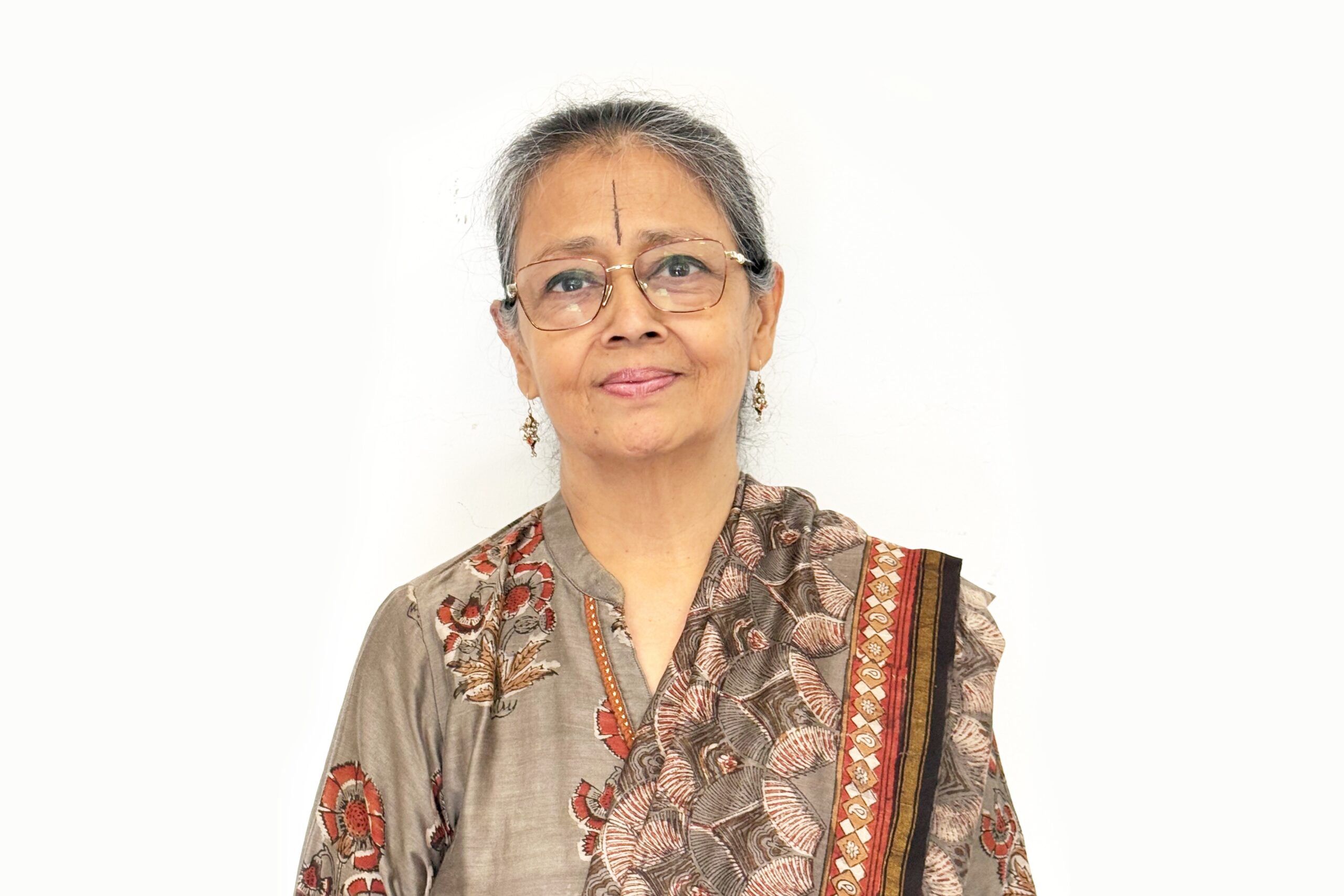
Dr. Kiran Modi’s remarkable journey from academia to founding one of India’s most influential child welfare organizations offers profound insights into transformative care models for vulnerable children. With a PhD in American literature, Kiran’s unexpected pivot into child welfare began with a deeply personal childhood experience of being separated from her parents – a brief but formative moment that instilled in her a visceral understanding of the trauma children face when separated from family care.

Founded in 1994, Udayan Care has evolved from a single children’s home to a comprehensive organization operating across 36 cities in 15 Indian states, with international chapters in the USA and Germany. What distinguishes Kiran’s approach is her holistic vision of child welfare that extends far beyond institutional care. The organization’s name itself – “Udayan” meaning “eternal sunrise” or “new beginning” in Sanskrit – embodies its mission to bring light and hope to vulnerable children’s lives.

The cornerstone of Udayan Care’s innovation is the LIFE (Living in Family Environment) model for group homes. Unlike traditional orphanages with rotating staff and institutional environments, these “Sunshine Homes” create genuine family-like settings with remarkable stability through a unique feature: voluntary mentor parents. These committed individuals, currently numbering 29, pledge lifelong relationships with the children – providing consistent emotional support even while not living in the homes full-time. This addresses the critical issue of attachment disruption that so many institutionalized children face, directly implementing John Bowlby’s attachment theory in practical care settings.

Kiran’s research-informed practice led to India’s first comprehensive care leavers study, examining the challenges faced by young people aging out of institutional care. The study identified critical gaps across eight domains: identity and legal awareness, housing, independent living skills, social support, emotional wellbeing, physical health, education and vocational skills, and financial independence. These findings directly informed policy changes, including improved aftercare planning, increased financial support, and the creation of India’s first care leavers networks – demonstrating how research can drive tangible system improvements.

Perhaps most impressive is Kiran’s integration of therapeutic approaches with practical support. Trauma-informed care underpins all services, with Kiran poignantly observing that trauma “lodges in your heart” – we don’t overcome it completely, but rather develop coping mechanisms and resilience. Through this lens, Udayan Care’s model combines Bowlby’s attachment theory, Erikson’s psychosocial development framework, and Bronfenbrenner’s ecological systems approach to address children’s needs holistically.

Kiran’s work extends beyond direct service to include advocacy, research and policy influence. She established BICON (Biennial International Conference on Alternative Care for Children in Asia) and launched an international academic journal focused on institutionalized children. This multilayered approach – connecting grassroots practice with research, policy and global networking – creates systemic change rather than just service delivery.

For organizations seeking to implement similar models, Kiran emphasizes several key principles: prioritizing mental health and trauma-informed approaches; developing secure attachments through stable relationships; addressing developmental needs through frameworks like Erikson’s stages; embedding children within communities rather than isolating them; building resilience and coping skills; and fostering spiritual well-being and purpose.

As we consider global challenges in child welfare, Kiran’s integrated model offers valuable lessons. By combining family-like environments, professional therapeutic support, community integration, and pathways to independence, Udayan Care demonstrates how we might better serve our most vulnerable children while advocating for systems that prevent family separation in the first place.

You can listen here:

You can watch here:

About Kiran:

Kiran has a PhD in American Literature from the Indian Institute of Technology, Delhi. Kiran founded Udayan Care, a non-profit organization, in 1994.

Since then Udayan Care has delivered programs at national and international level, with a focus on family strengthening and care reform.

Under Kiran’s leadership, Udayan Care now operates in 36 cities across 15 states in India and has international chapters in the USA and Germany.

Kiran developed the LIFE (Living In Family Environment) model for group homes, initiated aftercare programs, and launched the Udayan Shalini Fellowship, which has supported over 16,000 girls in higher education. Kiran also established 24 IT and Vocational Training Centers, training over 30,000 youth.

Kiran has pioneered several initiatives including BICON, Biennial International Conference on Alternative Care for Children in Asia, (BICONs), Asia’s largest platform for care reform; an international journal, ICB, Institutionalised Children Explorations and Beyond, and related initiatives.

Kiran led India’s first care leavers study, resulting in new programs and the formation of the country’s first care leavers’ network, as well as a global network of care leavers.

Kiran is a recipient of many prestigious awards, including the National Award for Child Welfare – India’s highest commendation for a non-profit child welfare organisation, and has contributed to several research papers in national and international journals.

Related Podcasts:

Patricia Sheridan

Listen here:

Watch here:

The Lighthouse Foundation

Listen here:

Watch here:

Transcript:

Kiran: 0:20

Then you can do individual care for each and every child. So this is the kind of stability we are able to bring in. Children know that the others may come and go, but my mentors would remain and we’ve been able to facilitate care leavers networks as a global care practice. Aftercare does not stop. Even when they become an ARG, they leave after care, they become Udian Care alumni.

Colby: 0:51

Welcome to the Secure Start podcast. I’m Colby Pearce, and joining me today for this episode is a highly respected figure in child and family welfare in India and beyond. Before I introduce my guests, I’d just like to acknowledge the traditional custodians of the land that I’m meeting on, the Kaurna people of the Adelaide Plains, and acknowledge the continuing connection the living Kaurna people feel to land, waters, culture and community. I’d also like to pay my respects to their elders, past, present and emerging. My guest today is Dr Kiran Modi. Kiran has a PhD in American literature from the Indian Institute of Technology, Delhi.

Colby: 1:40

In 1994, Kiran founded Udayan Care, a non-profit organisation. Since then, Udayan Care has delivered programs at national and international level, with a focus on family strengthening and care reform. Under Kiran’s leadership, Udayan Care now operates in 36 cities across 15 states in India and has international chapters in the United States of America and Germany. Kiran developed the Life Living in Family Environment model for group homes, initiated aftercare programs and launched the Udayan Shalini Fellowship, which has supported over 16,000 girls in higher education. Kiran also established 24 IT and vocational training centres, training over 30,000 youth.

Colby: 2:39

Kiran has pioneered several initiatives, including BICON, the Biennial International Conference on Alternative Care for Children in Asia, BICON, Asia’s largest platform for care reform, and an international journal Institutionalized Children’s Explorations and Beyond. Kiran led India’s first care leavers study, resulting in new programs and the formation of the country’s first care leavers network, as well as a global network of care leavers. Kiran is a recipient of many prestigious awards, including the National Award for Children for Child Welfare India’s highest commendation for a non-profit child welfare organisation and has contributed to several research papers in national and international journals. Welcome Kiran.

Kiran: 3:38

It’s such an opportunity. Thank you, piers, for giving me this opportunity. I don’t know whether I should call you Colby or.

Colby: 3:45

Yeah, colby’s good, colby’s fine. And I just like we just also should acknowledge Lena, who is also joining us on this podcast, and she will be helping you with some slides that you wish to show during the podcast. And Lena is your Director of Advocacy, research and Training there at Udayan Care. Thank, you.

Colby: 4:09

Thank you. Yeah, so I feel very privileged to have you on, kieran, and it’s also nice to have someone on who’s in a relatively similar time zone for me. So it’s mid-afternoon for me and mid-morning I think for you, mid to late morning. Yes, yes, and I just tell you that somewhat embarrassingly when we were first communicating and you were putting IMT, I was reading that as international median time. I thought I thought it meant Greenwich Meridian time, not Indian. So that was my bad. We say that was my bad here. So, anyway, glad that we got it sorted out after a while. So, kieran, can I first ask you to perhaps just tell us about Udayan care and in particular, perhaps mention what the word Udayan means and how does the definition of Udayan relate to the work?

Kiran: 5:14

It’s a lovely question, very near to my heart. Udayan is a Sanskrit word. It means eternal sunrise or a new beginning At Udayan Kaya. This is the essence that guides everything that we do. We strive to bring light into the lives of children, youth and women who have experienced deep vulnerabilities.

Kiran: 5:37

We were founded in 1994 and we had three major verticals and I would just like to tell you family strengthening. Actually it anchors all our programs in all these verticals we are looking at how do you strengthen the families so that children do not remain vulnerable, they don’t get separated from the families. So, first silo, as you can see, child protection and alternative care, under which we have many programs. But you mentioned also the group home model, which is called GAR. Gar means you know children’s homes. Then there is aftercare. There are several programs for care leavers. In the second vertical, which is education, skilling and employability, you’ve already introduced this to the audience, but I would just like to reiterate Shalini Fellowship Program and the Information Technology and Vocational Training Program. They are looking at vulnerable girls from the communities, youth and empowering them as per their capability higher education, vocational training and finally getting into employment. The third silo, which is very, very near to my heart because I’m also realizing again and again just service delivery will not make systemic change. How do you bring about that systemic change? That’s why we started this vertical, and I’m so glad that Lina is here with me. She’s heading this department.

Kiran: 7:08

Art means advocacy, research and training, so we’ve been doing a lot of consultations and seminars. You’ve already mentioned biennial conferences and I’m so happy to say that in October of this year 2025, we will be having an international conference. This will be the sixth one. In Malaysia.

Kiran: 7:30

We take out an academic journal you have already mentioned, and I always like to say that it’s a niche journal, you know, because it’s not about social work, it’s not about child rights, it’s actually about children who are without parental care. It’s actually about children who are without parental care. How do you strengthen the communities so that every child gets a family-like environment to grow up in? Then we’ve been conducting a lot of research studies. Almost 100 research papers have been published in different journals, including our own, and trainings, which is again very, very important, because we are working with several governments in India where we are training the child protection functionaries into delivering their work even better and learning from them as well. So it’s not only we are training, we are also learning, and I would just like to say that you know our children without parental care. When they get all these opportunities, you know the underserved children and youth they can really go places that’s lovely.

Colby: 8:34

Yeah, it’s such a an awesome endeavor, or endeavors, array of endeavors, that you’re doing for vulnerable children and young people, and I’m very pleased to be able to hear about it today. And you said something in there that is interesting to me, and I think it’s important to acknowledge that, just when you said just providing a good service or service provision alone doesn’t necessarily bring about systemic change. We do need to be doing research and advocacy around the work that we do, and I was introduced to an interesting term by a recent guest, which was pracademic, by which she meant, yeah, being both a practitioner and a researcher, and connecting.

Colby: 9:37

And her name is Lisa Etherson. She talked about shame containment theory, but it was new to me and I think I think she was making the point that not only is it necessary, as you say to, to do something more than just provide, do service provision. We are the best people to do research in this sector, the service providers, yes.

Kiran: 10:04

The practitioner’s experience has to inform policy and research.

Colby: 10:10

Yes, yeah. So what led you into this? I noticed you have a PhD in American literature, but you’ve kind of gone down the child and family welfare path. What led you into this work, kieran?

Kiran: 10:27

So actually, you know that life experiences as a child. I was only 80 years old and I just can’t forget. I was on a very, very busy road full of people with my parents and suddenly I found myself lost and I cried my heart out and finally the police took me to the police station where my parents came after some time looking for me everywhere. They were looking so worried and I was so relieved to find them. This thought remained with me just a few seconds of parental separation, you know. It formed my childhood, it informed my childhood, it continued with me in my youth, you know. So I think it was a very powerful experience which really, you know, made me understand what do children without parental care go through? And then, a quirk of a fate, I had personal tragedy and from the world of literature, suddenly I was thrown into the world of reality and I realized I need to do something, and especially when I found that my son was doing so much with his meager income in America, I really need to take that work forward and I started thinking of setting up an organization which can serve the underserved here.

Kiran: 11:55

In the initial one year it really took me. I went around to all kinds of causes, at least 150 organizations I visited. In one of my visits to an orphanage there was a child who just took, took hold of me and said please take me home. That remained with me. That remained with me and my childhood trauma of that parental separation came back to me and I said here is something. And that’s where in India, the model of children’s homes were always. You know, even the juvenile justice act was talking about 100 children’s homes, so largely children were very big homes and they were little away from society. Based on all that and my personal belief in that the family model has to be there, we set up our life. Udayan Khars means living in family environment. That was my first venture into the development sector.

Colby: 12:59

Yeah, lovely and, I think, such a stark portrayal of an experience for you of what it feels like to be separated from family, and that extends even to children and young people whose families are struggling with their care, yeah, and or are very dysfunctional. The children still feel keenly that separation, yeah. So you visited more than 100 organisations I think you said more than 150 organisations in that year before you went down this particular path and you started out in 1994. And how easy or difficult was it to establish Udayan Care and the work that it did?

Kiran: 14:02

I would say it wasn’t really difficult in the beginning. You know, all you need is some kindred soul who speak to you, who understand where you come from, and just find those kind of people who will support you. So once you’ve been built that kind of a support system and the legal legalities of setting up an organization is done and also your cause is very clear, then you know it’s not such a big challenge. But of course, limited infrastructure, low awareness in India about child rights and especially low awareness about small homes where children could live like a family. So there was a lot of skepticism and the government was running such large homes. To get a license for a 12 children home was also quite difficult, you know. So I really had to fight it out. But you know, as they say, one right person really brings about a change. There was this officer in one of the women and child development department. She understood where I was coming from. I said how would you understand a child’s trauma or the need if there are hundreds of them are together? If there are smaller numbers, then you can do individual care for each and every child and the adequate resources could be provided. So she understood my point and they allowed me the first license. Then, of course, more licenses came and we set up 17 homes at one point of time.

Kiran: 15:37

Resource mobilization, as you know, it’s always a constant challenge for any organization, but I think we were really blessed we have been able to find actually, you know, I always say the man upstairs, god, he’s there to help us, so I don’t have to worry about resource mobilization, he takes care. The biggest challenge was how do you find the workforce who is qualified, who is trauma-informed and who are interested in learning and sticking on with you? Children they have suffered unstable families uh, you know broken relationships and then they come here in a children’s home. They want, you know, that kind of a stability.

Kiran: 16:20

But the reality of the world, at least in India, is that it’s very difficult to retain people because you know it’s becoming like how any profession you know earlier it used to be different. It wasn’t really social work was really looked at only as a profession, mostly people with large hearts. They were coming here so. But the things have started changing. So it becomes very difficult to get qualified and trauma-informed workforce. Also to develop partnerships both at the local and international level with policy makers to your next-door neighbor. How do you develop these kind of partnerships with different NGOs, with different funding agencies? So these collaborations were again difficult, but it wasn’t very difficult we were able to do. I think the key is you have to persist, there has to be a transparency in your work and, of course, an unwavering belief in your mission which can take you forward.

Colby: 17:21

Yeah, yeah, lovely. Something that you said in there that resonated with me quite a lot was um, uh, I, I strongly believe that when we just focus on doing a good job, that the, you know that, the, the other things that are necessary, the people, the, the, the financial arrangements, they tend to fall into place and and at least that’s what I found, and it sounds like that’s what you found as well Absolutely.

Kiran: 17:51

And also another challenge which I would like to put it across is the ecosystem which is changing. You know the legal legalities, the legal provisions, whether it is for foreign donation, whether it is for you know, different kinds of paperwork it’s becoming. You know so much of paperwork in India also, which I realized when I visited some organizations abroad that the social workers end up doing a lot of paperwork and we never used to have so much, but now it is increasingly, you know, becoming more and more so it becomes like a tick box for many things, so, which is a little bit painful, but we are trying to deal with it.

Colby: 18:31

Yeah, yeah, I don’t think you’re on your own there.

Colby: 18:35

I think that there, as you say, you saw that in many of the organisations that you visited and even here in Australia, in the jurisdictions I’m familiar with, I think the paperwork has long been a bone of contention amongst workers who really just want to help children and and families.

Colby: 18:58

Yeah, yeah, you know, kieran, one of the things that really intrigued me about your organization and and your bio when I read it was the care leaver study that you did. Care leavers are very near and dear to my heart. I have primarily worked long term as a psychotherapist in the child protection space and out of home care space and I’ve kept in touch with or at least they’ve kept in touch with me a great many of the care leavers that I knew when they were younger people and in care, and I’ve always been really concerned, I guess, about the lack of support for a great many of our care leavers and the struggles that they have post-care. So I’m really interested to hear a bit more about your care leaver study and how that was then translated into better support for care leavers.

Kiran: 20:10

Yes, since you know, as we’ve been talking about, both of us agree that you know practice should inform your research. And you know, as we’ve been talking about, both of us agree that you know practice should inform your research and you know your advocacy. So, after running these homes for so many years and their children were growing up, 18, and then they were given aftercare, so they were supported fully, and we realized that many organizations are not able to do that kind of work, even though the government mandate was there to support youth, you know, as they are growing up at 18. You can’t expect them to be on their own at the age of 18. But it wasn’t happening in a very big manner. So we decided to conduct a study and we were lucky enough to get partnerships from UNICEF and Tata Trust. I did to conduct a study and we were lucky enough to get partnerships from UNICEF and Tata Trust. So this study was conducted in five states of India where we took up 500 youth and first of all, it was so difficult to trace children who have gone out of those institutions, if they are not being supported, so it was very, very difficult to find them. But when we developed our questionnaire was, again, you know, a very big process of you know to and fro, getting participation from the care leavers also. Finally, we finalized our tools and then we started doing studies and some of the the gaps which came out.

Kiran: 21:30

I would like to just tell you and the the youth that they were telling us. We realized where are the gaps? Gaps are in identity and legal awareness. So they don’t understand who am I as a caregiver? Am I a caregiver or am I a human being? You know, who should we support? What is my legal awareness level? Most of the caregivers did not even know that they are entitled to aftercare support Housing. Most of them did not know after 18 where to go because in India we don’t have any special system other than some aftercare hostels set up by government or NGOs like us. So there was a big problem about housing. If they would like to take an apartment, it wasn’t easy for them to get the paperwork done.

Kiran: 22:18

Independent living skills what we realized? Children who were growing up here in institutions or in foster care. Everything was done for them, so they were not learning the independent living skills. So we felt that this is a big gap. Then another gap that came out was social support and interpersonal skills. When you are in a children’s home, largely you are meeting children of your own kind. When you go to school, it’s only for a short while. Then again you come back to the routine of the home. You don’t get an opportunity to go out and meet society at large. So they become, you know, their interpersonal skills they do. They are not able to develop.

Kiran: 22:57

We also realize children who suffered so much trauma and abuse when they were separated from the family. Sometimes family itself was the perpetrator and so many times after, you know, leaving the family, they land up on streets there again more. Uh, you know trauma is perpetrated on them. How do they have emotional well-being? Are the, the care homes able to address their emotional well-being? Give them support, trauma-informed care so that they are able to. When nobody can really overcome trauma, this is what I believe.

Kiran: 23:33

At best a scab is formed and at the littlest of the provocation the scab is gone and the blood starts oozing. But still, to even to form that scab and even to inform the children how you can deal with your issues, the coping mechanisms, the resilience, how much is being done? We found there was a big gap. Physical health wasn’t so bad 78 percent children, but they did not have any insurance. So without insurance it’s so difficult to go for any kind of a proper care, education and vocational skills was taking a real, you know, back step. Because the children, they, their education gets disrupted when they leave the family and sometimes, from institution to institution, from one foster family to another, the education system is such that, you know, dropout rates increase and it becomes very difficult for them to cope up and if you don’t have the required education or vocational training, it’s absolutely impossible to gain financial independence and to develop a career. So these are some of the things that we develop and we call it a sphere of aftercare. So we feel every young person coming out of a childcare home or from a foster care, they should be getting support on these eight domains because these are, as you can see, these are interconnected. Nothing is standing on its own. You give housing, you don’t give others. It doesn’t make sense. So it all has to come in a package so that the youth, they are able to sustain themselves and go to the next level in their lives.

Kiran: 25:11

So you also asked me how did it support the larger system? So these recommendations which came out where we? Three things I would just like to point out, although there are many things, but we also have lack of time. So, uh, we were talking in india. For every child in an institution there has to be an icp individual care plan, but at it has no connection with your care plan, which was made for you. It has no future because there is no aftercare plan made. So we very strongly recommended that there should be an aftercare plan for every youth who is coming out after 18. So it happened in 2023, mission Vatsalya, which is a come and run scheme. There they are introducing IAP, which was a very big, you know, satisfaction for us.

Kiran: 26:03

In our recommendation we said there has to be an increased investment on aftercare. They were giving only 2000 rupees per youth and 2000 rupees is so measly, so measly and nobody can survive on that. So we requested you make it more so, from 19 pounds now to 38 pounds per month, which is still quite measly, but still because there are homes which are being provided so they are able to maintain. We also said there has to be a lot of linkages and convergence between educational institutions, between skilling ministries, between all these ministries must come together and more such with this convergence. Different government departments should be addressing the issues of the aftercare, youth and again, the mission Matsilya talks about it.

Kiran: 27:02

We also said how do you strengthen the voices of care leavers? Before that there was no care leavers sorry network. So we, I mean, I always take very, I feel very happy that we were the instrument by which many care leavers came together and they set up platforms for peer networking and mentoring and supporting each other. We also talked about that. There should be proper aftercare guidelines. You know, of course, in the law it is mentioned, but without a proper guideline, how do you know anybody function? So I’m so glad that now state level guidelines are there in many states as many as 13 states and others are also developing their own guidelines. So actually care, after care and care leavers is becoming a word which people have started understanding and recognizing and recognizing we also did at our level many models we developed to support caregivers. So this evidence that we created helped us in incubating programs because, again, as I’ve been saying, practice informs research and research should inform practice, because if you don’t bring back those learnings, there is no point. So we started our aftercare outreach program in 2020.

Kiran: 28:18

And here in six states of India, we are taking care leavers and supporting them for their next level on those eight domains that I showed you. In the sphere of aftercare, then we have started the care leavers networks, which I’ve already told you. After care, then we have started the care leavers networks which I’ve already told you. And now the care leavers are themselves, you know, putting it forward. In many states, care leavers themselves have set up such you know networks. Many states, ngos are also coming forward. Even UNICEF has been a very big driver to bring care leavers networks and we started a fellowship which is a very, very beautiful fellowship. It is called lift learning in fellowship. Together. Here, the youth they have to submit a proposal by which they are going to going to support other care experienced youth. So every project is different. Somebody is taking up developing life skill programs. Somebody is developing a research program. Somebody is developing podcasts of care leavers so that their voices can be heard. So beautiful you know projects they come up with state governments, especially on FBAC, family-based alternative care programming, which includes aftercare. So these are some of the states Bihar, madhya Pradesh, telangana and Jharkhand.

Kiran: 29:42

We have been generating a lot of evidence through publications, researching and publishing it. As I told you earlier about our 2018-19 study beyond know, the one which I talked about, but there after that, there have been a lot of researches which we have been publishing in different journals. So, in a way, care leavers you know, we started very, very locally, but we were very lucky that we had other partners joining in, international partners, and we have been able to facilitate care leavers networks as a global care practice. So some of australian care leavers are also part of it. We also realized that you know families need to be supported. If the families are supported, if the children are integrated with the families, why would they leave the families? So we started, you know, programs which is called fit families. It is working in three different localities of Delhi and where we are working with families so that the children who have been sent back from institutions can get properly integrated and how do you prevent further separation. So these are some of the programs which actually emanated from the research study.

Kiran: 30:58

We have already talked about this particular journal and this journal is doing very well and we also do a global monthly news wrap-up. So, if you see, 25 plus research studies have been conducted, 93 plus research papers and articles have been published and global monthly news wrap-up. I’m really proud that Sage Publishers. They are our partners. They are world-famous publishers. They are our partners for this journal In advocacy. I’ve already talked about you. You also mentioned BICONS, and first Care Leavers Convention was done. It was an international Care Leaversavers convention was done. It was an international care leavers convention. After that it was followed by the second one. So actually our practices can improve if there is advocacy, evidence generation and research all feeding into one. So this slide, you know, actually represents that.

Colby: 31:51

That Kieran, I’m just sitting here gobsmacked, we say, or in awe it is remarkable, truly remarkable, what you’ve achieved. I come from a sector where a jurisdiction sorry where sector organisations and sector supports are very fragmented. And seeing what you’re doing in Udayan care, you know, in terms of providing a therapeutic family environment for children and young people who are separated from their parents or can’t reside with their parents for whatever reason, through to support post-care, integrated with education we know everywhere that education is one of the absolute keys to rise out of poverty but also for our children and young people to have normal lives post-care. So it’s remarkable what Udayan Care and you have achieved.

Colby: 33:11

And another thing that you said very early on that, uh, I want to just mention um because I I agree with it very much where you said, um, we children don’t get over trauma. At best there’s a, there’s it scabs over and and, depending, and if and I think, if I heard you’re right, you were saying um, you know, depending on what happens after and particularly after care, the scab can be picked away or otherwise. And I use the term enduring sensitivities. I think we’re all impacted in some way, or at least shaped, by our childhood experiences and um, I hear a lot about trauma recovery, trauma repaired, you know, um as if, as if we can achieve an outcome where it is as if the trauma did not occur and the reality is that that’s a false yeah, it’s a false quest.

Colby: 34:16

We’ll never. We’ll never get there and and I think saying it is really important because it takes the pressure off everyone yeah, we, we don’t, we know what will help. The what will help will be, uh, connection to that was the other thing I didn’t mention. That I loved about your presentation restoring connection and strengthening connection to family. The most healing relationships, in my view, are those family relationships, absolutely, yeah, and so, yeah, I’m just blown away. It’s just remarkable to see what you are doing there from an integrated service provision point of view.

Kiran: 35:01

Thank you. Thank you, I would just like to, you know, add here yes, in the last three years, eight of my youth who came out of our children’s homes, they all studied in the UK and on complete scholarships they did their masters, you know, I mean. So it’s not that that trauma was erased, trauma remains. I always like to say, trauma lodges in your heart. You know it’s not easy to, and every given situation it does come out on the fore. But the issue is what kind of resilience skills, what kind of coping mechanisms you’ve been trained so that you can, at least at that time you are able to overcome that sorrow, that pain, that self-pity. So I think that’s very important and I think resilience training takes a lot of our, you know, focus.

Colby: 36:00

The other thing that I think is particularly close to my heart because I’ve also developed therapeutic models, but the life program, the living in a family environment model that you talked about. I’m just wondering if you might share a little bit more about its kind of key elements, and I’m particularly interested in any challenges you had in rolling it out or delivering it and how they were overcome.

Kiran: 36:33

So actually, you know, as I told you in the beginning also, that large homes were the reality. So when we started, you know residential group homes which are called sunshine homes, udayan, as I told you, sunshine. So these are sunshine homes, you know, so that they can dispel darkness from their lives. So we developed a strategy which is called LIFE Living in Family Environment. First of all I did is called life living in family environment. First of all, I did not like that system where every eight hours new people are coming in, the next batch of people are coming in. There is no continuity there. So we developed a system by which the carer team the carer team, it was like permanent Voluntary mentor parents, like I’m also a mother to. You know so many of them. So these are all volunteers who commit themselves for life. So that means as long as I am alive, as long as this home runs, my services are for the children, but since we have our own families, we are not able to stay with the children. But we are there for them. So we are meeting them twice or thrice a week and whenever they need us we are available on telephone. We actually become a window to the world for them. So these are voluntary mentor parents. Then, other than that, there are supervisors, in-house caregivers, psychologists, health specialists, social workers and volunteers, and at the office level there are managers who are managing the whole thing. So at this moment there are 11 Udayangars. There used to be 17,. We have reduced the numbers. I will talk about that later.

Kiran: 38:08

Let me first finish this particular part. What is our model? So the model is to develop a beautiful synergy between volunteers who want to give and volunteers who are committing for life it’s not that I can come in today and tomorrow I can go and the professional workforce. Then you know community ownership. We thought it was so important that the children should be in a community and they should be available to the neighborhood. So there is a community park where they are playing with others and they are mingling with others. They are going to the neighborhood shop to buy something. So it becomes like a normal childhood and community ownership was so important. Communities they start owning them For them. These become their children. They go to middle class neighborhood schools and there is a lot of social integration and this gives them a very good, realistic world view so that when they grow up suddenly they don’t have to face this monster called society, you know, because they are carrying some very bad image from their childhood. So we want them to get adjusted.

Kiran: 39:20

Then. Holistic upbringing here, through a participatory approach, they are provided quality education and all those eight domains which I showed you are for their all-round development. We are working on that. There is a safe and non-discriminatory environment. There is vocational training, education, life skills exposure, exposure to the market, secure and stable attachments. I will be talking about this attachment theory of John Bowlby. He was my biggest influence, you know, when I started these homes, the children who have disrupted attachments. And how do we make their insecurity and turn them into secure attachments? How do we train them into this? That’s why we brought in the voluntary mentor, parents and the social workers and everyone. All of us are very consciously working on developing stable attachments in them.

Kiran: 40:09

As I said earlier, individual care plans are made where each child we discuss with the child and the full team what should be the plans for going forward, and these are the therapist and then the mental health. You know, therapeutic interventions are tailored to each child’s need. So certain things we are able to address in a group system, group workshop, certain things they need individual attention and we are constantly researching on what we are doing. We have developed our own tool which is called qa ncc. Already 10 years, data we’ve been able to collect and three research papers have been published where children tell us what is going right for them and what is not going right for them. And just to maintain complete, you know, transparency. None of our staff conduct these. We are getting, you know, master students from social work. They come in every year and they conduct these tests so that, you know, children are able to voice whatever they want to say. So trauma-informed care approach is very, very strong and we do continuous training of our staff. The staff is, you know, quite fast rotating, so we try to retain the staff. We try to, you know, train the staff into trauma-informed care and our ultimate aim is that the environment of the home should be trusting. The child should be able to trust us, should be enabling and stimulating so that they are able to become productive citizens of tomorrow.

Kiran: 41:43

By giving aftercare support, aftercare support does not stop. Even when they leave aftercare they become Udhiyan Care alumni and we continue to handle. I’m very happy to say more than 2000 children have come out of our homes and we’ve got at least 100 children who are married without our support. Wherever they needed our support, we were there to give them away in marriage. And we have got more than 70 grandchildren in the family. And I must say about the mentor parents, we are 29 mentor parents who are looking after these children like our own and long term. You know Dolly Anand, I mean she really brings me so much joy. Now she’s 84. She joined me when she was 60. Even at the age of right age of 84, she goes to the children’s home, talks to them, makes them see the sense and discusses things with them. So this is the kind of stability we are able to bring in children, to know that others may come and go but my mentors would remain. So that’s a very big feeling of stability and security for the children. So this is our therapeutic model.

Colby: 42:59

It’s remarkable. I was just, I was kind of blown away at the voluntary mentor parents and what a remarkable thing to do to provide. Because you’re right, in any jurisdictions there is always mobility of professionals. But to have that stability of connection through those voluntary mentor parents and I guess they get a You’re one you were saying I guess you get so much joy out of that as well.

Kiran: 43:39

Oh, my God, You’ve said the same words with each and every mentor. Parent says you know, because there is no monetary outcome for them, it’s only sheer giving. So whenever you ask them, you do so much, what do you gain return? They said what can we give them? The amount they give us back, their love, their trust, you know just to? I mean Lina here. She has started working so much with the aftercare youth and all of them have started calling her mama, mama and they go and land up at her house. You know, because they know here is this mama will be available to me. So I think this kind of a feeling is so important for children to have that secure base where they can turn to.

Colby: 44:25

And I think it is. Yeah, absolutely Sorry, I was still thinking about the. You know, it just gives your life so much meaning to be giving to vulnerable young people who otherwise wouldn’t have these, wouldn’t necessarily have these stable and lasting connections that are so important for their growth and development. Absolutely, I could do a whole podcast with you just talking about the voluntary mentor parents, I think, and their relationships with the children. But sadly, we need to move on a little bit, and my last question to you, before I give you the opportunity to ask me a question, if you like, but my last question to you, is what advice would you give to an organisation that is trying to implement a model of care?

Kiran: 45:34

So these are some of our ideas that we’ve been using. You know, how do you integrate children in institutions, back into families and prevent the separation? So unless you keep that mental health perspective on the top of your priority, you will never be able to do the justice. It has to be a strength-based framework. So what we do is trauma-informed care and my advice to everyone is you have to bring in into your system of working and training the staff, letting the children know you have suffered trauma. There is no problem in that. We can still, you know, move on and tenets of Boolvi’s attachment theory. How do you develop secure adult interpersonal relationships? This is why, as I told you, mentor parents. I know it’s a very difficult system and it’s not easy to find this kind of a lifetime committed people. But I always say if we could get them, I’m sure out there hundreds and hundreds of them. You just need to be on the lookout. You need to provide opportunities. People would be coming, they would be willing to get trained and they are experienced parents themselves. So parenting experiences plus attachment tenets, they will be able to apply to the children. We also believe a lot on Erickson’s psychosocial theory of development, the eight stages. So we keep on training our staff onto these stages. Unless you understand where the crisis is and you are able to resolve it and go to the next stage, otherwise you will remain there. So it’s very important for all the organizations who are working with children at least in my mind to have this kind of a developmental approach, and we have placed our children right in the midst of the community. So when I found Yuri Bronfenbrenner’s ecological systems approach theory, I was blown away because this is exactly what we were doing, without you know naming as microsystem, mesosystem, exosystem, macrosystem or chronosystem. But we were doing everything, whether it is, you know, at the community level, whether it is at the school level, whether it is at the state level. We were trying to bring children and people, community, together. So I think these are very, very important, this community approach.

Kiran: 48:00

When we go to the community, what we found? Most of the community members. They feel so hopeless because they feel I’m not able to look after my child, so take away my child. How do you convince them that you have enough strength in you and you can look after your children? So I think you know even something as simple as genogram. You know you make them remember who are the people around you who could be. You know, your partners in bringing up your children. What are the assets available in your community, in your area, on which you can impinge upon? I think for any organization, it’s very, very important to keep these in mind. Then, as I’ve been saying again and again throughout that building resilience, improving coping skills, emotion and social well-being make them into a social person. Don’t let them be a loner in a children’s home or even in a community when they are not able to come out. You have to make such systems by which the child is able to cope and become a social being. We have to address behavior modification children who have suffered trauma.

Kiran: 49:07

They need, you know, behavior modification. So we need to develop a proper you know plan for each child. How do you ensure a productive future? And everything should be done in a case management approach and a higher purpose in life. So we haven’t mentioned in our eight domains the spiritual aspect, but I think it’s so important to have a higher purpose in life and that the moment you know anybody who has suffered, they start feeling a higher purpose in their lives. Their hope and faith goes up, and that’s what we are here for and that’s what all the organisation should be aiming for. This is my firm belief.

Colby: 49:50

Yeah, it reminds me a little bit of what I was saying about the house mentor parents as well. When our life has meaning, we thrive. And that was very much the message of Viktor Frankl, the author of Logotherapy and Survivor of Auschwitz and other concentration camps during the Second World War. So yeah, and again another theoretical orientation very close to my heart. That’s wonderful. It’s wonderful to hear that you can instil in our children and young people the children and young people that you serve in your country. I mean, they’re collectively ours. It is one human race, isn’t it?

Kiran: 50:46

I must make a caveat. It’s not possible to have 100% result and we must not get upset or start feeling guilty that I’ve not been able to serve this child. Because you are trying your level best and you are making an individual, specific plan. Still plans fail. So you have to take your successes and your failures in your stride. It’s the trauma is so complex and the kind of trauma they have faced we can’t even imagine. You know, we have not suffered. They have suffered, so they have their own reasons. So we have to keep that in mind and accordingly deal with them and deal with our own frustrations and sense of failure. It’s very, very important that we take self care, otherwise we will never be able to do justice to the children.

Colby: 51:36

Yeah, I think it’s really important that you mentioned that, that it is a tough area to work in and that what you said links in with a couple of my previous podcasts too one with Dr Nicola O’Sullivan talking about supervision and the importance of reflective supervision and acknowledgement that acknowledges the impact of the work on us. The other thing that came to mind was graham carriage’s podcast. Um. That was, I think uh, at this by this day, the the most recent past podcast that I released and he told the story of a young person who he worked with at the cotswold community in the UK in the late 1970s and who who recontacted him or contacted him via LinkedIn only a few years ago, but some 40 years later, for more than 40 years later, and in telling that story, graham did mention that the young person.

Colby: 52:38

You know that there were challenges and it wasn’t the best outcome that you would want to draw everyone’s attention to in terms of his early progress in life, but then he found his way and Graham tells a wonderful story about that young person’s achievements in their adult life and I think what that see a lot of people say to me. You know they worry about whether what they’re doing is enough for these young people. And I’m always put in mind of the one good adult research, the one, the one good adult literature, which which says, and I’m paraphrasing here but as long as a young person, when they’re growing up, can identify one person who, yeah, who is there for them, who understands them, who they can turn to for support, then that will make, yeah, they’re much more likely to have a normal life. And I say normal life because again, I’m tying this in another recent guest, adela Holmes talked about aspirations for our young people should be a normal life, just a normal life.

Colby: 54:06

Just a normal life, yeah, yeah, lovely, Kieran, I always give everyone a. I’m not sure about your time, but I always give everyone a chance now to ask me a question before we go. Did you have a question you’d like to ask me?Kiran: 

54:23

Actually, can I ask you to?

Colby: 54:25

yes, why?

Kiran: 54:26

not. So you’ve been doing such beautiful podcasts two or three of them I’ve been able to hear, and I gained so much from them. I want to understand from you what is one surprising or transformative insight you would like to quote. After meeting so many people who are practitioners in this field you are speaking to people from around the world one surprising and transformative insight which you were not exposed to earlier? This is my first question and the second question in the AI world, you know, how do we manage, you know the learnings that we are making and how do we maintain children’s confidentiality and safeguarding concerns? These two questions I have for you.

Colby: 55:19

Well, I’ll ask. I always pride myself on being able to answer questions without notice. The second one on AI. I have to say I don’t know with that one. I think the technology, the AI field is just developing very quickly. Field is just developing very quickly and if you don’t, if you and if you don’t kind of stick with it, it, it, you know, it leaves you behind very, very quickly. And I had kath nibs on. Katherine nibs on uh, I think was podcast episode four, um, she’s a international um expert in online harm for children and and she reflects on just how difficult it is seemingly, or at least how um, how far behind adults are in having a full appreciation of the online world and where children and young people are at online. So, um, if you haven’t already have a, have a listen to her podcast and and and perhaps um follow up.

Colby: 56:31

I’ve seen your youtube I okay, yes, um, so sorry. Unfortunately, all I could say is I don’t. I don’t really know the answer to that. What I do know is that we can’t we, we probably we need to educate our kids, we can’t our young people about what’s out there. We can’t restrict it, because children who come from deprivation, apart from it being totally unfair, they respond very badly to further attempts to restrict. And also, being overprotective and restrictive in that way will mean that they will feel different to their peers. In terms of what I, there’s been quite a number of insights. The things that have really stood out for me have been the importance well, I came into doing this very much of a mind that you need to have time.

Colby: 57:41

You need to take time to think about what you’re doing if you don’t take time to think about what you’re doing, then you become your work, becomes very heartless and procedural.

Colby: 57:57

And with regard to the heartless point, I think one of the things that I’ve been talking about with a number of guests has been the importance of acknowledging the impact of the work on us and being aware of our own capacity to perhaps not provide the best level of care because it’s uncomfortable for us because of some aspect that it brings up for us.

Colby: 58:32

So I think that, addition to what I was already coming in with about thinking about care, I think thinking about the work we do, thinking about the impact of the work we do and where our blind spots are. Nicola O’Sullivan talked beautifully about this in podcast number three, but you know it can sometimes feel isolating working in this space. It’s very nuanced, it’s very specialist and you can’t just talk to anyone about the work that you do and for them to fully understand and get where you’re coming from, what your experience is, so what the thing that the overwhelming experience that I take out of this is I’m surprised that so many people want to speak to me for a start, and it’s just a great experience to talk to people who are like-minded and have a similar experience of the work.

Kiran: 59:47

Great, thank you, thank you. There’s so much of learning here.Colby: 59:50

Yeah, Well, and thank you. Look, it’s just been wonderful to have you on board today, Kieran. Perhaps can you just tell people, our listeners, where is the best place to get to access more information about Udayan Care.

Kiran: 1:00:07

Yeah, so we are headquartered in Delhi and, as you said, we have expanded our banks to almost every part of India, and the website is there, wwwudayankareorg, so people can always find us. They can find me, kiran Moody. I’m on LinkedIn. I’m everywhere, so they can find me. I’m always available.

Colby: 1:00:32

I’ll put those links on the podcast, the audio and the video that’s on YouTube. Look, kiran. Again, thank you very much for appearing. My plan at the moment is to listen back to each of the podcasts that I’m doing in a little while and write down all the questions that I would have liked to have asked you today, but didn’t have time scheduled to do that. So I wonder if you would be happy for me to recontact you at some later date to ask you a few more questions.

Kiran: 1:01:15

Absolutely more than happy Because you know it makes me also reflect and, like you said, you need time to reflect on what you’re doing. I’ll be more than happy, and especially, you know, our transitioning from the institutional care model to the family-based care. Today we didn’t have enough time for that, I would really love to talk about that, thank you.

Colby: 1:01:37

Yeah, absolutely All right. Well, thank you and all the best to you, and I’ll speak to you another time yes, thank you bye.

What makes a good leader (and parent) in child protection?

In child protection and related endeavours, what should we be looking for in a leader, supervisor, support worker, service provider, foster carer, kinship carer, residential child care worker, or even birth parents?

Through The Secure Start Podcast, I am learning that what we need is a good container.

Central to Containment Theory (Bion, 1962) is the idea that a person’s capacity to manage and move past intolerable, unbearable, overwhelming experiences and emotions is heavily influenced by the presence of a second person who is able to soak up the emotional communication of the first person and feed it back in a more manageable form. When this occurs, person one is better able to develop and/or use thinking to self-regulate their emotions and experience more generally, and approach life, roles, and relationships in a more functional manner.

The relevance of containment theory to child development is easily made manifest through reference to Attachment Theory. In terms of the interplay between the primary caregiver’s capacity to act as a good container and attachment style, it is obvious that a good containing adult is best able to support the development of a secure attachment. In contrast, adults who are themselves overwhelmed by the child’s emotions/experiences/needs are more likely to support the development of an Insecure Avoidant or Insecure Ambivalent Attachment, depending on whether they withdraw or continue to interact with the child in a heightened manner. A Disorganised Attachment is more likely to develop when the caregiver is not only heightened by the child’s overwhelming emotions/experiences/needs, but they also hurt and frighten the child.

Childhood trauma work is inherently difficult and, at times, overwhelming. Viewed through the lens of Containment Theory, our own reaction to the work can impact adversely on not only our wellbeing, but even our capacity to think, process, and regulate ourselves. In such times we need a person we can turn to who can act as an effective container for our reactions and responses. In the absence of this, or when our leaders, supervisors, or colleagues are themselves overwhelmed, our wellbeing and capacity to perform well in our roles is compromised.

In consideration of the above, it is possible to make a strong argument that what we need in child protection, out-of-home care, care, education, and therapeutic services is good containers. This, I think, is a key message in the podcast interview given by Dr. Nicola O’Sullivan, and references made by John Whitwell in his podcast interview. It is also reflected in observations of podcast guests of the attributes of others who work effectively in this space.

Taken further, a good container might be seen as a person with a good aura, but not in a metaphysical sense. Rather, their aura refers to the felt experience others have when interacting with them. The word “aura” is a useful acronym to expand on this. AURA might be seen as referring to the person as being accessible, understanding, responsive, and attuned. This is a key aspect of my CARE Curriculum.

What do you think are the attributes of a person who contains others well? Who is a good container for you? If you don’t have one, for your own wellbeing and for the sake of your effectiveness and longevity in your role, seek one.

Reference:

Bion, W.R. (1962). Learning from Experience. London. Karnac Books

AURA Over Authority: Rethinking Our Response to Challenging Behaviours

When it comes to managing challenging behaviours in children who have experienced trauma, conventional approaches often fall short. Colby Pearce, a renowned expert in child trauma and development, recently delivered an insightful training session that offers a paradigm shift in how we understand and respond to children’s behaviours of concern.

The foundation of Pearce’s approach is asking three fundamental questions: What’s really going on for the child when they exhibit the behaviour? How can we respond therapeutically to the real reasons for their behaviour? And how will we know that we’ve made a difference? This reflective framework helps caregivers move beyond surface-level behaviour management to addressing the underlying causes of distress.

Central to Pearce’s methodology is the AAA model – Attachment, Arousal, and Accessibility to needs provision. This comprehensive framework provides a lens through which to understand children’s internal experiences. The Attachment component explores how children view themselves, others, and their world. Children who have experienced relational trauma often develop negative core beliefs, seeing themselves as unlovable or unworthy, viewing adults as uncaring or unpredictable, and perceiving the world as fundamentally unsafe.

The Arousal element examines how activated a child’s central nervous system is. Many children who have experienced trauma operate with heightened arousal levels, making them prone to anxiety, sleep disturbances, and emotional dysregulation. Their nervous systems aren’t well-developed for thinking before acting, predisposing them to impulsivity and emotional outbursts that conventional behaviour management approaches often misinterpret or exacerbate.

The third component, Accessibility to needs provision, considers what children have learned about getting their needs met. Children from traumatic backgrounds often display extremely demanding behaviours or, conversely, excessive self-reliance. These patterns develop in response to early experiences where needs were met inconsistently or inadequately, teaching children that they must work extraordinarily hard to secure adult attention and care.

Pearce argues compellingly that conventional behaviour management strategies fail with these children precisely because they were designed for children raised in consistent, responsive environments. Ignoring demanding behaviour, using reward systems, or implementing punishments simply doesn’t work because these children haven’t experienced the consistent reinforcement that would make such approaches effective. Instead, these strategies often trigger their negative core beliefs, confirming their sense of unworthiness and mistrust.

As an alternative, Pearce proposes the AURA approach: Accessibility, Understanding, Responsiveness, and Attunement. Being accessible to children reassures them that adults are available, reducing anxiety and building trust. Responding with understanding – through words, actions, and expressed emotions – validates children’s experiences and helps develop their language skills. Being proactively responsive to needs teaches children they don’t need to manipulate to get care. And attunement – being emotionally in sync – communicates deep worth and connection.

Perhaps most challenging for caregivers is identifying what success looks like. Pearce notes that humans are naturally problem-focused, making it difficult to notice improvements or positive changes. This negativity bias can leave caregivers feeling overwhelmed and inadvertently reinforces children’s negative self-perceptions through the “looking glass self” phenomenon – where children see themselves as they believe others see them.

For professionals working with traumatised children – whether in child protection, foster care, residential care, or education – this trauma-informed approach offers a path beyond the frustration of failed behaviour management. By addressing the real reasons behind behaviours, caregivers can help children develop more positive beliefs about themselves and others, regulate their emotions more effectively, and learn healthier ways to communicate their needs.

Access the worksheet here.

Watch here:

Transcript:

Colby: 0:00

Hi, I’m Colby Pearce. Recently I was asked to deliver training to a local organisation and its staff, with no brief about what that training would be about, so I decided to deliver the training on the topic of responding therapeutically to behaviours of concern. The training takes you through a reflective process to behaviours of concern. The training takes you through a reflective process with the intention of being able to answer three critical questions what’s really going on for the child or young person when they exhibit the behaviour? How can we respond therapeutically to the real reasons for their behaviour? And how will we know that we’ve made a difference? The training was recorded and the following video is an innocent version of it. It’s probably of most usefulness to practitioners in child protection usefulness to practitioners in child protection, foster carers, kinship carers, residential carers and teachers of children and young people recovering from a tough start to life and other professional stakeholders in their life. I hope you take something positive from the training. There is a handout to go with the training, a link to which I’ve included in the description of this video. If you take something positive from the video, please give it a thumbs up and subscribe to my channel. Is highly encouraging of me to continue to make high quality content for those who interact with children and young people recovering from a tough start to life in care professional and other stakeholder roles. I thought I’d talk to you about something that probably comes up a lot in our work, so I thought I’ll talk about behaviour management, because carers, foster carers, kinship carers often like to talk about behaviour management. What should we do about this behaviour or that behaviour? Notwithstanding that, probably it is the case that most, if not all, carers in the sector these days get training. That argues perhaps for relying less on conventional behaviour management strategies and more on providing a therapeutic milieu in the home, a trauma-informed milieu, and certainly also in schools there’s conventional behaviour management strategies that are used all the time. So I’m intending to make this a bit of a reflective process. Hopefully you’ve all got pen and paper and are handy. What I want you to do in the first instance is I want you to just think of a reflective process. Hopefully you’ve all got pen and paper handy. What I want you to do in the first instance is I want you to just think of a child or young person who you either care for or working with and on a piece of paper, I just want you to write down their name. And now what I want you to do is just to have a bit of a think about a behaviour that you or others are concerned about, that that child exhibits a child or young person exhibits. So just write down, underneath their name, a behaviour that is of concern In terms of responding therapeutically, which is my aim to impart today responding therapeutically to behaviours of concern. This is really the simple structure that I am going to follow. It’s part of the care curriculum, a curriculum that I’ve written over a long period of time. The three essential parts are what’s really going on, how can I respond therapeutically to what’s really going on and how will I know that I’m successful in my endeavours? So how do we know that we’re successful when we intervene or respond in relation to a presenting issue? You should have the name of a child and a behaviour that you or others are concerned about.

Colby: 4:29

The next thing I’d like you to do is answer these three questions about the child. We’ll write an answer to these three questions about the child. First one is if they could or would, how would they truthfully describe themselves, other people and their world? Don’t worry if it’s very negative, because that’s common in our children. How fast does their motor run? That is, how activated do you think their central nervous system is? Does it run really fast?Colby: 

5:07

Often kids whose nervous systems run very fast have problems with sleeping. They display high levels of activity and agitation, although that can be confusing, because also kids whose nervous system is under arouse can be impulsive and overly active as well. Sleep is affected. The children seem to have trouble going to sleep, staying asleep, wake up early, but seem to function better than you would expect. On the lack of sleep, are they anxiety prone or prone to tantrums? Anxiety proneness and tantrums tend to be associated with the motor running a bit fast. So just write down what you think. How fast you think their motor is running? Do you think it’s normal? Do you think they’re just very laid back and it’s slow? Or maybe they have ADHD? With ADHD we have an underactive nervous system that is corrected through psychostimulant medication, which has the so-called paradoxical effect of them calming down. And the calming down bit is that they’re less impulsive, less prone to trying to seek movement and activity to increase central nervous system arousal and better able to think and concentrate. Clearly it’s a trickier one with ADHD because the behaviours you see are not dissimilar to what you see with a highly anxious child, but it’s really important to discern whether it’s one or the other, because it impacts how you might respond to it.

Colby: 6:51

The third thing I’d like you to consider is what do they appear to have learnt about how to get their needs met, remembering that kids learn about adult responsiveness from very young, from infancy. So the sorts of things to be turning your mind to there include, you know, are they pretty relaxed about adults responding to them? Are they really demanding? Can’t let the adult out of this science Will ask for things that they don’t even want or need, but just to reassure themselves that they have access to needs provision.Colby: 7:29

Remembering that normality and abnormality are differentiated by frequency, intensity and duration. So by which I mean, if you made an exhaustive list of behaviour of concern that children and young people might exhibit, a good proportion of them would be exhibited by most children. The difference is frequency, intensity and duration. There are a few exceptions, like sexualised behaviour, for example, although there is a developmental phase when children are more interested in their reproductive parts and we’re engaging with others a little around that, but not to the extent that we see. The extent that we see, because it’s more exploratory and interest rather than symbolic for want of a better word and representative of unlawful things that have happened to them. Well, hopefully you’ve all got something down for that. The figure to the right of it hopefully you can see it in full is the AAA model. I’ve been using the AAA model for a long time in my work as the basis for understanding the internal world of children and young people. It was first published in 2009, then several times since, including in international peer-referred journals, but it’s meant to be a model that facilitates us having an understanding of what’s going on for our children and young people.

Colby: 9:21

So the first bits where I ask if they could or would, how would the child truthfully describe themselves to other people in their world? That maps onto attachment, particularly in the AAA model, whereby what we’re talking about is the internal working model is a term that you would see commonly in the attachment literature. Is a term that you would see commonly in the attachment literature. I use the term attachment representations. Schema is all self schema, core schema are used, but what we’re really talking about is that the core beliefs that a child or a young person has about themselves, other people and their world, and we all have these and we all have a set of beliefs that we are lovable, capable, deserving, worthy, the adults are kind, understanding, accessible, responsive and the world is a safe place. We also have beliefs that the world can be an unsafe place, that we’re weak and vulnerable and that other people are unsafe and what we tend to do. If you think about attachment as a spectrum, people kind of move along that spectrum based on what’s happening in their life in terms of these attachment representations.

Colby: 10:58

So what I would say to you is that our children and young people they spend a lot of time down the really negative end. I’m bad, unlovable, unworthy adults are mean and nasty, uncaring, the world is an unsafe place, and sometimes they’re up the other end, where they’re starting to believe more in themselves than in others. Sometimes they’re up there too much. They’re down the other end, whereas most of us, we’re a lot of time up the good end, secure end, but we do sometimes go down the other end. Whereas most of us, we’re a lot of time up the good end, secure end, but we do sometimes go down the other end, and the best recent example of that was in about March and April of 2020, when suddenly the world became unsafe, other people were unsafe and a threat potentially threatening, and we were vulnerable and weak. So we all have it within us to go to that darker place, but our children spend their.

Colby: 11:55

When I say our children and young people or our children, I mean the children that we work with. They spend too much time there and I mean it’s beyond the scope of this presentation to talk exhaustively about attachment. But where they predominantly sit on that spectrum really negative, down one end, really positive, up the other end, secure, disordered where they sit really just depends on things that are happening in their life now, but more so has a lot to do with the kind of relationships that they are happening in their life now. But but but more so has a lot to do with the kind of relationships that they’ve had in their life key relationships, because most of the young people who we work with have experienced relational trauma. They’re they’re kind of prone to being down the negative end more, but we can move them more towards the positive end by facilitating lots of positive experiences of relatedness and repair of damaged relationships. That’s why we do family contact.

Colby: 13:00

So this is attachment, this is the attachment part of it and the attachment part of the and the attachment part of the triple a model, as I said, is what? What do they, would they say about themselves, other people in their world, if they could or would? Remembering that our children don’t always have the language to express this, it’s more experienced and felt. That’s kind of like their thoughts, feelings. The thing about emotions is that emotions are thought to have two components arousal and valence. So valence just means good or bad. Arousal means level of activation of your nervous system. So when you’re experiencing emotions, your motor runs faster. Yeah, when you’re experiencing really strong emotions, your motor runs really fast and is in danger of blowing up. So arousal is the second A of the AAA model Our children.

Colby: 14:00

They tend to get to blow up really easily. Big part of that is that they idle quickly, they’re highly strung by and large, but they also negatively interpret their world through that, through those attachment representations. So they see threat, they see neglect or they see withdrawal of care everywhere, even when it doesn’t exist. So they’re particularly anxiety prone, our children. Anxiety is most likely to occur when there’s negative, overly negative, appraisals of a situation and your motor’s running too fast. So our children, as I said, motor running too fast, accessibility to needs provision is an interesting one.

Colby: 14:50

So the literature, the child trauma literature, is as over the time that I’ve been working in, and before that, well before that, a lot of it had was psychoanalytic thought but but probably attachment theory was the predominant theoretical approach to understanding what’s going on for our kids and young people. Then, from about the mid-90s, which is when I started my career in DCP, the work of Bruce Perry and others started to be widely known and thought about and integrated. So we ended up with content and knowledge around central nervous system development, the neurobiology of trauma. In reality, if you distill it all down, what we’re talking about are nervous systems that are not well developed to be thinking through things before acting and overly prone to activating the deeper structures of the brain that result in increased arousal or high levels of arousal.

Colby: 16:08

Apart from my early work in DCPP, I did a lot of work in inter-country adoption. In inter-country adoption children were coming from quite disadvantaged care environments overseas into hot, you know, quite enriched care environments here in Australia. But they would continue to behave as if they were in the old care environment where they were in an orphanage in a third world country where there was a high ratio of kids to adults. So it was really difficult for babies to get their needs responded to in a timely way. So what it prompted me to do is to think a lot about what children learn in their first days, about how to get their needs met.

Colby: 16:57

In the AAA model it’s dealing with the kids’ thoughts, their feelings, their thoughts and feelings, attachment, arousal, and their learning thoughts, feelings and learning. And they’re learning Thoughts, feelings and learning. So what we know, probably the best paradigm for understanding what they learn, is the operant conditioning paradigm. The operant conditioning paradigm is the paradigm that underpins most, if not all, of what we refer to as conventional behaviour management, to as conventional behaviour management. So as we’re growing up, we try different behaviours and some behaviours get a response from others, a desirable response from others. We refer to that as a reinforcer. So a child will do something. They’ll get a desirable response from someone. If they get that response often enough and consistently enough, that behaviour becomes a useful part of their repertoire and they’ll keep doing it. It’s a bit like when a kid starts school and the teacher says put your hand up when you need me. Well, kids have to learn about putting their hands up. If the teacher responds consistently enough, the kids will quickly learn that that’s how you get the teacher’s attention and they’ll put their hand up. Now they’re not the kids that we’re seeing.

Colby: 18:18

Did an international survey a few years back put a whole great big, exhaustive list in of potential behaviours of concern? I got responses from kinship carers and foster carers from Western countries around the world On it. They could put a checkmark next to as many behaviours of concern that they were observing in their home and the most commonly reported was how demanding the children are Can’t speak on the phone, can’t have someone over for a coffee, can’t even go to the toilet or have a shower without them trying to maintain connection. We certainly do have kids who alternate between overly demanding and overly self-reliant. By self-reliant I’m talking about things, like you know, getting up in the night and raiding the fridge and the cupboards. Not even getting up in the night, just doing that during the day. But more often than not they’re just highly demanding. So this is the AAA model the way they think, the way they feel and what they’ve learned about how to get your needs met.

Colby: 19:29

So, moving on to step number four with regard to that behaviour of concern that you wrote down for the particular child a little bit earlier. And thinking about your answer to those previous three questions, how would they describe themselves? How fast is their motor running? What did they learn about how to get their needs met? I want you to consider what might be the real reason for the behaviour of concern. Write that down. What do you think is the real reasons or reasons for the behaviour? And, as it says on the handout, if you’re not quite sure, just think about those three further questions. What’s the purpose? Does the behaviour serve? What is their intention when engaged in the behaviour? What needs does the behaviour meet? The behaviour concern may be that they’re quite demanding and, as I said, that’s the most common complaint or observation of carers in this space.

Colby: 20:28

The conventional behaviour management strategy is to ignore them. Take away the reinforcer and it works. It works if that behaviour arose under conditions of consistent reinforcement. Now, our children were not raised under conditions of consistent reinforcement. In real life, in our life with our children, they’re not responsive to the carer’s attempts to extinguish the behaviour by not responding to it. They’ll just keep trying and trying, and trying, and trying and trying, because they’ve learned that if you keep going, eventually you’ll get what you need and eventually they get what they need.

Colby: 21:16

One of the most difficult one is headbanging in younger children. The advice is to ignore it. How do you ignore a younger child headbanging? If they got a consistent response to head banging, you wouldn’t have to ignore it much. If you went down that path, I would never recommend it before they stopped. But our kids wouldn’t do that. They would just keep going and going and going and often enough do so. I would say you should be turning your mind to the way the child thinks, to the way the child thinks, the way the child feels and what the child has learnt when you’re thinking about why the behaviour of concern is presenting itself.

Colby: 22:08

The other part of the operant conditioning paradigm that translates into conventional behaviour management is rewarding the good behaviour Our children. If you try to go down such a path, they doubt that people will actually give them the reward because they’ve learned that they’re unworthy, undeserving, the adults are unpredictable, unreliable, so that often enough they just go. If I can get that reward, give it to me now. No, you have to do the, but you have to pull up your socks. You have to do these behaviors that we are part of our um, our behavior management plan. Well, you’re not going to give it to me anyway. They may not say this often enough.

Colby: 22:53

Our children don’t say these things, but they definitely think it and if you work, if you’re interacting with them and you go, well, I think you were probably thinking they wouldn’t give it to you, to you anyway. And they just come to life and their eyes open and they and they’re like, yes, they wouldn’t have given it, because they find it difficult and maybe even are unmotivated to really say what’s going on in their head and their heart. We know they find it difficult because, depending on how long they’re in an impoverished early environment, early language learning is impacted and that’s why a lot of the interventions that I do and support are about supporting expressive language development, so that, because one of our problems is our kids express themselves through their behaviours rather than their words Often enough, that’s because they either don’t have the words or don’t think adults will listen to them anyway. So we’ve got to build confidence so adults understand their words and we’ve got to support them to develop their words. Punishment, of course, just that really sets them off. I knew you were this, that and the other, and I’m just bad and nobody loves me and I’m unlovable and I don’t deserve anything. Often our kids if you say to them you choose your punishment, they’ll choose something way worse than the adults had in mind. So that’s a clue to what’s going on in their head and in their heart. So trauma-informed care and practice is less about implementing conventional behavior management strategies and more about responding therapeutically to the real reasons for the behaviors. So the next one on the list is in consideration of all of your previous answers, how do you think this behaviour of concern should be responded to? Write that down. You may not put much store on what I’m saying and stay still conventional behaviour management, but I would suggest maybe it would be responding with understanding of what’s really going on here. So now what I want you to do is I want you to write down, now that you’ve identified what you think is the real reason for the behaviour, what you would do, how you would respond to it therapeutically, the actual things that you would do. So while you’re doing that if you’re still doing that, it’s okay I’ve just got a slide up here that represents a model for addressing those three key factors of attachment, arousal and accessibility needs provision.

Colby: 26:14

I like to think in terms of acronyms. I think acronyms are helpful for people. I’ve found Probably the main one I use is CARE. Care stands for Consistency, accessibility, responsiveness and Emotional Connectedness. That’s what’s in my books, for example. But I like the idea of aura a little bit better, partly because I’m a bit mischievous and in my profession, which is a very serious profession, we shouldn’t be talking about auras too much. But I’m not talking about auras in the metaphysical sense. I’m talking about the actual definition of aura, which is the distinctive atmosphere or quality that a person or a place projects, which is experienced by the young person, their felt experience of us and where they are. And it’s also a handy acronym for what I advocate. And it’s also a handy acronym for what I advocate that we be accessible.

Colby: 27:22

Being accessible for our kids is reassuring to them. Being proactively accessible is the best way to do it. Being accessible is reassuring. It lowers arousal. If the carer’s attention is on the child. That supports experiences that they’re a person of worth, that the adult is here and accessible to me, and it provides the basis for changing their learning from. I have to work really hard to control this person to make them respond to me, be there for me and respond to me. To this person. This person is there for me. So accessibility is all about being there, facilitating learning that the adult is there for them, which is reassuring, it lowers arousal and it also supports a more optimistic set of ideas about self, other and world Understanding.

Colby: 28:24

I often talk about the next three as one, in the sense that we can’t solve all problems in this space, but at least we can respond with understanding in our words, in our actions and in our expressed emotions. And when we do that, the child or young person experiences that we get it. Not only are we here for them, but we get it, we understand. Often that’s referred to as validation. Validation is like a psychological inoculation against later major mental health concerns. So our kids benefit from us responding with understanding in our words, in our actions and in our expressed emotions. So the you and or mean.

Colby: 29:21

The strategies that I suggest are that we speak their mind, that we reduce the number of questions that we ask them and rather, if we think we know, if we find ourselves going to ask them a question and we think we know what the answer is, should they give it. We just say the answer, don’t ask the question. Yeah, when we ask our kids questions, they think oh, another adult that doesn’t understand. Often enough they think that when we say the answer, their response is their experience is you get it? I’m a person of worth, I can trust you, and it also helps with developing their expressive language if we do it a lot. So the you in aura is being understanding.

Colby: 30:09

In our words, the R is responsive. We’re responding proactively to their needs. Why I say proactively is is this distinction? If a child does something and we respond, they only think we responded because they did something to make it so. So they’re not learning anything different than their historical learning, which is you have to control and regulate adults to get a response and get your needs met. But when we respond proactively to their needs, when we spend time thinking about the kids and their needs, so we look at this behaviour and we think, well, what’s really going on there with that behavior? And if we think it’s because they need reassurance that we’re there for them, well, what we’ll do is we’ll make sure that we attend practice with them in sport, for sport, if they’re playing sport, and make sure we get out to the games. It can be that we just make sure that we touch base with them a couple of more times during the day than we normally would proactively.

Colby: 31:24

I say to our carers for a few days, just write down all the things they ask of you or they do to get a need met. Yeah, all the things they ask for and all the things they do to get needs met. And I’ll say to carers can you anticipate any of them? Do they always ask for blah, blah, blah after dinner, after tea? Yeah, well, if they always ask for it, don’t wait for them to ask, get in first, just do it. When you do that, their experience now is you just did something, did it without me having to control and regulate you to make it. So. Their experience is I, you, you get me, I’m a person of worth, I can trust and depend on you. What a relief.

Colby: 32:22

So, responding proactively to needs supports, as all of these things do, supports, moving the kids up towards the secure end of the attachment representation spectrum lowers arousal and anxiety proneness. Remember, with anxiety, you’re going to see behaviors associated with fight, flight freeze, right, controlling aggressive, destructive fighting. That’s your fight. Hyperactive running, running, running away, exiting the classrooms, for example, flight freeze is just withdrawing, going away in their mind, not responding. Some people talk about form this these days as well, but the main things that people see are the fight, flight freeze type behaviors. So all of these things with the aura lower anxiety proneness and they facilitate a more optimistic learning that adults are there for you and they understand your needs and they will respond to them without you having to push their buttons or pull their strings all the time. And the last letter in aura is A and that’s attunement, or affective attunement.

Colby: 33:51

Now, attunement is just where you’re in sync with each other emotionally. Research has been done where they put heart rate monitors on mothers and infants during play and what they find is the heart rates vary in sync with each other. So very quickly, the child goes into sync with the mother’s heart rate and vice versa. The child goes into sync with the mother’s heart rate and vice versa. Heart rate is a sign of arousal or central nervous system activation. And, as I’ve said before, central nervous system activation is the physiological component of emotion. So that’s seen as physiological evidence of emotional connectedness in play, or attunement. What attunement does, amongst other things it’s really good for emotional development, it’s really good for perspective taking, it’s really good for socio-emotional reciprocity down the track and so on, but at the very least and fundamentally, what it communicates for the child is I’m here for you, I see you, I feel what you’re feeling. You are a person of worth, I can be trusted, I care about you, I’m here for you. The Tumor Experiences also address all three aspects of that AAA model. My reason for putting up and talking about aura is all of those elements in aura address the AAA model.

Colby: 35:22

Now my next question is if you respond to the real reason, what would you expect to happen? Write down what you think would happen if you respond to the real reason for the behaviour. There’s two questions that I ask carers what do you think is going on? And how will you know that my intervention has made a difference? So for carers, in terms of their care, it is we’re encouraging them to respond more to the reasons and less to just the behaviour of concern. How will they know that it’s made a difference? And I tell you that that is the hardest question that I ever ask of adults, whether they’re foster and kinship carers or teachers or even case managers and social workers.

Colby: 36:21

Like yourselves, we find it very easy to identify behaviours of concern, but what it would look like when there’s an improvement. People tend to find that really hard. It has a bit to do with this. I’m just going to put an image up. I want you to just look at it and notice what is the first thing that you notice about it. Does that make sense? Notice what you first notice about this image. When I use that slide in my training, very commonly people just call it out what stood out to you about that image? That array of maths equations, like that’s the most common thing that people notice about it, aside from oh, I’m not maths, I hate maths. We’re problem solvers. We’re programmed that way.

Colby: 37:29

Our central nervous system makes us look for problems to solve or privileges looking for problems, and this is why it’s a really easy question to answer. When I say what are the behaviours of concern, it becomes a really difficult question to answer when I say how will you know that we’ve been successful in our endeavours? What will you notice that’s changed Other than well? The behaviour will be less. It is a problem that our nervous system is very good at focusing on problems but not so good on noticing that 9 out of 10 was right. We’re not good at noticing the things that are going well, because that’s not the way we’re built. If we’re not noticing them very well, we can get bogged down in the problems of caring for these children. We skew towards looking for problems to solve. That’s just the way we are and that can be overwhelming for our carers and it’s not great for our kids, because our children are very susceptible to the looking glass self.

Colby: 38:40

The looking glass self is a construct that was first talked about over 100 years ago by a fellow called Charles Horton Cooley, who wrote a book that was published in 1902. But basically, the premise of the Looking Glass Self is that we see ourselves as we experience other people to see us. We see ourselves as we experience other people to see us. Now adults are sophisticated enough to try and influence how other people see them, but kids are not so sophisticated and teens just start in the process of being more and more sophisticated. So our children are very vulnerable to seeing themselves as we see them. So they see themselves as a problem more often than not, unless we can also identify some really positive things to look out for and acknowledge.

Colby: 39:41

The other problem with our tendency to be problem focused is this next slide. This is called the nine dot problem, and your task here is to put your pen on the page at one dot, one of them, and join up all nine dots with four straight lines without taking your pen off the page. The nine dot problem was developed by Edward de Bono. The problem focus we have is frustrating, so this rubs off on our kids. If we’re annoyed, they become agitated as well. So it’s important to know what success in our endeavours look like.

Colby: 40:56

Next to step eight, I’ve got the question how might a child or young person approach life and relationships differently if you respond in the way that you’ve written in step seven? I’m going to put a slide up that you might want to reference. You might reference it too, and you can also do that last one too. Step eight how might the child or young person approach life and relationships differently when you respond in the way that you proposed at step five and six? And obviously, by having this up, I’m suggesting that you be addressing the real reasons for the behaviours. They’re organised under arousal, attachment and accessibility. What I’ve tried to do in relation to getting behaviour management right is talk about, or get you thinking about what’s really going on, how we can respond to therapeutically to what’s really going on, and how will I know that we’re successful in our endeavours, that we’re getting it wrong. Thank you.

Leadership Alignment: The Backbone of Therapeutic Practice

Everyone Needs Reflective Space, Even the CEO

The concept of therapeutic practice in social care settings is often misunderstood or diluted, yet it remains one of the most powerful approaches for creating meaningful change in the lives of vulnerable young people. Simon Benjamin, with over two decades of experience across various care models, offers profound insights into what makes therapeutic practice genuinely effective.

At the heart of therapeutic practice lies a simple yet revolutionary concept: alignment throughout the entire organisation. As Simon explains, therapeutic care cannot be compartmentalised to frontline workers alone. The approach must be embedded from the CEO to the receptionist, creating a cohesive environment where everyone understands their role in the healing journey. This alignment is not merely about following procedures but about creating a culture where reflection, vulnerability, and trust become institutional values.

Simon’s journey from cleaning houses as a support worker to becoming CEO of the Lighthouse Foundation demonstrates how witnessing therapeutic practice at various organisational levels provides unique insights. His experiences at the Mulberry Bush School in the UK and the Lighthouse Foundation in Australia showed him what truly effective therapeutic environments look like. In these settings, policies weren’t just administrative documents but thoughtfully crafted guidelines that read “beautifully,” as if someone was speaking to you. This attention to detail reflects the depth of consideration given to every aspect of care.

Perhaps most revolutionary is Simon’s emphasis on reflective practice at every level of the organisation. He describes how even administration teams at the Mulberry Bush School had reflective spaces, despite having no direct clinical work. This practice acknowledges that everyone in the organisation contributes to the therapeutic environment, whether they’re working directly with clients or not. For leadership teams, these reflective spaces serve as mirrors, allowing them to examine their decision-making processes and reconnect with the core purpose of their work.

Simon offers a powerful metaphor for understanding why these structures are necessary: working in social care, particularly child protection, is like navigating rough terrain. Without proper supports like reflective practice and ongoing training, it’s like “stripping off the increased suspension” from an off-road vehicle. The result? People get “bashed up” – they burn out and leave, often without citing the true reasons for their departure.

What’s particularly challenging about implementing therapeutic practice is that it requires vulnerability from everyone involved, including leadership. Simon describes how, as a CEO, he maintained mandatory reflective spaces even for his director of fundraising and head of finance. Initially uncomfortable, these spaces became essential for ensuring all departments understood the work happening on the ground. During COVID-19, rather than reducing these reflective practices due to increased pressure, Simon’s team doubled them, recognising their critical importance during times of stress.

For organisations looking to implement therapeutic approaches, Simon emphasises the importance of leadership buy-in and understanding change management principles. Rather than imposing changes, he suggests engaging the entire organisation in the process, modelling the very approaches used with clients. This participatory approach not only increases buy-in but embodies the therapeutic principles being implemented.

As the social care sector continues to evolve, Simon’s vision calls for agreed standards of what constitutes therapeutic care. Without such benchmarks, the term risks becoming “a bit of a cheap word,” diluted to the point where any organisation can claim to be “trauma-informed” after minimal training. True therapeutic practice, like medication reaching its therapeutic level, must provide enough positive care experiences to actually impact lives and facilitate healing.

You can listen here:

You can watch here:

About Simon

For two decades, Simon experienced a wide range of care models in disability, mental health, special education, out-of-home care and Aboriginal childcare services.

This included caring for deeply traumatised children in both community-based and state-run residential care homes. More than 10 years of this time was spent immersed in the well-established therapeutic milieu workplaces of The Mulberry Bush School in the United Kingdom, and Lighthouse Foundation in Australia, having been CEO for more than five years at the latter.

Simon now draws on this rich career experience, together with the latest research and evidence-based approaches, to empower organisational leaders, teams and frontline workers to better manage their own wellbeing and deliver optimal outcomes.

While his work supports a broad range of clients, Simon specialises in Out of Home Care, Mental Health, Homelessness sectors.

Simon’s vision is to see people, organisations and the human services sector deliver the care that vulnerable people need to enable them to reach their potential.

Related Podcast Interviews:

Lynne Peyton

Listen here:

Watch here:

Tom Ellison

Listen here:

Watch here:

Transcript:

Colby: 0:00

Welcome to the Secure Start podcast.

Simon: 0:03

That, for me, is the key of how therapeutic practice really works. Is the stuff that you would do with a child actually happens through the whole organisation?

Simon: 0:10

The senior leadership team had a reflective space, a clinical supervision space that was held regularly I think it was monthly and that was held right through. Even the administration team had a reflective space. I think that was the key thing in maintaining a therapeutic environment. The alignment has got to be through the whole system, from top to bottom, and the way I often describe the need for this in a leadership team is if you don’t, especially for a group supervision for a team, if you don’t provide the a group supervision for a team, if you don’t provide the space for it, people will talk somewhere, um, they’ll talk with their spouse, or they’ll talk, um, by the photocopier or, you know, have a private zoom with each other. The conversations will happen, but it’s best you bring them into an environment where they’re contained and you can have them as a group and, you know, get everyone’s perspective.

Simon: 1:04

I know, then, being as a CEO, the distance you feel when you’ve got suddenly a board to report to budgets, to meet financial pressures and you’re not in the day-to-day is not in your mind as much. A leader having supervision, enabled time to reflect on work things, that’s just for you. It’s not, you know, because you can talk with one direct report and you’ve got to be mindful what you’re sharing, you talk to your partner or whoever, and you’ve got to. You can’t share everything, but this person can share whatever you want and um, it’s just, yeah, it’s, it’s a bit of a release valve and many other beneficial things, I think, and it also connects you a bit with the work. You then have it. You see its benefits. You think actually I need to have this through the organization because everyone needs this.

Colby: 1:54

Welcome to the Secure Start podcast. I’m Colby Pearce, and joining me for this episode is an experienced leader and consultant with cross-sector experience. Before I introduce my guests, I’d just like to acknowledge the traditional custodians of the lands we’re meeting on For me, the Kaurna people of the Adelaide Plains and for my guests, the Jagera, yugara and Turrgal people. And I’d just like to acknowledge the continuing connection that the living Aboriginal people feel to land, waters, culture and community, and pay my respects to their elders, past, present and emerging. My guest for this episode is Simon Benjamin.

Colby: 2:44

For two decades, simon experienced a wide range of care models in disability, mental health, special education, out-of-home care and Aboriginal childcare services. This included caring for deeply traumatised children in both community-based and state-run residential care homes community-based and state-run residential care homes. More than 10 years of this time was spent immersed in the well-established therapeutic milieu workplaces of the Mulberry Bush School in the United Kingdom and the Lighthouse Foundation in Australia, where he was CEO for more than five years. Simon now draws on this rich career experience, together with the latest research and evidence-based approaches, to empower organisational leaders, teams and frontline workers to better manage their own wellbeing and deliver optimal service outcomes, while his work supports a broad range of clients. Simon specialises in out-of-home care, mental health and homelessness sectors. Simon’s vision is to see people, organisations and the human services sector deliver the care that vulnerable people need to enable them to reach their potential. Welcome, simon. Is there anything you’d like to add to that summary of you?

Simon: 4:11

Oh no, that’s quite a good roundup. I think I probably need to condense it a little bit more. But yeah, no, that sounds fine with me. Yeah, I probably would add. Actually, just on thinking of it, just my main focus in my consultancy, working with kind of social um organizations and social care is therapeutic practice. Yes, the uh it’s the recognition of the importance of therapeutic practice and how to adopt it and integrate it into regular service delivery, regular interactions with children, youth and families. Yeah, Awesome.

Colby: 4:48

Well, let’s get into it. So the first question I have of you is a fairly large one, so hopefully it doesn’t feel too much, but I just wanted to ask you what led you into a career supporting leaders and teams deliver best outcomes for their clients, including in the social care sector, and who and what were your major influences?

Simon: 5:16

Okay, well, look, it started for me around 23 years ago. I was new to Australia well new-ish. I just got married, I just got my visa to work here and so I’m from England originally and I was looking at different options. I had an honest degree in psychology from the UK options. I had an honest degree in psychology from the UK and I just felt right moving into a career where, into the care industry basically.

Simon: 5:51

So I started out as a home carer for my local council, working supporting families who had children with a disability. It started with house cleaning. So here I was with my degree and everything else, cleaning houses, which my father thought was just a disgrace um, but that soon progressed into becoming a respite carer for the, for the families, and and then I also started working in disability um and then, after a couple years of doing that, I went into youth mental health um and then adult mental health in day programs and residential um facilities and it just started progressing from there. Then it worked into a subacute unit where adults who had been in a psychiatric facility. They went into this place for about four weeks to kind of begin the transition back into the community.

Simon: 6:40

So I had a kind of varied experience, so I had a kind of varied experience, and then it was when I started working in residential care in Melbourne predominantly, that I kind of started to feel I found my niche and I then moved over to Perth for a year and worked in their first therapeutic group home. That was run by the Department of Child Protection it’s still running, that’s the same home and we had a team leader there who was from the UK it was quite recent and he’d worked in therapeutic facilities in England and actually was a, was a consultant, was kind of consulting, went around helping group homes that weren’t functioning too well, and so that was where I kind of had my first taste of therapeutic interactions one-to-one with, you know, children who were these were children up to age 12 quite violent presentations, and I was in that for a year and then from there I went to the UK and worked, worked at the Marlborough School for four and a half years um, which really um was an amazing experience to see how a well-developed, well-established therapeutic organization works um and where their practice is, from the receptionist to the ceo and everything in between um all fully aligned, and that gave me just a you know, just a great experience. I was actually working in the team that worked with the families. So while a lot of work was done with the children while they were at the residential school for 38 weeks of the year, then they went home and sometimes they went home to a family where the dysfunction originated from. So my work was to work with families to help them make progress. Progress also. And then when I came back from there, I spent a year at the Victorian Aboriginal Child Care Agency and then I went to Lighthouse Foundation working in that relationship with children and youth, where you actually build trust and take them on the journey or walk with them while they’re experiencing their own change and self-discovery about things that have impacted their lives.

Simon: 8:55

So then, when I moved into a CEO role, it was quite different. I was no longer, you know, interacting, or you know supervising carers or directly working with youth and children. Interacting, or you know supervising carers or directly working with youth and children and um, I then, you know, we went as a leading organization. It’s a whole different set of skills to learn and um, coming out from the other side of that, I mean it was a great experience. We grew the organization. It kind of doubled in size, financially. We went into, we started a foster care program, but that was new to the adopting a therapeutic approach. That was new to the sector. It had some variations to existing programs, and the core work of therapeutic practice, which is about the interactions really the interactions with children, youth and then within teams, is based on things like establishing trust.

Simon: 9:54

So you need to establish trust with your client or your participants, or just the child or youth or family, and to do that you have to have a level of vulnerability yourself to demonstrate in a professional capacity, um, and then from that trust you can then engage in and go through difficult experiences with them where they push your boundaries and challenge you and they feel your boundaries and vice versa.

Simon: 10:17

And and through that um relationship there’s trust built and then things can be started to overcome.

Simon: 10:24

And what I loved is um you know is is translating that into a management situation where, uh, I work with leadership teams now to help them be vulnerable with each other, to help them build trust so that they can actually thrash out the things they need to thrash out and make good decisions.

Simon: 10:40

Because the um work you do with with um with children, youth or families is is gray, it’s there’s no clear answer as to what you know. You’re personally working with needs in that particular moment and um, and so you need to have, build that relationship to help them, so you know what you can do to be of assistance and you know they know what they need from you and vice versa. And it’s not it’s difficult to articulate. The same is true of a leadership team of an organization. They have to work in the gray because they have to make decisions where there’s no, not necessarily a right or wrong answer, and they need the same set of skills to be able to work with each other. And that’s why I work in two different spaces that seem unrelated but actually have similar challenges. So that’s kind of how I’ve got to where I work here now.

Colby: 11:31

Fantastic Quite, the varied history. I mean really, basically, in a journalistic world it would be from the, I guess, from the floor up, you know, the mail person or whatever, right up to the editor of the newspaper and then freelancing after. That would be a similar kind of metaphor. You mentioned two in there, two very probably well-known, particularly the Mulberry Bush School and also the Lighthouse Foundation, which is well known to many of our listeners and to me. Um, you told me a little story a bit earlier about how you came to work in um, your first two jobs, uh, in when you returned to australia. I don’t. I think people be interested. Find that a little bit interesting to hear that story told.

Simon: 12:25

So I was at the Mulberry Bush School.

Simon: 12:31

The team I worked in was often the team that showed people around, when we had visitors, because the care workers or the teaching staff were often engaged with the children, obviously. So I’d showed many visitors around, but two visitors in particular. I firstly I think halfway through my tenure there I showed around Susan Barton, who’s the founder of Lighthouse Foundation and one of the executive directors at the time, and they said to me because you know through conversation I was with them for about an hour and a half that you know I’d been living in Melbourne for eight years, ten years, and I was intending to return at some point. And they said look, whenever you come back, please get in touch. It would be lovely to see if there’s an opportunity for you to work with us. So that was that Two years later, when I was actually put in my resignation, I was due to be leaving in a couple of months to come back to Melbourne.

Simon: 13:20

And I then showed around Adela Holmes with a friend of hers, and she’d been to the Mulberry Bush before, but she was having a second visit and I said to her oh, you know, I found out she was from Melbourne. I told her I was returning there and then she said oh, look, do you, have you found a job here? And I said I haven’t started looking. And then, long story short, I ended up working with Adela for just under a year at the Victorian Aboriginal Childcare Agency. So yes, there’s two people who I showed around and ended up working for both of them.

Colby: 13:50

Yes, and of course Adela has already been on the pod and yeah. So through that process of acquiring experiences and working in some really quite interesting places, were there any particular influences over your development that you would be happy to share with us, both the work environments that you were in and their approach to the work, or thought leaders, I guess, in the sector.

Simon: 14:33

Sure, I think probably there were some workers that impacted me that you know. I don’t remember some of their names just their approaches.

Simon: 14:45

But I think probably the first one to impact me was um, the um team. There’s house supervisor in the house in in Perth where I worked and um, he just had a very matter of fact um kind of approach and um, I think uh, gave me confidence in what I was doing. I’ve been working, um, I think this is one thing I’m going to say here’s probably quite key for some residential care workers, because when I first came into residential care, I didn’t as and I hadn’t been a parent at that point, I hadn’t had my first child, and I think actually being a parent puts you in a good stead to some degree, because I didn’t know what normal was, what should a normal, what normal child be doing, and how do I engage with this person. That’s a basic level of training that I didn’t have. I had no training actually and he really helped me develop my own person, to interact, which really was to encourage me just to be me.

Simon: 15:41

And I think that because I saw all these other kind of youth workers and they were really hip and really cool and I thought I got to be like them and I just I just wasn’t me. I just, you know, wasn’t quite hip and cool and um, and I then found in time that, um, uh, just through his encouragement, that actually they just needed a person, um, who, just a person, who is predictable, reliable, and it really encouraged me to be myself. So he was one influence Danny Burnett was his name in.

Colby: 16:12

Perth.

Simon: 16:13

Give him a shout because he was excellent. I think he’s still a year or two ago. He was still there, from what I recall.

Colby: 16:20

I was just going to jump in and say in authenticity is really still, I guess, talked about as being very important in this sector, because the kids see through fakeness very, very quickly and easily.

Simon: 16:38

That’s right, yeah, yeah, and I completely agree. Let me think yeah, and I completely agree, let me think, I think from there. When I worked at the Marlbury Bush School I can’t really point to any particular individual, but just the whole approach of that school really resounded with me and gave me again even further confidence to be who I was, to raise my voice in forums where to challenge ideas, because that’s what they did really well. There was one situation I remember there was one particular child that was causing, amongst you know, thirsty children that were all high, complex presentations. One was really pushing the boundaries of you know the different things the school was trying to do. And I remember the director of the time calling a meeting with some key individuals to kind of say we’re calling for different approaches as to what people think. And it was really amazing that, you know, the senior people were actually kind of saying we want everyone’s input here because this is a difficult situation for us to manage. And that really gave me like wow, this is a great way of just coming up with ideas. Brainstorming, decision-making really shows the nature of therapeutic practice that everyone’s involved. We want everyone’s skills on the table, everyone’s ideas, and so that was a good experience, a good influence there.

Simon: 17:59

Adela was also, I think, helped refine my approach a little bit. I think I love her dogged passion for the work and how. You know it was much more than a job for Adela and others in particular, and I think I probably found the same in Susan Barton as well, like you know, incredible commitment, um, and would fight, you know, for the kids um, tooth and nail if she had to. Um, yes, and um the other others on the journey, um, but they’re probably some of the, the main ones. I can probably list a few more names, but I’ll leave it there.

Colby: 18:41

It’s interesting because, um, you mentioned everyone being making a contribution and and kind of like a an open and flat structure in a way in terms of putting heads together. And, um, my most recent past uh podcast guest was Graeme Kerridge and he’s had a long and distinguished career in healthcare management internationally. But he started his professional career at the Cotswold community where Barbara Docker-Drysdale, who started the Mulberry Bush School, was the therapeutic consultant there. And what you just said about the Mulberry Bush not surprised or unsurprisingly is very similar to what impressed Graham about his work at the Cotswold community. So there’s an alignment between, um, those, those two places, and their practices. That, um, you know when you think about it, if you were exposed to that, I think, in around about the year 2000 or thereabouts, early 2000s. Is that correct?

Simon: 19:58

uh, no, for me it was at the Mulberry Bush uh.

Colby: 20:00

2009 to 2005 well, even even mean there’s 30 years difference between what Graeme’s describing at the Cotswold community.

Simon: 20:12

It really speaks, I think, to the enduring wisdom of Barbara Dockard, rysdale, really, and others who through those two seminal ventures, the Mowbray Bush School and the Cotswold community, yeah, and, if I can pick up on that, I think just to pinpoint because the articulation of, I think, what the keys are, there is a confidence in the approach to kind of say I don’t know, I don’t know what to do, I need to consult with others, and that’s what I loved about that that was really encouraging in the mobile brush was there was a lot of teamwork where people were just being really honest and vulnerable I don’t know what to do, or I’ve tried this and even people who experienced the people of at Modigrish have been there like 20 years but would still consult, and that, for me, I saw some of the best teamwork I’ve ever experienced where, in one of the teams I was in, it was actually at the point when I knew I was leaving and I was in the midst of thinking, oh, I’m going to so miss this, because you had real people of a lot of experience just pondering and discussing ideas and how are we going to do this, how are we going to break it through?

Simon: 21:33

And you know, there was so much thought that went into the children’s lives that it made such a difference. It was, yeah, incredible. So I think, yeah, that vulnerability of to be confident enough to say I don’t know, that’s consult.

Colby: 21:50

Yeah, yeah, yeah. It’s wonderful. I love for people to be thinking about what they’re doing. Too often they, you know, in the pressure of these complex work environments, people are in the pressure of these complex work environments. People are looking for the procedural response, or, you know, the easy solution or the straightforward solution suggestion. And John Whitwell was funny and I know you listened to his podcast when he said, when he made the transition from being the principal at the Cotswold community over to the UK’s first therapeutic foster care program and in his initial experiences there, staff would come to him with a question and he would say, well, I don’t know, I’ll have to think about that. And the staff were like, what? You know, you’re the ceo, we should be able to come to you for an answer. So, yeah, it’s, I think.

Simon: 22:52

I think adopting that stance that um, all, all humans, all, all young humans, and all situations, um, deserve a bit of thought, uh, about, you know, in terms of how we we’re delivering a service to them yeah, that’s right, and unfortunately it flies in the face sometimes of a government funding system than once um at um detailed outcomes of what will happen if they invest in a certain thing, and it can be, and meeting those two is another point of discussion.

Colby: 23:32

Yeah sure, Simon. We’ve heard about your work in a number of organisations, including those with an overarching therapeutic model or approach. I’m really interested to hear from you about what challenges you encountered or saw in maintaining a consistent therapeutic approach or practices across organisations, and how these were overcome.

Simon: 23:59

Sure, I think the challenge is really, if you have buy-in at the top, yeah, organisations that. So the Mulberry Bush and at Lighthouse it needed the leaders to say this is how our organisation is going to roll and to maintain it. I think probably the strongest, the strongest, this was done probably um strongly at the mulberry bush, where they had detailed policies written up that described how they would do things, even to the point of um. At the mulberry bush they were able to certainly in my day, but I was the physical restraint of children if need be, and they had detailed policies that described how and when they would you know, use this and why. And the policy read beautifully Like it was a very well thought out and it was as if it was like someone speaking to you giving you guidance and training. That’s how the policy was written, so you can tell it had been formed after you know a long time and been refined.

Simon: 25:11

And another practice that they had was that the senior leadership team had a reflective space, a clinical supervision space that was held regularly. I think it was monthly, and that was held regularly. I think it was monthly um, and and that was held right through. Even the administration team had a reflective space and they had no. They were doing no clinical work, no therapeutic work. They had interaction with the children because the children would walk through reception, so they were. Even the way they interacted had had importance, which is why they were part of the supervision process so that structure was right.

Simon: 25:44

The way through the system and that structure was right the way through the system. The policies were right the way through the system and I think that was the key thing in maintaining a therapeutic environment. The alignment has got to be through the whole system, from top to bottom. I’ve seen in other organisations where I’ve worked where it’s just the program is the therapeutic program and the rest of the organisation doesn’t have the therapeutic parts to it. That doesn’t work so well and I’ve seen one example I can recount, I won’t name names.

Simon: 26:16

I was a therapeutic advisor to a residential care program and I didn’t have the final say, I was just the advisor and I gave some advice on a situation that was of a young person and there’d been a number of like them leaving the home and it was getting a bit more dangerous and you know different things were being tried. I made some recommendations that they should do this and not that and blah, blah. Someone two levels more senior than than than even the person I was working with, um vetoed that suggestion and went with their um. You know their direction on things, having not really much contact with the day-to-day and what I said would happen if they did that ended up happening and that for me, is just an indicator of what happens when the whole organisation is not in alignment and in the same systems. I know then, being as a CEO, the distance you feel when you’ve got suddenly a board to report to budgets, to meet financial pressures, and the day-to-day is not in your mind as much. And then so you have this pressure and you kind of think, okay, I need to make this decision.

Simon: 27:36

And then I found then having that reflective group where we’ve got the director of care and the therapeutic input in the room helped ground my thinking and bring me back to the key of the work. And I can see how you’ve got great workers on the ground, great social workers, who then become senior leaders, how they lose touch, and I know that some of them. You know one CEO I met. He was going to a residential care home every month at least to go and have dinner with them to stay in touch, which which I thought was just fantastic, but that that can ground you to a degree. But I think having a regular thing through the system is the thing that actually holds it. And the challenges are you get very busy and often the first thing to go when you get really busy is the reflective practice, because no business is being exchanged other than just each person’s well-being, which is very important, and so it’s the first thing to go.

Simon: 28:33

Now. What we had at Lighthouse is one I instituted the leadership team having a regular space. It was recommended to me by my director of care and I completely related to it, having been in her position, um not long before. So I agreed and I maintained it the whole time I was there, um, and it was mandatory space even for our director of fundraising, even for our head of finance, and for them it was an uncomfortable space at the beginning because they had no idea what it was all about, but you know, essential. So even when they were signing off you know large invoices, they had an understanding as to what was going on because they were a bit more in touch with the work. So I think, and just to give one example, when things got more difficult, like especially during COVID I was CEO during, you know, during the first part of COVID we actually doubled our reflective practice as a leadership team rather than reduced it, because we had some more critical decisions to make and we knew it was important that we um were having the the buffer effect of having a space to think properly as a team.

Simon: 29:37

The way I describe it to people is like this um, I describe the work in in care, especially in child protection type work, as it’s like you’re working in rougher terrain and you wouldn’t take a normal road vehicle in an off-road environment and effectively the kind of work is off-road environment. You would have a vehicle that’s got a four-wheel drive with higher suspension, and I find what happens is if you don’t have things in place like reflective practice through the whole system, ongoing training not once in a year training, ongoing training as mandatory things for your team, then you’re basically stripping off the increased suspension, you’re stripping off all those features and you’re sending a road car into an off-road environment. And what happens? It gets bashed up, basically, and people leave and they get burnt out and they don’t tell you that’s the reason they’re leaving. They give another reason, but that’s often the case.

Colby: 30:33

I think there’s so much in there in your response there, simon, that I also have had varied experiences and I have been involved in delivering as a consultant, external consultant in therapeutic care.

Colby: 30:50

I’ve also been involved in the delivery of a therapeutic care program and I just want to maybe get you to expand a little bit more based on my experience. And my experience would be that management want something, they want a program to be rolled out, a program of training for staff. So it comes from management, but that’s where it ends, that’s where you don’t hear further really from management, but that’s where it ends, that’s where you don’t hear further really from management. You then, and in my case I’ve been left to just roll out the program, the therapeutic caregiving, training and implementation with a particular program, and that just didn’t work from my point of view. It didn’t work out well at all. So it needs more than just to be management approved. It needs to be as you described. It needs to be part of the whole structure, rolled out across the whole structure of the organisation, at every level.

Simon: 32:11

And I’m not.

Colby: 32:13

I was just going to say I’m not sure. In the bigger organisations. I’m interested to hear your thoughts on how management might be more involved in the rollout of a particular endeavour or program, given that some of our bigger organisations are so multifaceted you know especially our statutory child protection organisations.

Simon: 32:40

Well, I know, look, I don’t uh a lot of the detail behind models like, for example, the sanctuary model. I know that their process has a lot of change management features in, where they they consider it a change management process, which is actually really what it is. So you’re effectively bringing in a cultural change to an organization, of the way it works. So it it kind of requires the leadership to drive it, and if the leadership aren’t really involved, then for me I just, you know, make very clear what will happen if they’re not involved, that it will be an investment that will peter out after a certain amount of time and they’ll end up cancelling decisions that they kind of initially went ahead for and not see how they’ve got from A to B. But they’ve got there. So, yeah, it is very much because it’s a different way of working, it’s a retraining, it really is, and I think the intention is often good.

Simon: 33:36

We want these children healed or we want them on a better life trajectory, or to start on a better life trajectory. So go and do that. But there’s often, sometimes the the you hear this a lot for people who don’t know the implications of things is there’s a, sometimes a notion of can you just go and fix these children, and this program will fix them and and it’s, and it’s just not to do that Like you don’t go to the doctors to get fixed, you go there to be healed and treated, and that’s actually the. You know, we kind of use that kind of language and yeah. So I think there’s a lot more involved. It has to come from the top and I think sometimes, you know, in terms of engaging with an organisation, it’s if a consultant I’m not saying I do this or that others should she could say if your leadership don’t buy into this, I won’t work with you because there’s no point it’s a waste of time.

Colby: 34:30

exactly I, I and and that was exactly what you were reading my mind I was thinking there’s no way I would go in and as a consultant to or even to roll out um program without the leadership participating in it. Again, yeah, because you put so much of your wisdom, your knowledge, your acquired knowledge and you put so much heart into the endeavor and when it doesn’t work out, that’s very painful. I guess it certainly was for me to have that experience in this sector.

Simon: 35:15

Yeah, and I think also saying no when they want you to say yes is you know, is in some ways, you know, when you say no to them, it’s kind of saying actually no. This this takes you to, even if it takes another six months or a year to decide if you probably want to do it, it takes your full commitment, otherwise you know it’s not going to work I think, yeah, I think they’re really awesome points.

Colby: 35:44

Yeah, how do you reconcile that? Sorry, these are questions without notice, but you know, there’s also and I’ve been guilty of it at times a school of thought that is that you achieve change bottom up, or that you try to and I kind of try to do that in my work. I try to capture the I I kind of try to do that in my work. I try to, I try to capture the hearts and minds of the work of the workforce in this sector through not just podcasts like this but youtube videos that I make writing books, you know that sort of thing and try and facilitate something you know an embryonic, bottom-up, ground-up progression towards a more trauma-informed organization well, I think I mean it.

Simon: 36:30

Look, it really depends on the organization.

Simon: 36:31

I think, you know, if you don’t have the buy-in from the top, you start working on the ground, it could be that the, the whole organization starts to shift in that direction.

Simon: 36:38

It’s just whether the leadership provide the authorizing environment for the said program to do what it needs to do, and I think then it then needs the people in that program to be able to articulate what they’re doing in such a way where it’s properly communicated and received to the leadership. Um, so I think, yeah, I mean, you know, I wouldn’t turn away if someone said, look, we want to train this thing because I think, like you say, there’s a hope that it will start to progress through um, and it really would be on um, things being properly, you know, documented, recorded, and and they’re being, you know, um, the, they’re being some um, not results, but some progress in the lives of the children. We’ve actually we’re seeing, like instance, reduce, we’re seeing people the school attendance picking up, you know if that’s been an issue or different things, and then kind of go okay, what is this, what, how is this? Just turning around, and then it could be that that will start to enthuse the more senior levels.

Colby: 37:40

Yeah, yeah you’ve, you’ve had a I mean across your career, of which spans decades. You’ve you’ve worked from yeah, all the way from down, uh, at cleaning homes, right through to ceo and consultant, um to ceos and organizations and leadership teams. I’m just wondering if you, with all that wisdom that you’ve gathered, is there something that you would like to see happen in a cross-sector way that will help to realise the ambitions of all involved of better outcomes for the young people that we deliver services on behalf of?

Simon: 38:25

Sure, I think you know, I think when being the role of CEO, I was fortunate enough to be recruited in Victoria to like a working group of 12 leaders. At the time it was 2016. It was under there was a roadmap to reform, to reform the child protection system, and it was originally designed. It was like a co-design. It was actually probably in the end we were more consulted as opposed to designing, and it gave me I was on that for a few years, a number of years, and it gave me an overview as to why the sector looks at different things to different models and everything. And what I kind of realized was that, um, therapeutic care is not really understood um in in, um in among, even among ceos, um, there’s the people that kind of sit through the training, kind of they might say that you know that we’ve got trauma-informed programs and it’s trauma-informed and the whole thing, and I think that’s that’s become a I’m sad to say, a bit of a cheap word now, because any, most people can experience a bit of training and say that they’re trauma-informed. It’s whether they I mean I know there are other organizations who’ve broken this down I think it’s been good that you know you can be trauma aware, um, but then are you actually you know trauma practised and those different things, and I’ve you know, I did some work myself on what actually does therapeutic mean? Because one forum I was in the government minister at the time wasn’t in the forum, but I was told by someone who connected with them quite frequently that the government minister didn’t believe therapeutic practice worked and I thought how has that happened? Obviously, what’s been represented to them it must not have been genuinely therapeutic. And what that shows to me is, among many other things I’ve seen, is there needs to be some agreed standards of what therapeutic care is. What I did like in England at the Marlborough School was there was the Marlborough School were involved back then. I’m not sure if they are still now. It’s called the Therapeutic Communities and I think it was called the Community of Communities and they basically peer reviewed each other on a regular cycle to check their policies, to check their different parts of their practice and everything to actually be accredited as a therapeutic community. I think that needs to be happening, certainly in Australia and probably internationally, where there are agreed standards that if you’re not following these standards then you’re not therapeutic, because for me, therapeutic and not just trauma informed, but therapeutic.

Simon: 41:12

And by therapeutic I mean it’s kind of borrowed from my understanding, is borrowed from the medical term relating to medication. When you take a medication, it reaches its therapeutic level when it’s starting to impact and it has an impact on the disease or condition it’s treating or fighting. And that therapeutic level is dependent on how much you weigh and different things. I could take the dose of a child for a particular medication and it won’t reach its therapeutic level. For me it’s the same.

Simon: 41:46

I believe, when working with people who experience trauma, are they receiving enough of the good care experiences to actually start to impact their lives? Where they start to, you know, there’s repair of their attachment style, there’s repair of their experiences. Where they don’t respond in the same ways, they learn new ways of responding. That’s when the healing starts to take place. That’s when the therapeutic is having an impact. I think a lot of places that call themselves trauma-informed or therapeutic, if they go to the level of calling themselves therapeutic, aren’t actually reaching that what I call therapeutic level. And I think that’s what’s needed, because then you’ll have a minister who will start to see programs that are actually working and bringing change and will then say, okay, it’s worth investing in. So I think there needs to be, across the board, some standards that are set, and then I think the number of organizations or programs that are called therapeutic will drop off and the real ones will emerge. That are called therapeutic will drop off and the real ones will emerge.

Colby: 42:53

And I love that idea that you were talking about with the community of communities in the UK getting together and probably collectively agreeing some standards against which they reviewed each other, yeah, and kept each other accountable in the process in doing that and kind of. That allows me to segue, I think, a bit into. You’ve mentioned a number of times already about leadership having the opportunity to have their own reflective practice groups. I’m just wondering what you would see as being the key benefits that are derived from leadership of social care organisations having their own supervision group supervision, reflective practice supervision. You’ve talked about the benefit for the program in terms of implementation and alignment through the organisation, but what do chief executives and others get out of supervision?

Simon: 44:10

I think it provides a mirror. I mean, can you imagine going through weeks and weeks and weeks but never looking in a mirror to see how you look, to see how you’re responding, how you’re doing things? Because for me, clinical supervision is someone reflecting back to you what’s coming out of you and to have that reflected back for you to then go. Is this the way I want to be making decisions? Is that you know, and you know I’m pleased to say, a lot of the time, or some of the time, what was reflected back to me, I thought, oh, I’m quite pleased with my approach on that. But it also allowed me to refine some things and I think that’s probably what’s missing. I would say for a ceo who’s come from more the business world and comes into an environment there’d be hang on, what’s all this? You know fluffy stuff I need to get involved in. It’s probably similar to them having a coach, because a coach I’ve had I had a coach as a ceo and incredibly helpful because, um, they get to. It’s like a sounding board and it’s many different things and I think probably the clinical space is similar in many respects but also gets down to you know, you being in touch with what’s going on inside with you, especially when it comes to decision-making. You have a lot of tensions to hold, your communication has to be very measured in different forums and um, and you’re holding on a lot of stress that you’re often not aware of or you are aware of but not how much is impacting different things that you’re doing.

Simon: 45:45

And the way I often describe the need for this in a leadership team is, if you don’t, especially for a group supervision for a team, if you don’t provide the space for it, people will talk somewhere, um, they’ll talk with their spouse or they’ll talk um by the photocopier or, you know, have a private zoom with each other.

Simon: 46:05

The conversations will happen, but it’s best you bring them into an environment where they’re contained and you can have them as a group and, you know, get everyone’s perspective and and I think the same as a leader, having supervision enabled time to reflect on work things. That’s just for you. It’s not, you know, because you can talk with one direct report and you’ve got to be mindful of what you’re sharing. You talk to your partner or whoever, and you can’t share everything, but this person can share whatever you want and it’s just yeah, it’s a bit of a release valve and many other beneficial things, I think, and it also connects you a bit with the work. You then have it. You see its benefits. You think actually I need to have this through the organisation because everyone needs this.

Colby: 46:48

Yeah, that’s.

Colby: 46:50

Yeah, that’s really a very important point that if um, um, modeling the model is a, is a, um, a term that is used, I guess, um in in our work a lot um, that, that idea that you just presented, that um of supervisors modelling the model but if they can see and feel the benefit for themselves, then perhaps hopefully they’re more likely to say this should be happening all through the organisation.

Colby: 47:31

And again, I say there’s a tremendous benefit in people just having the opportunity to think about what they’re doing. Yeah, and the other thing that I really liked in what you said there was about that people will talk anyway, but what people probably need is the benefit of a containing space, is that you have that person that structures and manages the interaction in such a way that people can be vulnerable and hopefully it doesn’t invoke defences that mean that they shy away from deep and accurate self-reflection as well as reflection on the work. Yeah, love it. So my final question to you would be if you were asked to give advice to an organisation that was just starting out on developing a therapeutic milieu and a therapeutic model and practice in it, what key advice do you think you would be wanting to give them.

Simon: 48:53

Okay, the first thing, based on probably what I said earlier, was um, just to ensure that the leadership are on board um and to um. So, yeah, it was to be very clear on for the leadership you know, I and um I on board with this and just to make sure that they understand that the investment is obviously going to take time and probably to kind of educate them a bit on what it is like to change a culture and to do a bit of work on change management practices. Because, I mean, one thing I saw in change management once I attended a masterclass on it once was actually to was to will, be to the organisation, was for the leadership to go to the organisation to kind of say we need to make this change and, you know, explore why, to get the buy-in and then kind of go to them how do you think we should do this change and open it up? Obviously, there’s going to be parameters, there’ll be things that we suggested that we’d know, but they need to be explained as to why. Because then you’ll be taking the organisation on a journey with you and they’ve been able to contribute to the process and I think because in doing that you’re actually modelling the way you’d interact with a child, which is really the way that that, for me, is the key of how therapeutic practice really works is the stuff that you would do with a child actually happens through the whole organization. And so you would say with a child look, there’s this.

Simon: 50:30

You know, I’ll give an example of a challenging behavior. There’s this behavior that’s going on and we can’t keep doing this. Do you understand the reasons why? Oh yeah, because thingy gets hurt and you’re doing things you don’t want to do. How do we help you with that? And it’ll be the same thing you do with the staff.

Simon: 50:45

We need to make this change.

Simon: 50:46

How do we go about doing this in a way that’s going to work for everyone as best as we can do it and, be honest, not everyone’s going to like this. Some of you may want to leave, and that’s all right, but how can we leave in a really good way if you are going to leave and and just talk it through and then start to introduce things you need to introduce? Look, we’re going to need some training, we’re going to need to rewrite some policies, we’re going to need to do a whole change and it’s going to take time and we’ll check in with each other as we go and just take it on that kind of journey and that’s, that’s really like a just a thumbnail sketch just to some of the things that are involved. I believe, um, but it’s, I think also in the same thing of working where you work with a child you meet as a consultant, I’d meet an organization where they are and and take them where they are and map out. Map out the steps and make it realistic with a constant review process.

Colby: 51:38

Great, well, look, there’s so many takeaways in there for me and, I hope, for the people who are listening to this podcast as well. Thank you very much for your time and being gracious enough to accept the invitation before you go. I do give everyone these days. I didn’t the first couple of podcasts, but then I thought I’d be a good thing to do give you a chance to ask me a question without notice. I’ve asked you a lot, um, so I’m wondering if there’s a question curly or otherwise, otherwise that you might want to ask me before we finish up.

Simon: 52:18

Sorry, I think probably the. I guess one thing is I like to learn off of people is what’s the greatest thing that you’ve learned in this sector? So it could be an error you made or something like that. What’s something, that kind of really a situation you went through that you learned. Wow, this really taught me a huge thing. What did you learn?

Colby: 52:47

There’s quite a few different things. I’ve learned about what I think is fundamentally important, and I’ve talked about what I think is fundamentally important, and I’ve talked about that in previous podcasts. I think that the way we manage a person’s felt self-worth is really important, but I think the thing that is really jumping around in my head and I’ll speak it is that not all problems can be fixed, but at least they can be understood. Yeah, so what I mean by that is that, and particularly when you’re working and interacting with our children and young people, we can’t even, we shouldn’t even pretend. And when you said earlier about people who say, well, you know, I’ve got this program or whatever and it’s going to fix the trauma, as I said, I always tell people to avoid those ones like the plague.

Colby: 53:55

But, yeah, when you’re working with children and young people, there’s a number of challenges that they have, not least of which is the challenge of going to school every day that we can’t just say, oh well, we’re just going to remove that from your life, you don’t have to go to children. Just say, oh well, we’re just going to remove that from your life, you don’t have to go to children. There’s a legal impediment for us doing that, but at least we can acknowledge the experience of the child, of how their experience of going to school, the challenges that they face of going to school, the challenges that they face, and we can turn our mind to how we can respond therapeutically to those challenges. I think what I’ve, the greatest intervention, I think, is to be able to communicate understanding of the person in our thoughts, in our actions and in our sorry, in our words, in our actions and in our expressed emotions.

Colby: 55:05

I think that’s what I’ve learned acknowledgement, validation, empathy, therapeutic actions they’re, they’re the things that I think um, that I’ve you know, learned, are the most important yes, I think, just maybe I’ll put it in a bit of a reframe.

Colby: 55:28

I think what you’re saying is just um, for people to be um, felt that they’re, they feel they’ve been properly experienced for the true people that they are and understood that they’ve been understood that school is difficult and yeah, there is somewhat mischievously, because I’m a little bit of a mischievous person, I started thinking of acronyms in relation to the content that I, not a long time ago, but the content that I write and, um, I was thinking about the term aura now, and aura has got a whole kind of new agey vibe about it. But the actual aura really in the dictionary sense means it’s that distinctive quality or atmosphere of a place or a person. Right, and I think when I do my next edition or do another book, if, when and if probably a bit more of an if, I will probably structure it more around at least the therapeutic care side of things, more around this acronym of AURA. So not only is AURA the felt experience of a place and the people in it, but it means that those people are accessible, so they’re present, they’re with you, their facilitating feelings of being heard and understood, acknowledged, important, a person of worth in their words, understanding, in their actions, their responsiveness to the experience of the young person and in their outward expressed emotions and through attunement, facilitating attunement experiences.

Colby: 57:32

So I think, yeah, aura probably encapsulates a lot of the responses. I also am the author of the AAA model, which is a published model and is about my learnings about the inner experiences of the children. But I might talk about that when I get a similar question in another podcast. But yeah, that’s probably enough at this stage. So again, thank you very much for graciously accepting the invite to be on this fledgling podcast. And, yeah, wish you all the best and maybe our paths will cross again another time.

Simon: 58:19

Yeah, thank you for the opportunity. It’s been great. Thank you, yeah, it’s been good to talk about stuff.

Beyond Management: Why Culture Flows Downhill, with Lynne Peyton

Leadership is about creating confident practitioners who change lives

Leadership in social care isn’t just about managing teams—it’s about creating environments where practitioners can thrive and ultimately deliver better outcomes for vulnerable children and families. This profound insight emerged repeatedly during my fascinating conversation with Lynne Peyton, a former senior manager in health and social services who now runs her own leadership consultancy focused on transforming organisations from the top down.

Lynne’s journey into social work wasn’t planned. Originally intending to become a language teacher with dreams of working in Paris, her path changed dramatically after working at a holiday camp in England where she encountered people experiencing homelessness, those recently released from juvenile detention, and individuals struggling with various challenges. This exposure to life’s harsh realities sparked her curiosity about human stories and redirected her career trajectory. “I’ve just been fascinated by people’s stories ever since,” she explained, “and I have loved being a social worker.”

Perhaps most compelling was Lynne’s experience managing services throughout North and West Belfast during Northern Ireland’s political unrest. She described navigating extraordinarily challenging conditions where staff safety was constantly at risk, community tensions were high, and children’s wellbeing hung in the balance. Yet even in these circumstances, Lynne witnessed exceptional commitment from her teams who prioritised good practice despite the dangers. This period taught her valuable lessons about leadership under pressure and the importance of community partnerships in delivering effective services.

The core of our discussion focused on Lynne’s leadership model aptly named CORE, representing Communication, Optimisation, Relationships, and Evaluation. For communication, she emphasised that listening skills trump talking every time. “The most important bit about communication is listening, and to be a great listener, you have to be a great question asker,” she noted. Optimisation involves making the most of financial resources, but crucially also optimising staff potential and one’s own mindset as a leader. Relationships form the foundation of effective leadership across all stakeholders, while evaluation ensures accountability through measuring outcomes and constantly refining approaches.

One particularly striking observation was Lynne’s perspective on work-life balance. Rather than seeking perfect equilibrium, which rarely exists, she advocates for “life-work integration” that acknowledges the natural ebbs and flows of both personal and professional demands. Sometimes work must take priority; other times, family needs demand full attention. The key is flexibility and integration rather than rigid compartmentalisation.

Another valuable insight concerned the limitations of internal leadership development programs. While many organisations implement such initiatives, Lynne pointed out that middle managers can’t effectively coach senior leaders. Her independent perspective, backed by decades of experience, allows her to work with executives in ways that internal staff simply cannot. This external vantage point creates space for honest reflection and growth at the highest organisational levels.

Perhaps most powerfully, Lynne articulated the connection between empowered staff and empowered clients. “If we empower staff to be more confident in their practice, they’re willing to do more to empower families.” This ripple effect demonstrates why leadership development isn’t merely an organisational nicety but a direct contributor to better outcomes for vulnerable children and families. When practitioners feel confident and supported, they’re better equipped to support those they serve.

You can listen to Lynne here:

You can watch here:

About Lynne

Born and educated in Belfast Northern Ireland, Lynne’s spirit for adventure was fostered in the Officers’ Training Corps where she participated in a wide range of adventure training and leadership activities, including a transfer to the Virginia National Guard during a temporary social work position in a family crisis centre in Richmond in 1980. She also gained her Private Pilot license during that time.

A qualified Social Worker, Lynne is a former senior manager in Health and Social Services, having held both operational and strategic management responsibilities for mental health and services for children and families. She was the director of a not-for-profit children’s charity for a number of years. She is also a master practitioner in NLP and neuro strategies, which she believes are essential to building rapport and great communication.

Since establishing her consultancy almost 20 years ago, Lynne has been passionate about helping organisations working with vulnerable children to get better results. Her CORE Leadership Programme (Communication, Optimisation; Relationships, Evaluation) simultaneously targets executive teams as well as managers at all levels in organisations to bring about changes in attitude, culture, confidence, performance and outcomes.

In the words of one CEO, ‘Lynne has an amazing ability tounlock individual potential and bring out the best in people and inorganisations’.

Related Podcast Interviews:

Simon Benjamin

Listen here:

Watch here:

Andrew Isaac

Listen here:

Watch here:

Transcript:

Colby: 0:00

Welcome to the Secure Start podcast.

Lynne: 0:02

And I have loved being a social worker. I manage services all over North and West Belfast, which was a real political hotspot at that time. There’s no such thing as life-work balance. There’s days when you have to be just working all the time and then somebody gets sick and your family demands your attention. What we have to do is life work integration. I like a whole agency approach, because culture flows downhill and very often programs workforce development programs are run by middle managers. Middle managers can’t coach and empower and work with and be the confidant for more senior managers. So what I bring is the independence and the years and years of not just experience but expertise in working with senior people. And one of the things I found out recently Colby, just because I’ve been probing it a wee bit more not everybody has somebody like that in their corner and I think it’s critical that we do.

Colby: 1:08

Hi, welcome to the Secure Start podcast. I’m Colby Pearce, and joining me for this episode is an experienced leader and consultant in the social care sector. Before I introduce my guests, I’d like to acknowledge the traditional custodians of the lands I’m coming from the Kaurna people of the Adelaide Plains, and the continuing connection that the Kaurna people feel, and all Aboriginal people feel, to land, waters, culture and community. I’d also like to pay my respects to their elders, past, present and emerging. My guest this episode is Lynne Peyton.

Colby: 1:50

Lynne is a former senior manager in health and social services, having held both operational and strategic management responsibilities for mental health and services for children and families during the 1970s to 1990s, a time of political unrest in Northern Ireland’s history. Since establishing her business consultancy almost 20 years ago, Lynne has had major successes in helping organisations and senior managers to get better results. Her core leadership program simultaneously targets the top team as well as managers at all levels in organizations to bring about changes in attitude, culture, confidence, performance and outcomes. In the words of one CEO, Lynn has an amazing ability to unlock individual potential and bring out the best in people and in organisations. For more than 30 years, she and her husband have invested in property, initially throughout the UK, then expanding to commercial properties in the USA and more recently in Australia. Nowadays, business has to be integrated with spending time with their three sons and their families in Perth, Australia, Charlotte, North Carolina and Cork, Ireland. Fortunately, they love travelling and growing as part of JT Fox’s Global Entrepreneurs Network. Welcome Lynne.

Lynne: 3:23

Hello Colby, it is so good to see you again.

Colby: 3:27

And you and a little bit about that. In a moment I wanted to just bring up how we met. But was there anything that you thought needed to be added to that little summary of you? There’s probably loads, I guess.

Lynne: 3:41

Oh, my goodness, my goodness. It’s like I’m always trying to think, Colby, what’s going to be the next chapter? So maybe the next time we talk there’ll be something else.

Colby: 3:53

Okay, no worries, and I was. I’m pleased to have you on the podcast because we’ve known each other for a number of years and I think it’s only been my first podcast interviewee who was a practitioner from here in Adelaide, where I am, who I’ve known. So all my other podcasts I’ve been kind of meeting people for the first time, but we met in 2015 in Castle Blaney.

Lynne: 4:26

In.

Colby: 4:26

Castle Blaney I remember it well. Yeah, and just yeah, we were. I was there just talking about my therapeutic model of care and I remember you arriving and I remember we had a person, a foster carer, with lived experience of the rollout of the program I think that might have been in 2016, actually, who you found very impressive at the time?

Lynne: 5:00

And, of course, just to add to that, I was there for an entirely different reason, but I am so curious about everything I’m thinking who is this guy? Came from Australia. What’s he got to say? So I popped in and I was blown away by your insights into how best to work, not just with traumatized children, but how to enable and empower the people who work with them, and so often we think of that in terms of the social worker and the psychologist. But really, what really intrigued me was your hands on advice for the hands on people, and that foster carer, as you say, lived experience of the difference the techniques that you had taught were making in the life for her and for that child who was so insecure and I remember at the time it was attachment to food, it was clinging behaviour to her, and you had helped her to see that’s just what he needs in this moment. You know, colby, I still have goosebumps thinking about that, because that was such a powerful intervention between you and that foster carer.

Colby: 6:20

Yeah, well, thank you, you’re very kind and you’d probably be pleased to know that they’re still rolling out my program in the Toosler fostering service in Donegal. They’re not as the primary therapeutic model of care. I think for the last year or so They’ve gone back to. They’ve had a change in management and it’s gone back to circle of security um. So for a long time I had a very strong support, uh, there in with the um. Now, what was her? What was the position that they called her just my social worker the principal, social worker the principal social worker yeah.

Lynne: 7:03

Yeah, there’s been many, many changes because they’re restructuring again. I would just say that we can all learn from different models. The important thing is that we constantly ensure that our practice is influenced by tried and tested models by tried and tested models, and I think it’s so important that you are persistent, because we know that model works. So you know, people change, but we have to just keep trying to encourage them to do more of what works, and we’ll talk about it later. But one of the elements of the core program is evaluating, constantly evaluating. The elements of the core program is evaluating, constantly evaluating the impact of everything we do and doing more of what works, and sometimes, with changes in leadership and changes in ideas, we experiment again instead of staying grounded in the things that work well.

Colby: 8:03

I do hope, um, that it still continues to be rolled out and I’m really looking forward to being able to return to Ireland sooner rather than later. It’s been a lot. I haven’t been back since 2018 with you know, the advent of world events in the intervening period. But, yeah, hopefully, fingers crossed, we’ll be back there again in the next year or two. But look enough about me and what I’m. You know what I’m doing or not doing at the moment. I really wanted to just start off by asking you what led you into this career, supporting leaders and teams to deliver best outcomes for their clients, including in the social care sector, and who and what perhaps were your major influences in that?

Lynne: 8:55

I’m going to start a wee bit further back, because I never wanted to be a social worker. I always loved style and glamour and I wanted to be a French and German language teacher and I could see myself in Paris as an assistant. But my first job away from home was in a holiday camp in England and there were people in the kitchen who worked, who always had to get a job that had accommodation with it and of course the summer season was easy. But then they didn’t often know where they were going to go next and I thought, oh my goodness, how does anybody live with that level of insecurity about not having a home? And then there were people who were just out of Borstal, which was the juvenile offenders centre, were just out of Borstal, which was the juvenile offenders centre, and there were people who were on the game and in the early days it was alcohol was the issue, because drugs weren’t really an issue at that stage, and I thought I have had such a sheltered life, there’s a whole world out of here that I know nothing about and it’s so interesting. So it was really back down to that curiosity. So I got the boat back from England because nobody flew in those days and I changed my course from languages to social science and psychology, and the rest is history. I’ve just been fascinated by people’s stories ever since and I have loved being a social worker and progress, progressing through all of the levels, um to the point where um in, I think, one of my most exciting jobs. Although I loved working in Belfast and running services, sometimes in very difficult times, I really enjoyed the strategic management role where you were focused on working with all sorts of partner agencies to better understand needs, to look at where services currently were and to see which ones were having the greatest impact so that we could map those and then look and see where were the gaps and how could we fill that gaps. And from my days working in Belfast I knew we could only fill those gaps in partnership with local communities. And, interesting, the organisation in the Republic of Ireland that I do most work with is now reshaping towards an integrated care model where it’s small, localized teams that do sort of from front door right through to children in care and work more closely with families and communities. So in 40 years it’s gone back to where I started.

Lynne: 11:41

The leadership bit came about because there were several reasons why I felt I wanted to start my own consultancy in 2001. And I’ll talk about the influences for that later. But I did a lot of work at that time, chairing multi-agency reviews when things had gone horribly wrong. Either children died or were very, very badly injured, and the goal was for all of the involved agencies to get the learning from that.

Lynne: 12:16

I got frustrated because in every single review I was going and we need to strengthen the environment within which people are doing their job Because staff retention was an issue that put more pressure on the people left behind. Balls got dropped but people forgot that when they were writing about what went wrong. So for years and years and years I tried to encourage that strengthening of leadership, empowerment, staff well-being and I kind of felt, while it did get some attention, it was always the things at the front door they wanted to fix first and the practice issues and the interagency issues. So I just decided well, I’ll write my own leadership program and I’ve been delivering that for many, many years in all kinds of contexts. And the beauty of it is I make it bespoke to whatever organization or team I’m working with at that particular time.

Colby: 13:16

Yeah, wow, and it’s been quite the career really, hasn’t it? I remember part of your response there. You mentioned managing services during some very particular, very particularly difficult times in in Northern Ireland, and am I right in thinking that that you? I once heard you talk about managing a residential care home on that. That was on the Falls Road.

Lynne: 13:44

Oh, I managed services all over northern West Belfast, which was a real political hotspot at that time.

Lynne: 13:54

I mean, it was such a challenging time because kids were taking and driving away cars it was something called joyriding at the time and there would be you know, there would be dreadful accidents, and so the IRA tried to control that with a process called kneecapping. And of course the kids that we were most worried about were inevitably the kids that were tied up with all the antisocial behavior, and kids would turn up by appointment sometimes and they would give them their Valium and tell them what to tell the hospital. So it was dreadful, and there were times when we had to negotiate for the safety and well-being of some of the kids in care or children in the community that we were worried about. So there were areas we couldn’t go into some days. And then you add to that all the other problems of the Friday night money lenders and the you know some of the kind of other influences. So it was a tough time. What was amazing was the staff were just incredible. What was amazing was the staff were just incredible. We prioritised safety.

Lynne: 15:09

We were sensible about what we did and how we did it, and we made a commitment to uphold good practice, to uphold good behaviours, to respect everybody we were dealing with. But we got real creative sometimes, colby, about how we got things done. So it was interesting times and I would still pay tribute to the amazing staff who worked through those incredibly challenging conditions.

Colby: 15:38

And I think the reason why I bring it up is because those kinds of adversities really do have the potential to bring out the very best in people and to bring out the creative solutions that are part of people’s growth and again, working with communities was absolutely essential and we were fortunate because every time a government minister went walkabout we had a dose of proposals ready to pitch to him and we did get.

Lynne: 16:15

We did get lots of funding to try creative things. We also got funding which brought communities together across the divide and led a legacy for some brilliant work that continues today. We also did some in the next role, in the strategic development role. We did a lot of great cross-border work and again we were creative about pitching for European peace funds, which allowed us to partner with organizations in Denmark and Italy, because their family, their, their policies were, I think, much more family friendly than ours. So it exposed us to learning about how people did it in different cultures and countries.

Colby: 17:03

Yeah, yeah, fantastic. And were there particular people or particular theories or ways of working that were influential in your development through your career?

Lynne: 17:18

I think it’s so important that we remind supervisors, and especially your first ever supervisor, just how important they are, and I look back with fondness and still thankfulness and gratitude. I had the most amazing early team leaders and supervisors, and it was for one of them it was her that knowledge was everything that you had to know, whether it was the benefits that somebody was entitled to or the nature of their condition. You had to research and have the knowledge that equipped you to work with people. And then I had another team leader who his calm, quiet way of getting everything done was so inspiring, and someone else who, no matter how frustrated you were, she had this capacity to bring it down a level and always ask great questions, and one of those is well, ok, so what should we do? You know, it’s the simple question isn’t it that sort of cut through the drama and the crisis? So I think early influencers are so, so important.

Lynne: 18:37

And then and then I had some people I worked with that I wasn’t so aligned with and that could be very uncomfortable, and I’m quite outspoken, so I would say what I feel. And then that didn’t always work so well, and I’m fascinated these days with people like Gabe Karp, who talks about conflict resolution, and I’m saying that conflict is inevitable. If you have good, strong minded people with good ideas, the chances of them butting heads is really quite good, and that’s back to what you were talking about earlier. Somebody thinks a different model may be more relevant than Sure Start, secure Start, so that’s good and it’s healthy. What we have to do, then, is learn to have healthy conversations about it, and I wasn’t sure, um, at some of those times.

Colby: 19:35

I was mature enough to have those healthy conversations, and I think I’ve got a lot better at it over the last maybe 20 years yeah, and I think it highlights that, um, we’re we’re always continuously developing, we’re continuously growing, and it doesn’t really serve too much of a purpose to reflect back and think, oh, I wish I knew this or that at that point in time. And when you were talking about your first supervisor, it put me in mind of my own first supervisors. And the first one particularly shout out to Professor Tracy Wade if she’s listening, and I think what they instilled in me so first Tracy, and thereafter fellow by the name of Ken Kobayashi was confidence. They had confidence in me until I had confidence in myself and I thought, you know, and I think that was, it’s been a tremendous legacy from them, as it sounds like yours have been as well.

Lynne: 20:45

And that’s the number one benefit that people feed back to me for the core leadership program, that it has helped them immensely with improving their confidence. And, as you and I know, confidence comes because we’re more competent. So you know, we need the skills and the knowledge and the experience in order to be competent skills and the knowledge and the experience in order to be competent. But it also comes from the ability to risk, assess and make decisions. So the choices we make and the impact of that helps improve our confidence as well. So I think confidence and competence go so well together and I totally agree with you. You we must never stop growing and developing and learning. And what my influencers for the leadership part were, I did my first fire walk um at the unleash the power within event with Tony Robbins in Geneva, I think in 1999.

Lynne: 21:50

It was either 1999 or 2000. Everybody still talks about it because there were so many people in the room and Tony has people jump up and down with excitement and the engineers structural engineers told us we had to stop jumping or the ceiling was going to come down into the room below. So we used to do the jumping in a mexican wave across the room. But because he still wanted to keep the thing. But the thing that that tony always, that he taught so many wonderful things that the one that is really relevant, I think, is the six human needs, and the four essential housekeeping needs are certainty, and we talked about that earlier.

Lynne: 22:32

People need a basic level of certainty and security in order to, in order to, thrive. So, um, certainty, uncertainty. We need a bit of variety. That’s why, when people stay in the same job for 30 years without growing and learning and developing, you know they get tired and switch off and become dissatisfied, and that can dissatisfy the rest of the team, because we all either affect or affect the people that or infect the people that we work with. And then he talks about love and connection, and that’s so, so important as well. So, the human needs, but he also talks in about that’s not enough, because the spiritual needs are for growth and contribution, and that’s why you know, you and I and others like us, we get so much back from the work we do, because we feel we’re making a contribution and then because how we contribute has to change over context and time. That’s where the growth element comes in as well. We have to stay relevant, colby.

Colby: 23:43

Well, that’s part of the reason why I’m developing, I’ve been doing these podcasts, because I get to talk to all these leaders in the field who, and I, um, learn and and and I I reflect. I think it. One of the big things I think is that we should never stop thinking about what we’re doing, and and the podcast gives me that opportunity to hear and understand and reflect on and integrate what I’m hearing in my own work. And, lynn, you’ve mentioned a number of times, you’ve referred to core, which is your leadership model. I wonder if you might just share a little bit more information about it.

Lynne: 24:27

I’m still so passionate about it, colby, because it works. So what I thought was what are the core elements of leadership? And when you think about it, they really come down to the C’s for communication. As leaders, we have to be effective communicators. Now, that doesn’t mean about talking. It’s good that when we talk, that we can you know doesn’t mean about talking. It’s good that when we talk, that we can you know, we can convey what we want people to hear. But the most important bit about communication is listening and to be a great listener. You have to be a great question, asker. So it’s all about learning the art of being present when you’re talking to someone else, really listening to what it is that they’re saying, what are the issues, why are they upset, why are they taking this position? And that’s why I think curiosity comes into it as well. But I could only have one C. If I could have had a second, it would have been curiosity. So it’s been effective communicator. And then I think that’s everything that’s involved in communications it’s using your facial expressions, your body language, not just your words. And one of the things I say to people nowadays is, when you’re on a Zoom call, you have to remember there’s no hiding place. It’s not like the long end of a table where you can roll your eyes. It’s something the boss said. When you’re on the Zoom screen, everybody can see that eye roll. So you have to look and you have to continue to be interested and you have to continue to be present when you’re on Zoom calls. So communication is critical.

Lynne: 26:00

The O is for optimisation. Whenever people talk about resources, they always talk about budgets and staff, and we’ve got to definitely optimise those. So that means that you have to have good financial scrutiny so that you minimise waste. You’ve got to be creative with your budgets as well. You don’t want money sitting there doing nothing, so you have to make sure it’s invested. And the other thing we have to optimize is our staff, but also it starts with us. So, as leaders, you have to optimize your mindset. You have to convey that sense of confidence and self-belief and belief in the people that you’re working with, but also belief in the plan and belief in the potential outcomes. So, and we’ve got to optimize our time. The potential outcomes so, and we’ve got to optimize our time.

Lynne: 26:51

If there’s one thing I teach over and over and over again, it’s time management and energy management. So some people might put in their time, but if you don’t bring the energy and the enthusiasm, you’re not optimizing who you are. So I see, be yourself, be the best version of yourself and optimize everything that is you and time management for everybody listening. The number one thing you can do to improve your time management is do a stop doing list what are all the things you’re currently doing that are just a waste of time and stop doing the hours for relationships. It’s like you and I just talked about. You said the reason for the podcast is to meet and learn from other people who have expertise in certain areas.

Lynne: 27:40

Relationships are fundamental to leadership, whether it’s the relationships with our top team, if we’re a senior manager, the relationships with all the organisations that are essential to us doing business, the relationships within our family, because we want to make sure we get that life work integration. There’s no such thing as life work balance. There’s days when you have to be just working all the time and then somebody gets sick and your family demand your attention. What we have to do is life work integration. So once a project’s due in, ok, we might have to work extra hours to get it done, or if a client needs us or a child is not safe, and then we have to learn to take the time out to rest, recuperate, whatever later on. So optimising our time is so important, but the relationships in there are what restore us and keep us going, and that includes the debriefing when people come back from what has been a difficult situation. So relationships have to be worked at all the time and the E is for evaluation. We have to measure everything we do.

Lynne: 28:49

I was coaching somebody for a senior position yesterday and I was going. Evidence means that you provide the data. When I started it was this. When I finished, it was this and the change was down to me because. So you’ve got to be able to evaluate, but at its most basic it’s evaluating what you’re doing that works and do more of it, and what is it that you’re doing that’s having no impact, and seriously question why you’re still doing it. So, in a nutshell, the value of it is, I like a whole agency approach, because culture flows downhill. So there’s no point in me fixing, empowering, sorting the kind of words that sometimes get used frontline managers if the culture doesn’t change and the culture starts with the CEO and the top team and one of my joys at the moment is coaching CEOs and not-for-profit organisations.

Colby: 29:48

I’m really, really enjoying the impact that that’s having on the organizations yeah, it’s a consistent um message really that that any change process, any endeavor, um therapeutic model, implementation or other, really starts at the top. I must admit, I’ve always been a bit of a supporter of the bottom-up approach as well, probably because largely in many of my endeavours I’ve never had the interaction with and support from the very top, the interaction with and support from the very top. But you know, I try to influence practice through things like this podcast, through YouTube videos, through my writing, through books, that kind of embryonic development of people’s knowledge and capacity.

Lynne: 30:53

And your books are really influential because they’re like a toolkit, and I think that’s what people need. They need something that is grinded in theory but gives them the tools and the resources.

Colby: 31:07

Yeah, a lot of contributions in this space are very much focused on what you need to know. I guess I’ve always tried to ensure that I’ve got plenty of information in there about what you need to do when you do it, and you’ve always been incredibly generous on your website as well Over the years.

Colby: 31:27

I’ve always told people to go to your website because there’s lots of free stuff on there that are are brilliant tools and assessment kits and things, so thank you for the contribution you’ve made with as regards to those tools over all these years yeah, well, thank you again, and I think I’m going a bit red, but the important thing is that there are good outcomes for children and young people, and I was speaking to a very interesting guest a little while ago a week or so ago about human capital, and we were talking about what is lost when we don’t intervene successfully with our young people. Intergenerational trauma persists. If we are able to turn a life around, we’re turning a life around for that person, but also their children and grandchildren, potentially. So, yeah, so, but it’s not all plain sailing trying to roll this stuff out, and I do wonder, even with rolling out a leadership model, are there any particular challenges that that you’ve you’ve faced in doing that and, if so, how have you overcome them?

Lynne: 32:52

you’ve faced in doing that? And, if so, how have you overcome them? Oh, the usual ones we’ve no money um, we’ve got our own um. So you just have to help people work through that. So if people are saying we haven’t got a budget right now, I I very often say, well, let me do a taster session so you can see what the benefits would be. And it’s also good to ask them well, if you had money, what would be your priorities?

Lynne: 33:16

And I think another thing is how many social workers did you lose last year? Because the fallout it’s like you, it’s like you know, it’s like a funnel where the policy is to create even more jobs but they’re still dripping out the bottom and the attrition rate can be really quite significant. It is around looking at well, how many more social workers can you afford to lose? Or, as one person told me recently, nobody will take the senior positions because it’s just not worth it. So how are you going to run the service without senior people? I can help you to empower your senior people so that they are more effective. So staff feel valued, so they they stay. And, of course, happy staff, confident staff, are much better practitioners. So everybody, everything that I do and everything you do. The end result is so that young people and their families get a better service. But empowered, confident staff, competent staff, always provide a better service than people who are exhausted or overwhelmed or not sure they want to be here anymore. So that’s one. The other one is well, we’ve got our own leadership program and I go. That’s great and I’m so glad that so many organizations are focusing on that. The challenge is that they don’t have anything like the level of experience I have, and very often programs workforce development programs are run by middle managers. Middle managers can’t coach and empower and work with and be the confident for more senior managers. So what I bring is the independence and the years and years of not just experience but expertise in working with with senior people, and so I think that’s it. You have to keep at it, because people will take the path of least resistance and it is important that you and I people like us keep actually ensuring that we do so. And the other thing I do, like you, the podcast.

Lynne: 35:42

I’ve just finished 50 episodes of Success is Never Accidental. Episodes of success is never accidental, and I’ve interviewed not just people from our sector, but people from all over the globe and from all different sectors. And the theme has been what is it that has made you successful? What have you learned about being successful? What would you pass on to other people? What happened when you hit a bump in the road? Other people, what happened when you hit a bump in the road? How much is mindset an issue? What would you tell your younger self? And it’s amazing, because there’s a formula for success and there are themes.Lynne: 36:18

Now everybody might do it their own way, but you’re not going to get there if you don’t work hard, if you’re not persistent, if you’re not passionate, if you’re not clear about why you’re doing what you’re doing. In other words, like Simon Sinek, if you’re not living your purpose. And so often the work I do actually helps people see that they’re a square peg in a round hole, and if we can get them into something that’s more aligned with their values and their passion, they do so much better. And that’s a really important thing about leadership.

Lynne: 36:52

Not everybody who takes a leadership job is equipped to be a great leader. A lot of leadership skills can be learned In fact, most of them and if you’re not naturally a good communicator and if you aren’t naturally passionate about the role that you have. It’s not going to work. So sometimes it’s helping people pivot and, you know, move out of leadership roles into maybe a more specialist practitioner role. But it’s so important that we’re in the right roles for us because happiness of work is essential yeah you, there’s so much in that there, lynn.

Colby: 37:39

Um, the first thing I want to pick up is, um, the real importance of what you said about you know coming people being aware of, of the work that they can do that is consistent with their, their own values, and because values burn out or values fatigue it goes by different names now but it is the experience of working in a, in an endeavor that runs counter to or is not consistent with your values.

Colby: 38:17

And child protection is a really obvious area for that clash to occur, because most people who get involved in child protection get involved because they want to help families, they want to help children, they want to help families. But particularly here in the jurisdiction I live in, child safety is the paramount consideration, and so, rather than necessarily being a place to support and help families, our child protection authorities intervene to ensure the safety of our children. And look, there’s arguments both sides of the ledger on whether it should be safety or best interests is a paramount consideration, but, in any event, what we end up with is if we have too many people in our workforce who are there to help families that’s what’s consistent with their values then child protection is really not necessarily, or at least as it is in this jurisdiction, is not really going to be their best place to work, I think.

Lynne: 39:35

And that’s particularly the case when older children are in very high risk circumstances and I think sometimes we have to ask if we remove them from home, what have we got for them that is actually any safer or better? And often that answer is very nebulous well, I think I don’t know that.

Colby: 39:59

The question is often asked very much. So the, the, the the role of the agency is to intervene to ensure safety. What comes after that is a secondary consideration, but I guess what you’re referring to is that a child’s journey through care can be quite a vexed one, and it is something that we need to keep, I think, in the forefront of our thinking at all times, because I often say the most healing relationship for our children is the repair of the one with their birth family, birth parents in particular. That’s the most healing relationship.

Lynne: 40:47

I think that is so true and that’s why one of the things I work on constantly is empowerment is empowerment, because if we empower staff to be more confident in their practice, they’re willing to do more to empower families to get better at their parenting or, you know, or their family relationships. So empowerment really, really is the key, and I think that all starts with leadership. So you have your toolkit in your books, my toolkit. I haven’t written the book yet, to my shame. I should have had it written long ago. But on my website just lynnpaytoncom there is a thing called the Leadership Library, which is absolutely packed with toolkits for leaders on anything that is likely to come up. And people will say to me years later, I still do that perceptual positions exercise, or I’m still using the seven steps to change, or oh, do you remember the day you told me about the single issue meeting? Well, that changed my entire practice. So there’s lots and lots of stuff on there that will help, because for leadership, we need a toolkit as well.

Lynne: 42:11

I’ll briefly tell you about the single issue meeting. How many times have you been in a supervision session? And as the supervisor? There’s this one thing that you need to raise, and what happens when you do all your case management reviews and you get to the end and you think I’ll bring that up next time and what happens is that the elephant in the room just gets carried forward. Elephant in the room just gets carried forward. So I say you never deal with those things in supervision. You have a single issue meeting. You have it in a territory that is private but that you control, so you can leave when you’re done saying, as the supervisor or the leader, what you need to say, and you make it really, really short and you, you practice it because how you communicate, it is very important. Gabe Karp talks about doing it in your shopping list voice, so that there’s no emotion attached to it, and then you give the person a minute or two to respond or you can just say to them so have a think about that and we can talk about it again. But you do the thing that needs to be said. You set it up to say it will. You control the environment as the supervisor and it’s short. The meeting is short but sweet, and then you can pick it up again later. But you plant the seeds. You say what needs to be said, you don’t leave it to supervision.

Lynne: 43:39

And then I think the other thing is perceptual positions. It’s a beautiful exercise where you rant for a minute as you and then you completely shake it, shake it all off and you become the other person. So you, I always say, stand like they would stand, and they might say, well, they would sit. Okay, well, then sit and breathe like they would breathe and now rant as that other person.

Lynne: 44:06

The insights that come out when people truly accept that the other person has, you know, a completely different view on the world. Sometimes that’s enough. Sometimes you need a higher authority. So I’ll say who’s the wisest person you know? And they might say their granny, or for some people it might be God, and I say, ok, so could they look down at these two people and please tell me what’s going on here? And then from that position, it’s amazing what comes out sometimes that has healed fractured relationships. It has helped people to stay in organizations that they didn’t think they would stay in, because, remember, most people leave because of the relationship with their immediate boss, when that relationship isn’t safe, when that relationship is fractured. I mean, I had somebody whose boss didn’t speak to them for six months. How do you supervise somebody that you’re not even speaking to. So perceptual positions can unlock a lot. So those kinds of tools are all on the website, and if anybody wants to know more, they can reach out to me by email as well.

Colby: 45:18

Well, that’s very generous of you too, lynne, and you said something about five minutes ago that gave me chills, and that was you said you were talking about. If a worker is empowered, then they have an improved capacity to empower their client. Yeah, we’re now, you know, in child protection, we’re wanting to be empowering, empowering and encouraging parents to, to really take the bull by the horn, so to speak. Yeah, and what was going through my mind is the disempowered worker. And how does the disempowered worker work with the disempowered?

Lynne: 46:08

Well, we know the answer to that, don’t we? Sadly?

Colby: 46:13

You’ve mentioned a number of times about leadership, mentoring, leadership, supervision. I mean, what would you say to senior leaders and managers about the importance of supervision?

Lynne: 46:27

Supervision is absolutely mandated in social work practice and it is a governance responsibility at all levels to ensure not just that it takes place but that good quality supervision takes place. So that does require I mean, everybody has a supervision policy, everybody audits supervision. But does anything change? I mean it just is such a necessary requirement. It has to be quality from the point of view of case management and generally that’s the area that it’s strongest in. But supervision is also about personal development plans. It’s about staff growth and hugely it’s important, about staff well-being.

Lynne: 47:20

You know only too well the vicarious trauma that’s experienced by staff in these fields. It’s got to include well-being. It’s got to include whether there is accumulated harm over time and over incidents and working with a particular family and it’s got to check in about just general well-being. Thankfully, most organisations are putting well-being on the agenda, but it’s our job as a supervisor to check in. Are you sleeping? You know you seem to be eating a lot of junk food. You know what is going on. You know how are the kids we’re all carrying? We’re all carrying multi-responsibilities. You might have a parent who’s elderly that you you’re looking after. You’ve got kids, um, and so many children nowadays in the families of the workers with with particular issues that need maybe some special attention. We have to. We have to treat and care for and look after the well-being of all of our staff and, as leaders, we’ve got to lead by example. I can’t ask somebody else if they’re eating properly, sleeping well, drinking water, if I’m not doing it myself.

Colby: 48:44

Yeah.

Lynne: 48:44

We have to model the behavior that we want to see, and it’s so critical in our world that people take care of themselves and we take care of others as leaders. But not just that, because you said about bottom up approaches earlier on Everybody on the team needs to take care of everybody else on the team. You need accountability bodies, you need all, and you need people to speak up, like if I think you’re looking a bit ragged, I need to be able to say, colby, what’s going on, you just look tired or whatever. And it’s our responsibility to take care of each other.

Colby: 49:22

And if we do, then people, we are providing a safe containing space for people to feel, allow themselves to be a little bit vulnerable and share that the work and life do have an impact on us and share that the work and life do have an impact on us and in doing so, being open to support or open to time away, whatever, we need to ensure that when we are at work and servicing the needs of our children and families, that we’re optimal, as you said earlier, that we’re at our best.

Lynne: 50:00

How do you find in group supervision, can you create that space there?

Colby: 50:05

People respond best. People are. In my experience, people are more likely to trust, are more likely to trust to participate, to open up, to reflect in circumstances where they feel like their experience is honoured, is known, is understood and is honoured.

Lynne: 50:31

Absolutely. I think that is so true. And when I do team building I actually did a bit recently in Australia at an academic institution and I always have the same model I ask people to introduce themselves and I ask them what gifts do they bring to the team? And inevitably, when people do that, they get feedback on it. But I ask them to stand up, tell me what their role is not their job description, but their role and why they’re in the work. What gifts do they bring the team? And then I ask them what do you need from your colleagues? And it’s amazing what comes out in that simple exercise. Again, it has to be well facilitated.

Lynne: 51:19

I find when people try to do it themselves, they get stuck in their own head about what they think should be going on, whereas as the facilitator, you and I have no investment other than to make this a great experience and for them all to get to know each other better. And I ask everybody in the room what did they learn about the person? Not what they heard. What did they learn? And that lets them to say they’ve got amazing energy or you could tell that they’re really committed. So all that other stuff. Now people just glow when their colleagues give them all that amazing feedback. It’s not rocket science, but team building needs to be managed by someone who’s good at team building. Group supervision needs to be managed by somebody who’s talented in providing that group supervision.

Colby: 52:19

Yeah, for me, I think it’s.

Colby: 52:21

I talk to people every day.

Colby: 52:23

You know I’m primarily a psychotherapist working with children and I think one of the things that you alluded to there is the benefit of looking beyond the behaviour and looking at what’s really going on and acknowledging what’s really going on for a person.

Colby: 52:49

I think the question is not so much what you observe about a person but what you’ve learnt about a person, which means you have to take an open and reflective stance, and one of my mantras, I think, in supervision is about it being an opportunity to stop and think about what you’re doing, think about the work that you’re doing, think about your clients, and it’s one of those core aspects of trauma-informed work and trauma-informed organizations that there is a focus on looking beyond the behavior and trying to decipher the meaning of that behavior.

Colby: 53:34

And something else that you said that resonates with me and is also very much aligned with an interview I did earlier with a gentleman by the name of Simon Benjamin and his podcast may come out before or after yours, but they’ll be adjacent to each other and he talked about leadership supervision uh, being important because it models it, but also because if it’s good quality supervision to leadership, then leadership will see the value in supervision and if they see the value in it, then they’re more likely to promulgate it and support it right down through the organization, which I thought was. Yeah, it was also very, very similar to what you were saying and I think, I think, um, we all need coaches.

Lynne: 54:30

So I still have three coaches and sometimes I pick up coaches. So, um, I had challenges, I had an organization with challenges, um, that needed mediation. So I actually got a wee bit of coaching on mediation just to refresh my skills, and I think that’s important. I would not dive into something that I thought, gosh, it’s a while since I’ve done that. I need to brush up.

Lynne: 55:01

But I have my Tony Robbins coach from it’s now going on 23 years. I have quarterly sessions with her. She’s a very dear friend. And I have another very dear friend who I met through Success Resources America, and she and I have an arrangement where we coach each other for an hour each month. Now it flows, but we do our updates and we identify our challenges in advance. That’s the other thing with all my coaching. It’s all. You must prepare for it. We have to agree the actions. You have to keep going or I won’t continue to coach you. So I do accountability coaching, but with her it’s amazing. For about seven years now we’ve had this monthly session.

Lynne: 55:49

Now, again, these are two people I could.

Lynne: 55:53

My life could depend on them.

Lynne: 55:54

I could, if I needed anything, would reach out and one of the things I found out recently Colby, just because I’ve been probing it a wee bit more not everybody has somebody like that in their corner and I think it’s critical that we do so.

Lynne: 56:11

Again, it would be an exhortation to everybody listening have you got somebody who, regardless of what it is, you can talk to them, you can be yourself, you can be vulnerable and they will? They will listen and not necessarily advise, but ask you the questions that allow you to work through it yourself and sometimes become shift from a coach to a mentor, where maybe their advice is the right thing to do. So I would encourage everybody to ensure that they have somebody in their corner and and I think the other thing is, I have a business coach, which is a very different approach to the approach from this, but I love I think everybody should run their organisation like a business, and I have other businesses outside of. This is my passion, this has been my life’s work, but I love business as well. So I’ve got a business coach and that’s entirely different kind of relationship than the relationship with my growth and leadership coaches, than the relationship with my growth and leadership coaches.

Colby: 57:21

There’s so much I could pick up on and talk more with you about. Lynn, thank you very much for your generosity and grace in accepting the invitation to appear on this fledgling podcast of mine. What I usually? You’ve kind of asked me a question already, but I’ll give you another go.

Colby: 57:45

I always because when I’m working with children, if I find myself having, for whatever reason, asked them a series of questions, I’ll always say to them well, that was a lot of questions For me, wasn’t it? How about you ask me a question? So it’s kind of like a return serve for them. And the most common question they ask me is how old I am, and I was answering in months I was. Then someone worked that out, so then I was answering in dog and cat years.

Colby: 58:17

I mean before that I always used to say what my grandmother said, which is I’m as old as my tongue and a little bit older than my teeth. That served me for about 20 years. But then it was months, then it was dog and cat years. But I heard a really good one yesterday which was from a client, and she told me how old she is in adult years. So adult years start when you’ve left your teenage years. So I don’t know if I’ll see how that goes. I’m not sure it’s. It’s very flattering, of course, because it’s uh, if I say how old I am in adult years, it’s much lower than my actual age, but anyway.

Lynne: 58:59

Age is literally just a thought. You know, I mean, you’re literally, I like the bit. You’re literally only as old as you feel. I was 72 last week and I feel about 50 and I have loads more to do, and a numerical age is not going to stop me. I did a zip line my first ever zip line when I was in Perth a couple of weeks ago, and I’ve got a new daughter in law now. So I said to her you need to think of an adventure for us to go on. And so here’s my question for you. You’ve done a number of these podcasts. Now what has been the biggest learning, colby, from the people that you’ve interviewed so far From the podcast process?

Colby: 59:50

From the process, I think the important. I would say that you can be in an area of endeavour where you are highly experienced and you always wish you know more than you know. And the longer you stay in an area of endeavour, you probably are more appreciative of what you don’t know. Um, but I think what, what, what has stood out for me is I’ve talked to people in a in in the related endeavor that I’m in, and I have learned and been stimulated in so many ways by each of the different perspectives when I’ve done that. So I think not only should we be speaking with our mentors, our supervisors and so on, but I think we should speak to a diverse range and number of people in our era of endeavour. And the other thing that I’ve learnt is that all the people that I’ve spoken to have been really keen to have a chat with me. So you know, people are to to speak and share ideas and um. So there is a, so don’t.

Colby: 1:01:25

I would encourage people to not be backwards in coming forwards and reaching out to people and um, and and making connections and communicating. I think and that’s and, of course, for me, the conversation is, you know, the foundation of all the work that I do and, a bit like what you were saying before, I’ve absolutely loved doing podcasts because of the conversation, because of the interaction. It’s really floated my boat, um, and you, yeah, you feel so, you feel so energized about in doing that. So there you go, there’s a. There’s a range of a range of things. I thought you were asking me initially what who said the most profound thing? And I didn’t. I think it’s a bit early for me to choose favourites just yet.

Lynne: 1:02:19

Oh, no, no, no. I just think we learn something. As you said, it’s so stimulating. We learn something from everybody and I think what it’s done for me, in addition to all the things you’ve said with which I concur it just gives you hope, even more hope. You know we’re hopeful people anyway, but you just realise there’s so many amazing people in the world doing amazing things and, as you say, who are generous with time and spirit and willing to share, and every single person I speak to I learn something profound from them, whether it’s their take on a particular thing or just their attitude to life or something that a challenge that they’ve overcome. It is such a privilege to both host a podcast and to be a guest on a podcast.

Colby: 1:03:10

Well, thank you for being a guest and perhaps this might, if you’re willing, will, the the first of perhaps a number, maybe backwards and forwards, because I have appeared on your podcast as well you have.

Lynne: 1:03:24

You were amazing. It got very good reviews and I continue to be a huge fan, colby, so keep up the good work thank you.

From Cotswold to Global Health: Creating Healing Systems

What Happens When We Invest in Human Potential?

The Cotswold Community stands as a pioneering example of therapeutic residential care for deeply troubled young people, showcasing how thoughtful, systemic approaches to trauma can transform lives across generations. In my conversation with Graeme Kerridge, who worked at the Cotswold Community in the late 1970s before developing a career in international health management, we explored the profound and lasting impact of this revolutionary approach to caring for emotionally damaged children.

The Cotswold Community was established under the leadership of Richard Balbirnie, who undertook the monumental task of transforming an old-style approved school (essentially a reformatory) into a therapeutic community. What made this transformation remarkable was Balbirnie’s commitment to working with existing staff and residents rather than starting from scratch. This change management process speaks volumes about how institutional change can occur even in the most challenging environments when guided by clear therapeutic principles and strong leadership.

At the heart of the Cotswold approach was a therapeutic model based on the work of Donald Winnicott and Barbara Dockar-Drysdale, focusing on creating an environment where severely damaged children could begin to heal. The community operated without locks, bars, or restraints—remarkable for working with young people who were often one step away from secure facilities. This open approach was coupled with careful assessment: could they help the boy? Could they contain him in an open setting? And importantly, was the boy so damaged that attempting to help would drain and destroy staff?

What particularly stands out about the Cotswold Community was its commitment to being a learning institution. Staff regularly participated in reading groups, analyzed their work, and openly discussed what was working and what wasn’t. Both Balbirnie and Dockar-Drysdale published annual “realizations papers” documenting their learnings and needed changes. This culture of reflection and growth extended to both staff and residents, creating parallel developmental journeys that reinforced the therapeutic environment.

Perhaps the most powerful testament to the Cotswold approach came through Graeme’s story of reconnecting with a former resident 39 years after leaving the community. This young man, who had stolen soft toys from a childcare center (revealing his profound emotional deprivation), had managed to break his family’s intergenerational cycle of dysfunction. Despite a rough start after leaving the community, he developed marketable skills, maintained a stable 20-year partnership, and had two sons attending university—an extraordinary outcome for someone from his background.

The systems approach that guided the Cotswold Community had far-reaching implications beyond residential care. Graeme applied these principles throughout his career in healthcare management and international health development, recognizing that effective intervention requires looking at the entire system rather than isolated components. Whether managing hospital quality or national disease programs, this holistic perspective proved invaluable.

The conversation raises important questions about Australia’s current approach to troubled young people. While residential care has evolved toward smaller community houses, we lack the equivalent of the comprehensive therapeutic communities like Cotswold or the Mulberry Bush schools that continue to operate in the UK. This represents a significant gap in our care landscape, especially for our most damaged young people who may not thrive in foster care or conventional residential settings.

The economic argument for therapeutic intervention is compelling. As Graeme noted from his international health experience, preventive programs show remarkable returns on investment—$42 back for every dollar spent on TB programs, for example. Similar calculations would likely show the tremendous cost-effectiveness of proper therapeutic care for troubled children compared to the long-term costs of incarceration, intergenerational trauma, and lost human potential.

You can listen here:

You can watch at the link below:

About Graeme

Graeme is an international health development consultant who has worked in over 25 countries throughout Africa, Asia and the Pacific, and in the countries of the former Soviet Union. He has particularly focused on assignments supporting grants from the Global Fund to fight AIDS, Tuberculosis and Malaria (GFATM). In addition to working as a consultant and technical team leader on assignments funded by USAID, AusAID (DFAT), GIZ and other donors, for several years he was a technical manager on a major USAID project based in Washington DC where he managed and oversaw multiple teams of consultants supporting Global Fund grants around the world.

Prior to his international development career, Graeme worked for 18 years in health care management in several states of Australia. He started his professional career, however, working for several years in the late 1970s at The Cotswold Community, an experimental therapeutic community for maladjusted children in Wiltshire, UK. While he did not continue working in that field after returning to Australia, he often reflects on his learnings from that period in pursuing a career in the management of caring organisations.

Related Podcast Interviews:

Tom Ellison

Listen here:

Watch here:

John Whitwell

Listen here:

Watch here:

Transcript:

Colby: 0:00

Welcome to the Secure Start podcast.

Graeme: 0:03

And so the systems approach that was adopted at the Cotswold community very much influenced the way that I took work into healthcare management, and the probation officer that I was shadowing on a voluntary basis said look, Graeme, if you want to understand how people get to be like this in prison and coming out often very institutionalised and struggling, then it would be worth my while learning about children.

Graeme: 0:47

I saw an advertisement for the Cotswold community and I applied and was invited to go and meet with them and, yeah, that was how I came to work at the Cotswolds. Richard and his team had a very, very strong commitment to the Cotswold community being a learning institution and, you know, with a preparedness to examine what was working, what was not working and talk about it very openly, without, you know, ego getting in the way at all. The community was seeking to, and bearing in mind that a lot of the work that Winnicott had done and that Barbara Dr Drysdale had done was looking at the damage that was done by removing children during the blitz yeah and so there was a very, very um strong belief that, look, you do not remove the child unless you know it is is really very, very serious.

Graeme: 2:04

And then you look at how to do it in a way that causes the least damage.

Colby: 2:10

Welcome to the Secure Start podcast. I’m Colby Pearce, and joining me for this episode is a highly experienced executive and consultant in international health development who, at the beginning of his professional career, worked in the Cotswold residential care community for deeply troubled young people. Before I introduce my guests, I’d just like to acknowledge the traditional custodians of the land I’m meeting on the Kaurna people of the Adelaide Plains and also the Jagera and Tirribul people, who are the traditional custodians of the lands that our guest is coming to us from, and I’d like to acknowledge the continuing connection that Aboriginal people feel to land, culture, community and pay my respects to their elders, past, present and emerging. My guest for this episode is Graeme Kerridge.

Colby: 3:11

Graeme is an international health development consultant who has worked in over 25 countries throughout Africa, asia and the Pacific and in the countries of the former Soviet Union. He is particularly focused on assignments supporting grants from the Global Fund to Fight AIDS, tuberculosis and Malaria. In addition to working as a consultant and technical team leader on assignments funded by USAID, ausaid and other donors, for several years he was a technical manager on a major USAID project based in Washington DC, where he managed and oversaw multiple teams of consultants supporting global fund grants around the world. Prior to his international development career, Graeme worked for 18 years in healthcare management in several states of Australia. He started his professional community, however, working for several years in the late 1970s at the Cotswold Community, an experimental therapeutic community for maladjusted children in Wiltshire, the United Kingdom. While he did not continue working in that field after returning to Australia, he often reflects on his learnings from that period in pursuing a career in the management of caring organisations. Welcome, graeme.

Graeme: 4:40

Well, it’s very good to meet you at last, Colby.

Colby: 4:44

Yes, it’s been. I should tell the little bit of the story if you don’t mind that you got in contact with me after episode two of the podcast. Yes, yeah, with John Whitwell, who was the principal of the Cotswold community for a fair amount of time. I’m not sure if he was the principal while you were there, but he was there.

Graeme: 5:11

He was the deputy principal while I was there.

Colby: 5:14

Yeah, yeah and yeah. You got in touch with me and you’d just been in Adelaide as it happened, and discovered that this was where I was.

Graeme: 5:26

Yes, yes, I had no idea that there was interest in this field in Australia. So I saw that John had done a podcast. I listened to it and I was astonished to hear that it was hosted by yourself, based in Adelaide.

Colby: 5:44

Yes, so yeah, as we were talking about before we started, it is a community that fascinates me because it is an example, I think, of a really good a program with really good outcomes for children in a in a therapeutic residential care setting. And you’re right, there’s not a lot of that here in australia. And um, I will mention, uh, another podcast, uh, guest, adela holmes. I don’t know if you’ve ever heard of adela. She established the therapeutic model and was the initial director of a facility facility is a horrible way of putting it but a therapeutic residential care community in Victoria called Hurstbridge Farm, and so there is a little bit of that and it’s been quite successful and the podcast I recorded with her will probably have immediately preceded this one. If people are listening to this one and want to check that one out, to want to check that one out.

Graeme: 7:11

So, Graeme, tell me about how you first got involved in the Cotswold community. Well, it started off when I was at university. I studied economics as an undergraduate and during that time I became very interested in, I guess, what is known these days as human capital. That is how, and, more to the point, how we waste so much human capital in all sorts of ways, but particularly by, you know, the people that are incarcerated or the people who are in long-term institutions. And I’m not talking about wasting in a strictly economic sense of them not being in the workforce, but more in terms of them not leading full lives. You know it could be grandparents not being able to, you know, enjoy guiding their grandkids, that sort of thing. People just not being able to join the family in major gatherings at Christmastime and other times, all those sorts of ways where society and the lives of individuals are enriched. And while I was another graduate and thinking about all this, I saw a notice asking for volunteers at I think it was the Redfern Community Health Centre, because at that stage they were just dealing with an influx of people who were discharged from the long-term psychiatric hospitals which were in the process of emptying out as many as they could at that point. And I would go along and I became a volunteer with them, working with the staff to support weekly activities programs for the people who were newly out of the long-term institutions, and I found that a very interesting area.

Graeme: 9:22

When I finished my studies I travelled and went to, ended up in London and there I started exploring opportunities in the field of care and rehabilitation of people released from prisons and I volunteered with the London Probation Service, again with activity programs for men who had often been in prison for many, many years and had lost a lot of you know, social skills and daily living skills, and we would run a weekly activity center there and I would also shadow one of the probation officers as he would accompany some of the people along to court hearings, to meetings, to work out their next steps, to help them fill out forms.

Graeme: 10:27

And that was very interesting and the probation officer that I was shadowing on a voluntary basis said look, Graeme, if you want to understand how people get to be like this in prison and coming out often very institutionalised and struggling, then it would be worth my while learning about children. I saw an advertisement for the Cotswold community and I applied and was invited to go and meet with them. I applied and was invited to go and meet with them, and, yeah, that was how I came to work at the Cotswolds.

Colby: 11:14

So yeah, it’s interesting, isn’t it? You’re working with people who had served terms of imprisonment and had come out from it. But yeah, that sparked an interest or you were encouraged to follow an interest in how all of this came about. That’s right, and there was that recognition that people have kind of.

Colby: 11:40

I remember when I was training it was almost people could almost be a bit flippant about it all goes back to childhood. I think that reflects the particular time where I was doing my training, where the dominant I’m a trained clinical psychologist the dominant therapeutic approaches didn’t require an analysis of childhood experience and the enduring impacts that that has on life into adulthood. I’m a bit older and wiser now. In fact I’d never really fully embraced that, and you can see over here one of the books that I wrote about. I’ve written books about children and particularly have led a career with a strong focus and interest on child to adult relationships. Yeah, so you went back, I guess, went into the Cotswold community with an expectation of seeing where things go awry and perhaps how to change the course of history for young people.

Graeme: 12:57

Well, obviously that was my interest, but when I went to meet Richard Balbirnie, who was the principal there, and the senior staff to get to know them and to decide as to whether it was my thing, I must say you know, several things really made a big impression on me.

Graeme: 13:20

Firstly, the very clear therapeutic model that they had guided which was very much modelled on the work of Donald Winnicott and also coloured by Barbara Dockerdrysdale, who was the consultant psychotherapist for the Cotswold community, and so it was a very, very clear model that they were working to. Secondly and this actually became, I guess, over time, my particular interest I was struck by a very strong commitment to a systems approach for the way that they looked at care and the way that they looked at management of the care there. They worked very closely with the Tavistock Institute. They provided a consultancy, virtually a management consultancy for the community, and, as I can discuss later, I guess that was one of the things that really interested me, of the things that really interested me.

Graeme: 14:50

Thirdly, I picked up right at that initial meeting that Richard and his team had a very, very strong commitment to the Cotswold community being a learning institution and, you know, with a preparedness to examine what was working, what was not working and talk about it very openly without, you know, ego getting in the way at all. That was very impressive. You know, these were just the things I was picking up on at the initial meeting. And then I guess the fourth thing that really struck me during that initial meeting was the task that Richard was taking on, whereby he had been taking an old-style approved school, which you know all the dreadful things that everyone listening to this podcast will be very aware of, I’m sure.

Colby: 15:51

Reformatory in our parlance, I think in Australia yeah.

Graeme: 15:55

He was taking that and converting it into a therapeutic community and he wasn’t able to have the luxury of, uh, you know, clearing all the the uh, the boys from that approved school out and clearing all the staff that had been there out. He had to go through a process of working with what he had and then gradually, over a period of years, converting the whole style of that. And that type of change process was an extraordinary undertaking and so obviously you know that was very impressive.

Colby: 16:39

And at what point did you come into it? Because it would have been just. I remember when John speaking to John Whitwell about it, it would have been a massive undertaking. Yes, and as I recall the conversation with John, it started really from, obviously, I think it was 1969 that Richard Balburnie took it over. And at what point did you start there?

Graeme: 17:06

I started the very beginning of 77.

Colby: 17:10

Yeah.

Graeme: 17:11

So and I think John and Richard saw that look, the first five or four years or so, we’re really just slugging it out in terms of the change process and gradually, you know, moving on staff for whom it was not going to fit. Yeah, additionally, after a few years Richard moved on about half the boys that were in there as well.

Graeme: 17:46

Okay, because he recognised that, or there was a broad recognition that many of the boys there were, I guess, low-level delinquents and were not seriously disturbed boys that he wanted to really focus the community on and he recognised that, in fact, those boys that were essentially delinquents but not seriously disturbed, they actually deteriorated if they were in that type of environment you know of the institutional environment and it was much better for them to be out in the community and being kept an eye on at the community level by, you know, the local social services and the local police.

Colby: 18:41

Yeah, yeah, yeah, I mean, and that and that, yeah, and that’s right and that’s what we do see that um, there is that kind of effect where um people, when you’re the environment in which you are in, can can either um can expose you to um influences that that may not be in your best interest, I guess going forwards and um, but I, I’m really also this is a little bit of a question without notice, because I’m really um, I’m turning my mind to the really the, the magnitude of that, that process of change that richard undertook to um my and and my observation would be from my own work over the last 30 years. It is very difficult, even motivated people of the need to vary their approach to caregiving and relating with our deeply hurt and troubled young people, let alone what I think John well, in my conversation with him, described as almost prison guards really, and with that being the role and perhaps that being the mentality of the way in which they approached the work.

Graeme: 20:19

Yeah, yeah.

Colby: 20:21

So, no question without notice there it was more just me thinking and reflecting on on that um. So you, these were, that was your kind of initial impressions. They were, they were really favorable, um, and how did that, those impressions play out, I guess, at over the time that you were at the Cotswold community, and what additional things perhaps did you notice about it that both made it work and or needed further work?

Graeme: 20:58

Yeah, well, look, I can say that the portrayal that Richard provided and that I absorbed in that very first day that I spent with him, that was very accurate. But obviously I developed a lot more insights as to you know, more insights as to you know the way in which the place sought to function over time. One of the really things that struck me very, very strongly was the very clear triaging system that Richard had set up there, guided by Barbara Dockerdrysdale, obviously, in that there was a very clear process of asking, you know, firstly, can we help this boy? Secondly, can we contain the boy? Because it was an open community.

Graeme: 22:18

There were no locks, you know, no bars, no closed rooms, no bars, no closed rooms, no restraints. That, unfortunately, is still quite common in youth detention facilities and so on. It was an open facility. So it was really a question can we contain the boy? And thirdly, is the boy so damaged that trying to help drain and destroy staff? Because working with very damaged children, as you would know, is probably challenging for the carer. So the community was seeking to, and bearing in mind that a lot of the work that Winnicott had done and that Barbara Dr Drysdale had done was looking at the damage that was done by removing children during the Blitz, yeah.

Graeme: 23:42

We have got some dreadful experience here in Australia but that was the basis of their work at looking at the danger, that was, the damage that was done.

Colby: 23:53

Yeah.

Graeme: 23:54

And so there was a very, very strong belief that, look, you do not remove the child from unless you know it is very, very serious, and then you look at how to do it in a way that causes the least damage.

Graeme: 24:13

So there was a very strong belief in not taking in those boys who, while they may be damaged, they’re not so damaged that they would not be best staying with their family, however inadequate that might be, being supported by the county social services and by the police and other authorities at working through that out of a residential situation, but also not taking in those who were just so damaged that they would not be reasonably treated, without draining all the resources of the team.

Colby: 25:09

Yeah.

Graeme: 25:10

So getting an understanding of that triaging approach was, you know well, I found that that was a very valuable lesson to apply, you know, right throughout my career actually.

Colby: 25:29

Yeah, yeah, it almost sounds like you know, being very aware of what resources you have, to achieve the best outcomes with those with whom you think you can deliver the best outcomes for.

Graeme: 25:51

Yep.

Colby: 25:51

Yeah, that’s right. Yeah, and go ahead.

Graeme: 26:01

There are many other things that were really major lessons as well were really major lessons as well. Really, you know, understanding how their commitment to it being a learning institution played out was really an important and valuable lesson, you know, in that we would have frequently reading groups whereby, you know, we all studied different papers that were put together. We would, as a group and I’m talking about a small house group analyse what was working, what was not working and how to address those and the possible reasons for that. Again, in a way that was very open and Barbara Drasdell and Richard both often brought out about every year, brought out annual realisations papers, their learnings from the year where they had observed things that possibly needed to be changed or things that they need to stop doing and things they need to start doing. Being in that learning environment was really quite extraordinary.

Colby: 27:37

It does sound extraordinary and what it has me thinking about is that it was a very that staff growth and development, you know, had an important place alongside the boys’ growth and development.

Graeme: 27:55

Very much so.

Colby: 27:56

Yes.Graeme: 

\27:58

And that was an important part of Barbara Dr Dresdell’s role.

Colby: 28:05

Aye.

Graeme: 28:06

Yeah, to guide staff as well.

Colby: 28:10

And it sounds like it was a reflective environment and from the point of view that and you referred to the annual insights paper but it sounds like it was an environment where people were encouraged to think about what they were doing not just approach the role, uh, in a very um, routine, ritualized um, I’m trying to think of a better word for automaton, but you know what I routine ritualised I’m trying to think of a better word for automaton, but you know what I mean but to actually approach the role with a healthy reflective capacity, which is very much one of the foundations for what we refer to generally now as trauma-informed practice, whereby you are encouraged to very much adopt a reflective stance, be aware of yourself, be aware of the person with whom you’re interacting, the young person with whom you’re interacting, and what is their experience that led up to this interaction in the here and now. And it sounds like that was very healthily encouraged and supported at the Cotswold community.

Graeme: 29:42

Very much so and, look, I must say that observing and working with Richard Balbirnie was an extraordinary experience. You know, richard was a very well courageous person in terms of what he was prepared to set up there and the changes that he was prepared to work through. He was very single-minded and with a very clear vision of what he wanted to do. I have heard him being referred to as a very charismatic person, but that was something that Richard really argued very much against, you know, because so many of the types of communities that were set up were often set up by a charismatic person and everyone followed the leader. But then, as soon as that person went or often before that person went, you know, the whole thing would crumble and what Richard was seeking to establish was something quite different from that. It was very much a decentralised organisation.

Colby: 31:12

Follow your instinct.

Graeme: 31:14

And not a hierarchical organisation at all. It wasn’t so much following your instinct. You were very much following very much the treatment and the care philosophies and so on. But it was very much that recognising that it must be the people who are the primary carers who are making decisions and that they be supported to do that. And certainly if they stumble then you pick them up and work through.

Colby: 31:53

But rather than looking for approval from on high from some charismatic leader, he was seeking to have a very, very different organisation, seeking to have a very, very different organisation and entrusting the people that worked in the organisation with that capacity to think and reflect and instinct was not the right word, I think I was more thinking, following your reflections, I guess, following your understandings, following your understandings, following your learnings and teachings again, an extension of thinking about what you’re doing, I think, sounds very much like that was very healthy there. Yeah, now my um, my understanding of the Cotswold community is that relationships were. The relationships that were cultivated with the young men were very influential and important, and I think part of us kind of connecting with each other was not just hearing the podcast and recognising John, but also you told me about an experience that you had of a resident at the Cotswold community who contacted you many or decades later.

Graeme: 33:33

Yeah. Yeah, yes that was quite extraordinary really, in that some 39 years after I had left and 39 years after I had left, I got a contact, through LinkedIn actually, from a chap who had been a resident and who had been one of the boys that I worked particularly with in that each of the house staff would have about four boys that they would work with.

Graeme: 34:20

Yeah, and this chap. I had started working with him when he came to the community at about age 13. He had been a young thug in his local area and was in a lot of trouble with the law, and this was well. For any of the boys coming to the community, it was really the last stop before going into closed institutions, before going into closed institutions, and I worked with him for several years while I was there and just to give you an idea of the sorts of damaged kids, we used to work in terms of about eight weeks and then the boys would go home for about eight to ten days to keep in touch with their family, because that was considered very important, even if their families were often, you know, fairly dysfunctional.

Graeme: 35:54

And often, unfortunately, you know, they did break down a bit and get into trouble. And so I went along. This chap had got into trouble one break home and I went along to the court hearing with him and what he’d done? He’d broken into a childcare centre near where he’d been and stolen soft toys and this is a 13-, 14-year-old thug and so that shouted out the sort of severely emotionally deprived boys, boys that we were working with who had really had a very inadequate you know, early life that they were still trying to come to terms with.

Graeme: 37:14

And so you know that was the sort of chat that this boy was. And anyway, he made some progress while I was there, but obviously, once I left the community and came back to Australia I didn’t have any contact with them. And it was quite extraordinary receiving this, this letter. He initially just sought to make sure that that he got the right and then said he would write a longer note. You know when he could, and it took about another year before he actually did, but when he did it he had lived an extraordinary life, you know.

Graeme: 38:00

He explained how, when he left the community community he actually absconded from the community and he then sought to return but it was decided that no, look, it was best that he just leave at that point. And he went through several rough years, thankfully managing to stay out of prison. But then he managed to gradually start using some of the manual skills that he picked up in the community because there was a very, very good educational program that was undertaken at the community Poor Boys to help them develop manual skills, and he actually managed to hold down jobs in various fields, becoming very much a jack-of-all-trades.

Graeme: 39:04

He’d actually got married and had a stable partner for 20 years, or over 20 years, and had two sons that were going through university.

Graeme: 39:37

This chap, who came from an absolutely appallingly dysfunctional family background of intergenerational poverty, had actually broken the cycle. It was extraordinary. He said that he still struggles a bit and he had at that time when he reached out to me, he said he’d recently become involved with a group who was seeking to raise the level of public awareness of the sorts of experiences that he and his siblings had gone through very early in their life. For him, before he had got to the Cotswold community, because he’d gone in and out of foster homes and some dreadful situations that did not work, and he said that that was a very difficult process, you know, reflecting back on that whole very early time. But he said that he was being supported a bit through that process and he was feeling that he was coming up a better person through it. And he was feeling that he was coming up a better person through it.

Graeme: 40:58

But, as I said, I was absolutely thrilled that you know this chap, who had come from a totally, totally dysfunctional family and the family had been dysfunctional for generations had actually broken the cycle and was living, you know, a healthy life where he was enjoying a stable partnership. A stable partnership, he was enjoying being a father and caring for his sons and and he’d developed various hobbies outside of work that were giving him a lot of joy. You know that was very much that. I guess that fitted in while I’m thinking about it, that fitted in with my initial interest in the whole thing of how one builds up human capital.

Colby: 42:00

Yeah, how one builds up human capital. Yeah, it’s a really. It’s a beautiful story of growth potential, even amongst our most disadvantaged, in many ways, young people, that they still have tremendous growth potential. And I think you’ve had the benefit as well, through this experience, of being able to make the connection with work that you did and work that was done in the community and what comes after in the community and what comes after and this is one of the things that I similarly have a lot of experience of care-experienced young people that I worked with during their time in care making contact with me, and it really provides, I think, a really valuable perspective on the work that was done and, in particular, the importance, I think, of relational connection, the fact that he sought you out and made the contact with you, which would have been a fantastic experience for you, but reflected very well on his experience of you when he was in those formative years.

Graeme: 43:33

I’d obviously love to know a lot more of his story, but I’m very conscious that and I’m sure that you would have had the same experience that you need to be conscious that they need to pace the contact. It’s very much up to them as to when they’re ready to disclose parts of their story parts of their story.

Colby: 44:07

But yeah, I think, um, I think, when um john whitwell was was paraphrasing winnicott, um, and he talked about this in the podcast about winnicott and the idea of the, of the, you know, the, the children being like a bulb and we, and the growth was in the bulb John referred to, and I think that’s a very interesting perspective that everyone has, in the right circumstances, in the right containing environment, has the potential to grow. Yeah, when you said you moved, after being at the Cotswold community, you moved back to Australia and you worked in healthcare management and your career developed onwards into international health management and consultancy and you’ve worked across a great number of countries. But I’m curious as to whether there were elements of your experience at the Cotswold community that you took into that work and continue to reflect on.

Graeme: 45:18

Yes, look, as I said, one of the things that struck me when I first met Richard and the team at the Cosmo was their commitment to seeing the work very much in a systems approach.

Graeme: 45:38

The work very much in a systems approach, and I know that that very much affected the way that I viewed my work in healthcare management, whereby rather than looking at each individual work area separately, one looks at the whole system, the whole organisation, because in any system the different parts impact upon each other.

Graeme: 46:16

And during my time in healthcare management I became very interested and active in the quality management area and for a while there I was an accreditation surveyor for the Australian healthcare quality process. And when one looks at the quality in a complex organisation like a hospital, one really needs to look at the whole organisation. Because you know you may have a world-leading you know you may have a world-leading you know cardiothoracic surgeon and an extraordinary you know interventional radiology unit. But if you actually don’t have the connections between them, which may be as simple, as you don’t have the porters and the wheeling the person to and fro, you don’t have the medical records system, you don’t have the porters and the wheeling the person to and fro, you don’t have the medical records system, you don’t have the nursing system, they’re all working together in a harmonious way Then your quality can be very compromised. And so the systems approach that was adopted at the Cotswold community very much influenced the way that I took work into healthcare management.

Colby: 47:53

Yeah.Graeme: 

47:55

And to some extent in international health as well, in that I worked very much on national disease programs around the world and one needed to. You knew that for a country to be effective in, for instance, their program for HIV or TB or whatever, needed to not just look at the delivery process of drugs. You need to look at the supply system all the way through. You need to look at the legal system that they’re operating in in the country. You need to look at the uh, the messages that um, the elders, the community thought leaders, like the religious leaders, that they are sending in the community. So you need to take a total systems approach. So I think that that initial grounding that I experienced in the Cotswolds to a systems approach was, for me, extremely valuable.

Colby: 49:13

Yeah, and my understanding of how that looked in the Cotswold community is that everyone, all the staff, were trained in the model. All the staff were responsible for the delivery of the model. Yes yes, that’s true.Colby: 49:31

Yeah, and as an example of where that can break down, I remember John Whitwell talking about once he’d moved from the Cotswold to the first therapeutic foster care service within the UK. He made a similar point in relation to the drivers that they relied upon to transport young people to school and so on and that the observation that when the drivers were not were out of sync or asynchronous with other endeavour, that that has an observable impact on your capacity to achieve the outcomes of your endeavours.

Graeme: 50:21

Yes, yes.

Colby: 50:24

And you moved into international healthcare management and consultancy. What kind of motivated you to go there?

Graeme: 50:31

Well, I guess it was that original interest of mine in the concept of human capital, but very much on a macro scale.

Colby: 50:41

Yeah.

Graeme: 50:43

You know I was looking at what was happening in whole countries, not just in local communities or individuals. And also the knowledge and this is what we see in this field of treatment for disturbed children the knowledge that many of these interventions are massively, massively, massively cost effective. When I hear politicians drumming on about, oh, we’ve got to increase productivity, you know there is just so much that we can do as a society. That is massively cost effective. You know, rather than well, you would know, in dealing with disturbed children, you know, rather than locking them up in very, very costly and very destructive warehousing facilities where they are not going to really gain anything at all, you know. But if we do invest in them, hopefully very early in the piece, well before they become, you know, disturbed adolescents, but very early in the piece, you know the paybacks are enormous.

Colby: 52:11

Even so, if they’re disturbed adolescents, because the example you gave of the young person now not a young person anymore who contacted you, I mean think of the savings to society in the way and the breaking of that cycle and the way in which his family life and his children being at university, where the alternative would be to repeat the troubles that that family had, and there is a massive cost to society.

Graeme: 52:45

Indeed. So, the cost will. In those fields that I was working in, like in TB, I’ve seen various studies that suggest that for each dollar that’s put into a TB program, society gets $42 back. A similar in malaria and HIV, not at that level. I’ve seen figures of around $20 to the one. You know phenomenal payback, and you know, I’m sure, that there are similar studies in the area of treatment of young children.

Colby: 53:29

Yeah, I can’t say that I’m aware of them it’s not an area of professional reading that I do but I think it’s a point very well made in a number of ways, not least of which the description of the person who got in contact with you all these decades later, that if we, there is a tremendous benefit to our society by intervening in a therapeutic rather than a punitive way. In a therapeutic way with our troubled young people.

Graeme: 54:17

Yes.

Colby: 54:18

And the forward-thinking governments and administrators who hold the funding. Forward-thinking ones would do well to invest well in that area for the sake of. I found myself saying to a guest yesterday that the work we do is not only of benefit to the young people who are in front of us, but to their children and grandchildren as well.

Graeme: 54:55

Indeed.

Colby: 54:56

And it’s a very salutary reflection. I think yes, so, yeah. So do you have any kind of, all these years later, any ongoing or final reflections about your time at the Cotswold?

Graeme: 55:15

community. Oh well, look, it was obviously an astonishing privilege to have worked there during that time because it was very much leading edge, both from a clinical therapy point of view but also leading edge from that management approach as well, in that Richard and the team at the Tavistock who would consult with the community were very much, you know, studying how do we manage caring organisations, that they work most effectively, and that was an extraordinary experience. And, you know, obviously it was astonishing working in very much that learning environment where, you know, we were always studying the papers by Winnicott or Dr Drysdale or Bruno Bettelheim or others, and that was an extraordinary, very demanding experience. You know, I’d normally be reading between 10pm and 1am every night, so it was an extraordinary experience extraordinary is a good word, because, um, uh, they they’re not.

Colby: 56:50

It’s not the kind of reading that that someone who has a degree in economics, I guess, would necessarily. Or, you know, and people depending on what background drew people to that work. You know what was their formative or prior education. It’s not the sort of reading that I guess that they would necessarily have ever expected to be reading, ever expected to be reading. Um, it does make me, um, yeah, it does. It does make me wonder what, what people who work in a similar field are reading these days, what the what, the expectations around the growth in their potentials is. Um, look, it’s been fantastic having you answer a number of questions.

Colby: 57:43

I always, at the well, I’ve I’m developing a habit with these podcasts of uh, offering for the guests to ask me a question at the end because I’ve asked so many. I do. I do often. Um, I don’t often ask young people a lot of questions, but if it’s, if the circumstances are that I have to ask them more than just a small number of questions about something or other, I do the same for them. I say well, you know, I’ve asked you a lot of questions. Here you go, you can ask me a question. I’m pleased to say most of them are relatively safe in the sense that they generally ask me what my age is and I give them the answer. I used to give the answer in months, but someone worked that out how to do so I now give them my age in dog and cat years and they do they. Some of them have kind of cottoned on to that a bit now. But yeah, I pride myself on being able to answer questions without notice. I’m happy to answer a question if you have one of me.

Graeme: 58:49

Well, look, I would be fascinated to know whether you’re aware of therapeutic residential settings in Australia that are working with the highly damaged children, similar to what we’re working with in the Cotswolds, in that obviously I’m aware of individual or family-based therapy here. I get the impression that some of the residential ones are not dealing so much with the very troubled, damaged children, similar to what we were working with in the consulates. But I welcome you enlightening me as to what’s going on here.

Colby: 59:45

Well, if I speak for South Australia first, and based on my experience and an observation, residential care has gone through a lot of changes here in south australia in the last few years in terms of the structure and delivery of residential care. But certainly, um, our most troubled young people are in, um, they can, they can potentially be in each of the three main types of out-of-home care, which is foster care, residential foster care, kinship care. So, with with kin, usually family or residential care. I would say there was a, there was, there was a devolution from several years ago, from having congregate facilities, where there was eight or more or so in a facility, they’ve been devolved into smaller community houses where there would be one or more, really, depending on the complexity of the young person. And again, I don’t work in the residential care sector in our local departments. I may have omitted some of the things that they’re doing, but that would be my observation. I am aware, though, though, and as I said early on in this podcast, I interviewed, uh, someone whose podcast is likely to come out immediately before yours, who who was involved, um in the development of a facility in Victoria called Hurstbridge Farm, which I think is probably the closest thing that I’m aware of in Australia to what you describe as having been in place there at the Cotswold community.

Colby: 1:01:56

There are a few things that we don’t have that they had and or have maintained in the UK. So you know, barbara Docker, drysdale was equally perhaps more famous for establishing the therapeutic school, the Mulberry Bush. Yes, and there are the Mulberry Bush schools and those. There are several of those schools that continue to exist and in the United Kingdom where the kind of you know the Cotswold community and other therapeutic residential communities like that no longer exist and I think that they would be a good addition to our care landscape in Australia. In Australia, I think that I think it is. It is our loss to not have those kinds of. I know that there’s been scandals about them. I’m hoping to get a guest on who has looked into some of the myths and the factual or non-factual basis for some of the beliefs that exist about residential care.

Graeme: 1:03:08

Yes, Well, I guess that emphasises, I guess, how courageous Richard Balbirnie was in establishing the Cotswolds and taking it through that very, very difficult transition from an old-style facility.

Colby: 1:03:30

Yeah, so yeah, and then, yeah, I’m not au fait with other jurisdictions. Just, you know what’s happening in Victoria I’m aware of through connections and through a very recent podcast interview, but I would be pleased to know. I’ve worked overseas in Ireland as well, and they do have secure care facilities for their most at-risk young people, and that’s something that they’ve, as I understand it, has, been grappled with the implications of having a secure facility for our most at-risk young people. I think, here in Australia and here in South Australia, that we had a recent Royal Commission relatively recent that grappled with that issue, but probably that fell on the side of having a secure facility for our young people in such desperate straits is probably, you know, doesn’t necessarily doesn’t meet our human rights obligations, I guess, amongst other things. So I think, though, what I would say about the Cotswold community is is I would highlight some of the things that you’ve talked about that commitment to continuous growth, to parallel growth, you know, with the staff and the young people, that systemic approach, making sure that everyone is aligned and pulling in the same direction and pulling in the same direction, the implementation, maintenance of a therapeutic model, and I’m not aware of outcome study.

Colby: 1:05:35

There’s, you know data is key here, or king. I’m not aware of outcome studies, but I’m aware of, you know, a long career in an area of endeavour is kind of like research in and of itself. It doesn’t hold the same status as data collected within an academic institution same status as data collected within an academic institution, but across a long career, as I’ve had you can, I can reflect on the good outcomes that were developed with good practices and I can reflect on the you know, the problematic outcomes longer-term outcomes, adult people now, where things were not so great in terms of our care and management when they were growing up. They call that anecdotal. Sure, yeah, it was an enormous privilege, graeme, to speak to you and I really thank you for your preparedness to be on my fledgling podcast and share your experience and wisdom.

Graeme: 1:06:55

Well, thank you for reaching out and asking me to reflect back on what was an extraordinary um experience and very much a growing experience for myself yeah, well, thank you.

Colby: 1:07:09

I hope it was a good experience reflecting back, yeah.

Healing Through Relationship: A Lifetime in Therapeutic Care

An Ordinary Life Is the Great Aspiration

The journey of creating effective therapeutic interventions for traumatized children is filled with both challenges and profound rewards. This became abundantly clear during my conversation with Adela Holmes, whose remarkable 52-year career in child protection and therapeutic care has shaped Victoria’s approach to supporting its most vulnerable young people.

The evolution of therapeutic residential care in Victoria emerged from a crisis. During the 1990s, a well-intentioned but poorly executed deinstitutionalization process left residential care workers isolated and under-resourced. As Adela explained, the consequences were devastating: “Staff were encouraged to ring the police if a young person was out of control, which of course is the beginning of a long period of criminalisation.” This criminalization created a revolving door between the child protection and youth justice systems, with children entering through the family division of courts only to return repeatedly through the criminal division.

This crisis prompted judicial intervention and a pivotal report called “When Care Is Not Enough,” which recommended developing specialized mental health services for child protection clients and creating a therapeutic residential care model. These recommendations ultimately led to the creation of two groundbreaking programs: Take-Two Intensive Therapeutic Service and Hurstbridge Farm. Adela played an instrumental role in designing and implementing both programs, drawing on international therapeutic models while adapting them to the Australian context.

What made Hurstbridge Farm truly transformative wasn’t the rural setting, though many assume this was the key. As Adela emphasized, “People think that it’s the farm environment that is the key, but it’s not. It’s relationships.” The program’s success rested on fundamental principles: psychological containment, co-regulation, and consistent, caring relationships. The approach was remarkably simple yet profound – staff would never leave children alone, walking with them everywhere on the property, providing that continuous “calm presence” that traumatized children desperately need to feel safe.

The outcomes speak volumes about the model’s effectiveness. While a comparison group of similar young people either plateaued or deteriorated, 65-75% of the young people at Hurstbridge Farm showed clear improvements in their lives. As Adela puts it, her goal was simply “an ordinary life” for these children – a seemingly modest aspiration that represented a monumental achievement given their traumatic beginnings.

Adela’s experience offers crucial lessons for contemporary child welfare systems, which often seek cost-saving measures at the expense of therapeutic integrity. Her message to policy makers is unambiguous: “Don’t fiddle with what does work. Add to what does work. Take a deep breath. Spend the money now, because in 10 years’ time, 15 years’ time, is when the judgment will come.” She articulates what many practitioners know but systems often forget – that investing in relational capacity and psychological healing pays enormous dividends in reduced crime, improved wellbeing, and enhanced social capital.

The legacy of Hurstbridge Farm continues today, with the model still being implemented. As Adela discovered on a recent visit, “It has the same sense of order, the same sense of calm.” This continuity testifies to the model’s durability and effectiveness, challenging the common narrative that residential care is inherently problematic. Instead, her work demonstrates that well-designed therapeutic residential care can be transformative for our most vulnerable young people, offering them the healing, containment and relational experiences they need to thrive.

You can listen to Adela here:

You can watch at the link below:

About Adela

Adela has a career spanning 52-years, during which she has worked in the child protection, child & family welfare & out of home care fields for both the Victorian state government and the non-government sector.

Adela has a well-established track record in designing, developing and delivering complex trauma grounded therapeutic care services for the most complex and challenging children and adolescents, and an expertise for working successfully with and supporting others to work with these children and adolescents.

During her career Adela has designed and been involved in the ‘start up’ leadership and management of significant therapeutic service initiatives funded by the Victorian state government. These include the ‘Take Two” Intensive Therapeutic Service and the Victorian government’s successful pilot therapeutic residential care program, Hurstbridge Farm. 12 other pilot programs were developed using the same model and, in 2011, all 13 were evaluated as being highly effective in producing positive life outcomes.

Adela has been specialising as a trainer in the utilisation of complex trauma frameworks since 2000 and during this time has consolidated an extensive knowledge base and expertise in trauma & attachment informed therapeutic practice, both as a practitioner and a trainer of these skills.

Adela also specialises in the facilitation of Reflective Practice Groups and, in her consultancy work, Adela delivers to such groups as a visiting consultant on a regular basis.

In October 2024 Adela was awarded the inaugural Centre for Excellence in Child & Family Welfare Industry Lifetime Achievement Award for Services to Out of Home Care

Related Podcast Interviews

Dr Kiran Modi

Listen here:

Watch here:

Richard Cross

Listen here:

Watch here:

Transcript:

Colby: 0:00

Welcome to the Secure Start podcast.

Adela: 0:02

People used to say to me at the start well, you know, what are you aiming for with these kids? And I would say an ordinary life, because an ordinary life is the great aspiration for children who’ve experienced trauma Almost everywhere. I mean not everywhere, but almost everywhere I’ve been not everywhere, but almost everywhere there have been great compassionate mentors.

Adela: 0:31

But the day I knew that something had clicked for him was one of the other kids was having his birthday and we were having a barbecue on the deck and he had forgotten to bring the boys present that he’d made in the school. And he came up to me and he said will you walk with me up to the house? I want to get the present. Then the children’s court magistrates intervened and wrote a letter to the department saying what is happening in your residential care system? Because we’re seeing children come in through the family division and then they come back before us again and again and again in the criminal division. It’s compelling to try and save resources, but what do we do in terms of the judgment and the decision we make about the lives of people you’ve never met?

Colby: 1:39

Hi, I’m Colby Pearce, and joining me for this episode is a highly experienced expert practitioner here in Australia. Before I introduce my guest, I’d just like to acknowledge the traditional custodians of the land we’re meeting on the Kaurna people of the Adelaide Plains, for me, and the Wurundjeri people of the Melbourne area of Victoria, for my guest. I’d also like to acknowledge the continuing connection that all living Aboriginal people feel to land, waters, culture and community and pay my respects to their elders, past, present and emerging. My guest this episode is Adela Holmes. Adela has a career spanning 52 years, during which she has worked in the child protection, child and family welfare and out-of-home care fields for both the Victorian state government and the non-government sector.

Colby: 2:45

Adela has a well-established track record in designing, developing and delivering complex, trauma-grounded therapeutic care services for the most complex and challenging children and adolescents, and an expertise for working successfully with and supporting others to work with these children and adolescents. During her career, adela has designed and been involved in the start-up, leadership and management of significant therapeutic service initiatives funded by the Victorian State Government. These include the Take-Two Intensive Therapeutic Service and the Victorian Government’s successful pilot therapeutic residential care program, hurstbridge Farm. Twelve other pilot programs were developed using the same model and in 2011, all 13 were evaluated as being highly effective in producing positive life outcomes. Being highly effective in producing positive life outcomes, adela has been specializing as a trainer in the utilization of complex trauma frameworks since 2000 and during this time, has consolidated an extensive knowledge base and expertise in trauma and attachment-informed therapeutic practice, both as a practitioner and a trainer. Adela also specialises in the facilitation of reflective practice groups and in her consultancy work. Adela delivers to such groups as a visiting consultant on a regular basis.

Colby: 4:20

In October 2024, adela was awarded the inaugural Centre for Excellence in Child and Family Welfare Industry Lifetime Achievement Award for services to out-of-home care. Adela has no interest in retiring, as she loves what she does and still has much energy to provide input into the healing care of children impacted by complex trauma. Adela believes strongly in the capacity of well-designed and well-executed models of therapeutic residential care to bring about effective healing that is grounded in the growth of real relational capacity. In such settings, well-trained individuals can bring about the kind of real change required to heal from traumatic early beginnings and trust in the capacity of adults to provide safe, loving, respectful and kind care. Welcome, adela.

Adela: 5:22

Thank you, colby, good to be here.

Colby: 5:25

And Adela. I’m 30 years deep into a career, working in a very similar space to you in the adjoining state here in Australia, and I think your ongoing energy and passion is remarkable, which is not to say that I’m not still passionate about the work, but I do experience some dips in energy from time to time. How have you sustained your energy and passion for this work across 52 years?

Adela: 5:59

Well, it’s a really interesting question because 52 years ago when I started, I’d really fallen into the work. As I think I was saying to you a bit earlier, I started out my adult life as a folk singer. I was singing, I was born and raised in the UK, came to Australia in 1965, and it was at the height of coffee lounges and folk singers and I’d always sung. I was as a little girl. I was put up on tables and said oh really.

Adela: 6:45

Yeah, at family weddings or other dos, so I’d always sung. Got here, saw that there were a lot of coffee lounges, thought oh, this looks good, and so I kind of fell into this work. So I kind of fell into this work. But I always had an interest in the mind and psychology and things connected with that. So I read in a fairly eclectic manner from the age of about 16 with that sphere.

Adela: 7:24

In fact, the first book I read was by a guy called AS Neill N-E-I-L-L, a Scottish teacher who opened up a school in the UK for children with difficulties. It was a boarding school and the school was called Summerhill. The school was called Summer Hill. The book was called. Summer Hill then got interested in the work of RD Lang, the Scottish psychiatrist, and I think the people who I read back then had formed my thinking, because they had enormous passion and energy for the work.

Adela: 8:12

So there was no such thing as not being passionate about it and I think that mindset just has stuck with me because they were passionate and their writings showed that, demonstrated that passion really strongly. And I suppose the other thing, which is not a very scientific answer, but I’ve always, as an individual in my memory, only ever had on and off. There’s not a modulator in between. I’m either on or off. So when.

Adela: 8:56

I’m on. I’m on. I do have off times, but off time we’ll be reading or doing other fun things which some people might describe as on time. I don’t know. But I think also when you see what you do works, that kind of you know drives you with a bit of passion to keep going and do more of it.

Colby: 9:30

Yeah, yeah, I think you’re right. It’s reassuring, it’s reinforcing, I think was also the word I was looking for there. Yeah, it’s a vocation rather than a job, isn’t it?

Adela: 9:48

It is, it absolutely is. Yeah. And I know that. That’s why I have no intention to retire, because, you’re right, it is a vocation.

Colby: 10:03

Yeah, yeah, wonderful. Right, it is a vocation. Yeah, yeah, wonderful. So, um, you’ve part. I was going to ask you, uh, what led you to working in the area of designing and implementing therapeutic residential care programs, which is of great interest to me? Um, and one of the reasons why I started this podcast and chose certain people to interview but I’ve heard you speak already about those first two authors who designed therapeutic schools Reminds me a lot of the Dr Drysdale’s and the Mulberry Bush School. Yes.

Colby: 10:47

And of course Barbara Dr Drysdale was very important in the early days of the Cotswold community. Absolutely, and I’ve recently had John Whitwell on.

Adela: 11:00

Yeah, I saw that interview. I’ve met John when I was in the UK in 2008. And also, you know I do a fair bit of interface with Patrick Tomlinson. Yes.

Adela: 11:19

And I have said to him laughingly that I have what I call Cotswold envy because I was too young. Well, no, actually I’m older than him, but at the time that I was in the UK I couldn’t have worked in a setting like that because I was too young. And then I came to Australia and there was no such thing as a setting like that no, no. So I guess I never well, I did my own. But you know, we, I think, created something similar at Hirst.

Adela: 11:59

Not quite the same but very similar. But again that sort of sense of vocation, when you see something works. You know I’ve always also been what’s the word? Pretty outspoken, I suppose, but only in defence of something good you know, but a lot of times things that have worked haven’t necessarily been promulgated further because of systemic issues egos, which play a role in there, and resources, which play a role in there, and resources, and you know when you see that getting in the way of something that works to heal kids.

Adela: 12:54

I will never be quiet about that, never, ever.Colby: 12:57

Yeah, well, good on you. Yeah, it is frustrating that often extraneous factors are what gets in the way of the longevity of certain programs and, of course, the Cotswold I have a lot to do with Patrick as well, and the Cotswold community is no longer, and part of that, as my understanding, had to do with scandals that occurred in the residential care sector in the UK. But I’m hoping to speak to someone on a future podcast that can shed a bit of light on about, um that issue, the issue of quality of care and consistency of care, good quality care in in in residential care versus other forms of of out-of-home care. But so watch your space, people. Um, haven’t haven’t quite got there yet, but hoping to. And the other thing you wouldn’t have found here was therapeutic schools.

Adela: 14:09

No.Colby: 

14:10

No.Adela: 

14:11

No, and I know, having been brought up in the UK.

Adela: 14:15

there’s that long history of what was called Borschtel, which were residential, corrective residential schools, which have morphed into something different, but those residential schools that were therapeutic. I’ve read a lot about many of them and when I was putting together the Hurstbridge model, a big part of my research was a book that was put together. I think it was edited by Adrian Ward. A lot of people who had run services that I think grew from the Cotswold community had written chapters in the book that I read, and I actually met many of those people. When I was in the UK in 2008, alan Worthington and I went to the Mulberry Bush School. Yes, so all you know the places that had sort of grown out of the console community.

Adela: 15:27

I made it my business, wherever I could, to visit them and I must say that, adrian Ward, all I did was send him an email saying I’m going to be in the UK in November. I wonder if you could give me some numbers to contact people so I could go and see services? Yep, he developed me a whole one-week itinerary of visiting. Oh, wow. I was knocked out. And.

Adela: 15:57

I just, you know, got on the train and went from one place to another and was absolutely knocked out with what I saw. But it was great. I’d been doing Hurstbridge for a year at the time and I could see some of the practices that I based Hurstbridge on and I could see how well they worked and that gave me great fire and inspiration to keep going.

Colby: 16:29

Awesome, yeah, so we will talk more in a little bit about Hurst Bridge, and I know that people who are listening to this podcast and know anything about you will be very keen to hear you talk more about that. I’m just wondering you know you’ve come, you talked about, you’ve read some books about therapeutic work, therapeutic residential work, including in a school-based setting. How did you? But you’ve also talked about how it just didn’t exist here. How did you come to be at the forefront of developing these therapeutic residential care programs like Hearst Bridge? Who?

Colby: 17:13

you talk about. As I said, how did you get into that space to be able to bring it about?

Adela: 17:21

Yeah, it’s a good question when I reflect on it. So I mean my first job at the end of 1972, and it’s funny, I was in well funny, strange juxtaposition between doing this interview and events over the past two or three weeks here. I had a very formative, mentor-mentee relationship with a woman called Pat Simmons who had been the superintendent.

Adela: 17:58

we’re talking old times here of the very first place that I worked of the very first place that I worked, as I said, I fell into my study, discovered I could do it, discovered I had a real ability to do it. And then it was kind of onwards and upwards. But I was doing my final placement in doing welfare studies and it was at a place called Youth Welfare Division in what was then called the Social Welfare Department.

Adela: 18:37

It was a very new department in Melbourne, in Victoria, and so it was office-based and you would go out and do outreach visits to young people who were in the institutions. Because it was all institutionally based. At the time and it was coming to the end of the course, my only income capacity was back to the coffee lounges and earning $5 a night until I could find something in the sector. And I spoke to the person in charge then at that place and I said are there any jobs going here? He said, well, no, there aren’t. But there’s a very new initiative starting up in May next year. It’s a community-based diversionary program to keep young women out of the institution. And I thought, oh, that does sound interesting. So I did a couple of interviews with the people who were going to run it. But then I said to him well, that’s great, that’s good in May next year, but here we are in November now and I need to earn some money. Is there anything else?

Adela: 20:08

And he suggested that I work at the institution that they were building this diversionary program for, which was a place called Wynne-Leighton, so it had upwards of 100 girls who had been through the children’s court either for criminal offences or were considered to be what they called back then exposed to moral danger. Okay.

Adela: 20:41

In need of care, basically. So I said, all right, I had no real idea what I was walking into exactly, but it sounded like it was up my alley. So I said yes, went to work there. And by golly I mean there were some things I would never replicate. And by golly I mean there were some things I would never replicate, but there were many elements of the relational aspect of working with themselves that I retain to this day. And there was a woman there running the place called, as I say, pat Simmons. Pat very sadly suffered from dementia for the last eight to ten years, I think, and she died on Good Friday.

Adela: 21:34

So I went to her funeral last Friday and I was thinking a lot about exactly what you’ve asked me.

Adela: 21:41

And I suppose what I saw when I went into that role at Wynne-Leighton told me what you should do and what you shouldn’t do in deeply experiential terms, because it was like I walked in, I put my uniform on and there I was and I just had to do it and I saw from the very beginning, with Pat’s mentorship, that it was all about relational capacity, regulation and co-regulation. I didn’t use those words then, but that’s what it felt like and that’s later what I learned it was and the capacity to look past behaviour and understand what sat behind it. And you know, we were working two staff on a unit with 24 girls in it and you had to learn some very valuable things about the mood and the rhythm of what was happening in that large group of young women and also, therefore, how to intervene in a way that was a bit cleverer than just. You can’t do that, because that doesn’t work. It might work for 10 minutes or half an hour, but it doesn’t actually do anything, doesn’t change anything.

Colby: 23:25

Probably just stirs them up.Adela: 23:27

Yeah Well, actually, someone at the funeral talked about an event where a number of young women had climbed up on the roof of this place when they’d and I’m not quite sure what the reason was they weren’t either with Nathan. I’m not quite sure what the reason was, they weren’t either, but talked about the example of how Pat you know everybody was going to ring the fire brigade and the police and it was all going to escalate.

Adela: 23:56

But Pat said no, don’t want you to do any of that. I’m going to go up there and talk.

Colby: 24:05

I thought you were going to say that.

Adela: 24:08

And she did, and within half an hour and the shouting calmed down. Within half an hour they’d all taken off their clothes and they were standing up there in their underwear. Within half an hour they were all starting to feel cold. Why? Because they weren’t in a heightened state. Their heightened state was making them immune to the cold, but all of a sudden, when they started to come down and engage in the conversation with Pat, they started to feel cold. All put their clothes on, climbed down and came inside. So that’s the kind of person she was and that’s the kind of mentorship I received right from the word go. And that’s the kind of mentorship I received right from the word go. And it just fitted so well with what I’d read in Summerhill, what I’d read of Artie Lang’s work. Artie Lang lived in a household with people who were diagnosed with schizophrenia.

Adela: 25:15

He was no believer in schizophrenia. He resided in a house with them. I think there was a film made of it, called I think it was called Sanctuary. But a number of people worked with them and lived with them and you know, if you look at the film it’s probably unable to be accessed anymore, but I saw it. It’s just people talking to each other.

Colby: 25:45

That’s what I mean when you’re describing your role, that initial role in, I guess what we would think about more these days in terms of a youth training centre for girls out more these days in terms of a youth training centre for girls.

Colby: 26:03

um, I was, you were talking about the staff to to girls ratio which was, yeah, quite different to what you might observe these days, but and I, my mind was initially going to well, my mind was going to well it’s not how good a disciplinarian you are that will maintain calmness and order in that unit. It’s how well you’re able to develop a relationship with all the individuals, because the relationship is the most powerful regulating influence that you would have had at that time. And part of that is, as you said, is engaging with the young people with deep understanding of their experience, so not getting distracted with what they’re doing but focusing more on why they’re doing those things. And in those circumstances, the young people feel heard and understood and validated in their experience and they’ll regulate in consideration of their relationship.

Adela: 27:00

They’ll regulate without realising even why or how, because the person is interested in them. It never ceases to amaze me. I think a lot in metaphors, right, and I often use the metaphor of what works in physical health and what works in emotional, psychological health.

Adela: 27:27

Now, if you walked into the emergency room of a hospital and went up to the triage nurse and said, oh, you know, I’ve got a pain in my right side, and said, oh, you know, I’ve got a pain in my right side, does the triage nurse use a bit of compassion and empathy and get the details from you and help you feel better? Or do they yell at you from behind the glass? Stop that this minute. Yell at you from behind the glass, stop that this minute. But it’s the same thing with what’s going on emotionally. We come to triage kids every day of the week.

Adela: 28:12

You know I do either directly or indirectly with staff who need to work directly with them and where’s the compassion you know, where’s the understanding that we would automatically apply if it was something physical.

Colby: 28:34

I think it’s that question what’s really going on here? Yeah. It’s not what you present with, it’s the you know, yeah, the reason for that, that presentation, yeah.

Adela: 28:47

But it seems to the desire or the ability to do that seems to fly out of the window, when what we’re looking at is something to do with behaviour, right, and that’s something to do with the person on the other end as well. Mm-hmm.

Adela: 29:09

So I guess thinking about that induction into the work and working in the diversionary program that we did, that, I think, helps me to understand what set me on a pathway, and the pathway wasn’t straight. I you know. I did some things. I went back to singing for a little while, came back into the work, worked in child protection in the mid-’70s. I think my good fortune along the way has been that almost everywhere I’ve been not everywhere, but almost everywhere there have been great, compassionate mentors. Not to the same extent as Pat no one. I don’t think anyone will ever achieve the level of mentorship and influence that she had on my later career and thinking that she had on my later career and thinking but they’re in pockets, that approach, there’s enough people out there to be able to go.

Adela: 30:30

Yeah, okay, so we’re not going to do this, we’re going to approach this in this way and use the brains that we have in our heads to think about this intelligently and seeing that in those early days and seeing the results of my you’d have to say rudimentary attempts to work relationally with kids. But I learned from what didn’t work and what did work. But seeing that, I think has provided me with the fuel for the passion to keep going in it and, of course, because I had that fuel for the passion, I stayed on that track. So my passion, really, I do other things and I’m as passionate about those other things, but my first passion was for therapeutically working in a residential setting, because you have the entire day, the entire life of the young person rolling out before you and that affords us so many opportunities.

Colby: 31:51

So your passion led you ultimately to Hurstbridge and the development of the Hurstbridge residential farm and community. I think people who are listening would really love to hear a little bit about how Hurstbridge came about and your role in that and the model of care that you were responsible for there.

Adela: 32:14

Yeah, okay. So there’s a little bit of systemic explanation I have to do to explain how both Take Two and Hurstbridge Farm came about. Yep.

Adela: 32:27

So in the early 90s in Victoria there was a Premier called Geoffrey Kennett. I think he’s quite well known because he was a it was a liberal Victorian government and he was a person who understood the value of a funding cut let’s put it that way and was looking at things in a different way. Now, through the late 80s, there had been many discussions about the need to deinstitutionalise services in the state Great discussions. But by the time he came into power, those discussions had taken a slightly different twist, because they obviously also afforded the opportunity to cut money and redeploy resources, which he made full use of, might I say.

Colby: 33:40

I remember.

Adela: 33:43

So, in actuality, the deinstitutionalisation process was to some extent, and it probably varied across the state and the service system, but it was to some extent put into the probably varied across the state and the service system, but it was to some extent put into the service of funding cuts and refocusing of funding.

Adela: 34:10

Having said that, what that resulted in was a deinstitutionalisation process for young people that was probably quite stripped of resources in a way. It was never intended to be. I can’t say that for sure, but that’s my guess. So what that meant was that the way it was done was quite squished. So the staff who had worked in the institutions some of them were offered the option of redundancy packages and some of them were redeployed to work with kids in houses in the community. But of course there is a very big difference between working with children in an institutional setting, with all the things that surround you, and working in a house in a suburb with access to no one and nothing. You’re on your own, you know. And over the course of about two or three years the workforce was heading towards being quite industrialised about that.

Adela: 35:29

People were getting assaulted, of course, children and young people who really struggle with internal regulation for all the reasons we know in terms of complex trauma and early life experiences, are going to punch a hole in the wall when they’re frustrated because they can’t talk about how they feel. Now, in the institution there were solutions for that, but in the community there weren’t any. So the staff were encouraged to ring the police if a young person was out of control, which of course is the beginning of a long period of criminalisation of these young people, and I have nothing to base this on but my own experience. But I would not mind hazarding a guess that up to 80% or 90% of adult people now in prison were those children, because they became criminalised not all of them, but a fair percentage. So you know we were on a hiding to nothing in the system and during that period of time I was working in child protection very closely seeing the impacts of these decisions, and I was a case planner.

Adela: 37:10

So these decisions were having a major impact on the quality of care that we were able to provide children on the quality of care that we were able to provide children and in the mid or the industrialisation was noted, and what the response to that was was the outsourcing to the community service sector. It was a great solution.

Colby: 37:38

I think it’s someone else’s problem.

Adela: 37:39

Yeah, and the same thing happened. What we ended up with in the mid-’90s was a highly criminalised group of children in the residential care system, which could have been something wonderful, but ended up something not wonderful. Then the Children’s Court magistrates intervened and wrote a letter to the department, whatever it was called. Then it changes names every so often it does a bit.

Adela: 38:15

yeah, Wrote a letter saying what is happening in your residential care system Because we’re seeing children come in through the family division and then they come back before us again and again and again in the criminal division. And good on them because they called it out. Yeah.

Adela: 38:36

And that led to the commissioning of an investigation and a report. The investigation was undertaken by a fabulous woman called Robin Clark and two associates looking at those children who were coming back before the criminal division of the courts. Again and again and again I case-planned some of them, so I was quite involved in that process. And to cut a very long story short, the report, which is called when Care Is Not Enough, which I highly recommend to anybody. It was published in 1999, but it’s as relevant now as it was then because it’s based on the same truth. And in that their two main recommendations were number one the Child and Adolescent Mental Health Service System does not suit child protection clients. They won’t go, they won’t front up and so develop a service designed specifically for those kids that became TAG2. And develop a therapeutic residential care model. That became Hearst Bridge Farm. So they were the two recommendations of that report. That review and report the government changed to a labour persuasion.

Colby: 40:12

More sympathetic perhaps.

Adela: 40:14

And there were quite a number of people who were very committed to doing this, and so from about 2000 to 2002, there was a lot of activity in the head office of the department and they came up with the realizationisation that what probably would make sense was to go first with the outreach service and put some energy into that. At that time I was working for Berry Street. It’s a large service provider in Victoria that is non-religious but funded by the government. Yeah, and I made the mistake. We were all in a meeting. I was in a senior management role. I was relatively new to Mary.

Adela: 41:13

And we were in a meeting discussing the consortium that we were going to put together to put our hands up for that outreach mental health service, I put my hand up like that and said look whoever does it, not thinking that I would you know. I’m fairly junior on the tree. I said whoever does it, I’d really like to help them because I’m very interested in those sorts of services and the ceo.

Adela: 41:46

At the time, a woman called sandy de wolf said no, you can do it oh god, be careful what you ask for yeah, um, I said, oh, oh, really, yeah, this is a 5.5 million dollar program annually, recurrent for three years, with you know, and then, of course, dependent on outcomes.

Adela: 42:12

um, so you know, if we get it, career move, if we don’t get it bad career move, but I said, oh okay, and we had six weeks to write it. I wrote it. I designed the model with the assistance of a couple of people who were in the other parts of the consortium, but we put together what we thought would work and it was all grounded in what was, for us, an emerging understanding about complex trauma and how to approach it. And we got it. It was a good career.

Colby: 43:06

Then you had to do it.

Adela: 43:08

So we got that in. I think we were advised in mid-2000 or, yeah, mid-ish 2003, and mid-ish 2003. And then we got going with it and I got so connected with it I couldn’t really let it go. You know what it’s like? It’s like this is my baby.

Adela: 43:32

So I applied for a position in it and was one of the founding area managers of it. We were led by a fabulous guy psychologist called Rick Pawsey who had worked with the Child and Adolescent Mental Health Service who were part of the consortium. He was a fabulous leader and, again, great mentor. So we had the support from the head office of the department. It was all systems go. We recruited something like 43 people in a month and I remember doing the interviews. It was like oh right, okay, and we were fully staffed by October 2003. And then we started accepting clients in the beginning of 2004. So I was with that endeavour, which was going really well from the start, and in about 2005 the department started to then think about the second recommendation, which was the pilot, and I was at that stage in a role where I was the pilot and I was at that stage in a role where I was the statewide services development manager in TAC2.

Colby: 45:07

TAC2, yeah.

Adela: 45:10

And so really it came to that role to write, pilot and research it, which was extremely exciting because this was my passion. So I’d kind of got myself without a career plan of any sort, but being led by the passion where I was right there.

Colby: 45:38

At the right time. At the right time.

Adela: 45:40

At the right time. It was a very fortunate juxtaposition. So I think I spent about six months reading, researching, mainly drew from the work of Bruce Perry, bessel, van der Kolk, dan Hughes, others, some others as well Sandra Bloom, certainly in terms of how they made sense of what you needed to actually do in working with kids. Put that together with my own experience reading, et cetera, and wrote a proposal for a model. And then we sent it to the two regions who were going to fund it and operate it. And you know that’s nerve-wracking, because he spent all this time reading, putting together writing and it was a massive thing to write. It was really a important and B had to be very precise and grounded in evidence. And that was when I read the book and used the writing from the Cotswold community people and beyond and they came back to us having read it and said we love it, it’s what we want, it is exactly what we want.

Adela: 47:20

So this was my second baby. I already had a daughter, wonderful. So this was like my third baby, really, um, and again I couldn’t not do it really. It was like really, no, come on, you know.

Adela: 47:41

So then I went into the role of being the founding manager of hearstbridge farm yeah, yeah, it’s interesting, colby, because people you know, because we called it hearstbridge Farm because, it was 33 acres with animals on it. People think that it’s the farm environment that is the key, but it’s not.

Colby: 48:07

It’s relationships.

Adela: 48:09

Relationships and the freedom to trial what seems to work in other settings if it works in this setting. We also had fabulous backing to do it at head office level, and I will mention names because I think they deserve to be mentioned. Sure.

Adela: 48:36

The minister at the time was a guy called Gavin Jennings who was a social worker and totally understood what the model was and what we were trying to do, so he was really, really fantastic to have in that role. And the bureaucrat who sat above this and sanctioned all of it is a guy called David Clements who repeatedly said oh, I don’t really understand all this. I mean, he’s a social worker and he does understand it. But he said, oh, I just, you know, I have my faith and trust in the people who are doing it, and I repeatedly over time have said to him yeah, but you know, there you go, Dave, you also understood what we were doing. Yeah, yeah.

Adela: 49:36

I still think he’s a bit too modest. That’s why I named him, because he should take a vow. He made it happen and he had a. You know, if you think of that first cohort of kids who ate, kids who came through the farm, he had a direct impact on their lives, whether he acknowledges it or not.

Colby: 49:57

And their children.

Adela: 49:58

Because he supported it.

Colby: 50:00

Yeah, and their children and their grandchildren.

Adela: 50:04

Yes, absolutely right, absolutely right down through the generations, and a fairly high percentage in the region of 65% to 75% of those young people showed clear improvements in their lives, like an upward trajectory, when a comparison group of kids over the same period either plateaued and stayed troubled or got worse, or got worse yeah. So there’s a fabulous diagram in that report which is called the Verso Evaluation of Therapeutic Residential Care Violence. It’s just there. It’s a very simple graph that they’ve done, but it’s like yeah, so it just changed the trajectory, didn’t it?

Colby: 51:02

Yeah, figuratively and actually.

Adela: 51:06

Yeah, absolutely yeah. So, and we’re still we. I say the. You know, the original staff are still in contact with many of those kids and people used to say to me at the start well, you know, what are you aiming for with these kids? And I would say an ordinary life, because an ordinary life is the great aspiration for children who’ve experienced trauma. What they do with it after that, that’s up to them. They have the wherewithal by that stage. But an ordinary life is good enough for me. And I used to say well, just an ordinary life. And many of them, most of them in fact, have an ordinary life. If it’s not totally ordinary, it’s closer to than any other trajectory they might have been on.

Colby: 52:07

Yeah, that’s fantastic and probably not dissimilar to the stories that come out of the Cotswold community that you were so envious of and I’m tremendously interested in as well. You had the opportunity to go back there quite recently, back to Hurstbridge Farm. What were some key observations or take-homes that you took from that visit?

Adela: 52:35

Well, one of the key observations that um it came about because you know the award ceremony that I was at, where I got that lifetime achievement thing um, the woman who is has managed it for about the last 10 years I think a woman called lena lamandola and a small amount of her team were actually there doing the presentation for that day and she came up to me in one of the breaks and she said hi, and we had a hug and she said I just want you to know that I use your model and I will not let anybody make us change it.

Adela: 53:20

And I said thank you, you know, and of course it’s true, and I saw that when I went up there because it has the same sense of order, the same sense of calm. I mean, it’s a beautiful environment and you can’t take that out of it because it is an element of it. But the more important part of the environment is the people, and there are really good people up there. They’re calm, they know, they’re focused, they understand what they’re doing, they don’t diverge from it. One of the elements of the model that I think is really critical is the recognition that kids who have had these experiences feel uncontained, and the important, and I know Barbara Dogger-Drysdale talks a lot and Winnicott talk a lot about the importance of psychological containment. Yeah.

Adela: 54:35

And, of course, psychological containment comes from physiological containment, because that’s got to come first and that’s what I observed, because that’s something we created up there when we were starting off the pilot.

Colby: 54:53

Contained adults.

Adela: 54:56

Contained adults and initially the kids would say no, you’re going to stop me doing this, you know all that. But we started off really simple by not letting them be alone. Other than you know they’re having a shower, they go to the toilet, all of that, but in the rest of their waking hours we are positively with them and we took that down to walking everywhere with them on the property.

Adela: 55:33

So if a child was in the school and needed something from the house, someone would come and walk up with them to get it and on the way we would have, we didn’t talk about anything. What was? You know? A bird in the tree or whatever, it doesn’t matter, because the containing element is from the presence, the calm presence. And I knew with one boy who had lived his life on the street right. He was 13 and a half when he came in the first cohort and he resisted everything and we developed a series of ways of helping him come into the program. But the day I knew that something had clicked for him was one of the other kids was having his birthday and we were having a barbecue on the deck and he had forgotten to bring the boys present that he’d made in the school. And he came up to me and he said will you walk with me up to the house? I want to get the present. I said inside, I’m going. On the outside I’m going. Of course I will. You know it’s such a massive.

Colby: 57:00

it’s such a massive achievement, I mean for people who are are not like us, who don’t, you know, have the level of familiarity that we do have with these children, they would just think yeah so yeah what, but it’s such such a huge thing, yeah yeah, the the same boy.

Adela: 57:19

I mean I bore you with stories but the same boy was telling me about two months after or three months after that how he thought he was doing really well in the program and was checking that out with me. And I said, yeah, you are, and how he had been impacted by a newer boy who’d come in and who was still quite a lot less regulated and who made him feel unsafe, which was music to my ears because it meant he was feeling safe. And you know, we worked out some things that I was going to do to try and help him feel safer. And I reflected that story to the steering group, which was a group formed of people from the regions of the department, some bureaucrats from head office and some me and some other practitioners in child protection, and I told that story as an example of change and growth.

Adela: 58:29

And the bureaucrat made this comment. He said, oh, it just sounds like a lot of bullshit to me. And I said, well, you know when somebody says something and you think of the right answer two hours later and you go. Well, I actually thought of the right answer in that moment. I was very confused.

Adela: 58:53

It doesn’t happen often. I said, well, but even if you’re right, it’s really high-quality bullshit. Yes, but even if you’re right, it’s really high-quality bullshit. Ha, yes, and it was like, ooh, where do you go with that?

Colby: 59:13

Well, on that, Adela. I mean, I could talk to you for hours. I’m a little bit weird that we’re both at the beginning of our working days. I just Maybe we need to do a part two, if you’re up for it.

Adela: 59:26

I’m always up for it, but.

Colby: 59:28

I think maybe on that’s a nice little segue into what advice would you if you had the opportunity to speak before heads of departments, ministers, again what would you say to them about therapeutic residential care?

Adela: 59:54

I would say well, there’s a bit of a push at the moment in Victoria to, in my opinion, water it down a bit. It’s being badged as enhanced because it is giving therapeutic funding to a greater number of places, which is, of course, an enhancement of sorts. But it’s really only an enhancement if you do it forward rather than take some things away and put some things forward, and at the moment it’s a bit like that. So I’m hoping that that will be different, because the sector is having a lot of input. To that I would say don’t fiddle with what does work. Add to what does work. Add to what does work. Take a deep breath. Spend the money now, because in 10 years’ time, 15 years’ time, is when the judgment will come and when you will see what is the impact of what you didn’t do.

Adela: 1:01:04

And when you will see what is the impact of what you didn’t do. And I said I don’t know. I would say I don’t know what will exactly be the impact, but I can tell you in broad terms what the impact is likely to be. But it’s compelling to try and save resources. But what do we do in terms of the judgment and the decision we make about the lives of people you’ve never met and are not likely to meet? Because that’s what it’s all about. It’s about the quality of life. You know social capital.

Adela: 1:01:48

Yeah, if people are worried, I don’t know what it’s like in South Australia, but in Victoria and other states there’s great consternation about the level of crime and you know juvenile crime and I share that consternation because it’s not good for anybody, including the perpetrators of it. But if people are believing that there is no way that that can be impacted, they’re wrong and that’s what I would say to them. I would say to them you are wrong. There is a way. It may cost you a little bit more in money in the short term, but it will bring you such amazing dividends in the longer term in social capital and the quality of life of people.

Colby: 1:02:46

And I think yeah, just to repeat, probably an earlier point, that any investment in relational capacity impacts behaviours down the line.

Colby: 1:02:57

Absolutely, if you are concerned about behaviours in society. About behaviours in society, the focus needs to be in significant part, developing relational capacity and things that kind of spin off from that, including, you know, felt sense, self-worth. I had a very interesting conversation with Lisaisa etherson in my last interview. Um can facilitate relationships, um facilitate the containment of pervasive shame, uh, these. It’s a lack of um secure relational capacity, that is, and a lack of secure sense of one’s own worth. That really underlies a lot of the social ills. That, yeah, that you can almost, as you say. You can’t predict it with certainty, but you can almost guarantee that there’s a consequence down the line.

Adela: 1:04:00

Yeah, I think a lot in metaphors. Colby and I was having a conversation with someone just the other day about a family and I had this metaphor spring to mind you know, when you’re at a fun fair and you’re in the Dodgem cars, some people know how to drive the Dodgems really well. They’ve had a lot of Dodgem experience. Some people haven’t. I’m one of those, are you? Oh well, good, I’m not. Some people don’t. Now you’ll always notice that the person who’s operating the Dodgem cars will hop on the back of the cars where the people are not driving too well to minimise the impact or the number of impacts and help them steer. But they actually do it. I often think they would make wonderful workers with kids because they do it in a way that doesn’t shame.

Adela: 1:05:08

So, it’s like if I dodge a car then we need more of those dodge-em-car operators because they hop on the back and they get it going in the right direction and if you look at them, they’re laughing and chatting with the people who are hopeless. They’re steering the car. But they’re not laughing at them, they’re with them.

Colby: 1:05:36

That’s a great metaphor. And they’re not on your back, they’re guiding you. They’re guiding you. They’re guiding you. Yeah, I think that’s a great metaphor. Now I’m not sure about your time and commitments today. I usually, at the very end of the podcast, I say well, I’ve asked you a load of questions. Have you got a question you’d like to ask me before we wrap up?

Adela: 1:06:05

Yeah, well, I do, because I’d like to know where you got the idea to do the podcast, because I think it’s such a fabulous idea. What did it emerge from?

Colby: 1:06:19

Probably yeah, there’s probably a number of contributing factors. Probably yeah, there’s probably a number of contributing factors. I have dabbled in making YouTube videos. I’ve done a lot of training myself and face-to-face and online. I think what really motivates this format for me is making connections and having conversations. That matter, I think so. As I said, I’ve tried a few different things, but what I probably like best and what best suits me, I think, in terms of as a as a person practitioner, my personal style is to is to have conversations with people, and that’s, you know, probably largely because the great bulk of the work that I’ve done across the last 30 years has been psychotherapy. Um, in terms of, you know the people that I’m inviting on, there is a little bit of an agenda between Patrick and I, because I think that there is a need, because residential care has often, in the child and youth sector, has a bad reputation.

Colby: 1:07:41

Yes, it does it certainly has a terrible reputation here in South Australia amongst practitioners, I would add and I think decision-makers have even tried to go so far as eliminating residential care, and the reality is that that will never happen. We will always need residential care. So we have to turn our mind to how do we make it better, how do we address the concerns that people have, how do we address even the myths that exist around therapeutic residential care. So the agenda is a bit. There is a bit of an agenda to have people on the podcast who can contribute to a different narrative around therapeutic residential care. Right.

Colby: 1:08:36

And then, lastly, I think I really want to provide a space where people who have really significant knowledge and expertise and I think the expertise that you get on the work, in the work, shouldn’t be denigrated in any way. It should be elevated. It should be elevated those who’ve worked in the sector for years, decades. I don’t know anyone who’s worked in the sector longer than you, adela.

Adela: 1:09:10

No, I think I’m a record breaker.

Colby: 1:09:18

Yeah, and I’m the longest-serving clinical psychologist in the sector here in South Australia, just working in the sector. Yeah, yeah, and I’m only at 30 years, so I’m I’m 22 years behind you, um, but I think I do think that, um, I have a great interest in speaking to people who have tremendous experience and knowledge to share, who don’t necessarily, who don’t necessarily get the same attention from those who you know, who cherry pick to elevate, I guess. So I’m trying to elevate a much broader cross-section of people.

Adela: 1:09:54

Yeah, well, that’s great. That’s really good, Because, as you say, it’s a poorly understood modality of care. I think I came into contact with a particular concept recently. It’s called the Dunning-Kruger principle or the Dunning-Kruger effect one of them and basically it’s a cognitive bias whereby you don’t know what you don’t know.

Adela: 1:10:37

And if you don’t know what you don’t know, how can you make good decisions about it? Hmm, I really like the Dunning-Kruger effect. Well, I don’t like it, but you know, I like the conceptualisation of it. I’ve got no idea where it comes from. I’ll have to research it a bit, but it is true. If you don’t know what you don’t know, you’re going to make decisions that don’t necessarily prosper anyone. Well, that’s right, and I think that is the case often in relation to bureaucratic systems. Yes, not putting bureaucrats down. They have a value, but they don’t know what they don’t know.

Colby: 1:11:26

No, and they need to hear from people who do know. Yeah. Yeah, exactly so. Thank you very much, adela, for being so gracious as to appear on this fledgling podcast. I’ve enjoyed it.

Colby: 1:11:41

There’s so much more. I would like to ask you, like just just to flag a few, I I’d love to speak to you more about that transition from like a um, a training center, but it was called something different back in the 70s where train, that training, that transition from what had gone on before though the girls who had been young offenders or had lacked moral something or other, They’d been in moral danger.

Colby: 1:12:10

Yeah, in moral danger into something therapeutic, which, of course, is what happened with the Cotswold community and likely many others. The Cotswold community had started out as a reformatory and then Richard Balburnie had turned it into a therapeutic community. So I’d love to yeah, I would have loved to have asked you a bit more about that, and also your model and how that’s been applied in other.

Colby: 1:12:40

I think you said 11 other programs. Yeah, 12 others. So look until another time. Thank you very much from me and from our listeners, and look forward to speaking to you again another time.

Adela: 1:12:54

Great pleasure. Thank you very much, Colby.

Shame Containment Theory: A Revolutionary Approach

Your Relationship with Shame Defines Your Life More Than You Realize

In a groundbreaking podcast conversation, psychosexual therapist and PhD researcher Lisa Etherson introduced listeners to Shame Containment Theory, a revolutionary framework for understanding human behavior through the lens of shame. This theory, recently published in the prestigious journal “Attachment” in December 2023, offers profound insights into why we behave the way we do and how our earliest experiences shape our adult lives.

Lisa’s journey into researching shame began with a deeply personal experience of what she now terms “uncontained shame”—a moment when professional scrutiny triggered an overwhelming emotional response that felt like annihilation. This acute experience led her to recognize that shame isn’t just a fleeting emotion but a complex process with distinct components that profoundly impacts our lives. Most importantly, she realized that shame serves an essential function in human development and social connection, despite being traditionally viewed as something negative to be eliminated.

The theory identifies five key components of shame: attachment injuries, shame response, contained shame (including shame scripts), shame containment strategies, and uncontained shame. Attachment injuries occur when we experience disconnection from significant caregivers—not necessarily through major trauma, but often through subtle experiences of unavailability, disinterest, or distraction. These injuries trigger shame responses that compel children to modify their behavior to reconnect with caregivers, essentially telling them “you are bad” so they can then work to correct themselves and regain connection.

Over time, these shame responses crystallize into contained shame—internalized beliefs about ourselves as being inadequate, unworthy, or defective. To prevent this contained shame from becoming exposed (which would risk further rejection), we develop shame containment strategies—behaviors, attitudes, and beliefs that keep our shame hidden. These strategies can be life-enhancing, like politeness, or life-limiting, like avoiding relationships or using pornography to avoid intimacy.

The application of this theory extends far beyond clinical settings. In discussing the controversial Netflix series “Adolescence,” Lisa highlighted how intergenerational shame plays out in families, with parents projecting their own unresolved shame onto their children. The violence depicted in the show wasn’t simply about social media influence but stemmed from attachment injuries and uncontained shame that couldn’t find healthier outlets.

Perhaps most provocatively, Lisa suggests that current social attitudes toward masculinity may inadvertently create more shame for young men. When boys feel shamed for their masculine identity, they often respond either by withdrawing (avoiding relationships) or attacking (embracing extreme versions of masculinity as represented by figures like Andrew Tate). Both responses represent attempts to manage unbearable shame.

The revolutionary aspect of Shame Containment Theory isn’t that it introduces an entirely new concept—shame has been discussed by theorists from Freud to Brené Brown—but that it reframes shame as a process rather than a discrete emotion. This shift in perspective allows practitioners to work with different components of shame simultaneously, helping clients change their relationship with shame rather than trying to eliminate it entirely.

For parents, the theory offers a powerful invitation to examine how their own unresolved shame might impact their children. Rather than focusing exclusively on external influences like social media or peer pressure, the theory encourages parents to repair attachment ruptures and create safe spaces for authentic connection. By understanding shame as a process, we gain new tools for breaking cycles of intergenerational trauma and fostering healthier relationships with ourselves and others.

You can listen to the conversation here:

You can watch and listen here:

About Lisa:

Lisa is a qualified psychosexual therapist with over a decade of experience in private practice. Currently, she is also a PhD researcher. Her research focuses on developmental shame, and compulsive sexual behaviour in adult men, leading to the development of her innovative Shame Containment Theory (SCT). Her clinical work and research have cultivated a strong interest in the impact of childhood experiences on adult behaviour. Lisa is the author of Jake and his Shame Armour, a children’s book on shame.

Related Podcast Interviews:

Cath Knibbs

Listen here:

Watch here:

Transcript:

Colby: 0:00

Welcome to the Secure Start podcast.

Lisa: 0:03

We can feel like we’re going to be annihilated and destroyed. So it is literally the most unpleasant human experience I think that we can have, and I went into the literature to see what other people were saying about this and again I couldn’t really find anything in the literature either.

Lisa: 0:17

People were just talking about shame, but what they weren’t doing was describing that actually, shame is a process, but for Jamie’s dad to be a better parent, he would have to have looked at his own stuff, and that’s a very, very difficult thing to do. He would have to have looked at his relationship with his dad, what his attachment injuries were, where his contained shame is what? What does his contained shame tell him about? About him? So it’s so much easier to say well, actually, everything was fine for me.

Lisa: 0:47

It’s this thing over here, it’s this phone device, it’s this app. It’s what people are watching. My kids are watching. That’s really the problem. When it’s not, it’s actually our stuff and it’s what we are bringing into our dynamics with our children. But that’s a very hard, it’s a very big ask to ask people to do that, even though I think we should.

Colby: 1:08

So welcome to the Secure Start podcast. I’m Colby Pierce, and joining me for this episode is a thinker, researcher and practitioner in the nuanced area shame. Before I introduce my guests, I’d just like to acknowledge the traditional custodians of the land that I’m meeting on, the Kaurna people of the Adelaide Plains, and acknowledge the continuing connection that the living Kaurna people feel to land, waters, culture and community. I’d also like to pay my respects to their elders, past, present and emerging. Now. My guest this episode is Lisa Etherson. Lisa is a qualified psychosexual therapist with over a decade of experience in private practice. Currently, she’s also a PhD researcher. Her research focuses on developmental shame and compulsive sexual behaviour in adult men, leading to the development of her innovative theory shame containment theory. Her clinical work and research have cultivated a strong interest in the impact of childhood experiences on adult behaviour. Lisa is the author of Jake and his Shame Armor, a children’s book on shame. Welcome, Lisa.

Lisa: 2:29

Thank you very much, Corby. Thank you for having me.

Colby: 2:32

You’re welcome and I just want to acknowledge that, whilst I’m here in Australia and it’s a nice sunny afternoon for me it is sunny there, as we can tell from the look over your shoulder, but it’s. It is not the same time of the day and I do wonder 6 am.

Lisa: 2:52

I just after 6 am and how, how, yeah I’m.

Colby: 2:55

I’m jealous of both early risers and uh and those who have the stamina to stay up late at night. I think I can. I could get so much more work done, but I am neither an early riser nor am I energetic much past 8.30 at night time.

Lisa: 3:13

Oh yeah, I was there with night time, but I’m a very early riser, so I’ve been up and about since 5.30 this morning, and it’s not because of training. You know, they say that it’s that’s the best thing to do, isn’t it? Get up early and then you’ll be super productive. It just happens. My body clock says right, okay, this is the time that we’re getting up, but my brain switches off by about 4 pm yeah, I, mine, mine switches off a little bit later than that, um, but it definitely.

Colby: 3:43

I can’t work in the evening, um, and I can’t record podcasts in the evening because my brain has gone to sleep. And I did once try to get up at five o’clock and work and at last. I remember it lasting about four days before I became insufferable so during the day. So so back back to getting up sometime later. In fact, round about 6, 6.30 is good for me. Anyway, enough of all that. I heard about you from Kath Nibbs and I heard about your shame containment theory whilst actually recording a podcast with her about three weeks ago. So I’m really pleased that you agreed to come on. I’ve given a little bit of an opening spiel about you. Is there anything that you would add that describes the work that you do?

Lisa: 4:45

I don’t think there was necessarily anything more I would add, but I think perhaps there’s something quite important when it comes to being a researcher is being a term that I’ve come across since doing my PhD is a pracademic.

Colby: 5:01

A pracademic, wow yeah.

Lisa: 5:03

So a pracademic is somebody who is in practice, who’s also in academia, so that you know bridging that gap, and for me that’s super important because, often.

Lisa: 5:14

You know, I’ve been doing my phd for seven years now. It’s part-time, um, so I’ve been spending a lot of time in around academic work and reading research and I’ve I can really see the difference between people who are pure academics and people who actually do do the work that the research is supposed to be applied on, and that, for me, is a real key. I think it’s it’s so important and I would love to have more um practitioners, in whatever fields you are, you are in to do the research, because it just has such more depth.

Lisa: 5:48

Yes, because you know, whatever it is that you’re doing, has to apply to the work that you’re trying to achieve with whoever it is that you’re working with.

Colby: 5:56

Yeah, I’m quite envious of practitioners who do get to do research. I started my career doing primarily research but as I was working through the process of getting my qualifications in clinical psychology, I loved doing research. It was some of the best work years of my life. But, yeah, I often turn my mind to practice expertise and titled expertise, and often titled expertise goes with academic appointment, and I think you’re right. I think that practitioners bring a different kind of knowledge to the problems that we’re seeking to address in our work, that we’re seeking to address in our work. I’m also mindful of the so-called 10,000-hour theory. Have you heard of the 10,000,? Yeah, it takes 10,000 years, 10,000 years, 10,000 hours to develop expertise in something.

Colby: 6:59

And I think, yeah, and I think you know, in practice I’ve been practising for 30 years. So once with a colleague, patrick Tomlinson, we kind of turned my mind to how many hours of direct client contact that might encapsulate, and it was a lot more than 10,000. Yeah, so I think practitioner expertise is very important and, yeah, and if you’re lucky enough or fortunate enough to be able to go back into academia and research, then I think that that’s doubly important and beneficial.

Lisa: 7:40

I think practitioners are doing their own research anyway. It’s almost like ethnographic research, isn’t it? You are in it, you are involved.

Lisa: 7:47

And all this PhD is doing really, for me at least, is making it slightly more official. So I can say well, actually I have done the research, I have systematically researched this thing that I’ve been talking about. That I’ve known for a long time and I think that’s also was if people have listened to Kath’s podcast. I think that also was if people have listened to Kath’s podcast. I think that was Kath’s motivation as well. She knew all this stuff way before her PhD ever came along. But you just kind of need to get that rubber stamp to say we have researched this properly.

Colby: 8:13

And you’ve obviously listened to the podcast and my response to her was that I think of research as the scientific inquiry into things that we already believe to be true, and not always, but a lot of the time. It is that and you’re right Particularly, practice over a long career is a fertile ground to develop a lot of knowledge and wisdom in your area of endeavor, at least you know, I believe so, and I think that we need to hear more from experienced and expert practitioners, and that’s really part of the reason why I started doing this podcast. A large part of the reason is because I wanted to provide a forum for expert practitioners people who’ve worked in a field of endeavor for years and years, if not decades and decades to be able to come on and share what they’ve learned through their, through their work yeah but no, you know I you’ll have to tell me off if I talk too much.

Colby: 9:25

Actually, just give me a look. But you can’t kick me under the table, of course You’re on the other side of the world.

Lisa: 9:31

That would be impressive. Yeah.

Colby: 9:34

So you’ve come on to talk about shame and I guess my first question is what drew you to the work, to looking into shame, to the work?

Lisa: 9:44

to looking into shame. I think this is, um I don’t think my experience is particularly unique um to me as to why I became interested, because it was my own experience, which is often the way something happens to us, and I think, oh goodness, okay, I really need to take notice of this which is basically what happened so about maybe 10, 11, 12 years ago I can’t quite remember now. Um, maybe slightly more. I had been qualified as a psychosexual therapist for about a year, and the thing that’s really quite interesting about shame is it’s generally missed in our um, in our training as a, as any sort of counselor, psychotherapist, um, I believe, social workers too I’m busy training social workers in shame containment theory at the moment in the uk um, it’s been notoriously missed from the conversation.

Lisa: 10:37

Loads of things about anxiety, the conversations around trauma are fantastic, but there’s just very, very little on on shame. Um, and I had an event that happened to me, what I now call uncontained shame, an uncontained shame event which is where all of my shame that I’d managed to successfully keep inside me and contain and not let necessary people see, came out in one moment, and that moment was when I received a letter to say I was being investigated for something, um, from a professional capacity for for work. Uncontained shame is a very acute experience, um, it’s what a lot of people define as shame.

Lisa: 11:18

If you look at the literature, when people are talking about shame, they’re talking about about this, um, and it’s a horrendous experience and it’s the thing that we want to avoid, but it can make us feel um suicidal it can feel we go into various different um places with our nervous system either panic, shut down, freeze, all of all of these different things can happen quite simultaneously, so we’re kind of bouncing up and around our our nervous system, um we can feel like we’re going to be annihilated and destroyed.

Lisa: 11:49

So it is literally the most unpleasant human experience I think that we we can have, and this is the thing to me, um, so you have a very acute experience of that. Well, I did had a very cute experience of that for about um maybe 24 to 48 hours, and then um a more chronic experience of it, all in all for about two weeks until I received another letter to say the investigation had been completed, everything was fine, it was a mistake, all was good, and it was that moment that I felt like I was sort of let off the hook. I couldn’t let myself off the hook because I was waiting to find out what my fate was going to be in the hands of these unknown people.

Colby: 12:29

The regulators yeah.

Lisa: 12:30

Yeah, it was just a horrendous experience, but it completely changed my life, because what I was able to do from that experience was name shame for the first time and I was 40 at this point and I’d never been able to name shame. And another couple of things happened beyond that, which was the feeling that I had of uncontained shame was familiar to me. I’d had it before, not to the extent that I had it then and touch what I’ve never had it to that extent since that was. That was a very unique experience, but I could remember feeling very similar to that in childhood, as far back as my memory would. My explicit memory was enabling me to to go um. But the thing that was more interesting for me was I recognized that I had set up my whole life um with what I now call shame containment strategies. So shame containment strategies are the things that we do think, feel, believe, behaviors, all sorts of things mixed up in there that prevent us from having these moments of uncontained shame. So that was the relationships that I was having, how I was in relationships, the work that I was doing and how I applied myself to work. So having work as a shame containment strategy, the work that I was doing and how I applied myself to work. So, having worked as a shame containment strategy and then suddenly something with that happened, was utterly devastating and what I wanted to do was work on the shame containment strategies because I recognised I didn’t have the language, I didn’t use that language at that particular point in time. That’s come from the theory, but they were the things that I wanted to work on because they were starting to get in the way.

Lisa: 14:08

I recognized that I wouldn’t really take risks, I wouldn’t put myself out there, I would keep myself very closed in because of the vulnerability of if I was to be attacked, if I was to be seen, my own contained shame may present itself, um, and so I tried a few therapists over here in in the uk. Um, couldn’t find anybody to help, couldn’t find anyone who really fully understood what it was that I was talking about, um. So then, um, as as part of all of this, I was starting to recognize the same thing in my, my clients, the people that I was working with in psychosexual therapy, um, they were describing these moments of uncontained shame. I work with German, the majority of people that I work with are men um, and they were describing moments when maybe they’d been caught because their porn history had been discovered by a partner or something along those lines, and they would describe exactly the same feelings as what I had when I was also uncontained, even though the circumstances were completely different and also recognising that they also had their own shame containment strategies. But, like I said, I still didn’t necessarily have the full language of that at the time and I went into the literature to see what other people were saying about this and again, I couldn’t really find anything in the literature either.

Lisa: 15:29

People were just talking about shame, but what they weren’t doing was describing that actually that shame is a process and we have different parts and elements of shame. They were just talking about, um, they were just you know name shame, but they were talking about different things, which was very, very confusing. So I couldn’t find anything there, um. So then I decided that actually what I needed to do then was to really understand this thing, because clearly there was a gap, and not only was I experiencing it, but other people around me were also experiencing it, and we’re starting to see it and and just my family and and friends. It’s almost one of those things that, once you see it once you know it. You can’t unsee it, you just see it everywhere.

Lisa: 16:11

Um. So then I embarked on a PhD, and the rest is history, I suppose. Um, and having to figure out my own stuff, um, without really the aid of um therapy.

Lisa: 16:25

Not because I’m reluctant to be in therapy, quite the opposite I just haven’t been able to find anyone who could actually really understand what it was that I was trying to explain and what it was that I needed to work through, um, so I’ve had to sort of do that my own self by reading the literature and apply and being very reflective and okay, yeah, I understand that actually, that these are the things that were happening to me and shifting that. So what I’ve been able to do, um, in amongst all of that has completely changed my relationship with shame and that’s one of my biggest aims is to help people to change their relationship with shame.

Lisa: 17:02

It’s not about curing shame or letting go of shame, which is often what we see, that the narratives that we have around shame time is a bad thing it’s shame is a bad thing and it’s it’s not shame’s a very good thing. We absolutely need shame. It’s a very, very feeling, it’s a very bad experience, and they are two completely different things yeah, yeah.

Colby: 17:25

So listening to you, I was thinking that you’ve developed shame containment theory and I’ll ask you a little bit more about the various components of the theory in a moment. But you develop from your own experience and observations of others and again I’d like to ask you what you have found has been the reception for a theory that has been generated in that way. I mean, I’ve done something quite similar in my own work and just getting back to our earlier comments about research, I think that there’s probably a lot of theories that are developed through the developer having their own personal experience, uh, their observations of others and their um exploration of the relevant literature and their own exploration more generally, yeah, and. And then the research comes um, if people are fortunate enough to do the PhDs and so forth, the research then comes that those theories that hang around are supported by that. But just before I get you to describe shame containment theory, and while I remember to ask, what have you found to be the way in which shame containment theory has been received?

Lisa: 19:09

It’s been overwhelmingly positive. And the thing that’s really quite interesting because I’ve trained a lot of therapists and different practitioners in shame containment theory now and it’s very new still yeah, it was published, which was fantastic peer-reviewed art journal. It went into attachment, which was, you know, a really decent um publication, which I’m very, very pleased about, in December 2023, and that was almost like um. That was the seal of approval that I needed to say okay, this is an actual thing, this is a thing. Now, this is, this is an entity in its own right. So it was a very big moment for me to get that paper published, that article. And, yeah, I’ve since trained a lot of people since then in shame containment theory and the thing that’s really interesting is that the feedback from more experienced practitioners is generally a lot more enthusiastic. I don’t know if enthusiastic, it’s just been amazing. And I think one of the reasons is it’s quite rare Well, it’s not often that you get a theory where you think, oh, my goodness, that makes sense and I can use it.

Lisa: 20:27

You can actually apply it directly to the people that I am working with, and I think, because that doesn’t happen very often. Um, that’s why the the more seasoned um practitioners, if you like, are taking it on board so readily, whereas the people who are maybe newly qualified are the people who are still in training. Think oh god yeah that’s great, that makes a lot of sense, but they don’t know any difference, they they just think that this is something that you do.

Colby: 20:52

Yeah, it’s just just another tool, whereas the older practice older by but I mean more experienced practitioners are like oh wow, yeah, that’s, that’s really something and I recall reading in in some of your material that, um, when you looked at the literature, you you did find that people talked about particular aspects of shame. You referred to Freud and Freud kind of dispensing with shame in favour of guilt, and you talked about Brene Brown and how she has managed shame. But it struck me that the literature talked about shame as a discrete construct, and I think that’s the difference, isn’t it and you’ve already mentioned it that that your shame containment theory is about shame as a process and that there are different. You know it has different sides and aspects to it. I wonder if, if you can give us a bit of a synopsis of shame.

Lisa: 21:58

So from my perspective of shame containment theory, there’s five components and the first component is attachment, injuries and um. There was just something I was wanting to mention. Really Obviously, your podcast is Secure Start and you know you think about attachment and you think about child experiences. So why is an adult practitioner on your podcast? And it’s because for me, everything comes from that place, it comes from attachment, it comes from childhood experiences. So you know, you were talking to new um, to kath, and I just think, well, um, I’m the person who well, hopefully kath presents people from getting to me.

Lisa: 22:38

But if, if there isn’t people like kath around, then the other people who, who I do get to, to see, we can’t separate into moments in time, can we? Childhood and adulthood? They’re so entwined, they’re still us. It’s still us that’s actually had these experiences. Yes, and that’s one of the reasons why I spend so much time thinking about childhood when I’m with my clients is these are the reasons. You know, if you’re looking for answers, those answers are in your experiences, in those moments of being a child. So the first part of um I refer to them.

Lisa: 23:12

Sorry, I was just gonna say I refer to them as enduring sensitivities enduring sensitivities enduring oh, enduring yeah yeah yeah, that’s, that’s a, that’s a nice way to put it. So we have these childhood experiences where we feel a disconnect in our attachment to our significant others, whether that be parents, caregivers, whoever it is, whoever those attachment figures are, and these attachment injuries can be very, very subtle.

Lisa: 23:45

I think a lot of people think when we’re talking about childhood experiences, we’re talking about the capital T traumas the big events, and when I’m talking about attachment, injuries and a sense of disconnect, I’m talking about unavailability, uninterest, parents being distracted. Again, kath was talking about parents on their phone.

Colby: 24:03

I know it was gave me chills when she talked about the three-part family, the mother the parent, the child and the boss and it’s so easy to create.

Lisa: 24:19

This isn’t about blame. It’s just so easy to create these attachment injuries without us even realising that this is what it?

Lisa: 24:24

is that we’re doing with the children that we are in care of um? So we have attachment injuries and shame is a response to those attachment injuries. So we see shame as part of our attachment system, which is why it’s vital. So the idea of letting go and healing shame’s like no, no, no, because this is such an important part of us being able to survive. But what shame will do is as a response to these attachment injuries is it will get the child to modify their behaviour so that the parent or the caregiver will want to reconnect back up with that child, so that the child looks attractive and valuable again, because we have a sense of, as you’ll know, children are narcissistic. I don’t mean it as in personality disorder narcissistic but, the world has to revolve around them.

Lisa: 25:13

So if there’s a disconnect, the child will assume that it’s something that they have have done, so therefore, they can modify their behavior to undo what it is. So there’s a theorist called helen block lewis. She calls that writing behavior. So shame, it really propels us into a position to write our behaviour, and how it’s going to do that is by telling us that we are bad. So you know that position of bad childhood parents. It’s shame as a mechanism that puts us in that position so that we can then rescue ourselves from that position. From there we have. So from the shame response, we have shame script.

Lisa: 25:52

So this is part of the thing that I call contained shame. So contained shame is um. We can sometimes call this trait shame as well. So this is starting to become our identity, who we think we are. So if we have enough attachment injuries and if you think about how innocent an attachment injury can be from being distracted or not available, a child can have 10 15 attachment injuries in a day and they’re having shame responses to each of those attachment injuries. That’s a lot of shame response, um. So contained shame is um. That can be um confused with what people are talking about with self-esteem or self-worth. So these shame scripts I’m bad, I’m not good enough, I’m useless, whatever it is that actually that shame response is telling us that we have to change, because we generally don’t have conversations around shame.

Lisa: 26:45

We don’t necessarily have adults around to help us with understanding what it is that’s actually happening and why we have these feelings of of this um, internalized shame, if you like. Um that it stays stuck, it’s got nowhere to go, can’t really be expressed, because if anyone was to see it, we’re already in a place of vulnerability. If anyone was to see that we are bad, that we’re no good, that we’re um, we’re unlovable, worthless, whatever it is, then we’re definitely going to be abandoned. So shame is all about preventing us from being abandoned. That’s why it’s part of our attachment system, um, so we can’t allow anyone to see this contained shame. So what we do is, um, we create shame containment strategies, and they are the things that help us to prevent the contained shame from becoming uncontained and being seen.

Lisa: 27:34

So our shame containment strategies are, as I was saying before, behaviors. It can be thoughts, it can be attitudes, beliefs, it can be all sorts of different things, and we absolutely need shame containment strategies. We all need them as humans, because shame is about helping us to be pro-social. It’s how we function in society. So the example that I often use is a really good, helpful shame containment strategy is politeness and, as a British person, we’re very open to our politeness and it’s basically just a shame containment strategy because it helps us. It allows us to function and not be ousted from the group and be seen in a positive way and not be rejected. So we all need shame containment strategies. The difficulty, as I was saying at the beginning, with my experience is when our shame containment strategies become life limiting rather than life enhancing. So being polite is a life enhancing shame containment strategy. Um, the uncontained shame that is that very acute, extremely unpleasant, very, very painful experience of shame and every time we have an attachment injury, we tend to move into a state of uncontained shame.

Lisa: 28:47

It’s a trauma response, basically um, and that’s the thing that we’re really trying to avoid. So I I envision contained shame and uncontained shame. Is it like a jack-in-the-box? So we have our contained shame is held down by this lid, the lid of the shame containment strategies. Something happens with that um lid. Either the shame containment strategies, something happens with that lid. Either the shame containment strategy fails or we just didn’t put one in place because we didn’t expect this thing to happen. Uncontained shame tends to erupt as a surprise, as a shocker thing that we were not expecting at all.

Lisa: 29:23

So the lid comes up, uncontained shame will literally explode out if it’s a big enough um, uncontained shame experience. And then we need something to put the lid back on, and they are what I call re-containment strategies, which are very similar to shame containment strategies, but we employ them depending on whether we’re trying to keep the lid on or whether the need the lid needs to be put back on, if that makes sense.

Colby: 29:48

Keep it on and put it back on. Yeah.

Lisa: 29:50

Yeah. So with re-containment strategies they can either become very life-limiting or they can be life-enhancing. So my therapeutic work, what I do with clients now, is to address all of these different aspects of shame and see it as a process a linear process. So someone arrives for me and to me in therapy. It might be that they’re recognized well again. They wouldn’t have this language at this point, that there might be something going on for them. A shame containment strategy which is starting to become life limiting yeah they’ve been avoiding relationships.

Lisa: 30:24

They’ve been using a lot of porn um to avoid the vulnerability of intimacy, because that’s much safer.

Lisa: 30:32

But that strategy is starting to get in the way and they want to do something different for example or it could be, as I was saying before, someone’s been caught, their their partner isn’t very happy with their porn history or something along those lines. They’re in a state of uncontained shame at that point and the therapy is used then to recontain that shame. So people present it all different parts within that process and it’s really not linear, but there was always a starting point and that starting point is always attachment, injuries from childhood. So that, yeah, in a nutshell, that’s a very, very quick Thank you.

Colby: 31:07

And it sounds insight-oriented, because I think I’ve either read somewhere or you’ve said that. I think you are both. You’ve said it’s. I wonder if therapy is about changing your relationship with shame.

Lisa: 31:21

Yeah, absolutely.

Colby: 31:24

Yeah, and the thought that I was having as well was as you were describing it was. You know what we all have shame. Shame is a process. We we all have shame containment strategies and they’re functional. You’re saying, until they’re not. And I was trying to imagine. I was trying to imagine in which a person might seek a psychotherapeutic support in relation to their experiences and you were saying they don’t necessarily see it as shame and use that language. But what I’m hearing you say is that it often, from your point of view, has its basis in uncontained shame which stems from early attachment injuries and shame containment strategies going awry. I guess, so to speak. Yeah, and therapy is part of the um recontainment process, um, but left to their own devices. What, what, what happens for people as um, as part of trying to recontain their shame? What sort of things occur?

\Lisa: 32:45

well, well it. It’s interesting, um, because I know that, um, you, you mentioned adolescence, um, with the conversation that you’re having with kathena. I believe that was maybe something that you and I were going to talk about today, because that’s a brilliant example of of that.

Colby: 33:03

Yeah, um, I was leading there you know what I say when I say to kids. I say to kids you’re supposed to say to me get out of my head, colby, it’s rude to be in there. You know like, and I’m feeling like saying what are you doing? Read in my mind, we’re supposed to be doing a podcast. Sorry, go on. Yes, yes, I was very. I was leading that way towards. Yeah, I wanted to ask you about adolescence and what we saw happen in that show.

Lisa: 33:33

And I am going to put the caveat in that you know it is an outlier with how all of that experience was sort of played out. But one of the things that was amazing for me was I literally got to I was just watching Shame Cont, shame containment theory throughout the whole series, particularly in episode three, which is when Jamie was talking to the psychologist and you get to really understand what it was that was actually happening and why things happened and there’s been some amazing research done by a guy called James Gilligan over in the US and he was a psychiatrist and he was asked a lot of years ago now I believe he was asked to go into a prison that had the highest mortality rate of inmates.

Lisa: 34:24

So basically, inmates were murdering each other and and um it was a problem and they they couldn’t figure out why there was so much violence in this particular prison. So james was sent in to find out what was going on and he did some amazing research from there and what he discovered was, um that actually what was happening was people’s shame was being triggered. Um, I don’t actually like the word triggered, but I’ve said it um, so people were becoming uncontained, and how they were becoming uncontained.

Lisa: 34:54

And again this. This wasn’t james language. This is my interpreting his research in the language that I use, but the the language that he did use was about being dissed. It was about being disrespected. So if you think about what what being disrespected means is that you have no respect.

Lisa: 35:10

Therefore, you have no value so when people are perceived by their peers to have no value, they move into a state of uncontained shame. And, um, what was happening was, as so someone was being dissed, um, and the person who was, who was being, just had to assert their respect back, which is a re-containment strategy. They were trying to re-contain that sense of uncontained shame that they were feeling, and how they were doing that was through extreme violence, through murder, and this is kind of what we were seeing with Jamie in the television programme. Very, very fictional, it doesn’t happen very often, strangely enough, I fictional, it doesn’t happen very often, strangely enough, I’m saying it doesn’t happen very often.

Lisa: 35:51

It did actually happen somewhere very local to me, about 25 miles away from where I live, about two years ago, a young 15-year-old girl was murdered by her partner, who was 17. And there’s so many similarities with what was displayed in the tv program. So, again, it’s about the rejections, about the disrespect, it’s about the all of that shame coming out that I am not okay. I need to do something with this feeling, because that feeling is intolerable. And, um, there’s something similar happens as, as we understand it, in gang violence, for example.

Colby: 36:29

It’s a.

Lisa: 36:29

Thing of disrespect. So really it’s about uncontained shame and this is one of the reasons why, for me, uncontained shame needs to be looked at, because those re-containing strategies that we have, they are very, very life-limiting for everyone for the victim, for the person who actually doesn’t have any other ways of re-containing that shame. I also have another friend and colleague at the moment, who’s doing her phd?

Lisa: 36:57

on shame and violence and men and aggression, and she’s finding something very, very similar within her research as well. So it’s a it’s, it’s a really important thing. And yeah, it was a fictional program and you know it doesn’t happen all that often in the way that it was described, but equally, you were seeing it playing out yeah, what did you notice?

Colby: 37:14

what did you notice?

Lisa: 37:15

no, I noticed um that uh for me that the the big thing wasn’t necessarily um the social media and the um the insult. That isn’t necessarily how incels operate, that you know his cast said of course he was celibate. He was the 13 year old kid. You know he’s not voluntary celibate, he’s not deciding that you know, this is the lifestyle for him or this is the gang that he’s going to be part of. That really wasn’t the thing. It was more about his relationship with his dad and it was about his.

Lisa: 37:51

It was about his dad’s relationship with his dad, and you just got these little snippets of this stuff coming through about his dad’s idea of masculinity and how, for him in his childhood, if he deviated from that idea then he was. He was severely punished, he was beaten, and he didn’t want to do the same thing to his child, but that’s his shame. His shame was still presenting itself. So when Jamie wasn’t very good at football, it was his dad’s shame that was coming up. It wasn’t Jamie’s, it was his dad’s, and his dad was responding to Jamie in that particular way. I hope there’s no spoilers here.

Colby: 38:24

people haven’t watched the program yeah, spoiler alert before, but anyway, go, go ahead um, yeah, so it was.

Lisa: 38:36

It was that relationship and there was just there was these real key statements. Um, so you know it was about when Jamie was describing to the psychologist how his dad had turned away when he was playing football. You know, you turn your face away. You can’t stand. It’s a sign of disgust and contempt to turn the face away and that’s very uncontaining for a child to have that happen. And in episode four, jamie’s dad actually confirms that that actually was the case. It wasn’t Jamie just imagining that his dad was ashamed of him. His dad actually was ashamed of him, and so it was more along those lines. That was the thing that really piqued my interest, was that dynamic. And on social media.

Lisa: 39:20

everyone was focusing on the social media stuff and I’m like, no, there was so much to this.

Colby: 39:25

And dad was ashamed of himself as well. Yeah, for producing a son in this way.

Lisa: 39:33

Yeah, because of his history, because of the attachment injuries that he had experienced from his dad. So really what we’re seeing is that intergenerational trauma, but that also looks very ordinary. So it’s part of this idea that intergenerational trauma or trauma isn’t necessarily these big events, it’s these moments of disconnect are the thing that for me is key.

Colby: 39:56

Yeah, the issue in the show was of recontainment strategies was partly depicted in the way in which Dad in the’s, the way in which Dad in the show behaved and how he was described by his son in terms of the shed yeah, exactly.

Lisa: 40:16

Yeah, yeah, yeah. So if you think about that. So, dad, there was just this underlying aggression from Dad. So I know the destroying of the shed, or you saw him, you know, being very angry when he was provoked by the kids when he was outside of the DIY store. There was lots of aggression there, you know. And there was another key moment when he was talking to his wife, when his wife said to him but Jamie’s always had a temper, but so have you. So there’s just all of these little hints of their recontainment strategy is as men as males within that family was violence or aggression at least?

Lisa: 40:55

not necessarily, but certainly aggression. So when jamie’s being dissed by his dad, I still see that as disrespect, not being allowed to be who you are not allowed to be your authentic self.

Lisa: 41:08

the idea of having to be who you are, not allowed to be your authentic self, the idea of having to be something else, is quite disrespectful to you, but also the shame of him being ashamed of his son and that uncontained shame that you would feel from that, as well as that being an attachment injury, but then that being reinforced by the bullying and the things that were actually happening online. And one of the things that I’m very concerned about is when we focus on things like porn is a big thing, um, at the moment, obviously with young people, as it should be and social media. If we just focus on those things, we’re missing all of the stuff that’s going on underneath, which are things like um, how are we parenting? How are we creating, um, good attachments, how are we repairing attachments when that?

Lisa: 42:01

sense of disconnect is broken. It’s not necessarily the social media stuff that’s going on that might reinforce things, but that’s not necessarily the social media stuff that’s going on that might reinforce things, but that’s not necessarily the genesis of where these things are happening.

Colby: 42:12

And I just it really concerns me that we’re really missing a trick if we just focus on these things external to us they’re the, they’re easy targets, um, and and they’re uh, and we can reassure ourselves that we think we know what’s going on, without really turning our mind to what is really going on for a young person who reacts in this way to the provocation.

Lisa: 42:43

Yeah, and it’s really difficult, isn’t it? I think you’re absolutely right. So if we just go back to adolescence, and just because it’s a fictional story that everybody got to witness or the people who’ve watched it have witnessed this- and, by the way, I was having the thought about spoilers and I was thinking maybe we should get Netflix to sponsor this episode.

Colby: 43:05

It’s so rare that we have a well.

Lisa: 43:07

I don’t know. I think it’s so rare that we have a well. I don’t know. I think it’s a really good idea. It’s. It’s so rare that you, that we’ve had something that’s generated so much conversation, and I think that’s a brilliant thing that it that it did there’s there’s lots of things about it that were problematic, but the fact that it has created conversations is is amazing but for for Jamie’s dad to be a better parent, he would have to have looked at his own stuff, and that’s a very, very difficult thing to do.

Lisa: 43:33

He would have to have looked at his relationship with his dad, what his attachment injuries were, where his contained shame is what? What does his contained shame tell him about? About him? So it’s so much easier to say well, actually, everything was fine for me.

Lisa: 43:47

It’s this thing over here, it’s this phone device, it’s this app. It’s what people are watching. My kids are watching. That’s really the problem. When it’s not, it’s actually our stuff and it’s what we are bringing into our dynamics with our children. But that’s a very hard, it’s a very big ask to ask people to do that, even though I think we should hard.

Colby: 44:10

It’s a very big ask to ask people to do that, even though I think we should. I think you’re right. Um, I was only talking about this issue this morning, about, um, um, when parents bring along a child to see a therapist and, um, the quickest way to scare them off is to ask them well, about their own childhood, and you know how it was for them when their parents were not happy with some aspect of their behaviour. Yeah, very difficult.

Lisa: 44:38

Yeah, yeah, you’ve just given me a brilliant idea for one of the books in the book series. I can’t.

Colby: 44:46

I mean, it is the cornerstone of a certain theoretical approach that that is, um that, the name of which escapes me just at the moment, but it was quite prevalent here in some of our services.

Lisa: 45:00

Um, yeah, within the last 20 years, yeah, yeah, it’s strange as a sex therapist, psychosexual therapist, I actually have more um friends and and people around me who are child psychotherapists, which is brilliant for me because I get to hear all of this stuff and what I know from from them is yeah, it is really difficult to get parents to look at their own stuff and what is it that they are bringing um. But there’s a lot of similarities with my own work. So what happens in my own work is um a partner. If you have a couple um, one of the the people in the couple is deemed to be the one with the problem. The other one, who doesn’t consider themselves to have any problem at all, literally drags the one with the problem to therapy and says to me okay, you need to fix them, because once you fix them, I’m going to feel okay.

Lisa: 45:51

But what they’re not recognizing is actually what that person is is doing is bringing up all of their stuff yeah, and part of my job is to help them to understand that actually it’s your stuff that’s coming up here and it’s your stuff from childhood and it’s your attachment injuries, and I don’t say it like that. Obviously that’s a bit of bit of work but it’s a very similar dynamic, it’s a very similar process it’s fascinating.

Colby: 46:19

I did have a thought and I was hoping it would come back.

Lisa: 46:23

I really recognise that look.

Colby: 46:29

Yeah, that’s an age-related thing, but yeah, certainly, usually, it’ll come back. Yeah, anyway, moving on, yeah, anyway, moving on. So I think people will take home certain messages from the TV show Adolescence, but I wonder what you think would be the better take-home messages for parents in particular. This is going to be a bit of an unfair question, double-barrelled Unfair take-home messages, I guess, from what was portrayed from a shame perspective in the show adolescence and what, what you think um, professionals should um take away from from our conversation and from your from, from shame containment theory, uh, in their work I think if I start with the um, with professionals first, that’s probably the easiest one to answer, really, um, I think there’s something about recognizing that shame is there for all, all humans, and there’s a.

Lisa: 47:49

There’s a quite an interesting idea which makes sense to me, that even people who are present as shameless are so full of shame that they are the people who have to um, disavow or bypass or avoid these are various different terms that are used within the shame literature to not feel their shame and um. So, yeah, you know, there’s something quite important about people who present as being shameless and what it is that that’s going on for them. So even within those um dynamics, we will still be seeing shame. So just to go back very briefly to what you were saying about Freud, I believe that he’s single-handedly been responsible for us ignoring shame or not looking at shame or not recognizing that shame is there. We suspect it may be because he was so full of shame that he had to do exactly that.

Lisa: 48:45

He had just avoid his shame entirely, so guilt was a much easier thing for him to to um to, to spend time with, and that’s been the legacy of psychoanalysis, which has then been the legacy of most other things that we do within with regards mental, mental health. Um, so, it’s about recognizing that, because shame is a human emotion which is quite different from trauma.

Lisa: 49:07

Not everyone has had trauma experiences, but everyone will experience shame because we’re supposed to um, that shame will be there for their clients in some way, shape or form, and one of the things that shame containment theory does is it brings a language that we’ve never really had before, to the extent of being able to recognize these different components of shame, these different parts of shame, rather than people just talking about shame and me when I’m looking at the literature, thinking well, but but what which part of shame are you actually thinking about them?

Lisa: 49:35

because contain shape is very, very different from uncontained shame then you have all the strategies to try and manage all of these these things. Um, shame. Then you have all the strategies to try and manage all of these these things, um. So I think for professionals it’s. It’s about if you’ve got people who are stuck or if you’ve got people who don’t feel like they are. They’re I don’t really like the word resistance, but just to use it to make it make sense in this context if you’re perhaps giving a suggestion about something and they’re just really reluctant to take that suggestion on board, it’s because that’s a shame containment strategy and they can’t allow themselves to let go of that shame containment strategy just yet. So, yeah, things, when there’s an impasse, it’s often shame. That’s that’s there. Shame will get people into the room. Shame will get people out of the room yes as well.

Lisa: 50:20

It’s just present the whole time, and we’re really missing a trick if we’re not looking at shame, yeah, um, and you know even things like with anxiety, and there was a guy called Wormser, leon Wormser, who coined the phrase shame anxiety so shame anxiety is the anxiety that we are going to feel sorry, the anxiety that we feel of the impending shame.

Colby: 50:44

Yeah.

Lisa: 50:44

It’s going to come when we do a certain thing. So speaking on stage, we might feel a lot of anxiety, but really what we’re worried about is the shame that’s going to come when we trip over, or when someone tells us that our presentation was terrible.

Colby: 50:56

Real bad and inadequate at what we were doing.

Lisa: 50:59

Yeah, so evening and anxiety generally. What’s going on is shame, so we need to just take so much more notice of where the shame is and what is?

Lisa: 51:09

is actually playing out. Um. So I think for um parents, the key messages, I think for me would be about thinking about what is it that we are doing that might cause an attachment injury in a child, considering that my research is indicating that the biggest um sources of attachment injuries are uninteresting, unavailability. And again, this isn’t about blaming parents, because there’s a lot of parents who have to be unavailable because they haven’t to work. We’re in a very, very different position these days.

Lisa: 51:42

Momsums are working and and rightly so they have that career, but how are they managing that so that the child does still feel connected somehow? Or if there is a a disconnect, if there is a rupture, how are people repairing that rupture? You know this is a relatively new thing to be talking about. I think certainly people of my generation and I should suspect yours as well, colby our parents weren’t taught anything about about repairs and ruptures. We were just told off and that was it. That child is us as children, where they’re just left in the state of uncontained shame because we don’t know why.

Lisa: 52:17

We’ve just been told off yeah without that explanation, without that that ability to reconnect? And about how a lot of the stuff that’s going on is our own stuff. You know, if you just think about back to the programme, really we can look at all of that family and see that actually it was the granddad that kind of set things off and no doubt it was stuff from his dad.

Lisa: 52:46

And you know you can go back and back and back, but there has to be something where, at some point, that cycle needs to be broken, and I suppose this is an opportunity for us to be the ones that are actually going to do something a little bit different.

Colby: 53:00

I don’t know if you listened closely to well, I presume you did. You listened to the podcast, but at the end of the podcast I do the question without notice for me. I ask a lot of questions. Here’s your chance to ask me a question Before I give you that opportunity. With the last podcast, I did talk about with Kath asking about and what, what we’re doing with boys and having spoken to you now, I think that, um, and and you and, and thinking about what, at least what I said in that conversation, as well as what kath said, for, through the lens of shame, it strikes me that one of the things that we need to be concerned about I basically, to simplify the issue where are we going wrong with our boys? I simplified it down to we’re not showing that we’re proud of them. We’re not showing enough pride in boys and in their competencies and their achievements, and you know we’re very concerned about our boys and in talking to you, I wonder whether a lot of that is, you know, manifests as attachment injuries for our boys.

Lisa: 54:28

Yeah, absolutely.

Colby: 54:29

And because we are, you know, there is significant concern perhaps misdirected but significant concern about boys and yeah, if people want to hear more about my thoughts about that, um, they should listen to the podcast with kath. But this, this was what left my mind earlier and has come back. I was thinking about masculinity, masculinity amongst men, or boys, and men as a shame containment strategy, and how, in our society, there is a, there is such a reaction to people like andrew tate and others who are. I mean, andrew tate irritates me as well, I have to say, just in the way he communicates. But there’s been, it’s not just him, there is this whole what do they call it? The man verse or something like that. But anyway, there’s a whole reaction in society against masculinity and, as Kath referred to it, hate, her dislike of the term toxic masculinity. But you know, and and the, the, the demonization of um, masculinity. In a way, I just wonder about um, you know about, about that, about attacking, almost attacking, yeah, attacking, shame containment strategies and recontainment strategies and what’s the impact of that.

Lisa: 56:13

Well, the impact of those things are huge, aren’t they? As I said, it’s violence. Yeah, it’s violence, or it certainly can be.

Lisa: 56:23

And I think the reason why it’s violence or it certainly can be, and I think it’s I think the reason why it’s violence for men and boys is because of that conditioning. Well, it’s okay to to be aggressive if you’re a boy, it’s not okay to be aggressive if you’re a girl. There was a. I was doing some training quite recently and it was really, really interesting. This woman asked me. She said she had read a book. I don’t know what the book was. I really should have asked her what the book was. And in that book, um, what it was saying is that women feel shame and men don’t. And I was like, wow, that that’s some statement actually, because what we’re saying is an awful lot of shame. Um, for men, am I?

Lisa: 56:57

saying an awful lot of consequences of that shame for men. It’s just that men say, oh, if you are presented with violence, that might not look like shame.

Colby: 57:08

Yeah, and I guess where we landed in that part of the conversation is my strong view that the way we’re going, the way certain social forces and agendas are going in relation to masculinity and kind of attacks on masculinity, they’re not going to make the scenario. They’re not necessarily violence reducing, they’re actually by shaming boys and men for being boys and men. They, they, they. I’m concerned that they just opt out of the conversation and then social forces exert less influence over their approach to life and relationships.

Lisa: 57:59

But thinking of it from the point of view of what we’ve talked about, um, nothing good comes of of shaming masculinity nothing good comes from no because if, if you are, if you are feeling shame because of who you are, so being male mask, um, you know, I’m wary that that’s very um binary in the way that I’m talking here.

Lisa: 58:24

But for the sake of the conversation. That is the thing that is bringing that shame, because we’re telling men and boys that that is not okay. There always has to be a response. There will always be a response. And the thing that’s really interesting is I work with adults, but I work with um, but like the predominantly men from the ages of 18 plus, I see a lot of young men and um. These young men are terrified of being male, so what’s happening for them is they are completely avoiding relationships, they’re avoiding sex. They are the people who are going to porn because that is a safer place to be, because then they don’t actually have to worry about what anybody thinks about them.

Lisa: 59:08

So they’re not in relationships and they’re watching porn.

Lisa: 59:11

These are the people who would be classed as being sex uh porn addicted or have compulsive sexual behavior haven’t they’re in a state of fear of being who they are, because they’re worried about the consequences, because they’re reading all this stuff online and they’re being told categorically that them being men, male masc is not okay. And then you have the likes of Andrew Tate at the very, very opposite end of the spectrum very extreme To me. He’s just one big walking shame. Containment strategy or re-ontainment strategy, depending on where his own contained shame is. Because he has to. He also has to have a response. So the reason why for me that andrew taker so attractive is because young boys need a response they need to move away from their shame, because that’s the most intolerable place that we can be.

Lisa: 1:00:01

So this is what I mean they have to be responsible. They’re either going to withdraw or they’re going to attack.

Colby: 1:00:06

Yeah, yeah, yeah, it’s absolutely fascinating. Thank you for that. It’s your turn now, if you’d like that, and I’ll try and be quicker. I’m not sure what else you got on today, but it was quite a long conversation when Kath asked me last week.

Lisa: 1:00:26

I’m not sure if I did have a question, but I think you may have answered it. My question is a very, very broad question and it may be similar to maybe what Kath did ask you actually, what do you think is the biggest issue that we’re missing?

Colby: 1:00:43

With boys.

Lisa: 1:00:45

No, not necessarily for boys, young people.

Colby: 1:00:48

Young people. As I said when I was on with Kat, we should do a three-way podcast because we talked a lot about Kat. We should do a three-way podcast because we talked a lot about it. I always pride myself with being able to answer questions without notice. What’s the biggest thing?

Colby: 1:01:14

Look, I would have said before reading and speaking to you and I’ll still say it because you know my, my thoughts and my thoughts I would say the role of, of um worthiness, self-worth, beliefs around self-worth, self-worth, adequacy and competency. The role of attachment beliefs and how they they become. They are the rudder. I’m not very binary about them. You know, I see attachment as a continuum. I think even I’ve seen some of the most attachment disordered kids. You could see most disordered kids with, with, with grotesque attachment histories that you could see, and I’ve seen times when those young people approach life and relationships in a positive and pro-social way. But their enduring sensitivities are such that they’re often I’m going to use the word now triggered to head back down to that very yeah. So I think I would have said we need to be very careful with people’s felt sense of self-worth.

Colby: 1:02:43

Yeah, and there’s a long conversation that we could have about that.

Lisa: 1:02:49

But I should imagine that the conclusion of that conversation is we’re actually saying the same thing.

Colby: 1:02:54

Yes, I think so.

Lisa: 1:03:01

It’s interesting. I’ll just say this very, very briefly, but my husband is um 62 now and, if you see it, if watch any of the the videos that I have available on online, it’s a conversation between um rob and I and um he had a very, very difficult childhood lots of trauma, trauma and lots and lots of therapy and various different things, and it wasn’t until he started to look at his shame that things started to really shift and change for him. But the most difficult process, part of that process, was understanding and acknowledging and feeling his lack of self-worth.

Colby: 1:03:43

Yeah, yeah, I think they’re the same and different. And feeling his lack of self-worth? Yeah, yeah, I think they’re the same and different. Like, what’s going through my head is that shame is the insult, self-worth is the or lack of worthlessness is the outcome. That’s how I’m kind of processing it in my head at the moment.

Lisa: 1:04:08

Yeah, yeah, so how I would say that is so. I don’t say shame is a wound, I say shame is a response. The attachment injury is the wound. Shame is a response to that, and part of that response, is that sense of low self-esteem, low self-worth, just not being valuable at all, and for me, there’s something about value being valuable enough that someone was going to take care just being enough just being enough. Yeah, yeah, and going back to adolescence, that’s the thing for jimmy. He was never, felt as enough.

Colby: 1:04:37

No no, no and and and these are these early attachment injuries as I refer. I think we in my area of work in child safeguarding and out-of-home care and therapeutic intervention with deeply hurt and troubled children we imagine that somehow not me but there is a thought that we can fix what’s happened. I think we need to understand what’s happened and we need to understand that there will be enduring sensitivities and we need to. Yeah, in the focus of my work, in the focus of my work, is strengthening worth, felt worth, believed in worth to compensate for the ongoing impacts of shame. Because we don’t, I would. This conversation could go on and on, but I would dare say that improvements in felt sense of self-worth probably positively. I wonder if they positively impact one’s capacity to not go into a shame, you know into an uncontained shame space, absolutely, yeah, yeah.

Lisa: 1:06:08

So one of the things that so that what you’re describing is um the work that I would do on the contained shame.

Lisa: 1:06:13

Let’s look at the contained shame and change those scripts and and change that idea and bring in the reality in, because all shame scripts have to be believed but they’re not based in any truth, that their responses. That we needed to keep us as safe as possible. So my work with adults when they’ve had these experiences, let’s change this. Contain shame and help you to express that. And then what you find is is that some shame containment strategies just naturally drift away because they’re not needed anymore. But also there’s there’s less uncon, there’s less contained shame to be uncontained.

Lisa: 1:06:46

So we we experience and contain shame a lot less often. Yeah, the big events that I experience people generally experience those maybe once, twice, three times in a lifetime we don’t experience those very often because we have such good shame containment strategies.

Lisa: 1:07:01

Yeah, um, so that that is part of the process. That’s the part of the therapeutic process is to start changing your relationships with all of those different components of shame, and that’s our change in our relationship with shame. We need uncontained shame because that’s the stuff that keeps us pro-social. So, if you were to leave this podcast, go outside and smack someone in the face, you’re going to feel uncontained shame. That you worked prevents you from doing that. So we need uncontained shame. When we understand it properly, when we work with it. That’s the stuff that that’s our conscience, that’s the stuff that tells us not okay to do nothing.

Colby: 1:07:38

I’ve often and I think I may have even put it written in my, in my attachment book that way the example that I used to give from very early trainings was the reason was disapproval, the reason why you don’t and disapprove, and the feeling associated with disapproval, particularly from people whose opinion of us is really important to us, like our parents, our life partners, our children. We don’t that because we fear the consequences for our relationship, and I think what you’re, but I’ve never I don’t know that I’ve ever really named it. A shame, but that’s exactly what we’re talking about, Lisa. We could talk all day, but I’m sure you’ve got things to do. You’ve got the whole day ahead of you.

Lisa: 1:08:40

I’m near the end of it. Yeah, you’re ending down.

Colby: 1:08:42

Yeah, so listen. Thank you for coming on and, um, how can people find out more about your work?

Lisa: 1:08:51

um, so I do have um. If people are interested in the academic side of things, I do have um, a open access um article, as I said in an attachment. So if you just google shame containment theory, it will come up. It’s the first thing that that does come up. Um, I use linkedin quite a lot, so there’s various different articles. You can access different videos and things like that on there. Um, so that’s just lisa efferson, if you just go to linkedin, you can find me there.

Lisa: 1:09:18

Um, I do have some online training, um, although I’m putting that on hold because, as happens, my training and my thinking has developed and I feel like it’s slightly outdated right now. So maybe revisit that in about six months when I do that again. But anybody who has any questions can email me at info at lisabethersoncom as well. I’m always open to conversations and questions. Yeah, and there is a book that will be coming out in the summer, as I said, called Jake and his shame armor, and that’s for adults to read with children to help adults understand and also help children obviously understand what it is that’s actually going on with shame when we see behaviours and we don’t understand them. It’s about looking at the underlying shame. So there’ll be a guidebook that goes along with the children’s books, so that adults can actually understand the more complicated aspects of what we’re saying. Obviously, the book’s very simplified because it’s for children, so that’s very exciting.

Colby: 1:10:23

Terrific, excellent, all right. Well, thank you again, and we’ll bring it to a close there.

Lisa: 1:10:31

My pleasure. Thank you very much.

Beyond Fear: Raising Tech-Smart Children in a Digital World, with Cath Knibbs

Help! My Child Won’t Look Up From Their Screen

In an increasingly digital world, the lines between our online and offline lives continue to blur, especially for our children. This fascinating conversation with Catherine Nibbs, a researcher, psychotherapist, and technology expert with over 30 years of experience, delves into the complex relationship between technology and child development.

Cath brings a unique perspective to the discussion, combining her background in engineering, IT, and psychotherapy with her extensive work with children around issues relating to the internet. She emphasizes that we often make a critical mistake when discussing technology and children—we talk about technology as merely a tool, when in reality, it functions as a medium through which children experience life. This fundamental misunderstanding shapes how we approach the challenges that arise from children’s use of technology.

One of the most compelling insights Cath shares is that “vulnerabilities offline result in far more vulnerabilities online.” Children who struggle with attachment or connection in their real-world relationships often seek to fulfill these needs through digital spaces. Rather than simply viewing problematic online behavior as an addiction to technology, Cath suggests we should understand it as an attachment-seeking behavior. She introduces the concept of “e-tachment” to describe how children’s online connections are shaping their attachment styles alongside their real-world relationships.

The conversation takes a particularly thought-provoking turn when Cath discusses the impact of “distracted parenting” on early childhood development. She questions what sense babies make of a world where parents are frequently more engaged with their devices than with their children. In what she calls “three-parent families” (mum, dad, and device), babies may struggle to understand why their caregivers suddenly change their tone and attention when interacting with screens. This early experience of technology may shape how children relate to both technology and relationships throughout their lives.

Addressing current societal concerns about social media and online harms, Cath offers a balanced perspective. While acknowledging the potential risks, she argues against prohibition-based approaches, referencing Australia’s recent legislation banning social media for those under 15. She criticizes fear-based reactions that fail to address the underlying issues, comparing them to banning fire rather than learning to use it safely. Instead, she advocates for “Tech Smart Parenting”—an approach that combines technology, parenting skills, and education to help children navigate digital spaces safely.

The discussion also touches on the Netflix show “Adolescence” and its portrayal of online harms. Cath cautions against drawing broad conclusions from fictional outlier stories, emphasizing that we often miss the underlying attachment and relationship issues by focusing solely on technology as the problem. She argues that we’re failing our boys not just through their online experiences, but through broader societal messages that make them feel marginalized and problematic simply for being male.

This conversation challenges us to move beyond simplistic narratives about technology and children, recognizing that meaningful solutions require addressing both online and offline aspects of children’s lives. Rather than reacting with fear and prohibition, we need to equip children with the skills to navigate technology safely while ensuring their fundamental attachment and connection needs are met in the real world.

You can listen here:

You can watch here:

About Cath

Cath is a Researcher, Psychotherapist, Author, Speaker, and Doctoral candidate looking at the real harm children suffer in a world of technology, which is advancing quicker than many adults can keep up with.

Cath has a background in Engineering in the Army, IT, and Computer Tech of over 25 years, and over a decade of working with children and adults directly around issues relating to the internet, from Bullying to Porn viewing, from cybercrime to cybersecurity and more.

Cath writes about issues such as the impact of tech on the developing child, the impact of cyber trauma and the issues of immersive technology on eyes, brains, and bodies.

Cath runs a company educating professionals about child safeguarding around tech and digital spaces, and she teaches therapists how to be ‘safe AND secure’ when using tech to ensure they protect their clients.

Related Podcast Interviews:

Lisa Etherson

Listen here:

Watch here:

Professor Julie Taylor:

Listen here:

Watch here:

Transcript:

Colby: 0:00

Welcome to the Secure Start podcast.

Cath: 0:03

And the thing that I would certainly say is the vulnerabilities offline result in far more vulnerabilities online. What we tend to do at the moment is talk about the use of technology as though it is a tool, and we forget so often it is the medium.

Colby: 0:19

Welcome to the Secure Start podcast. I’m Colby Pearce, and joining me for this episode is a global expert in children’s online behaviour and associated online harms. Before I introduce my guest, I’d like to acknowledge the traditional custodians of the land we’re meeting on, the Kaurna people, and the continuing connection the Kaurna people and other Aboriginal people feel to land, waters, culture and community. I’d also like to pay my respects to their elders, past, present and emerging. My guest this episode is Catherine Nibbs.

Colby: 0:59

Catherine is a researcher, psychotherapist, author, speaker and doctoral candidate, looking at the real harm children suffer in a world of technology which is advancing quicker than many adults can keep up with. Kath has a background in engineering, in the army, in IT and in computer tech of over 25 years and over a decade of working with children and adults directly around issues relating to the internet, from bullying and porn viewing to cybercrime and cybersecurity and more. Kath writes about issues such as the impact of tech on the developing child, the impact of cyber trauma and the issues of immersive technology on eyes, brains and bodies. Kath runs a company educating professionals about child safeguarding around tech and digital spaces, and she teaches therapists how to be safe and secure when using tech to ensure they protect their clients. Welcome, Cath.

Cath: 2:11

You’re welcome, colby, for inviting me on, because I’m very excited to talk about this, and thank you to that beautiful rendition and nod to the land you’re on.

Colby: 2:16

We do that as a sign of respect for the traditional custodians of this land that we refer to, australia, and their continuous connection and habitation of this land that spans at least the past 40,000 years. So, kath, I’ve given a little bit of a bio or summary of your work, but I’m just wondering how you would describe the work that you do.

Cath: 2:47

Ah, in a nutshell, well, some of that description makes me sound younger than I actually am, because it’s over 30 years. I’ve been working in and around technology, so we’ll just skip that bit quickly, but I would say what I’m doing in my role is I work from the micro to the macro in terms of trauma. One of the things that isn’t on that description is my background in functional health since 2018, and using functional testing, such as checking for gut microbiome DNA what we call single nucleotide polymorphisms I can actually see on a cellular level what trauma does and how it impacts a body. And when I’m looking at technology, I’m looking at what we do individual, all the way through to the macro, in terms of society and how we’re changing, if you like, as a species, uh, so I would certainly say what I do is working individually, collectively and metaphysically. If that’s not too deep for uh, what? What time are we on tuesday morning?

Cath: 4:03

you know it’s the afternoon for me uh, here in Australia, but yeah yeah, wow, that is fascinating, and I wonder is that um associated with the PhD that you’re completing, which I referred to, or um, no, the PhD is in um, how young children so I’ve worked with seven to ten year olds how they perceive the impact of viewing, distressing, inappropriate graphing imagery and this is a piece of research that really hasn’t provided any new findings really in terms of children are affected by this stuff on a, let’s say, a nervous system level, on a psychological level, on an emotional level, and it’s almost like I’ve had to do the research to prove to people what I’ve been saying for the past 15, 20 years.

Colby: 4:59

Yes, yeah, yeah. Well, I guess that in some ways is the role of research, isn’t it? Yeah, is that research is? I often describe research as being scientific inquiry into the things that we already believe to be true.

Cath: 5:22

Yeah, and I guess what we do as clinicians is considered anecdotal until we have a piece of research that backs it up.

Colby: 5:33

That’s right. That’s right which can be reassuring but also frustrating, I guess.

Cath: 5:41

Yes, yeah.

Colby: 5:43

You know certainly you would be aware perhaps that I sometimes write about things like practice expertise and titled expertise, and a lot of titled expertise emanates from universities and probably has more standing than practice expertise. So it’s good to hear from someone who is a both a practitioner and a formal researcher, who is conducting research, just bearing out, I guess, what what you have known from significant practice in this field. Significant practice in this field, yeah, so that’s fantastic. Yeah, and how did you get, like, how did you get into this area of work?

Cath: 6:33

oh, in a nutshell, um my, if I go all the way back to my childhood, because that’s where we always go when we’re clinicians in this space my father was a radiographer in the prison service after leaving the army and he worked in and around what’s called category A prisons. So these are prisons where people are serving lifelong sentences for really macabre and abhorrent crimes. And when I was younger he would talk about the crimes that some of these criminals have had engaged in. And I must have been nine, ten. Obviously there’s reasons why my dad talked to me in that way and we’ll not talk about his dysfunction for doing that, but I got really fascinated in. Well, why would somebody do that? And because of the, if you like, the dysfunction in the family.

Cath: 7:28

I went down the route of physics, not people. But I actually came back to people after the career in engineering and going into computing because I was raising my own children, I was working in the computing industry and what I was dealing with. So this is when the Internet really started to take a really prominent part in people’s life, particularly in business. So this was like 1996, 1998, 2000. And I had young children who were beginning to get used to computers. I introduced them to technology very early on and what I noticed is the way in which the adults use the Internet and the way in which children use the Internet. And that was really my foot in both camps. And then I decided to train as a therapist because I jokingly say computers suck my soul. Train as a therapist because I jokingly say computers sap my soul.

Cath: 8:26

It’s a very quiet industry to work in in most cases, and I’m a chatty person. So I went and trained as a psychotherapist and, whilst doing so, did a little bit of work in some of the secondary schools.

Colby: 8:40

Yes.

Cath: 8:40

And I was finding what children were doing online was kind of in between, let’s say, the teenagers. Really, what the teens were doing differed to the primary school age children versus what the adults were doing, and we were not talking about this in 2010. If we go back, that’s really when I started, it was being missed and I continuously say and that’s the generation of children that we let down.

Cath: 9:08

Now, in 2025, 15 years later, we are now talking about the harms that children face, and this is thanks to uh online safety, trust and safety and, of course, a recent tv program which we’ll probably get into. But also it’s the space in which now we’re looking backwards saying we should have put um guardrails in place, we should have taken care of the children and, because of the ubiquitousness of this space, now we are now recognizing that children can be harmed.

Cath: 9:42

But I would certainly say the phrase I tend to use is we look at the ACEs study for trauma but, what we didn’t look at were cyber ACEs, and these are the ones that you can be harmed by on the internet, and that goes all the way back to early 2000s for the last 25 years, really.

Colby: 10:01

So you’re really talking about cumulative harms when you’re talking about the aces um, yeah, study, which is for those who who are not familiar with it, that’s the adverse childhood experiences um study. That um, that really contributed to our idea, contributed to our knowledge about um the impact of cumulative harms during childhood on health and well-being in adulthood. And yeah, it’s very interesting what you’re the parallel that you draw in terms of um, I guess children’s exposure and and and uh, in the same way that the ACEs study referred to complex trauma experiences, because there were multiple trauma experiences, probably experienced multiple times you’re clearly drawing a line of association between that concept and what happens in the online world for children and young people yeah, yeah, and the reason for that, uh, colby, is because everything we do online is attachment based.

Cath: 11:16

When you actually get to the crux of the, the modus operandi and the why we do what we do, there is so much neurobiology involved in using technology, being on technology, doing what we’re doing, and unfortunately, that’s the bit that has been missed, because what we tend to do at the moment is talk about the use of technology as though it is a tool and we forget so often it is the medium, and that’s that’s one of the phrases that I’ve used for a long time is it’s a tool and a medium.

Cath: 11:46

And when we’re talking about screen time and the metrics that that are being discussed in ways that reference addiction and things like that, that’s not taking into account the why we do what we do and when, when you actually get down to the crux of it, it’s about socializing, it’s about connection, it’s about engaging with your, your peers, and each and every part of uh, the developmental, uh trajectory of children is about that technology and how they interact with it or how others interact with it in front of them so everything has an impact on uh attachment and the thing that I would certainly say is the vulnerabilities offline result in far more vulnerabilities online.

Cath: 12:34

but when we’re talking about children who are um in environments where uh technology is um present uh and and it’s overly used at the detriment of the real-world connection, we are seeing a different kind of process emerging, and I call that e-tachment.

Colby: 12:58

Very good. Yes, it’s fascinating listening to you talk about it, and particularly the link that you draw to attachment. My mind was going to thinking about children’s online behaviour, as you were describing it as being a place where connection is achieved, a significant place where connection is achieved, and it’s through those those, each of those connections, plays a role in what our children, young people’s, attachment style is. So I you you may well be familiar with my work I draw a distinction between attachment, relationship and attachment style. Children, young people, can have multiple attachment relationships and they all differ based on their experiences of those relationships. Their attachment style is something of an amalgamation of all of those experiences and and it’s very interesting and the penny’s dropping for me, even as we speak as that you have included real world and online relationships as contributing to a child’s attachment style, which is very important in the way in which children and young people, and eventually adults, approach life and relationships and is like the rudder the rudder that steers them and their ship through life.

Cath: 14:34

Yeah, yeah, I mean, that’s why I went off to do my TEDx, because I found myself in that position with my own children. So one of the things I’ve looked at is early developmental, because I found myself in that position with my own children. So one of the things I’ve looked at is early developmental needs. When there’s a three-parent family the mum, the dad, the device and I was really interested when I was doing my baby ops about what sense do babies make of their world when perhaps the parent is only interested when the flashlight is on and the camera’s on and they’re paying attention to this thing and this thing gets pointed at them, and then their cadence and tone changes and, of course, the prosody around connection is around. Hi, let’s take a picture Da, da, da, da, da, da. And then the parent goes back to looking in the phone. What do, what do babies make of this new way of um being in the world? And what happens when that distracted parenting becomes about what I call other children inside the device, because babies can’t recognize themselves. And when, when mum, dad or other relatives are like oh my goodness, look at your picture here, swipe, swipe, swipe. Is that another infant in the room? Is that a sibling? Is it a baby that could be a threat. You know what is really going on in those first 1001 days and the?

Cath: 16:05

The reason I went off to do the TEDx is because I was sitting in, uh, my living room this is going back quite a few years, because my children are adults now, but nearly 30 in terms of their age and I was sitting there with one of the first, first ever iPads and I’m tapping away thinking, look at me doing my extra hours and I’m being a very busy mom. And here I am tip-tapping away and my children were playing on their consoles and devices and I realized nobody had spoken for an hour and I had this realization. I went okay, everybody, stop, we need to not do this, or we need to not do this as often as we currently are. And it was about, you know, really having a conversation Fast forward to I don’t know, probably about five, six years ago.

Cath: 16:57

I was on the telephone the good old fashioned, and I’m doing it here like the good old fashioned finger and thumb telephone, doing it here like the good old fashioned finger and thumb telephone and my eldest son sent me a piece of research. I opened my phone and started to read it, because we were having a conversation and he went deadly silent and he said you’re not paying attention to me, are you, whoa? And that was a moment where I thought, oh my goodness, even in a telephone conversation I’m not present because I’m reading the piece of research, which means I can’t do, you know, multitasking, and as a result, I kind of dropped that into the middle of the talk about this real world connection. What I’m beginning to see well, not beginning this has been happening for 15 years. Children who do not get their needs met and I call it out here go looking for their needs in there, and in there is whatever kind of technology they can find, or whatever app, device, game, etc. Etc.

Colby: 18:02

Wow, I’m yeah. I think we all have a certain level of understanding that these devices intrude into our real life and real-time interactions. I got goosebumps when you talked about what what do babies make of this? Uh, three-way interaction. Yeah, that that is fascinating and probably probably the um, the topic of, of of a of a much longer, I think, podcast interview. But I’m really, yeah, now that you’ve brought it up, I’m fascinated to hear more about what you’ve said and what you believe to be the case about that.

Cath: 19:05

Can I just put my caveat in there? Actually, it’s not to blame parents. I understand, um, and I think I’ve written this in my first parenting is the hardest job in the world, and if you’ve got a brand new baby and you’ve got I don’t know 300 people on your facebook page because that’s where us old fogies are, apparently- yeah if you’ve got 300 people telling you how you need to be as a parent, that can be so overwhelming for these, uh, new parents.

Cath: 19:32

Maybe there’s a reason why they’re online so long. Maybe it’s because they’re like well, should I be doing this or should I be doing that? Should I be doing sleep training? Oh, my goodness, I gave them food too early. Uh, I’m feeding them too often. Contradiction, contradiction, contradiction. Plus the health visitor who comes round. Maybe they’ve got 300 friends that have been telling them what they need to do.

Cath: 19:53

As a professional, we are overwhelmed with not doing things in air quotes the right way anymore. No real way of sitting with our instincts anymore, when this device can be telling you continuously comparison, comparison, comparison. You’re not good enough, um, you haven’t done enough of this. Your baby’s not doing that. They’re not standing, they’re not sitting, they’re not walking, and I I totally understand that must be overwhelming for brand new parents. But also, parenting is so difficult that in the early days when babies are sleeping, it used to be you would stick the television on. Well, you can now sit and play a game, you can talk to your friends, and for new mums, I guess that’s a way that they can still have some form of connection, whereas the isolation of the parents before the phone connection, whereas the isolation of the parents before the phone.

Colby: 20:49

So it’s pros and cons. It’s interesting because, while you were speaking about that, when we think about tech and of course our first concern is always our children and whether we have, and whether we have, by embracing online tech with the alacrity that we have as a society, whether we have created a I guess the grossest generalisation is that we’ve created a generation of anxious children and young people, people, more to the point, we’ve created a generation of anxious young adults, but what I’m hearing you say also is that it’s more generalised ubiquitous, I think, is the word than that, in that we’ve also created a generation of anxious adults who have a medium by which to constantly compare and contrast their performance in various roles, as well as the general stuff you know how they look, how they, you know what their interests are and all of that sort of thing, what Alain de Botton, my favourite modern-day philosopher, refers to as status anxiety.

Cath: 22:16

Yeah.

Colby: 22:17

Wrote a fantastic book about it.

Cath: 22:20

Yeah, his most recent one is absolutely gorgeous.

Colby: 22:23

Is it? Yeah, well, I haven’t read the most recent one, but, wow, I could sit and talk to you about tech, I think, for much longer than we’ve both got. But if you could, I’m actually really interested to hear a summary of where you land with tech and in terms of what you would say to professional people like me and yourself, and what you would say to parents about tech, and what you might even say to governments about tech.

Cath: 23:01

Well, do you know what that segues really nicely into? I have just written a book, right, which will be out in July with Penguin, and it’s called Tech Smart Parenting, because I am pro-tech, I am pro-parenting and I am pro-education and those three need to go together. In terms of the world we now live in is technological. So I will just go back to your reflection on the anxious generation being a particularly provocative piece of literature. Um, that has not summed up the world of technology very well. Uh, mainly given the. The author is not steeped in. Technology has arrived and done a recent uh, it’s kind of like an overview, without understanding all of the different domains and spaces and ways in which technology is used. Um hasn’t included games. Hasn’t included. Uh, immersive environments hasn’t included. The internet wants to just talk about social media without actually defining what social media is. So that’s just my little rhetoric reflection on that particular book.

Colby: 24:15

Absolutely Sorry. I was just going to jump in and say yeah, I think my understanding is that there is a distinction to be made, or at least, if we’re going to talk about the impact of tech and the online world on children and young people, we need to look more broadly than social media. Yes, if we’re going to talk about what we’re noticing, about the changes in the emotional health and wellbeing of our young people, we need to not just look at tech and the online world. We we need to look at everything that is happening in society yeah, there is um, I’ll actually send you a link to it.

Cath: 24:59

There’s a very good uh podcast that I’ve not long watched, which is an attachment specialist talking about actually the mental health crisis started before technology which I’m sure uh yourself being in this domain, this is not a new um arrival and because of tech it’s much more complicated and nuanced um I didn’t suddenly get busier.

Cath: 25:22

I didn’t suddenly get busier in 2010 um, there is yeah, there is something to be said about. I get it clickbait. Books and book titles sell and unfortunately I’m watching this particular professional at the moment distance diagnosing people on the internet when he knows nothing about the family situation. Actually, they’ve just appeared on a big US platform. A very well-known um tv presenter has just hosted them and one of the lines was so no tech, you know, no social media, but if they want to take a laptop into their bedroom then and I I just kind of rolled my eyes and went. Then you really do not understand what the dangers are and where they come from. And the reason I say that, colby, is because the reason I’m in the world of cyber trauma is because of something that happened to my children when they were about 10 or 11, on these flip phones which are allegedly safe.

Cath: 26:22

I can tell you they are not, because all of the spaces that children can interact and engage with all have the same kind of harms and they can be accessed in many different ways. They can be accessed a library. They can be accessed um. I actually know recently of a child managing to do something on a mcdonald’s uh device. Mcdonald’s device in the restaurant.

Cath: 26:47

So children are savvy enough to know how to get around if they’re not allowed on social media, because there’s no way to regulate this vast internet. So, going back to my position on this, I would say we need education for parents that A does not shame and blame, because that’s what I’m seeing at the moment. There is a huge drive to say, well, you gave them the damn devices, you should know better. You must, you can. And what I’ve seen as a fallout is scared and angry parents. And when we’re scared and angry and we go into fight, flight, freeze, we want the thing to go away, which is why the campaigns at the moment for no phones, no social media, no whatever.

Cath: 27:36

It is smart tech, this, that and the other. They’re coming from a place of fear of the unknown and it’s being driven by lots and lots of narratives in the mainstream media and certainly by TV shows, saying, oh, my goodness, this particular outlier case could be your child, and that isn’t helping anybody. And the children that are growing up now are going to be prime ministers, they’re going to be the technicians, they’re going to be the surgeons, they’re going to be the librarians. They’re going to be the surgeons, they’re going to be the librarians they’re going to be, tradespeople.

Cath: 28:10

And they are going to do that with technology, which also includes AI.

Cath: 28:15

And if we’re going to make this approach get rid of smartphones, get rid of social media what is it that we’re going to miss out on by teaching children how to survive in the real world?

Cath: 28:26

And it harks off going back to hunter-gatherer tribes and saying we’re not going to have fire in the camp because it could actually burn our village down, so we’re not going to learn to live with fire because it could potentially be dangerous, whereas another, another hunter-gatherer tribe might say well, we’re going to contain ours with stones and we’re going to use it, and we’re always going to have somebody taking care of the fire to make sure it doesn’t go beyond the bricks, so to speak. And what we’re doing at the moment is we’re saying we’re going to be a village that has no fire. There we are. We’ve progressed far more than the tribe next to us, who have learned to harness and contain it and to educate people about the dangers. But also, fire can cook food, fire can keep us warm, and this goes to that metaphysical approach. So heidegger talked about this, actually and called this techne.

Cath: 29:23

This is the use of uh, if you like to improve the environment and society and progress.Colby: 

29:34

Thank you. So I’m pro-progress, yeah, yeah, and powerfully so, if I might say. And of course, I’m coming to you from a country that is seeking to ban young people access to social media until they’re 15. And, in fact, legislation has been passed bringing that into effect, and the mind goes to you know, whether we’ve learnt anything from prohibitional approaches.Cath: 30:06

Not so far.

Colby: 30:08

No, no, but at least the government is on the side. The government can say they’re on the side of concerned parents and that’s a good thing.Cath: 30:20

Yeah, it is in how parents feel supported.

Colby: 30:25

Yeah.

Cath: 30:26

However, the gripe across the world from the academics is this is not research based, and I will give you a good example in terms of Pete Etchells has written a book called Unlocked. So, professor Pete Etchells, and he talks about the way in which sometimes we implement good ideas with the vested interest, only to find out later it wasn’t the best approach and that has happened repeatedly in medical settings where we’ve considered, for example, where somebody has a head injury and we do the little hole known as trepanning, where you actually do that, and we do the little hole known as trepanning where you actually do that. That has not been for the best interest of the patients, as it turns out, but it sounds like a good idea and if we think about what we’re doing at the moment, this is that it’s really an anecdotal. I don’t know how to, in air quotes, control my child. I don’t understand the technology, so I’m going to shout from the rooftops. It is damaging my child, because that’s the only thing I can say as a parent, because I don’t understand what’s happening and because there is, um, a movement of parents saying I, I’ve heard it and I’m going to go into the the things that really gripe me in terms of I’ve heard it gives them a dopamine fix or a dopamine hit? Um, when people don’t even understand what dopamine is or how it actually works within the body, um, I, I believe they’re addicted because they won’t get off it, whereas the understanding about what children are doing and why they can’t come off the game or why they can’t come off the platform at this point in time is about relational processes.

Cath: 32:12

But what we do is we get scared and we get angry and then we shout at the government and the government says well, best we keep our voters on side, we will support this movement and, sadly, bit around uh, we’re going to ban social media, hasn’t even defined it, and what I have seen is certain platforms are still available, but the internet isn’t banned and neither is gaming and neither is uh, vr, ar, xr, you know all of the different new immersive technologies, and the government is is pretty much saying there we are, we we’ve put a gate around the pond, but we haven’t done it for the skate park and we haven’t done it for the swings and the rides and we haven’t done it for the? Um, the, the graveled area, and we haven’t done it where the dangerous dogs run, and we have. It’s almost like we’ve done our part, because we’ve done the health and safety over this particular aspect in the city park and parents feel relieved, but it hasn’t really sorted the issue out yet. Yeah, yeah, yeah.

Colby: 33:16

Yeah, yeah, wow, yeah, there’s a lot in there. I think you mentioned the word segue earlier and I wonder if this is a good place to segue into the topic of the Netflix show Adolescence, which I guess very much from my observation, taps into some of these issues that you’re talking about, not least of which the concern that exists around the impact of social media on children and young people’s behaviour. On children and young people’s behaviour, I just want to ask you firstly well, I’m probably going to ask you a double-barrel question, the first part being just your general impression of the show and, in particular, how it portrayed social media use amongst young people and the contribution it made to the plot, I guess, of the show.

Cath: 34:34

So I think I used the word earlier, but I will make sure that I do use it here again. It is a fictional outlier story, okay, and certainly in terms of the actors in it, I enjoyed the programme it was. If it was a book, it might be what’s called a page turner. For certain, the story was fast paced, which I’m going to do the idiosyncratic. If we’re going to talk about what social media does in terms of how they influence us and how they hook us in in air quotes, that’s the same as the cinematic way in which this story was told.

Cath: 35:14

We went from, uh, an opening scene that was, uh, very energetic. It had lots of unknown uh questions and answers as to what was happening. Why was this child being arrested? Is this really how the police arrest children, etc. Etc. So it absolutely captured our attention and gave us that dopamine spike and I’m being slightly ironic, sarcastic here, okay, so what the program did was really good in terms of creating that attention economy in the same way that social media does, and, given that it was a screenplay, the way in which the story started to pan out on the first and second episode were kind of indicative of if we didn’t know anything about the policing service, we would expect that’s how they arrest children, and that is not necessarily the case. That is a very, very rare case that somebody would be arrested in that way, particularly if they were known to be 13. So for me there was quite a lot of eye rolling. Well, that’s not how it happens. That’s not how it happens, but in terms of entertainment, I enjoyed watching it yeah in terms of the actualities in practice.

Cath: 36:34

Is this? No, it did not. It did not go, uh, in line with what I know as a child therapist, certainly what I know in the criminal justice system, certainly in terms of, um, being around children who are within this system in this way and and that’s because I work with children in the criminal justice system and in this particular way, um, what was interesting was the tiny little nugget, and this is the bit that seems to have captured everybody’s attention was the, the police, uh, the police’s son, who said dad, it’s all about the manosphere, and began to talk about an environment that isn’t usually talked about in that way by 13 and 14 and 15 year olds. And I have had so much fun since the program talking to my 12, 13, 14, 15, 16, 17 year old clients, because many of them have watched it, including the ones that are underage, and their response has been we don’t even talk like that and we don’t use the emoticons and the emojis like that, and that’s not how, that’s not how we behave, that’s the adults not getting us. Uh, again, and and one, one client reflected and do you not think this was my favorite, you know, and do you not think that now you adults are talking about the emojis, that we’re not going to change what we’re doing. And I laughed and said but that’s, that’s what all children do. Yeah, so what it did do was it named, or it kind of gave a nod to the environments in which, um, in which misogyny and um and I particularly despise this term toxic masculinity is being discussed.

Cath: 38:17

Um, there’s no such thing as toxic masculinity. It’s masculinity and toxic behavior, and toxic behavior always has a root cause, which comes from and I’m sure I do not need to say this to you at all, colby that children do not rock up as toxic adults. You know, there is a trajectory, there is a story, and the way in which the the story has been told is, it’s, an absolutely outlier case. This does not happen in general day-to-day practice, however, we’re back to that blame, shame, scare, shock and all in which parents are now frightened uh, maybe my child is a potential killer. Maybe my child well, that is true of everybody who lives on the planet.

Cath: 39:03

We are all one. I think the way to to phrase this is probably we’re all one fight away from being um a dangerous person, and that for anybody who’s interested. Actually, there is a book called ordinary men. It is not a very nice, uh gentle, read. It’s about, um, how, how behaviors happen in nazi germany, how ordinary men became these killers, and that’s the thing about the human psyche. We are all one error away from a lifetime sentence in prison, for example, and what it has done, certainly, is bring to the surface conversations that we need to have about children, about boys, but the social media influence wasn’t discussed enough.

Cath: 39:51

For it to make sense in the program. I can say with absolute certainty not all boys who watch pornography turn out to be killers. Not all boys who watch pornography turn out to be sex addicts. Not all boys, not all boys, not all occasions, not all situations and the reason I say that is because I’ve worked with a number of them for 15 years. This is not a I’m not throwing this out to defend the program. This is based in a long time of being a clinical practitioner.

Cath: 40:24

What the program has effectively said is porn, social media gaming and being out of the sight of parents is the thing that caused the problem, and what I’m not seeing being discussed is really what it was like for a young boy to not get on with his father in that way. There was no discussion about how he got on with his mother. There was certainly a lot of shame, a lot of parental conflict, a lot of um, uh like parental uh modeling in terms of the way the father behaved. That that was completely missed and that’s the bit that we haven’t focused on. And yet again, I don’t need to say this to you when you go back and look at attachment processes of children who end up in criminal justice systems. There is always that child to parent neglectful or abusive attachment process underneath it all. What we have done is we found the common enemy to point towards. It’s social media, it’s pornography, it’s gaming are job done. Wash our hands of it, make it go away.

Colby: 41:27

And certain speakers in the so-called manosphere. So yeah, very interesting points that you make passionately, kath. I think it’s just yet another example of an inherent need is not the right word for it but an inherent focus on the behaviour of concern and a lack of consideration of the reasons those behaviours exist.

Cath: 42:06

And Daniel Kahneman would be, or is probably rolling in his grave, as the phrase goes. Because if ever there was a situation that absolutely played out type one and type two errors, as he called them, uh in in terms of the errors of misjudgment, the errors of speedily uh making a decision based on intuition, that is not true. This is it.

Colby: 42:29

Yeah, yeah, yeah, yep, it’s been my own reflections that we’re missing the point really in our society, or community’s concern about young boys, or community’s concern about young boys. We’re missing the point by creating labels, by concern about the online presence of certain people. The point that we’re missing is consideration of the experience of our boys growing up.Cath: 43:11

Absolutely absolutely.

Colby: 43:15

And, for example, why they’re turning to connections, connection on the internet, to help them to understand who they are as a male person. And you said something earlier which I think will resonate, which is that young people seek in the online world that which they’re missing in the real world, so to speak. I mean, the online world is the real world, but you know what I mean? Yeah, so if our boys are attracted to or consuming a certain type of content, then we really need to be looking at well what’s actually going on with our boys in terms of their connections in the real world, in the non-online world.

Cath: 44:19

Yeah. So there’s two little points that I want to dip into here. One is early childhood experiences of everybody’s equal, and I’ll come to that one in a second. But if you look at the internet writ large and how these podcasts occur and take place, what I would say is we are getting a cocktail phenomena, and the screenwriter and the conversation about Andrew Tate is quite minimal. So what I’ll say is you get what I have colloquially called the bro science podcasts.

Cath: 44:52

Ok, it’s a number of podcasts of adults talking to adults, and some of those podcasts are Jordan Peterson, they are Joe Rogan you know some of the biggest podcasts in the world and it’s adults talking to adults about adult sexual behavior. And in that space is where Andrew Tate lives. I’ve mentioned him, and Andrew Tate’s audience is not 13 and 14 year old boys, because he can’t sell to them. Because he can’t sell to them and whilst he operates in what I call the porn industry approach, which is customer of tomorrow, his audience are people who are putting money into his wallet, and that audience are young males, usually around 18 plus the males that are consuming the Jordan Peterson and Joe and joe rogan uh, content tend to be a little bit older, and what happens is then there is a conversation that takes place between the adults who are on the podcast and the adults consuming the content, and then we have the slightly younger adults who are regurgitating and having the conversations, without necessarily having that level of understanding that maybe Jordan well, jordan Peterson is his own uh, his, his own uh monarchy in his own right anyway, but there is something about an 18 year old young male who might be saying the same things using the same language that’s picked up by a younger sibling, by younger boys who hear it being talked about, I don’t know, when they’re on the football or rugby field, and what I find is the 9, 10, 11, 12 and 13-year-olds are using phrases that they don’t even understand.

Cath: 46:39

And if I was to ask them do you understand the 80-20 rule which was cited in the programme? They don’t know what it means. The 80-20 rule, which was cited in the program, they don’t know what it means and they certainly do not have an understanding about this uh incel movement, which I find kind of interesting because all 13 year olds, in most cases, are not having sex.

Cath: 47:00

They’re not in those kind of relationships, so by default, they are not involuntary celibate. They are celibate by the very fact that they haven’t developmentally progressed to where they are having sexual contact at 16, 17, 18, 19. And it’s this I would certainly say go and have a look at William Costello’s reflection on the incel movement, because the way in which this was portrayed in the program is, as I keep saying, an outlier. This is really really unusual and not the norm. And then, of course, I think to answer the question about why do boys do this and I’m actually going to throw it back as a question to you in a second is when my, when my children so that I’ve raised boys okay, when they were in primary school in the early 2000s, going into the 2010 and onwards, there was a whole approach of everybody’s a winner. There wasn’t on sports days, we all do it together and we all get a certificate. And I I challenged this at the school and I said where is the element of competition which exists naturally in evolution, where? Where is the competition between children racing each other in the egg and spoon race? Because you have to handle disappointment. So I took my children into martial arts. That was the first thing I did, because you learn by losing in martial arts and that is how you develop an ability to understand where you sit in terms of society, in terms of where you sit with your skill set, but also how you can handle disappointment and how you can handle victory and what.

Cath: 48:42

What I, what I have seen is this certainly the 20 plus the 20 to 30 year age group are that cohort of children who did not get the competition during school. I certainly remember my schooling days where your grades were read out in front of every other child. Oh, my goodness, it was heartbreaking If you didn’t you know, if you didn’t get your high score or if you were a low score. Actually, what we tend to do is we grade the children into classes and the top set, as they’re called certainly here is the way they say well, we’re top set, so we know by default we’re much cleverer than the lower set or the common denominator, and that is a normative part of adolescence, that is a normative part of growing up, and that’s actually what happened in the adolescence movie is there was a child who was given a statement. He was called an incel by the emoji. He was called it as an insult and my question would be about that TV program is where did it address who helped that young person manage that approach of being bullied, of being called names, of having disappointment around his father, of the non-victory status?

Cath: 50:01

So my question to you then, colby, would be so what? How do I phrase this? So what is it that we’re we’re not doing? And the reason I’m asking you is because you are a man and I am not. I have lived, uh, in environments, certainly within the army, where there’s a lot of male uh or masculinity and a lot of male attitudes, and I’ve raised two boys, but I, I am not a male, so I cannot talk from that perspective. What do you think we’re not doing? We’re not getting right.

Colby: 50:35

So usually this is the last part of the podcast, Kath, and where I acknowledge that I’ve asked a number of questions and it’s your turn to ask me a question and I actually do that routinely in my practice when I’ve asked people a lot of questions.

Colby: 50:57

And, as I’ve said on a previous podcast, all the kids ask me how old I am. That’s their question, which I give them a somewhat vague answer to. Now, what are we not doing for our boys? I think to answer your question would probably take the time of another of our podcasts, but where does one start? Look, I think we’re failing our boys in so many ways.

Colby: 51:42

As a general opening statement, I think that in our society my wife and I often talk about having three boys of our own we’re worried about the way society is going to be for them. For them, I think society has moved to one, to a place of accountability. So men need to be accountable for some of the problematic behaviours that do exist in our society. Men need to understand, for example, the dynamics of intimate partner violence, of intimate partner violence and consent in sexual matters. Our young men need to know all that, but our young men need. We’re not proud. I don’t think we’re proud of our young men as a society.

Colby: 53:12

I think where we’re failing them is that the messages are too much focused, a bit like what you’ve been talking about, not so much outliers, because the rates of domestic or intimate partner violence in our communities, for example, are not insignificant, so I wouldn’t necessarily call it an outlier. It is a significant problem in our community. However, not all men you know the vast majority of men are not perpetrators of intimate partner violence, are not perpetrators of problematic sexual behaviour towards their partners, and I don’t think our boys get that message that we, that they, they get the message that we’re worried about them, we’re worried about their capacity to do harm. Um, they don’t get us get the message so much that we’re, we’re, we’re proud of their achievements, that we’re even proud of differences between what a person, what a male gendered person, can contribute in all aspects of society, and celebrating the distinctions between masculinity and femininity. Sorry, kath, you did ask a question. It could be a very long answer.

Cath: 54:53

It’s a complicated question. It is. I guess it’s like everything else, nuanced. It is very nuanced, multi-faceted.

Colby: 55:04

I think so. If I really would sum it up, it was a question without notice, but that’s okay. Because I love questions, I always promise I’m being able to answer any question put to me. I would put it like this Our boys are exposed from a relatively young age to a lot of concern about masculinity. As such, perhaps yeah.

Colby: 55:38

I think masculinity has become conflated with issues like intimate partner violence and sexual violence, and so the message that they have been given is that to be a man is to be a problem. To be masculine is a problem.

Cath: 56:04

Yeah, absolutely yeah.

Colby: 56:07

The problem with that is that is what we know from attachment, which is if you marginalise people, if you make people feel marginalised in society, in community, then normal social rules and mores the expectations of others have less influence over how they go about approaching life and relationships.

Colby: 56:42

Yeah, yeah yeah, they withdraw psychologically as a defence against being shamed. So I think, to sum up my broader views about this topic, I would say, to the extent that we have marginalized males or made them feel bad and inadequate, or the behavior of a proportion of males, we have in fact contributed to an outcome where we will continue to see problematic behaviours amongst males in our community and we may even see growth in those behaviours of concern in circumstances where the people who are calling out the behaviour would say, well, no, that’s not our intent. Our intent is actually to promote accountability and informed reflection by men about the harms they could potentially commit, so that they can approach life in a much more self-aware way and not commit problematic behaviours. And my concern would be that you’ll never get to that point if you start from a place of it’s a problem being male.

Cath: 58:19

You start from a place of it’s a problem being male. I might change one word in that, because the thing that I found, colby, is it’s you’re the problem. So it’s not being a male is a problem, it’s you are the problem. And for me, that’s to reflect something that a child said in my office and I’ve said this out on social media a number of times I, I don’t want to uh. He was asking a question actually about uh approaching a woman and said I’m not going to bother because I don’t want to be called a rapist.

Cath: 58:50

And I went wow, if that’s the attitude and that’s the fear that young males are holding and and some of it will be conscious and some of it will be unconscious if that’s what we have done as a society is create this feeling that you are the problem, it is no wonder that there is a retaliatory uh um response at the moment, because I think and I’m going to quote my friend here, actually, who I’m going to suggest you talk to at some point as well Lisa Edison, who’s created shame containment theory and she talks about shame. Containment is all about you contain your shame. Shame seeps out and it comes out as rage and it comes out as aggression and it comes out. And if we are continually pointing the finger that you, being male, are the problem, then this contained shame is going to be uncontained and uncontained shame. Is that really primal aggression that comes from a place of well I might as well, anyway, if that’s your and it’s kind of people’s opinions, isn’t it, I guess?

Colby: 1:00:03

And it’s the well, it’s like, almost like the dogs in Seligman’s helplessness experiments.

Colby: 1:00:13

Yeah, if I’m damned if I do, and I’m damned if I don’t, then I might as well just do what I want to do, rather than um do what I want to do, in consideration of how society um thinks about what you want to do, and so I think so that yeah again, not to not to be meaning to be repetitive um and, by the way, I’m always interested in suggestions for interesting people to speak to address here are um are likely to be maintained or even worsened in in circumstances where it is a shame to be male I I’m I’m feeling incredibly sad deep down at the moment as we’re talking about this.

Cath: 1:01:21

I really really feel incredibly sad for the men who are emerging and the males yet to be men. I really worry in terms of, absolutely, we need to address violent behaviour, but also we need to understand where violent behaviour comes from, and I think what we have done is what I call the finger-pointing exercise, and it has never worked in society, and I just wanted to acknowledge, on behalf of those men, I feel incredibly sad that we have done this, yeah, and we society.

Colby: 1:01:54

So I think, if we just bring together a number of threads of our conversation, it is the case that when a problem arises, our society tends to focus too much on the behaviour of concern and too little on the reasons why those behaviours exist, yeah, yeah.

Colby: 1:02:20

And that inordinate focus on the behaviour of concern would, in my view, maintain and perhaps exacerbate the behaviour or increase the Now I’m starting to lose my words, Kath Increase the prevalence of the behaviour? Mm-hmm. Yeah, so the very response is a significant part of the problem. Kath, it’s been awesome to speak to you. There’s been so many things that have come out of this conversation that I hope are thought-provoking for people. People can contact you, I guess, via your website.

Cath: 1:03:28

Yeah, probably the easiest way to find out where I am is on TikTok, Instagram.

Cath: 1:03:34

I am on Facebook, but I would certainly say that it’s it’s more of the social media channels and it isn’t always me who’s on the social media channels, because we we put out, because I’m now doing um, I think it’s called micro influencer, because I’m putting out helpful videos for parents um, a lot of it is pre-record, then it gets shared on particular days and times and at the moment I’m doing another blog around, really around this pornography conversation, because I think we also get that one completely wrong. So I once heard a professional say why is porn so horrid? And I thought when did research become values-based Rather than looking at yeah, so people can find you on those mediums that you’ve mentioned.

Colby: 1:04:25

I know that you also have a website, because I was on it earlier, yep, and you’ve got a book coming out which sounds fascinating and I can’t wait to read it myself. So thank you very much for agreeing to be on this fledgling podcast. Thank, you.

Cath: 1:04:45

It was a good conversation. There are things where I was like I don’t think I’ve covered that. I don’t think I’ve covered that I need to do something separate there. But that always happens. So thank you very much, colby.Colby: 1:04:56

No worries.