Why Emotional Reactions Are Data And How Organisations Can Turn Them Into Care, with Emma Higgs

Why Emotional Reactions Are Data And How Organisations Can Turn Them Into Care

Psychodynamic practice often feels like stepping into a storm without a map: strong feelings, risk, chaos and the pressure to manage behaviour fast. Yet what if those feelings are not hazards to avoid but vital data? This conversation with Emma Higgs, a child and adolescent psychoanalytic psychotherapist and organisational therapist, puts the inner experience of practitioners at the centre of effective care. When we treat our emotional reactions as information about the child, family or system, we stop drowning in distress and start translating it. That move, from overwhelm to meaning, is the hinge between burnout and humane practice, and it changes how organisations must be built.

Emma’s path began in a therapeutic community, where learning wasn’t a manual but a way of living together. In that group life, language was ordinary and raw, and the work was bewildering and formative. She saw how severely distressed adolescents “show” their stories rather than narrate them, and how staff absorb projections of terror, shame or rage. Without a frame, people cope by hardening, blaming or fleeing. With a psychodynamic frame, they learn containment: receive the projection, feel it, digest it and return it in tolerable, meaningful form. This is not about technique over relationship. Relationship is the technique. It’s also why Emma helped build a professional “home” for non-traditional practitioners through APSIOS, giving identity, training and a reflective community to those doing therapy in corridors, classrooms and residential units.

Defensiveness thrives where thinking dies. Social workers, swamped and scapegoated, can become desensitised as thresholds creep upward. Teachers, judged on attendance and attainment, may lean into control and humiliation cycles. Police, rarely trained in child development, meet trauma with their own unresolved trauma. Across these settings, forms and protocols can become armour that distances us from human contact. Emma’s challenge is clear: procedures matter, but only as supports for thinking. Real trauma-informed work means leaders creating spaces for reflection, distributing supervision, and modelling curiosity over certainty. It means noticing when we reach for tick-boxes to escape fear, and instead asking what the behaviour communicates and what it evokes in us.

Containment scales. At the one-to-one level, it mirrors infancy: a baby projects unbearable sensation; a caregiver receives, names and soothes; over thousands of repetitions, a mind grows. At the organisational level, containment looks like clear boundaries with flexible minds, sturdy processes that bend without breaking, and scheduled forums where staff can feel, think and metabolise the work together. Emma likens it to a system with a digestive tract: impact is felt, processed and transformed into guidance, not dumped downward as blame. Groups matter too. Staff groups can be reparative or destructive; the difference is culture. Where people can challenge without persecution, lend each other their capacity to think, and stay connected to the humanity of colleagues and clients, the work becomes survivable and often joyful.

None of this denies science or strategy. It deepens them. Neurobiological insights, ACE scores and risk tools are useful lenses, but they will not transform on their own. Change happens in relationship, where practitioners use themselves as instruments with tone, sensitivity and strength. That requires a home—professionally and internally. When organisations invest in reflective practice, supervision and leadership that can absorb heat rather than radiate panic, they do more than reduce turnover; they deliver care that is accurate, personal and hopeful. Ultimately, the through-line is belonging. Staff need it to stay whole; children need it to build minds; families need it to repair trust. Make room for belonging, and you create the conditions where thinking returns, behaviour makes sense, and recovery begins.

You can listen to the episode here:

You can watch here:

About Emma:

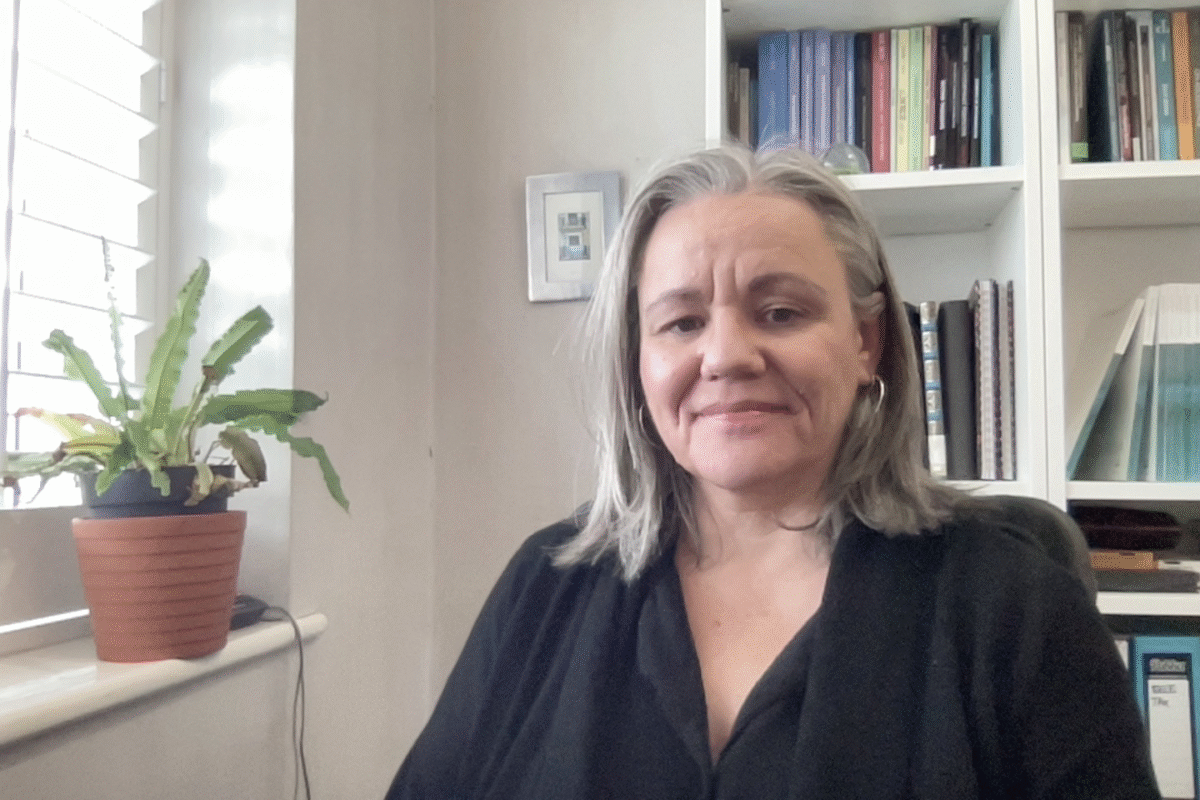
Emma Higgs is a senior Child and Adolescent Psychoanalytic Psychotherapist (ACP), Psychodynamic Organisational Therapist (BPC/APPCIOS), and Psychodynamic Psychotherapist (BPC), living and working in North West England. She has extensive clinical experience across a range of NHS CAMHS services, including inpatient settings and Parent–Infant services. Emma began her therapeutic career at Thornby Hall Therapeutic Community, part of the Peper Harow Foundation, where she was first introduced to psychodynamic thinking and practice. Since then, her training in attachment assessment and intervention, infant observation, and psychoanalytic psychotherapy has come together to shape her current work. She has a particular specialism in working with looked-after and adopted children (LAAC) and in applying psychoanalytic principles beyond the traditional consulting room. Alongside her private practice, Emma works closely with organisations that support distressed children and families. She has been involved in developing and delivering a wide range of trainings for non-psychoanalytic professionals, helping them to think psychodynamically about their work. This includes bespoke training for social care professionals and the police, with a focus on children’s development and the impact of trauma. Emma is especially interested in how psychoanalytic thinking can be used more broadly within support services, and in exploring the interplay between the internal world, the external environment, and the wider socio-political context. Emma is also the Deputy CEO of the Association of Psychodynamic Practice and Counselling in Organisational Settings (APPCIOS), a charitable organisation dedicated to supporting clinicians and practitioners working with distressed individuals through the application of psychodynamic thinking and skills.

Transcript:

Colby: 0:00

Hello, and welcome to the Secure Start podcast.

Emma: 0:04

But I actually started my journey the opposite way around and developed my clinical skills through organizational thinking. We think that psychodynamic work, psychodynamic thinking, psychodynamic principles, psychodynamic skills make extremely difficult work in organizations working with distressed people make it bearable, make it survivable, and so you feel bad quite a lot of the time when you’re doing this work. Um, and without any way of um making sense of what that feeling bad is, you drown, so that you go off sick, or you leave, you find something else to do, or you become um punitive in your response because you’re trying to survive. You know, everyone projects. So the adults who work with all of these children, young people, and families are not immune to projecting all over the place. Something transformative happens in the internal world through relationship. And I think that what a psychoanalytic training or model way of thinking and working offers you is some tools to be able to use essentially yourself as the therapeutic tool. Paying close attention to what’s happening to us gives you information and data that you didn’t have before and you would never capture in a form. So the thing that the psychodynamic model gives you is an opportunity to use how you feel, the experiences you have to inform your understanding of a child, young person, family, and not only understand them but then do something with it.

Colby: 2:01

Hello and welcome to the Secure Start Podcast. I’m Colby Pierce, and joining me for this episode is a highly regarded of the psychoanalytic community in the United Kingdom. Before I introduce my guests, I’d just like to acknowledge the traditional owners of the lands that I come to you from, the Ghana people of the Adelaide Plains, and acknowledge the continuing connection the living Ghana people feel to land, waters, culture, and community. I’d also like to pay my respects to their elders, past, present, and emerging. My guest this episode is Emma Higgs. Emma is a senior child and adolescent psychoanalytic psychotherapist, psychodynamic organizational therapist, and psychodynamic psychotherapist living and working in Northwest England. She has extensive clinical experience across a range of NHS CAM services, including inpatient settings and parent-infant services. Emma began her career at Thornby Hall Therapeutic Community, part of the Pepper Harrow Foundation, where she was first introduced to psychodynamic thinking and practice. Since then, her training in attachment assessment and intervention, infant observation, and psychoanalytic psychotherapy has come together to shape her work. She has a particular specialism in working with looked-after and adopted children and in applying psychoanalytic principles beyond the traditional consulting room. Alongside her practice, Emma works closely with organisations that support distressed children and families. She has been involved in developing and delivering a wide range of trainings for non-psychoanalytic professionals, helping them to think psychodynamically about their work. This includes bespoke training for social care professionals and the police with a focus on children’s development and the impact of trauma. Emma is especially interested in how psychoanalytic thinking can be used more broadly within support services and in exploring the interplay between the internal world, the external world, and the wider socio-political context. Emma is also the deputy CEO of the Association of Psychodynamic Practice and Counseling in Organisational Settings, APSIOS, a charitable organization dedicated to supporting clinicians and practitioners working with distressed individuals through the application of psychodynamic thinking and skills. Welcome, Emma.

Emma: 5:02

Hi, hi Colby.

Colby: 5:04

And welcome, yeah, welcome to the podcast. And I almost got through that without a without boo-boo. I’ll I’ll uh a couple of minor minor little edits will will go in there. And hopefully my head wasn’t moving too much because when you do when you cut out those edits, your head suddenly goes chum to a sudden spot. I think that’s 101 about recording things for YouTube, is you should keep relatively still. So you reading through your bio, you’ve had um quite a diverse uh career and practice, uh incorporating both work with individuals uh and uh sorry, work, yeah, work with individuals and families and work with organizations that support them as well. And on the basis of our prior chat when we discussed you coming onto the podcast, we’re going to focus a bit more this time on the uh the work that you do with organizations. Just wondering if you could tell us a little bit more about the work that you do with organizations and how you came into doing this work.

Emma: 6:14

Yeah, of course, yeah. Um, so I suppose um from a from a psychoanalytic perspective, um, I came to psychoanalytic thinking through organizations rather than the other way around. So it’s quite common uh for people who are trained psychoanalytically to then go on to think about organizational work. But I actually started my journey the opposite way around and developed my clinical skills through organizational thinking. So I sort of did it uh the reverse way around. Um so I suppose my my interest really, well, where did it come from? I suppose like everything your interest comes from your background, doesn’t it? It comes from where you start your life. Uh I came from a very uh working class uh city, Liverpool, uh in the northwest of England. Um strong cultural ties, uh strong community ties. Um so I was brought up with these things being, you know, sort of embedded as being essential and important, really, in the way that you live your life, the way that you thrive, the way that you develop. Of course, it comes with lots of tensions, it comes with lots of complications, it comes with a whole range of emotional experiences. Um, and and I think I want I I originally wanted to study art, is what I wanted to do, but I was a working class girl, so you there was no job that I couldn’t formulate a job uh in in relation to art. So I studied art therapy, and then from that I got a job in a therapeutic community. Um so I was young, early 20s, just left university. Um, and it was there really that I started to understand psychodynamic thinking, psychoanalytic thinking through the organizational setting, essentially. Um I have to say it was probably the most uh emotionally turbulent, bewildering experience that I’ve had in my whole career uh working in in the therapeutic community. Extremely rich learning, but it wasn’t without lots of pain and lots of stress and lots of anxiety. Um just a highly emotive experience, really. Um I met some wonderful people um and uh colleagues that I still work with today. Um so this is going back 30 years nearly. Uh so these are colleagues I still work with today. Um I suppose it was a unique place. I know that you’ve spoken to uh some other um professionals who who’ve worked in therapeutic communities and they’ve described uh what it’s like to be in therapeutic communities, but it’s very it’s a very unique experience because you’re completely absorbed in a in a way of living, really. Um and I would say a way of living as opposed to uh tech, it’s you’re not learning technique, you are living together essentially. And um and I just found it fascinating, I found it wonderful. I found that I um was in a set I suppose in a sense, my uh late teens, early 20s, I’d moved out of my community into another community, and um although they were using slightly different language, they were using language, well, they were using ordinary language, they were often swearing as well. Because it was a it was a large group therapeutic community with 25 plus uh adolescents, 13 to 18. So it was a you know, it was a lot of turbulence. The language was colourful, the language was colourful, um but it was there was psychodynamic and psychoanalytic language, but it’s it felt to me like this was the language of my family, my community. It was language I knew something about, but it wasn’t quite described in the same terms. So I kind of found a home there really. And finding the home in organizational thinking um meant that I stayed there for quite a long time. I was there for about eight, eight years, maybe nine years. Um and it was from that really that I discovered psychoanalytic thinking, psychoanalytic practitioners as a job. I’d never heard of it before, as a job that you could do. Um, and it was there that I discovered that really. So that’s how my kind of um interest in organizational thinking came about, and then over the years I’ve developed different sort of ways of working, different skills, different applications. But ultimately that’s brought me back to the application into organizational work because that’s where my heart is, really. That’s that’s what I love. Um, is how groups work, how teams work, um, how organizations work, how people, when they come together, you know, the thing I’m interested in is the psychodynamic practice, what happens when people come together, what happens in the space between the internal world and the external world. So, so that’s that’s what sort of brought me back to organizational thinking. In relation then to sort of how that looks in practice, I suppose it’s you know, it’s sort of consolidated into my work in Apseos, as you as you mentioned. So Apseos was an organization that was developed around about it’s a charity, it was developed in um 2011, I think, 2012. And it came from the therapeutic community tradition, really, and it was essentially uh developed to give a home to and to acknowledge that there were a whole raft of very skilled psychodynamic practitioners um out there that really didn’t have a home, they didn’t have a sort of psychoanalytic home because they hadn’t done a traditional psychoanalytic training. So we’re talking now about residential care workers, youth workers, social workers, um, and they were very skilled psychodynamic thinkers, but they didn’t really have anywhere to belong and to kind of a professional kind of umbrella to sit under. So it it it was its function really was two things. One was to provide a sort of virtual community, therapeutic community for professionals who think similarly, who want to think together, a bit of a professional network, um, you know, support, development for each other. Um, and the the other thing that it does is it provides a training in organizational therapy. So um organizational therapy didn’t exist as a profession until ACOS started really. Uh and what we’ve managed to develop over the course of the last, what is it, 12 years or so, a bit more 12, 14 years, is um we’ve developed a profession that is now regulated and registered with the British Psychoanalytic Council. Um, so during that time, uh obviously incrementally, uh, we’ve created this psychodynamic organizational therapy training. The idea behind that is that uh we we think that psychodynamic um work, psychodynamic thinking, psychodynamic principles, psychodynamic skills make extremely difficult work in organizations working with distressed people, make it bearable, make it survivable, and it allows people to stay and enjoy their work in a very particular way. Um, it doesn’t take away how difficult it is, but it allows them to feel like they’re contributing good clinical therapeutic um skills into their contact with very distressed people.

Colby: 14:31

Thank you. There’s a there’s a lot in there, and I found myself thinking uh as I imagine the listeners will be thinking while they’re while you were speaking, and um one one particular point that I’d like to follow up on was that um that uh picture that you you you drew about people who had had a non-traditional psychoanalytic training who effectively were um notwithstanding the quality of their practice, they didn’t have a a home as such, uh collective that they could be um a part of. I’m just wondering why you think it is um vital, beneficial, helpful to have an organization like Apsios that brings that creates a home for those practitioners.

Emma: 15:27

Well, I think uh I mean simple answer, we all need a home. You know, that that is essentially what we we will talk about. I I suspect in a little while when we’re talking about looked after and adopted children. We all need a home, we all need a place to belong. You know, our our humanity is uh partly located in our belonging to a community, to a place, to a home, to a family, to uh uh a social group of some kind. This is what we will go on to talk about, I think, you know, in terms of the groupishness of human nature and how that sits with um and is in conflict with the individual bits of human nature from time to time. Um, but this is it’s kind of um it’s an essential part of human development and human um experience. Um, so so I think having a home is a really important place, and home, as we as we know, isn’t necessarily bricks and mortar, it isn’t a pl it isn’t a physical building, it’s partly that. Um, but a home is an internal kind of structure that you feel located somewhere. It’s extremely important psychologically for your own mental health, for your own well-being, to be internally and externally located somewhere. So if it felt important to kind of gather together um a place uh where people could um you know, could could sort of hang their coat up in a way and say, this is sort of where I belong. It doesn’t mean you don’t go away, it doesn’t mean you don’t, you know, nip somewhere else, it doesn’t mean that you’re not part of other things, but you’ve got somewhere where you can kind of hang your coat up and say, I’ve I’ve got a place here, and people can understand something about me here.

Colby: 17:25

So it’s also about professional identity, isn’t it then, isn’t it?

Emma: 17:29

Absolutely about professional identity, and you know, and and um psychoanalytic training in particular is um it’s very rightfully very robust, very stringent, it takes a long time, but but typically it’s always been uh available to people from a particular socioeconomic background because it’s quite expensive to train, it takes a long time, um, and there’s been shifts certainly in the UK over the last probably 30 or more years in terms of that to try and build in um a more robust um range of people who will get into the psychoanalytic profession. So diversity in terms of race, um socio and economic socioeconomic background, etc. were you know, there’s a big drive to try and, as there are in lots of professions, to try and improve that, but nonetheless, it is very expensive uh as a training, and um it for for a long time it remained the domain of the upper middle class to upper class kind of, usually women, um, because they not always, but usually women. Um so so you know this the what we found where there was a group was that there were a group of professionals who come from a different in through a different route. They come in through social work, they come in through residential social work in particular, they come in through youth work, they come in through uh schools, you know, teaching assistants in schools, those sorts of things, um prisons, you know, um uh you know, people who were working with young offenders, for example. So they come in through these different routes, and they hadn’t, they they would never have even uh conceptualized of do undertaking a psychoanalytic trainer because it was out of their sort of way of thinking, really. However, they happen to be very talented in terms of psychoanalytic thinking and psychodynamic thinking, and essentially building relationships with these people who typically uh these the the children, for example, in a therapeutic community are not the children who typically would sit in a consultant room for 50 minutes a week. That would not happen, they’re not gonna sit there and do a therapy in that way. But but the this group of people has a way of working therapeutically with children that was um accessible, it made the therapy accessible to the children. So so the important thing was to give a professional identity to that because it was a really important profession that wasn’t quite captured in the existing structures really.

Colby: 20:11

And you you also mentioned about how um having a a home for them for for this group of practitioners is really important in terms of making the work which is very difficult a bit more bearable.

Emma: 20:29

Bearable and survivable and you know, and essentially um that you um uh you can do work and not lose yourself. Uh it is very difficult work. You know, you work and I know that you’ll know this, but you’re working with quite extreme disturbance quite a lot of the time. Um, and you know, the children and young people families that we work with have um had horrific experiences and they don’t know necessarily how to articulate that in a nice, tidied up way. They do know how to show, you know, they can show us what it’s like, and they usually show us what it’s like and or they make us feel it. Um, and so you feel bad quite a lot of the time when you’re doing this work, um, and without any way of um making sense of what that feeling bad is, you drown, so that you go off sick, or you leave, you find something else to do, or you become um punitive in your response um because you’re trying to survive. So um so so it’s really important to not only survive the work, but to kind of find a way to do something with the information you’re given as disturbing and as distressing. Person as it is to make the work survivable, make it make help you to understand that it’s not about you necessarily, it’s not about me, Emma, that it’s happening to, but it is a really important piece of communication from that young person, and now I can do something with it because I’ve got some tools to be able to think about it in a different way.

Colby: 22:22

It’s interesting. I I’ve been talking about this with previous guests for a little while now, about how we um in the difficult work, there is a real risk that we resort to habitual approach uh approaches to the work. And um those habitual processes, and you spoke mentioned it, can be punitive um and often are. So people become overly focused on how do we manage the behaviour and and they move away from what is the meaning of the behaviour? What yeah, yeah, why why is it happening? And and uh it’s it’s been my the cross that I feel like I’ve borne through the last 30 years is to try to help people to understand what’s actually going on here, yeah. Yeah, and I you you you mentioned that people carry the weight of emotion and uh and and and go on sick leave, leave the work and so on. Where does that emotion come from, Emma, that they that they carry?

Emma: 23:33

Well, I think I think it’s a combination for most people, it’s a combination of their own experiences, um, and whatever is, I guess, projected to use technical language, projected into them, communicated to them might be another way of describing it. Uh, whatever is given to them or put into them is a good way of describing it, uh, from the children, young people and families that they meet. So it’s this kind of coming together of these two internal world experiences, and there’s always a bit of an explosion, something happens. Um essentially, that is psychodynamic work. How do we kind of how do we remain curious about that explosion? What happened there? And how do we unpick um what that’s about? Um, so so I think that um it comes from the combination of somebody’s internal world meeting your internal world, your emotional experience meeting someone else’s emotional experience. And when that’s kind of infused with trauma, um, abuse, distress, lack of trust, hatred, uh, aggression, violence, all of the sort of experiences that lots of the people we see will come into contact with and have experienced first hand. Uh, when it’s infused with all of that, it um it meets with your internal world in a very particular way. And each of us have got our own experiences to kind of um that can to a greater or lesser extent uh do something with that. And you know, mostly what you’re trying to build actually in this work is clinicians who can develop a bit of an internal muscle to do something with those communications. I always I sometimes say to people, it’s a bit like you know, you do Pilates uh and you do the Planck to kind of build your internal core. I’m not very good at that physically.

Colby: 25:48

Look, I know what you’re talking about, but I’ve never done it.

Emma: 25:52

But I hear that when you do Pilates, you can build a strong internal core muscle, and it’s essential to have a sort of good, strong internal core muscle. So this is really about trying to build that psychological muscle um in individuals so that when they’re de when they’re given this stuff um that is very difficult to uh absorb, tolerate, understand, that they’ve got some muscle to do something with it rather than just spit it back out, which is what happens when people I do have a lot of compassion for people who are working untrained in these situations because they’re left with no choice but to get rid of it because it’s it’s awful, it feels awful. You feel frightened, you feel terrified, you feel furious, like a hatred and anger that you’ve never felt before, and you think, I don’t know where the hell this has come from. This isn’t me, this isn’t what I do. It’s come from the child. Yeah, exactly. So it’s really, really important that clinician, not clinicians, practitioners, sorry, they could be called clinicians, but practitioners are really helped to understand that they can do something with this, they’re not victim to it, they don’t have to just get swallowed up under the weight of it.

Colby: 27:11

Yeah, and I think um I think one of our primary human needs in a way, when the infant is born, I guess they of course they need their um their parents to keep them safe, look after them, respond to um a range of their needs, but they all they all in my way of thinking sit underneath the a very a f a uh a more primary step, which is that the infant needs the adults to understand them, to understand their their experience. And that to me, that’s it, that’s just so powerful that you have children who have been deeply hurt who will project their hurt uh onto the adults around them as a way in which to facilitate being heard and understood in their experience. And they’re not particularly aware that they’re doing it, and and it’s a disaster when the adults don’t know that that’s what they’re doing. So having that that understanding of what’s really going on here helps people to just step out of my own reaction to the work and just think about what’s actually going on here with in this dynamic between the children and and myself. Yeah, and without that, you you you you end up carrying a lot of negative feeling around.

Emma: 28:41

Well, you feel it as if it belongs to you, yeah, and that’s the difficulty. Um, and you do have to feel it to a degree because it’s the feeling of it that allows you to do something with it. You can start to wrap some meaning around the experience you’ve been given, but you so you have to feel it first because that’s how we understand what’s happening in the world is we feel it in our body usually first, you know. It’s just we’re we are bodily creatures, so you know, the the body-mind kind of relationship is really important. Um, so so they have to feel it and not be sort of killed off by it, psychologically killed off by it. Um, so the feeling of it is really important.

Colby: 29:32

It’s interesting. I mean, my I I my professional career is as a clinical psychologist, and I came through a fairly traditional clinical psychology training where um we were taught, or at least we were led to uh believe that it was really important to have to maintain a certain amount of professional distance from the experience of the client and be really good observers and responders to them um without being emotionally involved in their life. And um I I can remember a very early um insight that came to me when I worked, I I my first job as clinical psychologist was in child protection, and I’ve kind of never really gotten away from it. Um and one of my first insights was um it was my emotional reaction to the work that helped me to be a better practitioner in the work, and that I didn’t want to shut that off, didn’t ever want to shut that off. But it’s a bit it’s a double-edged sword. You you need to have you need to know what you’re gonna do with those, with that emotion. And I I’m for what I don’t I don’t think I did know for a long time because I had that insight. I plowed into plowed on. Um and it’s only it it it can be 10, 15. I had a another guest on who talked about you know uh 20 20 to 30 years into his career, he just suddenly has a heart attack out of nowhere. So and and it’s a bit I I I sorry, I don’t want to take too much of the floor, but I I think often think there needs to be an ACES score for practitioners in this work because the consequences of ACEs are longer term, yeah. And I and I think I think I think we as pre um practitioners in the work, um we have to we carry a lot on behalf of our clients.

Emma: 31:43

I think that’s true, Colby, and I think that you know the work comes at a cost, but it’s also a privilege, you know. It is both those things. I’ve learnt a huge amount from the children and young people and families that I’ve worked with and have been privileged to work with some um very uh distressed people but wonderful people who’ve taught me a huge amount. Um, has that always been easy? Absolutely not. Has it come at a bit of a cost? Yes, at times it has, and it’s given me a great deal as well. Um, it’s sort of both. What I would say, I do agree with you actually about the sort of impact and you know, the we know lots, don’t we, about secondary trauma, etc., etc. Um, you know, whatever sort of terminology we want to use. Uh what I would say is that without that is actually why psychodynamic thinking and organizational work is really helpful because it sort of helps you to um do something with the impact so that it doesn’t sit in you in as if it belongs to you, like I was saying before. The the professions I worry about most, the professionals I worry about most, are social workers and uh the police, for example. Um uh uh residential workers who don’t have this kind of support, uh, teachers in schools. I worry about them because they’ve got no framework to um process what’s happening to them. They they very rarely get clinical supervision, they very rarely get any opportunities to reflect or think, they’ve got no sort of theoretical framework to understand some of this stuff. Um, so that that actually I think has a bigger impact. And then what you see in those professions is they use all sorts of understandable defensive processes to protect themselves from the impact of what’s happening to them. You can’t survive it otherwise.

Colby: 33:43

Yeah, it’s interesting.

Emma: 33:45

Unfortunately, that is happening in mental health, actually. Sorry, in the UK at the moment. So I feel you know, I I still work in CAMS and I see lots of uh my colleagues um using all sorts of defensive practice to manage the impact of what they’re listening to day in, day out, every day, the high levels of risk, high levels of suicidality in the young people that they’re working with. And they use all sorts of defensive practice, and it usually looks like organizational defensive practice, like tick boxes, risk assessments, uh forms that they go in with that they use to fit to complete their therapeutic sessions. It it looks like that sort of defensive practice, so that they distance themselves from the work. But I think for myself, well, how do they survive it otherwise?

Colby: 34:38

Yeah, yeah. You you’ve you’ve you’ve mentioned defensive practices, you’ve mentioned a number of groups, all of which as I was going through my head as you were mentioning them, and then you mentioned them, and and and what what are they beyond risk assessments, tick boxes, what what are those defensive practices look like? What what should people be on the lookout for?

Emma: 35:06

Um I think um things like um removing themselves from sessions, so remove removing the humanity out of sessions with or you know, contact with children and young people, for example. So going in with forms, as if that tells you anything, loads and loads of forms, um uh being um agenda focused rather than curious about what might emerge. I know that that’s frightening to do, but if you go in with an agenda, you’ve already applied a set of circumstances to the session, there’s nothing for you to learn. Um, and this young person, child, young person wants to be in touch with a human being, I think, um, not a set of forms. Um I think they I know why people do it. I think they do it because they feel lost and frightened and out of their depth, understandably. Um I guess the other thing would be uh a huge focus on uh the behaviour change, as you mentioned. Let’s just focus on the behaviour change, or a huge focus on a particular element of the child or young person. So you come in through a pathway. So are we treating anxiety? Are we treating depression? Are we treating attachment or something like that? As if there’s not an individual with a whole constellation of experiences there that means that they depending on which lens you look at it through, it’s going to fit perhaps any one of those. Who knows? Um, so a singular focus rather than uh meeting a person, an individual.

Colby: 37:01

Yeah, so it’s kind of that retreat from from truly understanding, truly um experiencing and what what the other person is experiencing. We’ve we’ve retreated to perhaps even more so, I think, to uh a habitual reserve and professional distance in practice. I’m wondering about um, you mentioned also police officers, uh, teachers, social workers working, I guess, in local authorities in in more generic child protection type roles. What sort of defensive practices do you think they themselves and perhaps their supervisors should be on the lookout for?

Emma: 37:45

Yeah. Um, I think you know, social work, if I start with social workers, I think they’re completely swamped with paperwork. They’re a massively scapegoated profession, so they are always expecting to be attacked, not just from the clients they see, but from cult, you know, our our pop, our population, essentially. Um, and they are uh a profession that are um usually the ones to be blamed when something goes wrong. So there’s there’s defensive practice built in from the start, they’re covering their backs from the word go because they’ve been scapegoated and maligned and blamed for horrific events, but it’s not social work per se that’s kind of caused that to happen. Um, so they’re swamped with paperwork and they uh have developed a kind of hardened attitude, I think, to quite severe distress um and pain. Um and they get um conditioned to the horror of the stories they hear, and the threshold increases. So the uh it’s like what it’s it’s becoming a bit, they become a bit numb to the things that they shouldn’t become numb to. So sometimes I hear stories and feel shocked, and I look around and I think is no one shocked at this, and sometimes I have to say, say in a child protection meeting or something, you know, I’m really impacted by that, like I’m really shocked by that. And they might say, even, oh, we hear this all the time, you know. And I and I say, Well, you should be shocked. That’s shocking. You should be shocked by that. That’s an awful thing to hear. They become a bit desensitized because they have got to survive, uh, so they come be hard. The police are different in a way, I would say, Kobe. I I think this has been one of one of the very surprising things that I’ve found in my contact with the police. I don’t have a lot of contact with the police in terms of their actual work, um, and I don’t have a lot of contact with them individually therapeutically. I do training uh with the police, um, and I had expected a bit of a macho attitude. I suppose this was my bias. I’d I’d expected a bit of a macho attitude, a sort of dismissive quality to emotionality and human experience. I actually didn’t find that at all. I found them to be uh really receptive, very moved by the training that I delivered. They they are not taught child development, for example, um, as part of their training. So they so then when they see children and families who are traumatized, um, you know, there’s domestic violence or there’s child abuse or they’re doing um interviews to best evidence interviews and things like that, and they’re meeting with children, they they’ve got no context within which to um place the experiences they’re having with these children and young people because they’ve got no understanding of child development other than ordinary stuff that we might pick up along the way, or they may be parents, for example, and have got some sort of understanding of it, but they’ve got no specific training in relation to the impact of trauma or neglect, for example, uh, and what that might look like. Um, so they they’re very moved by the training, and it’s the trade that when I deliver that training, I always get police officers coming to me at the end of the training or in the break or something like that, uh telling me their story, which is very often traumatic, really quite horrific traumatic experiences.Colby: 41:28

Yeah, they have a lot of problems with uh retention in police with post-traumatic stress disorder.Emma: 41:34

Absolutely. Um, and so you can imagine, you know, if uh you’re a police officer with a traumatic story from whatever, whether it’s in the job or prior to the job, uh, and you’re meeting with a very distressed child who’s got a traumatic story, you can imagine where these two things might meet and what that particular explosion might look like. Internal explosion, um I’m thinking about as opposed to an external one.

Colby: 42:04

Yeah.

Emma: 42:05

And teachers so your capacity to think is gone, your capacity to do anything is gone.

Colby: 42:12

I have a I often say that um uh and I’ve meet I’ve talked about this on the podcast with previous guests, is that um what I’ve observed with social workers in particular in child protection is they stop thinking about the work that they’re doing. They just follow procedure, follow procedure, follow procedure, and a lot of procedures about how do we manage risk, yeah. So rather than I just wanted to pop in. I’m gonna ask you about teachers as well, the same question in a moment, but I wanted to pop in. I just remembered while we were talking that that insight that I referred to earlier, um, I can’t because it was so long ago, it’s 30 years ago, I can’t remember the temporality of the of the two. So I was in a job interview where I was asked about how you how I how you manage the feelings, and I said, well, I you know, if I stop having those feelings, then I I think I’ll I’ll not be a great practitioner. But I remember coming in to do an assessment of a um uh a child who was um under 10. And they I came into this is when I worked in child protection, and I came into the office and I went into the secure first secure area, and in there was this very young and very waflike, very small child, and lots of adults all around at desks and lots of activity, that first thing in the morning activity, drinking coffee and chatting and and so on. And the child had been brought in and dropped off by a taxi. And I just I I just her her experience, I mean it was the first thing I acknowledged to her when I s when we went into the room to do the assessment. But that that stuck with me for a long time. Her experience of being collected from home by taxi, a stranger, and brought in, and then having to kind of sit and wait for me. And she didn’t have to, I wasn’t running late. She it was she was just the first first person that I was seeing that day. Yeah. And I I just felt awful for how she how that might have been experienced for her.

Emma: 44:29

I also sorry, I was just gonna say those experiences are really important, Colby, aren’t they? Because you know, I’ve got similar sort of stories in different places I’ve worked really where you know there’s certain children, young people, adults actually that I’ve worked with, families that I’ve worked with, that will always be in my mind, like they’ve sort of lodged themselves somewhere because of whatever’s happened in that contact that we’ve had. Uh they will always be there and they teach us different things. It’s an important thing to hold on to. Um, you know, it’s not always pleasant, they’re sometimes painful, but they’re really important pieces of information to hold on to. Um, because they help us uh not only connect with the humanity of what we need to connect with, because that’s essential. Um but they but they help us um understand something about what’s uh what’s being you know the there’s a generosity. I know this it doesn’t feel like this when you’re on the receiving end of some of these communications, but there is a generosity in in the you know, you are being giving a something, um and you know, some it’s not always it doesn’t always feel like that. I’m I’m sort of correcting myself as I say it because I’m thinking about some of the things I’ve been given. They’re sharing something, and um it the thing that they’re sharing may not always be wanted by us, and it’s got to go so but it’s got to land somewhere, like it does actually need to land inside a person somewhere, otherwise, you know, we end up with um all of the things we know about, for example, the prison population, you know, the adult prison population. We end up with a population of people who uh can’t use relationships um to to have themselves understood, yeah. So, you know, so they they sort of live in the in actually going back to where we started, the importance of home, they they live in a world where home is is not something that’s useful to them at all.

Colby: 46:46

And teachers, teachers are another group group that what in fact have probably have the most um exposure to our uh troubled uh young people, and again also carry a lot of uh stress, but also carry a lot of um responsibility for managing behaviours.

Emma: 47:07

Yeah.

Colby: 47:08

What what do you what do you you see in terms of those defensive actions, those at work? Things that need to be, I guess, looked at, recognized, looked at, and understood, and perhaps um dealt with in a in a different way. What do you how do you see teachers responding in a defensive way?

Emma: 47:28

Um teachers, I mean, absolutely through behavior management, managing the class, uh focus on uh I don’t know if it’s the same actually in Australia, but there’s a a sort of almost um uh kind of uh completely unrealistic uh being wedded to attainment and attendance in the UK, as if they are measures of something. So everything is seen through the lens of attainment levels and attendance. Um, so the whole of a teacher’s job is structured around attainment levels, attendance levels, and um behavior. So manage the behavior in the class. What do I see them do in practice? I mean, I’m sort of being slightly careful because I don’t want to be unfair to teachers, but I I actually struggle with teachers more than probably most of the professions because I think they are highly defended. Um, I do understand why, but there’s a real rigidity around the capacity to see anything through a different lens.

Colby: 48:40

Yeah.

Emma: 48:40

Um, I think, I mean, certainly this is definitely in the UK. I don’t know how widespread this is, but you know, teachers are a profession that are under huge amounts of scrutiny uh in the UK, offstead come in and they, you know, they sit in classrooms and they they there’s an atmosphere in the whole profession of judgment. Um, you are being measured and monitored and assessed for competency all of the time, and that is absolutely passed down to the pupils. So, you know, most ordinary kids who come from ordinary backgrounds can kind of suck this up and get on with it and just kind of get through the day, and you know, even then they have uh sometimes a bit of an awful time in school. But if you’ve got a child who, for example, can’t learn, can’t learn, not won’t learn, but can’t learn because, for example, they’ve had a traumatic early history, there’s been lots of neglect or abuse, they they can’t play for a start. If you can’t play, you can’t learn. So they’ve got no capacity to sort of use their mind that you know they’re not relaxed, they’re in a completely traumatized state. So you can’t learn or play if you’re not relaxed in a relatively relaxed state. They feel endangered in those classrooms. It doesn’t look like that. I appreciate that, and certainly by sort of mid to late adolescence, it doesn’t look like they can’t do these things. It looks like defiance and violence and aggression and disruption and all of those sorts of things. They these kids humiliate teachers, is what happens a lot. Is that I think they humiliate them, they expose them and humiliate them, and they find their weak spots, and um because they’re very good, Ari, because they their whole lives have been uh they’ve been uh trained to find people’s weak spots, because that’s where you get the communication in, and they humiliate them, and teachers don’t understand the humiliation as something that they could do something with, for example. I mean, if you, for example, you’ve got you’re working with a child and they they say the thing that’s gonna just make you feel like the smallest person you’ve ever felt like ever in your whole life, um, and they’ve taken you right back to your most vulnerable self. You your option, you’ve got a couple of options, haven’t you? You’ve kind of got an option to hate this kid, they’re awful. What a vile child. I’m perfectly fine. I’ll put my big girl boots on and kind of get back out there, and you know, you might become aggressive, or you might become very strict, or you might become very rigid or disciplined. You might say, I want that child out of my class, you might exercise power, for example, because in schools there’s a massive power differential. Um, so you might exercise power in a very particular way, you might become very punitive, and that this child has disrespected you, has misbehaved, has not offered you the rightful authority that you deserve, etc. etc. You do all sorts of things, you could do a whole range of things. What you’re very unlikely to do is say, Oh my god, like is that anything near how that child feels? Like, if that is anything near how that child feels or has felt in their lives, that is awful. Now, if you can get to that point, you can approach that child, and or you or a colleague, a team of people can approach that child and sort of understand something about what’s communicated and find a way in. You’re not going to go up to them and say, I think you felt really humiliated because they’re not going to tolerate that, but you can find a way in. You, for example, can be very careful about not humiliating them because you know humiliation is extraordinarily painful for them. So you could find ways to be with them that don’t humiliate them, that don’t make them feel small, or don’t make them feel like they’ve got no power.

Colby: 52:44

As you’re saying that, I’m thinking both both the child and the teacher.

Emma: 52:51

Absolutely.

Colby: 52:52

Because I’m thinking about how how how so often leaders leadership in an organisation doesn’t participate in training. That’s for that’s for the people on the floor. And they and then through this podcast and speaking to a range of um guests, they that’s that’s really been um the the message, really strong message has been leadership. Everyone, yeah, drivers and organisers, everyone needs to be aligned and they all need to have um they need to be supported to think about the work they do. Because the first thing I think in in defensiveness, when you when you when you fall prey to defensiveness, the first thing you stop doing is thinking, and you and you resort to uh, as I said before, kind of habitual, um reflexive type responses. And um so there needs to be a a support structure that allows thinking about what’s going on, and that that has to come from the uh leadership of the organization, both sh supporting it, but also knowing themselves what’s really going on. Yeah, yeah, yeah.

Emma: 54:10

You know, that’s well there’s also an in in increase in projective processes, so adult, you know, everyone projects. So the adults who work with all of these children, young people, and families are not immune to projecting all over the place, they absolutely are projecting all over the place. Also, they’re getting rid of the stuff that they can’t tolerate. Um, and usually that goes upwards, it goes to the leadership. So, leadership, people in leadership are in uh receipt of particular kinds of projections, and we might understand these in family systems, you know, they they’re in a sort of parental projective position. So, you know, the the managers are senior colleagues, the managers are organizational leadership, even if they’re sort of unknown. People like the NHS, for example, is an absolutely huge organization. I only know some of my leaders. I don’t, you know, the the rest are faceless. So you can project in all sorts of ways. I can project particular things into my managers when I’m particularly upset or distressed, my direct managers, I can do something with that, or my supervisor, for example, um, and feel frustrated or disappointed with them, or like they haven’t looked after me properly, or I’m angry with them, or whatever it might be. Uh, to the faceless sort of big leadership people in organizations, the I have to say, what tends to happen is the vitriol of the projection is huge. You can hate them in a very different sort of way because they’re distant from you. You can um denigrate them in a very particular way because they’re very distant from you. Actually, this is just ordinary stuff. I don’t think there’s anything wrong with that, but you do need a leadership function that can receive the projection in the way that your ground floor kind of residential social workers, teachers, whatever it is, can receive the projection from the child or young person. So the projection and the anxiety ought to go up in an organization always, and you need a leadership that’s got the capacity to think as you keep uh drawing at right rightfully drawing attention to your capacity to think has to start and and kind of be functional at that leadership level.

Colby: 56:37

There’s a lot of in this space, there’s a lot of talk about trauma-informed practice. Yeah, and and it’s it’s trauma-informed the term has become endemic, I guess, in its usage in in populations where um there’s been significant adversity in the lives of of the client group. But not all trauma-informed training or models or whatever is is psychoanalytic or so psychodynamic. Where where do you think where do you see um the psychodynamic practice that and and concepts and that you’re talking about, where does that sit within so-called trauma-informed work?

Emma: 57:30

Oh, that’s that’s quite a big question, isn’t it?

Colby: 57:33

I mean, I guess and it’s a question without notice, I should say.

Emma: 57:37

No, it’s okay. I g I I I mean it’s got me thinking, but I think probably in Australia, like in the UK, psychodynamic and psychoanalytic thinking practice has kind of gone a bit out of fashion. You know, we have kept a strand of it in the UK, but it’s not the core, like everywhere, CBT, behaviour modification, etc. The sort of core um sort of uh they’re not straight, they’re not trauma-informed. No, but they’re but they’re the things that are kind of offered. We we get ACES training, everybody now gets ACES training uh in residential homes, uh in schools. Schools often call themselves trauma-informed because you know it’s not it’s not unimportant what they’re doing, um, but they go on a course for a day or something like that, and they learn a little bit about attachment, a little bit about trauma, the impact of trauma, and and they call themselves trauma informed. Um I don’t I don’t think that that’s unhelpful, it’s just that it’s a small bit of something that can kind of um well, what I don’t even know what it actually gives you. Uh it might give you a slight orientation towards something else that might be happening. So, you know, that’s good, that’s a good thing.

Colby: 58:59

Yeah.

Emma: 59:00

Um psychoanalytic work, psychodynamic work is essentially about the unconscious, it’s about the unconscious. This is the reason in lots of ways that it’s gone out of fashion, and the reason it’s such difficult work is because it requires you to be in touch with um the distress and the disturbance in a very particular way. Um now, my view would be that you get much more rich information, accurate information, um, person-specific information. Um if you if you do that. Um that there’s you know, essentially the you uh you trans something transformative happens in the internal world through relationship. The problem with trauma informed in its broad sense is it’s like it’s applied, like it’s a thing that you can just tell people and then it does something, it doesn’t do anything. You have to do something with the trauma-informed, and you the only transformative change that happens is through relationship. And I think that what a psychoanalytic training or model way of thinking and working offers you is some tools to be able to use essentially yourself as the therapeutic tool. You are the tool, that’s it. It’s not a cognitive process, it’s a relational felt experience. Um, and you know, for all the reasons we talked about before, that comes at a bit of a cost, however, it does make a change that is transformative as opposed to something is understood up here, but it’s not felt here.

Colby: 1:00:54

It’s long been my thought about it working in this space for 30 years. You I’ve seen attachment theory has hung around, but other theories have come and gone, uh, and certainly, and some are more to the fore at very at certain times. So um I think and for example, and I’m just picking one from my 30 years of experience, the neurobiology of trauma, that the that that body of work, which I found really helpful in my development as a clinical psychologist, the the work of Bruce Perry, uh, particularly in my early years back in the uh mid to late 1990s. So I’m not I’m not having a go at it. But what I what I my observation is it it’s it’s rich on knowledge or under you know what you need to know. It’s it can be a bit light on on what you need to do. Now I know Bruce has moved on, for example, and has the neuro-sequential model of therapeutics, but uh so in some senses what I’m reflecting on is kind of before that it gave people a lot of detailed information, but but there was not much that they could do with it, and maybe that’s why Bruce, you know, it also moved into into that. But uh, but there are there are other things like you know, ACEs, ACES scores and um what do you do with those?

Emma: 1:02:33

Um yeah, exactly.

Colby: 1:02:34

What do you do? I think I think we need guiding frameworks. We need we need him we need um to be able to have a lens or or even multiple lenses through which to understand what’s happening for us in the work and understand what’s happening. I think that’s probably one of the bits that is omitted a lot now that I think about it is the what’s happening for us in in the the widespread conventional kind of trauma-informed approaches to the work. What is happening to happening to us as practitioners as part of this dynamic with with the people that we’re working with?

Emma: 1:03:14

Yeah, yeah. And I suppose the psychodynamic model would say that paying close attention to what’s happening to us gives you information and data that you didn’t have before and you would never capture in a form or a set of experiences. You know, essentially you capture the ACE’s experiences, it’s a set of experiences, it doesn’t tell you anything about how that has impacted that particular person and how that particular abusive event or traumatic event has met with that particular person’s internal world, and you know, the sibling of that person might have an extremely different experience because they’ve got their own internal world that’s met with this particular event. So the thing that the psychodynamic model gives you is an opportunity to use how you feel, um the experiences you have uh to inform your understanding of a child, young person, family, and not only understand them, but then do something with it.

Colby: 1:04:24

What do you do?

Emma: 1:04:26

Well, you try to make some sense and uh through relationship make some sense, wrap some meaning around what’s being communicated, you bear the pain, they’re not alone, you’re traveling on something together, you create a unique language, a unique journey, a unique set of experiences. Um, so they’ve got a kind of partner in trying to understand this thing that might be intolerable. You try to help them build up a reservoir of uh muscle, for want of a better word, to tolerate and live with the experience they’ve had because it’s never gonna go, it’s never not gonna have happened. They do have to find a way to live with it and move on from it. You help them find a way to um accept something about their past and allow themselves to think of a future that can be different. You’ve try and help them find some hope, um, trust in relationships again. Essentially, you’re trying to replicate something that happens through ordinary child development, aren’t you? You know, um uh you you mentioned infancy earlier, yeah. You know, and an infant is is born into the world and they, you know, they they you know, there’s nothing more projective than an infant. Essentially, that is what they do. They project their bodily experiences out into the world, into their mother, father, whoever it is, but I’ll use the word mother for ease, and it is very psychoanalytic. So, you know, they project the the all of these experiences into their mother, and they don’t know what any of this means. The mother’s job is to receive the thousands of communications that they get given every day. Receive it, feel it, digest it, do something with it, and transform it into something that’s got a bit of meaning. What does that look like in practice? It looks like a screaming baby crying because they think they’re dying, and the mummy comes along and she says, Oh, it’s okay, I think you’re hungry. Is that a hungry pain in your tummy? Now the baby doesn’t have any idea what hungry means or what tummy means or any of that, but they do know that this mummy person is trying to do something with the information that they’ve been given. And then that happens thousands of times a day over years, and then the baby develops a mind, and that’s what you’re trying to replicate in a psychodynamic relationship.

Colby: 1:07:22

It’s having having gone down the traditional route, I I because of my primary guiding framework, the the the the theoretical orientation I most use was uh attachment theory, and and we all I always thought it was not, you know, it kind of sat on the boundaries of of psychodynamic and and other developmental psychology kinds of theories. So I did, I was never I always thought that the work that I do doing that I did was psychoanalytic in a sense, but but not deeply psychoanalytic. But in actual fact, I I arrived at that very place that you’re talking about a long time ago, which is to try and understand, think it very much about the infant and what what the infant experiences and what they’re projecting, and for a lot of our young people, I think um that there that’s what we need to be turning our mind to. What was what what the trauma occurred through neglect primarily and abuse during infancy, and um a recent conversation with Peter Blake, he was he was very much uh talking about well what infants do have seem do have a mind. What do they do with all of those experiences? How are they how are they stored? How do how are they expressed?

Emma: 1:08:53

But in any bodily, isn’t it? It’s the body, and they so that’s where you know it I know there’s lots of debate about where the mind is actually going back to the sort of neurodevelopmental stuff you were talking about, sorry, the neuropsychology stuff you were talking about, you know, this uh this introduction, well not introduction, the all the work that’s been done about the polyvagal system and the sort of central nervous system. And I I actually I don’t know if this is true or not, but it as a as a theory it really helps me because I’ve always kind of located my mind when I talk about the mind, I talk about it here somewhere. And I noticed a couple of years ago I was talking to a colleague who I actually worked with in the therapeutic community, and I’d met up with him somewhere else, and we were talking, and he was talking about his mind, and he’s doing this, and I’m doing this, and I’m like, So, where’s the mind then? Like, you know, because of course the mind is an abstract concept. So, so I started to think, and I don’t know if this is true, but I’ve started to think that that sort of central nervous system is the mind, in a sense, and that’s really helpful for me because it it really helps me understand how much is located in the body. You know, the body is it the the brain is the brain and does something called thinking or something, but it’s of course informed by the body. There’s a sort of process that’s going on here that’s kind of cyclical, and I think that’s the kind of mind. This is just my theory, by the way, but that’s the sort of mind process. This is just something that helps me, and I think partly because of what you were saying, Colby, is you know, a lot of my training, but a lot of the work that I do is working with children who were traumatized in infancy, they’ve got no language for their trauma, they’ve got no way of uh conceptualizing it as an event because it happened pre-verbal, it happened pre-memory, even. So, how do they make sense of that? The the reason we know they’re traumatized is because they it’s in their body, they show us, and they usually show us through behavior, and usually the way the way they show us is by having an impact on our body. That’s how they show us. So, this is really important stuff that I think we need to kind of uh keep, you know, really hold in mind. This is what, for example, teachers, social workers, police struggle to understand is that somebody who can’t remember a traumatic event will still be traumatized by it.

Colby: 1:11:27

Yes, yeah, yeah. When you were talking before, I I was thinking a lot about containment. And and and really that’s um people are a bit confused, as was I, when I first came first came across the term uh containment used in this uh in this space. Um but from a psychology a psychoanalytic point of view, um it’s it’s about being able to recognise, acknowledge, hold what the person is projecting and and then help them make sense of it feed it back in in feedback in in ways and in dosages that make it more tolerable. Making it making the experience of hunger more tolerable. And and Beyon he, you know, Beyond’s work, he talked about when when we we effectively contain someone, one of the outcomes of that is that they’re then able to think.

Emma: 1:12:38

And you could extend that’s the it’s the prerequisite to thinking.

Colby: 1:12:43

Yeah, and then so they can think and then talk about it. Yes, if yeah, so uh the uh a a young person who grows up in a conventional nurturing care environment will tell their mum and dad that they’re hungry, yeah, but the prerequisite for that is way back, if they’re not we well, the prerequisite for that is way back when their parent understood that they were hungry and responded to them. And um so if the child is not telling anyone that they’re hungry, if they’re doing other things, then we have to recognise that early on um the the the the adult wasn’t effective wasn’t an effective container, they didn’t feel understood by the adult. And this is I guess in part why I say understanding you gotta is where we start. And it’s also it’s probably our most powerful intervention is to just spend time understanding what’s going on here for the child. And then our responses can be psychological, they can be you know psychological strategies or whatever, but but I think um they’re just can they’re relational sh responses more often than not. You know, how do we it’s how we uh how we um uh create a relational space that is therapeutic for those particular issues for the for um for the person or the and and that goes for the child in front of you, it goes for the for the the practitioner and it goes for their supervisor and it goes for the manager as well. Everyone needs because as you say, everyone is in receipt of of projective experience. So you have a choice you either don’t think about it and just respond in a pre in a procedural way, heartless procedural way, which is interesting in the in the social care and child protection field. Like who’s gonna put their hand up to say, I prefer to respond in a heartless procedural way, or you have to think about it. Yeah. But you can’t think about you can’t immerse yourself, I guess, in the experience in that way unless you are well supported to do that. And that’s what we that’s one of the things I guess we find with organizations is that they don’t the support structures for the staff are not there.

Emma: 1:15:23

No, absolutely, and that you know brings us in a way back to where we started in relation to Apkeos, which is why it was you know, the work that we do in organizations is to try and build within the teams um these uh supportive structures, um, thinking structures, essentially, a culture of thinking that means the the contain the containment process that you’re describing there isn’t just happening in an individual, it happens in an organization. So um you’re trying to move the psychedelic. I mean, you’re right to kind of it was containment I was describing, so I’m glad you picked up on it. And of course, Beyond’s uh done the the work, it’s brilliant in a way, you know, brilliant in the proper sense of the word. Uh what he’s done in relation to uh the container-contained model, and I like to think of it as a container-contained model, which is how he described it, because it captures the dyadic relational process that we’re talking about. It’s not an it’s not a one-person process, it’s not a one um system process, it’s a it’s a relational process. Um, and what you know, what we would be hoping for organizationally is that you move that out of the individual, so the mother person or the individual condition in the consultant room, for example, who where it’s really important that it happens there, but organizationally, you can build a container-contained model as well. So that the digestive process, which is what happened essentially, the container-contained model is a process of digestion. Um, and you you you’re given something, you digest it, you do something with it, you metabolize it, and you reproduce something with meaning attached to it, as you rightly say, in a tolerable form. And organizate it is possible for an organization to have that container-contain model as part of their structure. And what that looks like is um good hierarchical structures, good systems, good processes, um, spaces for people to think together. Uh, you might have different spaces where people think. So, for example, the management team might get some specific support to think about uh a relational thing that’s happening or a projective process that’s happening from the staff. How do they understand that in relation to the particular group of kids that they’ve got in their home, for example? You know, what’s that about? Um, they might have a particular space to think about that, and then you you sort of cascade that right the way through the organization so that everybody’s got a small group, perhaps individual, and large group opportunities to think. I guess the other thing we because the other thing we haven’t touched on in a way, um Colby, is the power of the group. That’s the other thing that you capture uh when you do organizational work. You know, groups can be wonderful and they can be very reparative and they can be very destructive, as we know. Um, so how do you create a group, staff group and children’s group, uh, where there’s reparative capacities within the group, and it’s it’s extremely powerful if you can get it right. Um, it can be very destructive, as we know, which is what we need to try and uh mitigate against.

Colby: 1:18:55

And I I think you’re right. I think um um we started with a bit of a structure, but in uh in with a with a number of questions, but in in probably in keeping with the with the topic, we just uh uh remain curious about about well I did and and we meandered a bit. We meandered through maintaining a a stance of of curiosity. Um I guess so I I actually think we covered most of most of what um uh I had thought we might cover. But I found myself thinking just now about what what a um a containing the organization looks like, like an effective containing organization looks like. And I I wonder before I say what I think, what I what I’ve observed, I wonder wonder what you observe when you see a an effective containing organization. What do you see?

Emma: 1:20:03

I think I mean I think you you you’ve mentioned a few times now the link between containment and thinking. So I think that’s what you see is uh uh a preparedness to discover, a preparedness to uh not be an expert, to be prepared to learn something, get to know, understand. Um you see a preparedness to think essentially, which is that you’ve got um a sort of steady core of something that means that when you’re challenged and moved and um displaced slightly from ideas or processes that you might have, that you are curious about why that’s happening, why it’s happening now in particular. Um that you have an interest in the human people that make up your organization because organizations aren’t some magic thing, they’re essentially a collection of human beings so that you stay connected to the humanity of the people who are your organization. Um that you and and actually, I don’t think uh containing good organizations always um get it right. I think they make mistakes, I think that they um they flounder, they get lost, they continue to get frightened, they continue to feel the impact of external stresses, for example, funding cuts, all of these sorts of things. You know, they they still are living in the real world, but they’ve got a capacity to kind of um shift a little bit with all of these things. Actually, this is an interesting thing because an important part of containment, I think, is something like a boundary system, you know, that you’ve got a it’s not it’s not like a free-flowing thing that if it passes through sort of filters in this digestive model. Um that muscle I’m talking about, like there’s a there’s an impact that’s felt, things go wrong all the time, especially when you’re working with distressed, troubled children, young people, families. Things go wrong. Um, so you feel the impact of the thing that’s gone wrong, but you don’t collapse under the strain of the impact, and a good sort of impact barrier in a way is something I always think of it a bit like because I think in images, this is me art, but it’s sort of training going through. I think in images, but um the I always imagine it to be like you know, the do you ever remember those space hopper bouncy things? Did you ever have them when you were a kid? Like these big rubber bouncy things that you used to sit on and hold the oh yeah, yes, yes, yes. We used to call them space hoppers, um, but you know that thick rubber that can kind of take a bit of a punch.

Colby: 1:23:17

Yeah, yeah. It can’t take me now, but yeah.

Emma: 1:23:20

It can’t now, no, no. But it can it can feel the impact of something and it can change shape because of the impact of something, but it doesn’t collapse. Um, and the the problem with, for example, too rigid organizations that might have all sorts of wonderful policies and procedures in place. I’m not anti-policy and procedure, by the way, but you know, you kind of stick to that with a rigidity. Like we’ve got these wonderful care plans, and everyone has to do exactly the same thing all the time. Like there’s a rule that every single member of staff has to do the exact same thing and follow the care plan. I mean, apart from the fact that it’s completely impossible, it’s never going to happen. So you’re setting everyone up to fail. Um, the rigidity of it is brittle. So then when it’s knocked, it collapses, it just shatters. Having none as the opposite is no good either. No, you know, you you do need the sort of that’s the other bit about a good functioning organization with with uh a capacity to contain, is that they’ve got uh good ordinary structures, foundational structures in place, they’ve got an aim, they’ve got a collective, they know why they’re coming into work, they know what they’re doing. Uh, you’ve got a staff group that work together and think together, and they might not always like each other. Is the space in that organization for them to kind of, without persecuting each other, share what it feels like to be working alongside each other? Because that’s really important. As I mentioned before, some of the colleagues I still work with now, those relationships were built 30 years ago in a therapeutic community. These are the people I trust, these are the people who know me, and they can say to me, Hold on, Emma, you’re getting that a bit wrong. That’s not what you’re doing there. Well, you know, they can sort of pull me back when I’m losing my mind a little bit because they know something about me. These relationships are crucial in our professional careers, um, in our personal lives as well, but our professional careers, they’re crucial. So you want a kind of culture and an environment where the staff can build uh not always pleasant but good quality, really robust relationships with each other where they can challenge each other, but they’ve also they can help each other think because everyone loses their capacity to think, everybody does. So when you’ve lost your capacity to think, I want somebody, you know, when I’ve lost my capacity to think, I want somebody behind me saying, It’s all right, I can think for a bit, and we share our capacity to think, yeah. And of course, you know, the thinking thinking happens in relationship, so you always need more than one mind to think. So even if it’s a relationship with your own mind, it’s a relationship. So you thinking is a relational um experience process, yeah, it’s a better word. Thinking is a relational process.

Colby: 1:26:24

I’d love to talk to you for another 15 minutes or so about that too, uh Emma. Um I yeah, so the word that really stands out for me when I think of organizations that and you know, I can think of one in particular that I that appeared I had representatives on this podcast earlier on, is just is the humanity of it. Therapeutically to people at all at all levels, including the people that you don’t like, like for example, birth parents. Absolutely a lot more humanity shown to birth parents would not go astray because when the children turn 18, the the birth parents are still there.

Emma: 1:27:21

Um absolutely I’ve met lots of parents, uh Colby, and I don’t think I’ve met, I don’t know if I’ve ever met any. I’m sure they exist, but it’s few and far between that you meet parents that are intentionally harming, as in setting out to harm their children.

Colby: 1:27:38

Yeah.

Emma: 1:27:39

Birth parents, as we know, birth parents, um, you know, parents who uh who may even still have contact with their children, they they’re usually there’s troubled children and infants inside of them. And I don’t know at what age we sort of switch off our compassion. Um, I think in boys, it’s young than girls. We have less tolerance for boys who are troubled than we do for girls who are troubled. But then you get to adulthood and uh we we struggle um as you know as a culture here maybe there to remain compassionate um towards these people who you know they’ve already had the worst thing happen because their children aren’t with them. But you know we struggle to have compassion for their pain and you know the uh they might have done horrific things to their children but it doesn’t mean we can’t have compassion for their pain either.

Colby: 1:28:37

Yeah. Thank you Emma I know the evening is is um progressing on for you it’s it’s the morning now the sun is up I started I started in the dark and now it’s light. I suspect you st well you started in the dark and I suspect it’s I started in the dark yeah I started in the dark and it’s still dark Colby but but bed is calling yeah yeah all right well I won’t keep you uh from that so thank you very much for coming on

Emma:

I’ve really enjoyed the conversation me too it’s been an absolute pleasure

Related Podcasts:

If you enjoyed this podcast, do check out one with Peter Wilson:

Listen here:

Watch here:

Links:

Patreon: https://www.patreon.com/c/TheSecureStartPodcast

Podcast Blog Site: https://thesecurestartpodcast.com/
Secure Start Site: https://securestart.com.au/

Disclaimer:

Information reported by guests of this podcast is assumed to be accurate as stated. Podcast owner Colby Pearce is not responsible for any error of facts presented by podcast guests. In addition, unless otherwise specified, opinions expressed by guests of this podcast may not reflect those of the podcast owner, Colby Pearce. Finally, all references to case examples are anonymised to the extent that the actual case could not be identified, or are fictional but based on real-life examples for illustrative purposes.
Care Leaver To Care Leader – A podcast interview with Surja (Udayan Care Alumni)

Care Leaver To Care Leader

I am very pleased to release the final episode of The Secure Start Podcast for 2025, with Surja – an Alumni of Udayan Care, and so much more.

The heart of this conversation is simple and radical: lived experience should lead. We trace Surja’s journey from a village in Uttar Pradesh to Delhi, from a Hindi?medium classroom to top marks in English, and from being supported to supporting many. Along the way, the constant thread is belief—first from neighbours and teachers, then from house mentors, then from the LIFT Fellowship at Udayan Care. That belief becomes a scaffold for resilience, turning a personal story into collective advocacy. The episode makes clear that motivation grows when someone stands beside you with patience, structure, and high expectations, and when systems recognise potential rather than deficits. This is where aftercare becomes more than a service; it becomes a culture of continuity.

We dive into LIFT—Learning in Fellowship Together—a one?year leadership program that channels care leavers’ ideas into action. LIFT pairs mentoring, life skills, and professional development with connections to state and national networks. The result is not a one?off training but a shift from care leaving to care leading. Fellows design projects to strengthen aftercare, test what works on the ground, and bring those lessons back to policy circles. The impact shows up in alumni who coordinate networks, publish research, and hold space for others. It also shows up in a change of tone: moving from listing problems to offering solutions, recommendations, and feasible pathways for implementation. The fellowship models co?creation rather than consultation, giving lived experience equal standing with technical expertise.

Global ties matter. Through the Global Care Leavers Community (GCLC), care?experienced leaders across continents compare realities: gaps in aftercare in parts of Africa, language barriers in Latin America, and promising practices in Europe and South Asia. These exchanges surface common needs—long?term support, dignified employment, and accessible platforms for participation—while sharing tools that travel. The network acts as a switchboard for opportunities, from international conferences to research committees, ensuring people closest to the issues get the microphone, compensation, and capacity building. Monthly meetups strengthen belonging, because advocacy without community can feel hollow. The message is consistent: no one should have to walk alone to be heard.

Long?termism is the breakthrough. Short grants and time?limited programs lift hopes and then drop them; trauma recovery and skill building take years, not months. The conversation calls for multi?year commitments, stable mentoring, and pathways that link education, housing, work, and community. Mentors for life—house mentors who do not age out of your story—counter the chronic loneliness many care leavers report even when material needs are met. When support is steady, consistency grows: deadlines are met, confidence rises, and leadership becomes habit. Systems should measure success not only by crisis responses but by whether alumni look back and still feel connected.

Co?creation sits at the centre of every recommendation. Put experienced voices in decision rooms as equal partners. Pair experience with resources and technical skill: “I have experience, you have resources—let’s go together.” That is how projects turn practical, how policies become humane, and how networks sustain themselves. The episode closes with a vision both personal and collective: more care leaders at every table, stronger global bridges, and a future where journalism and advocacy lift the same voices. The call is clear—believe in people early, stand with them long, and design everything so no one has to choose between being helped and being heard.

You can listen to the full podcast here:

You can watch the full podcast here:

About Surja:

Surja is a care leaver from Uttar Pradeshm who spent nine years in a Udayan Care Childrens home. In 2022, she joined the LIFT (Learning in Fellowship Together) Fellowship, where she raised awareness about care leavers through impactful blog writing, and mobilized care leavers in Uttar Pradesh to form Care Leavers Unite, a growing state network.

Since BICON 2023, Surja has been part of the BICON Reference Group, contributing her ideas and experiences to strengthen global care leaver advocacy. In 2025, she became a member of the BICON Coordination Group, taking an active role in the BICON Committee to help shape future gatherings with her insights and leadership.

Surja is a core member of the National Care Leavers Network since 2023 and an active part of the Global Care Leavers Community, where she has been advocating for care leavers on national and international platforms for over three years.

In 2023, Surja also became the Coordinator for LIFT – the National Care Leavers Fellowship at Udayan Care, where she guides care leaders to design and implement innovative, personalized projects that strengthen care and aftercare systems while bridging gaps in support for young people transitioning out of care. Her work reflects a deep commitment to building strong connections, amplifying care leavers’ voices, and shaping better policies for aftercare across India and beyond.

Related Podcasts:

Dr Kiran Modi:

Listen here:

Watch here:

Lisa Cherry:

Listen here:

Watch here:

Transcript:

Colby: 0:01

Hello and welcome to the Secure Star podcast.

Surja: 0:06

If I have to talk about motivation that has drived me to be in that field, is uh first that someone has believed in me. Then I realized that if they can believe in me, it means I have to put some efforts, do some extra hard work, and I will do it. I’m talking the support. If that is not there, then it is not possible someone like me to be an international platform and speak about caregivers and do advocacy about them. At that level, I have reached out. From sharing only the challenges to now sharing challenges with solutions and recommendations, how we see that being possible. We walk with them and we want to say, I have experience, you have the resources, let’s go together. This is my dream that I want to anchor at BBC and talking about caregivers because whenever you feel being a caregiver, you are seen as one of never feel that way because if God has created this way, it means we are unique, we are strong, and we are different and we can do and do uh to make our life best.

Colby: 1:41

Hello and welcome to the Secure Start Podcast. I’m Colby Pierce, and joining me for this episode is an inspirational young care lever and international voice for care experienced people. Before we begin our podcast, I’d just like to acknowledge the traditional custodians of the lands that I come to you from, the Ghana people of the Adelaide Plains, and acknowledge the continuing connection the living Ghana people feel to land, waters, culture, and community. I’d also like to pay my respects to their elders, past, present, and emerging. My guest this episode is Serja. Serja is a care lever from Uttar Pradesh who spent nine years in a Udayan care children’s home. In 2022, she joined the Lyft or Learning in Fellowship Together fellowship, where she raised awareness about care leavers through impactful blog writing and mobilised care leavers in Uttar Pradesh to form Care Leavers Unite, a growing state network. Since BICON 2023, Serja has been part of the BICON Reference Group, contributing her ideas and experiences to strengthen global care leaver advocacy. In 2025, she became a member of the BICON Coordination Group, taking an active role in the BICON Committee to help shape future gatherings with her insight and leadership. Sergia is a core member of the National Carelievers Network since 2023 and an active part of the global care leavers community, where she has been advocating for care leavers on national and international platforms for over three years. In 2023, Serja also became the coordinator for Lyft, the National Carelivers Fellowship at Udain Care, where she guides care leavers to design and implement innovative personalised projects that strengthen care and aftercare systems while bridging gaps in support for young people transitioning out of care. Her work reflects a deep commitment to building strong connections, amplifying care leavers’ voices, and shaping better policies for aftercare across India and beyond. Welcome, Serja. And welcome also those who are watching this podcast on video will see that we have a third member here, at least for the uh first part of this podcast. Welcome, uh Dr. Kieran Modi. Kieran, we had you on the podcast at episode 10. Um I was just saying a little earlier, this will be episode 33. So we’re definitely motoring along uh through them. It only seems like a couple of short months ago that I last saw you and spoke to you, Kieran. Um, but here we are. And um we’re here to speak with with Surgia, um, someone whose life you know very well. Um I’ve read a bit of a bio that she supplied me, but I was just wondering what you would say about Sergia.

Kiran: 5:33

First of all, I must convey my gratitude to you, Kolby, for making us international figures. And I know many people all over the world who are interested in children and youth in care would be listening to us because it gives another perspective. So I’m really grateful. And uh, what do I speak about, Surja? What do you say about your own child? You know, so somewhere um my humility also stops me from going overboard, but one can’t go overboard with Surja because whatever you say is in reality, and I marvel at her resilience. You know, she stayed with us in our children’s home for nine years. Before that, she was in a village, and where she was the eldest, no, she wasn’t the eldest, but she had other brothers and sisters, but villainally she had to take on the responsibility of others also. And when the village and elders after her uh very sad, but both the parents passed away one by one, and the village and the the own immediate relatives were unable to do anything much for them. The village elders also did not uh contribute in their development. Surja took it upon herself and they left the village and they landed up in Delhi with all the brothers and sisters, all on her own esteem. I don’t think she would have told you all this. And I’m sorry, Surja, if I’m making you uh recreate your past, but I know that you always believed that unless we talk about what we have gone through, how would people understand? So then she came to us and imagine all through she had studied in a Hindi medium school and uh in Udayankia, at least at that time, we believed that children must go to private schools, and uh, in India, most of the private schools are in English medium. It was a big struggle for her, but she never gave up, and she tried to continually pull herself up, and finally, she did astoundingly good results in her board exams. She was not getting admission in college despite getting such high marks because of certain reasons, because she had to go for an orphan quota, and there was no such papers available for which she had to do the running around. She did, you know, all on her young shoulders. She did everything, and finally she beat the system and got herself admitted in one of the most prestigious colleges, and that’s where she studied, and uh she loved, you know, to talk about care, she loved to talk about aftercare, and she was looking at others, other children who are coming out of the system, and she was aghast that why can’t things be made better for them? And as a society, we owe it to them, and it’s not only them and us, it’s also us. So that’s the kind of challenge Surja took up on her own shoulders. That I also need to talk about our stories, I need to talk to other caregivers, and together we must raise our voice. So we are really, really grateful to Surja for understanding the depth of the cause, for taking it up upon her young shoulders.

Colby: 9:06

Yes, and you I can and I’m sure those who are watching and even those who are listening can clearly hear how hear and see how proud you are of Sergia. And um and and this what what stands out for me about um what you said there, Kieran, and what what’s what um Kieran said about you, Serja, is that from a very from a young age that you just you talk responsibility for for others and for yourself, but but particularly for for others. And um that’s I just I wonder where that comes from. Where where do you think it comes from, Serja? That um that drive to support other people.

Surja: 10:01

And thank you so much, Colby, for giving this opportunity. And I see this opportunity not from the uh uh side and point of view, vulnerability, but also from if I have given that strong support, how others can be given. So if motive if I have to talk about motivation that has drived me to be in that field, uh is uh first that someone has believed in me, and I had to share, especially the uh mentoring support in then care that I got. I and I have seen so many uh care institutions organizations who are giving all the support, but how’s this? I see mentoring support is very unique, somewhere even having all the support. Uh child not able to love or believe in themselves. So uh I remember I did lots of mistakes uh in the CCIs, but uh I knew there was someone will say it’s okay if you have done this mistake, but you need to understand and realize that next time how you uh do not make such mistakes but try to understand and uh do better in life. So uh before coming in CCI, uh the motivation is from one of my neighbors. So when I used to see them, their children used to go home, their mother used to love. So I also and their children used to talk very confidently. I used to feel like uh because they are going in school, that’s why they have that confidence, that’s why they are very vocal and able to come to us and they are even overshadow us also. So from there I took bold response uh the step that I have to run away and I have to uh find a place in Delhi where I can get education. So seeing those children, my neighbor’s children. So that’s why I ran away. And there I connected with a uh lady, and she was herself a teacher. So I believed in teacher. I thought teacher would understand. If I’ll tell I want to study, and when I went to a children’s court, I told them uh that I want to study. So in wherever you will put, I just want to study, and I want my brother’s sibling also to study. So that’s how I lend up to Udayan care. And in childhood, I was told that Udyan care is the best children’s home for education. So when they were putting me in Udankare, and when I connected, I saw so many children there uh wearing good uniforms, going in the private schools. So that motivation arose in me that if they can go to very good schools and uh they can talk in English, I also want to go to that school where I’m confidently speaking English. So initially I was weak in English, so I was put in government school, but I uh did my best, and the best part was also wherever I used to like, I was given a tutor who used to teach, and they were also the volunteers who used to come work on my English, and I gave exam to two, three schools, and finally I got admission in 12th standard. And navigating that phase was also not easy, but there also I got one mentor, and she supported me like her own child, the school teacher herself. There were also lots of challenges. I didn’t used to understand the terminology in English, but I knew the meaning in Hindi, local language. So there she used to give me extra time, she used to especially sit with me, and then I then I realized that if they can believe in me, it means I have to put some efforts, do some extra hard work, and I will do it. So when children used to sleep at home then that during night, I used to then study, and I’m I’m very uh secretive person, I don’t share much with people. So I always think it’s better rather than speaking, it’s it’s better. I need to work hard to prove that I can also uh do. And if these people are believing in me, I have to show them that you have believed in me, that’s why I’m able to do. So uh in 11th standard, it was very struggle phase. I used to fail in all the subjects because of English, but in 12th standard, even I didn’t believe that I passed with very good grades, more than 90%. And I checked my result, not one, two, three, but five times. This is my result, and that was the uh thing again. That motivation came from there that if I can do this much, it means I have that potential and capability, and I can do. And all my mentors, social worker, they encouraged me that I have a good grade, so I should apply in a very good university. So I applied in Delhi universities, in some other private universities also. But at that time, I also understood if I will go to a private university, they will charge so much of money. If I have this much of amount percentage, why should I not go where there is only a minimal fee? But they need a more percentage, so that’s why I applied in Delhi universities. But there also I applied in some specific categories for that documentation was then not there. But every time all the mentors used to say me that you can do if this you can do now, you can do much more better than this. So there was always uh beliefs from the people who are in my in my surroundings, they used to believe in me. Sometimes even I used to doubt. I used to say, somehow I managed to get this much marks, but I don’t think so, even in college, I will get this much. So I always used to have this doubt, but I also have had this belief in me. No, tomorrow they’re going to ask me how I’m doing, whether I am uh working hard or not. So there’s always someone to ask, then you always try to do best to uh not make them feel okay, uh, whatever support they are giving, guiding, I’m not doing that. So that’s how I completed my three years of education, uh graduation, and during that three years, again, uh, I’ll honestly say one mentor in Kiran Mam believed in me when this Lib Fellowship came. And they they uh believed in me that I have that potential, I have that hidden leadership that we can take out from her through this platform Lib Fellowship. So there they encouraged me and I applied for the Lyft Fellowship, and they knew that uh I put all my thoughts and ideas in paper. So they gave me that Lyft uh fellowship platform. I wrote blog and they gave me platform also to how I should become more vocal about the issues of caregivers, and there’s uh this also they realized that I speak from the heart, I speak what I have experienced. So they started connecting me with lots of platform workshop webinar, and I not only started talking about my own experience, but I started talking about the experience of other young people also. I started connecting, so that was a journey there I uh understood that there is also a leader in me, and this is the right platform. I need to bring that out, and that was a journey where I formed, as you mentioned, the the original network, Caliverse Unite, and that was the only platform that connected me with global caliber community, uh, the leader from other countries, and from there, after completing this fellowship, honestly speaking, I did join corporate, but there I understood one thing uh that understanding is not there, sensitization is not there, and there also uh I saw that no one is there now to manage this lift fellowship. Then I approach and I say, Can I be a best fit? Because I have the lift lift experience also, and I have the experience of uh living in care. So, how both I can bring. So that’s how I then I applied for a lift fellowship as a lift coordinator. So So from that’s how like my motivation is some every time motivation is my uh uh somewhere connected and go through one from one to another and from another to the next. So I’m connected.

Colby: 20:19

Yes, yes. So um you lots of the people who come onto this podcast, Sergio, they talk about that, that they they just find that they’re in they have the right background or the right experiences and they’re in the right place at the right time in a way. And it sounds like though that you were building towards this, even from your from a young age, you were um, as I mentioned a little bit earlier, you were taking responsibility for others, you were um you were you were seeing yourself as um being deserving of a better life. Um you had people who believed in you. You’ve had um in Western research they call it one good adult. And the thing about one good adult is you need lots of them. So you’ve had you you’ve had teacher, you’ve had, you’ve had Kieran, you’ve had uh the mint the house mentor in which you where you were, you’ve had and you’ve had others that have believed in you as well. And um and here you are working and coordinating the Lyft Fellowship uh for Udayan care now, as I understand it. And just could just for our um listeners and watchers who are not in India and um may not know a lot about the Lyft Fellowship, can you just explain what the Lyft Fellowship actually does?

Surja: 22:13

Okay, so well, uh as you can see, the child we explain not very vocal now, very vocal, and uh collectively shares the voices of Kaliber. So Lyft is a fellowship and it’s full form is learning in fellowship together. And that was initiated by Uday and Care in 2021, and it’s a one-year program that focuses on the leadership of a care experience who have ideas to innovate that they just need a platform. So, in the Lyft Fellowship, what we do, we provide mentoring, we provide life skills, we work on personal and professional developments and connect with other caregivers networks and build their uh capacity so they see themselves moving from care leaving to care leading. So this is the program, and now it’s been now uh four years of its journey, and we have three batches uh of this fellowship, and all the fellows have come with in with innovative ideas on care reforms and aftercare that how they can improve the gap that is there with uh including their lived experience, their skills, and their leadership and connecting with the caregivers regionally, at state level, and also nationally.

Colby: 24:06

I understand because I checked I’ve checked these things. You were in the first cohort, Serger, the first group that went through.

Surja: 24:14

Yes, I was the batch one fellow, and it always feels great to be a part of cohort one of some initiative that has started, and but also the big sense of responsibility, how you have to take this in a form of alumni, this movement, and then uh supporting who will further come and guiding them.

Colby: 24:39

Yeah, so and this is how it grows. You’re creating a an entity that grows advocates that with a who have a plan and a way of supporting um carelivers in your country and beyond. My reflection from speaking to Kieran. Um, I know you you call her Kieran mama or something. Uh I’m not saying I’m not saying it.

Surja: 25:08

We call her Boa. So for the larger audience, I just want to know uh why we call her Boa. So there is a beautiful story behind that, but Boa means the uh sister of our father. I yes, sister of father. So there’s a beautiful story.

Colby: 25:34

I actually don’t think anyone’s done in the Western world has done as much uh for care uh for young people in care, but particularly for care leavers than than that Kieran has done. I don’t think anyone has done more. I I actually think Kieran, and this was one of the exciting things for me about having you on my podcast so early on, is that I don’t if there’s anyone in the Western English speaking world that’s done more than you, then I don’t know who they are.

Kiran: 26:10

There are many people, Kulbi, there are many people, and now it’s becoming like a movement, you know, all over, even in India, there are so many defenders of carelivers, which is such a beautiful thing. All kinds of programs are being launched, yet the need is so deep and so wide that to fulfill that gap, you know. I think each one of us has to be there for them. So in abroad, also, actually, this um uh organization that we tried to set up, a kind of a loosely defined uh network, which is called Global Care Leavers Community, GCLC. It has four major organizations in the world joining hands. You know, one is Kinder Perspective, which they are based in Netherlands, then University of Hildesheim, they are in Germany, as soon as children’s villages, everybody knows they are internationally well known, and Udenkir, which is a small fry, you know, before these big, big names. But it was only our interest because as my children were growing up, I realized, you know, children grow up so fast before you realize they become adults. They need different kinds of a care, but continuum of care. And how do you provide that when the law, policies, practices, everything is going against, when the budgets are not sufficient? That’s what really interested me again and again into this. And we uh connected with all these organizations and tried to set up. We have four uh, you know, child care, I mean, these youth-led networks as its partners, you know, like um from India, from Sri Lanka, from Nepal, from different places. So they are also part of that global caregivers network. And Surja will be able to tell you more about it.

Colby: 28:09

Yeah, yeah. I hope that I’m I’m going to get to that with Sergia, but um it’s inspired, Kieran. Like I think what what you’ve established with the Lyft Fellowship is is truly inspired because you’ve what you you’ve created a community of of young people who have lived experience, you you you have facilitated an opportunity for them to feel self to be self-determining and to and to spread the message of self-determination to other carelivers. So it’s not this we need to look after them, this kind of paternalistic view that not so often pervades Western culture. It is about how do we support um the young people to look after themselves, which is which really is ultimately probably the best and only way that they can truly be successful in life. And I spoke to a guest who I haven’t released his podcast yet, but I spoke to one very recently who made me stop and think about how a lot of our care, a lot of our support endeavors are very much about responding to crises in the here and now. But don’t and we we’re probably very good at that, but we’re not very good, at least in Western jurisdictions, of also alongside of that, preparing young people for a successful life post-care. We’re not good at that, I don’t think at all.

Kiran: 29:56

I think you’re just being humble, it’s not true at all. We learn so much every day from the Western practices. So I think you know, it’s quite advanced there also. There are very famous names. In fact, I’m amazed, you know, all the universities, how they have come together in INTRAC. You know, these are university academics who are working only on children in care, aftercare, and um, we are very proud to be a member there because we are learning all the time how much is being done, you know, and it’s not really uh just providing some support, it’s enabling carelivers to stand on their own feet. So a lot of work is going on there, also. So, I mean, I don’t know why you feel, but thank you so much.

Colby: 30:47

I look, I would say it this way, Kieran. Um, sorry, Serge, I’ll get back to you in a moment. But I this is the way I would say it is that of course, of course, there are examples of good practice. It’s it’s a bit like um uh residential care. You know, residential care has a poor reputation, many would say, in in Western child protection jurisdictions. But of course, there’s there’s wonderful examples of high-quality residential care. And I’m I’m steadily trying to get all of those representatives of all of those endeavors on the podcast. And so I see the podcast as a way of making connections with, connecting with, and making connections with all of those good endeavors. Now, my my observation is of what the work that you’re doing, both of you, is that you are making those connects the connections with other areas of of of positive care leaver endeavor around the world. Yeah, and so you’re you’re I mean that you’re leading in that. So yeah, so uh I um I’m not I’m not necessarily try just being humble for the sake of it. I do I do think that there is something very special about um how you’re you’re approaching it at Udayan Kir. Thank you.

Surja: 32:20

So an example of the connection that you mentioned, I just wanted to say that. I remember uh Arboa Kiran telling uh as you mentioned. So I just wanted to connect with that and share. I remember her sharing how she was a part of some uh conference webinar in Europe, and from there, that uh motivation of having their own KLUS network would be possible. So that whole visualization and that strong uh intuition that this if this is possible here, this can help also here in India. So I see here Giranma more of bringing those learning inspiration and making sure how we see here. So even when I see all the Lyft fellows, I think I connect that connection with Lyft also. How Lyft for a year have given a platform to all the caregivers so they become more resilient, develop that leadership, and I see now they are leading their state caregivers network, and now we have 35 fellows of all three batches, and all because what I have observed and experienced and hearing from all the fellows today. If they are able to little bit or with their time, able to contribute to the network, and this the network is being sustained just because in one year they understood the importance of that group, and that’s why they are able to you know give time in their state level networks. It will not come out directly, but I have seen because of this preparation in one year, have given them understanding the values. More often, what happens? Uh, given so much of resources when there is no understanding of importance values, we are not even able to get the time to uh you know uh devote time for some cause or share or be part of any cause or initiative. So that I have seen understanding and valuing of their lived experience and how they can contribute and how they can bring other caregivers if they are not available during that time. So this is the one major outcome I see coming out from Lyft. And we all fellows are always grateful. It will not sometimes come out, but it is the fact that we always carry and have seen.

Colby: 35:20

I look at I mean I think we’re talking about modesty, um, uh or humility, Kieran, and you and you you were suggesting that I was being a little bit humble before, but what I’d like to say about you, Serja, is that um from what I know of of your last few years, you’ve very much moved on to not only a national but an international um stage with with this with the care leaver networks and the and the connecting up of those care leaver networks. Tell us a little bit about that experience of interacting with with people around the world, other networks, that is.

Surja: 36:15

Um it to me it feels like and this I always this is my learning and observation that if you have continuous support each step, as Kiran Mam also mentioned, continuum of care, having the support at each step, like I stare has each step because I feel I have given that each uh support at each stage, that’s why I see myself nationally and internationally able to connect with caliber, not emotionally, but also for other needs, also, like listening to them uh is possible because of that. Uh sometimes I get I feel hopeless when I share. But there is always a constant reminder that if I’ll stuck there, I know the support is there too for me. So that support has given me to connect and with nationally, with national organization, with platform, and when I got that connection, they listened to me and they uh they listened, and that’s how they started giving me more and more exposure opportunities because they have seen now I’m connected with so many organizations, young people. So I am the one. If I have again given that one step support, I’ll bring everyone’s voices I’m connected with and share it. Same as international. I’m connected with global caregivers community. Why? Because I build the connection through Lyft that I see, uh, lift fellowship, and there when I connected with the global caregiver community, uh, the core member, especially the caregiver, they believed in me. They observed that uh I speak very less, but I uh listen to them so much. I don’t give them the uh answer, but I say, let’s try. All these I learned because here, sitting at UC, honestly speaking, I know there are four people. I’ll not mention the name of that person, but I’ll say someone reach out to me for this, and I’m not I know the answer, but I know how to console that person or support that person by conveying them in a word. So I know I’ll immediately get that support. So somewhere if there is a disconnect of support because I am connected with so many calories, I have seen when each step there is a disconnect of the support. I have seen those falling down, but in my case, I see this is something like being added, more and more it is being added. At each step, the support has been added because of the through lip fellowship, the connection through that the national level connection, and when I’m having the national level connection, they believed in me, they listened to me, they understood I’m connected, I am available, they have. Connected me with international opportunities, exposure, webinar also. So that’s how I’m able to share not only my voices, but other voices also. Because I know if I got the opportunity last year to speak at FISA International, there was a financial support to me to be there in person. There are so many like me, they really want to, they know how to convey, how to collectively uh share the cariever’s voices. But there are other support also that are connected, and that matters for that young person to be at that platform. Passion is always there. So if I have to share the example of global careverse community only last year, we were given an international platform, and we were nine core members of global careverse community. If five were given an uh opportunity to speak in person, because we five had the materialistic support to logistic support, and we understood the language that is common for all the audience, and for few of them, why because of the not having the accessibility, not having the logistic support, uh coming from a different background. So all these things I have understood how if you are also passionate and you have time, how there are other factors, other things. I’m talking the support. If that is not there, then it is not possible someone like me to be at the international platform and speak about caregivers and do advocacy about them. In my case, because of the each support, I am able to do. Sometimes it’s very difficult when you have all the support for a young person to go and speak. That because of maybe not having that confidence, not having that self-believe, not consistency, consistent, not having it consistency. Uh and so that also does matter. And I have seen initially I was also not very consistent, not very good, but these support these exposures, and at each step has improved my being more consistent, completing things on deadline. How not every time talking about only the same challenges, but how seeing from other lens angles also, and uh sharing your uh challenges or the careleg voices with recommendations and solutions. So that I I see at that level I have reached out from sharing only the challenges to now sharing challenges with solutions and recommendations, how we see that being possible, or how we can put into practice, how we can implement that.

Colby: 43:32

Sergio, there’s so much in in what you you’ve said there. Um what what I’ve I hear you talking about significant adults in your life who have who’ve been there for you, who’ve supported you, who’ve understood your experience. Yeah. Um, I’ve also I hear you talking, I think about the importance of peer support, yeah, the other care leavers, getting together and and together with a united voice, with an understanding of each other’s experience, um advocating on behalf of better outcomes for young people who have grown up in care systems. And it it puts me in mind of something that um I I discussed with a friend and colleague, and he’s something of a silent partner to this podcast, uh, Patrick Tomlinson. We we we had a conversation about the idea of it takes a village to raise a child. Yeah. In Western, this probably reflects badly on us uh Western cultures in terms of our understanding of village life. Um but most of the time that just means the village uh is in our culture just refers to the adults, you know, like it needs it takes a group of adults um to raise a child. But the origins of the saying it takes a village included the other children, the children in the village, yeah. And it just strikes the similarity of that with what you are describing about this movement. Kieran described it, it was Kiran Mum. You referred to her as Kiran Mum. That’s what I uh I I um was hearing earlier, or Bua. Um but uh this movement she she referred to that you’re developing is is very much uh stands on, as I understand it. Yes, the support and the belief, including the material support of adults and organizations, um, people who are there for you, but also um the peer network and the and the support of of peers um being really important too. So Joe I you you’ve referenced that it’s not just about the challenges and not just about speaking up the challenges, but it’s putting forward some of the solutions that and a plan for how to how to achieve those solutions. I wonder if you would wouldn’t mind um sharing what what solutions are you working towards in in uh as part of the global care leaver network? What good outcomes are you are you working towards?

Surja: 46:47

Uh outcome that I see is that oh care leavers uh not only the carelivers in everything I see who have experience, they should be in their decision, they should also be the part of decision making, means co-creator. What we have seen now is who have studied something and who have expertise, but not having the experience is that co-creating, developing everything. But I see since last year, I have seen now there is an involvement of young people. So as an outcome house, I see their equal partners, they are experts, those who are coming with experience because on on the ground they know the gaps, they know the challenges, they know what will work in real life and what will not work. So I see everywhere the experienced people are involved equally, not it, it does not also mean that the social worker, the people who are passionate, like Dr. Kiran Modi, we we are saying that we want to replace, we want to that we want to be work with them, and we want to say, I have experience, you have the resources, let’s go together. So that’s what we are trying to say. Because we have seen when in lift fellowship carelivers is started working on their own project. We see uh that not only these fellows have uh become personally, professionally leaders and they know how to manage, but they have also supported other caregivers. And when they are coming from the ground sharing, see this happens at the ground, and then with our support, when they go back, it really they are able to really implement that. So I see that second uh outcome. I see uh is that uh there I believe in there are two kinds of support, as I mentioned, short-term and long term. So I see I see if we are investing any resources, can we have something for long term but not for short term? Because ultimately what is happening that short-term support is again leading that young person and child into that that same that in the same situation. If I have given the lift support, and after lift, I five would have not joined lift fellowship and it means I’m jobless, I’m not having any opportunities, right? So, how if any initiative support program we are coming, see that for long term? Why? Because I believe any child who are coming in any alternative care, they are coming with their past trauma, right? And it takes more than six months or a year for that child to understand its value, understand then no, it’s very important to coming out of our comfort zone and zone and doing something for to make my life better, right? And then six months and one year program or two years support program is not sufficient, not enough. So I see how come something the program is coming for supporting a young people for three or more than three, five years, eight years, like that. And having a very strong, as I mentioned, the support, because I am connected with so many calories, more than three thousand caliber nationally, and two thousand internationally. One thing very common, I have seen very good advocate, very beautiful house they are having, very beautiful life they are having. One thing that is always missing, and I feel like they feel alone is uh that love and care. So that could also be achieved having a lifetime mentor. I I never feel because I know uh uh Mr. Deepak Sharma. So who the that person is my mentor? I know if I am sleeping, he will call me and ask. I don’t see you today in the office. You okay? So I don’t feel alone.

Colby: 51:53

So but I have seen them feeling alone, and I think if I can just jump in there, uh Serja, what you’re what you’re referring to is something that Kieran spoke about in in the podcast interview that she gave uh some months ago, which is the inclusion of um the house mentors. And um, and that they’re mentors, well they’re they’re they’re mentor parents. Uh but they yeah, they’re they’re a support, they’re a connection that is is developed while you’re in a Udayank care home, and and it’s a connection and support for life. So you just you referred to the gentleman who’s your um your me your mental parent, and he um and he is there for you for for life, basically. Yeah, that’s that’s the arrangement. And I just thought that was one of the we we have some some uh something c that closely approximates that here in Australia in one of the programs that I’ve spoken to. But it yeah, I’m sure that there are lots of people who um who would would like the opportunity to do that for children and young people. It’s the example that you set as well that I think is really important here, that a global care leavers network that use is at is an equal member at the table when decisions are being made about post-care supports is is visible to young people coming up through through the care uh system and and is a is an example are examples to aspire to seeing our fellows do do well in life, and I think that that’s um a really important aspect of of the role that you perform. You you’re advocating for long-term support for um care alumni or so people who who graduate from care. Does the global care lever network or the or the local networks that you are involved with, do they get involved in um in services um for children in care as well and advocating for the children in care?

Surja: 54:30

Uh yes, since the last three years uh um I’m connected and monthly we do have cafe also where we connect and share that what we are doing at um our regional and the state level. Other than that, also as you ask, what is for them who are advocating, right? So, as Kiran Mam also mentioned, I also mentioned last year we became the part of the FISA International. So there I advocate the the employment opportunities, what could be done, the qualitative the research done with 50 caregivers at India level, national level. Same how other global caregivers community members who participated from other continent. They did what uh, for example, in Africa, they are not having any aftercare support, right? So, how they at least can have aftercare support or how government can uh work on the aftercare support. Someone came from the Brazil and represented Latin America and mentioned hey, the language itself is a problem that we are not able to see ourselves at global platform. Right. So uh, and someone uh came from other part of country also, so uh continent also, and they talked about something good is happening in our country. So, how we see that uh you can see in Africa, you can see in Asia, you can see in Latin America, and they uh presented that we have our own established, sustained caregivers-led network. So, how you can see sustaining, so they share their best practices and other learn. So that’s how global caregivers communities do advocate, and and they as a so I’m a core member of also global caregivers community, and we have a small core group. So, what core group ensures they are always in no, you know, in the uh always in uh always waiting, the opportunities should come come and what we do, we try to involve core member and the person from the ground in connect with such opportunities. For example, in track opportunities uh came into 2023. So in track is a research network and they did a grand challenges on leaving care. So they wanted to verify whether these grand challenges is okay, fine, anything needs to be included, input, they needed the input. So we got to know about that opportunity. We informed core group, core group informed their respective continent, country car levers, and we tell them if you are interested, be a part of it. You’ll get the certificate, you’ll get the incentives, and how you see uh sharing your experiences. Same for the last year FICE also. There is a conference happening, and they are uh saying that you can share your work in form of research or in form of presentation, and you can talk about that. So we connected with that opportunity this year. Also, in track form two groups research based and how we organize a conference for caregivers, right? So we again informed, they informed their networks, their regional network, they got to know, and we mentioned that if you are a person with uh others coming with other struggle challenges, also how you can part of this two community committees, and they not only you’ll get you’ll get the platform to share, but you’ll also get a person who will work on your leadership, build your capacity, and other than that, you’ll get incentives also. So that’s how we are trying to get the opportunities and connect, and this is the one that resources based. Other than that, we monthly also connect where we feel like we need to just celebrate ourselves and be as a family. So, monthly also we connect, and as Kiran We mentioned, global cariverse communities also are having their like group of people who are supporting this global cariverse community. So we monthly connect with them also to update. See, this is happening, there we need your support, how you can guide us in in our region, this is happening, if uh any supporting organization is available there, how they can support 10 caregivers to be a part of that opportunity. So that’s how also we connect with uh supporting organization, and these supporting organizations, I very proudly say not only the people uh who are uh like NGOs, but in that supporting organization, there are also caregivers networks. Supporting. So this is a uh combination of both caregivers supporting caregivers, other organizations working on the same cause, they’re also supporting. So yeah, this is about global carelivers community.

Colby: 1:00:15

Yeah, it’s wonderful. It there’s look, there’s so much I could talk to you about, but um we’ll need to wrap it up. It’s I just wonder if if there’s anyone who is listening uh who wants to find out more about the global care leavers network, how how would they do that? How would they go about finding out more information, getting in touch?

Surja: 1:00:39

Okay, so uh for like Lyft Fellowship, it is nationally available, but to understand how they can have in their own country such uh fellowship, they can reach out uh through our social media and website. So on Udincare website, you’ll know about learning in fellowship together. And there not only you see the about the program but what outcome impact has been created and the selection process, how you can see employee uh initiating this kind of support for KLUS in your country, and other than that, uh for Lyft Fellowship, we have a LIP LIP means the alumini group of Lyft Fellowships. So you can reach out to Lyft fellows also, and to connect with them, you can connect uh you can see their profile on Udenke website, yeah, and there if you’ll find their web uh the profile, then you can connect with them on LinkedIn. And now uh global care leavers community, global care leavers community have their own website. So if you search on Google, you’ll find the website and all the information are available there. The organization who supports the all the events activities happen, all the things are on the website, and there is also an active forum where you can chat and connect with any Kelly. So this is a great platform to connect, and also you don’t need to worry about your data protection and safety security because that uh the active forum I’m talking about, there no one will get to know your email ID, your personal contact number, except your name and your chatting to another candy or connector. So, yeah.

Colby: 1:02:41

Yeah, that’s fantastic. Well done. Well done on on being such an important part in sending setting all that up, uh Sergia. Um what do you what’s the future hold for you? Where in in if you could look ahead five years, where do you think your endeavors will lead you? Where do you hope that they’ll lead you?

Surja: 1:03:06

Uh future, uh so honestly speaking, uh I’m very personally connected with the this cause. Why? Because I have experienced and somewhere there are so many great opportunities coming to me, but sometimes I feel now I’m connected with more than nationally or globally, so more than 5,000 caregivers. It means they believe in me, they trust me. So uh uh I really want to uh stay connected with them and keep advocating when I’ll get the opportunity. But my future plan is that I need to at my where I see myself today, I want to bring more care leavers care leaders here. And personally, I want to go for further studies abroad, and I’m again very fortunate that I’m connected with so many uh caregivers who are studying abroad on 100% scholarship. So maybe in 2027, 2028, I see myself studying in maybe one of your country, it could be any continent country and in development or maybe in journalism. So I’m very passionate and I want to be a journalist. So studying journalism, and if I see myself becoming a journalist, this is my dream that I want to anchor at BBC and talking about care leaver causes.

Colby: 1:04:43

Can I just um that all sounds wonderful? And can I and I don’t say this to embarrass you in in any way, but uh there was a moment there where instead of saying care leavers, you said care leaders, as in leaders. Yeah, or at least that’s what I and I thought and it was a it’s a it’s uh relevant uh uh connection here because you’re creating leaders from the from the care leavers, which is um uh yeah, uh a very important connection.

Surja: 1:05:20

So I think I said care leader, I see myself as a care leader and I want to get more leaders.

Colby: 1:05:27

Yes, yeah, yeah, so that’s right, that’s what I was hearing. Yeah, you care leavers and care leaders. So um I think I I actually think I I need to think a bit more about that, but though the the the coming together of those two things, I think is uh probably in a nutshell captures a lot of of this conversation. Yeah. So thank you again.

Surja: 1:05:53

But if I yeah, in future, also if I’ll go even for my personal development, for my personal growth, whatever I will do, I it will always be connected with care living. I if I want to do something, be it I want to be a journalist and I want to do a PhD or go for further education, I’ll do something for around this cause.

Colby: 1:06:19

Yeah, yeah, it’s very important to you. Thank you again, Sergea, for making your time uh to making the time to speak to us. And uh I wish you well in your endeavors.

Surja: 1:06:36

Thank you so much uh for giving me this opportunity, and thank you who are listening and do share. And and one thing that in the end I would say never ever fear that you are less than anyone, especially caregivers. And whenever you feel being a careliver, you are seen as vulnerable, never never uh feel that way because if God has created this way, it means we are unique, we are strong, and we are different, and we can do and do uh to make our life best.

Colby: 1:07:26

Thank you.

It takes a network, not a superhero – A Podcast Interview with Emeritus Professor Robbie Gilligan

It takes a network, not a superhero

What if lasting change for young people in care comes not from a single attachment, but from a web of “many good adults” who open doors to the wider world? We sit down with Emeritus Professor Robbie Gilligan to trace how schools, mentors, hobbies, and work links create belonging that survives the transition out of care. Drawing on four decades of research and vivid stories—from a nun buying Sinead O’Connor’s first guitar to a baker mentoring a teen before dawn—we map an outward-facing practice that turns values into opportunities.

The conversation centres on a simple but challenging shift: move from a narrow focus on one attachment figure to an intentional web of support that follows a young person into real life. Robbie traces this shift through personal history and decades of research on children in care and care leavers. The goal is not to downplay attachment, but to balance it with social capital and outward-facing practice. Schools, clubs, workplaces, faith groups, extended family, and community mentors become active ingredients in stability, identity, and opportunity. This reframing asks professionals to widen their gaze and curate networks that endure beyond services.

A consistent theme is the overlooked power of school. For young people in care, school offers routine, recognition, and peers, alongside risks like bullying that require adult savvy. When we take a child-led view, school looms large as a daily arena for competence and connection. Yet placements can sever hobbies and talents that anchor identity. The practical task is keeping interests alive: the swimmer near a pool, the dancer near a studio, the musician near a teacher. Gilligan argues that even when institutions cannot do everything, they can make small, strategic moves that protect continuity and reduce loss.

Outward-facing practice turns values into lived experience. The story of a young nun who spotted Sinead O’Connor’s talent and opened doors to music is more than a feel-good anecdote; it is a blueprint. So is the baker who gave a teenager work before dawn, modelling trust and high expectations. These are bridges to belonging. Work experience, voluntary roles, and community teams let ideas be tested in the real world while services are still present. The aim is durable ties: former carers, a coach, a boss, an aunt, a neighbour. Many good adults reduce reliance on luck and buffer life’s shocks long after exit from care.

Participation comes alive in low-key, everyday contact. Young people say being kept in the loop and not losing face matter as much as big meetings. Certainty lowers anxiety; opaque decisions breed resentment. Practical tweaks—meeting discreetly at school, checking language, following up between set pieces—fuel trust. Listening must be universal, not tokenistic. A panel of voices cannot speak for thousands of unique stories. Professionals need habits that surface each child’s view, accept limits, and still show visible influence from what was heard. Being seen and taken seriously is itself therapeutic.

Rupture and repair are part of growing up, but care systems can make ruptures final. Adults should model repair, scaffold conflict resolution, and keep hope alive when timing is off or emotions run high. Over the life course, new phases—work, partners, parenting—often invite reconnection. Meanwhile, care leavers carry heavy emotional labour alongside housing, education, and income challenges. Therapeutically informed support, even brief and relational rather than clinical, helps process gaps in identity, family knowledge, and belonging. The standard should be a curated network for each young person, where services are a safety net and community ties are the mesh that holds.

This approach aligns child protection, residential care, and foster care around the same north star: a wider, kinder world that the young person can actually enter. It asks teams to walk and chew gum—support the home today, and seed connections for tomorrow. When we build social capital with intent, we turn chance encounters into planned pathways. The measure of success is not compliance while we watch, but growth that continues when we are gone. Many good adults. Real opportunities. Fewer closed doors. More certainty and voice. That is what lasting care can look like.

You can listen to the podcast interview here:

https://www.buzzsprout.com/2459807/episodes/18314028

You can watch here:

About Robbie:

Robbie holds a Professor Emeritus appointment at the School of Social Work and Social Policy, Trinity College Dublin. He previously served as Professor of Social Work and Social Policy at Trinity from 2001- 2022, and in total was a full time academic there for 40 years. He has worked in the area of children in care, care leavers and marginalised young people in many roles over his career including as: youth worker, social worker, policy advocate, foster carer, board member of residential and community services, adviser, social work educator and researcher. 

He has published widely in relation to the experiences of children and young people in out of home care and care experienced adults (with a strong focus on their work and education journeys). He has recently published with Vietnamese colleagues a study of care leaver experiences in Vietnam. He is currently Co-Principal Investigator of Ten Years On – a national study of care leavers in their late twenties/early thirties in Ireland.  He has also served as an adviser (2021-22) to the Organisation for Economic Coooperation and Development report on care-leavers – the first such intervention by OECD on this topic: Improving care leavers’ socioeconomic outcomes | The OECD Forum Network (oecd-forum.org)

See https://orcid.org/0000-0002-4150-3523 for a full list of his publications and outputs.

Related Podcasts:

Professor Julie Taylor

Ben Perks

Transcript:

Colby: 0:00

Hello and welcome to the Secure Start podcast.

Robbie: 0:04

But all of those experiences influenced my thinking and made me appreciate the significance of many actors in the lives of children. We shouldn’t paint all the people in the same family system as problematic just because some members have been problematic under certain conditions in a certain period. You know, that’s really what we can say. How do we connect young people into resources and opportunities outside in the wider world to give them the opportunity to apply some of the learning and the uh principles or values or norms that we’re hoping to instill, but give them a chance to apply them and test them in the real world and to make connections. We really, I think, need to be thinking about not just one good adult, but kind of find the connections for people to many good adults. Being cared about is more important than being cared for in many ways, I think, in the eyes of young people. I think a lot of things are tolerable if you have certainty. Being kept in the loop helps lower uncertainty. If we stay stay in touch with their perspective and know what their concern and their thinking is, and we check that out all the time. I know we know that, but in a way we can think we need to be kept reminded of that because it’s difficult to apply it in daily practice given all the other pressures. But if we can get that right, I think a lot of other good things flow from that. And we need to be careful of it just because we’ve heard certain things from some people that that holds true across the board. So that’s why if we can find a way of working where we’re listening to every child, not just emphasizing the future, then I think we’re gonna get we’re gonna get more right more of the time. If they feel people are making an honest effort and they’re being respectful, and that they are being listened to. That itself is very therapeutic, I think. They feel okay, I I I’m being seen here.

Colby: 2:09

Hello and welcome to the Secure Start Podcast. I’m Colby Pierce, and joining me for this episode is a highly respected and influential academic in the subject areas of children in care, care leavers, and marginalized young people. Before I begin the podcast interview, I’d just like to acknowledge the traditional owners of the lands that I come to you from, the Ghana people of the Adelaide Plains, and acknowledge the continuing connection the living Ghana people feel to land, waters, culture, and community. I’d also like to pay my respects to their elders, past, present, and emerging. My guest this episode is Emeritus Professor Robbie Gilligan. Robbie holds Professor Emeritus appointment at the School of Social Work and Social Policy at Trinity College Dublin. He previously served as professor of social work and social policy at Trinity from 2001 to 2022, and in total was a full-time academic there for 40 years. He has worked in the area of children in care, care leavers, and marginalized young people in many roles over his career, including as youth worker, social worker, policy advocate, foster carer, board member of residential and community services, advisor, social work educator, and researcher. He’s published widely in relation to the experiences of children and young people in out-of-home care and care-experienced adults with a strong focus on their work and education journeys. He has recently published with Vietnamese colleagues a study of care leaver experiences in Vietnam. He is currently co-principal investigator of 10 Years On, a national study of care leavers in their late 20s, early 30s in Ireland. He also served as an advisor between 2021 and 2022 to the Organisation for Economic Cooperation and Development report on care leavers. The first such intervention by the OECD on this topic. Welcome, Robbie.

Robbie: 4:50

Thanks, Colby. Great to be with you.

Colby: 4:52

Great to have you and uh I I jinxed myself. I said to you if I made any errors when I was uh writing the bio that I could edit them out. But I didn’t even get past the first couple of sentences and I had to re-redo it. So anyway, uh modern technology will allow me to make that all sound very polished. Or not I’ll leave this bit in probably. So um, as I said, it’s just been a remarkable career, Robbie, and and with a really long-term focus on uh care systems and our children and young people who are engaged with those care systems. I wonder if if you might just briefly tell us a little bit about yourself and how you got into this line of work.

Robbie: 5:43

Um well, I often say, and I think in some way, I mean, obviously, there’s we have multiple and sometimes hidden motivations that we’re not even aware of ourselves, I suppose, but um the kind of overt uh point that I can recall is uh a Latin class. I know that sounds like an unlikely source of inspiration, uh, but it was this uh very, very quiet, uh but uh it in many ways quite impressive. Um it he now I now realize he was younger than I thought. He seemed quite old when I was a teenager, but he was a Latin teacher. Yeah, exactly. He was a Latin teacher, but he was also chaplain to a youth club that was run by uh the past students of the school I went to. I went to a Jesuit college in the center of Dublin, um, and he was a Jesuit priest. Uh anyway, I a number of us went down to the club and played table tennis or billiards or whatever, and I eventually was one of the ones who stayed on for longer and got drawn into a fairly regular commitment and then went on uh summer camps and so on. And I remember in the first summer, I think I went for two for two block weeks of camp, and it was kind of one of the highlights of my life up to that point. It was just very intoxicating, the fun and the energy and so on. And I remember thinking, actually, this is what I want to do in my life. And now I was still very young at that stage, I was probably uh 17 or something like that. But I you know, I it did I I can remember that moment thinking that I had a kind of a quiet moment uh and thinking that at the time during the camp, and uh you know that that did influence my choice of course afterwards. I went and did a a social science type course in Trinity, thinking that that that would be good investment toward towards uh uh probably a further training. Uh anyway, I ended up as a social worker and um you know well actually went on to do some other kinds of youth work as well as that. So I’m actually that youth work experience I would say was very influential in my thinking about uh how to work with young people. Um anyway, went with when then did various other placements as you do, and uh you know, was influenced by those, and then became a social worker in children’s services or emerging children’s services in Ireland, and worked in in a rural a rural community and uh the centre city of Dublin, which is a more harsh social environment for kids to grow up in. Um, but all of those experiences influenced my thinking and made me appreciate the significance of many actors in the lives of children, and that there are many ways that children benefit or are harmed by influences in the at play in their life. And sometimes the professional gaze is too narrowly focused on the gaze itself and on and on the single actor of the child or the single household in which the child lives, or the single residential unit, or whatever. There’s kind of sometimes a very inward-looking gaze, which I think misses some of the some of the actual influences that are are active, or the potential influences that could be activated.

Colby: 9:15

Um there’s a number of things that I that we have in common. I I similarly um was involved in youth work and well more youth ministry for the Church of England, which is the Anglican Church here in um in Australia, and probably it was undoubtedly it was um my experiences um in that uh forum that did result in me ending up being a psychologist who who specialise in working with children and young people. Um and there were um many people, I guess, who contributed um significantly to that. And I’d have to say that it was it was it was adults outside of the family, so outside of the immediate family that that um uh did make an impression on on me um and uh yeah and kind of set me in the path um that that I I’ve taken. So there is there is a bit of similarity there, and I I I think um obviously the Latin teacher, the the Jesuit priest was was uh uh someone of of um uh who made a significant impression on you at that that time.

Robbie: 10:36

Yeah, but but if I may jump in there, no, he was he was he, you know, but but I would say very much agree with you that many of the people who I would say have been big influences in my life are not from within my within my family. That’s not to say my parents weren’t important. I’m an only child, that’s another big sort of uh I suppose dynamic in my life, you know. So I didn’t have siblings uh or their friends to be connected into. But uh I didn’t know, you know, I didn’t know the priest, some some of the boys got on, you know, had had close connections with the priests because they they were involved in out of school activities. And I mean in a sense, I was involved in that, uh became involved in that club, but but I wasn’t I wasn’t that close to this man. But I mean I think I think it’s an interesting point, but he still had quite an influence because he that we connected at a particular moment, um, and he opened an open opportunity for me which fitted. I could well many of the boys didn’t stay on, they they drifted away. A few of us did uh stay and get involved, and in various ways it became an influence in our lives, career choices, and other things. So, but the point is he he didn’t have to have a deep personal relationship for him to have some important influence because we trusted him, we accepted his uh you know, his bona fides, you know, there was something very authentic and genuine about him. Um but all he was asking us was to go to go and visit the club and see what we thought, and it was up to us then. He wasn’t he wasn’t in any way applying any pressure, it was very much our agency as as these young uh teenage boys to to decide. Uh it was there wasn’t any pressure or any suggestion that there’d be rewards of some sort if if we did this. It was totally an open offer. Um and I agree, I mean I met I met friends in the in the in the youth club, uh, other other adults, young adults, you know, what a few years older than me who who became very one of whom particularly Fergus McCabe, unfortunately, deceased recently, but you know, he was became a close friend and influential figure in my thinking right through my life. Um really quite an impressive figure. Now, you know, that’s a different kind of relationship, but again, sparked by the chance offer and connection. I mean, uh as I often say to student have said to students, if I wasn’t in class that day, I might be sitting here talking to you, you know. So it’s possible I would have found my way into social work by uh by some other route. Uh I’ve no I’ve no doubt that that’s possible. But it’s it is it is still an interesting example of how random opportunities present themselves, but often through people you trust. Um and that you know that that’s a I think that’s a pretty important ingredient.

Colby: 13:39

It’s interesting because I’ve had other guests on the podcast who say something similar that there were these significant adults in their life that had or these sorry, uh they were adults who had a significant impact on their life direction. And you know, in in child protection and out-of-home care, a lot of emphasis is put on, as you say, on attachment relationships and those close dependency relationships that develop within families and are seen to exert the greatest influence on the trajectory of the growth and development and and indeed the life course of the young person. Um but you know the guests who guests who’ve spoken to me about you know who this this there was this influential adult, um they may have had only fleeting contact with that person. They’re not an attachment figure, you know, in in any sense um that we would normally define such a person. And yet um when they look back, they go, Well, you know, there was this there was this teacher often enough, um, or this therapist that um um they may have only had brief and and fleeting uh contact with, but they said something that just that was a seed, they planted a seed.

Robbie: 15:02

Yeah, well, I mean uh when I say I wasn’t close to him, you know, I I wasn’t, I mean, I we have we we’d have had relatively few one-to-one conversations as I think about it, but I was in his presence in a classroom for maybe two, possibly three years, uh certainly two years, I think. And you know, that is like sitting in a classroom being taught Latin, which was my favorite subject, and maybe partly because of the way he taught it and so on, but it was my favorite subject. So that was a big advantage, I think, that he was he was we we were sharing something we both enjoyed and liked. Yeah, um yeah, so but there was enough people yes, yes, I think that’s an important element, and I think also it wasn’t I agree with you, I think there are times when fleeting things happen and they actually have quite a big influence. You know, you sit beside somebody on a on a on a long-haul flight for three or four hours, you ending you end up chatting at length and discovering shared interests, and that they give you a suggestion of something to do, and so on, and it proves to be very formative, uh you know, experience afterwards. So that you know, in that sense, it’s not the contact with the priests wasn’t fleeting, but but it was relatively relatively uh shallow in some respects, but in other respects there was a depth there, uh obviously it was part he was very much immersed in the Jesuit culture and the school culture and all of that. And he was very he was also very respectful, he was very, very gently spoken, he was he was very uh understated, and he was the kind of guy that you’d almost feel sorry for him coming into the room because you’d feel that he was going to be, you know, sort of overwhelmed by these teenagers who who needed somebody with a very strong uh will to get to keep them in check. But he somehow was able to, you know, he had a different different form of influence or authority. I think that made an impression on all of us as well. Um he’d come from Hong Kong, so he he was always had that slightly Asian or Chinese uh you know gentleness about him that that um made you know it was a bit exotic for us for us simple boys.

Colby: 17:25

Um yeah, I mean it it’s it’s interesting. I I um I didn’t I’m I’m I wasn’t um wanting to labour the point, but uh um it’s interesting to me that the the number of children I see who for therapeutic uh in therapy who want to be psychologists. And some have gone on to university and and um haven’t yet I st I don’t yet have a a psychologist amongst the the ranks of the young people that I’ve known over the years, but but it’s that children see something in adults from time to time, you know, and they and they that that affinity as I mentioned and um and and there’s that then uh I guess that um that desire to emulate in some way that again as I said it just seems to reinforce that we that the impact that um adults can have on the lives of the children, including adults outside of the family and and the network of um attachment relationships as such.

Robbie: 18:39

Yeah, and I I would say that um a bit of a generalization, but I think that in general uh in the child protection and welfare system, we don’t respect enough the power of schools in the lives of children that if we took a child-led view of their world, uh school looms very large in their life. And people like Michael Rutter would say that for you know the great British psychiatrist and psychologist and researcher, um he he, you know, he he was not alone in saying this, but he he drew attention to the evidence on this. That for for young people with family difficulties, school was the was the most important positive resource available uh to them, and often could have a decisive influence on what actually happened as a result of the family difficulties. Now, you know, obviously schools can’t do everything, and sometimes we expect too much from them, but at the same time, I think the the the educational but also the social uh resources and supports the schools can bring, even when they’re not trying, just just by the structures and the routines and the processes and the informal life, all of these things are happening. Organically within the system. Now, you can also say yes, but schools are also sites where bullying occurs, where where things go on under the radar of the adults, which is undoubtedly true. There’s a whole world, a child world underneath the radar of our gaze of the adults, which adults are probably a bit naive about. But some of that that what goes on is positive, it’s not all negative. But anyway, the point is I think we need to pay much more attention to the life the the social and inner life of school in uh in the lives of the kids that we’re working with. Um but school is only one example. There’s also uh you know, faith communities, there’s extended family. You know, we might we might say, oh, this family, you know, it uh has XYZ problems, but you know, again, I think we should avoid generalizations and see, well, actually, yes, but that may be true, but two things, two opposite things can be true at the same time. There may also be people in the family who are you know doing well, um, and who are who are interested and open to being supportive, an aunt or granny, somebody else, you know. I mean, I I think that just is so so important to to kind of acknowledge and recognize. Uh, we we do we shouldn’t paint all the people in the same family system as problematic just because some members have been problematic in under certain conditions in a certain period, you know. That’s really what we can say, but there are others who maybe are uh have a lot to offer, and the it’s important that we don’t lose sight of that. Uh and similarly, you know, sports clubs, uh the care and love of animals, uh all of these uh sort of uh foci or focuses, if you like, to pr present opportunities for young people to connect to adults who may be positive actors in different ways. Uh and some of those connections may endure. I think that’s the challenge when we’re talking about attachment theory, but we’re probably over. Well, there’s a risk that we overvalue one theory at the expense of other valuable theories, like social capital, for example. So the social capital would or the Brent from Branton Brenner’s ecology ecological thinking, these would draw our attention more to systems thinking, to multiple actors, to the potential contribution of different different actors, like a Latin teacher. How does a Latin teacher have influence on somebody’s social work career? It’s not very obvious, but that meant but it’s a great example of how those kind of quirky things um do actually spark opportunities for people.

Colby: 23:00

And you’re not the first person to to talk about these things on the podcast. And I think I’m I’m reminded of podcast guests who’ve really talked about the importance of the power of the group. And they’ve talked about that, I guess, uh a number of podcast guests, particularly in a residential care context, but but the the important regulating influence that that groups have over development and behaviour and and outcomes in those those areas. Um Richard Rollinson, who has had um a lifetime of connection to the Mulberry Bush, which was the Mulberry Bush School, which was the Docker Drysdale’s uh established back in the 1940s and is still going. Now, when I had Richard on, he talked about how uh the importance of the Mulberry Bush school and residential it’s a residential community, was that it and it allowed children the opportunity to learn to live with themselves and with other people. Which I thought was uh and then Laura Steckley was another person who really talked a lot about um the power of the group and the and and how the you the group and relationships within the group can be a a force for good um in the lives of our of our children and young people. Yeah.

Robbie: 24:23

Yeah, uh very much so. I mean I think I think one of the uh points I would pretend to emphasize with with any audience that gives me even fleeting attention is uh that there are multiple influences and multiple actors, and the group in you know, the family group in foster care, the group in residential care, and in other settings, the the the this you know, this the groups, the different groups within the school community and so on. All of those are potentially very influential. But I would also say in the case of young people in care, in foster care, I think in foster care this happens more organically, that they are connected into the community networks because the father the foster family is living its life in connection with other people and they get drawn into those connections. But in residential care, I think there is I mean, there’s absolutely there’s a need for a focus on the group and on the inner world of the setting. But I think there is perhaps at times a loss in that if you don’t also have a similar engagement, an outward gaze, an outward connection, uh, an outward facing approach. That’s not to say you ignore the inward, you you can do both at the same time. We can do opposite things, we can value opposite things. Um both serve the same purpose of promoting, I would say, the development of the young person. One of the things that I think in in residential care that we have to think about is not just improving things for the person while they’re there under the influence of the setting. As a very wise voluntary youth worker said to me a long time, one of the first lessons of working with young people, he said, the trick isn’t to get kids to do what you want them to do when you’re when you’re right over right there with them. The trick is to get them to do things you want them to do when you’re not there. And uh I think one of one of one of the things is that there is a world out there that where if we want if we want our influence to endure, we have to have the ideas and issues tested in the real world while they’re with us. And they have to be connected into resources that will endure in their lives. And I’ve one example that I’ve developed in recent times, which I really find works well and I like a lot. Uh you know, the Irish rock rock star Jeanade O’Connor, who died in sad circumstances, but nevertheless had a very interesting career, and there’s a lot to be learned from her, even though she was she had her dotty moments, but she was also supremely talented. Um and she she had uh it mightn’t surprise you to know to know this, but she had a troubled period in her teenage years, and actually the year before she died, she wrote a short biography, and this is what inspired me to develop this point. Uh she wrote uh very she she she was kind of anti-institutional, uh anti-authority, right? You know, proudly and consistently and not subtly. Uh and one of one of the targets of her of her of her um well, I suppose ambivalence is probably more accurate because she did she did like the symbols of religion in different ways, but she she um she she would rebel against uh other symbols. But anyway, she’s she acknowledged that when she was in care, but she was, um there was a particular one of the places in Ireland, you know, at that time, not now so much, but at that time there would have been religious run institutions, and she was placed in one of these. But there was a young nun who was kind of closer in outlook and and you know, kind of got her, got, got Sinead. And she could see that Sinead had a musical talent, and she bought Sinead her first guitar. She arranged her first music classes, uh, and the music teacher was getting married, and Sinead had her first performance, public performance, singing at the wedding of the music teacher. This nun also arranged for for her to go or allowed her or sort of smuggled her out, or whatever way, anyway, it was happened, that she went to concerts in the city and got kind of got into the music scene. And she very warmly acknowledged that influence in her life. Uh, and it was clearly quite transformative because you could have had now. I think her talent would have found it found an outlet eventually, but definitely this the nun with her outward-facing practice and her kind of ability to find a point of connection with the interests and talents of this young girl, is kind of a I think tells us a lot about the value of um having this kind of because she was giving this girl uh a pathway forward. She was giving her a sense of belonging in the world of music, she was building up her confidence, give recognition theory would say that she was, you know, she was giving her recognition uh in bucketfuls, but not only her giving the recognition, but creating conditions in which others would give her recognition. That’s the significant point that she was connecting her into resources. Um I’ve written about this in a recent chapter, and but another uh storyline in the same chapter is about Paul McGraw, who was a uh I don’t know how big an impression he made in Australia, but he was a favourite uh footballer of his day at Manchester United Ass and Villa. But chiefly for Irish people, he came for Ireland and rescued us in many airy moments. Irish soccer fans are are kind of a you know a breed of people who have who are familiar with suffering, a lot of sports fans.

Colby: 30:37

Well, I mean, you did have the Manchester United captain for quite a while and very successful.

Robbie: 30:43

Um anyway, Paul McBrow grew up grew up in Kerr, a black boy in a very white, at that time, very white Dublin. Um and still shy, but then I think even as an adult now in his in his pretty 60s, he’s I think would admit to being a bit shy, but he was he he certainly was, I’d say then, but he was an extremely talented footballer. And one of the workers in the in the home was very in uh sort of an amateur football uh fanatic. Well, well, more than a fanatic, so you know, he ran teams and was very involved in in the and he could see the boy had great talent, and he put a lot of energy into connecting him into all the football networks in the city, and this eventually led on to his being ultimately a professional in Man United and you know a greatly uh admired uh sportsman of his time. Um, but again, it was that bringing him, you know, okay, he he got on well inside the home, but it was outward-facing practice. Now, not everyone has those talents, but another example I use in that chapter is about a from Portugal of uh a boy who was who got work a work experience opportunity from a residential unit, from a school, not from the residential unit. He wasn’t getting on well at the time in the residential unit. I think that’s an important detail, actually. But anyway, he he had to get the early morning bus to the bakery, you know, bakers start work early. At ours that we’re only turning over in our beds, uh there uh they’re open uh open and about with their ovens and all of that. He he got on this was a small bakery uh run by the owner. Uh he got on very well there. Um he was encouraged, you know, to stay on after the work experience and go back and do some part-time work. This was a very, very important relationship he had with this baker. First time maybe in his life that he had an adult who was to some extent a champion for him in a modest way. Uh was a very important alternative to what was happening inside the home. The home, I don’t think, had any active role in facilitating it, other than not obstructing it. Which, you know, is not a small matter either. You know, they could have made it difficult in some respect because sometimes they can have, you know, maybe not so much now, but certainly institutions sometimes create barriers or norms that make it difficult for some of these opportunities to be realized. Uh, but again, it’s this I think it’s how do we connect kid young people into uh resources and opportunities outside the in the wider world that give them the opportunity to apply some of the learning and the uh principles or values or norms that we’re hoping to instill, but give them a chance to apply them and test them in the real world and to make connections. So you know that baker is a is potentially, you know. I wouldn’t say it’s overstating it to be that he might be invited to the to this young man’s wedding, that he might be somebody who’s a mentor to him in his parenting in the future, not to jump too far ahead. And maybe none of that actually eventuated. But the point is these these are possibilities that it’s it’s opening up connect opening opportunities. We really, I think, need to be thinking about not just one good adult, but trying to find uh connections for people to many good adults, um, and it really to a network for life which may be composed of former carers, uh positive actors in the birth family network, maybe work colleagues or former work colleagues done some research on young people’s entry into from care into uh work and like not just after 18, but you know, before 18, uh voluntary work, uh summer work, you know, uh whatever it was, daily delivering the newspapers or any of these things, some of which, of course, are kind of going out of fashion, I think. But anyway, the point is that sometimes in their stories, these young people said, Look, I made friends with with the boss, he he he did lots of things for me in my life afterwards. Um, you know, you could spend a lot of time trying to find a connection in a you know, many people do make a connection with, you know, my impression is that in a in a journey in foster in foster care, in the American sense of alternative care, there may be one carer that you make a special connection with along the journey. Uh, but you know, for some of the young people who find it hard to make those connections, finding uh an employer or a colleague in a workplace who turns into a lifetime friend is a big win. Uh because actually or building friendships is not a simple matter. Sure it’s not, you know, it it you know, and they have they tend to happen very often in in the younger life. And if you haven’t made the friendships, where do you uh you know we make them in school very often sometimes, but young people in care moved around in the schools, you know, so often the friendships are disrupted by care. Well, it’s kind of an irony, isn’t it? We step in to make life better, and we actually maybe uh disrupt some of the good things that are there already.

Colby: 36:20

Yeah. It’s there’s a lot in there, Robbie, but it I think the the really powerful message that I’m taking from what you’re saying is that perhaps sometimes we spend too much time on the developing of the relationships with the people who are um who are caring for the children at at this point in time. Um and one what we need to be also turning our mind to, because we have a saying here in Australia, it’s probably comes from Ireland, given the number of Irish that came here, that you’ve got to be able to walk and chew gum at the same time. Um but it but the powerful message that I’m hearing and what you’re saying is that we need to have an eye to their future and to developing pathways or supporting, recognising and supporting and encouraging pathways to a future, which is a really poignant issue because um there’s a lot of concern about what happens to young people in care when they turn 18 and uh and a lot of dissatisfaction around the observation that they’re they’re really you know the statutory organization pulls back or pulls out, and the children often our children are left to really flounder at that point in time. And were we to be uh more balanced in terms of our efforts prior to them turning 18 in insofar as not only you you need to get along with the people you live with, but you also need to get along in the world, and you you need to make those um real connections that that facilitate that. And it it was it was also interest of interest to me when you were talking that that the examples you gave were of care leavers, of people, you know, Sinead and and others, and um and I know that you that that’s been a an interest of yours and a and a topic of of research study across your career, including quite recently. And I I just I’m wondering about what what what can we learn from our care leaders about how we should um um deliver a child safety and out of care home care system uh over and above what we’ve already talked about.

Robbie: 38:51

Um yeah, well, I think probably one of the most important things we can do is listen to their accounts of their experience. I think uh that is a way of keeping us honest as service developers or service providers uh or professionals or carers. So I think listening carefully to what they’re saying about their experience. And also I think listening to people when we get evidence about care leaver experiences, maybe a tendency to listen to people who are who are in the midst of transition at the age of 18, 19, 20, 21, which is a challenging time in anyone’s life, not just caregivers, I think. Uh, but sometimes you get a more considered and more rounded view of the whole process of of of growing up in care and transitioning out of care into into uh an independent or more independent adult life. Uh, you get a more considered view when people are a bit older. So I think we need to talk to listen to people of all ages. Um Inside the care system in the transition period after leaving care and when they’ve had a bit of time to reflect, and maybe when they’ve begun to have children of their own and so on. I think there’s different life stages when different issues uh resonate or are more significant for people. Um I think the issues that are you know seem to be significant for for young people in care, listening to care leavers, are things like the stigma of being in care, the difficulty they have in deciding whether to tell people about being in care. That’s very telling, I think. Um the challenges about sense of belonging. Um, do I matter? Do the people I I’m with really care for me? Uh being cared, it’s being cared about is more important than being cared for in many ways, I think, in the eyes of many of the young people. Um the significance of school experience uh and attainment, um the significance of being able to continue interests in hobbies or you know um the yeah, very often placement means you know, examples of somebody who was a very good swimmer who who was placed a long way from any swimming pools and couldn’t maintain that interest. Somebody was a ballet dancer, uh, and that that that interest got completely lost in placements. Uh uh it was only rediscovered when when she got developed a very strong uh bond with her foster mother, and they were rummaging through old photographs, family photographs on the on the couch one evening, and uh, you know, in one of those kind of nice, sort of warm moments, and suddenly there’s a photograph of the foster mother in a tutu, and that sparked a whole discussion of oh you uh I didn’t know that, and I oh new were and yeah, and it kind of reopened the possibility that that uh the young person could could maybe re-engage with that. So I think the the problem with the professional gaze is that we’ve very, very procedural view of the needs and the interests and the the hopes and so on of the young people, and that we don’t start with a person-centered a person-centered view. Um I’ve I’ve just uh worked published a paper recently where we’re talking about children’s views of participation in child protection, a slightly off the point of being of the caretivers, but it’s relevant. Um and one of the things we were we did a we did a study of young people’s experience of being in the child protection system, of being, you know, being on being the focus of attention. Uh, and that was interesting in lots of ways. But one of the things, you know, when you really sort of thought more about what they were saying, uh there were two things they really wanted. One was to be kept in the loop. So we were writing about about participation in this in this paper, and the but the two themes were one keep be keep being kept in the loop and not losing face. Um, not losing face meant meant not losing face, especially among their peers or in their local community, because they were the subject of child protection concerns. So, I mean, the system wants to protect the children, which is of course important, and the kids don’t dispute dispute that they were right to be to be there, but they had concerns about how this was done. So they were one but one boy talked about two social workers arriving to to see him in school, took him out of the classroom, um, and he had to go and talk to them. But you know, it was reasonable business. But he said, you know, the interviewer said, What was it like going back into the into the uh classroom? He said it was horrendous because he had to try and explain what was why was he out of the classroom. Totally under the radar of the social workers involved, who as far as they were concerned, they they were busy people, they had to, you know, um uh you know see him as soon as possible and sort out whatever. Uh but they the the boy the you know if you have a more child-centered view, or if you’re if you’re helped to see understand that perspective, you then think, okay, well, how do we actually it’s not that we don’t see kids in school, it’s not that you don’t do certain things, but it’s just being a bit more savvy in terms of how to do it in a way that doesn’t put the kid into uh negative uh space in his peer relationships. Um and equally, you know, if you’re not in the loop, you’re you’re you’re you’re feeling more deflated, more anxious, more uh resentful, and so on. And it’s not they were out of control, uncertainty. Probably one of the great enemies of all I think for all of the young people I’ve in all the contexts is when you’re in this when you’re in the system, whatever system and for whatever purpose, is the uncertainty. Yeah, yeah. So I think a lot of things are tolerable if you have more certainty. Being kept in the loop helps lower uncertainty. Um being kept in the loop means giving more time to make keeping the you know, keeping the young person up to speed with what’s happening. There’s in the participation literature, there’s a lot of emphasis on formal moments of for participation. In other words, there’s two issues. One, either that it’s about set piece participation, come to this case conference, come to this planning meeting, but then in between, there mightn’t be the there mightn’t be much from the kids’ point of view, participation. So it’s about it’s a more maybe low-key iterative process that day by day you do rather than something you sort of have these flashy moments of set pieces where you think, oh, yeah, we we’re a very participation-oriented organization. We have we uh we include children in all our major decision making. But what actually the young person is looking for is something more low-key and kind of you know natural or organic rather than these what I actually might be quite intimidating set pieces, which are more difficult to actually engage with properly. So for depending on, you know, if you have somebody who’s very competent, maybe they they find that uh fine, but but that’s not how all how how certainly in the in the study we did, that the impression we strongly got was young people valued this more organic, iterative, low-key, day-to-day kind of effort to keep them in the loop. And that’s how they saw participation. And I think it’s the lesson of that is in all our work, and going back to children in care and caregivers, is if we stay stay in touch with their perspective and know what their concerns are and their thinking is, and we check that out all the time. I know we know that, but in a way, we keep need we need to be kept reminded of that because it’s difficult to apply it in daily practice given all the other pressures. But if we can get that right, I think a lot of other good things flow from that. That’s what I would stress, I think.

Colby: 47:33

I agree, and sadly, um one of one of the little sayings that I trot out for largely for shock value, because I am a bit mischievous like that, is um whenever you get a group of adults in the in the room in this sector, the first the first voice that’s that’s lost is the child’s voice. I’ve I’ve heard people um when I say that, I heard actually a team that I do supervision with um talked about one of their former colleagues who when they went into these meetings, uh the you know, kind of case conferences in for children in care, they they would say, hand up if you love the children. Um I I’ve had other conversations and particularly a recent podcast guest, a forthcoming podcast interview um with a foster carer who puts a photo of the child on the table when there’s a case conference. And it is sad that that’s there’s there’s the the out it is tough work, and and I think when it is in circumstances where it’s tough work, it um we become a bit more inward focused because we’re we’re concerned about our own well-being, and um, and we often have responsibilities with our for our own children and our own family, and we worry about our capacity to fulfil those those uh responsibilities in circumstances where the the job is is really quite difficult in some ways. In many ways. Um but I do I I think what what I’m hearing you say is um we we need to we need to be completely across the experience of of the customers of the service, so to speak. I’m not I’m not wanting to reduce it in that way, but you know, there is probably lessons from across other industry areas where you know customer experience is actually of paramount a paramount consideration and of paramount importance. And we would probably say, well, you know, that’s that’s a major supermarket chain, that’s way less serious than child protection. But but isn’t it interesting if they are more interested in the customer experience and more adaptive and responsive to the customer experience than what might happen?

Robbie: 50:00

Yeah. And one point I’d like to emphasize uh in this uh very I think this is a very rich vein of of for reflection and discussion for everyone who works in these systems. But I think there’s one or two traps. One is to have a consultative group of young people and talk to them about the issues, and then think, okay, we’ve got to fix on that. So we just take their ideas and we’ll do what they say, and then everything will be we’ll be we we’ll have that base covered. Um that’s I think a trap because they’re not the like a hundred children or five hundred children. They they I used to say to to my students, you know, the there’s there’s six there’s well in the our system, there’s about six thousand young people in care on any given day. And I said there are six thousand stories. Just because you’ve heard one, you haven’t heard them all. Uh each story is different, and it’s our job to hear that story, not not think we have one, you know, just a single story. So we can’t generalize, you know, research training tells you not to be very careful about generalizing from data. Uh, you know, I mean there are certain guiding principles on that, but you know, you’re you’re you’re to be cautious about generalizing from a small number of uh observations, whether that’s of individuals or or tracking somebody over a short period or whatever. Um now we can learn, definitely we can learn. It’s better that we talk to people and listen than not, but uh we need to be careful that we’re just because we’ve heard certain things from some people that that holds true across the board. So that’s why if we can find a way of working where we’re listening to every child, not just uh episodically a few children, uh then I think we’re gonna get we’re gonna get more right more of the time. Um and I think that that helps I think it helps it also is very powerful, I think, for children to feel they’re heard.

Colby: 52:12

Yeah, yeah.

Robbie: 52:14

Therapeutic. Even even if they don’t I think they begin to see that it’s it’s not possible for everything to get to be what they want, but they’ve they at least were heard.

Colby: 52:25

They still have to go to school.

Robbie: 52:28

Yeah, yeah. They can become cynical if they feel there’s no change uh based on anything they’ve said. So there does need to be some visible influence from what they’ve said. But I think uh they are they’re pretty sharp cookies, really, and they know that it’s not always easy to do deliver on everything. But uh if they feel people are making an honest effort and they’re being respectful and that they are being listened to, that itself is very therapeutic. I think they feel okay, I I I’m being seen here. I think for many young people, the the problem is they bring a set of problems or they they’re landed with a set of problems in their life that they’re carrying forward, and then people don’t actually add to those problems by g not giving them a sense of being heard or a sense of being seen, which are very profoundly uh therapeutic if they’re if it’s done with with genuine uh and authentic commitment and interest. Yeah, yeah.

Colby: 53:32

I it’s very interesting, just a very interesting conversation. Just take it a little bit in a in a slightly different direction. Um carelavers are hard to track, or is that not your been your research experience?

Robbie: 53:49

Hard to track to the research.

Colby: 53:51

Hard to track, hard to hard to keep uh engaged with.

Robbie: 53:55

Yeah. Um well I think a couple w one of the points I think is that we need to think about back to that point about uh help building a network of resources in the community for each per sort of a curated network for each person we were working with. And they may that we may not we may need to conceptualize resources as not just services, uh, but also uh you know, people or uh informal resources, sports clubs. Well, it uh sports clubs can be fairly formal places as well. But you know what I mean? In a child protection sense, they may look informal for the purposes of child protection, but they’re very important for lots of reasons, good and bad. Schools, uh you know, work workplaces, work opportunity, work experience, uh building up those kinds of connections. If if we build connections for young people, then services maybe fade in importance and people begin to develop their own trusted connections in their networks and communities. Um but I think also that where they have uh I was talking to somebody last night who in fact a conversation between a professional and a careler who uh they you know they they knew each other for the first time, I think 10 years ago or something like that. And while they’ve they’re no longer in a service user uh helper relationship, they they still have some not not regular contact, but they’re they had a they bumped into each other through a set of circumstances and they’re they’re meeting for coffee in the next few in the next week or so to catch up on on all the developments in life. Um and I think that that you know that is lovely when that when the kind of quality of the relationships people encounter in this in the service system leads on to some kind of humanity later on in life, and that especially in small communities, I think people are gonna, you’re gonna your paths will cross in different ways, uh and and even in bigger bigger uh suburbs or whatever. But um I think it’s yes, services we need services, uh particular, and particularly the most the most isolated or marginalized young people would probably need services because their own natural networks will be weakest. Um uh but I think the best the best combo, if you like, in service or policy terms is some kind of combo that is actively cultivating, curating, nurturing informal resources as well as providing services. We say one good adult as a sort of a guiding principle, and there’s a lot of wisdom in that, but I think there’s two concerns. One I think is it’s a bit based on luck whether you find that good adult. And I think we’ve got to do the policy challenges to reduce the reliance on luck. So that we actually have systems uh which are trying to make sure that we don’t rely on we don’t need luck. It happens because the processes lead it to you know lead it lead it in that direction. Uh and services are kind of a minimum safety net for people who don’t owe their supports, but we should be trying our our aim should be to try and generate an organic network of support, which will include some people with professional know-how, um, but would be also the grannies, the uncles, the aunts, the neighbors, the sports coach, the old the the former carer. You know, that’s very powerful, I think. The the importance of former carers, and also how I think an important point in care leaving stories is sometimes there’s the rupture, there’s the care relationship, the care journey. Somewhere in the towards the end of care or in early in the transition, there’s a row. When somebody formed a new organization in Ireland, the first item on the agenda was the split because those they fall out of. And in a way, that happens a bit in in placements or in care settings, that somehow there’s a uh at some point there’s a sort of a falling out. And and this also happens in ordinary life, too, you know, outside the care system to some extent. But I think the point is if if if you don’t lose faith in the possibility that this life will heal these things very often, not always, but very often. Sometimes the arrival of a baby is a point where everyone sort of sort of gets back in their box and sort of starts being a bit more well behaved, and and and and the the the baby bathes everyone in in good good will. Um so I I think it’s keeping you know, keeping trusting in the potential of these relationships, and even if they’re not working well at a particular point, they may come good with time.

Colby: 59:31

Yeah, I think um I often say, sorry, I I jumped in. I you know, I often say that conflict and ruptures are are part of life, and and our children need to experience them and get and and get over them or or or have that re reconnection. Otherwise, the difference is in the care system, these ruptures can be can be can go unrepaired. And I think that’s really destructive because then you have an outcome where children learn that conflict will inevitably lead to an unresolved rupture. And um and that’s not good for them. And it’s not good for them going on going forward in their life, um relationships that they have.

Robbie: 1:00:21

Yeah, that’s such such an important point. And part of our task as adults, I think, is to scaffold young people uh through these sort of issues or you know, around these issues, so you know that we we create sort of safe, manageable pathways, supported pathways through you know, finding resolutions to conflict. Uh and you know, and also maybe uh you know uh also learning to uh to let the passage of time to some extent um uh you know uh he play a part in healing, but and and a supportive adult acknowledging that there is this complex, but often these we the you know it it the time can can the the with the just to not lose hope, I think that’s an important point. That if if they if they want to restore a relationship that the other person doesn’t want to, or whatever, that just keeping hope alive, I think that’s quite an important. And also helping people very often young people come into adulthood with gaps of knowledge in terms of connections they have. They don’t know their father, or I mean they they may know roughly who their father is, but they don’t know a lot about that part of their background. So I think there’s a lot of good work that can be done within systems to help fill gaps like that. That’s done, you know, hopefully while they are in care, but if it isn’t, that’s I think a challenge. Where do young people go for that kind of more profound sort of helping? That uh I think insofar as systems are aware of the support needs of caregivers, they tend to be conceived as being or conceptualized as being about things like housing. Very, very important. I know that. But it’s not the only issue. Uh educational uh issues, you know, getting the right information about educational opportunities, having the right rules that are flexible enough for to cope with the kind of disruptions that carelavers face. Um but also the emotional uh labor, if you like, of of being a careler is quite considerable. And that that’s something that came through, interestingly enough, in our Vietnamese study that uh how much young people were wrestling with issues on their own that were quite demanding emotionally. And I mean that’s not unique to the Vietnamese, it just happened to be maybe a lens we were looking at the what they were saying through. But um I think that’s you know, we need to kind of uh we need to uh I think think about that. How do we uh how do we create points of access for caregivers where they can get that kind of considered uh more therapeutic type of support, not not that everyone has to go to therapy forever or anything like that, but just uh therapeutically informed support that’s more emotionally oriented at times, I think is what people need to process certain kinds of experience or process certain kinds of gaps that they become aware of in their in their lives.

Colby: 1:03:46

Not not you don’t have to um I had a recent guest who said something along the lines of and I’m trying not to butcher it, but but you can be therapeutic, an adult can be therapeutic towards a child without being the their therapist as such, or something, something a bit like that. Robbie, I’m just I’m aware that we’ve we’ve both got time restraints uh here. I feel like we’re just really getting into the conversation and um that people will reflect a lot on on what you’ve already um said during this conversation. Um, but they’ll put they may well want to know more. I will you you have supplied me, I think, in our communications the link to that study in in Vietnam, which I’ll include with um with the podcast. You also referenced mentioned a book or a book chapter. Um is it a book or or or or a chapter in a book that’s coming out? Yes, it is.

Robbie: 1:04:47

It’s a book, it’s a book about social support and and residential care. Uh I can send you the details.

Colby: 1:04:54

Yes. Well, and and I’ll share them with uh I’m just I’m sorry to cut across here.

Robbie: 1:04:59

I’m just a an a contributor of one chapter, but you know, it’s edited uh by colleagues uh internationally.

Colby: 1:05:07

Well, yeah, as I said, thanks again. And um uh maybe though I’ll get lots of emails asking me to get Robbie Gilligan back on again.

Robbie: 1:05:18

Well, I’d I’d be happy to drop by again.

Colby: 1:05:21

Maybe I’ll do it in Ireland next time because I have an affinity with Ireland, yeah.

Robbie: 1:05:27

Or I could drop by in Australia sometime. Yeah, we can do that. Yeah, no, I’ve a I’ve uh I’ve quite a few um uh research connections with Australia at the moment, but also friendships with people, uh Australians or Irish people living in Australia. So we my wife and I have been back and forth a few quite quite a lot quite a few times, so it’s it’s one of our favourite places, but um it’s a pleasure to talk to you. I’m certainly happy to drop by sometime in the future if you’re if you’re uh well I will I will I think of Donegal as the second home.

Colby: 1:06:02

So uh and and I still have a reasonable amount of my work being delivered up there, so yeah. Anyway, speak to you another time then.

Robbie: 1:06:12

All right, Colby. Lovely talking to you. Thank you for the invitation. Take care. Thank you. Bye-bye.

What makes a good leader (and parent) in child protection?

In child protection and related endeavours, what should we be looking for in a leader, supervisor, support worker, service provider, foster carer, kinship carer, residential child care worker, or even birth parents?

Through The Secure Start Podcast, I am learning that what we need is a good container.

Central to Containment Theory (Bion, 1962) is the idea that a person’s capacity to manage and move past intolerable, unbearable, overwhelming experiences and emotions is heavily influenced by the presence of a second person who is able to soak up the emotional communication of the first person and feed it back in a more manageable form. When this occurs, person one is better able to develop and/or use thinking to self-regulate their emotions and experience more generally, and approach life, roles, and relationships in a more functional manner.

The relevance of containment theory to child development is easily made manifest through reference to Attachment Theory. In terms of the interplay between the primary caregiver’s capacity to act as a good container and attachment style, it is obvious that a good containing adult is best able to support the development of a secure attachment. In contrast, adults who are themselves overwhelmed by the child’s emotions/experiences/needs are more likely to support the development of an Insecure Avoidant or Insecure Ambivalent Attachment, depending on whether they withdraw or continue to interact with the child in a heightened manner. A Disorganised Attachment is more likely to develop when the caregiver is not only heightened by the child’s overwhelming emotions/experiences/needs, but they also hurt and frighten the child.

Childhood trauma work is inherently difficult and, at times, overwhelming. Viewed through the lens of Containment Theory, our own reaction to the work can impact adversely on not only our wellbeing, but even our capacity to think, process, and regulate ourselves. In such times we need a person we can turn to who can act as an effective container for our reactions and responses. In the absence of this, or when our leaders, supervisors, or colleagues are themselves overwhelmed, our wellbeing and capacity to perform well in our roles is compromised.

In consideration of the above, it is possible to make a strong argument that what we need in child protection, out-of-home care, care, education, and therapeutic services is good containers. This, I think, is a key message in the podcast interview given by Dr. Nicola O’Sullivan, and references made by John Whitwell in his podcast interview. It is also reflected in observations of podcast guests of the attributes of others who work effectively in this space.

Taken further, a good container might be seen as a person with a good aura, but not in a metaphysical sense. Rather, their aura refers to the felt experience others have when interacting with them. The word “aura” is a useful acronym to expand on this. AURA might be seen as referring to the person as being accessible, understanding, responsive, and attuned. This is a key aspect of my CARE Curriculum.

What do you think are the attributes of a person who contains others well? Who is a good container for you? If you don’t have one, for your own wellbeing and for the sake of your effectiveness and longevity in your role, seek one.

Reference:

Bion, W.R. (1962). Learning from Experience. London. Karnac Books

AURA Over Authority: Rethinking Our Response to Challenging Behaviours

When it comes to managing challenging behaviours in children who have experienced trauma, conventional approaches often fall short. Colby Pearce, a renowned expert in child trauma and development, recently delivered an insightful training session that offers a paradigm shift in how we understand and respond to children’s behaviours of concern.

The foundation of Pearce’s approach is asking three fundamental questions: What’s really going on for the child when they exhibit the behaviour? How can we respond therapeutically to the real reasons for their behaviour? And how will we know that we’ve made a difference? This reflective framework helps caregivers move beyond surface-level behaviour management to addressing the underlying causes of distress.

Central to Pearce’s methodology is the AAA model – Attachment, Arousal, and Accessibility to needs provision. This comprehensive framework provides a lens through which to understand children’s internal experiences. The Attachment component explores how children view themselves, others, and their world. Children who have experienced relational trauma often develop negative core beliefs, seeing themselves as unlovable or unworthy, viewing adults as uncaring or unpredictable, and perceiving the world as fundamentally unsafe.

The Arousal element examines how activated a child’s central nervous system is. Many children who have experienced trauma operate with heightened arousal levels, making them prone to anxiety, sleep disturbances, and emotional dysregulation. Their nervous systems aren’t well-developed for thinking before acting, predisposing them to impulsivity and emotional outbursts that conventional behaviour management approaches often misinterpret or exacerbate.

The third component, Accessibility to needs provision, considers what children have learned about getting their needs met. Children from traumatic backgrounds often display extremely demanding behaviours or, conversely, excessive self-reliance. These patterns develop in response to early experiences where needs were met inconsistently or inadequately, teaching children that they must work extraordinarily hard to secure adult attention and care.

Pearce argues compellingly that conventional behaviour management strategies fail with these children precisely because they were designed for children raised in consistent, responsive environments. Ignoring demanding behaviour, using reward systems, or implementing punishments simply doesn’t work because these children haven’t experienced the consistent reinforcement that would make such approaches effective. Instead, these strategies often trigger their negative core beliefs, confirming their sense of unworthiness and mistrust.

As an alternative, Pearce proposes the AURA approach: Accessibility, Understanding, Responsiveness, and Attunement. Being accessible to children reassures them that adults are available, reducing anxiety and building trust. Responding with understanding – through words, actions, and expressed emotions – validates children’s experiences and helps develop their language skills. Being proactively responsive to needs teaches children they don’t need to manipulate to get care. And attunement – being emotionally in sync – communicates deep worth and connection.

Perhaps most challenging for caregivers is identifying what success looks like. Pearce notes that humans are naturally problem-focused, making it difficult to notice improvements or positive changes. This negativity bias can leave caregivers feeling overwhelmed and inadvertently reinforces children’s negative self-perceptions through the “looking glass self” phenomenon – where children see themselves as they believe others see them.

For professionals working with traumatised children – whether in child protection, foster care, residential care, or education – this trauma-informed approach offers a path beyond the frustration of failed behaviour management. By addressing the real reasons behind behaviours, caregivers can help children develop more positive beliefs about themselves and others, regulate their emotions more effectively, and learn healthier ways to communicate their needs.

Access the worksheet here.

Watch here:

Transcript:

Colby: 0:00

Hi, I’m Colby Pearce. Recently I was asked to deliver training to a local organisation and its staff, with no brief about what that training would be about, so I decided to deliver the training on the topic of responding therapeutically to behaviours of concern. The training takes you through a reflective process to behaviours of concern. The training takes you through a reflective process with the intention of being able to answer three critical questions what’s really going on for the child or young person when they exhibit the behaviour? How can we respond therapeutically to the real reasons for their behaviour? And how will we know that we’ve made a difference? The training was recorded and the following video is an innocent version of it. It’s probably of most usefulness to practitioners in child protection usefulness to practitioners in child protection, foster carers, kinship carers, residential carers and teachers of children and young people recovering from a tough start to life and other professional stakeholders in their life. I hope you take something positive from the training. There is a handout to go with the training, a link to which I’ve included in the description of this video. If you take something positive from the video, please give it a thumbs up and subscribe to my channel. Is highly encouraging of me to continue to make high quality content for those who interact with children and young people recovering from a tough start to life in care professional and other stakeholder roles. I thought I’d talk to you about something that probably comes up a lot in our work, so I thought I’ll talk about behaviour management, because carers, foster carers, kinship carers often like to talk about behaviour management. What should we do about this behaviour or that behaviour? Notwithstanding that, probably it is the case that most, if not all, carers in the sector these days get training. That argues perhaps for relying less on conventional behaviour management strategies and more on providing a therapeutic milieu in the home, a trauma-informed milieu, and certainly also in schools there’s conventional behaviour management strategies that are used all the time. So I’m intending to make this a bit of a reflective process. Hopefully you’ve all got pen and paper and are handy. What I want you to do in the first instance is I want you to just think of a reflective process. Hopefully you’ve all got pen and paper handy. What I want you to do in the first instance is I want you to just think of a child or young person who you either care for or working with and on a piece of paper, I just want you to write down their name. And now what I want you to do is just to have a bit of a think about a behaviour that you or others are concerned about, that that child exhibits a child or young person exhibits. So just write down, underneath their name, a behaviour that is of concern In terms of responding therapeutically, which is my aim to impart today responding therapeutically to behaviours of concern. This is really the simple structure that I am going to follow. It’s part of the care curriculum, a curriculum that I’ve written over a long period of time. The three essential parts are what’s really going on, how can I respond therapeutically to what’s really going on and how will I know that I’m successful in my endeavours? So how do we know that we’re successful when we intervene or respond in relation to a presenting issue? You should have the name of a child and a behaviour that you or others are concerned about.

Colby: 4:29

The next thing I’d like you to do is answer these three questions about the child. We’ll write an answer to these three questions about the child. First one is if they could or would, how would they truthfully describe themselves, other people and their world? Don’t worry if it’s very negative, because that’s common in our children. How fast does their motor run? That is, how activated do you think their central nervous system is? Does it run really fast?Colby: 

5:07

Often kids whose nervous systems run very fast have problems with sleeping. They display high levels of activity and agitation, although that can be confusing, because also kids whose nervous system is under arouse can be impulsive and overly active as well. Sleep is affected. The children seem to have trouble going to sleep, staying asleep, wake up early, but seem to function better than you would expect. On the lack of sleep, are they anxiety prone or prone to tantrums? Anxiety proneness and tantrums tend to be associated with the motor running a bit fast. So just write down what you think. How fast you think their motor is running? Do you think it’s normal? Do you think they’re just very laid back and it’s slow? Or maybe they have ADHD? With ADHD we have an underactive nervous system that is corrected through psychostimulant medication, which has the so-called paradoxical effect of them calming down. And the calming down bit is that they’re less impulsive, less prone to trying to seek movement and activity to increase central nervous system arousal and better able to think and concentrate. Clearly it’s a trickier one with ADHD because the behaviours you see are not dissimilar to what you see with a highly anxious child, but it’s really important to discern whether it’s one or the other, because it impacts how you might respond to it.

Colby: 6:51

The third thing I’d like you to consider is what do they appear to have learnt about how to get their needs met, remembering that kids learn about adult responsiveness from very young, from infancy. So the sorts of things to be turning your mind to there include, you know, are they pretty relaxed about adults responding to them? Are they really demanding? Can’t let the adult out of this science Will ask for things that they don’t even want or need, but just to reassure themselves that they have access to needs provision.Colby: 7:29

Remembering that normality and abnormality are differentiated by frequency, intensity and duration. So by which I mean, if you made an exhaustive list of behaviour of concern that children and young people might exhibit, a good proportion of them would be exhibited by most children. The difference is frequency, intensity and duration. There are a few exceptions, like sexualised behaviour, for example, although there is a developmental phase when children are more interested in their reproductive parts and we’re engaging with others a little around that, but not to the extent that we see. The extent that we see, because it’s more exploratory and interest rather than symbolic for want of a better word and representative of unlawful things that have happened to them. Well, hopefully you’ve all got something down for that. The figure to the right of it hopefully you can see it in full is the AAA model. I’ve been using the AAA model for a long time in my work as the basis for understanding the internal world of children and young people. It was first published in 2009, then several times since, including in international peer-referred journals, but it’s meant to be a model that facilitates us having an understanding of what’s going on for our children and young people.

Colby: 9:21

So the first bits where I ask if they could or would, how would the child truthfully describe themselves to other people in their world? That maps onto attachment, particularly in the AAA model, whereby what we’re talking about is the internal working model is a term that you would see commonly in the attachment literature. Is a term that you would see commonly in the attachment literature. I use the term attachment representations. Schema is all self schema, core schema are used, but what we’re really talking about is that the core beliefs that a child or a young person has about themselves, other people and their world, and we all have these and we all have a set of beliefs that we are lovable, capable, deserving, worthy, the adults are kind, understanding, accessible, responsive and the world is a safe place. We also have beliefs that the world can be an unsafe place, that we’re weak and vulnerable and that other people are unsafe and what we tend to do. If you think about attachment as a spectrum, people kind of move along that spectrum based on what’s happening in their life in terms of these attachment representations.

Colby: 10:58

So what I would say to you is that our children and young people they spend a lot of time down the really negative end. I’m bad, unlovable, unworthy adults are mean and nasty, uncaring, the world is an unsafe place, and sometimes they’re up the other end, where they’re starting to believe more in themselves than in others. Sometimes they’re up there too much. They’re down the other end, whereas most of us, we’re a lot of time up the good end, secure end, but we do sometimes go down the other end. Whereas most of us, we’re a lot of time up the good end, secure end, but we do sometimes go down the other end, and the best recent example of that was in about March and April of 2020, when suddenly the world became unsafe, other people were unsafe and a threat potentially threatening, and we were vulnerable and weak. So we all have it within us to go to that darker place, but our children spend their.

Colby: 11:55

When I say our children and young people or our children, I mean the children that we work with. They spend too much time there and I mean it’s beyond the scope of this presentation to talk exhaustively about attachment. But where they predominantly sit on that spectrum really negative, down one end, really positive, up the other end, secure, disordered where they sit really just depends on things that are happening in their life now, but more so has a lot to do with the kind of relationships that they are happening in their life now. But but but more so has a lot to do with the kind of relationships that they’ve had in their life key relationships, because most of the young people who we work with have experienced relational trauma. They’re they’re kind of prone to being down the negative end more, but we can move them more towards the positive end by facilitating lots of positive experiences of relatedness and repair of damaged relationships. That’s why we do family contact.

Colby: 13:00

So this is attachment, this is the attachment part of it and the attachment part of the and the attachment part of the triple a model, as I said, is what? What do they, would they say about themselves, other people in their world, if they could or would? Remembering that our children don’t always have the language to express this, it’s more experienced and felt. That’s kind of like their thoughts, feelings. The thing about emotions is that emotions are thought to have two components arousal and valence. So valence just means good or bad. Arousal means level of activation of your nervous system. So when you’re experiencing emotions, your motor runs faster. Yeah, when you’re experiencing really strong emotions, your motor runs really fast and is in danger of blowing up. So arousal is the second A of the AAA model Our children.

Colby: 14:00

They tend to get to blow up really easily. Big part of that is that they idle quickly, they’re highly strung by and large, but they also negatively interpret their world through that, through those attachment representations. So they see threat, they see neglect or they see withdrawal of care everywhere, even when it doesn’t exist. So they’re particularly anxiety prone, our children. Anxiety is most likely to occur when there’s negative, overly negative, appraisals of a situation and your motor’s running too fast. So our children, as I said, motor running too fast, accessibility to needs provision is an interesting one.

Colby: 14:50

So the literature, the child trauma literature, is as over the time that I’ve been working in, and before that, well before that, a lot of it had was psychoanalytic thought but but probably attachment theory was the predominant theoretical approach to understanding what’s going on for our kids and young people. Then, from about the mid-90s, which is when I started my career in DCP, the work of Bruce Perry and others started to be widely known and thought about and integrated. So we ended up with content and knowledge around central nervous system development, the neurobiology of trauma. In reality, if you distill it all down, what we’re talking about are nervous systems that are not well developed to be thinking through things before acting and overly prone to activating the deeper structures of the brain that result in increased arousal or high levels of arousal.

Colby: 16:08

Apart from my early work in DCPP, I did a lot of work in inter-country adoption. In inter-country adoption children were coming from quite disadvantaged care environments overseas into hot, you know, quite enriched care environments here in Australia. But they would continue to behave as if they were in the old care environment where they were in an orphanage in a third world country where there was a high ratio of kids to adults. So it was really difficult for babies to get their needs responded to in a timely way. So what it prompted me to do is to think a lot about what children learn in their first days, about how to get their needs met.

Colby: 16:57

In the AAA model it’s dealing with the kids’ thoughts, their feelings, their thoughts and feelings, attachment, arousal, and their learning thoughts, feelings and learning. And they’re learning Thoughts, feelings and learning. So what we know, probably the best paradigm for understanding what they learn, is the operant conditioning paradigm. The operant conditioning paradigm is the paradigm that underpins most, if not all, of what we refer to as conventional behaviour management, to as conventional behaviour management. So as we’re growing up, we try different behaviours and some behaviours get a response from others, a desirable response from others. We refer to that as a reinforcer. So a child will do something. They’ll get a desirable response from someone. If they get that response often enough and consistently enough, that behaviour becomes a useful part of their repertoire and they’ll keep doing it. It’s a bit like when a kid starts school and the teacher says put your hand up when you need me. Well, kids have to learn about putting their hands up. If the teacher responds consistently enough, the kids will quickly learn that that’s how you get the teacher’s attention and they’ll put their hand up. Now they’re not the kids that we’re seeing.

Colby: 18:18

Did an international survey a few years back put a whole great big, exhaustive list in of potential behaviours of concern? I got responses from kinship carers and foster carers from Western countries around the world On it. They could put a checkmark next to as many behaviours of concern that they were observing in their home and the most commonly reported was how demanding the children are Can’t speak on the phone, can’t have someone over for a coffee, can’t even go to the toilet or have a shower without them trying to maintain connection. We certainly do have kids who alternate between overly demanding and overly self-reliant. By self-reliant I’m talking about things, like you know, getting up in the night and raiding the fridge and the cupboards. Not even getting up in the night, just doing that during the day. But more often than not they’re just highly demanding. So this is the AAA model the way they think, the way they feel and what they’ve learned about how to get your needs met.

Colby: 19:29

So, moving on to step number four with regard to that behaviour of concern that you wrote down for the particular child a little bit earlier. And thinking about your answer to those previous three questions, how would they describe themselves? How fast is their motor running? What did they learn about how to get their needs met? I want you to consider what might be the real reason for the behaviour of concern. Write that down. What do you think is the real reasons or reasons for the behaviour? And, as it says on the handout, if you’re not quite sure, just think about those three further questions. What’s the purpose? Does the behaviour serve? What is their intention when engaged in the behaviour? What needs does the behaviour meet? The behaviour concern may be that they’re quite demanding and, as I said, that’s the most common complaint or observation of carers in this space.

Colby: 20:28

The conventional behaviour management strategy is to ignore them. Take away the reinforcer and it works. It works if that behaviour arose under conditions of consistent reinforcement. Now, our children were not raised under conditions of consistent reinforcement. In real life, in our life with our children, they’re not responsive to the carer’s attempts to extinguish the behaviour by not responding to it. They’ll just keep trying and trying, and trying, and trying and trying, because they’ve learned that if you keep going, eventually you’ll get what you need and eventually they get what they need.

Colby: 21:16

One of the most difficult one is headbanging in younger children. The advice is to ignore it. How do you ignore a younger child headbanging? If they got a consistent response to head banging, you wouldn’t have to ignore it much. If you went down that path, I would never recommend it before they stopped. But our kids wouldn’t do that. They would just keep going and going and going and often enough do so. I would say you should be turning your mind to the way the child thinks, to the way the child thinks, the way the child feels and what the child has learnt when you’re thinking about why the behaviour of concern is presenting itself.

Colby: 22:08

The other part of the operant conditioning paradigm that translates into conventional behaviour management is rewarding the good behaviour Our children. If you try to go down such a path, they doubt that people will actually give them the reward because they’ve learned that they’re unworthy, undeserving, the adults are unpredictable, unreliable, so that often enough they just go. If I can get that reward, give it to me now. No, you have to do the, but you have to pull up your socks. You have to do these behaviors that we are part of our um, our behavior management plan. Well, you’re not going to give it to me anyway. They may not say this often enough.

Colby: 22:53

Our children don’t say these things, but they definitely think it and if you work, if you’re interacting with them and you go, well, I think you were probably thinking they wouldn’t give it to you, to you anyway. And they just come to life and their eyes open and they and they’re like, yes, they wouldn’t have given it, because they find it difficult and maybe even are unmotivated to really say what’s going on in their head and their heart. We know they find it difficult because, depending on how long they’re in an impoverished early environment, early language learning is impacted and that’s why a lot of the interventions that I do and support are about supporting expressive language development, so that, because one of our problems is our kids express themselves through their behaviours rather than their words Often enough, that’s because they either don’t have the words or don’t think adults will listen to them anyway. So we’ve got to build confidence so adults understand their words and we’ve got to support them to develop their words. Punishment, of course, just that really sets them off. I knew you were this, that and the other, and I’m just bad and nobody loves me and I’m unlovable and I don’t deserve anything. Often our kids if you say to them you choose your punishment, they’ll choose something way worse than the adults had in mind. So that’s a clue to what’s going on in their head and in their heart. So trauma-informed care and practice is less about implementing conventional behavior management strategies and more about responding therapeutically to the real reasons for the behaviors. So the next one on the list is in consideration of all of your previous answers, how do you think this behaviour of concern should be responded to? Write that down. You may not put much store on what I’m saying and stay still conventional behaviour management, but I would suggest maybe it would be responding with understanding of what’s really going on here. So now what I want you to do is I want you to write down, now that you’ve identified what you think is the real reason for the behaviour, what you would do, how you would respond to it therapeutically, the actual things that you would do. So while you’re doing that if you’re still doing that, it’s okay I’ve just got a slide up here that represents a model for addressing those three key factors of attachment, arousal and accessibility needs provision.

Colby: 26:14

I like to think in terms of acronyms. I think acronyms are helpful for people. I’ve found Probably the main one I use is CARE. Care stands for Consistency, accessibility, responsiveness and Emotional Connectedness. That’s what’s in my books, for example. But I like the idea of aura a little bit better, partly because I’m a bit mischievous and in my profession, which is a very serious profession, we shouldn’t be talking about auras too much. But I’m not talking about auras in the metaphysical sense. I’m talking about the actual definition of aura, which is the distinctive atmosphere or quality that a person or a place projects, which is experienced by the young person, their felt experience of us and where they are. And it’s also a handy acronym for what I advocate. And it’s also a handy acronym for what I advocate that we be accessible.

Colby: 27:22

Being accessible for our kids is reassuring to them. Being proactively accessible is the best way to do it. Being accessible is reassuring. It lowers arousal. If the carer’s attention is on the child. That supports experiences that they’re a person of worth, that the adult is here and accessible to me, and it provides the basis for changing their learning from. I have to work really hard to control this person to make them respond to me, be there for me and respond to me. To this person. This person is there for me. So accessibility is all about being there, facilitating learning that the adult is there for them, which is reassuring, it lowers arousal and it also supports a more optimistic set of ideas about self, other and world Understanding.

Colby: 28:24

I often talk about the next three as one, in the sense that we can’t solve all problems in this space, but at least we can respond with understanding in our words, in our actions and in our expressed emotions. And when we do that, the child or young person experiences that we get it. Not only are we here for them, but we get it, we understand. Often that’s referred to as validation. Validation is like a psychological inoculation against later major mental health concerns. So our kids benefit from us responding with understanding in our words, in our actions and in our expressed emotions. So the you and or mean.

Colby: 29:21

The strategies that I suggest are that we speak their mind, that we reduce the number of questions that we ask them and rather, if we think we know, if we find ourselves going to ask them a question and we think we know what the answer is, should they give it. We just say the answer, don’t ask the question. Yeah, when we ask our kids questions, they think oh, another adult that doesn’t understand. Often enough they think that when we say the answer, their response is their experience is you get it? I’m a person of worth, I can trust you, and it also helps with developing their expressive language if we do it a lot. So the you in aura is being understanding.

Colby: 30:09

In our words, the R is responsive. We’re responding proactively to their needs. Why I say proactively is is this distinction? If a child does something and we respond, they only think we responded because they did something to make it so. So they’re not learning anything different than their historical learning, which is you have to control and regulate adults to get a response and get your needs met. But when we respond proactively to their needs, when we spend time thinking about the kids and their needs, so we look at this behaviour and we think, well, what’s really going on there with that behavior? And if we think it’s because they need reassurance that we’re there for them, well, what we’ll do is we’ll make sure that we attend practice with them in sport, for sport, if they’re playing sport, and make sure we get out to the games. It can be that we just make sure that we touch base with them a couple of more times during the day than we normally would proactively.

Colby: 31:24

I say to our carers for a few days, just write down all the things they ask of you or they do to get a need met. Yeah, all the things they ask for and all the things they do to get needs met. And I’ll say to carers can you anticipate any of them? Do they always ask for blah, blah, blah after dinner, after tea? Yeah, well, if they always ask for it, don’t wait for them to ask, get in first, just do it. When you do that, their experience now is you just did something, did it without me having to control and regulate you to make it. So. Their experience is I, you, you get me, I’m a person of worth, I can trust and depend on you. What a relief.

Colby: 32:22

So, responding proactively to needs supports, as all of these things do, supports, moving the kids up towards the secure end of the attachment representation spectrum lowers arousal and anxiety proneness. Remember, with anxiety, you’re going to see behaviors associated with fight, flight freeze, right, controlling aggressive, destructive fighting. That’s your fight. Hyperactive running, running, running away, exiting the classrooms, for example, flight freeze is just withdrawing, going away in their mind, not responding. Some people talk about form this these days as well, but the main things that people see are the fight, flight freeze type behaviors. So all of these things with the aura lower anxiety proneness and they facilitate a more optimistic learning that adults are there for you and they understand your needs and they will respond to them without you having to push their buttons or pull their strings all the time. And the last letter in aura is A and that’s attunement, or affective attunement.

Colby: 33:51

Now, attunement is just where you’re in sync with each other emotionally. Research has been done where they put heart rate monitors on mothers and infants during play and what they find is the heart rates vary in sync with each other. So very quickly, the child goes into sync with the mother’s heart rate and vice versa. The child goes into sync with the mother’s heart rate and vice versa. Heart rate is a sign of arousal or central nervous system activation. And, as I’ve said before, central nervous system activation is the physiological component of emotion. So that’s seen as physiological evidence of emotional connectedness in play, or attunement. What attunement does, amongst other things it’s really good for emotional development, it’s really good for perspective taking, it’s really good for socio-emotional reciprocity down the track and so on, but at the very least and fundamentally, what it communicates for the child is I’m here for you, I see you, I feel what you’re feeling. You are a person of worth, I can be trusted, I care about you, I’m here for you. The Tumor Experiences also address all three aspects of that AAA model. My reason for putting up and talking about aura is all of those elements in aura address the AAA model.

Colby: 35:22

Now my next question is if you respond to the real reason, what would you expect to happen? Write down what you think would happen if you respond to the real reason for the behaviour. There’s two questions that I ask carers what do you think is going on? And how will you know that my intervention has made a difference? So for carers, in terms of their care, it is we’re encouraging them to respond more to the reasons and less to just the behaviour of concern. How will they know that it’s made a difference? And I tell you that that is the hardest question that I ever ask of adults, whether they’re foster and kinship carers or teachers or even case managers and social workers.

Colby: 36:21

Like yourselves, we find it very easy to identify behaviours of concern, but what it would look like when there’s an improvement. People tend to find that really hard. It has a bit to do with this. I’m just going to put an image up. I want you to just look at it and notice what is the first thing that you notice about it. Does that make sense? Notice what you first notice about this image. When I use that slide in my training, very commonly people just call it out what stood out to you about that image? That array of maths equations, like that’s the most common thing that people notice about it, aside from oh, I’m not maths, I hate maths. We’re problem solvers. We’re programmed that way.

Colby: 37:29

Our central nervous system makes us look for problems to solve or privileges looking for problems, and this is why it’s a really easy question to answer. When I say what are the behaviours of concern, it becomes a really difficult question to answer when I say how will you know that we’ve been successful in our endeavours? What will you notice that’s changed Other than well? The behaviour will be less. It is a problem that our nervous system is very good at focusing on problems but not so good on noticing that 9 out of 10 was right. We’re not good at noticing the things that are going well, because that’s not the way we’re built. If we’re not noticing them very well, we can get bogged down in the problems of caring for these children. We skew towards looking for problems to solve. That’s just the way we are and that can be overwhelming for our carers and it’s not great for our kids, because our children are very susceptible to the looking glass self.

Colby: 38:40

The looking glass self is a construct that was first talked about over 100 years ago by a fellow called Charles Horton Cooley, who wrote a book that was published in 1902. But basically, the premise of the Looking Glass Self is that we see ourselves as we experience other people to see us. We see ourselves as we experience other people to see us. Now adults are sophisticated enough to try and influence how other people see them, but kids are not so sophisticated and teens just start in the process of being more and more sophisticated. So our children are very vulnerable to seeing themselves as we see them. So they see themselves as a problem more often than not, unless we can also identify some really positive things to look out for and acknowledge.

Colby: 39:41

The other problem with our tendency to be problem focused is this next slide. This is called the nine dot problem, and your task here is to put your pen on the page at one dot, one of them, and join up all nine dots with four straight lines without taking your pen off the page. The nine dot problem was developed by Edward de Bono. The problem focus we have is frustrating, so this rubs off on our kids. If we’re annoyed, they become agitated as well. So it’s important to know what success in our endeavours look like.

Colby: 40:56

Next to step eight, I’ve got the question how might a child or young person approach life and relationships differently if you respond in the way that you’ve written in step seven? I’m going to put a slide up that you might want to reference. You might reference it too, and you can also do that last one too. Step eight how might the child or young person approach life and relationships differently when you respond in the way that you proposed at step five and six? And obviously, by having this up, I’m suggesting that you be addressing the real reasons for the behaviours. They’re organised under arousal, attachment and accessibility. What I’ve tried to do in relation to getting behaviour management right is talk about, or get you thinking about what’s really going on, how we can respond to therapeutically to what’s really going on, and how will I know that we’re successful in our endeavours, that we’re getting it wrong. Thank you.