An Ordinary Life Is the Great Aspiration
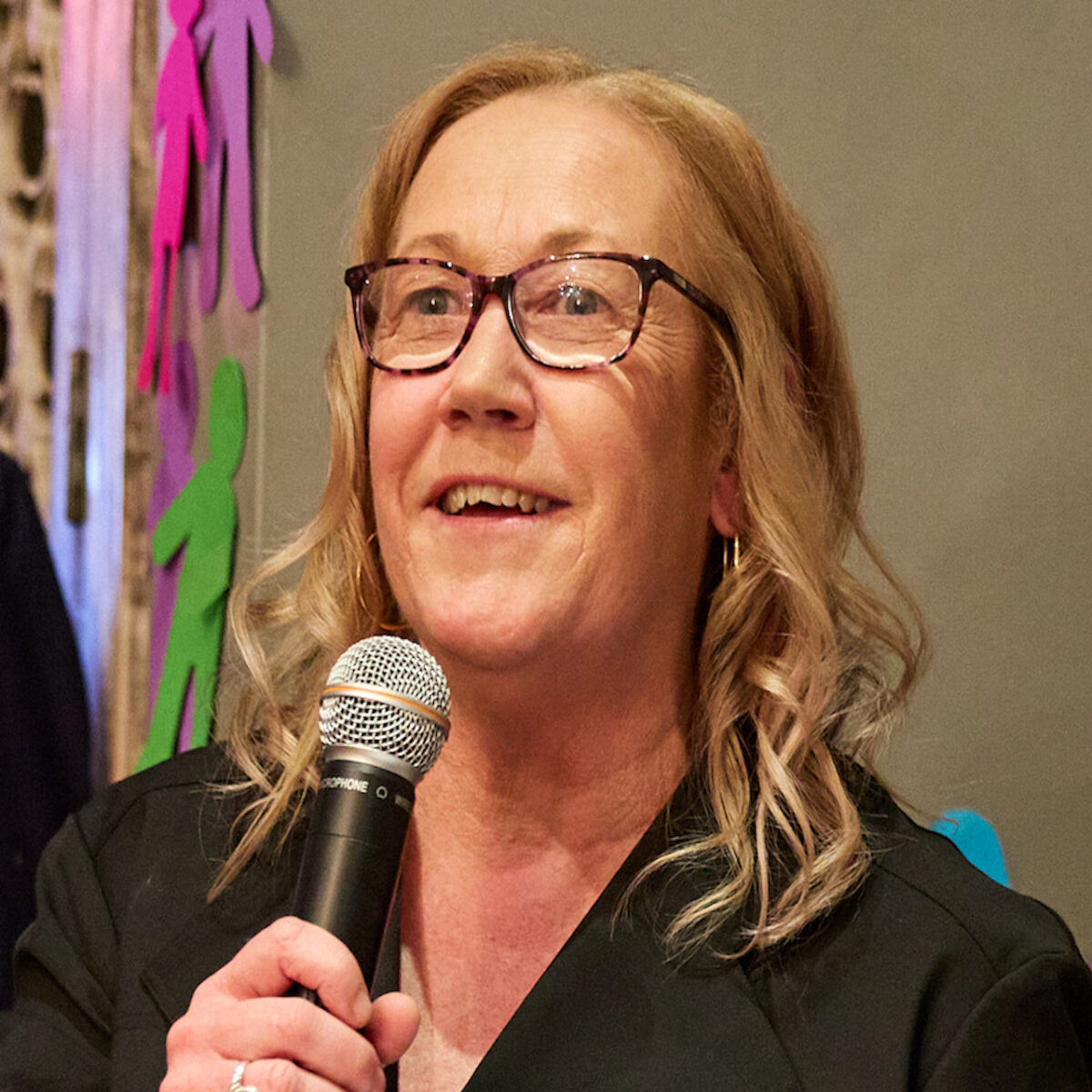
The journey of creating effective therapeutic interventions for traumatized children is filled with both challenges and profound rewards. This became abundantly clear during my conversation with Adela Holmes, whose remarkable 52-year career in child protection and therapeutic care has shaped Victoria’s approach to supporting its most vulnerable young people.
The evolution of therapeutic residential care in Victoria emerged from a crisis. During the 1990s, a well-intentioned but poorly executed deinstitutionalization process left residential care workers isolated and under-resourced. As Adela explained, the consequences were devastating: “Staff were encouraged to ring the police if a young person was out of control, which of course is the beginning of a long period of criminalisation.” This criminalization created a revolving door between the child protection and youth justice systems, with children entering through the family division of courts only to return repeatedly through the criminal division.
This crisis prompted judicial intervention and a pivotal report called “When Care Is Not Enough,” which recommended developing specialized mental health services for child protection clients and creating a therapeutic residential care model. These recommendations ultimately led to the creation of two groundbreaking programs: Take-Two Intensive Therapeutic Service and Hurstbridge Farm. Adela played an instrumental role in designing and implementing both programs, drawing on international therapeutic models while adapting them to the Australian context.
What made Hurstbridge Farm truly transformative wasn’t the rural setting, though many assume this was the key. As Adela emphasized, “People think that it’s the farm environment that is the key, but it’s not. It’s relationships.” The program’s success rested on fundamental principles: psychological containment, co-regulation, and consistent, caring relationships. The approach was remarkably simple yet profound – staff would never leave children alone, walking with them everywhere on the property, providing that continuous “calm presence” that traumatized children desperately need to feel safe.
The outcomes speak volumes about the model’s effectiveness. While a comparison group of similar young people either plateaued or deteriorated, 65-75% of the young people at Hurstbridge Farm showed clear improvements in their lives. As Adela puts it, her goal was simply “an ordinary life” for these children – a seemingly modest aspiration that represented a monumental achievement given their traumatic beginnings.
Adela’s experience offers crucial lessons for contemporary child welfare systems, which often seek cost-saving measures at the expense of therapeutic integrity. Her message to policy makers is unambiguous: “Don’t fiddle with what does work. Add to what does work. Take a deep breath. Spend the money now, because in 10 years’ time, 15 years’ time, is when the judgment will come.” She articulates what many practitioners know but systems often forget – that investing in relational capacity and psychological healing pays enormous dividends in reduced crime, improved wellbeing, and enhanced social capital.
The legacy of Hurstbridge Farm continues today, with the model still being implemented. As Adela discovered on a recent visit, “It has the same sense of order, the same sense of calm.” This continuity testifies to the model’s durability and effectiveness, challenging the common narrative that residential care is inherently problematic. Instead, her work demonstrates that well-designed therapeutic residential care can be transformative for our most vulnerable young people, offering them the healing, containment and relational experiences they need to thrive.
You can listen to Adela here:
You can watch at the link below:
About Adela
Adela has a career spanning 52-years, during which she has worked in the child protection, child & family welfare & out of home care fields for both the Victorian state government and the non-government sector.
Adela has a well-established track record in designing, developing and delivering complex trauma grounded therapeutic care services for the most complex and challenging children and adolescents, and an expertise for working successfully with and supporting others to work with these children and adolescents.
During her career Adela has designed and been involved in the ‘start up’ leadership and management of significant therapeutic service initiatives funded by the Victorian state government. These include the ‘Take Two” Intensive Therapeutic Service and the Victorian government’s successful pilot therapeutic residential care program, Hurstbridge Farm. 12 other pilot programs were developed using the same model and, in 2011, all 13 were evaluated as being highly effective in producing positive life outcomes.
Adela has been specialising as a trainer in the utilisation of complex trauma frameworks since 2000 and during this time has consolidated an extensive knowledge base and expertise in trauma & attachment informed therapeutic practice, both as a practitioner and a trainer of these skills.
Adela also specialises in the facilitation of Reflective Practice Groups and, in her consultancy work, Adela delivers to such groups as a visiting consultant on a regular basis.
In October 2024 Adela was awarded the inaugural Centre for Excellence in Child & Family Welfare Industry Lifetime Achievement Award for Services to Out of Home Care
Related Podcast Interviews
Dr Kiran Modi
Listen here:
Watch here:
Richard Cross
Listen here:
Watch here:
Transcript:
Colby: 0:00
Welcome to the Secure Start podcast.
Adela: 0:02
People used to say to me at the start well, you know, what are you aiming for with these kids? And I would say an ordinary life, because an ordinary life is the great aspiration for children who’ve experienced trauma Almost everywhere. I mean not everywhere, but almost everywhere I’ve been not everywhere, but almost everywhere there have been great compassionate mentors.
Adela: 0:31
But the day I knew that something had clicked for him was one of the other kids was having his birthday and we were having a barbecue on the deck and he had forgotten to bring the boys present that he’d made in the school. And he came up to me and he said will you walk with me up to the house? I want to get the present. Then the children’s court magistrates intervened and wrote a letter to the department saying what is happening in your residential care system? Because we’re seeing children come in through the family division and then they come back before us again and again and again in the criminal division. It’s compelling to try and save resources, but what do we do in terms of the judgment and the decision we make about the lives of people you’ve never met?
Colby: 1:39
Hi, I’m Colby Pearce, and joining me for this episode is a highly experienced expert practitioner here in Australia. Before I introduce my guest, I’d just like to acknowledge the traditional custodians of the land we’re meeting on the Kaurna people of the Adelaide Plains, for me, and the Wurundjeri people of the Melbourne area of Victoria, for my guest. I’d also like to acknowledge the continuing connection that all living Aboriginal people feel to land, waters, culture and community and pay my respects to their elders, past, present and emerging. My guest this episode is Adela Holmes. Adela has a career spanning 52 years, during which she has worked in the child protection, child and family welfare and out-of-home care fields for both the Victorian state government and the non-government sector.
Colby: 2:45
Adela has a well-established track record in designing, developing and delivering complex, trauma-grounded therapeutic care services for the most complex and challenging children and adolescents, and an expertise for working successfully with and supporting others to work with these children and adolescents. During her career, adela has designed and been involved in the start-up, leadership and management of significant therapeutic service initiatives funded by the Victorian State Government. These include the Take-Two Intensive Therapeutic Service and the Victorian Government’s successful pilot therapeutic residential care program, hurstbridge Farm. Twelve other pilot programs were developed using the same model and in 2011, all 13 were evaluated as being highly effective in producing positive life outcomes. Being highly effective in producing positive life outcomes, adela has been specializing as a trainer in the utilization of complex trauma frameworks since 2000 and during this time, has consolidated an extensive knowledge base and expertise in trauma and attachment-informed therapeutic practice, both as a practitioner and a trainer. Adela also specialises in the facilitation of reflective practice groups and in her consultancy work. Adela delivers to such groups as a visiting consultant on a regular basis.
Colby: 4:20
In October 2024, adela was awarded the inaugural Centre for Excellence in Child and Family Welfare Industry Lifetime Achievement Award for services to out-of-home care. Adela has no interest in retiring, as she loves what she does and still has much energy to provide input into the healing care of children impacted by complex trauma. Adela believes strongly in the capacity of well-designed and well-executed models of therapeutic residential care to bring about effective healing that is grounded in the growth of real relational capacity. In such settings, well-trained individuals can bring about the kind of real change required to heal from traumatic early beginnings and trust in the capacity of adults to provide safe, loving, respectful and kind care. Welcome, adela.
Adela: 5:22
Thank you, colby, good to be here.
Colby: 5:25
And Adela. I’m 30 years deep into a career, working in a very similar space to you in the adjoining state here in Australia, and I think your ongoing energy and passion is remarkable, which is not to say that I’m not still passionate about the work, but I do experience some dips in energy from time to time. How have you sustained your energy and passion for this work across 52 years?
Adela: 5:59
Well, it’s a really interesting question because 52 years ago when I started, I’d really fallen into the work. As I think I was saying to you a bit earlier, I started out my adult life as a folk singer. I was singing, I was born and raised in the UK, came to Australia in 1965, and it was at the height of coffee lounges and folk singers and I’d always sung. I was as a little girl. I was put up on tables and said oh really.
Adela: 6:45
Yeah, at family weddings or other dos, so I’d always sung. Got here, saw that there were a lot of coffee lounges, thought oh, this looks good, and so I kind of fell into this work. So I kind of fell into this work. But I always had an interest in the mind and psychology and things connected with that. So I read in a fairly eclectic manner from the age of about 16 with that sphere.
Adela: 7:24
In fact, the first book I read was by a guy called AS Neill N-E-I-L-L, a Scottish teacher who opened up a school in the UK for children with difficulties. It was a boarding school and the school was called Summerhill. The school was called Summer Hill. The book was called. Summer Hill then got interested in the work of RD Lang, the Scottish psychiatrist, and I think the people who I read back then had formed my thinking, because they had enormous passion and energy for the work.
Adela: 8:12
So there was no such thing as not being passionate about it and I think that mindset just has stuck with me because they were passionate and their writings showed that, demonstrated that passion really strongly. And I suppose the other thing, which is not a very scientific answer, but I’ve always, as an individual in my memory, only ever had on and off. There’s not a modulator in between. I’m either on or off. So when.
Adela: 8:56
I’m on. I’m on. I do have off times, but off time we’ll be reading or doing other fun things which some people might describe as on time. I don’t know. But I think also when you see what you do works, that kind of you know drives you with a bit of passion to keep going and do more of it.
Colby: 9:30
Yeah, yeah, I think you’re right. It’s reassuring, it’s reinforcing, I think was also the word I was looking for there. Yeah, it’s a vocation rather than a job, isn’t it?
Adela: 9:48
It is, it absolutely is. Yeah. And I know that. That’s why I have no intention to retire, because, you’re right, it is a vocation.
Colby: 10:03
Yeah, yeah, wonderful. Right, it is a vocation. Yeah, yeah, wonderful. So, um, you’ve part. I was going to ask you, uh, what led you to working in the area of designing and implementing therapeutic residential care programs, which is of great interest to me? Um, and one of the reasons why I started this podcast and chose certain people to interview but I’ve heard you speak already about those first two authors who designed therapeutic schools Reminds me a lot of the Dr Drysdale’s and the Mulberry Bush School. Yes.
Colby: 10:47
And of course Barbara Dr Drysdale was very important in the early days of the Cotswold community. Absolutely, and I’ve recently had John Whitwell on.
Adela: 11:00
Yeah, I saw that interview. I’ve met John when I was in the UK in 2008. And also, you know I do a fair bit of interface with Patrick Tomlinson. Yes.
Adela: 11:19
And I have said to him laughingly that I have what I call Cotswold envy because I was too young. Well, no, actually I’m older than him, but at the time that I was in the UK I couldn’t have worked in a setting like that because I was too young. And then I came to Australia and there was no such thing as a setting like that no, no. So I guess I never well, I did my own. But you know, we, I think, created something similar at Hirst.
Adela: 11:59
Not quite the same but very similar. But again that sort of sense of vocation, when you see something works. You know I’ve always also been what’s the word? Pretty outspoken, I suppose, but only in defence of something good you know, but a lot of times things that have worked haven’t necessarily been promulgated further because of systemic issues egos, which play a role in there, and resources, which play a role in there, and resources, and you know when you see that getting in the way of something that works to heal kids.
Adela: 12:54
I will never be quiet about that, never, ever.Colby: 12:57
Yeah, well, good on you. Yeah, it is frustrating that often extraneous factors are what gets in the way of the longevity of certain programs and, of course, the Cotswold I have a lot to do with Patrick as well, and the Cotswold community is no longer, and part of that, as my understanding, had to do with scandals that occurred in the residential care sector in the UK. But I’m hoping to speak to someone on a future podcast that can shed a bit of light on about, um that issue, the issue of quality of care and consistency of care, good quality care in in in residential care versus other forms of of out-of-home care. But so watch your space, people. Um, haven’t haven’t quite got there yet, but hoping to. And the other thing you wouldn’t have found here was therapeutic schools.
Adela: 14:09
No.Colby:
14:10
No.Adela:
14:11
No, and I know, having been brought up in the UK.
Adela: 14:15
there’s that long history of what was called Borschtel, which were residential, corrective residential schools, which have morphed into something different, but those residential schools that were therapeutic. I’ve read a lot about many of them and when I was putting together the Hurstbridge model, a big part of my research was a book that was put together. I think it was edited by Adrian Ward. A lot of people who had run services that I think grew from the Cotswold community had written chapters in the book that I read, and I actually met many of those people. When I was in the UK in 2008, alan Worthington and I went to the Mulberry Bush School. Yes, so all you know the places that had sort of grown out of the console community.
Adela: 15:27
I made it my business, wherever I could, to visit them and I must say that, adrian Ward, all I did was send him an email saying I’m going to be in the UK in November. I wonder if you could give me some numbers to contact people so I could go and see services? Yep, he developed me a whole one-week itinerary of visiting. Oh, wow. I was knocked out. And.
Adela: 15:57
I just, you know, got on the train and went from one place to another and was absolutely knocked out with what I saw. But it was great. I’d been doing Hurstbridge for a year at the time and I could see some of the practices that I based Hurstbridge on and I could see how well they worked and that gave me great fire and inspiration to keep going.
Colby: 16:29
Awesome, yeah, so we will talk more in a little bit about Hurst Bridge, and I know that people who are listening to this podcast and know anything about you will be very keen to hear you talk more about that. I’m just wondering you know you’ve come, you talked about, you’ve read some books about therapeutic work, therapeutic residential work, including in a school-based setting. How did you? But you’ve also talked about how it just didn’t exist here. How did you come to be at the forefront of developing these therapeutic residential care programs like Hearst Bridge? Who?
Colby: 17:13
you talk about. As I said, how did you get into that space to be able to bring it about?
Adela: 17:21
Yeah, it’s a good question when I reflect on it. So I mean my first job at the end of 1972, and it’s funny, I was in well funny, strange juxtaposition between doing this interview and events over the past two or three weeks here. I had a very formative, mentor-mentee relationship with a woman called Pat Simmons who had been the superintendent.
Adela: 17:58
we’re talking old times here of the very first place that I worked of the very first place that I worked, as I said, I fell into my study, discovered I could do it, discovered I had a real ability to do it. And then it was kind of onwards and upwards. But I was doing my final placement in doing welfare studies and it was at a place called Youth Welfare Division in what was then called the Social Welfare Department.
Adela: 18:37
It was a very new department in Melbourne, in Victoria, and so it was office-based and you would go out and do outreach visits to young people who were in the institutions. Because it was all institutionally based. At the time and it was coming to the end of the course, my only income capacity was back to the coffee lounges and earning $5 a night until I could find something in the sector. And I spoke to the person in charge then at that place and I said are there any jobs going here? He said, well, no, there aren’t. But there’s a very new initiative starting up in May next year. It’s a community-based diversionary program to keep young women out of the institution. And I thought, oh, that does sound interesting. So I did a couple of interviews with the people who were going to run it. But then I said to him well, that’s great, that’s good in May next year, but here we are in November now and I need to earn some money. Is there anything else?
Adela: 20:08
And he suggested that I work at the institution that they were building this diversionary program for, which was a place called Wynne-Leighton, so it had upwards of 100 girls who had been through the children’s court either for criminal offences or were considered to be what they called back then exposed to moral danger. Okay.
Adela: 20:41
In need of care, basically. So I said, all right, I had no real idea what I was walking into exactly, but it sounded like it was up my alley. So I said yes, went to work there. And by golly I mean there were some things I would never replicate. And by golly I mean there were some things I would never replicate, but there were many elements of the relational aspect of working with themselves that I retain to this day. And there was a woman there running the place called, as I say, pat Simmons. Pat very sadly suffered from dementia for the last eight to ten years, I think, and she died on Good Friday.
Adela: 21:34
So I went to her funeral last Friday and I was thinking a lot about exactly what you’ve asked me.
Adela: 21:41
And I suppose what I saw when I went into that role at Wynne-Leighton told me what you should do and what you shouldn’t do in deeply experiential terms, because it was like I walked in, I put my uniform on and there I was and I just had to do it and I saw from the very beginning, with Pat’s mentorship, that it was all about relational capacity, regulation and co-regulation. I didn’t use those words then, but that’s what it felt like and that’s later what I learned it was and the capacity to look past behaviour and understand what sat behind it. And you know, we were working two staff on a unit with 24 girls in it and you had to learn some very valuable things about the mood and the rhythm of what was happening in that large group of young women and also, therefore, how to intervene in a way that was a bit cleverer than just. You can’t do that, because that doesn’t work. It might work for 10 minutes or half an hour, but it doesn’t actually do anything, doesn’t change anything.
Colby: 23:25
Probably just stirs them up.Adela: 23:27
Yeah Well, actually, someone at the funeral talked about an event where a number of young women had climbed up on the roof of this place when they’d and I’m not quite sure what the reason was they weren’t either with Nathan. I’m not quite sure what the reason was, they weren’t either, but talked about the example of how Pat you know everybody was going to ring the fire brigade and the police and it was all going to escalate.
Adela: 23:56
But Pat said no, don’t want you to do any of that. I’m going to go up there and talk.
Colby: 24:05
I thought you were going to say that.
Adela: 24:08
And she did, and within half an hour and the shouting calmed down. Within half an hour they’d all taken off their clothes and they were standing up there in their underwear. Within half an hour they were all starting to feel cold. Why? Because they weren’t in a heightened state. Their heightened state was making them immune to the cold, but all of a sudden, when they started to come down and engage in the conversation with Pat, they started to feel cold. All put their clothes on, climbed down and came inside. So that’s the kind of person she was and that’s the kind of mentorship I received right from the word go. And that’s the kind of mentorship I received right from the word go. And it just fitted so well with what I’d read in Summerhill, what I’d read of Artie Lang’s work. Artie Lang lived in a household with people who were diagnosed with schizophrenia.
Adela: 25:15
He was no believer in schizophrenia. He resided in a house with them. I think there was a film made of it, called I think it was called Sanctuary. But a number of people worked with them and lived with them and you know, if you look at the film it’s probably unable to be accessed anymore, but I saw it. It’s just people talking to each other.
Colby: 25:45
That’s what I mean when you’re describing your role, that initial role in, I guess what we would think about more these days in terms of a youth training centre for girls out more these days in terms of a youth training centre for girls.
Colby: 26:03
um, I was, you were talking about the staff to to girls ratio which was, yeah, quite different to what you might observe these days, but and I, my mind was initially going to well, my mind was going to well it’s not how good a disciplinarian you are that will maintain calmness and order in that unit. It’s how well you’re able to develop a relationship with all the individuals, because the relationship is the most powerful regulating influence that you would have had at that time. And part of that is, as you said, is engaging with the young people with deep understanding of their experience, so not getting distracted with what they’re doing but focusing more on why they’re doing those things. And in those circumstances, the young people feel heard and understood and validated in their experience and they’ll regulate in consideration of their relationship.
Adela: 27:00
They’ll regulate without realising even why or how, because the person is interested in them. It never ceases to amaze me. I think a lot in metaphors, right, and I often use the metaphor of what works in physical health and what works in emotional, psychological health.
Adela: 27:27
Now, if you walked into the emergency room of a hospital and went up to the triage nurse and said, oh, you know, I’ve got a pain in my right side, and said, oh, you know, I’ve got a pain in my right side, does the triage nurse use a bit of compassion and empathy and get the details from you and help you feel better? Or do they yell at you from behind the glass? Stop that this minute. Yell at you from behind the glass, stop that this minute. But it’s the same thing with what’s going on emotionally. We come to triage kids every day of the week.
Adela: 28:12
You know I do either directly or indirectly with staff who need to work directly with them and where’s the compassion you know, where’s the understanding that we would automatically apply if it was something physical.
Colby: 28:34
I think it’s that question what’s really going on here? Yeah. It’s not what you present with, it’s the you know, yeah, the reason for that, that presentation, yeah.
Adela: 28:47
But it seems to the desire or the ability to do that seems to fly out of the window, when what we’re looking at is something to do with behaviour, right, and that’s something to do with the person on the other end as well. Mm-hmm.
Adela: 29:09
So I guess thinking about that induction into the work and working in the diversionary program that we did, that, I think, helps me to understand what set me on a pathway, and the pathway wasn’t straight. I you know. I did some things. I went back to singing for a little while, came back into the work, worked in child protection in the mid-’70s. I think my good fortune along the way has been that almost everywhere I’ve been not everywhere, but almost everywhere there have been great, compassionate mentors. Not to the same extent as Pat no one. I don’t think anyone will ever achieve the level of mentorship and influence that she had on my later career and thinking that she had on my later career and thinking but they’re in pockets, that approach, there’s enough people out there to be able to go.
Adela: 30:30
Yeah, okay, so we’re not going to do this, we’re going to approach this in this way and use the brains that we have in our heads to think about this intelligently and seeing that in those early days and seeing the results of my you’d have to say rudimentary attempts to work relationally with kids. But I learned from what didn’t work and what did work. But seeing that, I think has provided me with the fuel for the passion to keep going in it and, of course, because I had that fuel for the passion, I stayed on that track. So my passion, really, I do other things and I’m as passionate about those other things, but my first passion was for therapeutically working in a residential setting, because you have the entire day, the entire life of the young person rolling out before you and that affords us so many opportunities.
Colby: 31:51
So your passion led you ultimately to Hurstbridge and the development of the Hurstbridge residential farm and community. I think people who are listening would really love to hear a little bit about how Hurstbridge came about and your role in that and the model of care that you were responsible for there.
Adela: 32:14
Yeah, okay. So there’s a little bit of systemic explanation I have to do to explain how both Take Two and Hurstbridge Farm came about. Yep.
Adela: 32:27
So in the early 90s in Victoria there was a Premier called Geoffrey Kennett. I think he’s quite well known because he was a it was a liberal Victorian government and he was a person who understood the value of a funding cut let’s put it that way and was looking at things in a different way. Now, through the late 80s, there had been many discussions about the need to deinstitutionalise services in the state Great discussions. But by the time he came into power, those discussions had taken a slightly different twist, because they obviously also afforded the opportunity to cut money and redeploy resources, which he made full use of, might I say.
Colby: 33:40
I remember.
Adela: 33:43
So, in actuality, the deinstitutionalisation process was to some extent, and it probably varied across the state and the service system, but it was to some extent put into the probably varied across the state and the service system, but it was to some extent put into the service of funding cuts and refocusing of funding.
Adela: 34:10
Having said that, what that resulted in was a deinstitutionalisation process for young people that was probably quite stripped of resources in a way. It was never intended to be. I can’t say that for sure, but that’s my guess. So what that meant was that the way it was done was quite squished. So the staff who had worked in the institutions some of them were offered the option of redundancy packages and some of them were redeployed to work with kids in houses in the community. But of course there is a very big difference between working with children in an institutional setting, with all the things that surround you, and working in a house in a suburb with access to no one and nothing. You’re on your own, you know. And over the course of about two or three years the workforce was heading towards being quite industrialised about that.
Adela: 35:29
People were getting assaulted, of course, children and young people who really struggle with internal regulation for all the reasons we know in terms of complex trauma and early life experiences, are going to punch a hole in the wall when they’re frustrated because they can’t talk about how they feel. Now, in the institution there were solutions for that, but in the community there weren’t any. So the staff were encouraged to ring the police if a young person was out of control, which of course is the beginning of a long period of criminalisation of these young people, and I have nothing to base this on but my own experience. But I would not mind hazarding a guess that up to 80% or 90% of adult people now in prison were those children, because they became criminalised not all of them, but a fair percentage. So you know we were on a hiding to nothing in the system and during that period of time I was working in child protection very closely seeing the impacts of these decisions, and I was a case planner.
Adela: 37:10
So these decisions were having a major impact on the quality of care that we were able to provide children on the quality of care that we were able to provide children and in the mid or the industrialisation was noted, and what the response to that was was the outsourcing to the community service sector. It was a great solution.
Colby: 37:38
I think it’s someone else’s problem.
Adela: 37:39
Yeah, and the same thing happened. What we ended up with in the mid-’90s was a highly criminalised group of children in the residential care system, which could have been something wonderful, but ended up something not wonderful. Then the Children’s Court magistrates intervened and wrote a letter to the department, whatever it was called. Then it changes names every so often it does a bit.
Adela: 38:15
yeah, Wrote a letter saying what is happening in your residential care system Because we’re seeing children come in through the family division and then they come back before us again and again and again in the criminal division. And good on them because they called it out. Yeah.
Adela: 38:36
And that led to the commissioning of an investigation and a report. The investigation was undertaken by a fabulous woman called Robin Clark and two associates looking at those children who were coming back before the criminal division of the courts. Again and again and again I case-planned some of them, so I was quite involved in that process. And to cut a very long story short, the report, which is called when Care Is Not Enough, which I highly recommend to anybody. It was published in 1999, but it’s as relevant now as it was then because it’s based on the same truth. And in that their two main recommendations were number one the Child and Adolescent Mental Health Service System does not suit child protection clients. They won’t go, they won’t front up and so develop a service designed specifically for those kids that became TAG2. And develop a therapeutic residential care model. That became Hearst Bridge Farm. So they were the two recommendations of that report. That review and report the government changed to a labour persuasion.
Colby: 40:12
More sympathetic perhaps.
Adela: 40:14
And there were quite a number of people who were very committed to doing this, and so from about 2000 to 2002, there was a lot of activity in the head office of the department and they came up with the realizationisation that what probably would make sense was to go first with the outreach service and put some energy into that. At that time I was working for Berry Street. It’s a large service provider in Victoria that is non-religious but funded by the government. Yeah, and I made the mistake. We were all in a meeting. I was in a senior management role. I was relatively new to Mary.
Adela: 41:13
And we were in a meeting discussing the consortium that we were going to put together to put our hands up for that outreach mental health service, I put my hand up like that and said look whoever does it, not thinking that I would you know. I’m fairly junior on the tree. I said whoever does it, I’d really like to help them because I’m very interested in those sorts of services and the ceo.
Adela: 41:46
At the time, a woman called sandy de wolf said no, you can do it oh god, be careful what you ask for yeah, um, I said, oh, oh, really, yeah, this is a 5.5 million dollar program annually, recurrent for three years, with you know, and then, of course, dependent on outcomes.
Adela: 42:12
um, so you know, if we get it, career move, if we don’t get it bad career move, but I said, oh okay, and we had six weeks to write it. I wrote it. I designed the model with the assistance of a couple of people who were in the other parts of the consortium, but we put together what we thought would work and it was all grounded in what was, for us, an emerging understanding about complex trauma and how to approach it. And we got it. It was a good career.
Colby: 43:06
Then you had to do it.
Adela: 43:08
So we got that in. I think we were advised in mid-2000 or, yeah, mid-ish 2003, and mid-ish 2003. And then we got going with it and I got so connected with it I couldn’t really let it go. You know what it’s like? It’s like this is my baby.
Adela: 43:32
So I applied for a position in it and was one of the founding area managers of it. We were led by a fabulous guy psychologist called Rick Pawsey who had worked with the Child and Adolescent Mental Health Service who were part of the consortium. He was a fabulous leader and, again, great mentor. So we had the support from the head office of the department. It was all systems go. We recruited something like 43 people in a month and I remember doing the interviews. It was like oh right, okay, and we were fully staffed by October 2003. And then we started accepting clients in the beginning of 2004. So I was with that endeavour, which was going really well from the start, and in about 2005 the department started to then think about the second recommendation, which was the pilot, and I was at that stage in a role where I was the pilot and I was at that stage in a role where I was the statewide services development manager in TAC2.
Colby: 45:07
TAC2, yeah.
Adela: 45:10
And so really it came to that role to write, pilot and research it, which was extremely exciting because this was my passion. So I’d kind of got myself without a career plan of any sort, but being led by the passion where I was right there.
Colby: 45:38
At the right time. At the right time.
Adela: 45:40
At the right time. It was a very fortunate juxtaposition. So I think I spent about six months reading, researching, mainly drew from the work of Bruce Perry, bessel, van der Kolk, dan Hughes, others, some others as well Sandra Bloom, certainly in terms of how they made sense of what you needed to actually do in working with kids. Put that together with my own experience reading, et cetera, and wrote a proposal for a model. And then we sent it to the two regions who were going to fund it and operate it. And you know that’s nerve-wracking, because he spent all this time reading, putting together writing and it was a massive thing to write. It was really a important and B had to be very precise and grounded in evidence. And that was when I read the book and used the writing from the Cotswold community people and beyond and they came back to us having read it and said we love it, it’s what we want, it is exactly what we want.
Adela: 47:20
So this was my second baby. I already had a daughter, wonderful. So this was like my third baby, really, um, and again I couldn’t not do it really. It was like really, no, come on, you know.
Adela: 47:41
So then I went into the role of being the founding manager of hearstbridge farm yeah, yeah, it’s interesting, colby, because people you know, because we called it hearstbridge Farm because, it was 33 acres with animals on it. People think that it’s the farm environment that is the key, but it’s not.
Colby: 48:07
It’s relationships.
Adela: 48:09
Relationships and the freedom to trial what seems to work in other settings if it works in this setting. We also had fabulous backing to do it at head office level, and I will mention names because I think they deserve to be mentioned. Sure.
Adela: 48:36
The minister at the time was a guy called Gavin Jennings who was a social worker and totally understood what the model was and what we were trying to do, so he was really, really fantastic to have in that role. And the bureaucrat who sat above this and sanctioned all of it is a guy called David Clements who repeatedly said oh, I don’t really understand all this. I mean, he’s a social worker and he does understand it. But he said, oh, I just, you know, I have my faith and trust in the people who are doing it, and I repeatedly over time have said to him yeah, but you know, there you go, Dave, you also understood what we were doing. Yeah, yeah.
Adela: 49:36
I still think he’s a bit too modest. That’s why I named him, because he should take a vow. He made it happen and he had a. You know, if you think of that first cohort of kids who ate, kids who came through the farm, he had a direct impact on their lives, whether he acknowledges it or not.
Colby: 49:57
And their children.
Adela: 49:58
Because he supported it.
Colby: 50:00
Yeah, and their children and their grandchildren.
Adela: 50:04
Yes, absolutely right, absolutely right down through the generations, and a fairly high percentage in the region of 65% to 75% of those young people showed clear improvements in their lives, like an upward trajectory, when a comparison group of kids over the same period either plateaued and stayed troubled or got worse, or got worse yeah. So there’s a fabulous diagram in that report which is called the Verso Evaluation of Therapeutic Residential Care Violence. It’s just there. It’s a very simple graph that they’ve done, but it’s like yeah, so it just changed the trajectory, didn’t it?
Colby: 51:02
Yeah, figuratively and actually.
Adela: 51:06
Yeah, absolutely yeah. So, and we’re still we. I say the. You know, the original staff are still in contact with many of those kids and people used to say to me at the start well, you know, what are you aiming for with these kids? And I would say an ordinary life, because an ordinary life is the great aspiration for children who’ve experienced trauma. What they do with it after that, that’s up to them. They have the wherewithal by that stage. But an ordinary life is good enough for me. And I used to say well, just an ordinary life. And many of them, most of them in fact, have an ordinary life. If it’s not totally ordinary, it’s closer to than any other trajectory they might have been on.
Colby: 52:07
Yeah, that’s fantastic and probably not dissimilar to the stories that come out of the Cotswold community that you were so envious of and I’m tremendously interested in as well. You had the opportunity to go back there quite recently, back to Hurstbridge Farm. What were some key observations or take-homes that you took from that visit?
Adela: 52:35
Well, one of the key observations that um it came about because you know the award ceremony that I was at, where I got that lifetime achievement thing um, the woman who is has managed it for about the last 10 years I think a woman called lena lamandola and a small amount of her team were actually there doing the presentation for that day and she came up to me in one of the breaks and she said hi, and we had a hug and she said I just want you to know that I use your model and I will not let anybody make us change it.
Adela: 53:20
And I said thank you, you know, and of course it’s true, and I saw that when I went up there because it has the same sense of order, the same sense of calm. I mean, it’s a beautiful environment and you can’t take that out of it because it is an element of it. But the more important part of the environment is the people, and there are really good people up there. They’re calm, they know, they’re focused, they understand what they’re doing, they don’t diverge from it. One of the elements of the model that I think is really critical is the recognition that kids who have had these experiences feel uncontained, and the important, and I know Barbara Dogger-Drysdale talks a lot and Winnicott talk a lot about the importance of psychological containment. Yeah.
Adela: 54:35
And, of course, psychological containment comes from physiological containment, because that’s got to come first and that’s what I observed, because that’s something we created up there when we were starting off the pilot.
Colby: 54:53
Contained adults.
Adela: 54:56
Contained adults and initially the kids would say no, you’re going to stop me doing this, you know all that. But we started off really simple by not letting them be alone. Other than you know they’re having a shower, they go to the toilet, all of that, but in the rest of their waking hours we are positively with them and we took that down to walking everywhere with them on the property.
Adela: 55:33
So if a child was in the school and needed something from the house, someone would come and walk up with them to get it and on the way we would have, we didn’t talk about anything. What was? You know? A bird in the tree or whatever, it doesn’t matter, because the containing element is from the presence, the calm presence. And I knew with one boy who had lived his life on the street right. He was 13 and a half when he came in the first cohort and he resisted everything and we developed a series of ways of helping him come into the program. But the day I knew that something had clicked for him was one of the other kids was having his birthday and we were having a barbecue on the deck and he had forgotten to bring the boys present that he’d made in the school. And he came up to me and he said will you walk with me up to the house? I want to get the present. I said inside, I’m going. On the outside I’m going. Of course I will. You know it’s such a massive.
Colby: 57:00
it’s such a massive achievement, I mean for people who are are not like us, who don’t, you know, have the level of familiarity that we do have with these children, they would just think yeah so yeah what, but it’s such such a huge thing, yeah yeah, the the same boy.
Adela: 57:19
I mean I bore you with stories but the same boy was telling me about two months after or three months after that how he thought he was doing really well in the program and was checking that out with me. And I said, yeah, you are, and how he had been impacted by a newer boy who’d come in and who was still quite a lot less regulated and who made him feel unsafe, which was music to my ears because it meant he was feeling safe. And you know, we worked out some things that I was going to do to try and help him feel safer. And I reflected that story to the steering group, which was a group formed of people from the regions of the department, some bureaucrats from head office and some me and some other practitioners in child protection, and I told that story as an example of change and growth.
Adela: 58:29
And the bureaucrat made this comment. He said, oh, it just sounds like a lot of bullshit to me. And I said, well, you know when somebody says something and you think of the right answer two hours later and you go. Well, I actually thought of the right answer in that moment. I was very confused.
Adela: 58:53
It doesn’t happen often. I said, well, but even if you’re right, it’s really high-quality bullshit. Yes, but even if you’re right, it’s really high-quality bullshit. Ha, yes, and it was like, ooh, where do you go with that?
Colby: 59:13
Well, on that, Adela. I mean, I could talk to you for hours. I’m a little bit weird that we’re both at the beginning of our working days. I just Maybe we need to do a part two, if you’re up for it.
Adela: 59:26
I’m always up for it, but.
Colby: 59:28
I think maybe on that’s a nice little segue into what advice would you if you had the opportunity to speak before heads of departments, ministers, again what would you say to them about therapeutic residential care?
Adela: 59:54
I would say well, there’s a bit of a push at the moment in Victoria to, in my opinion, water it down a bit. It’s being badged as enhanced because it is giving therapeutic funding to a greater number of places, which is, of course, an enhancement of sorts. But it’s really only an enhancement if you do it forward rather than take some things away and put some things forward, and at the moment it’s a bit like that. So I’m hoping that that will be different, because the sector is having a lot of input. To that I would say don’t fiddle with what does work. Add to what does work. Add to what does work. Take a deep breath. Spend the money now, because in 10 years’ time, 15 years’ time, is when the judgment will come and when you will see what is the impact of what you didn’t do.
Adela: 1:01:04
And when you will see what is the impact of what you didn’t do. And I said I don’t know. I would say I don’t know what will exactly be the impact, but I can tell you in broad terms what the impact is likely to be. But it’s compelling to try and save resources. But what do we do in terms of the judgment and the decision we make about the lives of people you’ve never met and are not likely to meet? Because that’s what it’s all about. It’s about the quality of life. You know social capital.
Adela: 1:01:48
Yeah, if people are worried, I don’t know what it’s like in South Australia, but in Victoria and other states there’s great consternation about the level of crime and you know juvenile crime and I share that consternation because it’s not good for anybody, including the perpetrators of it. But if people are believing that there is no way that that can be impacted, they’re wrong and that’s what I would say to them. I would say to them you are wrong. There is a way. It may cost you a little bit more in money in the short term, but it will bring you such amazing dividends in the longer term in social capital and the quality of life of people.
Colby: 1:02:46
And I think yeah, just to repeat, probably an earlier point, that any investment in relational capacity impacts behaviours down the line.
Colby: 1:02:57
Absolutely, if you are concerned about behaviours in society. About behaviours in society, the focus needs to be in significant part, developing relational capacity and things that kind of spin off from that, including, you know, felt sense, self-worth. I had a very interesting conversation with Lisaisa etherson in my last interview. Um can facilitate relationships, um facilitate the containment of pervasive shame, uh, these. It’s a lack of um secure relational capacity, that is, and a lack of secure sense of one’s own worth. That really underlies a lot of the social ills. That, yeah, that you can almost, as you say. You can’t predict it with certainty, but you can almost guarantee that there’s a consequence down the line.
Adela: 1:04:00
Yeah, I think a lot in metaphors. Colby and I was having a conversation with someone just the other day about a family and I had this metaphor spring to mind you know, when you’re at a fun fair and you’re in the Dodgem cars, some people know how to drive the Dodgems really well. They’ve had a lot of Dodgem experience. Some people haven’t. I’m one of those, are you? Oh well, good, I’m not. Some people don’t. Now you’ll always notice that the person who’s operating the Dodgem cars will hop on the back of the cars where the people are not driving too well to minimise the impact or the number of impacts and help them steer. But they actually do it. I often think they would make wonderful workers with kids because they do it in a way that doesn’t shame.
Adela: 1:05:08
So, it’s like if I dodge a car then we need more of those dodge-em-car operators because they hop on the back and they get it going in the right direction and if you look at them, they’re laughing and chatting with the people who are hopeless. They’re steering the car. But they’re not laughing at them, they’re with them.
Colby: 1:05:36
That’s a great metaphor. And they’re not on your back, they’re guiding you. They’re guiding you. They’re guiding you. Yeah, I think that’s a great metaphor. Now I’m not sure about your time and commitments today. I usually, at the very end of the podcast, I say well, I’ve asked you a load of questions. Have you got a question you’d like to ask me before we wrap up?
Adela: 1:06:05
Yeah, well, I do, because I’d like to know where you got the idea to do the podcast, because I think it’s such a fabulous idea. What did it emerge from?
Colby: 1:06:19
Probably yeah, there’s probably a number of contributing factors. Probably yeah, there’s probably a number of contributing factors. I have dabbled in making YouTube videos. I’ve done a lot of training myself and face-to-face and online. I think what really motivates this format for me is making connections and having conversations. That matter, I think so. As I said, I’ve tried a few different things, but what I probably like best and what best suits me, I think, in terms of as a as a person practitioner, my personal style is to is to have conversations with people, and that’s, you know, probably largely because the great bulk of the work that I’ve done across the last 30 years has been psychotherapy. Um, in terms of, you know the people that I’m inviting on, there is a little bit of an agenda between Patrick and I, because I think that there is a need, because residential care has often, in the child and youth sector, has a bad reputation.
Colby: 1:07:41
Yes, it does it certainly has a terrible reputation here in South Australia amongst practitioners, I would add and I think decision-makers have even tried to go so far as eliminating residential care, and the reality is that that will never happen. We will always need residential care. So we have to turn our mind to how do we make it better, how do we address the concerns that people have, how do we address even the myths that exist around therapeutic residential care. So the agenda is a bit. There is a bit of an agenda to have people on the podcast who can contribute to a different narrative around therapeutic residential care. Right.
Colby: 1:08:36
And then, lastly, I think I really want to provide a space where people who have really significant knowledge and expertise and I think the expertise that you get on the work, in the work, shouldn’t be denigrated in any way. It should be elevated. It should be elevated those who’ve worked in the sector for years, decades. I don’t know anyone who’s worked in the sector longer than you, adela.
Adela: 1:09:10
No, I think I’m a record breaker.
Colby: 1:09:18
Yeah, and I’m the longest-serving clinical psychologist in the sector here in South Australia, just working in the sector. Yeah, yeah, and I’m only at 30 years, so I’m I’m 22 years behind you, um, but I think I do think that, um, I have a great interest in speaking to people who have tremendous experience and knowledge to share, who don’t necessarily, who don’t necessarily get the same attention from those who you know, who cherry pick to elevate, I guess. So I’m trying to elevate a much broader cross-section of people.
Adela: 1:09:54
Yeah, well, that’s great. That’s really good, Because, as you say, it’s a poorly understood modality of care. I think I came into contact with a particular concept recently. It’s called the Dunning-Kruger principle or the Dunning-Kruger effect one of them and basically it’s a cognitive bias whereby you don’t know what you don’t know.
Adela: 1:10:37
And if you don’t know what you don’t know, how can you make good decisions about it? Hmm, I really like the Dunning-Kruger effect. Well, I don’t like it, but you know, I like the conceptualisation of it. I’ve got no idea where it comes from. I’ll have to research it a bit, but it is true. If you don’t know what you don’t know, you’re going to make decisions that don’t necessarily prosper anyone. Well, that’s right, and I think that is the case often in relation to bureaucratic systems. Yes, not putting bureaucrats down. They have a value, but they don’t know what they don’t know.
Colby: 1:11:26
No, and they need to hear from people who do know. Yeah. Yeah, exactly so. Thank you very much, adela, for being so gracious as to appear on this fledgling podcast. I’ve enjoyed it.
Colby: 1:11:41
There’s so much more. I would like to ask you, like just just to flag a few, I I’d love to speak to you more about that transition from like a um, a training center, but it was called something different back in the 70s where train, that training, that transition from what had gone on before though the girls who had been young offenders or had lacked moral something or other, They’d been in moral danger.
Colby: 1:12:10
Yeah, in moral danger into something therapeutic, which, of course, is what happened with the Cotswold community and likely many others. The Cotswold community had started out as a reformatory and then Richard Balburnie had turned it into a therapeutic community. So I’d love to yeah, I would have loved to have asked you a bit more about that, and also your model and how that’s been applied in other.
Colby: 1:12:40
I think you said 11 other programs. Yeah, 12 others. So look until another time. Thank you very much from me and from our listeners, and look forward to speaking to you again another time.
Adela: 1:12:54
Great pleasure. Thank you very much, Colby.